Up Next

Charlie Kirk Responds to Trump's 34 Felony Convictions: America Now Lives Under a Banana Republic Regime
37:22

Charlie Kirk and Alina Habba Discuss Jack Smith Dismissal and the End of Trump Lawfare
9:05

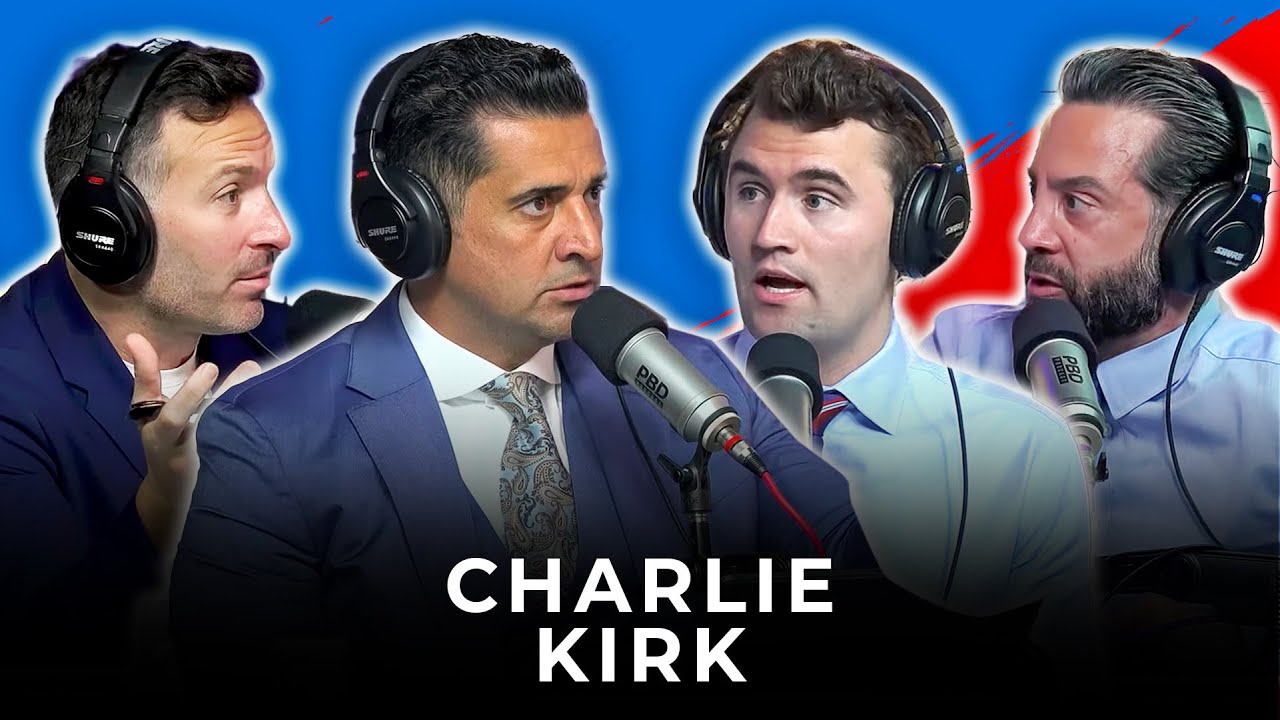
Patrick Bet-David, Charlie Kirk, and Chris Cuomo Debate Trump's Historic Election Victory and the Issues That Mattered Most
2:03:26
Charlie Kirk and Tim Pool Examine Trump's New York Surrender and America's Collapsing Confidence
Charlie Kirk joins Tim Pool to dissect Donald Trump's historic surrender in New York City on criminal charges that many see as politically motivated. Kirk argues this indictment represents not just legal overreach, but a fundamental breakdown in America's social contract. With Secret Service agents now set to testify against Trump in Washington D.C., and 34 felony counts looming, the conversation explores what happens when confidence in institutions collapses. Kirk reveals why the 2024 electoral map actually favors Republicans, discusses the strategic failure of Alvin Bragg's prosecution, and explains why deterrence through reciprocal indictments of figures like BLM leaders might be the only path forward.
The Precipice of Societal Collapse
Donald Trump has arrived in New York City preparing to surrender for his arraignment. The question that looms over America isn't just about the indictment itself, but what it represents for the stability of the nation. If Trump had refused to surrender, what would have happened? If a judge remands Trump to custody without bail, what becomes of this country?
The answer reveals just how close America stands to the precipice. A country only exists based on confidence—it's an abstract idea that tethers people together. When you look at other countries where citizens don't have confidence in their government, you end up with civil war, corruption, and bribery. The government has no power beyond its guns.
If Trump had stayed in Florida and announced these charges were illegitimate political persecution, what precedent would be set? New York would be powerless to stop someone who committed what they claim are felonies. Florida would refuse to extradite. The confidence that holds this nation together would shatter.
But Trump cares about this country. He realizes what would happen if he defied this indictment. He also sees tremendous benefit—his polling has skyrocketed, fundraising has exploded. He's giving them exactly what they want, and they will regret it.
The Secret Service Testifies Against Trump
The indictment in New York isn't the end. News has broken that the Secret Service is scheduled to testify against Donald Trump in Washington D.C. regarding classified documents. This pertains to special counsel Jack Smith's probe into the handling of classified materials at Mar-a-Lago. They're not going to stop.
According to Brett Baier's report, a number of Secret Service agents are set to appear before the grand jury. This represents an escalation in federal investigations that could prove far more consequential than the New York case for ballot access and Trump's ability to run for president.
The Psychology of Political Revenge
Why would they indict Donald Trump in the first place? The answer goes beyond simple politics—it's revenge for stealing the Javits Center from them. That night in 2016, when Trump won, is seared into the psychological makeup of the New York political elite.
Trauma is a powerful thing. These people are traumatized and humiliated by that night. They thought they were going to a wedding ceremony—Hillary Clinton's coronation at a venue with a literal glass ceiling. They wore their best clothes. Instead, they went to a funeral. That night caused massive psychological damage and trauma, and they swore a blood oath.
Do not mistake the pettiness of the New York political elite. When Trump is arraigned, there will be a population of New York saying it took seven years, but you stole that night from us. You might have gotten Amy Coney Barrett, you might have gotten Brett Kavanaugh on the Supreme Court, but now we got you.
Remember the 2016 debates when Hillary said, "You better be glad that someone with Donald Trump's temperament isn't in charge of the law in this country," and he responded, "Because you'd be in jail." They looked at each other. That's why they're going after him. It's petty, it's pathological, it's personal. Donald Trump psychologically scorned these people.
The Legal Landscape and Potential Outcomes
Democrat jurors in New York will not acquit Donald Trump. The question becomes what happens next. There's legal uncertainty—a judge could say this is a misdemeanor, not a felony, though that might not happen with a New York judge. There could be a long process of jury selection. The 34 counts could get reduced to five or six. There's also sentencing to consider.
If Trump gets convicted, he's someone who's never been convicted of a crime before. The precedent in New York shows that if you lob Molotov cocktails at police cars, you don't get serious jail time. The city gave $21,000 to BLM rioters. Trump's lawyers could argue their client should get community service, which would be remarkable—imagine Donald Trump cleaning up the Brooklyn Bridge.
Twenty years ago, if someone like Trump was charged and convicted with a misdemeanor and the sentence was community service, the lawyer would suggest a large contribution to various charities in lieu of community service, and they would say yes. Being Donald Trump, they won't do that.
There's an equal protection claim under the 14th Amendment that can be made. The whole trend is relaxed on crime, but with Trump, different rules apply. Before you go to jail, you get an appeal, and the appellate courts are a lot saner than the original criminal courts.
The Possibility of Travel Restrictions
Trump cannot imagine leaving the state becoming an issue, but consider this scenario: A judge says Mr. Trump, you own several high-end properties in New York City where you can easily reside. Do not leave the state for the duration of this trial. He will not be able to campaign. They'll say whether or not you campaign for president is not our fault—you are being criminally charged.
That's a real possibility. When it comes to the Molotov cocktail comparison and Trump's lawyers politely arguing to the judge that New York City's laws are very lax in terms of crimes committed, that this is not a violent offender, and they reference the two young people who firebombed police vehicles and were given an opportunity, the judge might say, "How dare you question the motives of people challenging the white supremacy of this nation. Donald Trump is a white supremacist."
The Room for Legal Error
The room for error here is very limited. Every comma is going to be dissected by the legal community. People could get disbarred. This is not some fringe case in Ithaca, New York. Everybody involved is going to be examined on the appellate level. They could lose their law license. Complaints could be filed against them.
The whole system might be corroded and poisoned. However, because of the scrutiny, there's a prediction that they're going to blink and keep their heads down and act as if this is a regular crime. They won't do anything too unusual. They'll say this is the law and we follow it, this is precedent, fine, you can go, no bail.
Regarding the 34 counts—counts don't necessarily mean you go to jail. You could have one action with 34 different points. You could get charged for fraud and make 34 phone calls, and it's all on the prosecutor to determine how many counts there are. U.S. attorney's offices in America are notorious for 99-count indictments just to do it.
Why Cyrus Vance Didn't Charge Trump
If this was so clear-cut, why didn't Cyrus Vance charge Trump on these charges? Why did it take Alvin Bragg? Because there's not unanimity that this is a good idea. That's why. Cyrus Vance was a way better prosecutor, way more respected, way more from a white-collar law firm. Alvin Bragg is like a street thug who has attained power by going after Trump.
The fact that other DA's passed on this case shows there's a risk element here that favors Donald Trump. It's not as if Cyrus Vance wouldn't have wanted to get Trump indicted—he would have loved nothing more. The guy was a total Trump hater. He would have been the darling of the New York City elite. But maybe this is about escalation, not risk.
Incitement and National Security Concerns
Maybe this is about trying to distract from the looming currency collapse and banking crisis. Maybe it's about inciting violence amongst the American right so they can clamp down and say, "See, these people can't handle freedom, they can't handle liberty." They're trying to raise the temperature in the room because the American currency is about to collapse.
Does the national Democratic Party want this to happen, or is Bragg doing this despite them potentially not wanting it? That's a good question. They may be saying, "Look how much money Trump is making, his polling is skyrocketing, you need to chill out." And this local-level guy is saying, "I'm winning."
The NYPD has ordered cops to patrol in uniform and prepare for mobilization after Trump's indictment. Every officer has been told to be in uniform and get ready. The question is: for what? Are Trump supporters going to riot? What are they expecting?
Reporters who went to the courthouse spoke with cops stationed outside who said they were told this wasn't going to happen for another month. Then all of a sudden they were all called up, told they had to pull doubles and get out there right away. They were pissed. They didn't think this was happening now. That's a way to agitate people—you're agitating the cops and their families.
The Bifurcation of American Culture
This must be looked at as an indictment trying to lead to incitement. This is a direct incitement campaign where they're trying to raise the temperature to spark a backlash they want to be violent. Who is "they"? The national security state, the deep state, the regime media. Because right-wing violence makes the regime more powerful.
At this point, it doesn't matter. No one on the right is swayed by any arguments about right-wing violence. We know what Antifa does. We've experienced it. Conservatives don't even want to go around waving flags peacefully. They barely want to go outside and protest at all. If anything, some do, but mostly they don't.
The narrative among the left is they truly believe it. At a casino in Maryland, a regular guy playing poker said all the people on January 6 should be executed. No kidding. Someone brought up politics, and this guy who doesn't know much about politics said they should be executed. When asked about May 29, 2020, when leftists tore down barricades at the White House, firebombed St. John's Church, firebombed the guard post, and Trump was forced into an emergency bunker, the guy said, "I don't know what you're talking about. I don't know anything about that."
That's it right there. This guy wasn't political. He said he hated all politicians, but the messaging that reaches him is insurrectionists are traitors, and he has no idea what Antifa is.
The Martyr of the American Right
Imagine a new wave of riots called the Trump riots. That's what they want to see. But it's unlikely. The reason Trump is in New York is he sees massive upside to this. Alvin Bragg is doing what the other DA's decided not to do. Trump is raising money, getting points in the polls. Donald Trump is now being positioned as the martyr of the American right.
Martyrdom is a way to win popularity. What is the American left thinking about it? It depends who you're talking to. Mark Elias or your average crazy person in Brooklyn—they're cheering for it. Mark Elias is probably not cheering—he's much more strategic. The average Trump derangement syndrome Democrat is saying "finally." Joy Behar and The View fell into it. These people are savages in their bloodthirsty quest for revenge.
The 2024 Electoral Map Favors Republicans
There's an important reality about the 2024 election that explains why Democrats fear Trump. Go to 270towin.com. Every 10 years we do a census as mandated by the Constitution. The map has slightly changed in Trump and Republican favor for the first time for 2024. The maps are good for two cycles and then redone.
Assume Texas goes red (easily), Florida goes red, Pennsylvania goes blue, New Hampshire goes blue, all of Maine goes blue, Michigan goes blue, Minnesota goes blue, Nevada goes blue, Iowa goes red, Ohio goes red, North Carolina goes red. What you have right here is why they fear Trump.
All Trump has to do is win Arizona, Georgia, and Wisconsin, and he's the president of the United States. Three states he won in 2016. Three states that received Zuckerberg money. Three states that have elected statewide Republicans. Two states that have more Republicans registered than Democrats (Georgia and Arizona), and one state that's 50-50 (Wisconsin).
This is why the Democrats are indicting Trump. The map has changed. Even without one Nebraska district, it goes 271 to 267. With it, it's 272. You need 270 to win. Donald Trump can not only win the presidency, this map heavily favors the Republican to win the presidency.
Even the consideration—Arizona is a 50-50 state. Kyrsten Sinema is going to be a formidable Senate candidate if she runs as an independent, which is good for Republicans. Arizona with the proper get-out-the-vote ballot chasing operation is going to be fine.
The entire United States election comes down to three states, comes down to seven counties. This is why they fear Trump so much. This is not a national election. In 2016, Trump won with 88,000 votes across three states, but he needed Michigan or Pennsylvania in addition to Wisconsin because the census map favored Democrats because of the Sun Belt surge. Florida has gained population so significantly it's a red state. Texas has. New York, California, and Illinois have lost population.
The stars have aligned where the Republican is now in a much easier spot to win the White House than ever before. Mark Elias knows this. That's why Elias and the national Democrats are not thrilled about this indictment. They're saying, "What are you doing?"
Upper-middle-class white suburban voters are not thrilled about the idea of over-prosecution because they kind of get what that means. That resonates. A swing voter in Pennsylvania said this country over-prosecutes, and also said to execute the J6ers. A walking contradiction—a swing voter.
The Need for Deterrence
Republican DA's and Republican AG's need to start indicting and investigating members of the Democrat crime family. One that we can all agree on is the BLM criminal enterprise that materially benefited with $100 million in the summer of 2020, and they've been untouched. Act Blue was being used to facilitate donations to some of these organizations.
Just with Black Lives Matter Global Network and Patrice Cullors, we now know there was material charitable fraud under any reading. She was buying houses—a $6 million mansion in Malibu. The money went missing. She has a multiple real estate empire. She also paid her boyfriend, now husband, for security services for a healthy sum.
L.A. Times reported: "Black Lives Matter leader accused of stealing $10 million." That's a separate case from BLM Global Network Foundation. Why is there not widespread investigations and indictments into the BLM charitable fraud?
At Turning Point USA, every dollar is audited. We have an audit committee, a CFO. It takes two people to sign checks. We do 990s. The IRS holds us to a very high standard of financial accountability. What BLM did is outright charitable fraud.
Why does this matter? Because the counter-argument is, "Well Charlie, that's just some charity." No. BLM was the vehicle of choice for the activist left. You go get Donald Trump in New York? Fine. We're going to take BLM and put them on trial and go through the charitable fraud of how they raised $100 million and got $83 billion in pledges from corporate America. Where did the money go?
That would be a prudent act of deterrence that would actually open up the legal conversation. That's just one example of a hundred.
The Collapse of Shared Reality
The country is so bifurcated. What's being described would just be the exact same thing to them. It's equal and opposite reaction—you punch us, we punch you, and then it escalates further. The question is stabilization versus escalation.
Escalation is better than being pummeled. If you have a friend that smacks you a lot and you say, "If you do that again, I'm going to smack you back," and they do it again and you smack them back, they stop. That's deterrence. But this is not that simple.
There are numerous examples in history where the pushback just led to escalation until war broke out and people killed each other. In the Civil War, they didn't just say, "Whoa, this violence is growing too much." Sherman decided to march to the sea rather savagely—an understatement. He said, "I'm so sick of these people, I'm going to burn their cities to the ground, kill children, and destroy farmland all the way down so they starve and die." Scorched earth warfare.
The American right has a choice. Option one: keep doing what we are doing, which is sending strongly worded press releases and op-eds and hope things get better. Option two: indict, use political power, and hope it gets better. They're both bad options, but those are the options.
The forgiveness arc—if you're really pummeled and beaten down by society so hard and you still stand up and forgive people for it, that's a message that will resonate for thousands of years. That's powerful. It could happen.
Prior to 2016, candidates didn't hate each other. It was very out of character for the United States. Republicans and Democrats at least had the same goals for the country. They had the same goals—the uniparty. Funding the military-industrial complex, invading the world, inviting the world, outsourcing American industry overseas.
The Question of Healing
Donald Trump didn't cause the division—he revealed it. He revealed 50 years of neoliberalism, of a fake currency and endless global wars. He exposed invading the world and inviting the world and re-domiciling American industry overseas. He did it in a very blunt, sometimes clumsy, but awfully direct way. He gave the American population a prognosis that was honest: you guys got tumors everywhere, and I'm going to remove them. All of a sudden, he's the problem for even mentioning that we have these tumors.
We are really divided. We've been divided for quite some time. There's an interesting theory: can a large republic sustain itself? Is this just inevitable when you have 330 million people and almost 4,000 miles of land mass? Is it just unsustainable? The founders were concerned about it.
Jefferson, a walking contradiction, wrote in the Anti-Federalist Papers that he was afraid large republican governments can't work, and then he bought Louisiana. We're all walking contradictions in some sense, which should give comfort that even our heroes were contradictions.
How do we heal the land? This is the question of the statesman—someone able to identify the problem cogently and come up with some form of a prudent, healthy, and realistic solution. Abraham Lincoln called it the crisis of the house divided. That's similar to what we're living through now, but we're even more divided in some ways than we were leading into the American Civil War. At least there was a Christian country back then. Now we have different metaphysics and all sorts of different views.
We have some things working in our favor. The great hope is that we can de-escalate the national politics and go back into hyper-local community and just say, "I don't like the person in Portland, I don't like the person in Wichita, but I'm not going to try to imperialize their life." Until we get to that, the project is going to fall apart.
The Structural Problems of Representation
There are structural problems. Our republic has become out of control. There are 535 people in Congress representing 350 million. There are like 700,000 people trying to be represented by one guy. You can barely represent yourself.
Mike Gravel, Senator from Alaska who has passed, created this idea of national initiative—creating a fourth branch of government where the American people can pass laws into Congress. You'd have 50 representatives, one from each state, and they could come together whenever convenient.
But having the monopoly of law in the hands of 600 people—let's talk about how the founders thought it would be. Until the 17th Amendment, the state legislatures used to pick the senators. That used to be your through-line. Now people pick the senators, but they're just pseudo-celebrities who raise a bunch of money. These elections have become corrupt contests.
The founders' design—repealing the 17th Amendment would be amazing. It was passed in 1917 under Woodrow Wilson. It was way better before because senators were appointed by the state. One senator for seven million people? No. You went to your state rep to complain about your senator because they could recall the senator at a moment's notice. That was the original design.
You know your state senator because there's many more of them at the local level. These senators at any time could be called for hearings or recall by the state legislature. "You're not representing West Virginia. What are you doing?" That actually makes a lot of sense because we don't have a way to hold our senators accountable other than not voting for them.
If we still had the structure before the 17th Amendment, Republicans would have 58 seats in the U.S. Senate.
The Algorithmic Divide
What's causing the divide in this country is not leadership—it's algorithms on social media that manipulated young people, creating two different realities. Ten-year-olds got on Facebook in 2008 and were immediately shuffled into two different realities. They're now voting age. There was never a point where someone decided, "I am a conservative, I am a liberal." Young kids were being fed two different versions of reality by Facebook.
There's no bringing those people together because they live in different realities. They don't even understand reality in the same way. They don't have the same goals, worldview, or anything like that. If someone's entire being—their brain, their body—was built on "this country is nothing but white supremacy," and someone else was built on "America is a great freedom-fighting nation, civil rights, etc.," you are not going to reverse 18 years of mental development. Not overnight, not even in a few years.
The decline in critical thinking in education is an issue as well. Thinking long game—there are a lot of people that will mindlessly follow Donald Trump and Joe Biden and do what they say. For better or worse, that's how people are built sometimes. If they see them being kind to each other and promoting forgiveness, they'll just mindlessly do it. That's the beginning. Then their kids will actually realize why it's valuable. In 20 years, Donald Trump Jr. might be president. It doesn't have to be all or nothing today.
The Foundation of Eternal Truths
The reason why the Constitution and the Declaration are just as applicable today is because they're built on eternal truths—things that are always true. What is a human being? What is our purpose here? Generally, are we naturally good or naturally bad?
Technology won't solve this. In fact, technology amplifies the worst aspects of human behavior. Writing is a form of technology, and before it was barbarism. Now we have organizations, but people still lie with their pen.
The founders designed a system with a Council of Elders (Supreme Court), a group gathering (Congress), and the executive (the Monarch). All these different forms of government they had seen—they said, "Let's do all of them and have them challenge each other and create this networked system." It was brilliant.
As time changes and technology changes, there are probably ways to improve. But the challenge with technocracy is look at how algorithms were created on YouTube with the intent of creating more Game of Thrones. YouTube said 10-minute-long content, high watch time—that's what we want. Instead of getting Game of Thrones, we got weird videos of Elsa being chased by the Joker and Spider-Man with no English because more people could watch it if there was no language barrier. It had multiple keyword-generating figures in it.
If we go the technocratic route, the only actual outcome is either a human being is in control of the system that we think is technocratic, or we create a mechanism by which the technology aids us and then it runs haywire because it's impossible to predict.
Someone would have to have supreme control over that system to correct errors and maintain the system. That seems like Wikipedia—a total disaster. What will happen is you'll get a network system where Democrats register a bunch of people, they'll say, "Hey, download this app on your phone," which will then make—they're going to say this is called Swing Vote, and if everyone signs up, we can control the system.
When you have power, it will corrupt, as Lord Acton said. We're looking for something that is the least corrupted of a corruptible system. Nothing's incorruptible. If you think technology will smooth out the inherent corruption in man—writing is a form of technology, and before it was just barbarism. Now we have organizations, but people still lie with their pen.
Video Transcript
Donald Trump has arrived in New York City preparing to surrender for his uh arraignment and you know we got to with Charlie Kirk is hanging out and we were talking earlier so I think I think Charlie might disagree but I I was saying this earlier on my morning show that if you want to explain to people just how close we are to societal collapse or the precipice just tell them ask them what happens if Donald Trump doesn't surrender 34 counts what happens if Donald Trump just says no okay well we know he's going to New York he's no he's going to do it okay here's the other scenario what happens if a judge says we remand Donald Trump to the custody of the New York criminal court system meaning he's going to jail and they're not going to let him out until the case is resolved what do you think happens to this country the front runner for the Republican Party a former president for the first time in history that's the precipice because I could not imagine a peaceful resolution if either of those things occurs and that's what we're dealing with right now and it's not just the indictment in New York we now have news that the Secret Service is scheduled to testify against Donald Trump in Washington D.C this is pertaining to classified documents they're not going to stop that's how close we are confidence is about to break down so we're going to talk about a lot of that plus we do have some silly social issues I guess because Elon Musk changed the Twitter logo to Doge and then Doge spiked like 40 or whatever yeah yeah so uh before we get into all that head over to timcast.com click the join us button to become a member if you want to support our work directly and as a member if you join at the 10 level after six months you will get access to the VIP chat in our Discord server which allows you to call into the uncensored after show and ask questions as a member you'll get access to the Discord where you can hang out talk with people and communicate and we use that sort of the chat the chat will appear on the uncensored show live stream but if you're a member for at least six months you get that auto upgrade or sign up now at 25 bucks and instantly join the VIP Channel where you can call into the show we screen everybody so we only do a few questions per night I don't want to get expectations too high we try to get as many people as possible but uh we're really excited for the community building aspect of the Discord and we did Just Launch castbrew.com our coffee company so things are going really really well thanks to all of you so also smash that like button subscribe to this channel share the show with your friends and as I already mentioned you already heard Charlie Kirk is hanging out tonight hello and Libby Evans is here cheers you know we'll go in order you want to introduce yourself hi everybody I'm Charlie Kirk I host a radio show and podcast and run Turning Point USA I'm a big big big fan of what Tim's doing here appreciate it man and Libby Evans of course I'm Libby Emmons I'm the editor-in-chief at the post-millennial and human events glad to be here with you Charlie oh my gosh I'm Ian cross and Charlie good to see you man I'm a big year I love you too that's why I can we haven't seen since I haven't seen since am fest wasn't that great that was so fun yeah we had Steve Bannon I mean it was awesome swore more than any person in the history Tim cast in a short period today it's great thanks for having us that was just so awesome it was really sweet I just want to point out that Charlie is wearing a button-up shirt collared with a tie Libby is wearing a button-up shirt slightly more relaxed I'm wearing a button-up shirt completely unbuttoned and Ian is wearing a I guess a lavender what is that purple velvet everyone dressed as you would expect exactly maybe we'll talk about religion today man I want to also it's Holy Week what what is it what holy let's get into it okay we'll do that later because we got to talk about Trump getting arrested and all that we got surge pressing buttons yo uh let's just roll all right here we is the story from the AP Trump returns to New York to face historic criminal charges so as I stated in the opening of the show if Donald Trump made the decision not to surrender I think this country would get ripped apart New York would be complaining he's criminally wanted we want Florida to return them as with any criminal Florida Ronda Sanders would be like I'm not getting involved in this I'm not going to do it the feds probably wouldn't move in but Donald Trump I believe cares about this country and so I think he realizes what would happen if he does defy this this indictment I also think he sees a tremendous benefit as his polling has skyrocketed as fundraising has skyrocketed so he's saying you know what I'll give you exactly what you want and you will regret it so the latest story is President Trump returned to New York from his Florida State money to face historic booking an arraignment on hush money charges they say that but it's 34 counts so it could be more they say already months into a Third campaign to reclaim the White House Trump and his advisers seem to relish the attention cable networks followed his plan at airports in Florida and New York with video from there I mean I view this as an as a complete backlash a complete backfiring for Democrats he's raised he raised five million bucks 4 million bucks in a day 5 million over two days he's his polling is up 30 points 33 points Ron DeSantis has completely collapsed against him in the GOP Primary Trump could not have asked for something better to help his campaign except the fact he might go to jail besides that it's great well here's a question I have for you do you think Democrat jurors in New York will acquit Donald Trump no no I mean so he's going to jail well no not necessarily I mean first of all there's a lot of legal uncertainty here it could be a judge could say this is a misdemeanor not a felony it is a New York judge so that might not happen there could be a long process of jury selection 34 counts can get reduced down to five or six there's also sentencing right so I mean God forbid Donald Trump actually gets convicted but if that ends up happening you have someone who's never been convicted of a crime before so you could pull you in front of the judge like hey this is a should be a misdemeanor that you call a felony the precedent New York is saying that if you lob Molotov cocktails at police cars you don't get serious jail time we give 21 000 to BLM rioters my client should get community service which I think will be hilarious to have Donald Trump do community service but uh as kind of everyone would love him right no I mean like go clean up the Brooklyn Bridge and it would be the most watched live streams Palestine 20 20 years ago if someone like Donald Trump was charged and convicted with a misdemeanor and then the sentence was going to be community service the lawyer would say perhaps our client can make a large contribution to various charities in the community in lieu of community service and they would say yes being Donald Trump I don't think they would do that and your point about BLM while correct I don't think applies to people in New York City no I'm just saying there's a broader question legally I get that the whole trend is relaxed on crime but come on you can hear that there's there's an equal protection there's a 14th Amendment claim that can be made good luck no I agree with you I'm as cynical as you are too but at some point you're going to run into some backstop at that could slow at least slow this down and especially and then also Tim before you go to jail you get an appeal and the appeal courts the appellate courts are a lot saner than all right the original the the original criminal court so Trump is not allowed to leave the state okay that's that's a potential do you think that's going to happen so I cannot imagine a circumstance where New York jurors I'll quit Donald Trump no I can't imagine that I cannot imagine a circumstance one just takes one yeah but then it's just a mistrial and then it's well then but so that we're dealing with time right so they'll say I'm I I do not I right now Donald Trump has gone to New York voluntarily he's going to surrender I'm glad he did I don't believe there's a strong probability a judge remands him into custody because of the fear of what would happen if they do but it would be just they don't do that in New York anymore but that did you hear we're talking about Donald Trump but but outside of that the political ramifications I don't think it will happen however I do think there's a possibility the judge says Mr Trump you own several high-end properties in New York City where you can easily reside do not leave the state during for the duration of this trial he will not be able to campaign and they're just going to say whether or not you campaign for president is not our fault you are being criminally charged that would be that's a possibility right and I got to be honest when it comes to the molotov cocktail thing I even envisioned a possibility where when Trump's lawyer politely argues to the judge New York City's laws are very lacks in terms of crimes committed this is not a violent offender and then if they reference just recently two young people were firebombing police vehicles and were given an opportunity the judge will say how dare you question the motives of people challenging the the white supremacy of this nation Donald Trump is a white I would not be surprised if you're more cynical than I am did you see what it is a New York City judgment I don't I'm just not as I'm not as like forthright and just thinking the whole legal system will collapse here's why I think you might be wrong Tim just to play Devil's Advocate is that the room for error here is very limited every comma is going to be dissected by the legal Community here people could get disbarred this is not some sort of Fringe case in Ithaca New York they had everybody involved in this is going to be examined on the Appellate level they could lose their law license there could be complaints filed against them you might be right the whole system might be so corroded and might be so poisoned however I think that because of the I think I think this is my prediction that they're going to just blink and just keep their head down and act as if this is a regular crime and not do anything too unusual and say this is the law and we follow it this is precedent fine you can go out no bails jail 34 counts hold on that not necessarily they're misdemeanors though well they're yeah they're misdemeanors one felony no 34 accounts doesn't mean you go to jail by the way I mean it's just you could have one action that you have 34 different points for example you could get charged for fraud and you make 34 phone calls and it's all on the U.S attorney or on the charging documents of the prosecutor to determine how many counts there are there are U.S attorney's offices in America that are well known they're notorious for 99 count indictments just to do it so why so let's look at this why would they indict Donald Trump in the first place I I have a theory as to why it's Revenge for winning winning no it's more than that it's revenge for stealing the Kravitz center from them we know this in the psychological literature trauma is a very very powerful thing these people are traumatized and humiliated that night oh yeah they thought that was going to be a wedding ceremony think of it they wore their best clothes they thought they were glass ceiling yeah no literally for people to understand this is Hillary Clinton's yeah the party yes and it's a literal glass ceiling corrections I get all messed up Javits thank you for correcting me yeah for a second I was like wait what are you doing oh yeah jab it's Kravitz that Kravitz is in Palm Beach so the Javits Center and they thought they were going to a wedding and they went to a funeral and that but that is those massive psychological damage and Trauma and they soar a Blood Oath that night do not do not mistake the pettiness in New York political Elite I I was re-watching the debates 2016 Trump Hillary and when he's like she's like you guys better be glad that someone with Donald Trump's temperament isn't in charge of the law in this country and he's like because you'd be in jail and then he just looked at her and they looked at each other and I'm like that's why they're going after him it's Petty it's pathological it's personal and so Donald Trump psychologically scorned these people and they said we're gonna get you back and now they looked when he's arraigned tomorrow there will be a population of New York that says it took us seven years but you stole that night from us and you might have got Amy Coney Barrett you might have got Comey Kavanaugh you might have got all these different people on the Supreme Court but now we got you but but that implies this is the end of it I don't I don't I don't believe no no well they have additional charges I mean the doj as you said the doj is now looking at obstruction charges the secret service is going to testify against them in DC no it's not the end no no but if you were talking about New York politics we're talking about who is in Alvin Bragg's ear the New York City Elite primary Hillary Clinton that is very Petty very personal very political this is about revenge and there's there's other games to be played here with Jack Smith at the doj and the woman in Fulton County because of the phone call Trump made which was perfectly fine so then there's another theory that they're doing this to try to take Trump off the chessboard um I'm not as convinced of that one this one just seems to be Revenge politics perhaps but I just don't see a circumstance where they can set this this chain of events in motion and then appease their constituents by backing down no I think that's right and therefore the room for error is almost nothing and when you overcharge and create a crime with a quote exotic legal Theory as Maggie Haberman said on television you might let a lot of people down again yeah the the legal system in America is designed to allow people that are overcharged that have good legal representation to fight it now you might be a cynical about New York as possible I do not have faith in the in the pattern of behavior we've seen in the New York legal system but everything will be examined every single charging sentence and syllable is going to be hyper critical so there's a potential I imagine of this going to an appeals court correct or even being escalated to U.S appellate federal courts Supreme Court potentially Supreme Court I think I think there's a decent percentage chance that actually happens but in the meantime you I think we're going to see hyper partisan politicized law enforcement and Judiciary because too much of what I see is the what I refer to as the freedom faction which consists of disaffected liberals Libertarians conservatives believing well there's rules and the rules say it must be done this way and then it's like dude they fire bombed a car and then got let go no I'm not even making that argument I'm just saying that there's a lot of there's a plenty room for error for these people that think that Trump is 100 going to prison that a lot can go wrong that is they're gonna oh they're over charging they're creating a crime that doesn't exist they're upgrading a misdemeanor to a felony also Michael Cohen is going to be your star witness I mean the only way I see this going in Trump's favor is if after conviction it goes to an appellate court with a trump appointed judge and that gives the Democrats an out of his own appointee excuse himself yeah well that that's their out to avoid going all the way down yeah but it would be a state a judge it wouldn't be a trump appointed judge it wouldn't be that's what I'm saying it would have to only be if it goes to the federal level having some kind of federal court intervening how would it get to a federal level Federal prosecutors had already declined to prosecute this right I know I I do not see a circumstance where New York political establishment says we've decided to let Trump go I just don't see it I do not see a jury of New Yorkers being I think you're right I don't disagree with that but I also this this ends up with Trump facing sentencing potentially potentially I just I'm not I'm not saying it's certain there's a lot that can go wrong this is this is in for them I mean and go right for those of us that believe in the country justice but how I mean I could go to the list again right they're over charging but so who's going to intervene and say this is an overcharge the Democrat D.A the Democrat lawyers the Democratic population a potentially a judge that doesn't want to get disbarred or put in front of discipline from who in New York State Court this is interesting because you're saying nobody is going to follow the rules that exist no and you're in New York that they're Democrat no New York judge is sitting there thinking well the the the Democratic establishment that controls New York state is going to disbar me they're thinking I will be disappointed if I don't put Trump well look there's you might be right but considering how insane these charges are and how damaging they are this is far from a we're assuming what the indictment is we don't know exactly what's in it yet it's far from a signed sealed and delivered case right and here's the thing Trump's going to try to stretch out the timeline here and he will use it to his Advantage every one of these local actors is now going to be under a national Spotlight and National examination I'll give you a couple examples everybody now working in the DA's office that's going to touch this case their social media histories will now be examined they're not going to be comfortable with conservative freedom-loving media shining a light on them and if they're hey hold on Kyle Rittenhouse is largely free today because of free media that was on the street and we shined a light and we exposed them but he was also in a it was a Wisconsin court in Wisconsin but very strongly conservative uh no not so much that's not totally true I mean Wisconsin as a Democrat Governor it's more sane than New York I'll give you that for sure I what I'm getting at though is I think the New York political Community is going to be shocked at how big of a deal this is going to be how much their failures are going to be put on Spotlight and these people are over charging and we know that yeah but that only but then maybe it's so what by the rules man I don't think they're playing by the rules so why would they care about overcharging because you're going to find a couple people that still have some shame shame who do they fear so you live in New York you're a judge who lives in New York City you know what you fear you fear Auntie for coming to your home with bricks and Molotov cocktails let me let me have a counter argument if it's that signed sealed and delivered why didn't Cyrus charge Trump on these why brag I don't know because it's not there's not unanimity that this is a good idea that's why well here's what this is a risk if it was Cyrus would have done it he was a way better prosecutor way better respected way more kind of White Collar Law Firm Alvin Bragg is like a street Thug that has become attained on going after Trump correct one so and now he's doing it but the fact that the fact that other DA's passed on this case shows that there's a risk element here that favors Donald Trump or because they didn't a new guy gets in who's escalating things well that that could be the case but it's not as if Cyrus wanted to get him indicted he would have loved nothing more I mean the guy was a total Trump hater he would have been the darling of the New York City Elite but maybe this is not so much about risk as it is escalation maybe this is that's a separate argument though right so is it about Trump or is it about trying to distract from the looming currency collapse and banking crisis to incite violence amongst the American right so that they can clamp down on us and say CCC these people can't handle Freedom they can't handle Liberty we're going to try to raise the temperature in the room because the American currency is about to collapse let me pull up the national Democratic party wants this to happen or do you think brag is doing this despite them potentially not wanting it that's a good question too I mean I I think they may not want it to happen I think that too they may be saying look how much money he's making his his polling is skyrocketing you need to chill out and this dumb local level guy is being like I'm winning you know so maybe but to your point uh I want to pull up the story we have this from pix 11. once again New York PD uh NYPD cops ordered to patrol in uniform prepare for mobilization after Trump indictment so this was just the end of the last week as it was being announced Trump was going to head to New York but this has been a consistent story since the announcement of the looming indictment before it was confirmed New York police fully mobilized every every officer told to be in uniform and get ready my question is for what you know what's interesting is we had our Trump supporters going to go around or what we had a reporter out there last week who went out to the courthouse the night of the uh like with the with the indictment I think it was um Wednesday she went out on or maybe it was Thursday I don't know anything anyway uh she went out and she was talking to some of the cops who were stationed outside the courthouse and they had all said they were talking to her about it and they said that they were told that this wasn't going to happen for like another month and then all of a sudden they were all called up they all were told that they had to pull doubles and they had to get out there right away and they were all kind of pissed they were like we didn't think this was happening now that's also a way to agitate people and that you're just agitating the cops and their families that is agitating so the way it must be looked at it's an indictment trying to lead to incitement this is a direct incitement campaign where they're trying to raise the temperature in the room to try to spark a backlash that they want to be violent who is they the National Security State the Deep State the regime media because right-wing violence makes the regime more powerful I'm at the point where I just don't see how it how it matters no one on the right like the bifurcation of culture in this country is is complete none of us here are swayed by any arguments about right-wing violence we know what antifa does we know that I've experienced it absolutely and For Heaven's Sake conservatives don't even want to go around waving flags around peacefully they barely want to go outside and protest at all if anything some do but mostly they don't that's right but the narrative among the left is they truly believe it so I was uh I was at a a casino called Maryland Live this past weekend and I was playing poker with the boys as I often do and talk about and the guide to my left said that all of the people on January 6 should be executed um my goodness no kidding like he got so someone brought up politics this is a regular guy he doesn't know much about politics he's uh executed executed not kidding he's he's uh these are like grandmas being like oh look at the pictures well there were violent guys out there wouldn't want to be a lot there would be a lot of dead federal agents sure but listen so there was violence there's a riot there's people fighting with cops I've seen worse say antifa protests but I get into the capital on one side of the building the doors are open but the cops people are let in and I'm talking to this guy because someone brought up the economy which led to someone bringing up Joe Biden and you're not supposed to talk politics at these tables because of what happens and then I asked the guy what he thought and he was a really funny guy he was really cool we were getting along having a great time just having fun some jokes were made some fun poker hands and then we got into he got really angry and it was just like those people what I saw with my own eyes in January 6 they should all be executed every single one of them that's treason against this country and I saw what happened and I said I was like well you hear about how happened on 529 and he says no what's that was like when the when the leftists the far left they they tore the barricades down at the White House that fire to St John's Church so firebomb the guard post and then the the Trump was forced into an emergency bunker and he goes I I don't know what you're I don't know anything about that and I'm like that's it right there this guy was not political he said he hated all politicians but the messaging that reaches him is insurrectionists or traitors and I have no idea what antifa is yeah and imagine a new wave of riots called the Trump riots that's what they want to see bubble up but I don't I just I just I just can't see it I can't well you were the one Tim that you think the country would collapse if they remanded him but not because people on the right are going to romp around with guns it's probably unlikely very unlikely the reason I believe that if Donald Trump did not surrender okay the country would collapse is because a country only exists based on confidence it is an abstract idea that tethers people together you look at other countries where they do not have confidence in the government you end up with Civil War you end up with corruption with bribery Etc and then very little in power of the government other than guns if Donald Trump stayed in Florida and announced to the nation I do not find these charges to be legitimate these are political it's a political persecution in a Witch Hunt so I'm going to completely ignore it what precedent would be set nationally that New York was powerless to stop someone who committed what they say our felonies and Florida refuses to extradise yes so that's that's two questions so it's speculation because it's not happening but it's interesting first the precedent would be you file an extradition order the second is Florida has to choose whether or not to honor it and they probably would you think that you think Ron DeSantis that's the question I don't think the governor has all that Authority I don't know how all the particulars work I think that he wasn't going to get involved yeah not getting involved and dishonoring a Interstate extradition order are two different things can you imagine yeah this is all speculation but I think it's helpful but but let's just entertain these two potential outcomes the extradition order denied Rhonda Santa sang We're not involved which I think would be a pretty ballsy and cool thing to do but that's absolutely I completely agree but but what does that mean for law enforcement as a country the other scenario I want to sure on imagine Ron DeSantis saying we have no choice I am hereby ordering State Police to Mar-A-Lago to arrest and transport Trump against his will to New York that would be insane exactly but that's what would have to happen hold on we have we have a precedent of a couple things so the idea of a state or a locality saying that other people's laws don't apply to us is not new yeah California's doing California is doing it with the gender stuff Vermont I'm just trying to do it Los Angeles San Francisco Portland Seattle Chicago Boston Philadelphia are all Sanctuary cities where they defy federal law and don't work federal agents so that's not a perfect example but this idea of blue States and blue cities carving out their kind of own place to you know play if you will so that's one argument the second thing is what would happen in a standoff between a former president and Florida State Troopers it'd be impossible to know goodness the question the question would be what would be Trump's end goal which is why Trump is going to New York because Trump the reason why Trump is in New York is he sees massive upside to this because Alvin Bragg is doing what the other DA's decided not to do he's raising money he's getting points in the polls and Donald Trump is now seeing himself is now being positioned as the Martyr of the American right yep that is that is so wild and being the Martyr is incredibly popular and martyrdom is a way to win popularity and what do you think the American left is thinking about it depends who's who you're talking to Mark Elias or your average crazy person in Brooklyn they're cheering for it well yeah Mark Elias is probably not cheering for it that's a separate issue he's much more strategic that's the question about the national Democratic party is interesting yes the average Trump derangement syndrome Democrat is saying finally Joy Bahar on the viewers fell into it but these people are savages and they they they they're never going to stop in their bloodthirsty quest for revenge and that's my point we have two completely bifurcated worldviews and cultures one that is calling for Injustice and one that is saying it's good that Trump turned himself into Injustice it makes no sense well no no I'm not saying yeah I I I see it both ways so Define the Injustice you have to you have to have the ends in Minds right your final and formal causes developed and I don't think that would have been necessarily prudent for Trump to say you got to go send the Troopers after me it would have felt very like George Wallace you know 1960s or 70s now having Florida stand up and have the entire Florida State Troopers Stand Down against an extradition order that would have been interesting but what I think does need to happen and the only mature response that I've called for for quite some time is Republican DA's and Republican AGS need to start indicting and investigating members of the Democrat crime family one that we can all agree on is fraudulent is the BLM criminal Enterprise that materially benefited with a hundred million dollars and the sum summer 2020 and they've been untouched wasn't act blue being used to facilitate donations to some of these organizations correct yeah and act blue is a harder case to make but we can say just with black lives matter Global Network with Patrice cullers we now know there was material charitable fraud under any sort of reading she was buying all those houses yeah six million dollar mansion in Malibu for a content creator and the money went missing I guess the money went missing all these sources oh yeah you could just just to make track check me on all of it right there was a bunch of that she has a multiple multiple real estate Empire right she also paid her was boyfriend now husband for security services for a healthy sum you can fact check me um on that it was quite a lot yeah NBC News is not what I would use as yours no but you know that's why it's just going to take you more time to find the numbers BLM leaders condemn allegations of mismanaged funds that's that's a that's a word salad headline they're condemning their own Mystery but it was even reported in it here's L.A times black lives matter leader accused of stealing 10 million dollars there we go sure that that right there so let's just pause there and that's actually a separate one that's not BLM Global Network right but my guess is that somebody in a red State don't what's his name again this is that the global Network Foundation Bowers sure um why is there not widespread investigations and indictments into the BLM charitable fraud now that matters because if we if we want to have the promise of equal justice and the 14th Amendment it's like okay you go after Donald Trump who has become a martyr of the conservative right there you go Washington examiner is a great site so that's BLM Millions unaccounted for after leaders quietly jumped so I'm I deal in the 501c3 world every dollar is audited every dollar we have an audit committee we have a CFO I can't even sign checks it takes two people in the organization right we do 990s we do the IRS very very high standard of financial accountability at Turning Point USA this year is outright charitable fraud now why does this matter because the counter argument said well Charlie that's just some charity no no no BLM was the kind of vehicle of choice for the activists left so you go get Donald Trump in New York then fine we're going to go take BLM and put them on trial and go through the charitable fraud of how they raise 100 million dollars and got 83 billion dollars in pledges from Corporate America and where did the money go that would be that's so much that would be a prudent Act of deterrence that would actually I think open up the legal conversation and that's just one example of a hundred that I think a few years ago there were people telling me that what's happening today would never happen because the government would not allow it that the government was Secure that the the Deep State apparatus the whatever you want to call it does not allow these kinds of things because it's destabilized sort of things like Trump being arrested like Basics like BLM Summer of Love who says that like this was in 2018 are you reading like keyboards or something no like wait what the these are these are mainstream conservatives I I've never heard that but sure you've never heard people say that the country can't collapse that no I'm saying that Trump can't be indicted like I don't I haven't heard that yeah so so in 2018 the idea that Donald Trump would actually be impeached they were like they won't allow something like that okay well impeachment is different than indictment but sure continue yeah well but indictment wasn't even on the table there wasn't even a criminal charges that were okay I think I misunderstood what you were saying in 2018 when I was talking about how we are heading towards a collapse or Civil War and again I stress I didn't make the idea a Princeton Professor was talking about the Colts of wore numerous Outlets were talking I see what you're saying people were saying that can never happen the government is an entity in and of itself the Deep state it will not lose control in that matter it doesn't care about the left doesn't care about the right and now what are we seeing as the years go on the federal government is being bifurcated into mostly an establishment left and more new there's no right there's no opposition there's no opposition there is just the hyper partisan hyperpolarization of federal government and so what we end up seeing today is Donald Trump just flew to New York to surrender on bogus criminal charges there will be no opposition to that this will get worse as the years go on there is no reason to believe that these people in power are going to decide to pull things back so they don't have to why why would they what is the mechanism by which they will say hey let's let's slow down here so the only way they stop is if we stop them and so I agree if the current trajectory continues everything you just said will happen I'm a big believer in Free Will and agency and the ability to do something so I'm going to use my platform to call on what the only thing I think that could stop it which is deterrence which is to get DA's and AGS to indict Democrat crime member families if we don't do that everything you're saying is true but so my my issue there is this country is so bifurcated what you're describing would just be the exact same thing to them as it is of course it is it's equal and opposite reaction you punch us we punch you and then it escalates to further so the question is stabilization what escalation is better than being pummeled well I I my heart is saying we're not going to stop until you stop and and the issue is true if you have a friend that smacks you a lot and you're like if you did that again I'm going to smack you back but they do it again and you smack it back they stop that's deterring but this is not no I completely it's a fair warning you're like what you're doing is wrong I completely disagree there's there's numerous examples about history where the the pushback just led to a escalation until war broke out and people all killed each other with a Civil War in this country they didn't just say whoa this Vines is growing too much guys that's the greatest stuff that's a good thing argument is good and Sherman decided to March to the Sea rather savagely and and Savage is an understatement yeah it is he said I got an idea I'm so sick of these people I'm going to burn their cities to the ground kill children and Destroy Farmland all the way down so they starve and die of scorched Earth Warfare so the no no no so let me just frame it though because I hate to reduce things to binaries but the American right has a choice option one keep doing what we are doing which is to send strongly worded press releases and op-eds and hope things get better Choice two indict indict use political power and hope it gets better they're both bad options I agree I like them totally agree the the Forgiveness Arc for Donald like if you're really pummeled and beaten down by Society so hard and you still stand up and forgive people for it that's a message that will resonate for thousands of years I think that's powerful not gonna happen it could I think I think they're lying in the polls too they're they're trying to make the argument that they want Trump to be the nominee so they can beat him in 2024 but they didn't beat him last time well I mean they did beat him once they beat him last time but they don't but but they don't have anything right now there's no one Biden can't do it Biden didn't campaign he hid in his basement there was a lockdown where melon ballots were sent to everyone's home I totally agree they don't have any of these tools so unless H1 h5n1 hits yeah and then they do another lockdown like a Slime Flu 2.0 or something Biden is done do you remember the town halls people in their cars right right yes that was the Jeeps front of the stage yes Biden is a proven failure the country is in shambles that guy I mentioned who talked about executing j6ers also said it's Biden's fault the economy is bad so my point is just they can't try this game twice and I do believe they're going to try they're putting out polls where it's like if an election was held today Biden would win DeSantis would beat Trump but Biden uh they're saying that DeSantis would beat Biden but and Trump would lose to Biden and they're trying to make the case that we should support DeSantis for the primary I think they are lying once again in the polls so can I validate what you're saying yeah can you go to a website it's number 270to win.com yeah this every 10 years we do a census as mandated by the Constitution most people don't know this but the map has slightly changed in Trump and the Republican favor for the first time for 2024. so the maps are good for three cycles and then you read do them good for three Cycles actually two cycles redo them well what do you mean it's right right here it's saying let me show you okay so let's make let's let's assume Texas goes red is that fair enough to say oh easily and Florida yep okay let's assume Pennsylvania goes blue please and then New Hampshire goes blue and then all of Maine goes blue really yeah let me show you Michigan goes blue I know what I'm doing here so and Minnesota goes blue and Minnesota goes and then Nevada goes blue and Nevada goes below Iowa goes red Iowa and Ohio goes red and Ohio and North Carolina goes red and that's okay so what you have right here is why they fear Trump all Trump has to do is win Arizona Georgia and Wisconsin and he's the president of the United States three states he won in 2016. three states that received Zuckerberg money three states that have elected Statewide Republicans and three states that have more repo well two states that have more Republicans registered than Democrats in Georgia and Arizona and one state that's 50 50. this is why the Democrats are indicting Trump the map has changed if we if this was not the map in 20s what I'm telling you are we going to say uh so Nebraska had that one District I turned it red well no if you even if you don't it goes 271 right if it's 271 without it with it it's 272. yeah and so you 270 to win is all you need so let's know this so therefore Donald Trump can't not only can he win the presidency this map heavily favors the Republican to win the presidency this is interesting even even the the so the only real consideration I think I don't even know if Arizona is necessarily I'm I'm not as worried about Arizona I live in Arizona right it's it's it's a challenge you think so okay it's a 50 50 state Cinema is going to be a formidable Senate candidate if she runs as an independent that's good for Republicans it's good I think Arizona with the proper get out the vote ballot chasing operation which we can talk about is gonna be fine My Philosophy my hypothesis is the entire United States election comes down to three states comes down to Seven Counties and this is why they fear Trump so much this is not a national election mind you Pennsylvania's blue yeah you're right you're right in 2016 Trump won with I think 88 000 votes across the three states but he needed he needed a Michigan or a Pennsylvania in addition to a Wisconsin because the census map favored the Democrats because of the Sun Belt surge it's because Florida has gained population so significantly it's a red State because Texas has a New York and California and Illinois have lost population the stars have aligned where the Republican is now in a much easier spot to win the White House than ever before you better believe Mark Elias knows this that's why Elias and the national Democrats are not thrilled about this indictment they're just saying what are you doing to win those three states what do you want to do this when to win those three states and this is helping them there oh yeah his polls have gone up oh not only that but upper middle class white Suburban voters are not thrilled about the idea of over prosecution because they kind of get that what that means that's a that resonates that's that's a democrat-based thing let me tell you the funny thing is this guy I'm talking to who's that execute the j6s which is insane to me also said this country over prosecutes well so there you go and it's it was this is an interesting thing it sounds like a walking contradiction AKA a swing voter absolutely he was a PA swing voter well that and so you look at it because people say how do we win Michigan how to win Nevada how to win Pennsylvania you don't need to and so you look at the map you then you then Focus very precisely there's not just a path there is a great probability Trump becomes president so let me pull up this story we got this from Newsweek Donald Trump's Secret Service agents set to testify against him report a number of Secret Service agents are set to testify as part of a federal investigation into Trump's handling of classified documents Brett Baer said on Tuesday the grand jury appears uh appearances are related to special counsel Jack Smith probe into the handling of classified documents at Mar-A-Lago so yes what uh for those who are just tuning in or missed the last segment what Charlie is saying is that actually what is it you said Georgia Arizona Wisconsin that's it Arizona with the four Givens which is Iowa Ohio North Carolina Florida which I feel comfortable all will be in the Republican category it's looking very good for Donald Trump to win in 2024. not only do we have the indictment in New York but it looks like federally they're gearing up for some kind of indictment as well and that one can be trickier for ballot access the New York one will not prohibit from actually becoming a candidate being a convicted Federal felon is an open question really yes but I thought I I thought that wasn't the case I thought uh the the talking point was even if he gets charged it depends on what you're tried with if you're tried with Insurrection well they can't try him with it classified doc but the classified documents bar you from running for office correct yes then how could Joe Biden run again well because they won't charge him yeah they're gonna they've already defended what he did and criticized what Trump is ridiculous but the Insurrection one is interesting I don't think they're going to charge such a ridiculous claim but just for a thought experiment because that's what we're doing that's what they try to get marginally Taylor Marjorie Taylor green on in Georgia and Madison cawthorne correct is because a lot of these Southern States actually have criminal code Provisions you can't be on the ballot if you were charged Insurrection it's a Civil War era yeah exactly that's being more convicted of of it I believe yeah that's right cubic not charged with you're you're correct so what's the what are the chances they try and charge Trump with the most minor of minor j6 related quote unquote insurrections like how they're getting people on trespassing calling them insurrectionists what happens if they say misdemeanor um um what do they call it um like uh medicine what if they say menacing in relation to January 6. it's unclear legally but here's the greater concern remember that strange argument we had of whether or not California can tell you you have to be on the ballot based on your tax returns yeah right Democrat primary States are going to use these charges as a way for ballot access in these states that Trump would otherwise do very well in like New York what do you mean how so don't be surprised if New York you're going to find out if the Democrat Party wants Trump or does not want Trump to be the nominee very soon and I think they do not want him to be because he brings out a different voter no one else can bring out if the New York State Assembly gathers and they say if you are charged with a felony you're not allowed to be on a primary ballot in the state of New York now what would that mean now they might lose it might be a silly argument if they're successful well Trump would then not be able to even compete for the primary delegates for the Republican nomination of the state of New York interesting is that just mean don't even try it means that that he would if they did that then whoever the second place person would be would just be on the ballot right we're in our scientists yeah or whoever hasn't announced he hasn't announced but he's probably going to run but we're inspecting we're in speculation World here yeah and I think it's somewhat helpful because we're now building out kind of a universe of all the different dimensions of how they're attacking Trump contingencies I actually think this is really healthy it's kind of how a war room talks in a the best possible way but I'm going to just say it again Arizona Georgia Wisconsin it's less about messaging it's less about the person it's about the Machinery not the Dominion machines but ballot chasing yeah or you have early voting agree look at John fetterman John Federman is United States Senator not because of his Charisma yeah I mean and I can't say he's coming back to work April 17th yeah the full force of John fetterman how could anyone watching any of this not be like double WTF mate yeah I think it is that in in what world is a Democrat like I'm totally fine with whatever it is with John fetterman and yeah the the level of cognitive dissonance with John Federer and it's insane I just I just he's a walking brain dead Frankenstein who can't understand anything that is said to him Libby have a little empathy for the guy you know he look I I look I feel bad for him I I am saddened by his story it was his dream he wanted to make it to the Senate he had a stroke I wouldn't wish that on anybody what we need to do right now is in our heart of hearts have empathy for this man and just let him vaguely take him out of this stressful stressful position and give him Comfort I would I believe that Republicans in this country should pledge right now one million dollars towards the the retirement of John fetterman to relax peacefully and carry out his men medical treatment at home and then have somebody else be the senator granted I know the reality there is that it's his wife and so we don't really want that either want to be the senator she seemed to want that after she had that stroke and everything my point is simply like in all seriousness I do feel bad for the guy because he really wanted to be a senator and then he had a stroke and it's got to be like that's the worst thing in the world man I mean that's a bummer but I don't it's insane that they would put him in office who have voted for him well what was really insane too was when it turned out that he couldn't understand anything that was said to him and that everything needed to be on a on a computer screen translated so that he could read it and when we mentioned all of us mentioned that this was perhaps going to make being in Senate remarkably difficult everyone accused us of uh ableism and saying that his disability you know was some issue ableism works if it's like someone was born paraplegic or something and we want a wheelchair around to help him right not when like a senator who has to debate make decisions is having a his brain is a problem like this isn't Stephen Hawking over here you know what I mean yep but there are people who were like I would prefer that and so that's why I call it cynical or whatever I just I do not see a mending of the bifurcated culture in this country I think it's got to start somewhere at the top and I last night I was thinking like if Trump and Biden could get together and just be like you know what we're Americans first high five a little bit that's all it that it doesn't seem like much for them but like the world will be like oh America is the greatest I think that I think that would never happen well you know but I do think that you're right that the culture is remarkably um remarkably divided we don't watch the same TV shows there's no common culture that we have our religions our Collective religions are incline there's nothing that unites us I mean when I was a kid we'd all watch the same TV shows on Thursday night I could even probably give you the lineup you know what I mean it was like The Cosby Show and and that's why I don't think it comes from the topic on the radio it comes from the bottom I do not believe what's causing the divide in this country is leadership I believe it is algorithms on social media that manipulated young people creating uh so so as I've explained numerous times ten-year-olds get on Facebook in 2008 or whatever and are immediately shuffled into two different realities they are now growing up there was never a point where someone just like decided you know what I am a conservative I am a liberal what was happening was young kids were being fed two different versions of Reality by Facebook now they're a voting age there is no bringing those people together because they live in different realities they don't even understand reality in the same way exactly or the same language they don't have the same goals for a world view or anything like that right so how do you if someone's entire being their brain their body was built on this country is nothing but white supremacy and someone else is built on America is a great freedom fighting Nation civil rights Etc you are not going to reverse 18 years of mental development yeah not overnight but but not even in a few years the decline in critical thinking in education too that's an issue as well like I'm thinking the long game if there's a lot of people that will mindlessly follow Donald Trump and Joe Biden and do what they say which For Better or Worse that's how people are built sometimes and if if they see them being kind to each other and promoting like forgiveness they'll just mindlessly do it and that's like the beginning and then their kids will actually realize why it's valuable and in 20 years Donald Trump Jr will be president or something like that like it doesn't have to be all Donald Trump senior today right now or nothing like it's we're kind of creating the environment I never saw it uh presidential Camp uh campaign I've never seen like candidates go at each other until 2016. I've never seen them hate each other until 2016. it was very out of character for the United States you know I think you're on to something with that too because there it used prior to that it did seem like uh Republicans and Democrats at least had the same goals for the country right you're right like blowing up kids overseas funding the military industrial complex Tim on this I think that I'm not saying that's a they had good goals but they at least had the same goals yeah it was the unit party yeah so two thoughts on this because we're having a conversation on how to heal the land that's kind of the summary of what we just talked about here the first is I don't think Donald Trump caused the division he revealed it he revealed 50 years of neoliberalism of a fake currency and endless Global Wars and invading the world and inviting the world and re-domiciling American industry overseas he just exposed it and he did it in a very blunt sometimes clumsy but awfully direct way who gave the American population a prognosis that was honest you guys got tumors everywhere and I'm going to remove them and then all of a sudden he's the problem for even mentioning that we have these tumors and yeah we are really divided I think we've been divided for quite some time and I think there's a couple reasons for that there's an interesting theory that we can explore which is can a large Republic sustain itself meaning is this just inevitable when you have 330 million people and five you know almost 4 000 miles of land mass 3000 miles of land mass is it is it just unsustainable the founders were concerned about I always hate that question because I love this country and I love Oliver you love the size I love them you're like Jefferson you want to go from Ocean to Ocean see the shining sea right and yet you know Jefferson being a completely walking contradiction was the one that wrote in the Anti-Federalist papers he was afraid that large Republican governments can't work and then he bought Louisiana so again that we're all walking contradictions in some sense which should give you comfort that even our heroes were contradictions in some ways but how do we heal a land this is really the question of the Statesman it's a question of someone that is able to identify the problem cogently and then be able to come up with some form of a prudent and healthy and realistic solution and so Abraham Lincoln called it the crisis of the house divided right that's similar to what we're living through now but I actually think we're even more divided in some ways than we even were leading into the American Civil War at least there was a Christian country back then now we have different metaphysics and we have all sorts of different types of views but we have some things working in our favor which is the great hope is that we can de-escalate the national politics and go back into hyper local community and just say I don't like the person in Portland I don't like the person in Wichita but I'm not going to try to imperialize their life until we get to that the project is going to fall apart absolutely I was thinking about the word democracy and how it comes from demos which means the people and it's basically I hate the word democracy yeah it allows the mob to make decisions for the whole I'm not a fan of democracy it's it's pretty brute it's pretty like kind of rudimentary and if we could evolve into like a technocratic republic where we have technology like apps where we can govern ourselves locally I can hear me out of this look and he's like hear me out because we could always go back if the power goes out we're still Democratic Republic but we can upgrade and govern locally because what you just mentioned is local governance if we could somehow send our tax dollars around locally through a local app that's free software you can watch the code nothing's tracking it um and if the power goes out you can still set your representative to the to the central location to govern the whole from there because that's the least worst of a bad government system but I think we need to evolve our Republic what I think you're hitting is interesting in the sense that there are different forms of government that might be different for different people if you leave the federal government out of this equation people can then have a structure that might better fit their values the Amish are going to be a lot different than you know the secular nihilists in Brooklyn where the American Republic has gone wrong is we have an imperialist government that is invading the communities and invading the lives with an Ever urgent pattern of behavior that is telling people what to do and that is really the incitement and then the one symbol of that Donald Trump is being martyred we also I got to respond to what you were just saying because while I do agree we shouldn't just assume the founding fathers hit the nail on the head perfectly in every as I think it was the best ever but yes I think it was the best even now the structure and form of it without a doubt the best and we could talk about why I'd love to and I'll simplify it you've got a Council of Elders Supreme Court you've got a a group Gathering a communal Gathering of Congress and then you have the executive the Monarch all of these different forms of government they had seen they were like let's do all of them and have them challenge each other and create this networked style system it was brilliant but what I'm saying is as time changes and Technology changes there's probably ways to improve however my challenge to you in on the idea of technocracy is or our technocratic government whatever you want to call it we look at how we created these algorithms on YouTube with the intent of creating more games of Game of Thrones YouTube said 10 minute long content High watch time that's what we want instead of getting Game of Thrones what we got were weird videos of Elsa being chased by The Joker and Spider-Man with no English because more people could watch it if there was no language because it crossed language barriers it had multiple keyword generating figures in it if we go the Democratic route the only actual outcome is either a human being is in control of the system that we think is technocratic or we create a mechanism by which the technology AIDS us and then it runs Haywire because it's impossible to predict um you could put in stopped apps like you need your face your social security number to use the app it's public data so you can see who's posting what and that's only local someone would have to have Supreme control over that system to correct errors and maintain the system it would be open source so the whole Community would be policing the software that seems like Wikipedia like a total disaster and right what will happen is you will then get uh 51 attack or whatever it's going to be a network system where Democrats are going to register a bunch of people they're going to say hey download this app on your phone which will then make they're gonna they're gonna say this is called Swing Vote and if everyone signs up we can control the system I'm thinking more of something like public Square where you can it's just resource distribution I love Public Square yeah so like a government app that's like open source free software that is resource distribution and then someone gets in government and says that Ian Crossland guy take him off the app no no it would be we would have our own Local app so like every city would have its own version or every locality could have its own version and they could interoperate you have a great heart this is never going to happen but I I I I I love the heart that you have for trying to build this it's just the problem is the power of having an app that control all will be corrupted by a by a person um it's all going to get corrupt like the voting database has been corrupted no I agree yeah it's just when you have power it will corrupt absolutely as Lord actins so we're looking for something that can is the least corrupted of a corruptable system like nothing's Incorruptible right but if if that if you think the technology will smooth out the inherent corruption in man it does because writing is a form of technology and before it was just barbarism and now we have an organizations do people still lie with their pen true people yeah exactly I imagine it was much worse before 3000 BC I think that was just the exact same I mean we we it helps you see yourself so you can judge your own heart video video being able to watch yourself and see yourself speak you immediately know what you're doing wrong I hate watching myself that's the why because you're seeing the faults I don't think that's but I I would challenge Ian because I think there's a deeper philosophical point that I think Tim was hovering over the reason why the Constitution and the Declaration are just as applicable today is because it's built on Eternal truths things that are always true what is what is a human being what is our purpose here generally are we naturally good are we naturally bad I don't think a piece of technology in fact I think technology amplifies the worst aspects of human behavior here's a couple certainly is right now here's a couple problems that I think that piece of tech we were just talking about won't solve is that our Republic is have become out of control in that there's 700 Representatives 700 people 600 people in Congress 535 350 million so there there's like 700 000 people are trying to be represented by one guy totally you can barely right you represent yourself essentially so that's interesting I that I don't I at first I was like get rid of the House of Representatives and people I know that's too extreme uh Mike Gravel who is Senator from Alaska unfortunately has passed because the man's was amazing and I love them created this idea of national initiative creating a fourth branch of government where we would set up a system where the American people can pass laws into Congress as well as the right that's a terrible idea too well uh you it would be like you know 50 Representatives one from each state and they could come together you know whenever convenient that's why I'm not I'm not a more law guy so but having the the uh Monopoly of law in the hands of 700 600 people but let me tell you how the founders thought it would be until the 17th Amendment the state legislatures used to pick the Senators so that used to be your through line 17th Amendment yeah we went people State reps senator now you say well the people pick the Senators but now we know they're just pseudo celebrities and they raise a bunch of money and these elections have become just corrupt you know contests but the founders design which I would love to repeal the 17th amendment I think that'd be amazing agreed right is now all of a sudden senators are appointed by the state that's how it worked until Woodrow Wilson 1917 I think it was passed and it was way better because then all of a sudden you're right one senator for 800 let's say one senator for seven million people no no you went to your State Rep to complain about your Senator because they could recall the senator at a moment's notice that was the original design and you know your state senator because there's many more of them and they're at the local level precisely and these Senators at any time could be called for hearings or called for recall by the state legislature you're not representing West Virginia what are you doing you know that actually does make a lot of sense because we don't have a way to hold our senator's response accountable other than to just not vote for them if we still had the 17th Amendment Republicans would have 58 seats in the U.S if we didn't have that that's what I mean if we got rid of it let me I want to say something as to what Ian was bringing up with um 775 000 people per representative so there's something I refer to as the scaling problem that people and fans of the show have heard me say a billion times but for the sake of those who don't please bear with me if a hundred celebrities were gifted a brand new iPhone extreme and one percent of those phones were defective that's one celebrity going on Instagram saying my phone's broken well no one cares they're gonna buy that sucks for you bro like your phone broke that happens a phone broke I'll say they give up 100 million phones with a one percent margin of error now 100 now you have one million people posting on social media about how their phone broke and everyone's going dude what happened all these phones are broken same margin of failure considering that now consider politics Alexand
Related Books
Browse Conservative Books