2,387 videos 1,376,944,188 views US Joined Aug 30, 2018
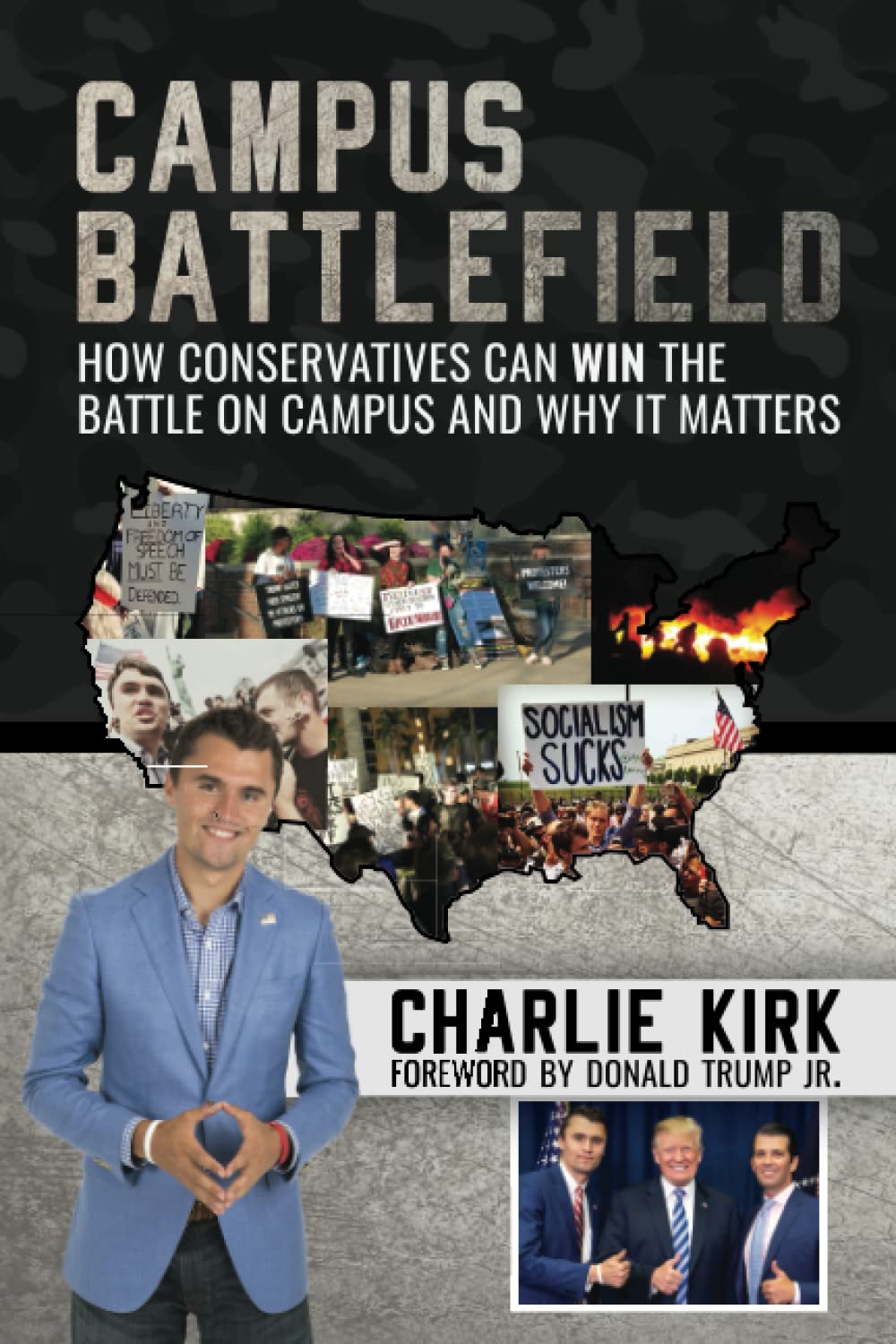
Charlie Kirk is the Founder and President of Turning Point USA, the largest and fastest growing conservative youth activist organization in the country with over 250,000 student members, over 150 full-time staff, and a presence on over 2,000 high school and college campuses nationwide. Charlie is also the Chairman of Students for Trump, which aims to activate one million new college voters on campuses in battleground states in the lead up to the 2020 presidential election. His social media reaches over 100 million people per month and according to Axios, he is one of the "top 10 most engaged" Twitter handles in the world. He is also the host of “The Charlie Kirk Show,” which regularly ranks among the top news shows on Apple podcast charts.
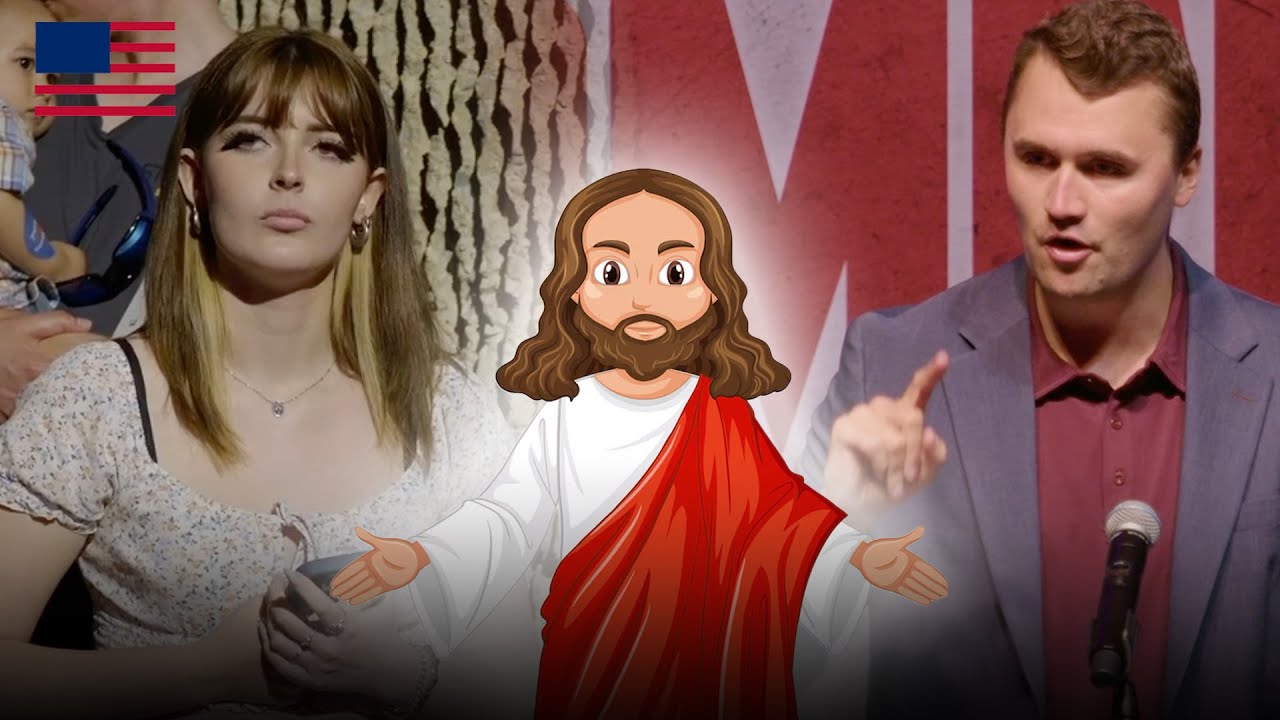
Charlie Kirk Asks College Student: If You Believe in the Big Bang, Don't You Believe in God?
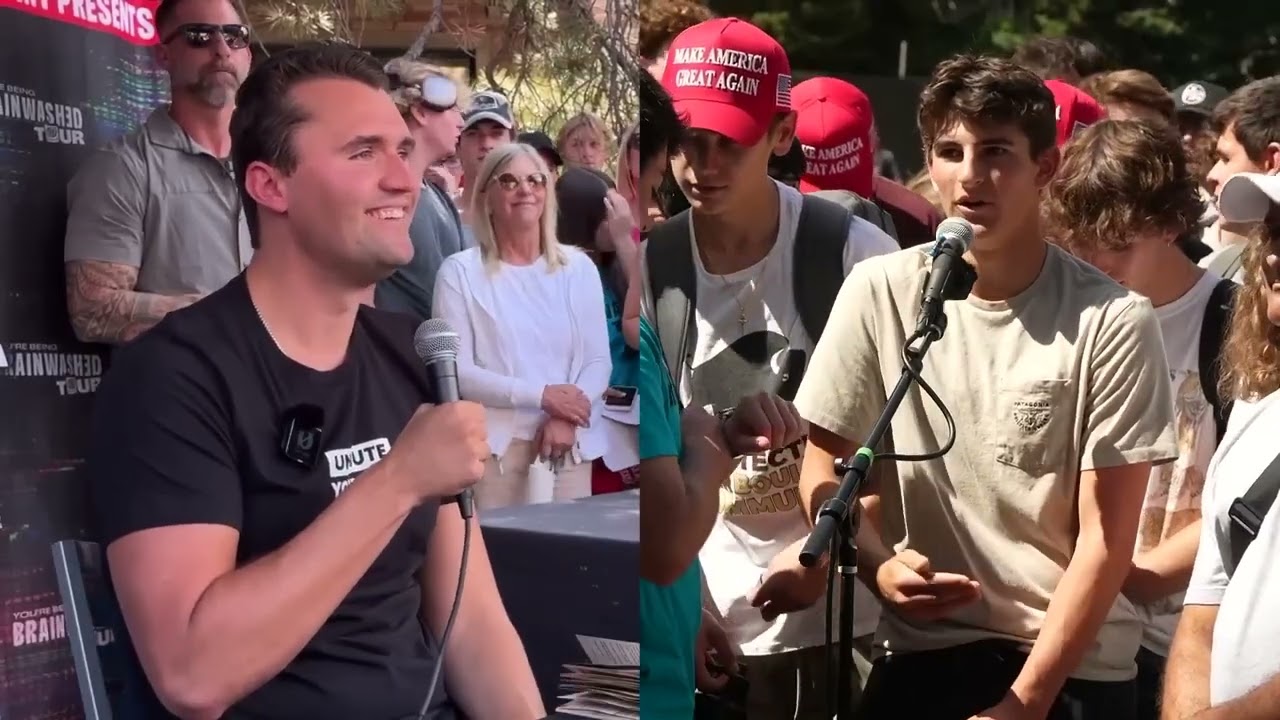
Charlie Kirk engages a college student named Opal in a conversation about faith, science, and the origins of the universe. When Opal reveals she believes in the Big Bang but hasn't found religion yet, Charlie presents an argument that the Big Bang itself requires a divine initiator. The exchange touches on afterlife experiences, neuroscience evidence, and why every civilization in history has believed in God or an afterlife. Charlie argues that if space, time, and matter had a beginning, something outside those dimensions must have caused it, which points directly to God as the Creator who spoke the universe into existence.
Charlie Kirk approached a college student and asked what appeared to be a simple question: what do you believe? When the student, Opal, responded that she believes in Jesus Christ, she immediately wondered if Charlie would disrespect her for that belief. Charlie reassured her that he wouldn't, explaining that he simply didn't know her religious views and could only guess.
The conversation took an interesting turn when Opal revealed she's not really religious and hasn't found a religion yet. When she asked Charlie for a recommendation, he didn't hesitate: Christianity. Opal jokingly asked for a pamphlet, and Charlie suggested the Bible or downloading the Bible app. But Opal wanted something more personal—she wanted it from Charlie himself, acknowledging that he knows so much about faith.
Where Do We Go When We Die?
Charlie posed a fundamental question: where do you think you go when you die? Opal's answer reflected a materialistic worldview—nowhere, nothing exists after death. When Charlie asked why she believed that, she answered simply: science.
Charlie pressed further, asking her to explain the science behind what happens when we die. Opal struggled to articulate a scientific explanation, which opened the door for Charlie to present counterevidence. He pointed out that neuroscience has documented over 25,000 pieces of evidence showing people having afterlife experiences in just the last decade alone.
Charlie then made a historical argument: every civilization in the history of the world has believed in an afterlife or a God. If science is right now, he asked, why was everyone else throughout history wrong? Opal responded that previous civilizations didn't have the science and modern technologies we have today.
The Limits of Scientific Proof
Charlie challenged Opal's position by asking what scientific discovery has actually disproven the afterlife. Opal admitted that while there might be scientific arguments, no one can actually confirm what happens after death unless they come back to life. She acknowledged that nobody can confirm it yet.
This led to an important admission: you can't disprove the afterlife, and you can't prove it either. Charlie pointed out that this means it takes faith—and he has faith. Opal acknowledged she doesn't have that faith, and expressed that if Charlie believes in an afterlife, that's fine with her. She wasn't mad about his beliefs.
The Big Bang and the Beginning of Everything
The conversation shifted to cosmology when Charlie asked how the world came into existence. Opal answered with the widely accepted scientific theory: the Big Bang. Charlie saw an opportunity to connect science and faith.
If the Big Bang created space, time, and matter, Charlie asked, what started the Big Bang? Opal honestly responded that she doesn't know, but added that it wasn't God. Charlie challenged this assumption, suggesting that the laws of physics themselves point to the necessity of God.
When Opal expressed confusion, Charlie explained his reasoning. In Christian theology, God is the Alpha and the Omega—God always is, without beginning or end. But the universe had a starting point. Therefore, whatever made the universe must have existed before the universe. That, Charlie argued, is God.
Reconciling Faith and Science
Opal asked a question many people wonder: if God always is, how did God get there? Charlie acknowledged it's a good question and explained the Christian perspective. God is eternal, existing outside of time. But the universe had a beginning, which means something outside the universe brought it into existence.
Charlie pressed his point: if you believe in the Big Bang, which Opal said she did, then you believe space, time, and matter had a beginning. Something must have caused that beginning to happen. Why not call that something God?
Charlie revealed his own position: he believes God started the Big Bang by speaking it into existence. The first words of the Bible, he noted, align with the Big Bang theory—"in the beginning." Opal believes the Big Bang was the beginning, and Charlie believes in a big bang too. The difference is that Charlie believes God initiated it.
An Honest Admission
Opal remained confused by the theological implications, which is understandable given the depth of the topic. Charlie asked for her explanation of what caused the Big Bang. Opal gave an honest answer: she doesn't have an explanation because she doesn't study science deeply, just as she doesn't study faith.
It was a moment of intellectual honesty. Rather than pretending to have all the answers or making up an explanation, Opal admitted the limits of her knowledge. The conversation demonstrated that questions about origins, whether approached through science or faith, ultimately lead to profound mysteries that challenge both believers and skeptics alike.