Up Next

Charlie Kirk Exposes How Public Schools Attempted to Remove Founding Documents from History Classes
10:23

Charlie Kirk and Alex Marlow Expose Big Tech Oligarchy and the Left's Smear Mentality at CPAC
12:08
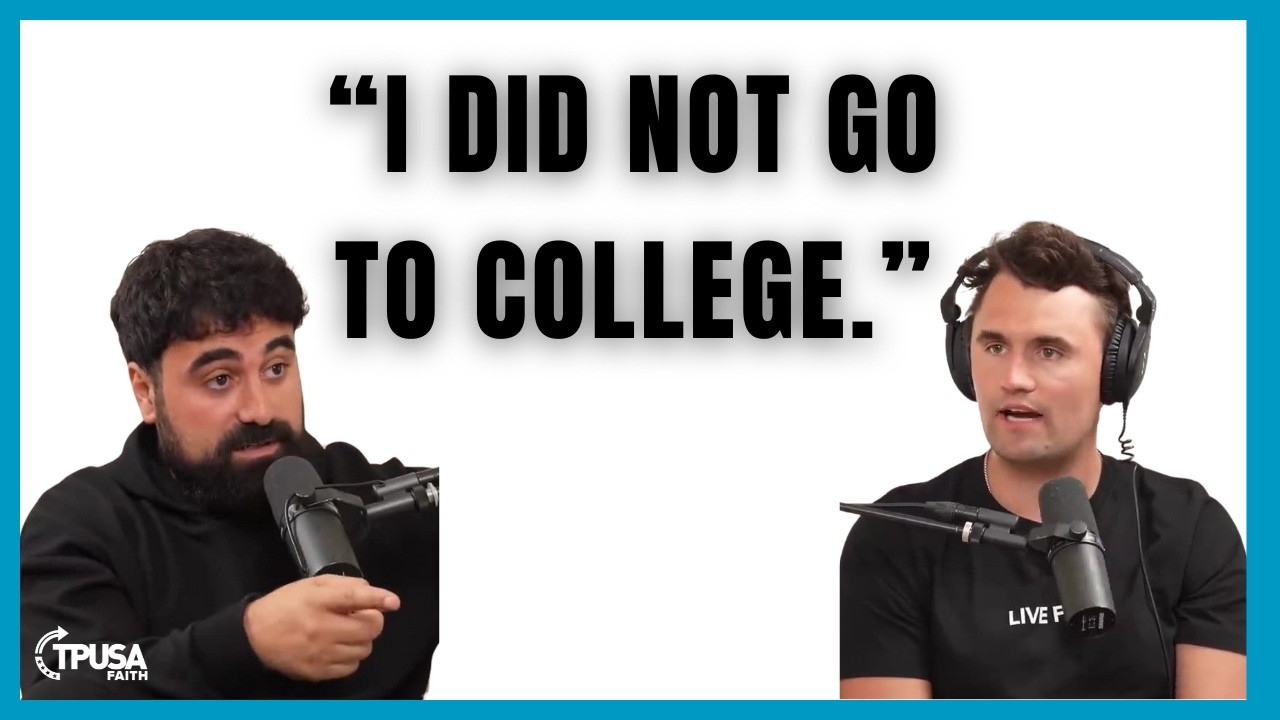
Charlie Kirk Discovered His Gift for Communication and Chose Eleven Gap Years Over College
5:08
Charlie Kirk Built Turning Point USA From a High School Essay to 250,000 Members at Age 27
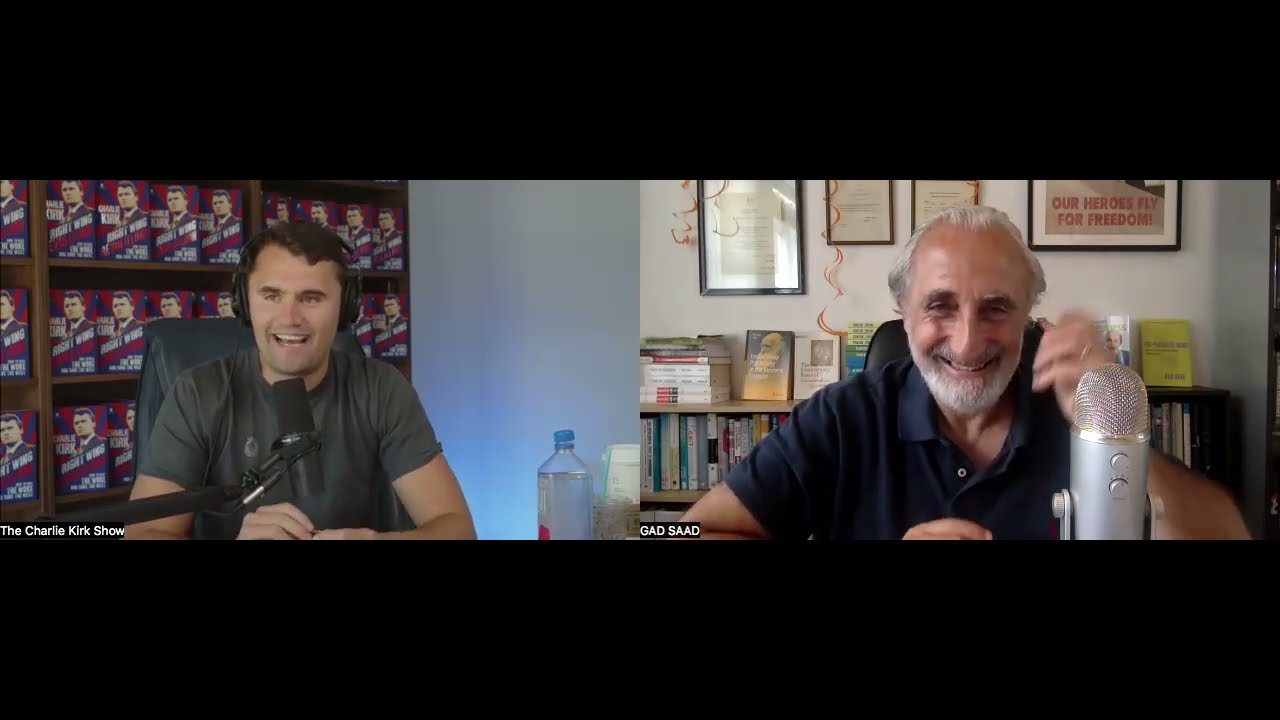
Charlie Kirk shares how a single high school essay challenging liberal bias in an AP economics textbook launched him onto Fox News and ultimately led to founding Turning Point USA. At just 27 years old, Kirk now leads the largest conservative youth activist organization in America with over 250,000 members, 2,000 chapters, and a $45 million budget. In this conversation with Dr. Bob, Kirk discusses why he never attended college, the dangers of critical race theory, the problems with diversity mandates over meritocracy, and why American entrepreneurship and capitalism remain the greatest paths to opportunity despite increasing attacks from the left.
From High School Essay to National Spotlight
Charlie Kirk's journey to becoming one of America's most influential conservative activists began with a high school essay. As a senior, Kirk discovered an AP economics textbook by Paul Krugman that presented what he considered a fundamentally flawed view of history, particularly regarding the economic growth of the 1980s under Ronald Reagan. The textbook claimed the 1980s was a period when the middle class suffered and poor people got poorer, directly contradicting the historical record of economic expansion following Reagan's tax cuts and deregulation.
Kirk challenged his teacher and wrote up his findings. Breitbart.com published the essay, and it went viral across hundreds of websites. Within days, Kirk appeared on Fox News at 6 a.m., then returned to class where his teachers had seen him on television. The experience was transformative. Kirk realized he had made enemies among administrators and educators simply by exposing what was being taught in classrooms. More importantly, he discovered what it felt like to be an activist and recognized that millions of other young people were likely experiencing the same liberal indoctrination.
The Path Not Taken: Rejection That Became Opportunity
Kirk's entire life had been focused on attending West Point. He was an Eagle Scout, a football and basketball captain, earned strong grades, served his community, secured every recommendation letter imaginable, and obtained his congressional nomination. But when the appointment letter arrived, it was a rejection. The crushing disappointment came simultaneously with the viral success of his essay, and Kirk found himself at a crossroads.
His parents wanted him to attend college, as most American parents do. In the suburban Chicago area where Kirk grew up in Wheeling and Arlington Heights, kids addicted to drugs were treated better socially than kids who didn't go to college. Not attending college carried a significant social stigma. But Kirk's parents made the difficult choice to support their son's decision and tell neighbors that Charlie wasn't going to college. They trusted him to figure out his own path.
Kirk now views the West Point rejection as the best thing that ever happened to him. Had he been accepted, he would have spent four years at the academy plus five years of military service, just getting out now. Instead, at 27, he leads an organization that is shaping the conservative movement across America.
Building Turning Point USA: From Nothing to 250,000 Members
Kirk founded Turning Point USA in 2012 with nothing but enthusiasm, energy, and purpose. In just nine years, he built it into a powerhouse of conservatism. The organization now has more than 2,000 chapters on college and high school campuses around the country and 250,000 members. The organization's budget exceeds $45 million with no debt, supported by over 100,000 grassroots donors contributing small amounts like five, ten, or twenty dollars. Turning Point USA employs over 200 full-time staff members.
Kirk's entrepreneurial approach came from watching his father, who worked in architecture and building development, take only three days off per year: Thanksgiving, Christmas Day, and New Year's Day. His father would come home for dinner, then return to work until one in the morning, waking up at 7 a.m. to do it all over again. That work ethic became ingrained in Kirk's approach to building his organization.
When Kirk started Turning Point USA, people would ask about his detailed business plan. He had no such thing. He had a skill and a passion, and he started. The entrepreneurial mindset, Kirk believes, cannot be taught in college courses on entrepreneurship. The very fact that someone is sitting in a classroom learning about entrepreneurship means they're not actually doing it. Real entrepreneurs are flexible, agile, and constantly adapting rather than following rigid five-year plans.
Expanding the Mission: Multiple Organizations
Beyond Turning Point USA, Kirk has launched several additional organizations to advance conservative principles. Turning Point Action is a 501(c)(4) social welfare organization that engages in politics and supports political campaigns. Through this arm, Kirk and his team have been involved in efforts like the recall of California Governor Gavin Newsom, state legislative races across Arizona, Pennsylvania, and Georgia, school board races, and congressional and senatorial campaigns.
Turning Point Academy, a project of Turning Point USA, works to advance pro-American curriculum in high schools across the country. Most recently, Kirk launched Turning Point Faith with 32 full-time staff members. This division aims to build a coalition for liberty among people of different faith backgrounds, recognizing that American churches represent one of the last institutions not totally corrupted by the left. American evangelicals, particularly in their support for Israel, remain a critical force for conservative values.
Pew Research conducted a study showing that religious officials rank as the number one counselors Americans trust when making consequential decisions about voting, marriage, and finances, even above spouses in some cases. Turning Point Faith provides pastors and churches with the support, resources, and training they need to speak out on critical issues facing the nation.
The College Myth: Why Kirk Advises Against It
Kirk's decision not to attend college has proven remarkably successful, and he now often advises young people to consider alternatives. The traditional path of attending college, particularly for four years, represents a waste of time and money for many people. While certain specialties like medicine, law, and architecture require formal education, colleges have become fraudulent in many respects, stretching out learning that could be accomplished in two years into four-year programs.
The social pressure to attend college remains intense. Parents face embarrassment telling neighbors their children aren't attending university. But Kirk points to his own employee Mikey as an example of a better path. At 19 years old, after Kirk spoke at a church in Thousand Oaks, California, Mikey told Kirk he planned to attend college to study political science in order to get a job in politics. Kirk simply offered him a job on the spot. Mikey's parents, to their credit, supported the decision. Now Mikey has no debt, earns a good wage, meets influential people, and does the work he wanted to do at 19, while his peers wear masks, face vaccine mandates on college campuses, and learn from their parents' basements.
Kirk emphasizes that if opportunity presents itself, young people should seize it. College will still be there if things don't work out, but unique opportunities won't wait. This mirrors the story of Bill Silver, a doctoral candidate at MIT who was described by professors as the smartest student they ever had. Silver chose to leave his program to join Cognix, a decision that proved extraordinarily successful, though his choice was met with shock by many who couldn't understand leaving MIT for a startup.
The Diversity Delusion: Merit Over Melanin
Kirk challenges one of the most sacred tenets of modern corporate and academic culture: that diversity is a strength. While he acknowledges this may be considered a thought crime in current discourse, Kirk argues that unity, not diversity, is what makes organizations successful. Whether building a company, organizing a military operation, or fielding a sports team, the goal should be getting everyone aligned with the mission, not maximizing demographic differences.
Diversity of thought can be valuable, but the current obsession with diversity based on immutable characteristics has become an incantation repeated without examination. Why exactly is diversity a strength? If a company has a room full of 20 Asian coders, they weren't selected because of their race but because they excel at coding. That's what efficiency and customer service demand.
The primary obligation of any business is to its shareholders, employees, and customers, not to abstract social justice concepts. Yet social revolutionaries have taken over human resources departments at major financial institutions like Goldman Sachs. These activists, generations removed from the companies' founding and trained at Harvard, Princeton, Yale, Stanford, or Berkeley, view these institutions as sandboxes for revolutionizing the world rather than as businesses that must efficiently allocate capital and serve customers.
The hypocrisy becomes obvious when examining professional sports, which remain exempt from diversity mandates. Nobody demands that short people be added to NBA rosters or that skinny people play in the NFL. Sports celebrate winning and success, rewarding those who can break records and achieve the seemingly impossible. That celebration of excellence and meritocracy represents the American creed. The nation loves honoring athletes who win 100 Jeopardy rounds in a row or break untouchable Olympic records because it showcases what human beings can achieve through dedication and talent.
Critical Race Theory: The Unprovable Accusation
Kirk confronts critical race theory (CRT), which claims that racism is part of everyday life in America because racism exists in the DNA of every white American, whether they know it or not. According to this ideology, America has been fundamentally flawed since 1619, and all white people are automatically racist. Kirk finds this framework both absurd and insidious because it's constructed to be unfalsifiable. When challenged to prove where this omnipresent racism exists, proponents respond that white people can't see it because of their skin color. It's everywhere, they claim, but impossible to pinpoint or demonstrate.
This represents a deconstructionist philosophy designed to disassemble America as quickly as possible through race-based arguments. If the racism can't be pointed out or proven, how can society possibly address or fix it? It's like telling someone they have a tumor but refusing to say where it's located. The person is simply labeled as flawed and that's the end of the discussion.
Kirk notes the stark contrast with the America of Martin Luther King Jr., who advocated judging people by the content of their character rather than the color of their skin. America has regressed significantly from that ideal, and Kirk identifies the turning point precisely: 2008, when Barack Obama was elected president. Kirk was 15 years old at the time. From his generational perspective, he feels like he's lived in two different countries within one lifetime. Race relations were fine in 2004, 2005, and 2006. Nobody cared about skin color; success came from meritocracy and hard work. Then everything changed quickly after Obama's election, which Kirk sees as ushering in the worst race relations in modern American history outside of Jim Crow and the Civil War era.
The fundamental absurdity of the critical race theory narrative becomes apparent when examining reality. How did Barack Obama become president for eight years if America is so irredeemably racist? Why have more Black people come to America through legal immigration since 1980 than ever came through the slave trade if the country is so terrible? People vote with their feet, and millions of Black immigrants choose America, which contradicts the story that America is fundamentally racist and oppressive.
The Equity Agenda: Oregon's Embrace of Illiteracy
The logical endpoint of the equity agenda can be seen in Oregon, where state law has changed graduation requirements for high school diplomas. Graduating no longer requires proficiency in mathematics, reading, or writing. Students can now receive a high school diploma while being completely illiterate, unable to read, write, or perform basic math. The diploma becomes meaningless if there are no standards attached to it.
This trend started with participation trophies a decade ago and has now reached its inevitable conclusion: eliminating all standards in the name of equity. If excellence makes some students feel bad, then excellence must be abolished. But this destroys the entire incentive structure that drives human behavior. In economics, incentives determine outcomes. If speeding in the carpool lane results in a $500 ticket, people won't do it. If making honor roll requires no additional effort, why would students read books or study?
The elimination of prizes and recognition for achievement harms not just the successful students but everyone. Seeing others succeed through hard work provides a model and inspiration. It shows that with exercise, practice, and dedication, others can achieve similar results. Removing that model removes hope and direction for struggling students.
Capitalism and the Wealth Gap: Producing vs. Taking
Kirk strongly defends capitalism as the system that has lifted more people out of poverty than any other economic arrangement in history. The core lie of anti-capitalist critique is that when someone gets rich, someone else necessarily becomes poor. This fundamentally misunderstands how wealth creation works. In most market transactions, both parties benefit. Trade is voluntary, and both the buyer and seller gain from the exchange. As standards of living rise, products improve, and competition flourishes.
Entrepreneurship represents the heart of capitalism: the small person with a big vision willing to take risks to benefit others while earning something in return. Without incentives to take risks, innovation disappears. The entrepreneurial process that gave us personal computers illustrates this perfectly. IBM was once the largest computer company in the world, with Digital Equipment second. A RAND study concluded there was need for only about 200 computers in the entire country, with no individual ever needing a personal computer. Then Steve Jobs, a college dropout with a revolutionary idea, changed everything. Within years, IBM was no longer the largest computer maker and Digital Equipment went out of business. Free markets allowed this transformation. If government controlled computer production, there would be no innovation, extraordinarily high prices, and incredibly inefficient distribution.
The foundation of this system is private property. Markets cannot exist without the ability to keep what you earn and to protect your ideas and innovations through legal means. This represents the core of Western civilization economically. When someone works—whether mowing lawns or selling computer systems—they deliver goods or services to customers and receive money in return. They contributed to society through their labor, and received compensation. Income tax represents a tax on producing goods and services, which creates a disincentive for productive activity. The better approach would be taxing consumption rather than production, encouraging people to create as much value as possible.
The current focus on wealth gaps misses the point entirely. The gap between rich and poor matters far less than social mobility—how quickly people can move up. Rather than throwing rocks at the top of the building, society should fix the elevator. The people complaining loudest about wealth inequality are often implementing policies that make it hardest for people to enter the middle class. They focus attention on billionaires like Jeff Bezos and Elon Musk while implementing educational, economic, and criminal justice policies that trap people in poverty.
In inner-city Baltimore, five schools were examined where the student body was almost entirely Black, and not one fifth-grader could read or write at grade level. Not one. This disaster results from public sector teacher unions and what they've done to the educational system. No amount of complaining about billionaires will fix illiteracy. Standards must be set and enforced, teachers must teach properly or be replaced, and competition through school choice and vouchers would allow parents to send children wherever they believe education is best, including homeschools.
The Hidden Tax: Monetary Policy and Inflation
Beyond the obvious taxes, Kirk highlights an often-overlooked way the wealthy grow richer while the middle class suffers: monetary policy. When the government spends six trillion dollars and prints money to cover deficits, what happens to the purchasing power of a family earning $50,000 a year? The money they've saved becomes worth less. This is why prices appear to rise—it's not that goods cost more, but that dollars are worth less. A gallon of gasoline takes more dollars to purchase because each dollar has less value.
This represents a tax on the middle class that nobody wants to discuss. Everyone must buy gasoline, and both rich and poor pay the same price per gallon. The wealthy can absorb increased costs, but the middle class and poor cannot. The inflation heading toward America in coming years will be fueled largely by the printing and giveaway of money, done in the name of helping people but actually accomplishing the opposite. The approach echoes President Trump's question to voters in Chicago and Detroit: "What have you got to lose?" These cities with extreme poverty and crime rates have been run by Democrats for decades. Voters at the bottom have nothing to lose by trying something different, yet politicians prefer to focus on wealth gaps and make people angry at the rich rather than addressing the actual policies creating poverty, poor education, and crime.
The Traits of Success: Perseverance and Hard Work
Kirk attributes his success to several character traits instilled by his parents and experiences. Growing up watching his father work constantly while still being present for every sporting event and important moment taught Kirk about dedication and time management. When teachers complained that young Charlie couldn't sit still in class, his parents refused to medicate him or send him to counselors. They recognized that restless energy and drive as positive traits that would serve him well.
Perseverance stands out as perhaps the most important value, and Kirk notes it's increasingly rare in America. Television and movies show crimes solved in an hour and houses built in montages, creating the impression that things happen quickly. In reality, the only things that happen quickly are mistakes and destruction. Building something—whether a career, a house, or a business—takes time, dedication, and overcoming barriers. Young people today lack models of this patient, persistent effort.
Kirk's parents also instilled an entrepreneurial mindset emphasizing risk-taking and thinking big. He was taught that America is a place where impossible things can be achieved. When people ask for the steps to entrepreneurship, Kirk laughs. There were no steps. He had a skill and a passion and simply started. The notion of studying entrepreneurship in college misses the point—sitting in a classroom learning about it means you're not actually doing it. Entrepreneurs must be flexible and agile, constantly adjusting rather than following detailed five-year plans.
Sports taught additional lessons, particularly about dealing with loss and rejection. Parents willing to say "you should have played better" after a losing game instill hunger to improve and be the best. This childhood experience prepared Kirk for the opposition that comes with starting something from nothing—not just external opposition, but the internal doubts: Can I do this? Is this the right idea? Should I be doing something else?
Fighting for America's Future
Kirk sees America at a tipping point. The country must decide whether to return to the America of freedom, free expression, and equal rights for everyone, or continue down the path of fundamental transformation promised by Barack Obama before his inauguration. The question is whether Americans still want the country they once enjoyed, and more importantly, whether they're willing to fight for it. Are parents seeing what's happening to their children willing to intervene and stop the nonsense?
The mainstream media portrays America as having nothing good about it, but Kirk's mission through his work proves by example that America has always been and still is the land of opportunity for everyone. At 27 years old, leading an organization with a $45 million budget, 250,000 members, and over 200 employees, Kirk himself embodies that opportunity. His story demonstrates what young people can achieve with enthusiasm, energy, purpose, and the willingness to take unconventional paths. The rejection that seemed crushing at 18—not getting into West Point—proved to be the best thing that could have happened, opening a path to influence millions of young Americans and shape the conservative movement for a generation.
Video Transcript
[Music]
mainstream media gives you the
impression that there is nothing good
about america
in direct contrast to that my podcasts
will prove by examples that america has
always been and still is the land of
opportunity for everyone
[Music]
welcome to another episode of life
lessons with dr bob
during these episodes we invite
very interesting and successful people
to share their experiences with us
the hope is these are entertaining
conversations but at the same time we're
going to learn about the things in their
personality or background that help them
to reach the success that they have
achieved
and tonight our guest is charlie kirk
charlie is the founder and ceo of
turning point usa it's the largest and
most influential conservative youth
activist organization in the country
starting with nothing but enthusiasm
energy and purpose in 2012
and in just nine years he has built
turning point usa to be a powerhouse of
conservativism with now more than 2 000
chapters on college and high school
campuses around the country
and 250 000 a quarter of a million
members
and guess what
he's only 27 years old
now how did a 17 year old kid who
finished high school but who never
graduated from college
reached this remarkable achievement
well i read a little bit about it and
i'll tell you the intro it all started
with an essay that he wrote as a senior
in high school that described the
liberal bias
in textbooks
so how charlie did that essay lead you
to where you are today to the behead to
the head of um a large conservative
activist organization great to be here
dr bob and i just want to say thank you
for for backing us throughout the years
you're a great friend and and mentor so
i'm super thrilled we're able to to do
this conversation so that people can
learn from you yeah i wrote that essay
when i was a senior in high school and i
came across an ap which means advanced
placement textbook economics textbook
that was called paul krugman's economics
for the ap
and paul krugman is an economist for the
new york times who's been wrong about
basically everything for the last 30
years and i opened it up and it was
one chapter after the other of why
private property
needs to be
put into question why collectivization
of property is actually more efficient
more kind of the cass sunstein model of
organizing society and there was one
chapter in particular that was wrong
it was wrong in its interpretation of
history and wrong in what it was trying
to teach the readers and it was teaching
students that the 1980s was not a period
of economic growth it was a period when
the middle class suffered and that poor
people got poor and dr bob you know
you're entitled to your own opinion
you're not entitled to your own facts
you know the 1980s that thanks to ronald
reagan tax cuts and deregulation that
the economy soared and so i challenged
this to my teacher
and kind of wrote it up
and this was when andrew breitbart was
still alive right before he died like a
month before he died breitbart.com took
that essay and was the first essay i
ever wrote i was i just sent to them as
a tip and they said why don't you try to
write this and it ended up going totally
viral it was published on hundreds of
websites
i ended up going on fox news over it and
all of a sudden i kind of realized hey
this is what it feels like to be an
activist you know why because the
enemies that i made because of that my
teacher administrator and principal
superintendent head of instruction they
hated the fact that i would go and
expose the fact that they are teaching
this garbage in these classrooms and so
from there i kind of i kind of got the
got the itch you could say to try to do
something to save this country
and that led that article in breitbart
led to an interview on fox news that's
right for a high school senior that's
right pretty good so i was on i was on
fox news in the morning at like 6 a.m
then i went back to class and it was all
over the internet and this was pre
twitter it was still kind of getting
online and my my teachers were saying
did i see you on television this morning
and that was that was the beginning
stages of kind of what became turning
point usa
and it's i got to thinking kind of the
entrepreneur in me kicked in
i said there must be millions of other
young people experiencing exactly what i
saw in that textbook and that was just
one isolated incident of dr bob of
teachers that would go out of their way
towards framing marxism in a positive
way and kind of the beginning stages of
what was wokism all the way back in 2012
and um
that led you to becoming an activist now
i know you did uh try to get into the
air force academy your slide western
west point uh they for some reason they
turned you down and that was probably a
good thing
i i was a professor for many years
nevertheless
when my children were graduating high
school i suggested to them that they not
go to college because college for most
people is a waste of time it's a waste
of four years and it's a waste of money
now of course college is necessary for
certain specialties if you're going to
be a doctor a lawyer
many things architect you have to learn
but colleges are in many cases a fraud
they stretch it out for four years what
generally you could learn that trade or
that profession in two years
i told my kids i said if you want i'll
give you the exact same amount of money
that tuition and living expenses will
cost i'll front that to you and go out
and do something start a business or
build a career you're smart enough you
can learn what's necessary by doing you
don't need to go to college so i think
it was
it was very
lucky that they turned you down because
you wouldn't be here today if you spent
time uh four years ago i totally agree
with four years plus five years military
service
right so i i would just be getting out
right now and who knows maybe i would be
in some afghanistan debacle after that
whole humiliation it was the best thing
that ever happened to me and that's my
lesson to young people is my whole life
was about going to west point i was an
eagle scout football basketball captain
good grades you know member of the
community got every right letter
recommendation you could imagine got my
congressional nomination but when it
came for appointment to the academy i
didn't get in and it was crushing at the
time and i couldn't quite process it or
understand it and i was kind of left
with this decision what do i do
and that simultaneously that kind of
essay was written right near that denial
letter and i realized that there was a
much more important path than i was
supposed to be on now do your parents
pressure you in any way usually of
course american parents want their kids
to go to college there that's in
in their training so tell us about uh
your parents they definitely wanted me
to go there was definitely pressure but
they were very understanding of the
circumstances and understanding of like
hey it's your life now you can make what
decisions you want
and they were definitely under the
belief that hey college is probably a
better choice for you but they deserve a
great amount of credit dr bob there was
no shaming there was no
kind of
ridiculing which would happen in some
family sure in in the i grew up in the
suburbs of chicago the wheeling
arlington heights area and where i came
from the kids that were addicted to
drugs
were treated
much better than the kids that didn't go
to college in the sense that if you
didn't go to college there was kind of
like a social stigma and there probably
still is totally and so
my parents decided like hey they were
going to do the difficult thing which
was they were going to tell their
neighbors that you know charlie's
actually not going to college this year
yeah that's a tough be proud of it be
proud of it he's going on his own that's
right he's going on his own he's gonna
figure this out
and you know from the beginning dr bob
there were so many people that were
negative and naysayers but there were a
couple people there were a couple
neighbors that stepped up and supported
us early on that were conservative not
in you know massive numbers but
definitely
help this get going but large in part
you pinpointed it perfectly one of the
reasons why students go to college is
because of parental social pressure
right i'm going to
turns out my kids despite the fact that
i advised them not to go to college they
felt the social pressure to go to
college and they did and i i frankly
don't and they're not using their
education now they're doing something
else but here's another story when i
started my company cognix back in 1981.
a number of people i tried to recruit uh
smart engineers and and i found this
fellow uh who turns out to be brilliant
and i rarely i was uh i was teaching at
mit got my phd at mit so i know what
brilliance is and i rarely use that
brilliant name is bill silver and he
joined the company for the summer to
help me program things we had about
three or four employees
and at the end of the summer he told me
he said dr bob i'm going to stay here i
i'm going to drop out of a doctoral
program at mit wow and i spoke to his
professors before i hired him and they
said he was the smartest student they
ever had so he was a doctoral candidate
at mit and he says
i'm going to stay with cognix
i went home that night and i friday
night i usually returned to my parents
and i had dinner with them and they said
what's happening with the company i said
oh very good news bill silver decided to
drop out of college and join the company
they said that's terrible
don't don't do that let him finish
college
and i said to them
college
life is has various paths to it if
opportunity arises and the reason many
people go to college is to look for
opportunity yeah to be available for
opportunity if the opportunity comes
before you finish college grab the
opportunity oh i i couldn't agree more
you just met mikey who who's here he's
19 years old so i'll tell you about
mikey um i met mikey after speaking at a
church up in thousand oaks california
his father actually is my pastor and so
he was driving me really impressive kid
had his act together and i said hey what
do you want to do with your life he said
i'm going to go to college to study
political science i said why
and he said well to go get a job in
politics i said come work for me okay
and he was like well don't i have to go
to college to do that i said no you
don't and his parents credit they said
yeah go move to phoenix go get your own
apartment so now he has no debt earning
a good wage you know meeting some of the
coolest people in the world learning
everything politicians and politicians
doing what he thought wanted to do 19.
all of his peers are wearing masks being
forced to get vaccines on college
campuses not sure what they want to do
with their life and and they're doing it
from their basement that's why we're not
even getting a really good collagen if
opportunity is there just like bill
silver take it do it and he said to his
parents who also were pressuring him
telling him it's a mistake and he looked
at them he had the brains at that age as
you did to say to his parents cognex is
here now mit will still be there that is
exactly right if it doesn't work out i
can go back to mit but cognix won't be
here this opportunity won't be here
that's right so it takes very special
people a very special person because we
offered jobs to another fellow and he'd
be a millionaire today based on stock
options we give and he said at the end
of the summer he said well it was great
working here but i'm going to go on the
peace corps so the you know opportunity
knocks you got to answer the door that's
right if you want to live a life of
adventure and that's the thing is that
not everybody does right if you want to
go along to get along then do what
everybody else maybe do the knock on the
door that's right oh it could be scary
who knows oh it's very scary because
it's uncertainty right there's pressure
there's unpredictability you know this
from starting an amazing company from
nothing you got to be willing to hire
people fire people manage people work
weekends not sleep for weeks and in your
case because you have taken the
conservative side
you can make enemies and i'm going to
i'm going to talk a little bit about
that here's what the left says about you
wikipedia quotes the new york times
horror show
wikipedia is horror show okay but here
it quotes the new york
times as saying this
by mixing and matching and twisting
facts mr kirk has come to exemplify a
new breed of political agitator that has
flourished since the 2016 election of
president trump by walking the line
between mainstream conservative opinion
and outright disinformation now when
they use the term agitator i think they
meant it in the negative i see it as a
positive thank you because what an
agitator does is questions what is
happening and if it's wrong tries to
make it right agitating for change you
are an agitator and i'm using that in
the most positive sense and i consider
the new york times taking time to write
that piece which was on one a of the new
york times when they published that oh
above the fold as a compliment they
don't go after just any sort of schlep
on the side of the street no they're
going to go after people that are doing
something hopefully very significant and
you notice when you read that they don't
give any sort of evidence
never and they use this kind of
interesting language twisting and mixing
and matching what exactly do you mean by
that because they won't outright say i'm
lying right instead they use these other
terms yeah that's correct because
they're trying to create the impression
that they're twisting mixing maxing
disinformation it's very cryptic this
information yes so tell me straight up
new york times what do you think
and they won't do it they won't do that
now tell us where tpusa is now and then
describe the other three
organizations that you've recently
started absolutely we are bigger than
ever uh just from an organizational
standpoint our budget is in excess of 45
million dollars we have no debt we have
over thousand grassroots donors people
that chip in five dollars ten dollars
twenty dollars we're gonna hit a hundred
thousand grassroots donors by the end of
this year we've been blown away by that
dr bob of how many small dollar donors
that's so important and it keeps the
organization alive in perpetuity uh as
you said 250 000 active members um well
over 200 full-time people on staff um
and growing which is extraordinary and
so um we're we're in great shape and uh
we're doing very well we also have
turning point action
which is uh been around for a couple
years 501c4 social welfare organization
that's also allowed to do politics and
also able to help in political campaigns
um and we've been doing a lot with that
so we've been involved in the recall
newsome type effort um and i know this
will probably be airing after all of
that but that's something that we were
involved in um we were also we've also
been very involved or were very involved
um in a lot of the state legislative
races across the country which are very
important in arizona and pennsylvania
and georgia involved school board races
from our 501c4 and then of course uh
involved in congressional and senatorial
races as well
we also started uh turning point academy
which is a project of turning point usa
which is to try to advance pro-american
curriculum in high schools across the
country um and yeah that's just some of
our new projects that we have coming but
we really have this beautiful
combination of our 501c3 turning point
usa not political at all educational and
cultural in its mission and then turning
point action which of course allows us
to do politics um what about turning
point faith and turning point faith is a
new uh program that we just launched
which is really exciting um which is try
to build a coalition of liberty uh for
liberty of people of all different faith
backgrounds um because you know dr bob
if we're serious
about who what is the last entity that
hasn't been totally corrupted by the
left
right they've taken over the
corporations they've taken over the tech
companies they've taken over everything
the american churches they're they're
ready to rock
and um you know this especially when it
comes to both of our love of israel it
is the american evangelicals that
support israel that defend israel and so
turning point faith we have 32 full-time
people that have been hired in this
division of this organization to try and
find pastors and find churches and give
them the support they need and the
resources they need and the training
they need to speak out on these critical
issues that is fantastic because people
still look to their pastors for guidance
and that's that's such an important
point so pew research did a study a
couple years ago they said who are the
most important counselors
in america when consequential decisions
are being made
for example voting
marriage financial decisions number one
was religious official number two was
boss you know what number three was
spouse
not that the spouses are unimportant but
someone will trust a religious official
and their boss even above their spouse
when it comes to these very intimate
decisions
great to hit those points
let's talk about diversity uh of course
it's a very big deal these days we're
going to be talking more about that
critical race theory but even 10 years
ago when i was running the company we
had something every month called ask the
president where people could come have
pizza usually about 100
of my employees would show up probably
for the pizza more than for asking the
question
and we also took questions anonymously
and one of the questions from one of my
employees was dr bob when are we going
to have more diversity
and
you know i thought about it very quickly
and came to the conclusion that we'll
have more diversity when that's what my
customers want
that's a great question right now my
customers haven't asked for diversity
they're asking for the highest tech
highest capable most uh efficient uh
reliable products at fair prices
and that requires hard work and brains
competency and competency and that's why
the company has for 40 years been based
on merit it's a meritocracy we hire
irrespective of everything else we don't
care as long as you can write code or
balance the books as long as you love
your profession and you're going to do
it really well with high ethics we'll
hire you so i would think that diversity
uh
will happen by by its very nature if we
just close our eyes to the nature of the
person other than their skill set
then
then what are we doing wrong but now
that's not the case
now organizations are being forced by
some of the largest fund managers in the
country
who own all these companies you know
most public companies uh the stock is
held by large funds
and those fund managers
are writing letters and pressuring
corporations on this issue of diversity
and inclusion and inequity and uh i'd
like your your feelings about that what
what do you feel is important or not
important about diversity yeah i mean i
i will uh i'll probably be committing a
thought crime here but i don't think
diversity is a strength
i think that diversity of thought can be
a strength but when you're trying to
build a successful enterprise unity is
your strength unity not different
uniformity you want everybody to sign up
for the mission of the company whether
it be a company or a military operation
or a sports team this idea that discord
or diversity is somehow going to be your
defining characteristic or strength
it could be an element of who you are
i'm not saying anything you know that
you should be outrageously hateful or
any of that of course not but it's
become this kind of incantation hasn't
it dr diversity diversity is our
strength very strong why is it our
strength right right and if you read
letters from the president in annual
reports uh public companies file annual
reports there's always a letter from the
president or the chairman and you will
find ever since i think five years ago
the first sentence is about diversity we
have a diverse workforce we have this
well you know investors that i don't
think the investors care about that okay
what they care about is is the company
doing well am i going to get my
dividends as a stock going up yes that's
what the investors stand for and and as
public companies we're owned by these
people we're owned by the shareholders
and we owe it to them
certainly we owe it to them to run a
straightforward ethical organization
that doesn't uh discriminate unduly
against any particular race or people or
sex or whatever but the first thing we
got to serve is our customers and they
want quality yeah and and so if you have
a room and you look around the room and
you have 20
coders you know people that can code
that are all asian
you didn't pick them because they were
asian you picked them because they were
good at coding exactly because you need
the efficiency you're you're in a custom
business
and i just want to be very clear here
because some people are going to try to
cut up what i said is that
that if you look at how a business needs
to be run
the obligation and the duty is not to
some sort of esoteric
bumper sticker which is what the
activists have done instead it's about
fulfilling the mandate to your
shareholders or to your employees or to
your customers the most important thing
right which is what keeps the entire
enterprise going what's happened though
is you have these social revolutionaries
that have taken over the hr departments
of these major funds let's take goldman
sachs for example that have no idea how
capital flows work they are they are a
hundred years removed from the founding
of that company and they come in after
they go to harvard princeton yale
stanford or berkeley thinking like whoa
yeah it's just so easy to make money the
hard thing is diversity and we need all
these mandates and they look at goldman
sachs as this kind of sandbox to try to
revolutionize the world and we're
starting that we're starting to see that
do real damage to our country now you
you see the push of a diversity
everywhere except in sports
no interesting you know i don't
understand why they aren't held to the
same standard how many short people are
on in the nba right we need diversity
not only of color i suppose but
diversity of height yes how many skinny
people are are in football teams well
and this is this is why i believe the
diversity equity inclusion movement is
against the american creed and against
what makes america an exceptional nation
because deep down we love celebrating
winning and success in america we love
the people that can go 100 jeopardy
rounds you know straight we love the
olympic athletes that can break the
untouchable olympic record we love the
celebration of impossibility
and that only happens when you
prioritize competency
meritocracy
consciousness reason
not
not kind of silly melanin contents in
people's skin
and so but sports is the great example
here dr bob because deep down no one
wants to see a bunch of five foot eight
people play for the los angeles lakers
but that's what would happen it'd be
really boring actually well
we would have to adjust the height of
the basket to the average of the players
and lebron james should have to have his
hands handcuffed when he plays that's
right that's only fair that's right
because he's fair he's too good
right and then i have to hear him
lecture us
that it's a racist country it's a
terrible country the nba is at least 80
to 85 percent black maybe more
and
there's no racial quota there nor should
there be
because it should be a competition of
competitiveness like everything
excellent everything should be held to
that standard that's right and that was
an american ideal
well winning and and giving prizes to
people who win is not only useful for
the person who won it's useful and
helpful to the people who can see that
if you work hard if you play hard if you
exercise maybe you can do it i totally
agree and this is being destroyed in
america
no more
applauding for the people who are
successful because it makes the other
people feel bad and and this is so
important and you just said prizes in
economics we call this word incentives
incentives is what drive human behavior
right and so if you think you're going
to get a 200 500 ticket you're not going
to drive in the hov lane by yourself
because that's an incentive not to do
that this disincentive right and so the
same is this for honor roll why study
right
why read the book and in oregon
the state law has changed
about the requirements for graduating
high school that's right it no longer
requires proficiency in mathematics and
i'm not talking about calculus here
we're talking about basic math
graduating with a high school diploma
does not require competency in
mathematics nor reading or writing
so you will be able to grant people in
oregon will be able to get a high school
diploma
while they're illiterate
illiterate so what does a high school
diploma then mean
what does it mean if there's no
standards it means that you're able to
be an activist you showed up you showed
up that's right just like participation
participation and that's what that's
what we really started with 10 years ago
that's right
and and this moves on to critical race
theory and i didn't know what it was so
i had to look it up crt
the theory says that racism
is a part of everyday life in america
because racism is in the dna
of every white america a might american
whether they know it or not yes they are
automatically racist
this is being taught in our schools
that america is fundamentally flawed
from 1619 or whatever date they want it
became racist now
if that's the case
how did barack obama get to be president
for eight years you know i i'm struck by
this or why did more blacks come through
legal immigration since 1980 than ever
came to the slave trade why do so many
blacks want to come to this country if
it's so racist and awful and
colonialistic you see the presupposition
they come from is you it's it's actually
brilliant in one sense you can never
prove it wrong
because they state something that can
never be proven right or proven wrong
it's everywhere
well what is everywhere the air you know
no no racism it's it's it's and and so
then you you call them out for it i do
this all the time well prove it to me
well you can't see it because you're
white
oh so your entire operational thesis is
that we're operating we have something
in our systems in our dna that's
everywhere you can't tell me where it is
but if you would be able to tell me
where it is i can't find it because of
my skin color they say yes
see this this this is how this is this
is absurd and insane and what it is and
you know this dr bob is that it's a
deconstructionist philosophy it's how
can we disassemble the parts of america
the quickest and they found the way to
do that through race
and if they can't point it out how how
could we possibly fix it if it were
there that's right it's like oh you have
a tumor but i'm not going to tell you
where it is where it is right it might
be in your kidney and you're flawed and
you're labeled so we have gone a long
way
from measuring people as martin luther
king said by the content of their
character not by the color of their skin
we've gone a long way
and i believe this started with
president obama
and
we are now america is now at a tipping
point i agree with you we
americans america has to decide if we're
going to go back to the america that we
loved of freedom free expression and
rights for everyone right no
discrimination in law the outcome might
turn out differently but everyone should
have the shot at whatever they want
we're either going to tip back there or
we're going to go where president obama
said we would go to fundamental he said
this before he was inaugurated
he said a few he said in a matter of a
week whatever it was
we are going to fundamentally change the
united states of america and i think
that's what is happening now that's
right fundamental shift
and this is the question isn't it is
that do americans still want the country
that we want once enjoyed or do we want
to go into this fundamental
transformational
direction and
it's an open question it's a question of
are we willing to fight for it are we
willing to do something about it are the
the parents that are seeing what's
happening to their kids willing to
intercede and actually you know
intervene i should say and stop this
line of nonsense that's been happening
but you know dr bob i i i totally agree
because i grew up in an america born in
93 right
where i saw both sides of this
i grew up in america
in 040506 where no one cared about skin
color it was about meritocracy how hard
you worked it was waking up early
staying up late and then i saw it in
front of my very eyes and you did too dr
bob obviously i mean you've seen the
country change but from my generational
perspective as 27 i feel like i've lived
in two different countries in one
lifetime
absolutely and it broke right quickly
quickly it broke exactly when i turned
15 years old in 2008 when barack obama
got elected that's we have never had
worse race relations in my time you know
maybe in jim crow civil war they were
worse but never they were fine until
barack obama pointed these things
pointed us in a totally different
direction totally agree with you
i'd like to ask you tell me about your
family and and your character the traits
that got you to be where you are today
got got you to be at 27 heading a
substantial organization
with substantial cash flows in and out
hiring people how many how many
employees did you say 200 200 plus
employees at 27 years old uh
i didn't do that well i started now you
built something way bigger than that
yeah but i started way later and it took
40 years 40 years for the company to be
what it is today with maybe 2 500
employees so
tell us and it's not secrets of success
but tell us about the family that you
grew up in and how they motivated you
and then the parts of your character
that helped you to get to get you to
where you are today yeah the the first
thing is my parents were very
hard-working growing up when i mean
hard-working i mean my dad would take
three days off a year
right thanksgiving christmas day and new
year's day what kind of business was he
architecture
and
you know building buildings and also
developing um very difficult business
obviously once 2008 hit and you know
that kind of whole market got uprooted
but i grew up seeing my dad always be
there for every single sporting event
every be there be there for anything i
needed but he'd come home for dinner
then he'd go back to work to one o'clock
in the morning
and he then he'd wake up at 7am you know
what it's like to build a business and
so that was the culture i was raised in
and i was also you know obviously i'm
very you know um active and i have
trouble sitting still and my parents to
their great credit you know anytime
anyone would be like oh charlie has
trouble sitting still in class they're
like you know what that'll be end up
being a positive no like medication
perfect no counselors i want to tell you
that same story please
it was the third grade in or second
grade one of the two and we're learning
how to print letters
and mrs kershan that was her name went
to the blackboard said class here's how
you make the letter a
you one line lift the pen another line
and the third line three lines and
here's how you do it and then she says
okay i want everybody to do that and she
walked around the room
and i remember this i can't remember
what i had for breakfast but i can
remember what happened when i was in the
third grade
i said oh i can make it without lifting
the pen and it's much faster
and she came over to me and pushed me
teachers could do that at the time and
it's fine you know i didn't go home and
complain didn't call a you know
a lawyer
mr shulman you make it this way
and i kept on doing it so it's clear
that i had
the seeds of entrepreneurship that's
right i want to do it my way i'm
creative and it's a shame that our
educational system doesn't recognize
this that's right they want everybody to
be the same and sit with your hands
folded or whatever the same thing
happened with my son barney
we were getting letters and calls from
the school barney can't sit still and
they advised us to put him on add
medication ritalin or whatever and we
took him to a variety of experts and one
older very experienced child
psychologist said
well in my day we called that normal
the way he is and i was right on the
edge of that doctor i don't know how old
your sons are but i was i was my
teachers were like he can't sit still
there's something wrong with him that's
called drive but exactly right and
hopefully charter schools or private
schools recognize these kinds of kids
and treat them differently put them all
over here because they are going to be
special all right they're they're
they're they're the change makers
they're the change makers i i didn't
care what the teacher's role was here's
dr bob's role yes and the other thing so
i i i so i'm not surprised that you had
that same trait and so you
when when was first started turning
point and my parents instilled this in
me as well which was that
entrepreneurial approach too which is
take risks think big i was always taught
that this country was a place to be able
to do impossible things
and i i you know young people ask me
what time charlie how did you start this
i started it you know one of the things
that you know i always laugh and i don't
mean to insult anyone watching this when
people say yeah i went to college to
study entrepreneurship
that's funny i'm often asked or i was
years ago
asked to give lectures at uh
very famous institutions to give
lectures on entrepreneurship and i would
go and i would tell them about my story
but in the back of my mind what i really
wanted to say is if you're sitting here
you're not an entrepreneur that's the
whole point right if you're sitting here
yeah it's what people say well charlie
what are the steps i say steps
i said you think i had a plan when i
started i had a skill and a passion that
was it and i kind of you just kind of
start they say well did you have a
detailed business plan what are you
talking about a detailed business plan
i said you know i might have had like a
pitch deck two years later to go raise
some money from somebody but not
initially no i mean initially and even
you know this as a creator you're always
changing things right you're looking to
be flexible
it's one of them be ready to change you
have to be agile right you have people
say uh is there a five-year plan
no yes and even today at cognix one year
business plan one year we try to be
and we're big enough we can plan for one
year we have enough customers we could
do that but five years who knows what's
going to happen in technology in two
years and it's going to change how you
do totally totally oh who knew that
covet is going to come that's right so
i you know it's important to plan but
it's important to plan for the near term
and be flexible ready to change your
actions and change your plan that's
right and then also the other thing you
know taught you know growing up through
sports and other ways was perseverance
as well which is a very important thing
which you know
that's a tough thing to instill in
somebody other than if you have parents
that are willing to tell you no and
willing after you lose a sports game be
like yeah well you should have had it
yeah exactly like and all of a sudden
that instills in you this kind of hunger
to want to be the best and because you
know this starting something from
nothing you know there's a lot of
opposition that will come your way and i
just don't mean opposition people i'll
take you down that comes after success i
mean let in opposition in your own head
right can i do this you know is this
really the right idea you know should i
be doing something else and so those are
some of the values that i was raised
with
perseverance is one of the things that i
value most highly
and it is very rare in our country yes
because television movies show you a
crime is solved in one hour or uh you
can build a house and it shows you
buildings and everything happens quickly
and
real things don't happen the only thing
that happens quickly are mistakes and
destruction can happen quickly i totally
are building something whether it's
career or a house or um and building a
business takes time it takes time and
dedication and overcoming those barriers
that's right you mentioned that your
father was very hard-working yes
and
i i see a commonality in in the people
that i've met who are very successful in
business or or in the trade like you are
in public speaking they came from
families where the father
where they met the father was home for
dinner but always hard-working yeah that
happened it's true in my house we never
had a new car we only had a bottle of
soda once a week and it was a sunday
lunch one bottle of soda wow and you
know what i didn't feel like i was
underprivileged i didn't feel poor
because all my friends
in that neighborhood were the same yes
and i believe that's very important i
think that you know this tendency to uh
to
force communities to have low-income
housing or called affordable housing of
course it's called affordable housing
next to
mansions
it makes no sense at all it's a disaster
it's disastrous it makes the people who
are living in low-income housing they
have they can't afford the same clothes
or the bicycles or whatever they're
going to feel depressed and they get
resentful resentful we're living here
and yet we
we don't really live the same way that's
right it's i think it's a total mistake
and when the politicians use the term
affordable housing
you know i think every housing is
affordable you just got to be able to
afford it that's right right whether
it's a 5 million home or thousand dollar
home it's all affordable housing but
forcing the mixture between those kinds
of
a different strata of the uh economy uh
i think is harmful and it does create an
a group of people that can be mobilized
for their grievances right which create
activists
and potential voters
i'd like to talk a minute and hear your
views on capitalism first i'll give you
give you mine uh because i clearly am a
capitalist and i benefited from the
capitalistic system
as have all my employees and as all as
have all my customers and as have all my
shareholders benefited from capitalism
the left thinks that capitalists are
greedy well
capitalist successful ones certainly
have more money
than people who are poorer right there
are people who are less successful
and what happens when you go to work
whether you're mowing a lawn or whether
you're selling computer systems what's
happening is you're delivering
goods or services to the customer
and what are you getting back
you're getting back pieces of paper
so you worked hard to deliver those
goods and services
you contributed to society by delivering
goods or services and all you got back
were these pieces of paper or a number
in your bank account it was wired to you
yes
now
income tax is a tax that taxes people
for producing goods and services
in reality you want people the the
nation society should want people
should incentivize people to create as
many goods and services as possible who
cares if they get these pieces of paper
or dollars now we all have to pay taxes
and raise taxes but the better tax is a
tax on the money when it's spent
because then the the person who produced
those goods and services gets the
dollars
then buys products for his own
self for his own
consumption and and that is sort of
taking away from it's not punishing
society but he's taking it for his he or
she is taking it for his own benefit and
if you're going to tax that's a better
tax
we don't want to place a disincentive on
people for working yes and yet that's
exactly what an income tax is yeah i i
totally agree and and markets are the
best way to organize you know society
economically it has lifted more people
out of poverty it has given people the
opportunity entrepreneurially to start
something from nothing and at the lie of
the anti-capitalist critique the whole
thing if you had to like reduce it down
to one thing they think that if someone
gets rich it's therefore somebody got
poor
when in reality that trade happened in
most cases voluntarily and both people
benefited tremendously benefited and
people's standard of living goes up and
all of a sudden you have abundance and
you have choices and then products get
better and if you don't like a product
you can compete against that and you
could take a risk in the marketplace um
to be able to maybe create a better
widget or go up against you know this
company that might look really big but
they're actually kind of inefficient and
they might be
able to be disrupted and at the heart of
all of this is entrepreneurship which is
really the small guy with a big vision
that wants to take a risk to be able to
benefit people so that he can get
something out of it this goes back to
our conversation of incentives if all of
a sudden people don't have incentives to
go take risks well then you're not going
to see new products well right to that
point let's talk about computers which i
know something about
the largest computer company in the
world uh about 20 years ago 30 years ago
was ibm and the second largest was
digital equipment
in an entrepreneur called steve jobs
said you know we can make computers
cheaper and we can give them many people
will want computers
and there's a famous rand study that was
done on how many computers how many
people would buy computers and how many
needs would be computers and they said
there there's a need for 200 computers
in the country there's no no no person
no individual is ever going to want a
computer
and in a matter of years ibm is no
longer the largest computer maker in the
world digital equipment went out of
business and it's because of the
free market yes that allowed a kid who
didn't go to college by the way is
another story he didn't go to college
wonderful idea came out with the
personal computer and wham changed the
world yes and free markets allows for
that if the government was in charge of
who's going to make computers and what
you're going to do we would have no
innovation none that's right so and the
prices would be extraordinarily high and
the distribution of the good would be
incredibly inefficient and at the core
of all that though is private property
that really is the core is
am am i able to keep what i earn
and can i go to a judge
and say that my idea for this computer
is mine and not that other guys that
really is the core of western
civilization economically is that you
cannot have markets without private
property right and and that that's
something that american system protects
and the tax system in most countries is
getting to be confiscatory that's right
and the argument is about fairness
well the the rich aren't paying their
fair share tell me how much
of my money
should you be allowed to take to be fair
it's my money i earned it that's right
right
what are you talking about fair you
shouldn't take any of my money that's
what's fair that's right well and then
what is the number unfair it is by
definition a subjective term and besides
in america as i understand it more than
50
of americans who are eligible to pay tax
don't pay taxes that's right and then
don't pay them not to mention some of
the biggest companies get loopholes too
i mean you have amazon that almost pays
no taxes and they're able to do that
through a variety of different you know
loopholes and all this and so there's
there's an incredible crony component to
a lot of this as well when people that
are producing real things
probably pay upwards of 60 to 65 percent
at times in state local federal sales
tax
and in california not only do we have to
pay an income tax
but after you've paid the income tax you
have after tax dollars then you have to
pay 15 16 sales tax which is and then
property taxes and then property tax uh
it's becoming
overly overly burdensome yes and
that's why many people are leaving
california for states like texas and
florida that have no income tax nevada
and nevada but look it's important taxes
are important i've never objected to
paying taxes matter of fact my father
again poor
but wise he said robert
don't spend your time trying to pay less
tax spend your time trying to make more
money that's good and that is great
wisdom because again making money is a
measure of how much you've contributed
to society
and let's talk about the wealth gap all
of a sudden the wealth gap is uh
is a discussion for a very active
discussion in america now
some people i think that elon musk is
either he or jeff bezos they vie for the
richest person in the world and they
have their it's paper money of course
it's their their stock in their company
but the value is extreme it's very high
it's in the billions maybe 50 billion
dollars more than that and people say
oh that's that's ridiculous what can
they do with it well that's up to them
in my view and and people who talk about
the wealth gap will will say look you
have these people who are multi multi
billionaires and other people living on
50 000 or whatever it is
i never worried about the gap i think
it's wonderful
that people make as much money as
possible they've earned it okay they're
not selling cocaine to kids they've
earned this money in legal ways their
stock went up because people bid the
stock up but
what is certainly of concern to society
is the safety net are there people
we call them poor but poverty and we
define poverty differently every year by
the way it's a it's it's a fluctuating
definition
poverty in our country would be middle
class in most other countries okay
in my view poverty in this country means
you have an iphone 7
and you don't have a
inch flat screen which is only 40 inch
so what's important
is that there'd be no hunger that
there'd be you know adequate health care
that's what's important so we should
worry about where the baseline is that's
more important than the difference
between poor and rich yeah and the
distance or the gap is is not the right
focus it should be how quickly can
people move up that's right social
mobility so don't throw rocks at the top
of the building fix the elevator right i
mean are you stuck in a government-run
school by some teacher union thug that
doesn't you know give you the access to
be able to read or write and if you kind
of look at it the people that complain
the most about wealth inequality are
actually the ones implementing the
policies that make it the hardest for
people to move up and actually get into
a middle class or upper middle class
lifestyle and so instead they're
distracting people about like we'll look
at you know this sort of you know gap
like okay yeah whatever and then what in
reality it's like wait a second
you are implementing a series of
economic policies and also a series of
educational policies in particular and
crime we can't forget about crime so you
have in you know compton for example or
in the inner city chicago
you get shot on the way to school you
your property values go down then when
crime goes up and it's hard then for
some of these families to break out of
that and so but we must defund the
police well that i mean the most absurd
and ridiculous
you know measure and effort anywhere and
but this is all
smokescreen
and they're trying to focus on a couple
people like bezos who i'm not a fan of
because politics and elon musk is
whatever to try to focus all on that
when in reality wait a second are you
able to go to school can you go shopping
without worrying yes
can can the kids in inner city baltimore
read five schools in inner city
baltimore they looked at almost all
black not one kid in fifth grade could
read or write a grade level not one kid
and that's all because the public sector
teacher unions and what they've done
what they've done to the educational
system and nothing that the left is
talking about is going to cure that
that's right whether you can give a high
school diploma to somebody who's
illiterate is not going to cure
illiteracy that's right the way to cure
literacy is to have standards and to
enforce the teachers to teach properly
or replace them a matter of fact have
competition uh uh schools i think that
parents should get have vouchers and
they can spend them wherever they want
that their kids should go to school
wherever those vouchers including
homeschooling yes the goal is to have an
educated populace and the way to do that
i believe is through the free market i
agree
and to have private school systems now
where parents are paying i don't know if
you're not yet a parent
thousand dollars for kindergarten first
forty thousand dollars and that's on top
of the property taxes that they're
paying for for the public school system
and there's another note i want to
mention on this dr bob which doesn't get
mentioned as much which is if they
really are complaining a lot about why
bezos and elon musk are getting
wealthier a lot of it has to do with our
monetary policy as well is that when we
open up cheap money or if we spend six
trillion dollars in washington dc what
does that do to the purchasing power of
a fifty thousand dollar a year family
right what would that do to someone like
your father i'm saved so absolutely
right and so that's people don't
understand oh great the government's
going to print up money what that means
is the money you have is going to be
worth less and that's and that means you
know people complain prices are going up
it's not prices going up money is less
valuable
it takes more dollars to buy that same
gallon of gasoline right it takes more
because the dollars are worth less and
that is a tax on the middle class it
really is absolutely right no one wants
to talk about it everybody has to buy
gasoline for example and the tax on
gasoline and the high price in gasoline
everyone has to pay rich or poor the
rich can absorb that the middle class
and the poor can't so we're seeing
inflation happening i think it's going
to be much worse in the next few years
under the democrats and it's mainly
fueled by the giveaway of money the
printing of money that's right in hopes
that that will fix things and it does
the opposite it does the opposite
and i like what president trump said
when he was running for president when
he was either in chicago or detroit one
of these horrible cities that have
extremely high poverty extremely high
crime rate which have been run for
decades by the democrats and he said to
the people what have you got to lose
voting for me
right yep it's not
you're already at the at the bottom
that's right basement what have you got
to lose and that's why he won and
instead they want to focus on the wealth
gap when the wealth
when to make people angry that's right
and it's the wealthiest it's their fault
they took your money and there's 500
murders a year in chicago yeah yeah
well i want to thank you charlie first
of all i want to thank you for uh coming
to my home and
spending time with me but i want to
thank you even much more
for what you are doing investing your
energy your life into building an
organization
that has the potential
to change the direction of our country
thank you well thank you dr bob for all
that you've done to support us and your
story's remarkable i learned a lot here
so thank you
thanks so much for listening to another
episode of life lessons with dr bob if
you enjoy these interviews with some of
today's most influential thought leaders
please follow and rate the show on your
favorite podcast platform and don't
forget you can also watch each episode
on youtube as well we'll see you next
time
[Music]
Related Books
Browse Conservative Books