Charlie Kirk Challenges Student on DEI: Why Black America Needs a Victor Mentality, Not Victim Mindset
Enjoying this? Share it with someone who needs to see it.
Up Next
Charlie Kirk Debates DEI Advocate on Merit Versus Diversity in Hiring at Turning Point USA Event
17:26
Charlie Kirk Defends Conservative Campus Activism and Challenges Britain to Reclaim Western Values in Oxford Debate
21:45
Charlie Kirk Debates College Student Ila on Affirmative Action, DEI Hiring, and Merit-Based Excellence
8:27
Charlie Kirk Challenges Student on DEI: Why Black America Needs a Victor Mentality, Not Victim Mindset
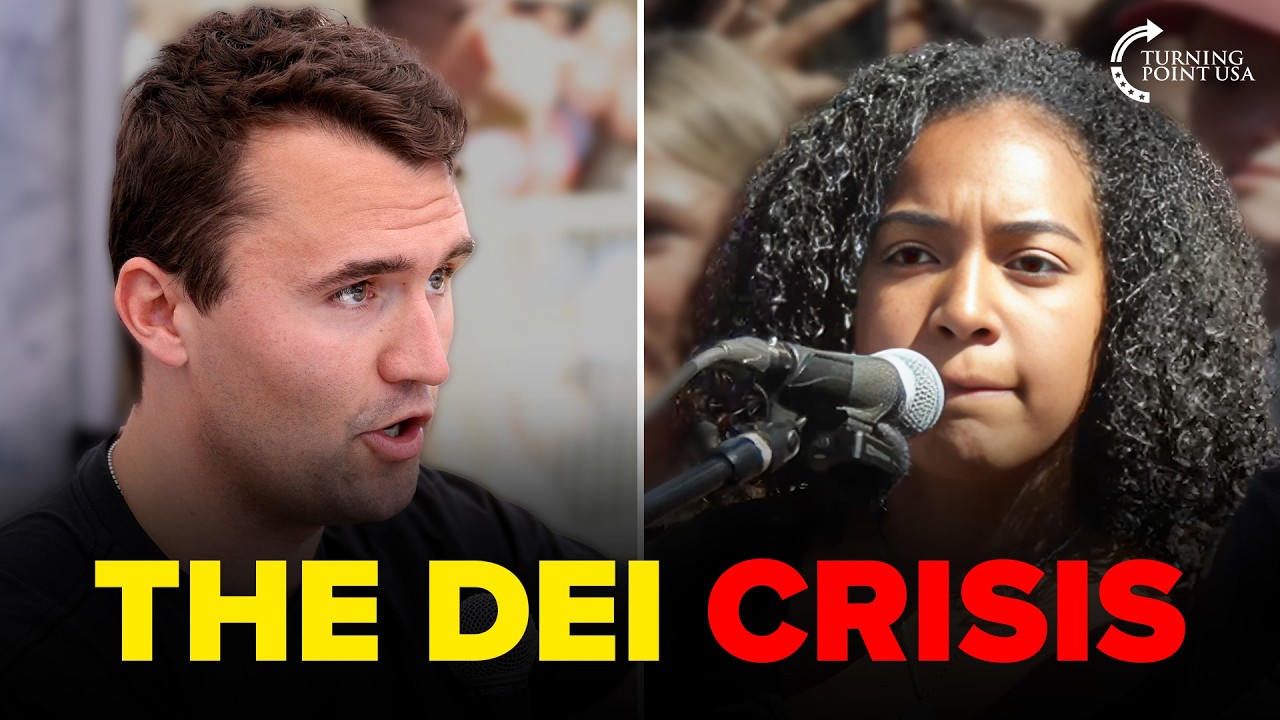
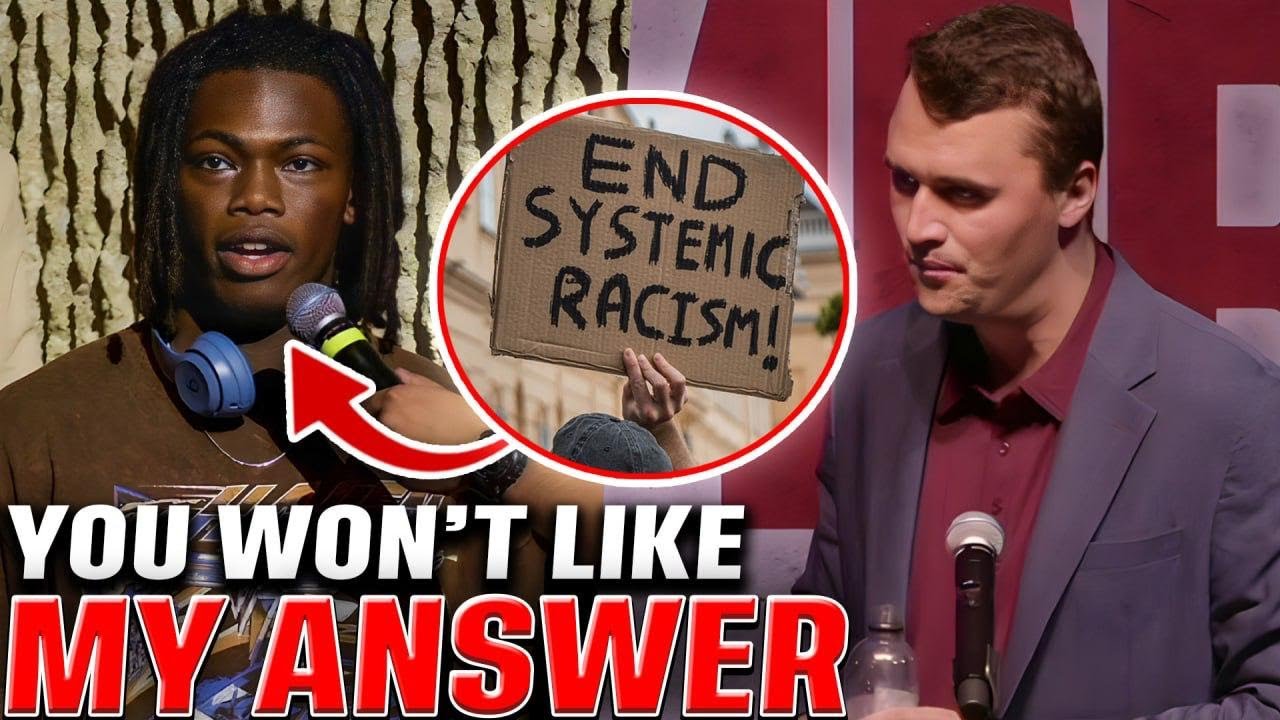
Charlie Kirk engages in a tense exchange with a student over the true purpose of Diversity, Equity, and Inclusion programs. Kirk argues that DEI fundamentally means "didn't earn it" and represents forced corporate and college programs that elevate irrelevant criteria over merit. The debate intensifies as Kirk challenges the widespread victim mentality he sees in Black America, arguing that focusing on past injustices rather than future prosperity has failed the community. He claims Martin Luther King Jr. would oppose modern DEI initiatives, sparking disagreement about the civil rights leader's legacy and whether systemic barriers still impact opportunities today.
Charlie Kirk opens the conversation by cutting straight to what he believes is the core truth about DEI initiatives: "Diversity, equity, and inclusion" might be the official acronym, but in practice, Kirk argues, "it means didn't earn it." This provocative redefinition sets the tone for an intense exchange about merit, opportunity, and racial justice in America.
Kirk characterizes DEI as "a forced corporate program or college program" that elevates "things that do not matter, that should not be in the matrix of making decisions." His fundamental objection centers on the idea that characteristics unrelated to qualifications are being prioritized in hiring and admissions decisions.
Beyond Hiring: The Broader Application of DEI
The student pushes back, noting that DEI extends beyond employment decisions. "DEI isn't just about hiring," the student explains. "It can be researched to find disparities of diseases against different groups." The student lists various ethnic communities—Salvadorians, Mexicans, Iranians, Persians, Syrians, Lebanese—as examples of groups that could benefit from research into health disparities.
However, Kirk pivots to what he sees as a critical distinction: "You could pick any country. The ones that have succeeded reject the attitude that you and the prior guy have said." This leads to a direct confrontation about mindset and cultural attitudes.
Past Injustices Versus Future Prosperity
Kirk challenges the student to examine his fundamental approach: "What do you think my attitude is?" The student responds: "You are prioritizing the past and deemphasizing agency in the media. You're saying that the past should..." Though the sentence trails off, the implication is clear—Kirk believes too much focus on historical wrongs prevents forward progress.
Kirk acknowledges that historical events have consequences but argues that other immigrant groups have taken a different approach: "All these other groups do not believe this. In black America, there is an attitude, a worldview, an ethos that is predominantly focused on past injustices, not on future prosperity."
The student offers a measured response: "I think black Americans see that there has been past injustices and those past injustices are still here to some extent." This sets up Kirk's central question.
Has the Current Mindset Worked?
Kirk poses a direct challenge: "Has that mindset worked for black America?" The student responds by invoking the civil rights movement: "I mean, it worked for MLK."
This reference to Martin Luther King Jr. becomes the flashpoint of the debate. Kirk makes a bold claim that many would find controversial: "MLK would be marching in the streets against DEI actually."
The student immediately disagrees: "No, he would not be."
Competing Interpretations of Martin Luther King Jr.'s Legacy
Kirk grounds his interpretation in one of King's most famous statements: "Well, he said, 'I don't care about color. I care about content of character.' DEI cares about color."
The student offers an alternative view of DEI's purpose: "DEI is about making an inclusive space for everyone of every background."
Kirk counters with his understanding of the ideology underlying DEI programs: "DEI and wokeness believe that every action is impacted by some systemic injustice and that DEI can fix it."
A Call for Mindset Change
Kirk concludes the exchange with an appeal that reflects his core message: "I just hope Black America stops this victim mentality and embraces a victor mentality. They'll be much better if they do that."
The conversation ends cordially, with Kirk thanking the student for the discussion. The exchange encapsulates a fundamental divide in contemporary American discourse: whether addressing historical and systemic barriers is necessary for progress, or whether such focus perpetuates a counterproductive mindset that prevents communities from moving forward.