2,387 videos 1,376,944,188 views US Joined Aug 30, 2018
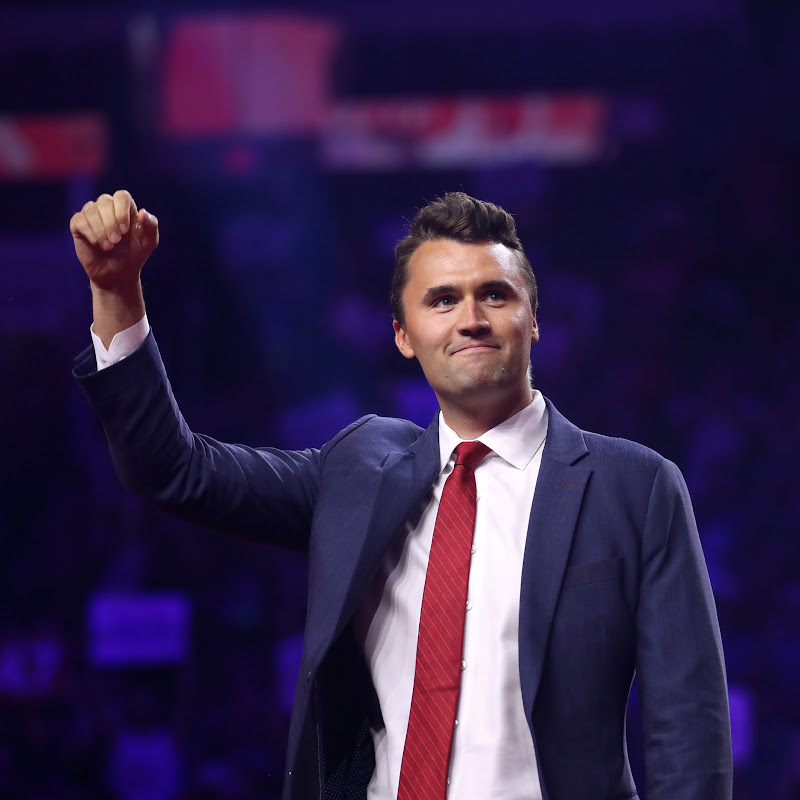
Charlie Kirk is the Founder and President of Turning Point USA, the largest and fastest growing conservative youth activist organization in the country with over 250,000 student members, over 150 full-time staff, and a presence on over 2,000 high school and college campuses nationwide. Charlie is also the Chairman of Students for Trump, which aims to activate one million new college voters on campuses in battleground states in the lead up to the 2020 presidential election. His social media reaches over 100 million people per month and according to Axios, he is one of the "top 10 most engaged" Twitter handles in the world. He is also the host of “The Charlie Kirk Show,” which regularly ranks among the top news shows on Apple podcast charts.
Charlie Kirk Explains Why DEI Quotas Would Ruin the NBA and NFL Using Simple Sports Logic
Charlie Kirk breaks down the fundamental problem with Diversity, Equity, and Inclusion quotas using professional sports as a clear example. In a candid conversation with a college track athlete, Kirk explains how forcing demographic quotas on the NBA or NFL, which currently reflect merit-based selection, would immediately lower the quality of play. The discussion highlights why hiring the best person for the job, regardless of race, produces better outcomes than artificial diversity mandates. Kirk's sports analogy makes the abstract DEI debate concrete and understandable.
A Track Athlete's Question About Race and Competition
During an event, Charlie Kirk signed autographs for a college track athlete who runs the 400-meter dash. The young man, who had track practice in 30 minutes, mentioned hearing Kirk discuss how the NBA is 75% black. He brought up how the NBA's Olympic dream team almost lost to a team composed mostly of non-black players, though the American team ultimately won. Kirk saw this as the perfect opportunity to explain his perspective on Diversity, Equity, and Inclusion policies.
The NBA Quota Thought Experiment
Kirk asked the athlete to consider a hypothetical scenario: What if the NBA suddenly decided it wanted more diversity because it was "too black" at 75% black players? If the league imposed a quota limiting black players to just 30% of rosters, would the quality of play decline?
The answer, Kirk argued, is obviously yes. The NBA currently selects players based on merit and ability. Forcing artificial demographic restrictions would mean bringing in less qualified players simply to meet a quota, which would diminish the overall quality of the league.
The NFL Corner Position Reality
Kirk extended his argument to the NFL, pointing out that there isn't a single Caucasian cornerback in the league—with the exception of Cooper DeJean, who plays a different position but excels at it. About half of the NFL is black, Kirk noted, reflecting the merit-based selection process.
If NFL Commissioner Roger Goodell—whom Kirk made clear he doesn't respect for various reasons—suddenly declared that "diversity is our strength" and limited black players to 30% of rosters, the result would be catastrophic for the quality of play. Unqualified white players would fill positions simply to meet the quota, and the competitive level would drop significantly.
Extrapolating to Other Areas of Life
Kirk's point was to help the young athlete understand that this principle applies far beyond sports. If forcing demographic quotas would obviously harm the NBA and NFL, why would it be beneficial in other professions? Whether in business, medicine, aviation, or any other field, hiring the best person for the job—regardless of race—produces better outcomes than artificial diversity mandates.
The athlete agreed with Kirk's reasoning, stating that there shouldn't be restrictions on anybody. As long as someone is good at what they do, their race shouldn't matter. Kirk affirmed this perspective, noting they stood in agreement on the fundamental principle of merit-based selection.
A Rising Track Star
Before parting ways, Kirk learned more about the athlete's impressive track career. The young man was heading to the Penn Relays—one of the most historic track meets in the United States—that Wednesday. His team was currently ranked number two in the nation, just behind USC, which had taken the top spot that week.
The athlete runs the 400-meter dash and competes on the 4x400 relay team, though his coach keeps the relay order secret until race day. His personal best split time is 4:49, with his best opener at 46 seconds. Kirk jokingly claimed he could run it in 44 minutes before acknowledging the athlete's superior abilities and wishing him well.