Up Next

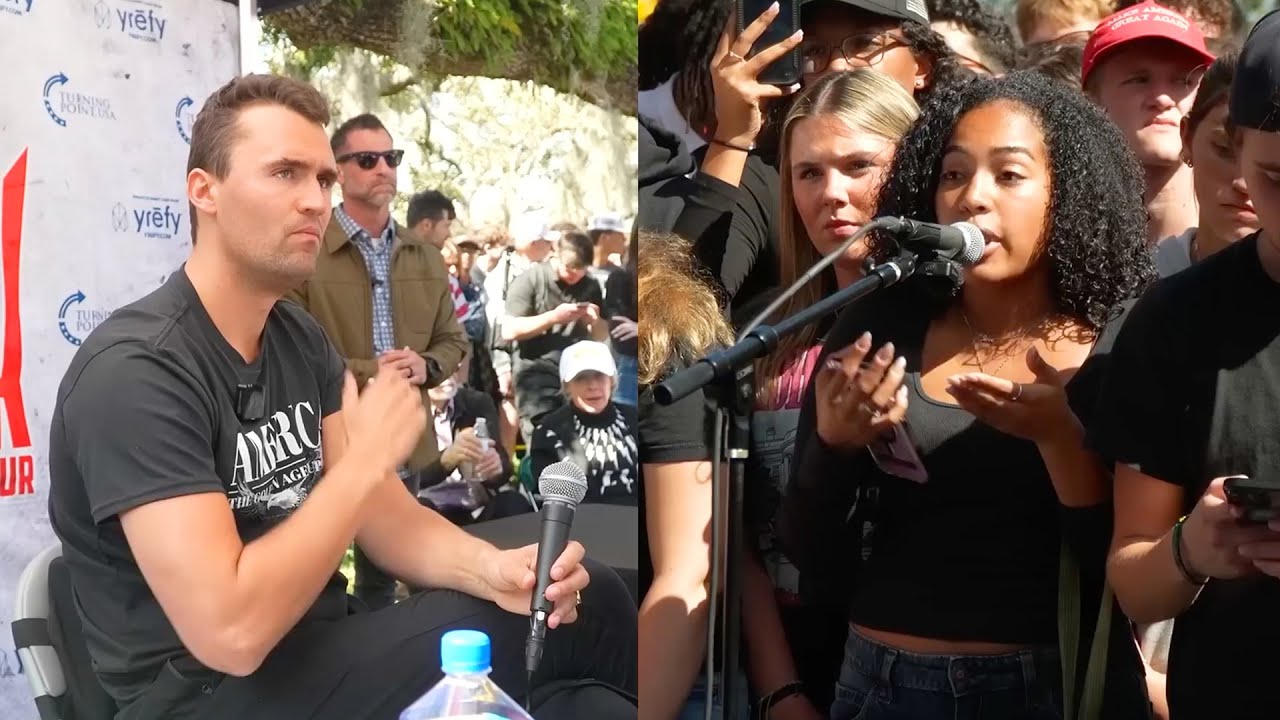
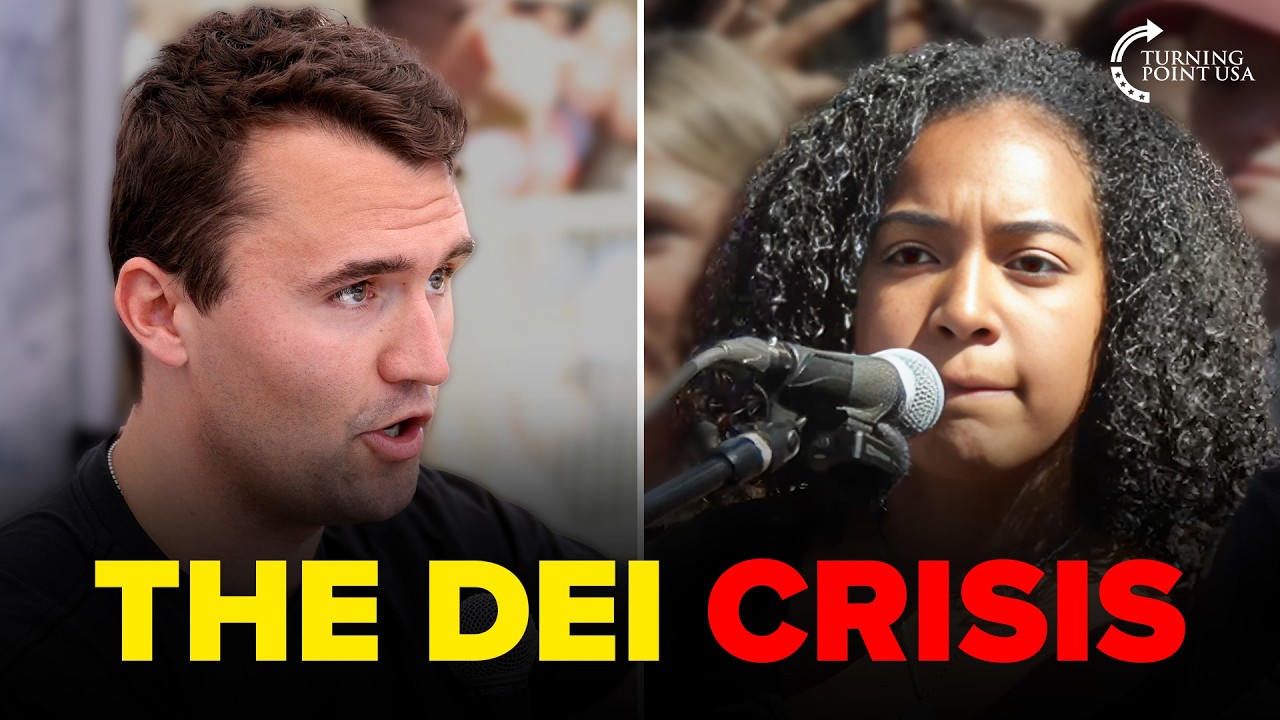
Charlie Kirk Debates Texas A&M Student on DEI, Systemic Racism, and Cultural Responsibility in America

Charlie Kirk Debates Texas A&M Student on DEI, Systemic Racism, and Cultural Responsibility in America

18:47

Charlie Kirk Confronts Student on Meritocracy and Equal Opportunity at University of California Riverside

Charlie Kirk Confronts Student on Meritocracy and Equal Opportunity at University of California Riverside

3:47

DEI, Sports Diversity, and Meritocracy: Athlete Admits Pro Sports Would Suck

DEI, Sports Diversity, and Meritocracy: Athlete Admits Pro Sports Would Suck

3:58

Charlie Kirk banner
2,252 videos 1,362,132,946 views US Joined Aug 30, 2018

Charlie Kirk is the Founder and President of Turning Point USA, the largest and fastest growing conservative youth activist organization in the country with over 250,000 student members, over 150 full-time staff, and a presence on over 2,000 high school and college campuses nationwide. Charlie is also the Chairman of Students for Trump, which aims to activate one million new college voters on campuses in battleground states in the lead up to the 2020 presidential election. His social media reaches over 100 million people per month and according to Axios, he is one of the "top 10 most engaged" Twitter handles in the world. He is also the host of “The Charlie Kirk Show,” which regularly ranks among the top news shows on Apple podcast charts.

Charlie Kirk Debates SimpleBlackTheory on DEI Versus Merit in Hiring Practices and the Workplace

April 24, 2025

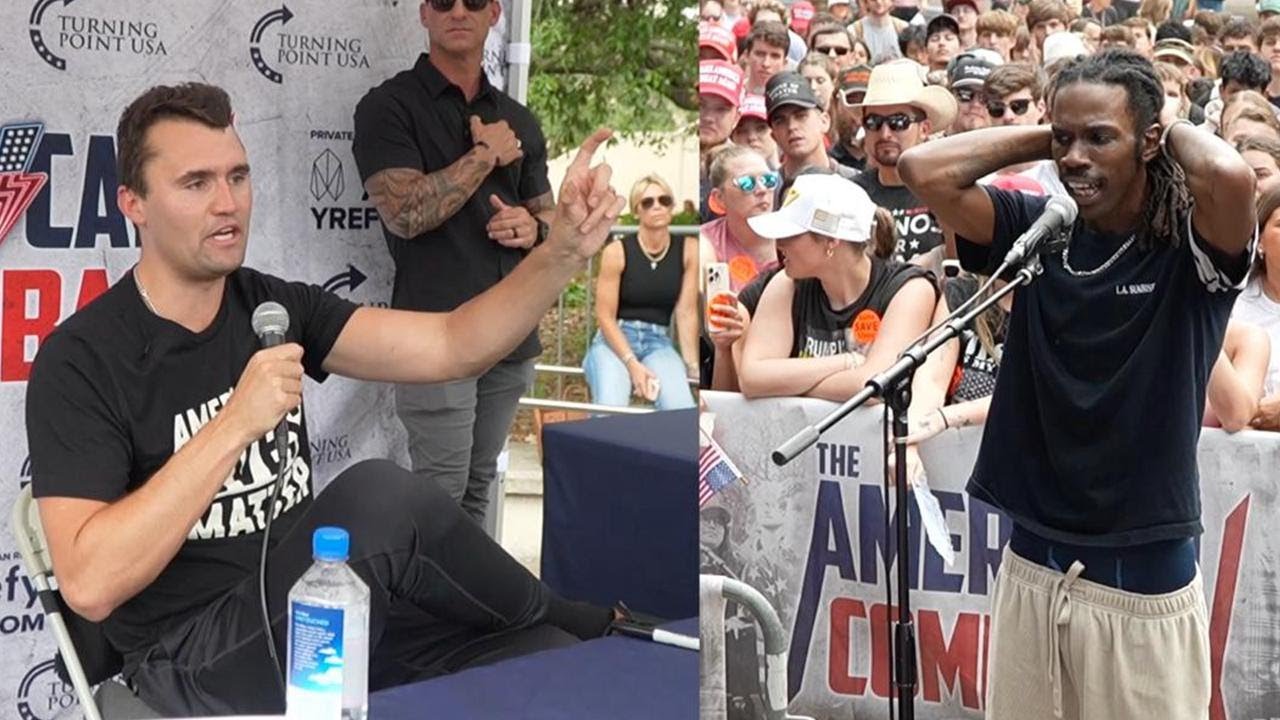
Charlie Kirk sits down for a heated debate with SimpleBlackTheory on one of the most contentious issues in America today: DEI versus merit-based hiring. The conversation quickly escalates as they clash over blind hiring, affirmative action, United Airlines' pilot programs, and whether diversity initiatives help or hurt excellence. Kirk argues that forced diversity compromises standards, while SimpleBlackTheory contends that DEI creates safer, more equitable workplaces. From the NBA's desegregation to Google's hiring committees, air traffic controller standards to workplace accessibility, this exchange exposes the fundamental disagreement about race, excellence, and the future of American institutions. Kirk maintains that character and merit should trump skin color every time, while his opponent insists DEI encompasses far more than racial quotas.

The Opening Volley: Blind Hiring and Merit

Charlie Kirk opens the debate by asking SimpleBlackTheory a straightforward question: What do you think about blind hiring? The question sets the tone for what becomes a contentious exchange about merit, diversity, and hiring practices in America.

SimpleBlackTheory initially says no to blind hiring, prompting Kirk to press further. When asked to define blind hiring, the conversation reveals the core tension. Blind hiring means not knowing a candidate's race, age, or gender during the hiring process—theoretically creating a purely merit-based system.

Kirk challenges this by presenting a hypothetical scenario about hiring an Amazon warehouse worker. If age isn't disclosed and you discover the candidate is 69 years old with one year left before retirement versus a 24-year-old man, wouldn't the employer prefer the younger candidate? SimpleBlackTheory accuses Kirk of moving the goalpost, but Kirk insists he wants a full picture of a human being when hiring them.

This leads to the fundamental question: Does Kirk care about diversity? His answer is clear and emphatic: No, he doesn't care about diversity. He explains that if diversity happens naturally through meritocracy, that's fine. But DEI, he argues, is about forcibly making institutions more colorful or more black. Kirk wants excellence and meritocracy over race in every possible circumstance.

The NBA Example: Natural Merit or Forced Diversity?

The debate shifts to sports when SimpleBlackTheory brings up the NBA. At one point, black people weren't allowed in the NBA, then they were allowed. Wouldn't that be considered diversity? Wouldn't that be DEI?

Kirk's response cuts to the heart of his argument: No, that's actually the opposite. What existed before was a form of white preference DEI—white supremacy. When that was eliminated and discrimination ended, the quality of play got better because it became merit-based. The difference, Kirk emphasizes, is between forced racial quotas and removing racial barriers to allow natural excellence to emerge.

This distinction becomes central to Kirk's position throughout the debate. He argues that his opponent actually wants to bring back a form of how Major League Baseball and the NBA used to work before desegregation—systems that used race as a determining factor, just in reverse.

Executive Order 11246 and the Definition of DEI

SimpleBlackTheory references Executive Order 11246, claiming it focuses on creating safer and more equitable environments in the workplace and hiring process. He offers an unusual example: workplace bathrooms providing tampons or pads for women. According to him, that's DEI.

Kirk doesn't dispute that such initiatives might fall under DEI but challenges the broader premise. The debate becomes heated as SimpleBlackTheory insists that DEI encompasses workplace safety, accessibility, and equity—not just racial quotas. He mentions onboarding processes, sexual harassment training, and accommodations for disabled workers at places like Trader Joe's as examples of DEI in action.

Kirk remains focused on what he sees as the core problem: DEI is racial quotas, end of story. He argues that when you pursue diversity, you sacrifice excellence every time. He points to Harvard, Yale, and the military as examples where the pursuit of diversity has compromised standards.

Google's Hiring Committee: Does DEI Work?

When SimpleBlackTheory brings up Google as an example of successful DEI implementation, Kirk pushes back hard. Google, he notes, has lost its competitive edge over the last decade. The company has failed to compete in social media, losing battles in launching Facebook, Instagram, Zoom, and Skype competitors.

Kirk points out that Alphabet (Google's parent company) has missed market expectations over the last two years compared to Netflix, Amazon, Apple, and Microsoft. Ten years ago, predictions said Google would be the first three-trillion-dollar company, but Microsoft achieved that milestone first.

SimpleBlackTheory argues that Google uses a hiring committee—a diverse group making hiring decisions—and remains one of the best companies in the world. If DEI takes away merit, he asks, how can Google be doing well while using DEI?

Kirk's response: Google wasn't built with these DEI hiring committees from inception. Whatever success Google has achieved came from merit, and DEI is now destroying that foundation. The fundamental question remains unanswered in Kirk's view: Why does skin color matter at all in hiring?

United Airlines and the Pilot Program Controversy

The debate reaches a flashpoint when Kirk brings up United Airlines. SimpleBlackTheory accuses Kirk of claiming United Airlines is hiring women of color to make up 40 or 50 percent of pilots when in reality, they're creating training programs that allow women to become pilots with the same requirements as any other program.

Kirk clarifies his actual statement: If you're going to go from 4 percent of pilots being black to 50 percent being black, it begs the question whether you're lowering standards. You're forcing something that's not happening naturally, and you're playing a dangerous game when people board planes.

Kirk's position is straightforward: When getting heart surgery or boarding a plane, he doesn't care about the color of the skin of the person doing it. He wants excellence and meritocracy.

The debate intensifies when Kirk references a lawsuit with the Department of Transportation from 2016-2017. He claims air traffic controller and pilot standards were lowered in pursuit of diversity, citing over 15 whistleblowers who said standards were being sacrificed.

SimpleBlackTheory disputes this, claiming the FAA actually made requirements harder by adding more scenarios. He accuses Kirk of lying, while Kirk insists people can do their own independent research and that the documents support his claims.

Blind Hiring Revisited: The Core Disagreement

Near the end of the debate, SimpleBlackTheory circles back to the blind hiring question, arguing that Kirk's opposition to blind hiring—which is based on merit—proves he doesn't actually care about merit.

Kirk pushes back, saying the issue is that companies like United Airlines prioritize certain groups above what is meritocratic. They've announced that half of all their new hires would meet specific diversity criteria, which Kirk sees as the opposite of merit-based hiring.

The Final Clash: Two Competing Visions

Kirk concludes the debate by framing the fundamental disagreement with clarity: He wants a country based on content and merit. SimpleBlackTheory, he argues, wants a retribalization of America based on skin color.

The debate exposes two entirely different worldviews about how American institutions should function. Kirk sees DEI as racial stereotyping that compromises excellence in the name of forced diversity. His opponent sees DEI as creating safer, more accessible, more equitable workplaces that help qualified people from all backgrounds succeed.

Throughout the exchange, Kirk repeatedly asks why skin color should matter in hiring. His opponent insists that DEI is about far more than race—it's about accessibility, safety, and equity. But Kirk remains unconvinced, arguing that whenever an organization gets forcibly more diverse, it gets worse, not better.

The question left hanging at the end: Can America pursue both diversity and excellence, or are they fundamentally at odds? Kirk believes merit and excellence must come first, and if diversity results from that, fine. His opponent believes that creating equitable systems through DEI initiatives is what allows merit to flourish. The debate, like the national conversation it reflects, ends without resolution—but with the core disagreement clearly defined.

Comments

Be the first to comment on this video.

Video Transcript

[00:00] Uh, Mr. Simple, you've said some very

[00:01] nasty things about me online, so the

[00:04] floor is yours. Thank you. Thank you.

[00:05] Uh, so, uh, simple question, Simple

[00:08] Black Theory. Um, what do you think

[00:10] about blind hiring? Are you for blind

[00:13] hiring? No. No. So, why not? Cuz blind

[00:16] hiring, for those who don't know, is

[00:18] based on merit where you don't look. So,

[00:20] what's blind hiring? Blind hiring would

[00:22] be that you do not put the race actually

[00:24] when you submit for you actually you

[00:26] don't even see the person when you

[00:27] interview them for a a job. No, no, no.

[00:28] That's that's one part of blind hiring.

[00:30] There's multiple ways to do blind

[00:31] hiring. But at the end of the day, blind

[00:33] hiring is exactly not knowing the

[00:35] person's race, age, or gender. That's

[00:37] based on merit. Like you said, you want

[00:39] merit. Correct. Well, hold on. Those

[00:41] things can factor into merit as well.

[00:43] For example, if I'm trying to hire for

[00:45] an Amazon warehouse worker and all of a

[00:47] sudden I find out that they're at 69

[00:49] with one year left from retirement and

[00:51] the age is not disclosed, wouldn't I

[00:52] prefer to have a 24 year old man than a

[00:54] 69year-old woman who's overweight?

[00:56] You're moving the goalpost. Let's bring

[00:57] it back here. No, no, the whole point

[00:59] was about blind hiring. No, you just

[01:01] said you said race, sex, and age is not

[01:05] incorporated. Correct. I think you

[01:06] should have a full picture of of a human

[01:08] being is when you hire them. So, you

[01:10] care about diversity. No, actually, I

[01:12] don't. How? Why? Because that's

[01:14] basically merit. You're focusing solely

[01:16] on merit. You said you want me. Just to

[01:18] be clear, I want I I If diversity

[01:20] happens naturally through meritocracy,

[01:22] great. If all of a sudden we have people

[01:24] that Well, no, no, it's not DI's by

[01:26] force.

[01:27] No, no, no. I got I got to interject.

[01:29] DEI is that we are going to forcibly

[01:31] make an institution more colorful. We're

[01:33] going to forcibly make an institution

[01:35] more black. Where if all of a sudden if

[01:37] half of Texas A&M was black because it

[01:39] was all on merit, praise God. That's an

[01:41] amazing thing. It doesn't matter. If all

[01:43] of a sudden, for example, if the NBA is

[01:45] 75% black because it's on merit, great.

[01:47] Terrific. If the NFL is half black

[01:49] because on merit, we don't want to force

[01:51] race. We want excellence and meritocracy

[01:53] over race in every possible

[01:55] circumstance.

[01:57] Right. Yeah. My turn. Okay. So, let's

[02:00] get into the NBA for instance, right?

[02:02] Can we both agree at one point black

[02:04] people weren't allowed into the NBA and

[02:06] then they allowed them to be in in NBA?

[02:08] Wouldn't that be considered diversity?

[02:10] Wouldn't that be DEI? No. No. No. It's

[02:12] actually the opposite. You see, you're

[02:13] mistaken, my friend. It's actually we're

[02:15] getting rid of any racial stereotyping.

[02:17] What happened was actually a form No.

[02:20] DEI is racial stereotyping. So what

[02:22] actually was before was a form of white

[02:24] preference DEI which is white supremacy

[02:27] or whatever and then we got rid of it.

[02:28] We said we're not going to discriminate

[02:30] it and the quality of play got better.

[02:32] Do you guys see the difference between

[02:33] the two? You see it's very important.

[02:35] Well no actually I'm talking to both you

[02:37] and the crowd. Right. Mean I'm talking

[02:38] to both. Right. So what ended up h what

[02:40] you want is you actually want to bring

[02:42] back a form of how Major League Baseball

[02:45] and the NBA used to work before we

[02:47] desegregated. So, we can agree that

[02:50] executive order 11246 is what basically

[02:52] brought in DEI. Correct. I I'm not I

[02:55] think that might be it. Is that the

[02:56] affirmative action one? I don't know.

[02:58] No, it's not the firm. It's for DI. So,

[03:00] within that executive order, where does

[03:01] it say that they're solely focused on

[03:05] making people get into jobs? For

[03:06] instance, like United Airlines, right?

[03:08] You mentioned that. Well, let's pause

[03:10] that. I'm going to get to here. So, for

[03:12] an example of DEI is basically your

[03:14] daughter, right? She decides to get a

[03:15] job, right? And unfortunately, it's that

[03:17] time of the month. She goes into the

[03:19] bathroom. Calm down. Calm down. Calm

[03:22] down. She goes into the bathroom. Stop.

[03:24] She's going into the bathroom. You're

[03:26] losing the audience, man. I don't care.

[03:27] I'm talking to you. So, she she goes

[03:29] into the bathroom, right? And she gets a

[03:32] She goes into the bathroom and gets a

[03:34] tampon or a pad that's been given from

[03:36] the job. That is DEI. That is literally

[03:39] Yes.

[03:40] Yeah. Yeah. Yeah. Yeah. You You don't

[03:42] know. You don't know. You don't know.

[03:43] That's great. So if you don't know de ei

[03:46] interrupt me so he can win. Go ahead.

[03:48] You want to do that right? Or be quiet

[03:49] and we can talk. Thank you. So right.

[03:57] Can I continue? Thank you. So my thing

[03:59] is dead. All right. So yes because in it

[04:03] so in executive order 11246 they say

[04:05] that DEI is focusing on a safer

[04:07] environment and a more equitable

[04:09] environment within the workplace and the

[04:11] hiring process. Let's look at Google.

[04:13] Google actually does DEI. You know how

[04:15] they did a DEI? Give me an example. Do

[04:17] you know Google's DEI? I'm pretty sure

[04:19] you don't. And they shouldn't. Of course

[04:20] not. In fact, what is their DI

[04:21] initiative? There was there I actually

[04:24] don't know the specifics cuz I don't I

[04:26] don't know every company specifics. I

[04:28] got However, let me ask you a question.

[04:29] When you're hiring somebody, would you

[04:31] rather hire someone that's black or

[04:33] someone that there is excellent? So,

[04:35] that's what we're talking about. That's

[04:36] not what DEI is. Actually, it is. So,

[04:39] let let me let me prove it to you. As I

[04:41] said, according to the student for fair

[04:43] admission Supreme Court case, black

[04:45] students were able to get into Harvard

[04:47] with affirmative action. Affirmative

[04:50] action. Time out. Time out. Time out.

[04:53] Time out. You're getting too worked up

[04:55] here, man. Okay. Time out. Affirmative

[04:57] action is DEI in practice. You see, DEI

[05:00] is a theory. Wasn't it struck down by

[05:03] Supreme Court? Yes. And they still

[05:04] ignore it. Why are you bringing it up?

[05:06] Because they're still ignoring it. My

[05:07] friend, let's focus on my question. Hold

[05:09] on. Let's get back to the core macro

[05:11] tenant which is which I think is very

[05:14] important. Correct. Which is wouldn't

[05:15] you prefer a country built on excellence

[05:17] and merit not one based on forced

[05:20] pigmentation diversity? Why does

[05:22] somebody's skin color matter? No. Tell

[05:25] me what what what differences do you as

[05:27] a black man and me as a white man have?

[05:28] And why does it matter? Okay. So why

[05:30] does it matter? So let's look at because

[05:33] again you don't understand what DI is

[05:34] and you're trying to put into one stance

[05:36] what which is not. So you. Thank you.

[05:39] The battle between good and evil seems

[05:41] to be escalating. It is easy to blame

[05:44] politicians, government, or poor

[05:45] leadership. But behind all of that is a

[05:48] spiritual battle. Pastor Alan Jackson's

[05:50] new book, Angels, Demons, and You talk

[05:53] about the reality of this battle and the

[05:55] spiritual realm that exists around us.

[05:58] It has a real impact on us every day. As

[06:00] you read, you will discover that angels

[06:02] and demons are not imaginary. They

[06:05] actually exist. You can find them

[06:06] playing a variety of roles throughout

[06:08] the Bible and they're still influencing

[06:09] the world today. We don't need to be

[06:11] afraid, but we do need to be aware and

[06:13] prepared. Angels, Demons, and You

[06:16] provides valuable insight, practical

[06:18] tools, and biblical truth to help you

[06:21] recognize the spiritual battle around us

[06:23] and become a differencemaker in our

[06:25] generation. Get your copy today at

[06:28] allenjackson.com/angels.

[06:31] So, back to this question. So, in

[06:33] executive order and and and correct me

[06:34] if I'm wrong, you don't know executive

[06:36] order 11246. Correct. So, I mean I I

[06:39] have an idea of what President Trump

[06:40] signed. Correct. But because he got he

[06:43] got rid of that executive order, right?

[06:44] And in that executive order, it says

[06:46] literally, y'all can Google it too. It

[06:49] says that DEI focuses on both the

[06:52] workplace and hiring. Got it. So, does

[06:54] it explain? Now, let me explain it. Does

[06:56] it have the word diversity? Yes, we

[06:58] should not have any force diversity.

[06:59] Period. End of story. It's not forced

[07:00] diversity. It does not for say force

[07:02] diversity and I'll put money on that

[07:03] too. But does it say diversity? It says

[07:05] diversity. Yes. Well, then it's force

[07:07] force diversity. What is it? It's a

[07:08] suggestion. So So correct me if I'm

[07:11] wrong. Tell me if I'm lying. Does it say

[07:12] force diversity in executive order? But

[07:14] it has the word diversity. Does it say

[07:15] force diversity in executive order? Hold

[07:17] on. Let me get this straight. Executive

[07:18] order with the word diversity. Can I

[07:20] give you an example of DI initiative?

[07:21] Let me give you an example of DI

[07:22] initiative so you have a better

[07:23] understanding. So let's look at Google,

[07:25] right? Google's one of the hardest

[07:27] companies to actually get into. In fact,

[07:28] I believe there's a 0.2% 2% chance that

[07:30] you actually get the job, right? They

[07:32] actually run a DI initiative. Their DI

[07:34] initiative is called a hiring committee

[07:36] where they have a diverse group of

[07:38] people working awful. How? So, you're

[07:41] telling me Google sucks? Google actually

[07:43] is honestly. So, y honestly chat GPT is

[07:47] way better than Google recently. I don't

[07:48] know about you guys. No, but honestly,

[07:51] to your point though, Google has lost

[07:53] its competitive edge in a lot of ways

[07:54] the last 10 years. They're Hold on a

[07:56] second again. Google does a lot right,

[07:57] but hold on. Google has lost the social

[07:59] media war. Google tried to launch a

[08:01] Facebook competitor, Instagram

[08:03] competitor failed. They try to also

[08:05] launch a Zoom and Skype competitor.

[08:06] Conversation has no problem. Google's

[08:08] market cap Google's market cap,

[08:10] otherwise known as Alphabet, has

[08:12] actually missed expectations over the

[08:14] last 2 years versus Netflix, Amazon, and

[08:17] Apple, and Microsoft. In fact, there was

[08:18] a prediction 10 years ago that Google

[08:20] would be the first $3 trillion company.

[08:22] Turns out that it was actually Microsoft

[08:24] that was the first $3 trillion company.

[08:26] Now, of course, Alphabet is a very good

[08:27] company on a lot of different ways, but

[08:29] if your argument right now is like,

[08:30] well, because the one of the biggest

[08:32] companies on the planet has embraced a

[08:34] bad idea, what is your argument exactly?

[08:36] They're still one of the best companies

[08:37] in the world. Not because of that,

[08:38] because they were built by merit and

[08:40] it's being destroyed by diversity and

[08:42] they use DEI to get that merit. Listen,

[08:45] if if they're hiring people, yes, it

[08:47] makes sense. If if you're doing a hiring

[08:48] process and you have a hiring committee

[08:50] that is DEI and they're hiring the

[08:52] people that's making the company as

[08:54] great as we just said, how your argument

[08:56] your argument is that DEI takes away

[08:59] merit. But if we see that Google is

[09:01] doing well and they're using DEI, how

[09:03] the hell are you saying that DEI is not

[09:05] making merit? First of all, Google has

[09:06] not had this hiring committee around

[09:07] since its inception. They have. No, not

[09:09] since it inception, but they had it for

[09:10] a while. And the people in the committee

[09:12] are people who's been there for a while,

[09:14] which is very diverse. Secondly, you you

[09:16] have not answered this fundamental

[09:18] question though, which is can you tell

[09:20] me when a organization gets forcibly

[09:22] more diverse, it gets better.

[09:25] Google. Again, I just proved to you

[09:26] Google is Google. I just gave you

[09:29] Google. They use DEI. Not only are they

[09:32] one of the best companies Oh, yeah.

[09:33] Yeah. I hate that argument. Great. I

[09:35] mean, again, it's just they're fine. I'm

[09:37] not going to like totally kind of crap

[09:38] on Google, but like more importantly and

[09:41] more more broadly, I do think you have

[09:44] to answer the question why why does skin

[09:47] color matter at all in hiring? Answer

[09:49] that question. Why does skin color

[09:51] matter? So, if we look at basketball,

[09:54] cuz you love talking about that, right?

[09:55] Can we both agree that at one point

[09:58] there was no black athletes and then

[10:00] what happens? They diversified. They got

[10:02] rid of forced segregation, which is a

[10:04] form of DEI. So, and that diversified

[10:06] the the basketball because it was based

[10:08] on merit. Was it diversified? Yes, but

[10:10] not by force. No, hold on a second. Very

[10:12] much. Hold on. But if you're argument is

[10:13] that if you want to make things more

[10:15] merit-based, then let's do it. It is

[10:17] more merit based. They made it

[10:19] diversifying. They diversified

[10:21] basketball, bringing black people who

[10:23] are good in it. Nothing. Nothing you're

[10:26] saying is making any sense because what

[10:28] they did, the NBA went to pure merit,

[10:32] pure excellence. Are you good at this?

[10:35] That's all they cared about in the They

[10:36] allowed black people in. Right. Exactly.

[10:38] Because prior because pri hold on

[10:41] because you know what they had prior was

[10:43] a form of racial stereotyping and you

[10:46] want more racial stereotyping. Your

[10:48] worldview is indecipherable from the

[10:49] KKK. What you want? It's indecipherable

[10:52] cuz you are race obsessed. I am not race

[10:55] obsessed. You talk about the race. You

[10:57] talk about race more than the grand

[10:59] wizard of the KKK. Because the grand

[11:02] wizard of the KKK. Well, think about it.

[11:04] I said your worldview. Think about it

[11:06] because you're around talking about race

[11:08] all the time. I'm talking about

[11:09] character. Which of you talk about race

[11:11] all the time. You literally said DEI is

[11:13] based on race when it's

[11:15] not with accessibility. You're getting

[11:17] really upset. My bad. You're right. Cuz

[11:18] you keep lying. For instance, right,

[11:20] I've been trying to say this. DI one

[11:22] part of DI is literally giving women p

[11:25] um tampons or pads at work. Oh yeah.

[11:29] You're laughing because you don't know

[11:30] that. women tampons is a form of DEI.

[11:33] Yes, it is. You know why? Let me

[11:34] explain. Let me explain. Yeah. Yeah. No,

[11:36] I got you. I'm about to explain to you

[11:37] guys. So, basically what happens is the

[11:39] the reason why we have DEI is the fact

[11:42] that um in a job um location, right?

[11:44] They want to hire more people diverse.

[11:46] So, what they is these initiatives,

[11:48] these goals, these aspirations that

[11:49] they're doing is trying to bring more

[11:51] people in. For instance, like if um um

[11:53] what's that store Trader Joe's, right?

[11:55] They let people sit down while they uh

[11:57] let uh they bring stuff in. They help

[12:00] disability. That's DI. That helps

[12:02] disabled people get a job at Trader

[12:04] Joe's. But what you're telling me is

[12:06] that we are not allowed to to tell

[12:08] people that for like onboarding.

[12:10] Onboarding in itself is also DEI. When

[12:12] they explain to you sexual harassment,

[12:14] when they do all these things, when they

[12:16] make it more a safer place, that is DEI.

[12:19] And what you're saying is that the

[12:21] workplace shouldn't be uh um safe. What

[12:23] you're saying is that more companies

[12:25] should have discrimination lawsuits.

[12:27] Let's get back. Let's get back to

[12:29] regional lawsuits. DEI is racial quotas.

[12:32] End of story. Give me one racial quoted

[12:34] airlines. I I Googled that. Go ahead. I

[12:37] Googled it. Okay, great. So So go ahead.

[12:39] Go ahead. Continue. What What did United

[12:42] Airlines announce? Because you know what

[12:44] I said about black pilots? What did they

[12:46] announce when it came to pilots? And why

[12:47] should skin color matter when you board

[12:49] an airplane? So just remind everybody is

[12:51] Charlie Kirk's uh idea. He basic Yes.

[12:54] Stop talking. So Charlie Kirk basically

[12:58] that's very that's very massage that's

[13:00] not very dei of you.

[13:04] All right let me finish cooking. So

[13:06] right

[13:12] [Music]

[13:17] so can I can I finish? So Charlie Kirk

[13:20] said that they're basically hiring women

[13:23] of color to make 40 or 50%. Right? But

[13:25] when you actually look into it, what

[13:27] happens is women and people of color,

[13:28] right? Women and people of color. What

[13:30] happens is they're creating a program

[13:32] that's allowing women to train become

[13:34] pilots. If you actually look at the

[13:35] requirements for these program is

[13:37] nothing different than any other program

[13:40] that trains pilots. But you told people

[13:43] that they're just hiring women when

[13:45] that's not true. First of all, I never

[13:46] said that. Second, yes, you did. I did a

[13:48] video on it, guy. Yes, I know what I

[13:50] said. Secondly, when you hire based on

[13:53] race and not on excellence, you end up

[13:54] compromising the standards of

[13:56] excellence. Allow me to finish without

[13:58] interrupting. When you hire based on

[14:00] race and not on excellence, you end up

[14:02] compromising excellence to be able to

[14:03] pursue race. We know this with Harvard,

[14:05] University of California. We know this

[14:06] with major companies. We know this with

[14:08] the government. Exactly. DEI, that is a

[14:10] affirmative action is DEI philosophy in

[14:13] practice. You're bringing old. Allow me

[14:15] to finish my statement. They are

[14:18] actively defying the Supreme Court

[14:19] decision or they are contorting their

[14:21] policies to try to fit their own DEI

[14:23] agenda. But let me ask you a question.

[14:25] If you were to board a United Airlines,

[14:27] right? If you were to board a flight

[14:28] with United Airlines, would you rather

[14:30] have a pilot that is qualified or one

[14:33] that is diverse?

[14:36] Answer the question. That makes no

[14:38] sense. Why is there two different

[14:39] things? How is it different when you go

[14:41] to American? Because in the pursuit of

[14:43] diversity, in the pursuit of diversity,

[14:45] you sacrifice excellence. Every time, we

[14:48] know this with Harvard, we know this

[14:49] with Yale, we know this with the

[14:50] military. Every time, every example that

[14:53] we pursue diversity, an institution

[14:55] becomes less excellent. It becomes some

[14:57] part. When you go on a plane, do you go

[14:59] to the pilot and ask for your

[15:01] credentials or do you have do you

[15:02] believe that the airline did the right

[15:04] thing and high? So, you

[15:07] ask I start to doubt it. That was my

[15:10] statement. University was my statement.

[15:12] My statement was when you're going to if

[15:14] you're going to go from 4% of the pilots

[15:16] being black to 50% of the pilots to be

[15:19] black, it begs the question, you are

[15:21] going to lower the standards. You are

[15:23] going to you're going to put a square

[15:24] peg through a round hole. You are going

[15:26] to force something that naturally is not

[15:28] happening and you will all of a sudden

[15:29] be playing a very treacherous and

[15:31] dangerous game when you board a plane.

[15:32] When I get heart surgery or if I board a

[15:35] plane, I don't care about the color of

[15:36] the skin of the person doing it. I want

[15:39] excellence and I want meritocracy.

[15:41] platform. Yes. Yes. So, so stop talking.

[15:45] You're talking. So, right. Let's get

[15:47] back to because you're talking a lot.

[15:53] Final point, then I'll get to the next

[15:54] question. Oh, yeah. That's fair. That's

[15:55] fair. That's fair. That's fair. That's

[15:56] fair. Fair. Okay. So, again, so going

[15:58] back to what you said, cuz like I said

[15:59] earlier ago, you said um and I forgot

[16:01] this is IU. You basically said that um

[16:04] that women are being hired to become

[16:06] pilots. Right now, first, that's not

[16:08] that's a lie. That's based on a program.

[16:10] Second, what? Correct me if I'm wrong.

[16:13] Becoming a pilot is based on skill.

[16:15] Correct. It's not based on height. It's

[16:17] not based on on on physicality. That's

[16:19] based on nothing. It's based on skill.

[16:20] Meaning that if you're being Oh. So,

[16:22] what is it based on? Because based on a

[16:24] now public lawsuit with the Department

[16:26] of Transportation in 2016 2017, air

[16:28] traffic controllers and pilot standards

[16:30] were lowered in pursuit of diversity.

[16:31] Sure. I'll looked at because of over 15,

[16:33] let me finish. Because of 15

[16:34] whistleblowers that said the standard of

[16:36] air traffic controllers and pilots were

[16:38] being sacrificed in the pursuit of

[16:39] diversity. ly inclusion. You're lying

[16:41] again. Okay. I mean, people can do their

[16:43] independent research and they also I've

[16:44] done it and you're lying. They actually

[16:46] made it harder. They add more scenarios

[16:48] within the FAA. Everybody here Google

[16:51] Google it right now. Yeah. Okay. Again,

[16:53] the the the documents bear out exactly.

[16:55] We now have

[16:57] we have air traffic controllers after

[16:59] air traffic controllers have said in the

[17:01] pursuit of making air traffic

[17:03] controlling more diverse, we have then

[17:05] lowered the quality of air traffic

[17:06] controlling. So at the end of all this,

[17:08] what you basically told me is that if

[17:11] merit matters, you don't it it doesn't

[17:13] matter because when we mentioned blind

[17:14] hiring, you said you're against that,

[17:16] which is based on that. No time out.

[17:17] They said that they want to prioritize a

[17:20] group above what is merit meritocratic.

[17:23] I didn't say that. That that's what

[17:24] United Airlines said. They said

[17:26] confident the executive order out loud

[17:29] United Airlines

[17:32] again. They said half of all their new

[17:33] hires you got cooked. Okay. We we we

[17:36] have clarity and the clarity is very

[17:38] simple. We want a country based on

[17:42] content and merit. He wants a

[17:44] retribalization of America.

[17:47] Thank

Link copied to clipboard!