2,422 videos 1,389,747,653 views US Joined Aug 30, 2018
Charlie Kirk is the Founder and President of Turning Point USA, the largest and fastest growing conservative youth activist organization in the country with over 250,000 student members, over 150 full-time staff, and a presence on over 2,000 high school and college campuses nationwide. Charlie is also the Chairman of Students for Trump, which aims to activate one million new college voters on campuses in battleground states in the lead up to the 2020 presidential election. His social media reaches over 100 million people per month and according to Axios, he is one of the "top 10 most engaged" Twitter handles in the world. He is also the host of “The Charlie Kirk Show,” which regularly ranks among the top news shows on Apple podcast charts.
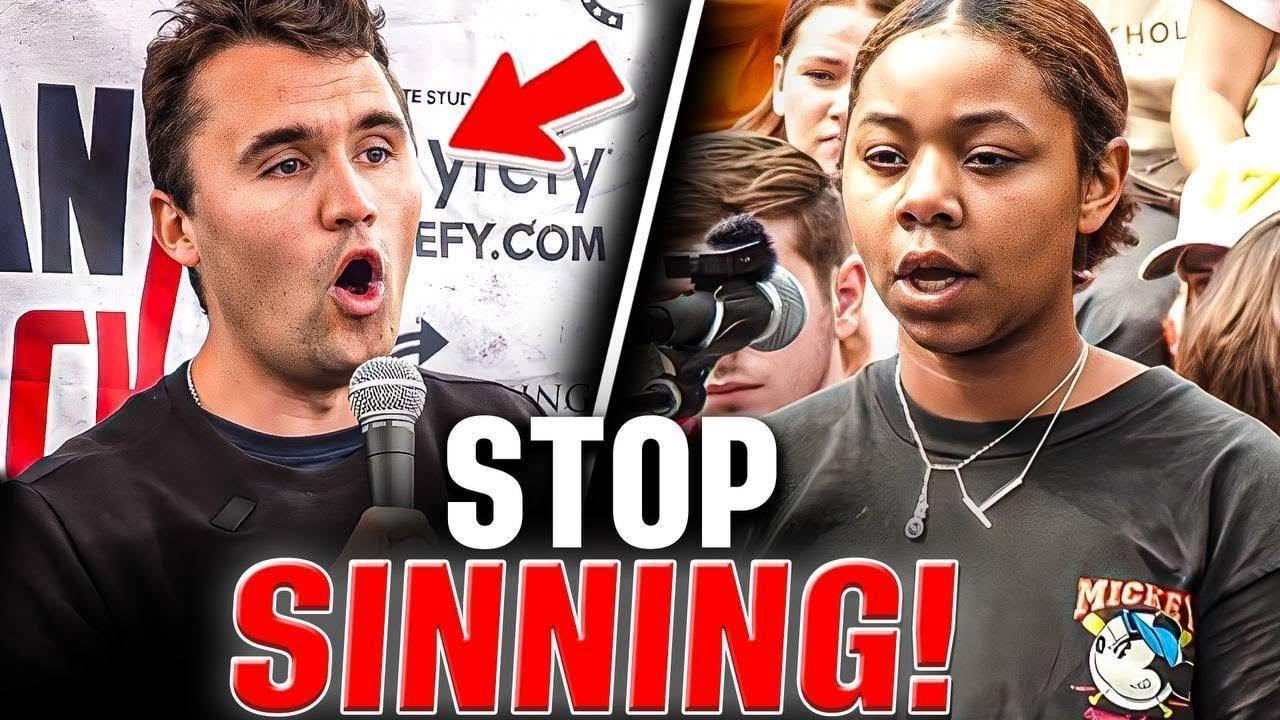
Charlie Kirk Confronts Student on Meritocracy and Equal Opportunity at University of California Riverside
Charlie Kirk challenges conventional thinking about the American dream during a college debate at UCR. When a student questions how to achieve equal opportunity in a true meritocracy, Kirk offers a controversial solution that cuts through preparation advantages. The exchange reveals fundamental disagreements about intelligence testing, systemic fairness, and whether true equal opportunity can ever exist. Kirk argues that the answer to achieving meritocracy has been available all along, but political opposition has prevented its implementation.
During a debate at the University of California, Riverside (UCR), Charlie Kirk fielded a thoughtful question from a student about one of America's most cherished ideals: meritocracy. The student opened by affirming his belief in the American dream and identifying meritocracy as one of its core aspects, specifically highlighting equal opportunity as fundamental to a true meritocracy.
Kirk immediately pushed back on this premise, asserting that equal opportunity as an absolute will never be achieved. To illustrate his point, he asked whether he and the student had equal opportunity to play in the NBA alongside LeBron James. The answer, obviously, was no. Kirk clarified that while equal opportunity could be a worthy goal, it would never be reality due to inherent differences in human abilities and circumstances.
The SAT Preparation Problem
The student then presented a concrete scenario to challenge Kirk's position. He described two individuals taking a practice SAT on the same day. One person scores 100 points higher than the other, but lacks the resources to maintain studying, while the lower-scoring student has abundant resources. The student asked how both could have equal opportunity in this situation, noting that a theoretical meritocracy would suggest the person who scored higher initially should end up in a higher position.
This question struck at the heart of a common debate about standardized testing: do preparation resources create unfair advantages that undermine meritocracy?
Kirk's Controversial Solution: IQ Testing
Kirk offered a straightforward solution: IQ tests. He explained that IQ tests are "study and preparation agnostic," meaning they measure innate cognitive ability rather than learned knowledge or test-taking skills acquired through expensive tutoring. Kirk argued this would be a great way to bring back true meritocracy precisely because it removes the advantage that wealth provides in test preparation.
However, Kirk acknowledged a significant obstacle: "The left hates IQ tests." He referenced Charles Murray's book "The Bell Curve" to explain why IQ tests face political opposition, noting that critics label them as racist. Kirk confirmed he believes IQ tests have validity but acknowledged the student's point that they test specific types of intelligence while people possess different types of intelligence suited for different professions.
The Preparation Advantage
Kirk made a candid admission about standardized testing. Coming from the Midwest, he noted that students there take the ACT rather than the SAT. He openly acknowledged that students can achieve higher ACT scores with proper preparation and investment in tutoring. This concession validated the student's concern about unequal access to resources creating disparities in outcomes.
The acknowledgment was significant because it recognized that current standardized testing systems do not provide the level playing field that meritocracy theoretically requires.
Finding Alternative Paths to Meritocracy
The student then posed the critical question: if the left opposes IQ testing so strongly, what other methods could achieve true meritocracy while remaining faithful to the American dream? Kirk's response was remarkably honest: "I can't think of one."
He reiterated his position that IQ tests remain the best "colorblind preparation agnostic way to find out people that have the acumen to be able to do the task." When the student asked whether different types of IQ tests should exist for different professions, Kirk agreed there should be variety but maintained that "the generally agreed upon IQ test that was developed in the late 80s is pretty good."
The Unresolved Tension
The exchange ended cordially, with Kirk thanking the student for the great question. However, the conversation highlighted an unresolved tension in American society: how do we create genuine equal opportunity when people start with vastly different abilities, resources, and circumstances? Kirk's position suggests that perfect meritocracy requires acknowledging innate differences and measuring them directly, while critics argue this approach itself creates injustice.
The debate at UCR encapsulated a broader national conversation about fairness, opportunity, and what the American dream truly means in practice versus theory.