2,422 videos 1,389,747,653 views US Joined Aug 30, 2018
Charlie Kirk is the Founder and President of Turning Point USA, the largest and fastest growing conservative youth activist organization in the country with over 250,000 student members, over 150 full-time staff, and a presence on over 2,000 high school and college campuses nationwide. Charlie is also the Chairman of Students for Trump, which aims to activate one million new college voters on campuses in battleground states in the lead up to the 2020 presidential election. His social media reaches over 100 million people per month and according to Axios, he is one of the "top 10 most engaged" Twitter handles in the world. He is also the host of “The Charlie Kirk Show,” which regularly ranks among the top news shows on Apple podcast charts.
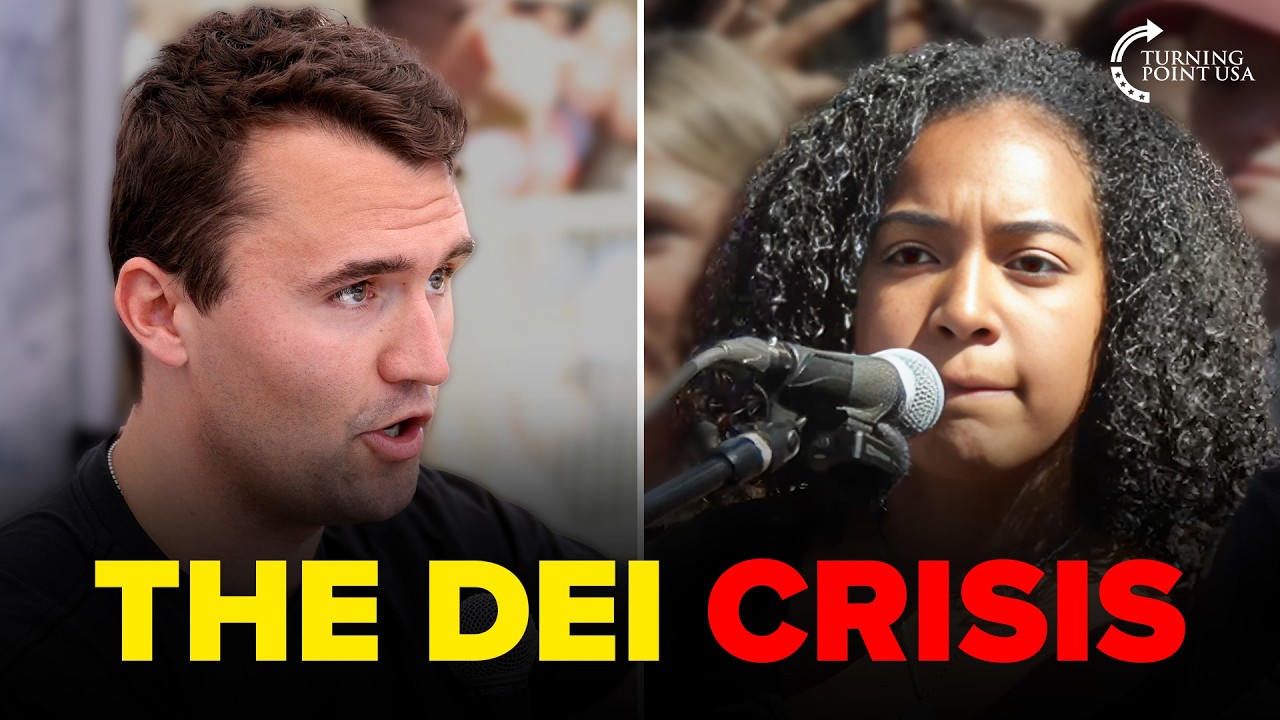
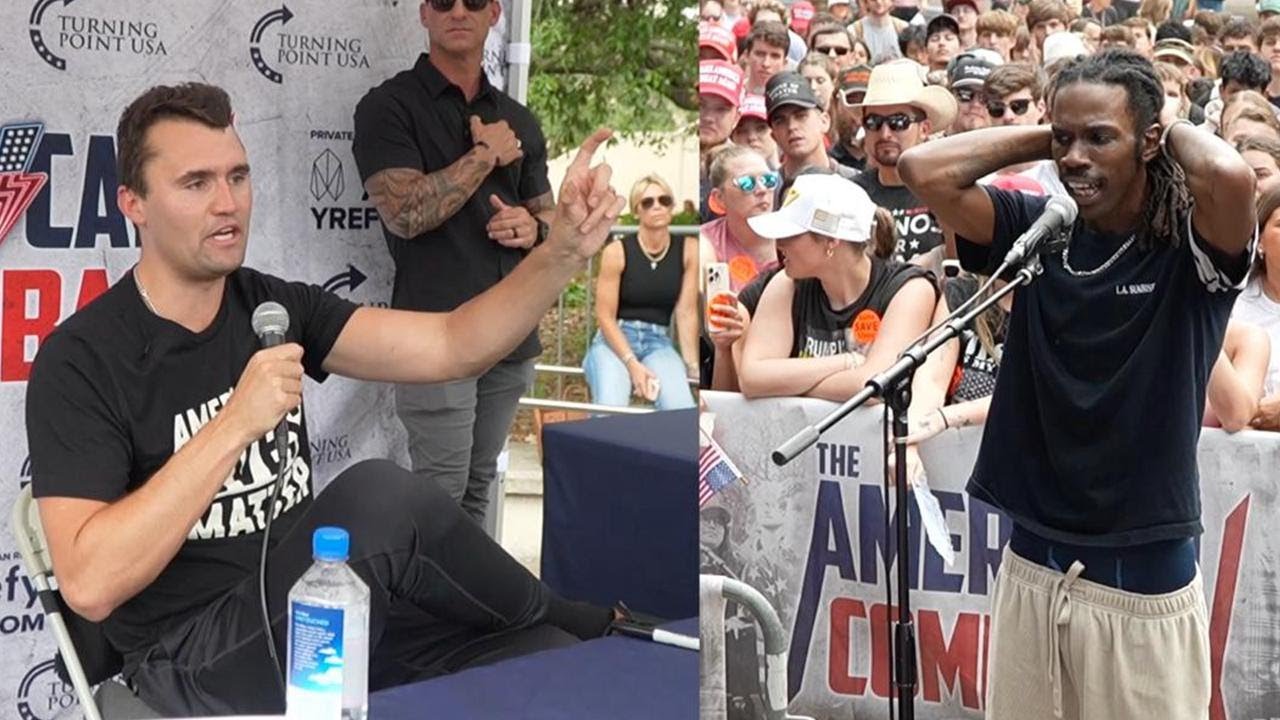
Charlie Kirk Debates DEI, Airline Pilot Standards, and Black Family Structure with Concerned Citizen
Charlie Kirk engages in a heated debate about diversity, equity, and inclusion policies in America, focusing on airline pilot qualifications, college admissions, and racial quotas. The conversation tackles Kirk's controversial statements about United Airlines' diversity goals, the effects of affirmative action at Harvard, and the question of merit versus race-based hiring. Kirk defends his position that DEI initiatives compromise excellence and standards, while his challenger questions whether Kirk's framing unfairly targets black Americans. The exchange expands to include discussions about black privilege, family structure, and absent fathers in black communities, with both parties citing competing statistics and interpretations of the data.
Charlie Kirk faced direct questioning about his previous statements regarding diversity, equity, and inclusion policies in the airline industry. When challenged about suggesting black pilots might be unqualified, Kirk clarified his original statement: United Airlines announced plans to have 40% of all pilots be people of color or women, and whenever racial quotas are implemented, standards tend to be relaxed.
Kirk explained that his concern centers on the precedent set by other industries. When organizations prioritize racial quotas over merit in areas like air traffic control, college admissions, and other fields, standards inevitably decline. This creates a situation where people question whether individuals were selected based on qualifications or demographic characteristics.
The challenger pushed back, asking whether airlines would genuinely risk passenger safety by placing unqualified pilots in cockpits. Kirk distinguished between "unqualified" and "underqualified," arguing that United Airlines wouldn't take someone off the street, but might cut corners or accelerate the certification process to meet a 40% diversity goal. According to Kirk, when organizations must choose between excellence and racial quotas, both cannot exist simultaneously.
Who Benefits from DEI Programs?
The conversation shifted to examine who actually benefits from DEI initiatives. The challenger pointed out that only 3-4% of black people actually benefit from these programs and noted that United Airlines' pilot diversity stands at approximately 6%, far below their 40% goal.
Kirk seized on this point, arguing it proves his case: the jump from 6% to 40% would necessitate a relaxing of standards. When the challenger suggested Kirk's rhetoric has turned DEI into a slur that causes people to assume any black person in a professional position is unqualified, Kirk countered with concrete examples from Harvard University.
The Harvard Admissions Example
Kirk cited revealed documents showing that black students at Harvard had test scores 30-35% lower than their white counterparts. This data, according to Kirk, demonstrates that black students were admitted under different standards than white students. He argued this creates two problems: qualified white students lose spots they earned through merit, and the presence of lower-performing students devalues Harvard degrees overall.
The challenger responded that students still must pass their classes, complete tests, and finish research regardless of how they were admitted. Kirk acknowledged this but noted that students admitted under affirmative action also drop out at higher rates. His central argument remained consistent: everyone should be held to the same standards, and admission should be based on merit rather than race.
Black Privilege in Modern America
When asked to explain his statements about "black privilege," Kirk provided several examples. He pointed to college admissions, where black students can gain acceptance with lower test scores than white students through affirmative action. Although the challenger noted that affirmative action in college admissions has been struck down, Kirk moved to other examples.
Kirk highlighted media representation, noting that 40-50% of network TV commercials feature people of color, despite black Americans comprising only 13% of the population. He also mentioned corporate hiring practices, where entire departments exist solely to expand racial quotas. While the challenger pointed out that white people still appear in these commercials, Kirk emphasized the disproportionate representation compared to population demographics.
According to Kirk, the root cause of needing DEI programs stems from those who want to "destroy the excellence of the country and elevate racial tribal politics." When the challenger suggested eliminating racism would eliminate the need for such programs, Kirk insisted that pursuing excellence naturally identifies the best candidates regardless of demographic factors.
The Surgeon and Pilot Hypothetical
Kirk posed a hypothetical scenario: if a pilot announced over the intercom that they were hired because of diversity rather than merit, would passengers feel confident? The challenger maintained that pilots must still meet qualification standards regardless of hiring reasons. Kirk countered that evidence from air traffic controllers and other fields shows standards are indeed relaxed to meet diversity goals.
The exchange revealed a fundamental disagreement about whether DEI initiatives can coexist with rigorous standards. Kirk argued that racial quotas inevitably prioritize demographic characteristics over excellence, particularly in high-stakes fields like aviation and surgery. For Kirk, a merit-based society is the only acceptable alternative to a race-based society, though he acknowledged this should have been the standard from the beginning.
Black Fathers and Family Structure
The conversation concluded with a discussion about absent fathers in black communities. The challenger acknowledged agreement with Kirk about the importance of fathers in the home but took issue with Kirk's framing. Kirk had previously stated that government systems incentivize women to have children without husbands, referencing Great Society programs.
When Kirk claimed that 60-70% of black men abandon their families, the challenger disputed this with CDC data from 2023 showing that 54% of black men don't have children at all. Kirk clarified he was discussing a different statistic: among black children who exist, two out of three do not have their fathers present in their lives.
The challenger pressed Kirk on why he seems to focus specifically on black fathers when family breakdown affects all communities. Kirk maintained that the problem is particularly acute in black America and represents what he considers the biggest issue facing the black community. He emphasized that his message about family breakdown applies universally across all racial groups, though the challenger felt Kirk's rhetoric disproportionately targets black men.
The Core Disagreement
As the exchange ended, the challenger expressed concern about Kirk's framing of these issues. As a black man in America, he felt Kirk's presentation creates unfair assumptions about black Americans in professional positions and reinforces negative stereotypes about black fathers. Kirk offered grace regarding the statistical disagreement but stood by his broader arguments about DEI policies and family structure.
The conversation highlighted a fundamental tension in American discourse about race, merit, and equality. Kirk advocates for colorblind meritocracy while arguing that current DEI initiatives undermine excellence and create the very suspicions they aim to eliminate. His challenger worried that this rhetoric, regardless of Kirk's intentions, contributes to assumptions that qualified black professionals only achieved their positions through preferential treatment rather than earned merit.