2,422 videos 1,389,747,653 views US Joined Aug 30, 2018
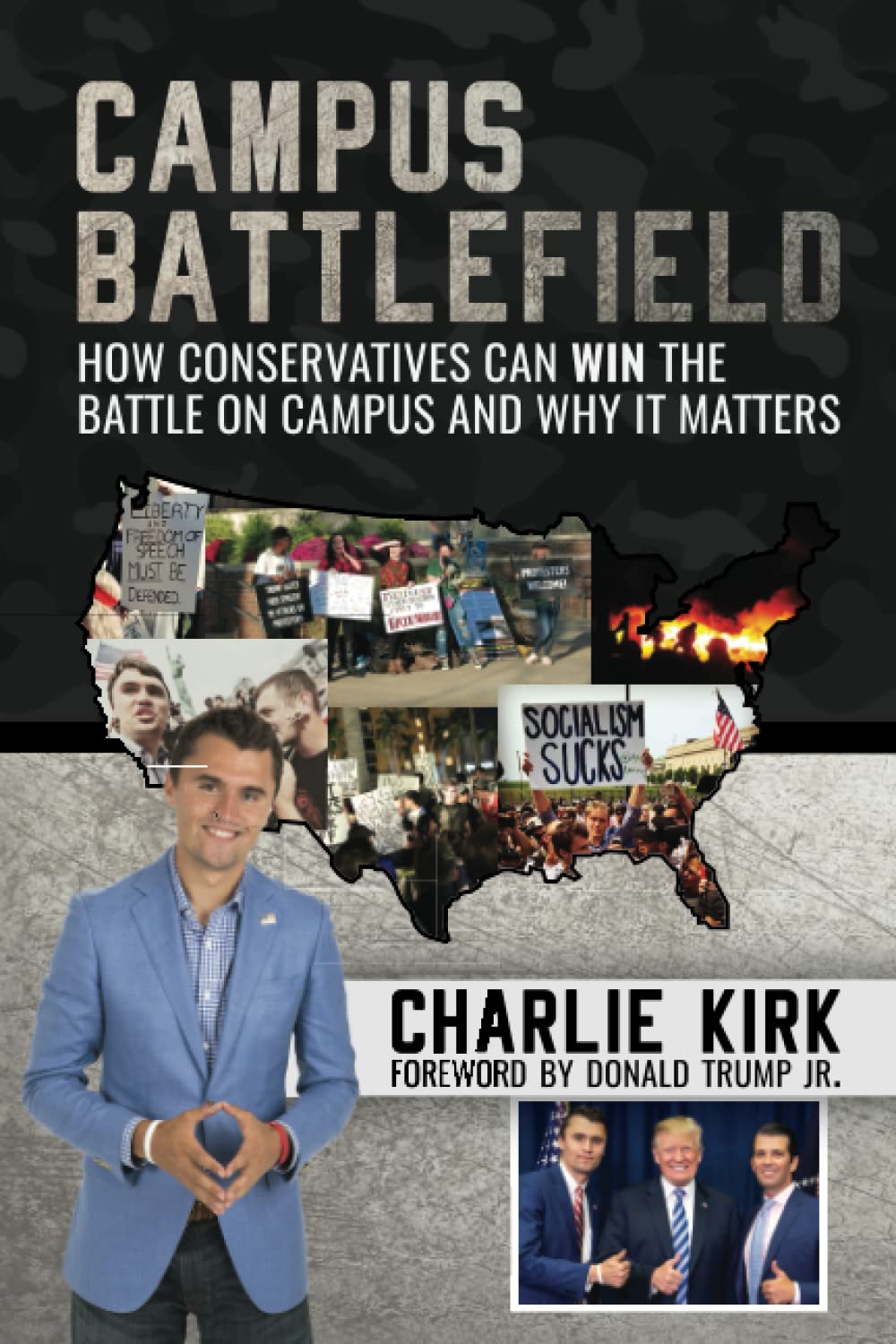
Charlie Kirk is the Founder and President of Turning Point USA, the largest and fastest growing conservative youth activist organization in the country with over 250,000 student members, over 150 full-time staff, and a presence on over 2,000 high school and college campuses nationwide. Charlie is also the Chairman of Students for Trump, which aims to activate one million new college voters on campuses in battleground states in the lead up to the 2020 presidential election. His social media reaches over 100 million people per month and according to Axios, he is one of the "top 10 most engaged" Twitter handles in the world. He is also the host of “The Charlie Kirk Show,” which regularly ranks among the top news shows on Apple podcast charts.
Charlie Kirk Defends Conservative Campus Activism and Challenges Britain to Reclaim Western Values in Oxford Debate
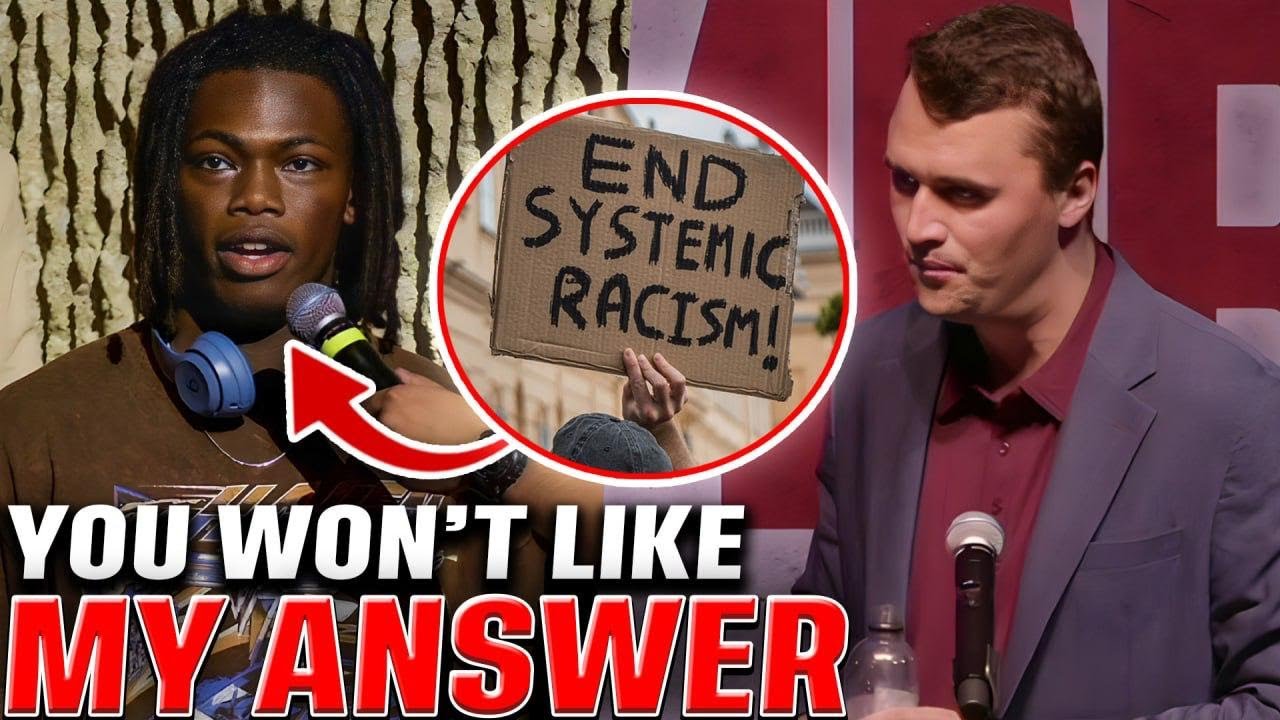
Charlie Kirk faces pointed questions from Oxford students about Turning Point USA's professor watchlist, views on bodily autonomy, the Civil Rights Act, and January 6th. Kirk defends his organization's mission to expose what he calls the "moral rot" of universities while arguing that American campuses have become places where students "look different but think the same." He challenges Britain to reject multiculturalism and return to the values that once made it great, crediting his own shift toward more conservative politics to marriage, fatherhood, and deepening Christian faith.
Charlie Kirk opened the Oxford debate by addressing criticism of Turning Point USA's professor watchlist, which has drawn fire from organizations like PEN America for allegedly intimidating professors who express controversial views. Kirk defended the initiative without hesitation, explaining that Turning Point USA has grown to become the largest campus conservative organization in the country, operating on over 3,000 high school and college campuses.
Kirk argued that conservatism, which he defines as the defense of Western values, free markets, rule of law, individual initiative, entrepreneurship, and the Constitution, is widely underrepresented on American campuses. He characterized modern universities as places that "strive to have everyone look different but think the same."
Regarding the watchlist itself, Kirk was blunt: "If these professors don't say obscene things, then they will not end up on our watchlist. I'm talking about professors that were excited about what happened on October 7th. I'm sorry, if you're excited about what happened on October 7th, then you deserve to be on a professor watchlist and people should know all about you."
Kirk rejected the notion that publicizing professors' statements constitutes intimidation, calling such claims "laughable." He framed it as using free speech to expose professors who are "making America a worse country," asserting that higher education in America "has largely posed a threat to Western values."
Truth Claims and Intellectual Diversity
When questioned about how promoting a fixed set of values at Turning Point Academy stifles intellectual growth, Kirk pushed back on the premise. He argued that any educational system must eventually make truth claims and establish what is good.
"At some point you're going to have to get to a truth claim," Kirk explained. "So even to say that you want intellectual diversity means that you think intellectual diversity matters, but by what standard?"
Kirk, who identifies as a Christian, referenced Tom Holland's book "Dominion," noting that Holland, educated at Oxford, argued that even critiques of Christianity use Christianity itself. Kirk maintained that while students should read different books and authors, "the purpose of education is not to have an endless buffet line for students to sample every bad idea in the world. It's to point them to the good, the true, and the beautiful."
He explained that education in Latin means "to lead forth," originally referring to leading students out of Plato's cave. At Turning Point Academy, Kirk said they make no apologies for instituting beliefs in God, the defense of universal human equality, and other foundational values.
Bodily Autonomy and Vaccine Mandates
Kirk faced questions about reconciling his support for freedom with his opposition to abortion and trans-affirming healthcare. He seized the opportunity to highlight what he sees as hypocrisy from critics.
"I find it laughable, not from you of course, but some of the people that are always very critical: 'Charlie, why don't you just believe in bodily autonomy?' I'm sorry, didn't you just mandate a vaccine for the last couple years?" Kirk said, noting he couldn't visit the UK for two years without a vaccine. "So it's my body, my choice if it's another human being in the womb, but it's not my body, my choice if I want to take a vaccine."
Kirk drew a distinction between liberty and license, defining liberty as "the pursuit of things that allow human beings to flourish at its highest possible potential" while license encompasses actions that don't promote flourishing.
On abortion, Kirk stated clearly that under Western morality derived from Christian constructs, no one has the freedom to murder another human being. He affirmed that life begins at conception and therefore deserves universal human rights.
Regarding trans-affirming care, Kirk expressed more nuance for adults over 18 but drew a firm line for minors. He praised the UK's Cass Report, which questioned trans-affirming care for children, and argued that just as societies limit freedoms for young people in other areas, there should be prohibitions on what he called "life-altering irreversible gender affirming care" for those going through what might be a temporary phase.
Youth Vote Success in 2024
When challenged about Trump's youth outreach in 2020, Kirk quickly pivoted to his organization's success in 2024. He pointed out that Turning Point USA ran "basically the entire youth operation" in the most recent election and won the youth vote in Michigan.
"We crushed the youth vote," Kirk declared. "Even Democrats acknowledge it. There's story after story after story: Why are young people moving so far to the right?"
Kirk cited data showing that in several key battleground states, Trump performed 10 to 25 points better among young voters in 2024. He noted that both young men and young women moved to the right dramatically, and according to the Yale Youth Poll and Harvard Youth Poll, young people are now Donald Trump's most loyal cohort.
Looking to the future of conservatism among young people, Kirk expressed optimism: "I think it's going to be the dominant, God willing, dominant worldview amongst young people in America. And it's ascendant."
He explained that young men are on pace to be the most conservative generation in history, with young women following suit. Kirk identified two distinct groups within Gen Z: those who finished college around COVID and those who were in high school during the pandemic. The latter group, he argued, had their most formative years obliterated by masks, Zoom school, and rising suicide rates.
Kirk also pointed to what he called "Floyd Palooza," the 2020 racial unrest following George Floyd's death, which he characterized as the country deciding "to burn our country because a guy drug overdosed on the streets of Minneapolis." He insisted this is factual based on the Hennepin County Medical Examiner report.
Problems with the Civil Rights Act
Kirk condemned the Civil Rights Act of 1964 as a "huge mistake," a position that raised eyebrows among the Oxford audience. He clarified that his issue wasn't with the intent but with how broadly the legislation was written.
"Nothing against the intent, but it was too broadly written and it played into something called disparate impact," Kirk explained. He defined disparate impact as a legal theory that says if two racial groups have different outcomes, the answer must be racism, without allowing for legal nuance.
Kirk identified four components of what he calls the "anti-racist regime of America": affirmative action, critical race theory, DEI, and disparate impact. He argued the Civil Rights Act led to affirmative action, which he characterized as "weaponized reverse racism against Asian and white people."
The Act also blazed the trail for disparate impact as a legal theory, Kirk said, which prevents consideration of marital differences, cultural differences, or single motherhood issues when explaining disparate outcomes. He argued it's now being used to oppose voter ID and election integrity measures.
Kirk contended the Act should have been a single page or two-page bill stating simply that discrimination based on skin color is prohibited. Instead, "we get a multiple 100-page bill with lots of chapters and lots of lesser-known amendments that created basically a permanent anti-racist bureaucracy within our federal government to go find racism where it doesn't exist and create it new places where otherwise did not exist."
Complicated Views on Martin Luther King Jr.
Kirk's comments on Martin Luther King Jr. revealed nuance often missing from conservative commentary. While acknowledging MLK's famous quote about judging people by the content of their character rather than the color of their skin, Kirk described him as "awful, not a good person," though he later clarified he's also complimented him.
"First of all, he was a personally morally flawed man," Kirk said, quickly adding that many people he looks up to are morally flawed and "we're all sinners."
Kirk's main contention centered on what he sees as a mythology around MLK that doesn't warrant the reverence he receives in America. He argued that MLK is treated as "the new founding father" and that at the end of his life, MLK "advocated for a more communistic view and then actually got away from race blindness and actually got towards race obsession."
The deeper issue for Kirk is that the Civil Rights Movement resulted in refounding the country. "We cast aside our founding roots and our founding documents, the US Constitution, and we decided to basically usher in the Civil Rights Act as a new anti-racist dogma creed," he said.
Kirk objected to the fact that America now has a national holiday for MLK while eliminating the national holiday for George Washington, changing from Washington's Birthday to Presidents' Day.
January 6th Was Not an Insurrection
When asked whether his rhetoric and claims about a stolen election contributed to the January 6th Capitol attack, Kirk dismissed the question as "somewhat irrelevant" and answered with an emphatic no. He noted that Turning Point USA students "didn't even go to the Capitol and peacefully went home."
Kirk rejected the characterization of January 6th as an insurrection "by any means whatsoever." While acknowledging that some people acted improperly by assaulting police officers or breaking windows, he argued that many people simply walked into the Capitol building through open doors, walked between queued lines, and said a prayer.
"These are the people that walked around with pocket constitutions and they were smeared in the largest witch hunt and manhunt, I should say, the largest manhunt in American law enforcement history that resulted in 1,300 arrests of nonviolent offenders that walked into the people's house in the United States Capitol building while violent crime rose in almost every major city in the country," Kirk said.
Biblical Views on Sexuality and Marriage
Kirk faced questions about comparing same-sex sexual behavior to drug and alcohol use while also claiming to welcome gay people into the conservative movement. He responded by grounding his views in scripture rather than personal opinion.
"It doesn't matter what Charlie Kirk believes. That's a view derived from scripture," he explained. "The Bible talks very clearly about God's natural order. We see this reflected in the natural law."
Kirk noted that some of his closest friends and people who work alongside him at Turning Point USA "participate in a same-sex lifestyle and that's their own prerogative." But when asked what he believes and why, his answer comes straight from scripture.
On marriage, Kirk maintained his position that it's between one man and one woman, regardless of polling showing most Americans support same-sex marriage. "I don't derive my morality from up or down vote," he stated simply.
A Challenge to Britain
Throughout the debate, Kirk didn't shy away from offering pointed commentary on Britain's current state. When asked about far-right discourse being inflamed by organizations like Turning Point USA, Kirk responded: "If the truth inflames you, you have a problem. It's not my problem."
But his most passionate moment came when discussing the role of Turning Point USA and the future of conservatism. After noting the organization's commitment to respectful dialogue through open mic campus debates, Kirk turned his attention to his British audience.
"For the three conservatives that are here tonight, I hope you guys get your mojo back," Kirk said. "This was once a great country. I want to see it great again. You guys are a husk of your former self. You guys, you can laugh and sneer all you want, but the country that split the atom and invented the steam engine and eradicated slavery and brought common law to the world can do a lot better than this."
Kirk acknowledged that Britain's existence led to America's existence and expressed hope that the country would find leaders to restore it. While declining to give specific political advice, he shared his wish for the world, which he said "feels like it's missing something" when Great Britain isn't at its best.
"Be proud of your heritage. You've done good for the world. Stop apologizing. Get your energy. Get your vitality. Get what made England and made Great Britain such a phenomenal place," Kirk urged. "I hope you get that back. And I hope that you reject the swan song of multiculturalism and get back to the fundamental truism that a strong Britain means a strong world and therefore a strong West and we can stand up for what is good, true and beautiful."
Personal Evolution Toward Conservatism
Kirk acknowledged that his politics have become more conservative in recent years and identified two main causes for this shift: marriage and fatherhood, and deepening faith.
"Getting married and having children, something that I hope all of you do, getting married and having children is an objective good thing for yourself and for society," Kirk said. He expressed concern about declining birth rates in the West and explained that having children helped him understand what he's fighting for and the threats against their well-being.
The second factor was getting more serious about his faith, which has clearly shaped his worldview and his positions on issues from education to sexuality to the fundamental nature of Western civilization.
Meritocracy and IQ Testing
In response to questions about making education more equitable for disadvantaged students without affirmative action, Kirk proposed a controversial solution: IQ tests.
"IQ tests don't have anything to do with background," Kirk argued. "Meaning like if you have somewhat of an equal nutritional capacity, it doesn't matter how much you study or you get an IQ maybe get an IQ tutor and boost it by a couple points, but we should bring back IQ tests in the West."
When asked whether equal treatment is possible without considering external factors like economic background, Kirk said such factors can be considered, but insisted that affirmative action as practiced in America isn't about that. He noted that affirmative action was race-based, giving points based on "melanin content" rather than merit, and celebrated the Supreme Court striking it down.