Up Next

Ben Shapiro Honors Charlie Kirk's Greatest Debate Moments After His Tragic Assassination
19:28
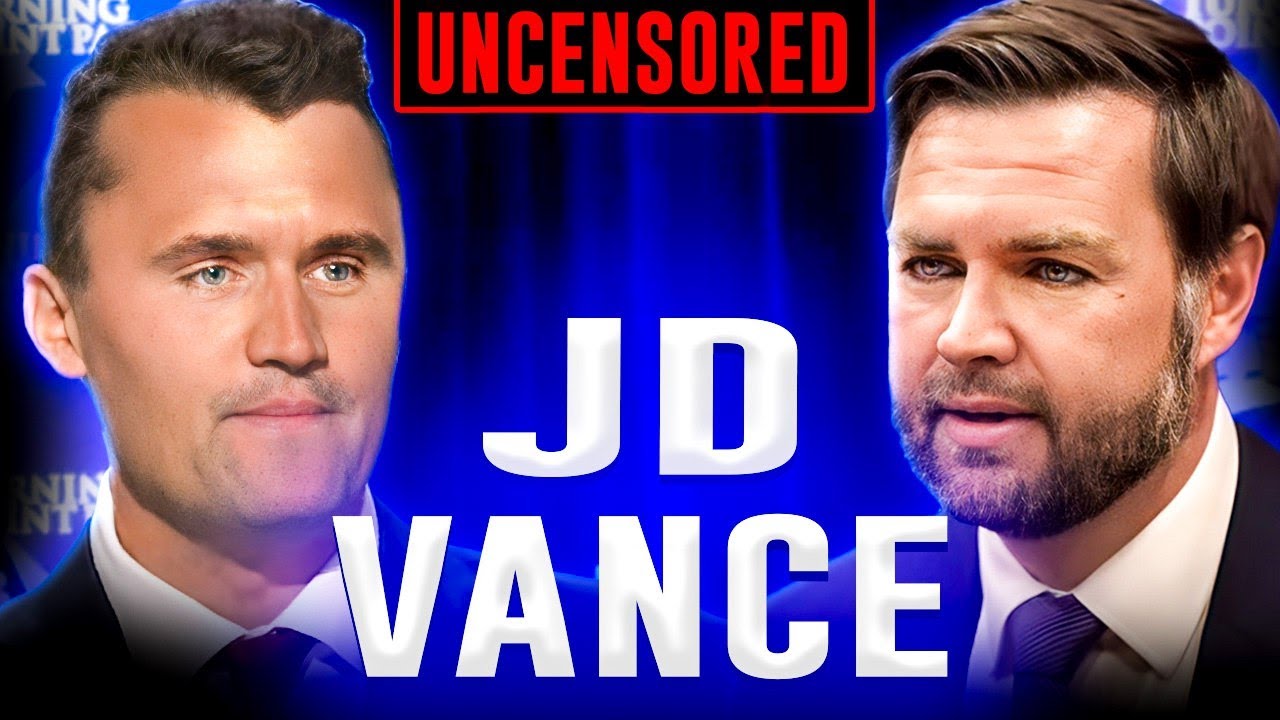
JD Vance Warns Gen Z About Becoming Paupers in Their Own Country at High Point University
46:55

Charlie Kirk Debates Cambridge Students on Faith, Free Speech, and Western Values at Cambridge Union Event
1:41:24
Charlie Kirk on Strong Men, Western Civilization, and Why the Left's Cultural Revolution Failed
Charlie Kirk, founder of Turning Point USA, delivers a compelling defense of traditional values at Oxford Union. Kirk confronts controversial topics including immigration reform, birthright citizenship, abortion in cases of rape, the rising influence of China, and what he sees as the systematic attack on masculinity in the West. Drawing connections between strong men and civilization's survival, Kirk argues that President Obama's cultural revolution ultimately failed, that mass deportations represent the will of the American people, and that the West must return to its Christian roots to reverse declining birth rates and rising suicide among young people. He warns that Europe faces a critical choice between embracing Western values or looking eastward to China.
The Foundation of Civilization and the Role of Strong Men
Charlie Kirk opened his remarks at Oxford Union with a powerful thesis about the relationship between masculinity and civilization. "Strong men built the West and won the wars and built the building that we're in right now," Kirk stated. "And without strong men, then you all of a sudden see civilization unfold upon itself. And we're seeing that happen in real time."
Kirk's appearance at Oxford followed a previous engagement at Cambridge, where he noted the remarkable interest British students have in American politics and constitutional governance. As founder and president of Turning Point USA, a prominent conservative youth organization with presence on over 2,000 high school and college campuses across the United States, Kirk has built a reputation for direct engagement with challenging questions on contentious topics.
Birthright Citizenship and Immigration Reform
Kirk began the substantive portion of his remarks by addressing the 14th Amendment and birthright citizenship, explaining that current American law allows a pregnant woman from Beijing to fly to San Francisco, give birth, and have that child become a full US citizen with no restrictions. "Most of the rest of the world doesn't have it," Kirk observed, noting that the United Kingdom does not grant automatic citizenship through birth tourism.
He explained that while the Supreme Court ruled in the 1890s that the 14th Amendment applies to children of permanent residents, it has never been definitively decided whether illegal immigrants' children qualify for birthright citizenship. Kirk advocated for joining other nations in eliminating this practice, arguing that prospective citizens should "apply like everybody else and get in line."
On the question of what happens to children born to undocumented immigrants who have been in the country for years, Kirk was unequivocal: "They do not become US citizens." He explained that the administration's position is to deport everyone in the country illegally back to their country of origin as full family units, noting that Trump won both the popular vote and electoral college on a platform that included mass deportations.
The South African Asylum Controversy
When questioned about the Trump administration expediting refugee applications for white South Africans claiming racial discrimination, Kirk defended the policy by pointing to explicit threats against this population. He noted that one of South Africa's leading political parties openly chants "kill the boer" at political rallies, referring to white South African farmers.
Kirk described crosses filling roads for miles, representing white South African farmers brutally murdered in their homes, often in the name of land reparations. He found it telling that American leaders who had been comfortable granting asylum to millions were suddenly concerned when "15 white South Africans" sought protection from government-endorsed racial violence.
He clarified that asylum decisions should be made on a case-by-case basis, and that America should extend similar consideration to other groups facing genuine persecution, such as Nigerian Christians being killed by extremists, provided there is clear evidence of state-sanctioned or politically endorsed violence.
Abortion, Brain Death, and the Value of Life
Kirk faced intense questioning about a Georgia case involving a brain-dead woman being kept on life support due to the state's restrictive abortion laws that ban abortion after cardiac activity is detected at six weeks. When pressed on whether a brain-dead woman should be used as a vessel for life, Kirk reframed the moral question.
"How can you actually have a baby fully develop within you if you're dead?" Kirk challenged. "People that are called dead, they could still get pregnant. Women who are dead still menstruate." He argued that since the woman cannot express her current wishes and the baby can potentially survive, society should "yield on the side of life."
Kirk then posed a fundamental question: "What is the moral difference between the baby and the woman? Are they not both human beings? Why all of a sudden that we're able to say that she's older and more developed that you can eliminate the smaller being?"
On abortion in cases of rape, Kirk presented what he called a thought experiment: "I have two ultrasounds here. One of the ultrasound is a baby that is conceived in rape. The other one is from a loving marriage. Do we know which one is which?" His point was that both are human beings deserving of human rights regardless of the circumstances of conception.
Kirk acknowledged that rape cases present "the hardest thing that we have to defend," but maintained that there is no moral justification for "doing something evil after an evil act when a life is eliminated." He noted that he regularly meets young people on college campuses who were conceived in rape and "are flourishing and doing amazing things."
The Fertility Crisis and Western Demographics
When asked about the relationship between abortion restrictions and falling birth rates, Kirk pointed to Texas as evidence for his position. Since Texas abolished surgical abortion while still allowing medication abortion, birth rates have increased by approximately 200,000 babies over 18 months compared to previous years.
"In the UK and America, we wouldn't need as many third world immigrants if we didn't kill our babies all the time in the womb," Kirk argued, connecting immigration policy directly to abortion and demographic trends.
Masculinity, Red Pill Media, and Cultural Values
Kirk offered strong support for what he termed traditional masculinity while rejecting toxic elements of some online content. When asked about figures like Joe Rogan, Kirk was enthusiastic: "He helps save civilization. He's a bow hunter. He's fun."
However, Kirk drew clear lines about sexual ethics, stating: "I know this crazy Christian idea of saving yourself until marriage and not having sex until marriage. I believe abstinence is not talked about enough." He argued that using women as objects or promoting hookup culture degrades both men and women.
Kirk diagnosed a crisis among young men in the West: "We have the lost boys of Peter Pan that are basically watching porn all day long and doing drugs and they don't have to go on an adventure to mature themselves. They have nothing significant to aim for."
He argued that young men need challenge and something that "elevates them above their primitive state of just indulging the flesh," warning that an entire generation of men in middle America has "completely disappeared" due to what he sees as a hyperfixation on feminism and female empowerment without acknowledging men's essential role in building and defending civilization.
Project 2025 and Administrative Reform
Kirk expressed strong support for Project 2025, particularly its focus on deconstructing the administrative state. He noted that while he hasn't read all 1,200 pages, he supports the sections he has reviewed.
Kirk pointed to immediate results from the Trump administration's approach: "In April 60,000 people last year came across the southern border illegally. This one? Six." He credited this dramatic reduction to executive action rather than new legislation, arguing that America "just needed a new president who knew what to do and actually cared about sovereignty."
He rejected the previous administration's claims that border security was an unsolvable problem, stating that operational approaches like "Remain in Mexico" proved effective when properly implemented.
President Obama's Legacy and Cultural Transformation
Kirk described Obama as "a failed cultural revolution agent," explaining that Obama believed he would "bring forth a great awakening and a reconfiguration of America." Instead, Trump's 2016 victory interrupted what Obama expected would be a continuation under Hillary Clinton, including the appointment of three additional Supreme Court justices.
Kirk noted that he doesn't automatically hate Obama, acknowledging that "he's very talented. He's very charismatic. He's very good on his feet. He respected the White House. He respected the Oval Office." However, Kirk argued that Obama's vision for America "has failed" as evidenced by Trump's popular vote victory and shifting support among young voters, who moved toward Trump in the most recent election.
DEI, Affirmative Action, and Meritocracy
Kirk strongly opposes diversity, equity, and inclusion initiatives, arguing that DEI really stands for "didn't earn it." He identified four interconnected concepts: critical race theory as the philosophical framework, affirmative action as the practical implementation, disparate impact theory as the legal justification, and DEI as the corporate manifestation.
Kirk's primary concern is that DEI demands hiring "ridiculous diversity departments" that function as "speech police" internally, making companies less productive and less able to compete against China. He argued that any organization aiming at anything other than excellence and meritocracy will "compromise those things."
"If all of a sudden you want to be equitable, well maybe that company will not be that good anymore," Kirk warned, pointing to what he sees as a slippage of excellence across Western institutions.
Tariffs, China, and Western Self-Sufficiency
Kirk expressed strong support for Trump's tariff strategy, viewing it as necessary to address Western dependence on China. He noted that tariffs brought many countries to the negotiating table and that the UK received favorable treatment in bilateral trade deals.
The fundamental question, according to Kirk, is whether Europe and the United Kingdom will "embrace the West or look very far to the east." He identified the Chinese Communist Party as "the greatest threat" to Western values, pointing out that America currently produces none of its own vitamin C, antibiotics, or critical pharmaceuticals.
Kirk warned that the US cannot manufacture the components needed for four submarines annually, managing only two because parts must come from China. "We have grown addicted to cheap products," he argued, while cautioning against underestimating Chinese manufacturing capabilities, which he described as highly organized and industrious.
He noted that being head of a manufacturing plant in China carries prestige equivalent to being a small-town mayor, with direct access to governors, indicating how seriously China takes industrial production. Kirk argued that tariffs will remain on critical manufacturing goods like rare earth minerals, which are essential for smartphones and other technology.
The Sabbath and Digital Disconnection
In response to a question about his Saturday Sabbath observance, Kirk revealed he is writing a book titled "Stop in the Name of God: Why Honoring the Sabbath Will Change the World." He explained that in "this hypermaterialistic, very fast, digitally frenzied world," the Sabbath represents a gift that modern society has glossed over.
Kirk cited empirical evidence that people who honor the Sabbath live longer, are happier, and have better health outcomes, pointing to Seventh-Day Adventists as an example. "Everything about disconnecting from modernity is good for you. It isn't arguable," he stated.
He described his personal practice of turning off his phone from Friday night through Sunday morning, making that time distinct for his best thinking and family time. Drawing from Deuteronomy's retelling of the Ten Commandments, Kirk noted that Moses said people shouldn't work seven days "because you're no longer a slave," implying that "only slaves work for seven days."
Kirk argued that the Sabbath serves as "a phenomenal civilizational preserving tool" that has helped the Jewish people thrive despite persecution and displacement throughout history.
Israel, Palestine, and the Three-Part Distinction
Kirk emphasized the importance of distinguishing between three separate concepts: Jews as a people and religion, Israel as a state, and the Israeli government. "Not everyone who is against Israel hates the Jews, but everyone who hates the Jews is against Israel," he observed.
He argued that it is possible to "support Jewish life and support Jews and support Israel but not support this current Israeli government," noting that he has both agreements and disagreements with Netanyahu. Kirk believes this distinction could "deescalate a lot of the fingerpointing" in current debates.
On Israel's existence, Kirk aligned with what he called an Ezekiel 36 view of a prophesized reconstitution of Israel, though he emphasized he is "not a theologian" and prefers not to delve deeply into end-times theology. He describes himself as "pantrib," joking that "it's all going to pan out in the end."
Kirk acknowledged that "it is miraculous that Israel in this current form exists," considering the attacks from all directions since its founding. He argued the more important moral question is not whether Israel should have been formed, but whether "a country has a right to be able to defend itself into existence."
Regarding October 7th, Kirk stated unequivocally that Hamas's actions were not "a fight for self-determination" but rather "something horrific and brutal and evil." He criticized anyone who downplays what happened that day while also acknowledging that "war is awful" and expressing distress at videos of children being killed in Gaza.
Race, Policing, and Criminal Justice
Kirk rejected the concept of systemic racism in US policing, arguing that "a police officer is actually 18 and a half times more likely to be shot by a black person than vice versa." He cited Washington Post data showing only 10 to 15 unarmed black people are shot by police annually.
Addressing disproportionate representation in crime statistics, Kirk stated that black Americans make up 13% of the population but account for 55 to 60% of murders, thefts, and carjackings. "When you commit more crimes, you have more interactions with the police," he explained, arguing that some of those interactions will inevitably go wrong.
On wrongful convictions, Kirk attributed disparities more to income level and quality of legal representation than race itself. He made the provocative claim that if all murders in Chicago were solved, the percentage attributed to black perpetrators would increase rather than decrease, since only 50% of murders are currently solved and most unsolved cases involve gang violence in predominantly black neighborhoods.
Kirk advocated for increased rather than decreased policing in high-crime areas, pointing to New York's experience with heavy policing in certain neighborhoods leading to dramatic reductions in murder and theft rates. He identified the "Ferguson effect" and "Floyd effect" as examples of crime rates skyrocketing when police retreat from communities, with murder rates reaching levels not seen since the 1990s.
Transgender Issues and the Cass Report
Kirk addressed transgender issues by first stating fundamentally that "you can't be what you are not. If you are a man you can't become a woman. If you're a woman you can't become a man." He praised the UK for being "better on the trans issue" than the United States, noting that the British Supreme Court recently provided clear definitions distinguishing men from women.
He celebrated JK Rowling as "a hero," observing how "the left will no longer applaud their heroes when you differentiate from the faith." Kirk noted the dramatic shift in how Rowling is treated simply for stating "that a woman is a woman and a man is a man."
Kirk cited Dr. Miriam Grossman's book "Lost in Trans Nation" and particularly praised the Cass Report, which led to significant changes in UK policy on gender-affirming care. He called it "sick and medieval and awful" to perform surgical interventions on 14-year-olds experiencing what he termed "momentary puberty anxiety."
He credited the UK with being a leader in recognizing problems with gender-affirming care and praised the country for slowing or halting such interventions based on the Cass Report's findings.
Free Speech, Lucy Connolly, and the Future of Britain
Kirk identified "the left" as the biggest threat to free expression in higher education, though he clarified an important distinction: "My wish for the left is that you will become liberal again and no longer leftist. Free speech is a liberal value. It is not a left-wing value."
He pointed to the case of Lucy Connolly, who was sentenced to two and a half years in jail for a social media post about a migrant hotel that she later apologized for and deleted. "You should be allowed to say outrageous things. You should be allowed to say contrarian things," Kirk argued.
Kirk warned that Britain has failed to codify free speech protections like America did, and now those protections have essentially vanished. He challenged his audience to imagine a future where Reform UK and Nigel Farage take power: "Do you want Nigel Farage, prime minister, to be able to lock you up if you criticize his government?"
He predicted that Britain is on the verge of a political revolution similar to what happened in America, citing the "same vibe" he sees among the working class and "muscular class" in London. Kirk called for "a value-neutral free speech policy" that protects expression "regardless of who is in power," describing this as "the bedrock of a liberal democracy."
Conservative Principles and Western Revival
Kirk concluded by articulating what conservatives stand for beyond mere opposition. While acknowledging clear opposition to "woke stuff," mass migration, and "insidious values," he emphasized that conservatism stands for "what has worked, what is good, what is true, what is beautiful."
He called for reversing fertility rates, increasing church attendance, and dramatically reducing suicide rates, noting that the younger generation is "the most suicidal, the most anxious, the most anti-depressant addicted generation in history" despite being "the most wealthy and the most prosperous."
This contradiction, Kirk argued, proves that "material conditions alone" do not "dictate happiness or well-being," representing "a flaming indictment" of purely materialistic worldviews. He believes the answer lies in the soul and in recovering "a moral code that we have forgotten" and "a root to our existence that we have cut off."
Rather than creating "a new moral code," Kirk advocated for returning to "what gave us the civilization in the first place, what is divine, what is everlasting." He cited Tom Holland's book "Dominion," which argues that everyone living in the West, regardless of personal beliefs, is "an inheritor of a Christian tradition."
Kirk concluded that concepts like honoring your neighbor, helping the poor, charity, and natural rights are "somewhat weird ideas when you actually think about it," and rather than manufacturing "a counterfeit new morality, we should go back to our Christian roots."
Video Transcript
Strong men built the West and won the wars and built the building that we're in right now. And without strong men, then you all of a sudden see civilization unfold upon itself. And we're seeing that happen in real time. Charlie Kirk is the founder and president of Turning Point USA, a prominent conservative youth organization with a presence of over 2,000 high school and college campuses across the United States. He served as the chairman of students for Trump which focused on mobilizing young voters during the 2020 presidential election. Kirk is the host of the podcast the Charlie Kirk show and maintains a social media presence following with high levels of engagement across all platforms. So please welcome me introducing Charlie Cuck. [Applause] Welcome. Thank you. Uh honor to be here. Thank you so much. Um, so I'm going to go straight into it. Um, so some of my first questions are regarding immigration. Um, so you've argued that the 14th amendment polic um, 14th amendment has been misapplied to undocumented immigrants. If and if so, you oppose birthright citizenship and if you do oppose birthright citizenship, what alternative system would you propose for determining for determining who is automatically a citizen citizen? and how would you address the risk of creating a legally precarious or stateless class of US-born children? Okay, it's a good question and first of all, thank you for having me and great to be here everybody. So, if you don't what I I was amazed um I was uh at the other place yesterday. So, we hope that uh you guys are going to be even better, right? We'll see what happens. Um the I was amazed by how much you guys care about American politics and you know about our system of government. So, if you don't know, I'm just going to kind of just give you a quick overview. So, we have the 14th Amendment. It was one of the post civil war amendments. Uh it's been used to applied for a lot of different things. Um one of the ways that it's been debated is this idea of birthright citizenship. So birthright citizenship is that currently in America you could fly from Beijing, China, 9 months pregnant, land in San Francisco, go to the hospital and your baby is a full US passport uh passport holder, full US citizen. No reservations, no, you know, asterric, nothing at all whatsoever. So that is what's called birthright citizenship. Uh most of the rest of the world doesn't have it. I don't even think you guys have it here in Britain where you could just come into the country and have a baby and you get a passport and you become a full citizen. Um, so the question is does the 14th amendment apply to the children of non-citizens? Well, the Supreme Court ruled in the late 1890s in what's called the Wong case that it does apply to the children of permanent residents. uh and well since 1890 I think it was 1898 or something similar to that it has not yet been decided or adjudicated whether or not illegal immigrants or non-American non-permanent resident non US passport non green card holders and their children can get birthright citizenship. I think that we should join the rest of the world including your country uh and not give just full US citizenship for people that come on birth tourism to the United States. Thank you. Um, so then what is the alternative system you propose? Because I know the UK has a similar system, but I think Ireland still has kind of like the birthright citizen state um and stuff like that. So what would be your alternative? Well, to the birthright citizenship question, just get rid of it just and replace well there should be no replacement meaning that if you want to come to the United States of America, apply like everybody else and get in line and you don't get to show up pregnant and have a child and that child becomes a full US citizen. So in terms of situations where like the parent has been an undocumented immigrant for a couple of years or decades at this point and they're having children, where does that leave the children? Do we then create like a a state of like basically people who don't have kind of like do documentation? Yeah. Yeah, that's correct. They do they do not become US citizens. So our belief is that we should deport everyone who is in our country illegally back to their country of origin. Something that finally your Labor prime minister is waking up and saying he wants to do. I hope he actually does it, but it's quite a concept that you're not allowed to come into a country unless you're invited. And so we in the United States just won a popular vote election, a popular vote majority and electoral vote majority uh under the idea that we want mass deportations. So if you are in our country illegally, the United States, it is our plan to return you back to your country of origin as a full family unit. Okay. Thank you. Um, and then talking about kind of the idea of mass deportation and basically Trump winning an election and that we've seen recently that he's been expediting the refugee applications of white South Africans claiming they are victims of racial discrimination. Um, considering what you've just said about kind of mass deportation being the few. Um, what do you think justifies the embrace of white South African immigrants? Um, yeah, white South African immigrants and their temporary legal protections that Trump is granting them. Well, for one, the the one of the leading political parties in South Africa is saying that we should kill the boar over and over again in a endorsed chant from the top leaders in a political rally saying that we should go kill the white South African farmer. You can look at videos of crosses that will fill roads for miles of white South African farmers that have been brutally murdered in their home basically because of what is called land reparations at worst. So this is a at best and then there's another word that we could use for it which we'll see if it actually qualifies for that as time goes on. But yes, I mean this is a group where a government has decided that we want we are endorsing the worst and most ven venomous form of racial hatred against white South African land owners and they're fleeing appropriate asylum with the United States. Hilariously, it's only been like 25 people that have received this asylum. And the American leaders have been completely okay with every other type of person on the planet to be granted asylum. Like 15 million people, they want to grant asylum. But when 15 white South Africans want to show up to the United States and have asylum because there's actually an endorsed mantra and chant to kill them, all of a sudden there's a major issue. I I wonder why. Thank you. So then considering that so if it applies to for example Nigerian Christians being killed in Nigeria um and other kind of like world atrocities we're seeing across the world where people are in a vulnerable position you would agree then that they also should have their it can again it's a case by case basis and if if one of the leading political parties in Nigeria whether it be the Muslim or the Christian faction was outwardly saying we must kill the Muslims or we must kill the Christians we're a very generous country we're willing to look at all the cases associated I happen to know the South African one better than the Nigerian One, I mean, Nigeria is the most populated country in Africa. So, it's not unreasonable that something like this could happen. But the United States of America is a generous country. We've been known when it meets the criteria that we are a place that you can find safe refuge. The problem is our asylum process has become a scam the last 15 years where people from countries just that have high crime rates are able to say that I am fleeing violence to come to the United States of America. Well, guess what? The United States is also very, very violent. You go to Chicago, you go to Philadelphia, it's not exactly a good cause or good claim. And that is in a bad way. That is a way where our compassion as Americans is being taken advantage of for an ulterior political motive. Thank you so much. Um, moving on slightly to a different topic um, which is abortion. Currently, there is a woman who has been declared brain dead in Georgia and is being kept on life support because the state's restrictive abortion abortion laws that ban abortion after cardiac activity is detected generally at 6 weeks. So, I want to basically ask you a your thoughts on that and how you think kind of like the pro-life arguments apply. I'm having a hard time hearing. So, you said there's a woman in Georgia that's on life support because she was not able to get an abortion. So, she's being kept on life support because she still has this baby in her womb. Um, and she has what? I'm sorry. She still has this baby. Um but she's like brain dead, completely brain dead. She still has a baby. Yes. But she's being kept on life support just because of this baby. Um and this is just due to the state's restricted restrictive abortion laws that ban abortion after cardiac activity is detected. So I I don't know enough about the case. Why is she on life support? Is it a pregnancy induced ailment or is it a unrelated separately ill? But the idea is she's completely brain dead. So basically the only thing that's keeping her alive is this machine because of the baby due to the restrict restrictive abortion laws. Yes. I mean that baby is going to be able to live. Praise God. And that that that mom will now her parting gift to the world will be another life. I think that's beautiful. Unless there's a an element of the case I'm missing like she has pregnancy induced sepsis or there's something related to the case that I'm not aware because I do believe in the exception for the life of the mother. But I don't that doesn't sound like that's what this case is. So to be clear, like the mother is dead and like she Hold on. How is she dead if she can? Hold on a second. How could she How is she dead if you congested a baby? She's She's brain dead, but she's not dead. Hold on a second. She's brain dead, but let's let's let's reexamine what being dead means. How can you actually have a baby fully develop within you if you're dead? And that's what's always so interesting. People that are called dead, they could still get pregnant. Women who are dead still menstruate. They still when they are stabbed their adrenaline levels go up and I again this goes back to the fundamental question of what is a human being and when does life begin and it would be very interesting shouldn't the question also be I don't know what her wishes are we we do we know her wishes or not or well the thing is again she's brain dead she can't give us her wishes I'm saying though but hold on a second she could have prior to this of the pregnancy said I want to do whatever is possible to save my baby so it's not a dumb question yes but I'm I'm not saying it's a dumb question okay so we don't know so therefore since we don't know her wishes, we should yield on the side of life. And if that baby is able to survive and the mom dies, I mean, that's the that is of course the moral thing to do. Surely considering her family is kind of like, please have been to basically save her first, which is obviously not possible anymore, but I'm sorry. So, the family wants to save the mom and But you said she's brain dead, so there's no way to save her. So, she's simply just a vessel for a life. Well, do you think that's okay for women to just be vessels for life? No, of course not. In this extreme case though, which is a moral question of if you terminate the mom, the baby dies. If you can keep the mom quote unquote alive long enough, another life enters the world. That is a morally great thing for humanity to be able to say another life comes into the world when someone who is brain dead would otherwise have no contribution to the species. But what if this continues when we see more restrictive abortion laws in different states? Well, we're we're not this case that you're saying actually proves my point that she's doesn't have agency. She doesn't have consciousness. So, we should yield on the side of the protection of the human being in utero. So, here's my point. The reason why we have this case happening in the first place is because of how restrictive the abortion laws. So, here's my point. Abortion should be banned in the United States of America. And we're well on our way to do that. Well, so yes, correct. Completely. Except for the life of the mother. Okay. So in the exception of the life of the mother, you agree that that should be but in this case where we've basically have these women being vessels as brain dead individuals and we're continuing to carry these pregnancies to full term. Do you think this is like morally okay in terms of what if the woman says no beforehand she doesn't want to be carried as I guess the question I would pose to you or anybody else what is the moral difference between the baby and the woman her one is older are they not both human beings I mean why all of a sudden that we're able to say that she's older and more developed that you can eliminate the smaller being why is that okay under what moral standard it is okay to eliminate being smaller than you or because that you've been developed more in fact we should as humanity say under this very extreme case and Thank you for bringing it to my attention. I'm actually going to talk about it cuz it's it's it might be used as like a way to like put us on defense, but in some ways it shows that we value both human beings. That that mom who might not have nothing else to give. Again, the last thing that her body can actually do is to have another life, her offspring enter into the world. And of course, I will defend that because every human life is exceptionally and uniquely made. And we believe in universal human equality, the first of which is life. Okay. Thank you. Um, so some other abortion related questions kind of like touching on what you said. Um, you've kind of talked about obviously the safety of the mother being like the only kind of like bar in which you think abortion should correct. Yeah. Um, so what about abortions in cases of sexual assault or rape? Yeah. So again, let's just say I have two ultrasounds here. One of the ultrasound is a baby that is conceived in rape. The other one is from a loving marriage. Do we know which one is which? So, they're both human beings and they both deserve human rights. Someone in this audience was conceived and raped. Do you know who? Tell me, do they look different? Do they get less rights? Are you not able to have free speech rights cuz you're a rape baby? No. We believe in universal human equality regardless of how horrific or evil the method of conception is. That is what built the West and I will continue to defend that. So then what happens in cases when the baby from that is a product of rape or sexual assault is mistreated is abused? That's a separate issue. There's plenty of babies that are in loving monogous marriages that are mistreated and abused. Separate. There is no correlation. There's no moral justification to say that I think or I even have data that that baby will be mis be abused or mistreated. Therefore, murder is okay. I mean there is correlation. I think it's very clear when they've been perceived in very very horrific situations. the mother specifically as well is obviously in terms of mentally the impact they have on her that still the mother has to raise that baby all the way till 18 years old. Still not a justification for murder. And if you think that abortion is just a medical procedure or cosmetic type intervention no different than getting plastic surgery. Women have regrets after abortion. They have psychological trauma. Again, the question is do we defend human life universally as a statement? And if the question is, I'm going to just kind of well, I can eliminate the smaller life because I have regret of a sexual encounter I had, then I find a great question with that. On the rape thing though, to your point, it is the hardest thing that we have to defend. On its surface, rape is awful and terrible. Rapists should be castrated and put in life for for jail the rest of their life. The the more important fundamental question is under what moral standard it is okay to do something evil after an evil act when a life is eliminated. One of the most powerful things I get to do is go down college campuses and all the time I meet young baby young kids that were babies that were scheduled for abortions that were conceived in rape and they are full citizens of America that are flourishing and doing amazing things. And I believe that we should get back to this idea that all human beings are equal regardless of how you entered the world. Thank you. Um then considering obviously you've talked about how we need more abortion restrictions, but we're also seeing low birth rates in America and also in the West as a whole, how do you think they interacted with children? Do you think they're related? I'm sorry, just to make sure I'm hearing the question. Um and it's not your fault, it's the it's the acoustics. Um the you said uh falling fertility rates and abortion rates. Yeah, basically. So, we actually already have a window into this. In Texas, we have completely abolished uh surgical abortion. You could still do an at home abortion. Um, which is um mythopressinone, I think it's what it's called. Uh, and birth rates are up about 200,000 new babies over the last 18 months in Texas versus the years prior. And so, yeah, I mean, you in the UK and America, we wouldn't need as many third world immigrants if we didn't kill our babies all the time in the womb. Thank you very much. Um my next question is slightly a larger picture um considering not abortion but just the treatment of men and women. So what do you think the role of red pill media is in men in the men's rights movement and what are the implications you think it has for women? Okay. So you're I'm sorry you said that what is the role of right-wing media in the red pill? Yes. Red pill media. I'm sorry. I'm not I'm not trying to be No, don't worry. I want to make sure I answer the question. What is the role of right-wing media in the red pill media? I'm sorry. Okay. Red pill media. What? men's rights movement. What What is Red Pill Media? So, um I'm trying to think of a more broad definition. Can you give me a name? Think like Joe Rogan. Your Andrew Joe Rogan's awesome. Great. What's wrong with Joe Rogan? I didn't say there's anything wrong. I know. What's Joe Rogan's role? He helps save civilization. He's a bow hunter. He's fun. Okay. My my more general point is very much um content that's being produced right now regarding um men, how they act in terms of very toxic masculinity, how they treat women. Something we've seen at least in the UK was the show Adolescence came out recently. Yeah. Which was a complete fiction by the way. Talking about what was it based on? talking about the kind of the way media inter it's a mythology no different than Lord of the Rings like there's there's no basis for this I there's a slight difference well you're right the difference was that the main character was actually an immigrant not a white person that's right that's the one thing they got wrong so is it a complete fiction or is it yeah it's a mythology I mean if they would have talked about how it was like a third world Arab young kid radicalized by Islam and then started decide to go stab somebody then they would have gotten more correct in that Netflix special but yes the the the point that I think and by the way this kind of scold not you you've been great but like that ridiculous the head of the conservative party being scolded. Have you not watched adolescence? What are you talking about? As if it's like some sort of like like you have not read the catechism of like the the core faith. Have you not experienced the full eukarist? It's just like preposterous. And so I mean sorry you're asking a good faith question. um like what is the role of right-wing media? Of course, they're toxic masculinity. There's a war on men in the West. We as men are here to be protectors and defenders and providers. We should treat women with total dignity and respect, of which I'm a proponent of men. I know this crazy Christian idea of saving yourself until marriage and not having sex until marriage. I believe abstinence is not talked about enough. In fact, you want to dignify women. All of a sudden, don't have a bunch of hookup sex on Tinder and every app that you can get your hands on and start acting like men. And so in so far that any media is talking about using women as objects or as ways to try and sleep around a lot, I reject that. At the same time, I am a traditionalist where I believe most, not all, but most women in the west deep down desire getting married and having children and have a husband who loves them. We have a lot of sex in this society and we don't have enough love in this society because love comes from connection. It comes from the soul. It comes from something deeper, not just an orgasm. [Applause] Thank you. Um, thank you so much for your answer. Um, just another follow-up question on that in terms of Redpool Media. Um, specifically stuff like Andrew Tate's content, which I think is probably on the edge and kind of the fringe of it. What are your thoughts then in terms of when it kind of pushes the limits? Yeah, look, I I don't know Andrew, I've never met him. I mean, he has a certain following and he has a certain approach. I've seen some of his content, some of it I like, some of it I disagree with. I can only speak for what I believe, and I think that's fine. I mean, if there's a video or a statement you want me to respond to, I can do that. Uh, but more broadly, I think that the men of the West have been infantilized for too long. We have the lost boys of Peter Pan that are basically watching porn all day long and doing drugs and they don't have to go on an adventure to mature themselves. They have nothing significant to aim for. And part of that needs to be challenge. Young men need challenge. They need something that elevates them above their primitive state of just indulging the flesh. And that means an entire society that knows that young men need other men to communicate to them in a way that is not that you're the worst, most awful thing ever. Because we see the men of the West checking out. And I would love during our Q&A portion if somebody thinks that's a good thing or a bad thing. And if you think it's a good thing, at least you are morally consistent. If you think that the men of a society checking out is a good thing, well, you are getting your goal because that is what is happening. We have like this generation that has completely disappeared of young men particularly in my my country in the middle parts of America. I don't know if the same trends are here in the UK, but I do know that it is it is intercontinental this trend. We see it across Europe and across the UK of this hyperfixation on feminism and female empowerment while also not acknowledging that strong men built the West and won the wars and built the building that we're in right now. and without strong men then you all of a sudden see civilization unfold upon itself and we're seeing that happen in real time. Thank you so much. Um going to move on slightly in terms of topic area. Um what is your stance on project 2025? Um it's going great. To what extent do you think it's feasible in terms of all the actual clauses within it? And also in all fairness it's a thousand one it's a 1,200 page document. I haven't even read it all, but the parts about deconstructing the administrative state. There's an entire chapter of Project 2025 that our former president who wasn't even president. He was brain dead. Um, and you all know it's true and the media covered up for it and they lied about it and they smeared all of us that acknowledged it and knew it. He did not even know the year he got elected. That is a fact. You can go listen to the Robert tapes and the leader of the United States of America did not know the year that he got elected and an aid had to insert be like, "No, sir. You were actually elected in this year, not that year." He didn't know the year that he left office as vice president. He thought that his son died in combat, not of cancer. In an official testimony to the United States government about an criminal investigation, so we had an administrative state running our government. So to about product 2025, Joe Biden and the Democrats and some very weak Republicans told us the border is a pro is a problem that cannot be solved. You just have to get used to the fact that two and a half million people come into your country every single year. There's nothing you can do. in project 2025 2025 and other documents there's like no we can operationalize the border we're going to you do remain in Mexico all these other details so in April 60,000 people last year came across the southern border illegally 60,000 last April this one six President Donald Trump did not need Congress he didn't need a new act of legislation turns out we just needed a new president who knew what to do and actually cared about sovereignty so I think the project's going great I don't know all the details But I'm thrilled that America has its mojo back. Thank you very much. Um, my next question is something you said regarding Obama. Um, you described him as a failed cultural revolution agent. What did I say? A failed what? Failed cultural revolution agent. Oh, that's right. That's correct. Yeah. Can you please clarify what you mean by the statement and your position on basically DEI more broadly? What was the DEI part? So can you clarify a what you meant by that statement about Obama and then your position on DEI more broadly? Oh okay. Got it. So I'll do the second one second. Okay. So yeah Obama's revolution partly in his book Dreams from my father which I encourage you to read was that he thought that he would bring forth a great awakening and a re reconfiguration of America. And he thought that Hillary Clinton was like an automatic to become president. They thought they were going to stack the Supreme Court with three new Supreme Court justices. And his revolution never actually hit its final mark. Instead, President Donald Trump won in 2016. We got three Supreme Court justices. We were displaced from power from four years. And now, President Trump is back on top. And almost every one of the core things that Obama ran on or defended have fallen out of popularity with the American people. And so, you can like Obama. I actually think there's plenty of things you can like about him. He's very talented. He's very charismatic. He's very good in his feet. He respected the White House. He respected the Oval Office. Plenty of stuff. Like I'm not like an automatic hate Obama guy. But you must just be factual. Like his vision, what he wanted to do for America has failed. It's failed in the popular vote majority. It's failed in our public opinion polls. Young people, which used to be Obama's greatest constituency. College campuses were all on fire for Obama. Well, young people actually moved the most towards Donald Trump this last election. And President Donald Trump won the youth vote in Michigan and several other battleground states. As far as DEI, my stance on it, I'm very much against it and it they say it stands for diversity, equity, inclusion, but it really stands for didn't earn it. Can you elaborate more why you think it didn't earn it? Yeah, I mean, so again, so DEI is a is a very inoculous term that could be applied in many ways. So affirmative action is an extension of DEI and they're kind of like cousins to each other. So there's four elements to this. There's critical race theory, which is the legal, it's kind of like the philosophical theory. We could talk about it if you like. There's affirmative action, which is most most definitely in practice, if you will. And then there's uh disperate impact theory, which has been the predominant legal theory in the United States to justify the US civil rights act and it's kind of it's it's downstream tributary effects. And then there is diversity, equity, inclusion, which I think the best example of DEI can be how it's kind of taken over the corporate workforce. There's two ways I could look into it. Number one, DEI demands that you must hire these new ridiculous diversity departments for no reason whatsoever that weigh down costs that are basically speech police internally of our major companies that make it a uh less desirable place to work and honestly less productive and less likely for us to be able to compete against the Chinese communists. So, I could talk and I can give you examples on that if you'd like. The the other part of this though is that you could insert I I don't know how much you deep you want me to go into this but fundamentally DEI is about race quotas in America. I don't know if it here in the UK and so when you have a quota and you want to reach that quota you will then have to relax the standards of excellence. When you build a big organization you say this is what we stand for. Harvard for example used to stand for truth verits. Every organization must have a telos and must have something you aim at. And if you aim at anything other than excellence or meritocracy as a company, then you will compromise those things. If all of a sudden you want to be equitable, well maybe that company will not be that good anymore. And we see the slippage of our excellence here in the west where if we get away from excellence and meocratic type um undergirling philosophy and towards other other type substructures, I think it's a a remarkably dangerous proposition. Thank you very much. Um again moving slightly. um you spoke um briefly about President Trump and kind of the success he's having in the US right now. So what are your thoughts on basically the tariffs issue we've basically been seeing with the US? Uh I'm supportive. Look, when you we're talking about this, I'm sure in the Q&A, always look at the end result with Trump because the process can sometimes drive people mad and a little crazy and the up and down, but like in the first term, everyone was very critical of his Middle East policy. And then we got the Abraham Accords which was an incredible accomplishment of peace between Israel and the Amiradis and the Saudis. And so there's there's there's a process that you have to allow unfold here. As far as the tariffs, the tariffs brought a lot of countries to the table. You guys got actually a pretty good deal out of this. President Trump was generous enough to actually exempt Rolls-Royce and some of your major manufacturing in the latest trade bilateral trade deal with the United States. And I want to see our two countries grow closer together. And I think the president has the same wish. But as all the tariffs are eventually pointing at what we should and this is the question for Europe and this is the question for the United Kingdom. Will Europe and the United Kingdom decide to embrace the west or will will it look very very far to the east? The the rising power struggle in front of us is all the things we've talked about. But it really is the Chinese Communist Party versus Western values. The Chinese Communist Party is anothetical to even those of you that are liberal in this audience right now. Is anothetical to what you believe and how you believe it. The CCP is the greatest threat to so many of these different things in our in in on the planet. And as it is this rising power, we have to reckon with this question. Are we okay as America, I don't know if that's the case here in the UK, are we okay with not making any of our own vitamin C, none of our antibiotics, none of our own critical pharmaceuticals? We do not make our own drone materials. In fact, we are supposed to make four submarines a year. We only make two submarines a year because we have to get the parts from China. And so I I think there's a there is a vassal state problem that is presenting itself in the west where we have grown addicted to cheap products. And the Chinese, they do manufacturing very well. And you are underestimating the Chinese if you think it's just that it's cheap labor. They're very organized. They're very industrious. They take manufacturing seriously. Being the head of a manufacturing plant in China is like being a mayor of a small town. you have power, you have prestige, you have honor, you can call the local governor at any time. They they prioritized it and they knew that this was a way that they could enter into the global market. So tariffs are in some ways a very um let's say provocative way to bring us to a conclusion that no western leader other than President Trump has had the moral courage to actually bring out into the open which like hey guys this centr will be defined as to who actually stands up against China and it's better that we do it in 2025 other than 2045 because we might not have the chips to bargain against them. Thank you. Um on that I think China's response to that has been very much you know lax in terms of they don't care and kind of like retaliating with their own tariffs. Do you actually think they can get to a position where Trump and China can kind of like have a level playing field of an agreement? It's a good question. I I don't know. Um I for so just for you following it was like 180% tariffs and now it's at 30% tariffs. I can say that tariffs will remain on critical manufacturing for American critical American goods. Now, if it's car seats or if it's toys for girl, you know, like like dolls or whatever, like that's not the critical stuff. Rare earth minerals, very critical. Every single one of the smartphones in your pocket requires a combination of rare earth minerals, most of which are mined and sourced in Chinese Communist Party, China. Not because we don't have them in the West, but because all my friends that I'm sure I'll get a question from, you wonderful environmentalists don't let us actually use our own rare earth minerals, but hey, it's somehow it's a different planet in China. So, it's okay if they pollute, but not if we pollute. But if we import it, then, you know, we feel good about ourselves. And so essentially the phones almost everything we have in the west has some Chinese component to it. So we need to triage this. We need to ask the question can we be self-sufficient if there is a rapid decoupling. And this is something that both our countries need to reckon with that we need to reconcile. And right now the answer is no. And I hope that we can bring back that not just manufacturing base because people think like what are you just going to make you know t-shirts and textiles? Well yeah that's part of it but it's a lot deeper. There is a there is a advanced manufacturing opening that's going to happen in the west right now around robotics and around drones. There will be a global supply of drones in the hundreds of millions in the coming decade. Drones are actually really really hard to build when they're sophisticated. It's not as easy as you might think. A lot of them come from China. A lot of them the parts do. And so all of a sudden if we're going to be comfortable with like a country that doesn't share our values that is at best an adversary at worst than enemy is going to all of a sudden control the stuff that's going to define the future. Yeah, check me out on that. So, I support President Trump's strategy completely in that regard. Thank you. You've c you've characterized the Democratic Party as antagonistic to American ideals and argue that the Republican party falls short of opposing the agenda. As someone who identifies as a conservative, how do you define the Conservative movement today and how do you think it should evolve to engage with the next generation? Yeah, thank you. It's a great question. Um, how do I define being a conservative? Well, we as conservatives need to not just oppose, we need to stand for stuff we want to. So what we oppose is very obvious. We oppose the woke stuff. We oppose mass migration. We oppose the importation of these insidious uh values into our country and into the west. What do we stand for? I mean we stand for what has worked, what is good, what is true, what is beautiful. We want to have the fertility rates reversed. We want to see church attendance go up. We want to see suicide rates take a 180°ree pivot. In our country at least, we have the young the younger generation is the most suicidal, the most anxious, the most anti-depressant, addicted generation history. And yet, they're the most wealthy and the most prosperous. So, for anyone that just thinks that material conditions alone dictate happiness or well-being, the West is a is a flaming indictment of that claim. Mark's got some stuff right. He got some stuff really wrong. We are not just social material be beings. There's something deeper here. And I believe, of course, that is the soul. And we want to try to have people look up. We want to have the people look back that there's something beautiful that's been passed down. That there is a moral code that we have forgotten. That there is a root to our existence that we have cut off. And we as the West are reckoning with what Nichzche unfortunately predicted way way back when. And when he said God was dead, he was lamenting the death of God. But he also said the West is not going to know what to do with itself. And he basically predicted the Third Reich. like you're going to get all these counterfeit insane movements of nationalism and self-hatred and nihilism and I believe the answer is not for us to create like a new moral code which we failed to do by the way we have failed to do that why don't we just work why don't we just reinstitute and go back to what gave us the civilization in the first place what is divine what is everlasting and the as Tom Holland I know he went to Cambridge but you got to indulge me for a second as Tom Holland would say in his book Dominion that whether you realize it or or not. Whether you're a secular, atheist, Buddhist, Hindu or Christian, if you live in the west, you are inheritor of a Christian tradition. The way we look at things, honor your neighbor, help the poor, charity, natural rights. These are somewhat weird ideas when you actually think about it. And instead of us trying to make a manufactured counterfeit new morality, we should go back to our Christian roots. Thank you. Um, a more personal question on the idea of like Christian youth and you being a very devout Christian. Um I remember speaking to your assistant during the vacation and he's saying you don't respond on a Sunday because you participate in Saturday actually. Yes. Sorry. That's right. Yeah. That's very astute. Yeah. So kind of like more why do you kind of like is that something you've taken from the Jewish tradition? Now I really like you. Uh now you asked the best question anyone's ever I could talk about the Sabbath all day long. Um I don't know if anyone is interested in this so you could roll your eyes but I I am I'm a Christian. So whether or not we're bound to the Jewish Sabbath is hotly debated. There's great arguments for great arguments against. I'm actually writing a book right now on why I honor the Sabbath. It's very simple. It's called Stop in the Name of God, why honoring the Sabbath will change the world, basically. And it is an argument that in this hypermaterialistic, very fast, digitally frenzied world that there is this there is this gift that I believe the Lord gave the Hebrews that we have decided to just gloss over. And it's very simple. It's that for one day you will stop, that it will be holy, that it will be different. For those of you that are agnostic or not Christian, I still encourage you to do this. People that honor the Sabbath live longer. We know this with the 7th Day Adventists. They actually are happier. They have better health outcomes. Everything about disconnecting from modernity is good for you. It isn't arguable. Like this is this is a material fact. But why is it that we have forgotten it? Well, for me personally, I work like crazy for 6 days. On Friday night, even Sunday morning, I turn my phone off and I try to stop. I try to make it distinct. I try to make it different. It's where I do my best thinking. It's where I do my best time with my family. Um, and again, this kind of goes back to, okay, we're trying to create all this new stuff. Like, wow, we're gonna have this new technological invention in innovation. We're gonna have this vaccine, and you we're going to be a solve this with quantum mechanics and quantum computing. And I'm kind of like, honestly, something was told to us on Sinai that we shouldn't forget that like you shouldn't work for seven days. In the retelling of the Ten Commandments in the book of Deuteronomy, the only difference of the retelling of the Ten Commandments is when Moses says, "Hey, you shouldn't work seven days because you're no longer a slave." What Moses is saying is like only slaves work for seven days, actually. And we in the West have kind of been slaves to our work. And I say this as a free market capitalist. That's not good. It's making us depressed. It's making us anxious. And I all of you have the agency to disconnect from that to make a choice to no longer have to be subservient to the ever more more more next text, next alert, next email, you know, next WhatsApp message. And it kind of goes back to a theme I've been saying that it has worked. It's also a phenomenal uh civilizational preserving tool. It's worked for the Jews. They've been kicked out of a lot of countries and a lot of people have hated the Jews, including right now. and they're thriving and they're growing and they continue. I think God has given us a preservative for a civilization and I believe it is the Sabbath. Thank you very much. Um just picking up on a comment you just made just then about um a lot of people hating the Jews right now. Um would you elaborate more specifically on what you're talking about? Yeah. Not everyone who is against Israel hates the Jews, but everyone who hates the Jews is against Israel. So, it's an important connection. Look, I mean, it's coming from both sides. We all see what's happening on social media. There is this kind of temptation to blame the Jews for all of your problems. I think it's sloppy and it's wrong. No group is perfect. No group is going to act in a in a, you know, in a directionally consistent way. But look, I I think that it's at least in my country, I don't know if that you guys are seeing a similar rise in the United Kingdom, but I think that there is this temptation to say that all the world's suffering is because of a small group of people, many of whom I have not met. And I I reject that wholeheartedly. But would you say the criticisms is of the Jews or of the state of Israel, which I think Oh, no. Those are two different things. So there are three issues here and that's a very good question and we must have the maturity to differentiate them. And in the Q&A, we could talk Israel, Gaza, whatever you want, obviously. But there is a difference between Jews, Israel, and the Israeli government. And I acknowledge those differences. So Jews are, you know, is a very complicated thing because it's a people, but it's also a religion, and it's an ancestry, but it's a culture, almost nothing like it in the world, right? Where you're kind of born into it and you can be like an atheistic Jew, but there's also like a religious text. And then there is Israel, which I believe is fundamental to Judaism. a god toward Israel is the informal like trinity of Judaism and then the Israeli government. You can support Jewish life and support Jews and support Israel but not support this current Israeli government. It's a perfectly mature view to have. It's fine. Like I I have disagreements with Netanyahu. I have agreements. It's I think it's okay. But I actually think we could deescalate a lot of the fingerpointing around this issue if we look at it through that lens that anyone who says like, "Oh, we're going to blame the Jews." Well, then that that's the first like no one here rationally I think would if you believe that then we could talk about it. But then if you're like, well, I don't think Israel should exist or I don't like Israel. Okay, that's another step, but that's a more reasonable argument, one I wouldn't share. But then if you're criticizing Israeli government, so where I think a problem emerges is where my side, where I am pro-Israel, we conflate those three things and we immediately say that you're against Netanyahu, therefore you're against the Jews. I'm sorry. I I think that's immature. sloppy and it actually creates more uh resentment uh where it otherwise would not exist. Thank you. Um on the state of Israel in terms of its existence. Oh, here we go. Great. I was going to leave it to the Q&A but we started um uh just a question and a your belief in the state of is Israel existing in its current form. Is it biblical or is it just a political belief? Okay. So you asked is it biblical or what? So is your belief on this current state of Israel where it is and how it's formed is that is that belief biblical? So I'm not Got it. I'm not a theologian. Uh but I am uh definitely more let's say aligned with a view of Ezekiel 36 that there is a reconstitution of the state of Israel and that was prophesized. I will bring you from across the lands and graft you together. More I don't want to get into that again. If you guys want to talk about end times theology, I'm honestly going to be like let's get a more important question because I don't know it that well. I'm not that interested in it. It's called esquetology. There's like there's pre-tribulation Christians and there's post-tribulation Christians. I'm pantrib. It's all going to pan out in the end. Okay. Uh Jesus will return. I'm going to be on the welcoming committee, not the planning committee. Um and so like I'm not I'm not overly interested in that. Um, instead I think what is lost and I think I would like at least the anti-Israel advocates I don't want to say anti-Israel the critics of Israel that will come up and ask questions to acknowledge this that it is miraculous that Israel in this current form exists. I mean it's really unbelievable what Bengurian and the Zionists were able to pull off um from just a Zionist perspective. It is a miracle considering they were attacked from every direction from its charter completely under attack and totally brutalized. Number two, it's interesting because in the Balffor declaration, as you will know, it actually was the smallest suggested size for Israel as of all the four plans. All that to say, what do I believe about the current composition of the state of Israel? Well, my historical analysis of whether you know it should be formed or not, I actually think it should be is not that relevant. The more important moral question is what do you think about what is happening right now? Uh, do you think that Israel has I I I don't like the qu I think it's a little bit of a copout like do you think Israel has a right to exist. I think more importantly, do you believe that a country has a right to be able to defend itself into existence? That's a more important question that if a country can prove to itself that to you that it can exist, should it then be given recognition? So, I don't know if that answers your question. It's kind of just a mind dump on the topic. I seek to actually find reconciliation on this. I think there is a downplaying what happens on October 7th to a great detriment. And I think that at times those of us that are per Israel need to acknowledge war is awful. War is brutal. I'm a Christian. I hate when I see these videos of these kids being killed. I mean, it's terrible. I want to see this come to an end. I mean, like, who can possibly see that and support that? And anyone who's like, for example, like Nikki Haley signing bombs that are going to be dropped in Gau, like that's repulsive. I'm sorry. That's disgusting. Okay? Like that's going to be used against people that shouldn't like that are just complete casualties in the war. And so yeah, I I I I hope that offers some clarity on that. Yeah, thank you. Um, but then in terms of the question of being pro-Israel and the right of Israel to exist when Palestine very much exists and they're fighting for their own self-determination, how do you reconcile both? So, I would push back a little bit. I think what some well-meaning Arabs are doing in the West Bank is is righteous. What Hamas did on October 7th was not a fight for self-determination. I I I would find great exception to that claim. Uh going 1300 people going in on a holy day on samat shamatra 50 days after the six- day war um on Shabbat to go to kabutzas and a music festival to kill 1300 people and take 200 hostages all while filming it on GoPro cameras and then some of which not all calling back to their relatives on WhatsApp saying I just killed 10 Jews. Can you believe it? I just killed 10 Jews. I'm sorry. That's not a fight for self-determination. that's something horrific and brutal and evil that every human being with a conscious would say that's wrong and we don't support that and so again as far as this idea of self-determination there are important and these are not trapped questions the settlements make it very difficult in the West Bank what is a Palestinian what are the borders who's in charge these are again and it also kind of goes back to this because I also have to throw it back some people believe that Palestine or whatever the state will be called let's just call it PA is from the river to the sea okay so then you don't believe in in a Jewish state. I come I come from the premise that I think a Jewish state should exist. If you want a Palestinian state, tell me where, tell me who, tell me how, and I will be open-minded to hear that contention. But if it's nothing more than the eradication of jewelry between, you know, Jerusalem, the Tel Aviv and Hifa, I'm sorry. That's where now we're blurring on the going backwards, not forwards, from okay, we're going from Israeli government to Israel to some problem with the Jews. Does that make sense? That kind of g that gradation of regression, I think, is very harmful to the dialogue. Thank you. Um, moving on slightly topic-wise, um, you've argued that systematic racism does not exist within US policing. However, many black and white Americans say black people are treated less fairly by the police and by the criminal justice system at large. Um, what evidence do you rely to support your view about systematic racism not existing in US policing? Yeah. So, um, I think you're saying, uh, it's not your fault. Systemic racism, right? Yeah, that's you're great. So, um, I mean, show me the data. A police officer is actually 18 and a half times more likely to be shot by a black person than vice versa. There's only about 12 unarmed black people in America that are shot every single year that are unarmed. It's true. According to the Washington Post data, it's only 10 to 15 people. And respectfully, you're you said black people say. I don't care what people say. Show me the evidence. Like people make stuff up all the time. And there's a self-confirming bias loop. Is there evidence of this? The evidence is very clear. Black Americans make up 13% of the US population. They make up between anywhere between 55 to 60% of the murders, the thefts, and the carjackings. There is a disproportionate crime problem in America. And I don't like it. It's just what the data is. And again, I would prefer not to talk about race all the time, but the data is the data. When you commit more crimes, you have more interactions with the police. And therefore, when you have more interactions with the police, some of them might go sour. Thank you. Um, so given that a lot of your data that you use about kind of like black people um, arrests and convictions um, come specifically from kind of the arrests and convictions and not from the crime commission, how do you account for the fact that many crimes go unreported and unsolved, but also that black Americans are statistically more likely to be wrongfully convicted? Okay. Yes. So the the so the wrongfully convicted it it it might be right, it might not be right. It's more about the quality of your lawyer and the income level. And yes, black Americans are per capita poorer than white Americans. But I I'll say something provocative. If we actually solved all the murders in Chicago, the black portion of murders would go up, not down. You know that only 50% of murders in Chicago get solved. And they're almost all in black densely neighborhood gang violence. So those don't even get reported in the crime statistics. So if we c if we solved every murder in Chicago, it would go up from 60% of the murders are black to like 75% of the murders are black. And so we actually have a major under unsolving problem in America of black violence. Most of it is black-on-black violence that shouldn't care. Every human being matters. Like I don't actually like that talking point um very much. What was the the other did I answer that question or Okay. Um and then my last question on the topic is then looking at systematic bias and over policing in poorer areas um which have an equal access to justice as you've discussed with things like being able to pay for a better lawyer and how they all contribute to the outcomes. Would you say that actually it's a cultural kind of like impact in terms of poor neighborhoods creating crime? No, I have a totally different view. I think we need more police not less police in these neighborhoods. In fact, in New York, when we started to enforce more heavy policing in black only neighborhoods, murder rates went down dramatically. Theft went down dramatically. And so, the question is actually not too much police. It's lack of policing. In America, we have two measurable correlative effects. It's called the Ferguson effect and the Floyd effect. These are two major race hysteras that occurred in our country. And that subsequent after we saw the police retreat because they say we're not welcome here. We're going to be called things not. We're not that's not true, you know. and we saw crime rates skyrocket. In fact, the murder rate in America post Floyd went to record levels we hadn't seen since the 1990s. Uh which thankfully we brought down over the last 20 to 30 years. I I don't know how you guys view police here in the in the UK. Police are constantly under attack in America. They're very much maligned. Uh they're very much criticized and scrutinized. Generally, I think police are trying to do the right thing. Uh they are there to to help you. They're there to support you. Um, and when there is violence or crime, you want to have a police officer around. And there is a direct correlation in the states. The amount of police officers in a densely populated area equals to the level of violent crime. More police officers equals less violent crime. Thank you. Um, my next question is about some of the views you've expressed regarding being trans. So you have previously expressed the view that people who identify as trans are part of a social contagion due to causes such as bullying and autism. Why do you hold this position and what evidence do you have to support this position? Well, I mean it's true. I mean first of all you c you can't be what you are not very fundamentally. So if you are a man you can't become a woman. If you're a woman you can't become a man. Um, as far as the bullying, I mean, we know this because of the skyrocketing rates of, um, peer pressure, social contagion data. In fact, the Cass report was one of the most interesting ones. You guys are actually better on the trans issue than us. Don't mess it up, guys, please. Uh, your Supreme Court actually defined, I think, what was it like a man, what a man is a man and a woman as a woman. Like, they actually had clarity on this topic recently. Um, by the way, we all can agree that JK Rowling is a hero. Yes. So funny how the left will no longer applaud their heroes when you differentiate from the faith. Everyone love JK Rowling. She's wonderful. Make her a dame. She's the best. She's Oh, she says that a woman is a woman and as a man is a man. Crucify her. Think about it. You know I'm right. People say, "I don't see much of JK Rrowling." I wonder why. Because the Zealots no longer allow her. because the puritanical view of the trans does not allow such dissension or disagreement from one of your former heroes. Okay. To your question, yeah, look, as far as my evidence, Dr. Miriam Gman has a great book on this called Lost in Transnation. Um, the the emergent Yeah, it's true. You guys can laugh all you want, but there's something sick and medieval and awful about chopping off a 14-year-old's breast just because they're going through a momentary time of puberty anxiety. something that your own government has recognized with the Cass report and I encourage you to read it. Uh and you guys were like the leader of gender affirming care, puberty transition surgery in London and thankfully because of some sane minds in this country, you guys have slowed it down to either a halt or I think completely closed. I know there's been some debate of um chemical interventions versus surgical. I don't know if that that probably doesn't answer your question, but a man is a man and a woman is a woman. Thank you. Um, and then my last question before I throw it to the audience is Turning Point USA is known for advocating for free speech on college campuses. What do you see as the biggest threat to free expression in higher education today? The left. Would you like to elaborate? Well, you've been great, I have to say. Uh, much better than Cambridge. She's she's been terrific. Um, Cambridge one, she read my Wikipedia. She was like, well, and you know, in this part of the Wikipedia, I was like, what are you doing? You go to Cambridge. Um, well, that explains it, right? That explains [Applause] it. My challenge, and you guys have been great. I have to give you all credit. I've said some things that you would think be provocative. In the States, what I've said is actually now mainline conservatism because we've moved that Overton window rather dramatically. is as a my wish for the left is that you will become liberal again and no longer leftist. Free speech is a liberal value. It is not a left-wing value. It is wrong. And I'm sure we'll talk about this in the Q&A, but as of today, Lucy Connelly is going to jail for two and a half years in this country for a social media post that she apologized and deleted about a migrant hotel. That is not a free speech value at all. You should be allowed to say outrageous things. You should be allowed to say contrarian things. Free speech is a birthright that you gave us and you guys decided not to codify it and now it's poof, it's basically gone. And I think there's something really troubling about that because I want you to imagine one day that reform might take over this government. You guys can laugh, but they're winning elections in downtown London. Farage is ascendant. There is a silent majority in this country. I see this. Oh, I'm going to really scare you. I see the same themes that led to Trump's rise in this country. I see it with the working class in the streets of London. I see the muscular class. I see people coming up to me. It's the same vibe. You guys are about to see a political revolution, if the stars align, that could mirror what happened in America. So, when that happens, do you want Nigel Farage, prime minister, to be able to lock you up if you criticize his government? If your answer is no, then you have a moral obligation to make sure that your prime minister and the MPs advocate for a valueneutral free speech policy. So regardless of who is in power in this country, you guys can challenge and you guys can speak openly. That is the bedrock of a liberal democracy. Thank you so much. Um, and I'm going to shoot to Q&A. So, would you like me the show trial will begin? I think one of the best ways to bolster an argument, to construct an argument, is to um foresee potential counterarguments and to address them. And because you've been doing this for quite some time and you're wellversed in what you believe um in your ideologies and your beliefs, if you were in my position, what would you ask yourself that would be most effective in challenging those core tenants? Thank you for that question. I didn't expect that. So respectful and like thoughtful. I don't know if you're a left liberal or not. I don't know. But cuz it's it's implic implied in your question that you are. Is that correct or not? because you said what would you believe as your toward corten I don't know but anyway do you wanna I take it as a compliment okay okay that's fine um always come into every conversation believing that you might be wrong and that you might learn something and you guys go here to a ridiculously old institution that has some of the greatest thinkers that I admire Tolken Lewis I mean the list goes on and I don't again I don't know the core cannon of what you are studying. But I can definitely tell you in America there is a deemphasis of the thinkers and of the writers that were once um let's just say embedded within the core curriculum of a place like this. And I would encourage all of you that are intellectually honest that are on the left that are liberals to know what conservatives believe better than conservatives. Read our literature. Read CS Lewis Mir Christianity. Go read Edmund Burke. Go read Russell Kirk, of which I share a name, no relation. Go read Milton Friedman. Understand it. Spend time with it. Treat it with respect. Don't just do it as a passer by. Because the very few, and there is a couple right-wing students in this room, they've done that to all the leftwing ideas. No, it's fine. I'm calling them out because many they've done that with the leftwing ideas. They've had to. You cannot proceed in many universities without having to reckon and reconcile with that. So, I hope that answers your question. Thank you. I just want to quickly follow on from that. Um, I was I did my undergrad in the US. And so, what school? Michigan State. Oh, go Spartans. Yeah. Um, and uh, so I've, you know, here and there I've been labeled leftist, rightest. So, I've heard it all. I hate labels, honestly. So, you seem very sweet. So, yeah. Thank you. Um, and I wanted to know uh if you believe that I I know your views on college education specifically in the US and that you believe that it does not deliver what it should. Um, do you think that whether right or wrong that the because you don't have that degree, your influence within society might be restricted compared to for example Jordan Peterson. Yes, I'm sorry to interrupt you. Keep going. That's Yeah, you're exactly right. This is a barrier that I have to overcome. uh I did not go to university or college. I just went straight into doing stuff. And the a criticism I get is, well, you didn't go to college, therefore you're not capable of dialoguing. That is inherently an argument from authority. But yes, that is a good argument if you want to be taken seriously because it's of course a barrier because people I it actually only motivates me more to learn more and to dive deeper and to become better understanding of these ideas. Um but yes there is a at least in the states of which you studied your undergrad there is an emphasis on the credential. However that also plays into my core argument as the indictment of the current state of the academy. If it is a credential then it's a very expensive timeintensive credential just to be able to have people take you more seriously and that is kind of like the downfall of what do you do instead of like where did you go and I don't like that. Right. Thank you very much. Thank you. [Applause] I wanted to ask you about something you've probably never talked about. Never. Yeah. Abortion. Oh, yeah. Uh now, if you make an argument I never heard, I will give you great credit. Uh so uh yeah I wanted to basically try to determine whether you uh as you I believe suggest believe that abortion in case of rape should be illegal because of the absolute because of the right of to life being absolute or uh that it's the right to life is supposed to be weighted against autonomy and freedom but just the burden of carrying a child of a rapist is simply insufficient to justify abortion And if I if I may, I would uh use a thought experiment for that. A is it the violinist? Uh a modified version of it. Yeah. See, I've heard it all, man. So, you got it. It's Oxford. You got to go deeper, man. I'm going to be honest. Like, I got hundreds of hours on this topic. Give me something I haven't heard. It it it is deeper. So, uh the question is whether you would uh if anyone uh do
Related Books
Browse Conservative Books