2,422 videos 1,389,747,653 views US Joined Aug 30, 2018
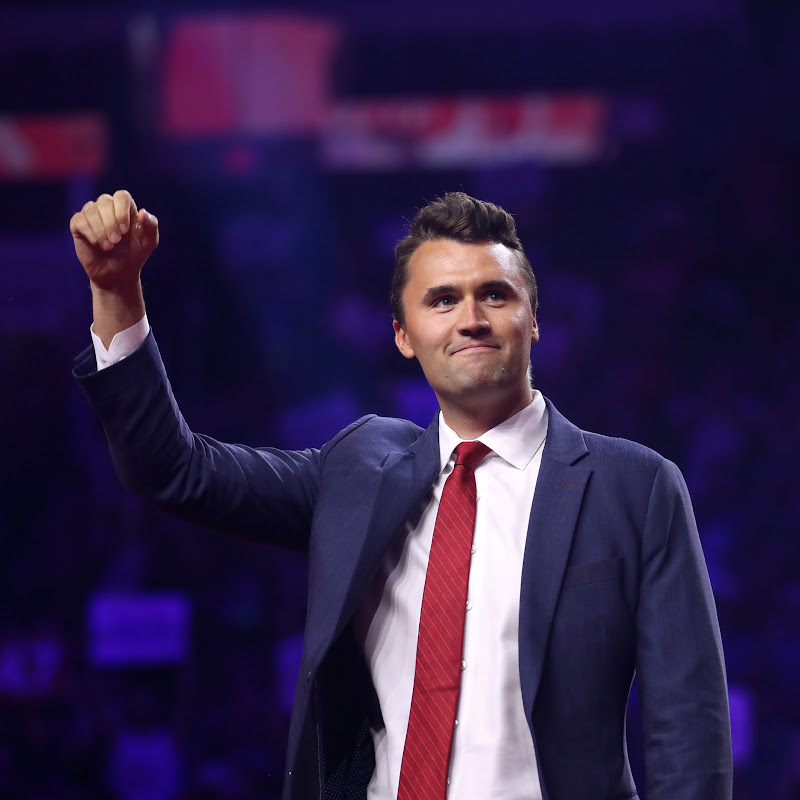
Charlie Kirk is the Founder and President of Turning Point USA, the largest and fastest growing conservative youth activist organization in the country with over 250,000 student members, over 150 full-time staff, and a presence on over 2,000 high school and college campuses nationwide. Charlie is also the Chairman of Students for Trump, which aims to activate one million new college voters on campuses in battleground states in the lead up to the 2020 presidential election. His social media reaches over 100 million people per month and according to Axios, he is one of the "top 10 most engaged" Twitter handles in the world. He is also the host of “The Charlie Kirk Show,” which regularly ranks among the top news shows on Apple podcast charts.
Charlie Kirk Confronts Student Debate on Communist Elites, Elon Musk, and Wealth Distribution
Charlie Kirk faces off with a college student in a spirited debate about the nature of elites in America. The conversation covers everything from whether Elon Musk qualifies as part of a problematic elite class to the role wealthy individuals should play in society. Kirk defends the concept of "noble elites" while arguing that America needs better leaders at the top, not the elimination of successful people altogether. The exchange highlights fundamental disagreements about wealth, power, and what constitutes genuine contribution to American society.
The debate began with a student pressing Kirk to define exactly who constitutes the "communist elites" he frequently criticizes. Kirk offered specific examples, pointing to figures like Klaus Schwab of the World Economic Forum and wealthy individuals running major global companies who promote communist or socialist ideologies. When asked if Elon Musk qualified as one of these elites, Kirk drew a distinction: Musk is an elite, but not a communist.
The Case for Noble Elites
Kirk argued that eliminating elites entirely is neither possible nor desirable. Instead, America needs what he called "noble elites"—people at the top of institutions who possess duty, courage, and strong ethics. He pointed to historical examples like Andrew Carnegie, John D. Rockefeller, and Bernard Baruch as elites who propelled the country forward. The question, according to Kirk, isn't whether elites exist, but whether those elites serve the nation's interests.
Elon Musk as the Model Elite
The student challenged Kirk's praise of Musk, questioning why anyone should support elite figures at all. Kirk defended Musk vigorously, citing several specific contributions. He noted that Musk spent approximately $50 billion to acquire Twitter (now X), which Kirk credited with saving freedom of speech in the West. Kirk also highlighted Musk's hundreds of millions in political donations aimed at preventing Kamala Harris from becoming president, as well as Musk's work identifying government waste through the Department of Government Efficiency.
When the student suggested Musk should give away more of his wealth and criticized him for spending time "doing ketamine," Kirk pushed back. He argued that Musk has already given away billions in various ways, including through his purchase of Twitter, political contributions, and charitable giving. Kirk suggested the student's real issue was that Musk "used to be on team left and now he's on Team America."
The Innovation Debate
The conversation turned to whether Musk deserved credit for his companies' achievements. The student downplayed Musk's role, noting he only has four patents to his name, mostly for the Tesla Model X rather than space-related innovations. Kirk countered by asking how many patents the student had, defending Musk as "the inventor and the innovator of SpaceX" who deserves recognition for launching rockets into orbit and landing them.
Kirk expressed frustration with what he saw as the ease of criticizing successful people without acknowledging their accomplishments. He suggested the student should have "a little bit more awe" at what Musk has built.
Wealth Distribution and Government
When Kirk asked hypothetically if the student would approve of Musk giving $300 billion to the federal government, the student conceded it would be "better than what he's doing now." Kirk responded by noting that Musk is "on our team and not yours," suggesting a fundamental political divide underlies their different views on wealthy elites.
An Unexpected Height Challenge
In a lighter moment that concluded the exchange, the student questioned Kirk's listed height on Wikipedia, which states he is 6'5". The student, who identified as 5'3", asked Kirk to stand up to verify his height. After standing, Kirk appeared to tower over the student, though the student maintained "agree to disagree" about the accuracy of Kirk's claimed height. Kirk invoked his own catchphrase—"facts don't care about feelings"—in defending his stated height, joking that someone should bring a tape measure to settle the matter.
The exchange, while beginning with weighty questions about power and wealth in American society, ended with humor and demonstrated the often unpredictable nature of campus debates.