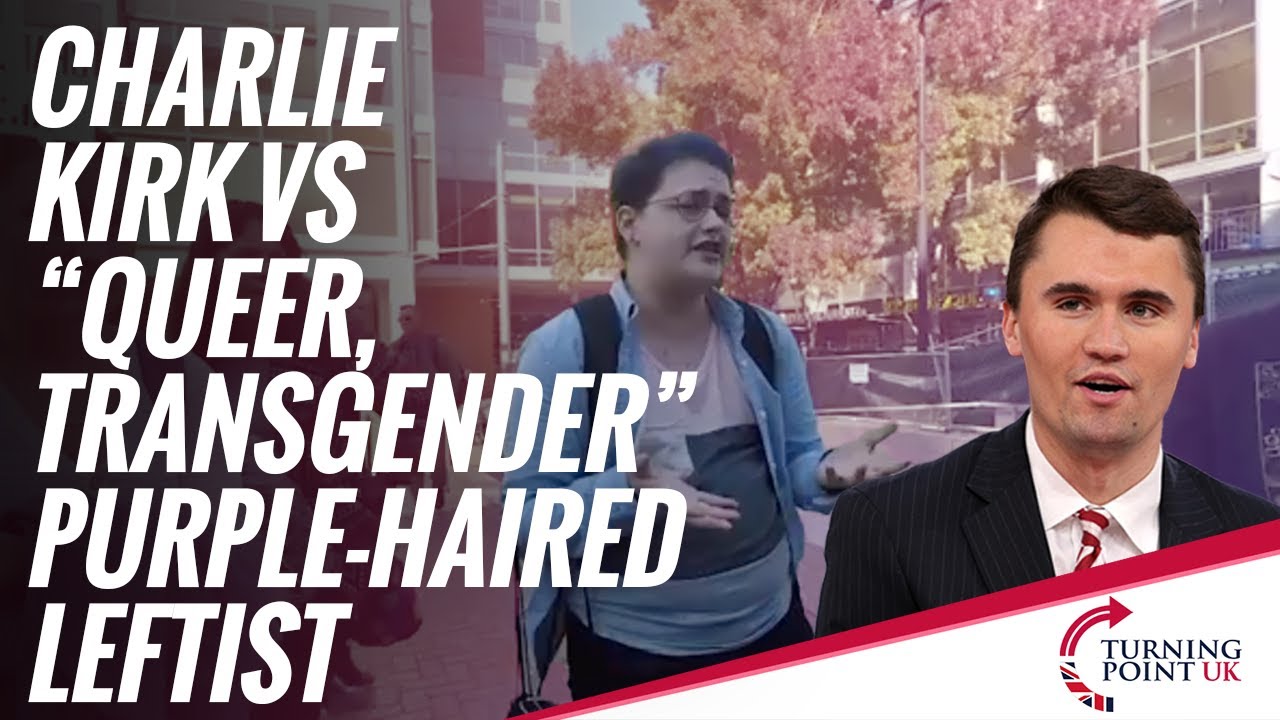
Charlie Kirk Confronts Student on Transgender Suicide Rates and Transition Regret Community
Enjoying this? Share it with someone who needs to see it.
Up Next
Charlie Kirk Debates Gender-Neutral Bathrooms and Women's Safety with UC Berkeley Student
4:57
Michael Knowles Debates 20 LGBTQ Activists on Marriage, Transgenderism, and Social Contagion in Heated Surrounded Episode
1:40:23
Charlie Kirk Explains Why College Is a Scam and Defends Absolute Truth on Gender Ideology
36:08
Charlie Kirk Confronts Student on Transgender Suicide Rates and Transition Regret Community
Charlie Kirk debates a student who claims gender transition improves mental health outcomes. The student cites studies showing mental improvement for those treated as their identified gender, while Kirk counters with evidence of higher suicide rates and points to a 27,000-member Facebook community called "Transition Regret." Kirk challenges the narrative that bullying causes post-transition suicide, arguing that chemical castration decisions are irreversible and the data shows increased self-harm. The exchange highlights the sharp divide between affirming gender ideology and those raising concerns about irreversible medical interventions for gender dysphoria.
A heated exchange unfolded between Charlie Kirk and a student over the outcomes of gender transition treatments. The student argued that research demonstrates significant mental health improvements for individuals who transition and are treated as the gender they identify as. According to the student, this data is legitimate and shows unbelievable mental improvement for those who undergo transition.
Kirk immediately countered this claim with contrary evidence. He pointed out that individuals who transition are actually more likely to commit suicide, not less. He directed attention to a community called "Transition Regret" on Facebook, which boasts 27,000 members—people who made the decision to undergo chemical castration and transition, only to regret it later.
The Irreversibility Problem
Kirk emphasized a critical point that often gets overlooked in these debates: the irreversible nature of transition decisions. Chemical castration and other transition procedures cannot be undone, making the decision one with permanent, life-altering consequences. He challenged the student's citation of studies, asserting that the actual data shows exactly the opposite of what the student claimed—that those who transition are more likely to commit suicide and engage in self-harm.
The Bullying Excuse
When pressed on what the proper treatment approach should be, the student maintained that their cited study has not been disproven. They offered an explanation for the high suicide rates among those who transition: bullying. According to the student, the reason suicide rates remain elevated is because transgender individuals are bullied for who they are, and this bullying occurs even outside of school settings.
Kirk immediately dismantled this argument by pointing to the very room they were in. He noted that every single person in the audience disagreed with the student fundamentally, yet they were all treating the student with incredible respect throughout the evening. This real-time evidence, Kirk argued, proved that the bullying narrative was "a pile of garbage." The respectful disagreement demonstrated in that room contradicted the claim that societal rejection and bullying were the primary drivers of poor mental health outcomes for transgender individuals.
The Data Dispute
At the heart of this exchange lies a fundamental disagreement about what the research actually shows. The student insisted on studies demonstrating mental health improvements, while Kirk pointed to data showing increased suicide and self-harm rates. This clash represents a broader cultural and scientific debate about the appropriate treatment for gender dysphoria and whether affirmation and medical transition truly serve the best interests of those experiencing gender confusion.
The existence of the large Transition Regret community on Facebook adds another dimension to this conversation—one that challenges the narrative that transition is always beneficial and that regret is rare or non-existent.