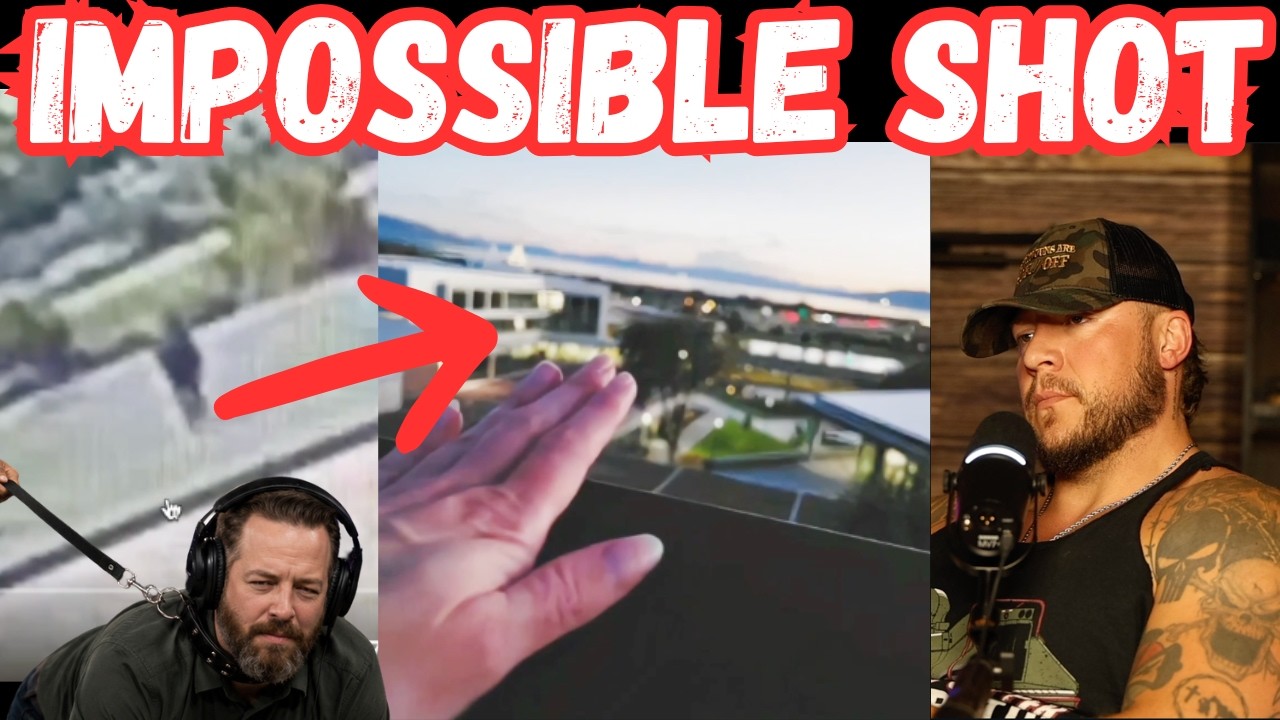
Charlie Kirk Death Theory: Testing Basement Shot Hypothesis with Ballistics Experiment
Enjoying this? Share it with someone who needs to see it.
Up Next
Jon Aaron Bray Presents Technical Analysis of Charlie Kirk Incident Using AI Enhanced Frame by Frame Investigation
1:56:34
The Strange Connection Between Mark Leiti's Death, Corey Comperatore, and PETN Explosives from Butler to Lebanon
18:45
Candace Owens Uncovers Military Connections in Charlie Kirk Assassination Investigation Involving Egyptian Planes and Operation Valhalla
47:04
Charlie Kirk Death Theory: Testing Basement Shot Hypothesis with Ballistics Experiment
An investigation into the theory that Charlie Kirk was shot from below, potentially from a basement or underground location. Using suspended pork butts as ballistic test subjects, this experiment examines whether shots fired from ground level could create wounds with no exit, as some theories suggest. The test includes multiple calibers (9mm, .45, .22, and .50 cal) to determine which ammunition could match the wound patterns described in various accounts. The results provide insight into the ballistics behind this controversial theory and whether the physical evidence supports the basement shooter hypothesis.
A controversial theory has emerged suggesting that Charlie Kirk was shot from below, possibly from a basement or underground shaft. This theory gained attention after Candace Owens brought it up, noting a curious detail: the absence of an exit wound. The hypothesis proposes that a shooter positioned beneath the target location fired upward, creating an entry wound but no corresponding exit.
The key evidence supporting this theory is the lack of an exit wound, which previous testing with 30-odd-6 ammunition and frangible rounds had already demonstrated as unusual. To properly investigate this claim, a ballistics experiment was designed to replicate the conditions and test whether various calibers could produce such results.
Testing Methodology
The experiment involved suspending pork butts from a tree to simulate human tissue, then firing from a prone or kneeling position to replicate a shooter firing from below. Multiple calibers were tested to determine which ammunition types could create entry wounds without exits:
9mm ammunition
.45 caliber rounds
.22 caliber bullets
.50 caliber API (Armor Piercing Incendiary) rounds
The testing began with the experimenter lying on the ground to simulate shooting from a basement or underground position, though the discomfort from Texas grass and stickers eventually led to adjustments in positioning.
9mm and .45 Caliber Results
The first rounds tested were 9mm and .45 caliber ammunition. The .45 round is notably girthier and larger than the 9mm, providing a useful comparison for wound characteristics. When fired from the ground position, both calibers produced interesting results.
The initial shots created both entry and exit wounds. The first test showed an entry on one side with a corresponding exit on the other. When the target was doubled up to increase tissue density, the results changed significantly. Both the 9mm and .45 caliber rounds created entry wounds but failed to exit the doubled target, suggesting that sufficient tissue depth could prevent exit wounds even with these common handgun calibers.
One notable observation was that the firearms failed to eject spent casings when fired at an upward angle, an unexpected mechanical issue that arose during testing.
Wound Size Analysis
An important consideration emerged regarding wound appearance versus actual size. Exit wounds often appear larger than they actually are due to tissue damage and blood flow. As demonstrated in the testing, what might look like a large wound could be caused by relatively small caliber ammunition, particularly if it strikes major blood vessels like the jugular or carotid artery.
This observation is crucial for understanding eyewitness accounts and photographic evidence, as the visual appearance of a wound doesn't necessarily correspond directly to the caliber of ammunition used.
.22 Caliber Testing
The .22 caliber test was conducted to examine whether a smaller round could have been responsible for the wounds described in various theories. The .22 is significantly smaller than both the 9mm and .45 caliber rounds, and some speculated it might not create a large visible wound.
Using what was described as "daddy's old war gun," the .22 caliber test was conducted from a kneeling position rather than prone, due to the discomfort experienced during earlier tests. The results from this test were documented but specific outcomes weren't detailed in the same manner as the larger caliber tests.
.50 Caliber Demonstration
The final test involved .50 caliber API ammunition, representing the extreme end of the spectrum. This test was approached with caution, as the experimenter referenced the Kentucky Ballistics incident where a catastrophic firearm failure resulted in serious injury.
The .50 caliber round produced dramatic results, sending meat flying and creating massive tissue damage. The entry wound was large, but the exit wound was described as "fantastic" in terms of the experiment's documentation purposes. This test clearly demonstrated that larger caliber ammunition would create unmistakable exit wounds, making it an unlikely candidate for the no-exit-wound theory.
Conclusion and Theory Assessment
After testing multiple calibers from positions simulating a basement or underground shooter, the experiment provides mixed evidence regarding the theory. While it's possible for certain calibers to create wounds without exits under specific conditions (particularly with doubled tissue or certain ammunition types), the testing doesn't definitively prove or disprove the basement shooter theory.
The question remains whether an underground location such as a mine shaft or basement playground could have housed a shooter. The experiment demonstrates that the ballistics are at least physically possible, though questions about the location, access, and feasibility of such a shooting position remain unanswered.
The testing does confirm that previous experiments with frangible rounds and 30-odd-6 ammunition showing no exit wounds weren't anomalies, and that under certain conditions, various calibers can indeed fail to create exit wounds even when fired from below.