2,422 videos 1,389,747,653 views US Joined Aug 30, 2018
Charlie Kirk is the Founder and President of Turning Point USA, the largest and fastest growing conservative youth activist organization in the country with over 250,000 student members, over 150 full-time staff, and a presence on over 2,000 high school and college campuses nationwide. Charlie is also the Chairman of Students for Trump, which aims to activate one million new college voters on campuses in battleground states in the lead up to the 2020 presidential election. His social media reaches over 100 million people per month and according to Axios, he is one of the "top 10 most engaged" Twitter handles in the world. He is also the host of “The Charlie Kirk Show,” which regularly ranks among the top news shows on Apple podcast charts.
Charlie Kirk Debates an Aerospace Engineering Student Over Christian Nationalism, Taxes, and Military Service
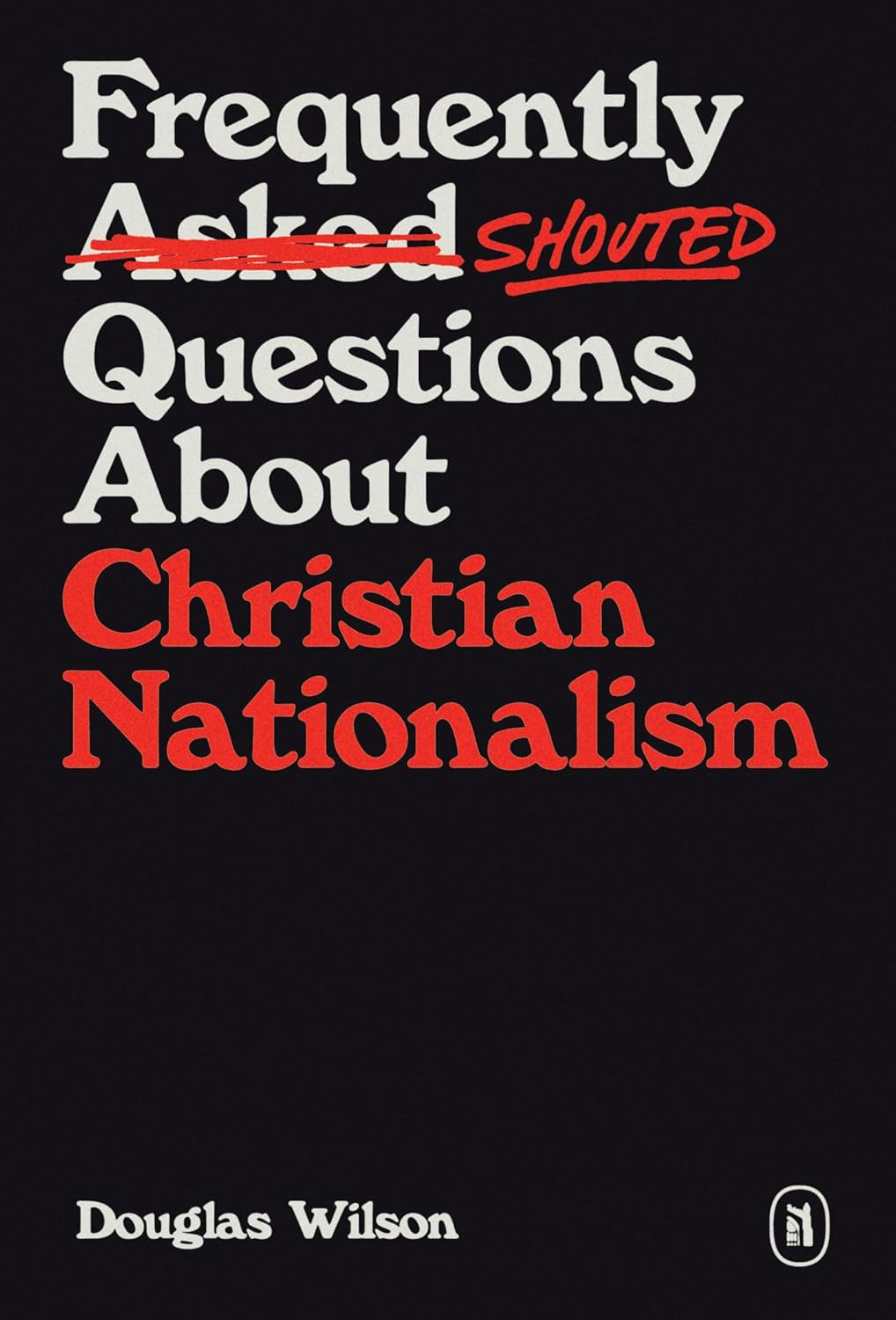
Charlie Kirk faces off against Nick, a self-described Christian and aerospace engineering student, who challenges him on whether mixing Christian faith with national politics and power is consistent with the early church. The exchange moves through whether the Bible is a political text, how the Old and New Testaments should be read together, and what the Greek word ekklesia actually meant when Christ used it. From there the debate turns to history, with Nick arguing that most white Christians backed slavery and Jim Crow while Kirk counters with figures on abolitionist states and Christian-led abolition movements. The two also clash over taxation, with Kirk arguing that taxing billionaires amounts to theft and covetousness, and over whether Christians should ever serve in the military, with Nick citing Eastern church fathers against violence and Kirk invoking St. Augustine's just war theory.
A Christian Engineering Student Challenges Charlie Kirk on Christian Nationalism
Nick, an aerospace engineering student and self-described Christian, opens by telling Charlie Kirk he disagrees with Christian nationalism, calling it antithetical to the values of the early church. He asks how Kirk reconciles white Christians in America blending politics and power with their faith.
Kirk responds that he has never described himself as a Christian nationalist, clarifying that he considers himself a Christian and a nationalist as two separate descriptions, not one combined label.
Is the Bible a Political Text?
Kirk argues that scripture is full of political engagement, pointing to Jeremiah 29:7, which calls believers to seek the welfare of the nation they live in. He lists Daniel, Esther, Mordecai, Nehemiah, Jeremiah, Joseph, Jacob, Moses, and Aaron as figures who served as counselors and leaders within government.
"Moses was so political that he wrote an entire book of the Torah all about how to set up a government. It's the Book of Deuteronomy," Kirk says. "The Bible is an explicitly political text amongst many other things."
Old Testament Versus New Testament
Nick presses Kirk on whether he is only citing Old Testament examples, asking whether those texts should be interpreted through the revelation of Christ described by St. Paul. Kirk agrees the New Testament carries greater weight in shaping interpretation, calling the Old Testament "a type and shadow of the things to come," but pushes back on the idea that this makes passages like Genesis 1 lesser. He cites Christ's statement that he came not to abolish the law but to fulfill it, and points to 1 Timothy's instruction to pray for leaders by name.
What Does Ekklesia Actually Mean?
The two debate the meaning of the word translated as "church" in Christ's statement, "On this rock I will build my church." Kirk argues the original Greek term, ekklesia, was a secular word tied to the advancement of freedom and equality under law, citing the Greek terms eleutheria and isonomia. He uses this to argue that Christians are called to be salt and light, actively shaping the governments and societies they're part of.
"Christ called us to be salt and light. We as Christians should change the environment that we come in contact with," Kirk says. "So why should we then not care about changing government to be more Christlike?"
Are Borders and Nations a Biblical Idea?
Nick draws a line between wanting government to reflect Christlike values and nationalism, which he characterizes as the belief that one's own nation is inherently better than others. The conversation turns to whether national borders are a biblical concept, with Kirk pointing to the Book of Nehemiah's account of rebuilding the wall around Jerusalem as evidence that borders and sovereignty are explicitly biblical ideas. Nick counters that Israel today is defined less by physical borders and more by a spiritual identity shared by believers, a point Kirk attributes to a Catholic interpretation he does not share. Both agree to set the theological disagreement aside.
Christianity, Slavery, and Jim Crow
Asked what a Christian's role in government should look like in practice, Kirk points to the Sermon on the Mount. Nick responds by citing American history, arguing that a majority of white Christians supported slavery and later Jim Crow.
Kirk disputes the framing, noting that nine of the thirteen original states had already begun abolishing slavery by the time the Constitution was ratified, and that the United States was the second nation in the world to abolish slavery, a change he credits to Christianity. He cites Christian abolitionists John Quincy Adams and William Wilberforce as examples of faith driving the movement against slavery.
Nick argues those abolitionists represented a minority within Christianity at the time, while the broader institution went along with slavery and later opposed the civil rights movement. Kirk separates support for Jim Crow from opposition to the Civil Rights Act, calling the legislation itself "a disaster" that he argues increased racial division in America rather than reducing it.
What Should a Christian's Role in Government Look Like Today?
Returning to the present, Kirk again points to the Sermon on the Mount as his answer: love your neighbor, put others before your own needs, feed the poor, clothe the sick, and care for the widow. Nick presses him on whether that includes raising taxes on billionaires to help the living, which Kirk rejects outright, framing it as legislating against the sin of greed by taking other people's property rather than addressing it through personal moral choice.
Taxation, Greed, and the Ten Commandments
Nick cites data showing that wealth inequality has grown over the past 40 years, with the top 1 percent capturing a disproportionate share of national wealth. Kirk responds that proposing higher taxes on billionaires violates two of the Ten Commandments, against stealing and against coveting.
"Taxation is theft, definitionally, because it's not the government's money. It is private property that you earn," Kirk says.
Nick counters that taxes fund the basic functions of a shared society, including police, fire departments, roads, and mail service. Kirk acknowledges that taxes are not voluntary and that the government can compel payment through legal penalties, while maintaining that this still amounts to coercion rather than a freely given contribution.
Theocracy, Persecution, and the Early Church
Nick asks directly whether Kirk wants a government that fights for Christian principles at the exclusion of the rest of the population, effectively a theocracy. Kirk says no, that he wants equal representation, and argues the church does not need government backing to thrive.
"The church doesn't need to have government in order to thrive. In fact, in suffering and humility, the church thrives," Nick says, pointing to the example of the early church under persecution.
Kirk pushes back on the idea of inviting persecution voluntarily, comparing it to abandoning a national military on the theory that hardship makes people stronger. Nick clarifies he is not advocating for persecution, but argues Christians should be willing to embrace it rather than avoid it at all costs, while Kirk warns that unchecked persecution can lead to the unjust suffering of millions.
Should Christians Serve in the Military?
The debate closes on whether Christians should serve in the military at all. Nick argues that he sees no scriptural basis for Christian military service and that early church fathers in the Eastern tradition, including St. Athanasius, St. Gregory of Nyssa, and Origen, held that joining the church required leaving military service behind.
Kirk invokes St. Augustine's just war theory from Book Three of "The City of God" as a counterpoint from the Western church tradition. Nick acknowledges he does not follow Augustine's framework, noting his own preference for the Eastern fathers' teaching that Christians should not commit violence under any circumstance.
The two also spar over how literally to read the Book of Revelation's description of Christ wielding a sword from his mouth, with Nick arguing it represents the piercing power of the word of God rather than literal warfare. The conversation ends without resolution, with Kirk moving on to the next question.