2,422 videos 1,389,747,653 views US Joined Aug 30, 2018
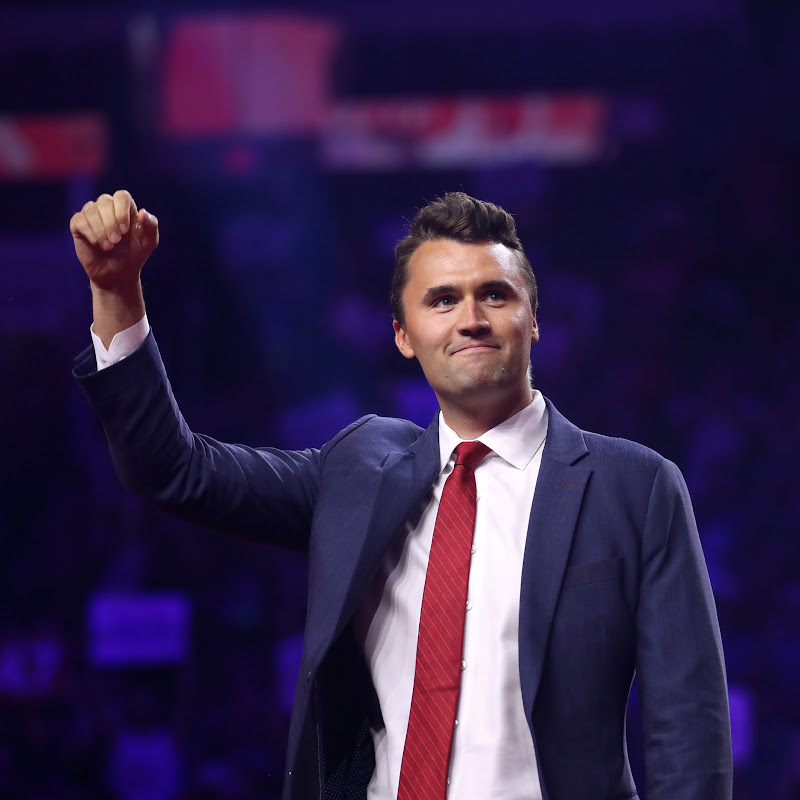
Charlie Kirk is the Founder and President of Turning Point USA, the largest and fastest growing conservative youth activist organization in the country with over 250,000 student members, over 150 full-time staff, and a presence on over 2,000 high school and college campuses nationwide. Charlie is also the Chairman of Students for Trump, which aims to activate one million new college voters on campuses in battleground states in the lead up to the 2020 presidential election. His social media reaches over 100 million people per month and according to Axios, he is one of the "top 10 most engaged" Twitter handles in the world. He is also the host of “The Charlie Kirk Show,” which regularly ranks among the top news shows on Apple podcast charts.
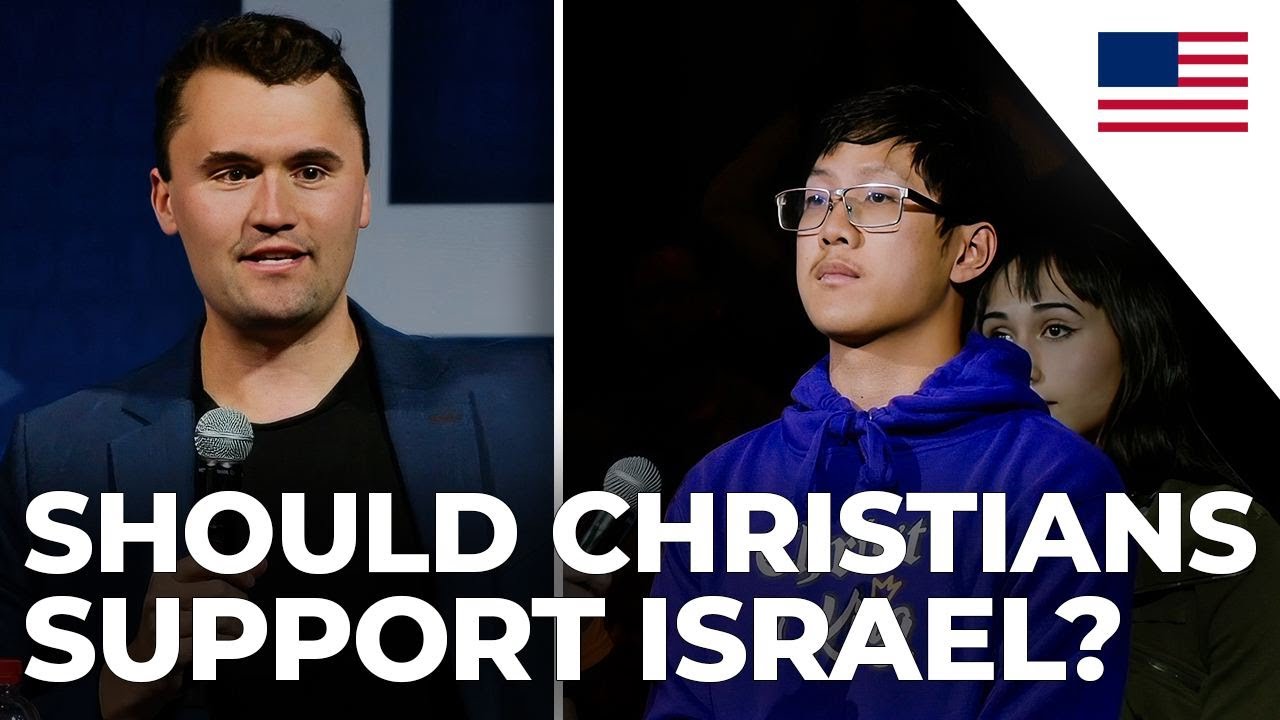
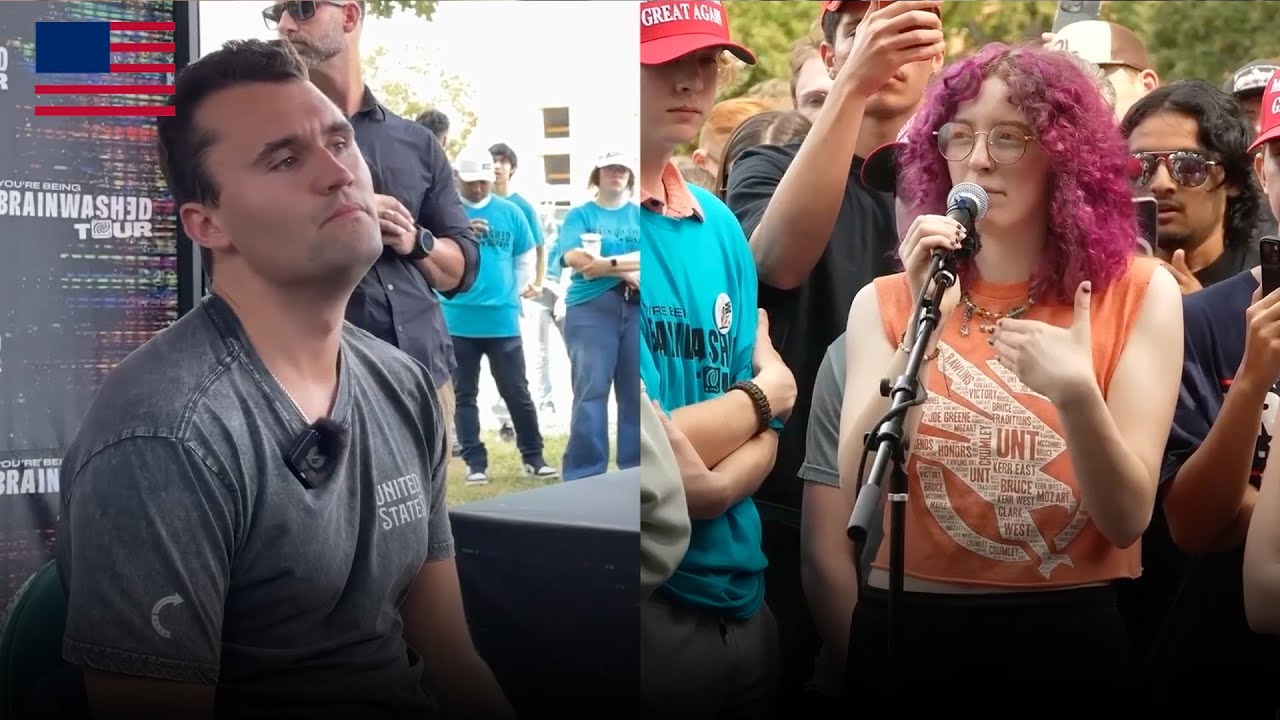
Charlie Kirk Debates Christian Student on Government Welfare Versus Church Charity and Biblical Responsibility
A Christian college student challenges Charlie Kirk on whether supporting limited government contradicts biblical commands to feed the needy. The student argues the government should provide free school lunches and food assistance as a Christian duty, citing over 2,000 biblical references to helping the poor. Kirk counters that the Constitution doesn't mandate government charity, that private churches are more effective at helping the hungry, and that massive government welfare spending has failed to solve food insecurity while creating distance between givers and receivers.
The Challenge: Reconciling Faith and Limited Government
A student opened the exchange by establishing common ground, confirming that Charlie Kirk views the Bible as the word of God. The student then posed a central question: How can Kirk advocate for religious principles on issues like abortion and marriage while not supporting government programs like free school lunches, given that the Bible mentions helping the needy over 2,000 times?
Kirk immediately clarified that he had not used biblical arguments in his earlier abortion discussion, establishing that his political positions are rooted in constitutional principles rather than exclusively religious reasoning.
The Constitutional Framework Versus Biblical Commands
The student argued that Christians should prioritize finding systems that feed every person, even if it costs tax dollars. Kirk responded by distinguishing between personal Christian duty and government responsibility. He pointed out that the Bible never commands believers to use the state apparatus to help the needy, but rather calls individuals and churches to act.
Kirk acknowledged his own charitable giving through tithes and donations to local churches. The student agreed this is good but pressed further: Why should some policies be governed at the state level while others, mentioned thousands of times in Scripture, should not?
Kirk returned to the Constitution as the framework for American governance. Border security, national security, currency, interstate commerce, justice, tariffs, and duties are constitutional responsibilities. Government provision of food to citizens, however, is not constitutionally mandated and should be a last resort.
Churches Versus Government: Which Feeds People Better?
Kirk posed a hypothetical: If all government spending on food assistance disappeared, would churches step up to ensure no one goes hungry in America? The student acknowledged churches would try but argued the government has unique organizational reach and scale that churches lack.
When asked how government is better positioned than the church, the student noted that churches cannot make laws. Kirk countered that churches can collect and deploy money far more effectively than the federal government. He emphasized a key difference: Over a trillion dollars annually goes to food stamps, SNAP, and Medicaid, but this subsidizes unhealthy eating habits among the poor, who often purchase sodas and processed foods.
In contrast, Kirk argued, churches provide healthy meals prepared by members in a relational setting. A single mother seeking help would come to a church, receive nutritious food, and hear the gospel. This creates direct connection between helper and helped, whereas government programs create distance, separation, and bureaucratic murkiness.
The European Model: Big Government, Small Church
Kirk pointed to Europe as a cautionary example, where massive government welfare states have led to the decline of church charity. European churches do little charitable work because the government handles social services. Kirk argued this is deeply unhealthy, preferring instead a small government and a robust church. America, he warned, is heading toward the European model of big government and small church.
Food Choice, Obesity, and Mismanagement of Resources
The student argued that people should be able to choose their own food at grocery stores regardless of economic status, and noted that unhealthy food is substantially cheaper than nutritious options. Kirk acknowledged that cheaper food often drives choices but emphasized that America does not have a starvation crisis. Instead, half of American children are clinically obese by age 15, a far more pressing problem than food insecurity.
The student defined food insecurity as not knowing where the next meal will come from, affecting 10% of children. Kirk questioned whether this metric accurately reflects reality given widespread obesity. The student maintained that regardless of obesity rates, hungry children exist, and government has a responsibility because churches cannot provide free lunches to every school child every day.
Living in the Big Government Era That Isn't Working
Kirk challenged the premise that government programs are currently insufficient. America already spends hundreds of billions on food stamps, school-supported lunches, and other programs. The student, who grew up in Idaho, claimed never to have seen widespread free school lunch programs except during COVID, suggesting current programs are inadequate.
Kirk made a controversial assertion: It is not the role of the state to feed children at school. That responsibility belongs to parents. The more the state assumes parental responsibilities, the more it diminishes the American family.
Parental Sacrifice and Government Resources
The student described struggling parents who skip meals to feed their children, calling it beautiful but arguing they should not have to make such sacrifices. Kirk agreed it is beautiful but maintained that government intervention, despite vast resources, has proven ineffective. The best way to help the needy is through local churches.
When the student asked whether Christian duty requires exhausting every possible means to help the hungry, including government action, Kirk agreed that Christians should do everything possible, but insisted the evidence shows local churches do this work better than government.
Tax Exemption and Consistency in Religious Governance
The conversation turned to whether government should support churches through tax cuts. Kirk clarified that churches are already tax-exempt organizations and should remain so. He reiterated that Christians and conservatives believe government operates by force and performs poorly compared to local Christian nonprofits and churches in delivering help to those in need.
As the exchange concluded, the student accused Kirk of contradiction, arguing that if religious values inform some political positions, they must inform all government policy. Kirk maintained his position: Biblical principles can inform personal values and church action without requiring the state to implement those principles. The government does not need to be the mechanism for fulfilling Christian charity.
The Core Disagreement: Means, Not Ends
Both participants agreed that feeding the hungry is important. Their disagreement centered on means rather than ends. The student viewed government as the most effective mechanism with the necessary scale and legal authority. Kirk argued that decades of massive government spending have failed to solve food insecurity while creating unhealthy dependencies, and that churches operating locally and relationally are far more effective at addressing genuine need while preserving human dignity and family responsibility.