2,422 videos 1,389,747,653 views US Joined Aug 30, 2018
Charlie Kirk is the Founder and President of Turning Point USA, the largest and fastest growing conservative youth activist organization in the country with over 250,000 student members, over 150 full-time staff, and a presence on over 2,000 high school and college campuses nationwide. Charlie is also the Chairman of Students for Trump, which aims to activate one million new college voters on campuses in battleground states in the lead up to the 2020 presidential election. His social media reaches over 100 million people per month and according to Axios, he is one of the "top 10 most engaged" Twitter handles in the world. He is also the host of “The Charlie Kirk Show,” which regularly ranks among the top news shows on Apple podcast charts.
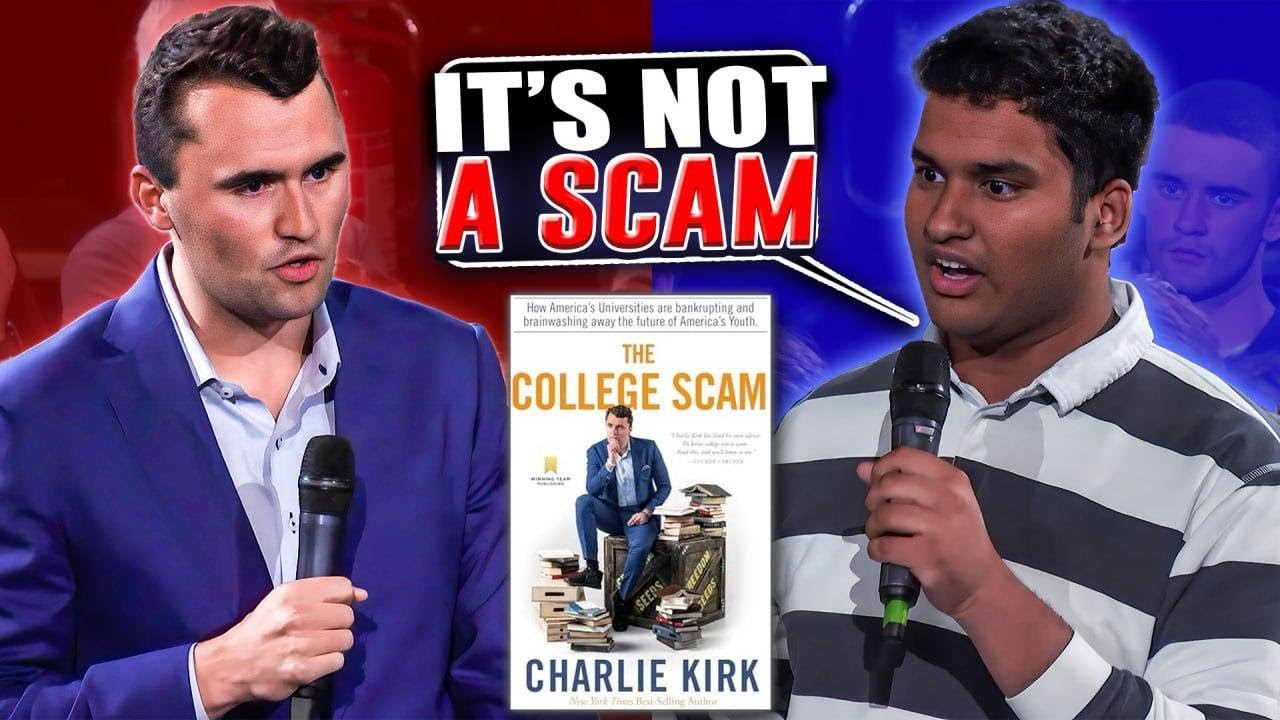
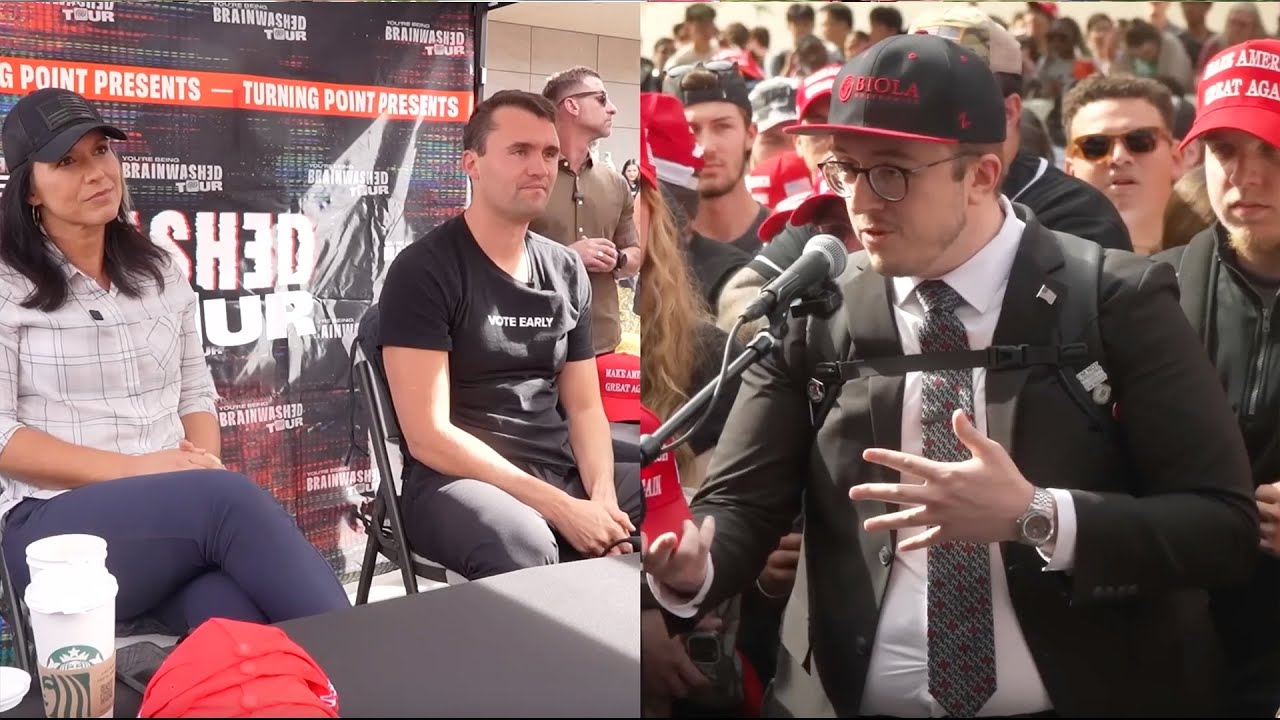
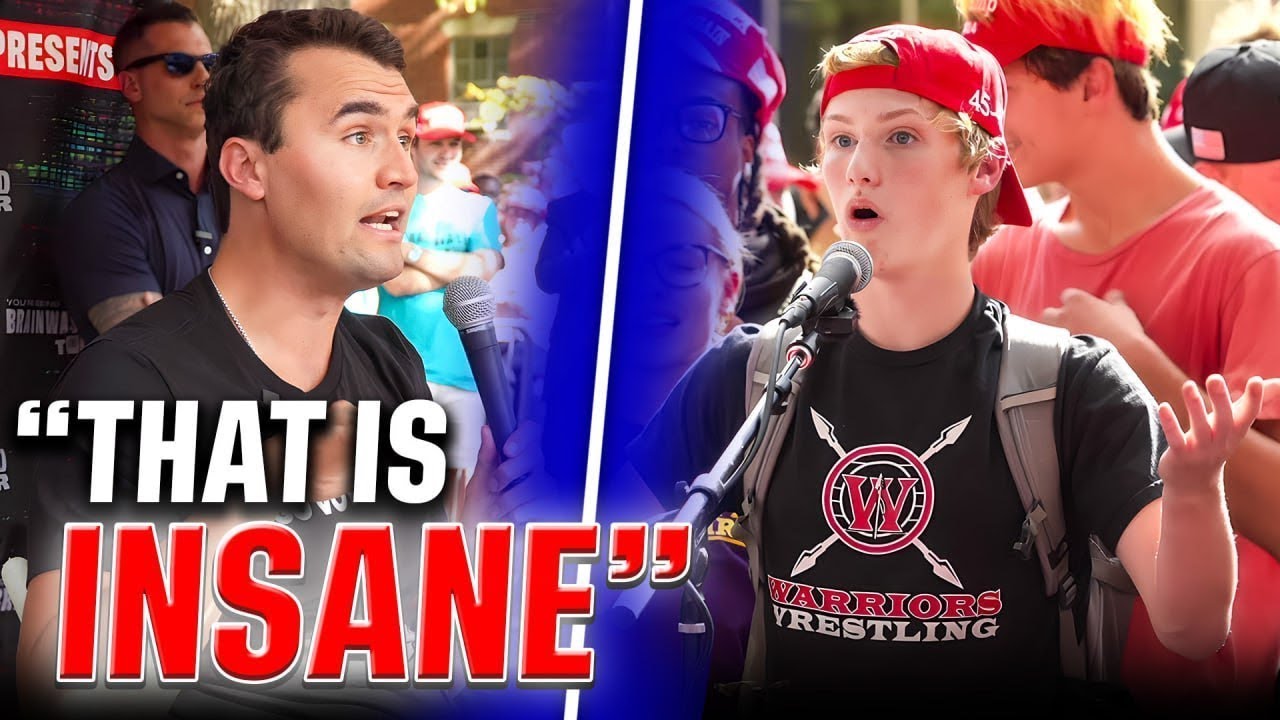
Charlie Kirk Debates College Student on Whether Higher Education Is a Scam at Cal State Fullerton
Charlie Kirk faces off with a college student at Cal State Fullerton who challenges his position on higher education. The debate centers on college completion rates, job market outcomes, and whether universities deliver on their promises to students. Kirk argues that 41% of students drop out without graduating, and over half of graduates end up in jobs that don't require a degree, while the student contends that college provides valuable skills beyond immediate job placement. The exchange becomes heated as they clash over what constitutes informed consent, the value of required courses, and whether credentialing systems serve employers and students effectively.
A college student approached Charlie Kirk with a direct challenge: debate his strongest political opinion. When Kirk invited the student to present a claim first, the response was clear: "I don't think college is a scam." This set the stage for a pointed exchange on one of Kirk's signature issues, given his book on the subject and the "college is a scam" messaging that appears on Turning Point USA merchandise.
Defining What Makes Something a Scam
Kirk began by establishing a framework for what constitutes a scam. He asked the student to agree that if 40% of customers don't get the product they paid for, that would qualify as a scam. Using the analogy of a restaurant where 40% of customers get food poisoning, Kirk pointed to the national college dropout rate of 41%. Every hand in the audience went up when Kirk asked if they knew someone who had dropped out of college.
But Kirk didn't stop at graduation rates. He pressed further, claiming that over half of college graduates end up in jobs that don't require a college degree ten years after graduating. In his view, this means the degree is useless for the majority, and students could have obtained those jobs straight out of high school without accumulating debt.
The Skills Transfer Argument
The student pushed back, arguing that just because someone doesn't use their specific degree doesn't mean college was useless. He compared it to working at Turning Point USA for two years and then moving to a different job. The skills learned transfer even if the next position is completely different. According to the student, college graduates take interpersonal skills, communication abilities, and other competencies with them, even if their job title doesn't match their major.
Kirk challenged this premise by emphasizing that the jobs graduates obtain don't require a degree at all, meaning they could have acquired those skills without the $100,000 debt burden. The student responded by asking what specific skills college provides, listing communication classes, public speaking, and interpersonal development.
The Promise and Informed Consent
Kirk argued that the issue comes down to promises made to consumers. He pointed to Cal State Fullerton's own website, which promises to "achieve greatness" and prepare students for the 21st-century job market. Yet according to Kirk's statistics, half of graduates from the university will end up in jobs that never required college in the first place. He compared this to industries like supplements or airlines, where misleading promises result in shutdowns and legal action.
The critical question Kirk posed to the audience: When you enrolled at this university, did you know that if you're studying sociology, you're likely to end up in a job where that degree doesn't matter? He argued that students lack informed consent about debt burden, time investment, and dropout rates. The entire premise of college, Kirk said, is that students are betting on themselves to enrich their future, not gambling on a risky proposition.
Required Classes and Wasted Time
Kirk asked the audience how many were forced to take classes they considered a waste of time. Every hand went up. He pressed the point: How is that not a scam? When asked if they learned anything useful even from classes they didn't like, the responses were mixed, though Kirk characterized the crowd as largely agreeing with him. He suggested that whatever students might have learned could have come from YouTube videos or books without the debt.
The Credentialing Question
The student shifted to the employer perspective, asking Kirk directly: If he had 100 applicants for an accounting position, wouldn't he screen for someone who went to Harvard over someone who was self-taught? Kirk's response was blunt: If someone went to Harvard, he would immediately think they're "an intellectual idiot" infected with the worst possible ideology. He would never hire them at Turning Point USA.
Kirk drew a distinction between being overqualified and being over-credentialed. Wisdom, he explained, is the knowledge of things that don't change, while intelligence is the knowledge of things that do change. You can gain wisdom and intelligence outside of formal schooling, but credentials are a different matter entirely.
The student pointed out what seemed like a contradiction: Kirk was saying college is a scam while simultaneously acknowledging that certain professions like accounting require credentials. Kirk clarified that Turning Point USA doesn't require college degrees for applicants, and that the vast majority of students aren't becoming accountants, lawyers, or doctors.
The Refined Claim
As the debate concluded, Kirk offered a more specific version of his claim: "College in its current form that affects the majority of students at the majority of colleges—not counting the sliver cases of doctors, nurses, lawyers, accountants that are able to avoid left-wing parasitic ideology—is a scam." The student quipped that this doesn't make for a good t-shirt, and the exchange grew more heated.
When the student used profanity in frustration, Kirk seized the moment to make a point about the communication courses the student had mentioned earlier. He suggested that the first rule of effective communication is not to swear at the person you're talking to, and that the student was "making a fool" of himself, thereby proving college's ineffectiveness.
Closing Arguments
Kirk wrapped up by acknowledging there are costs to college even when pursuing legitimate careers like accounting: ideological costs, time costs, and financial costs. He directed the student to his 300-page book for a more thorough treatment of the subject. The student closed with a direct message to the audience, assuring them that their degrees aren't useless and that they're learning valuable things they won't regret, even if they don't use them immediately. Kirk's final word: "I couldn't disagree more."