2,422 videos 1,389,747,653 views US Joined Aug 30, 2018
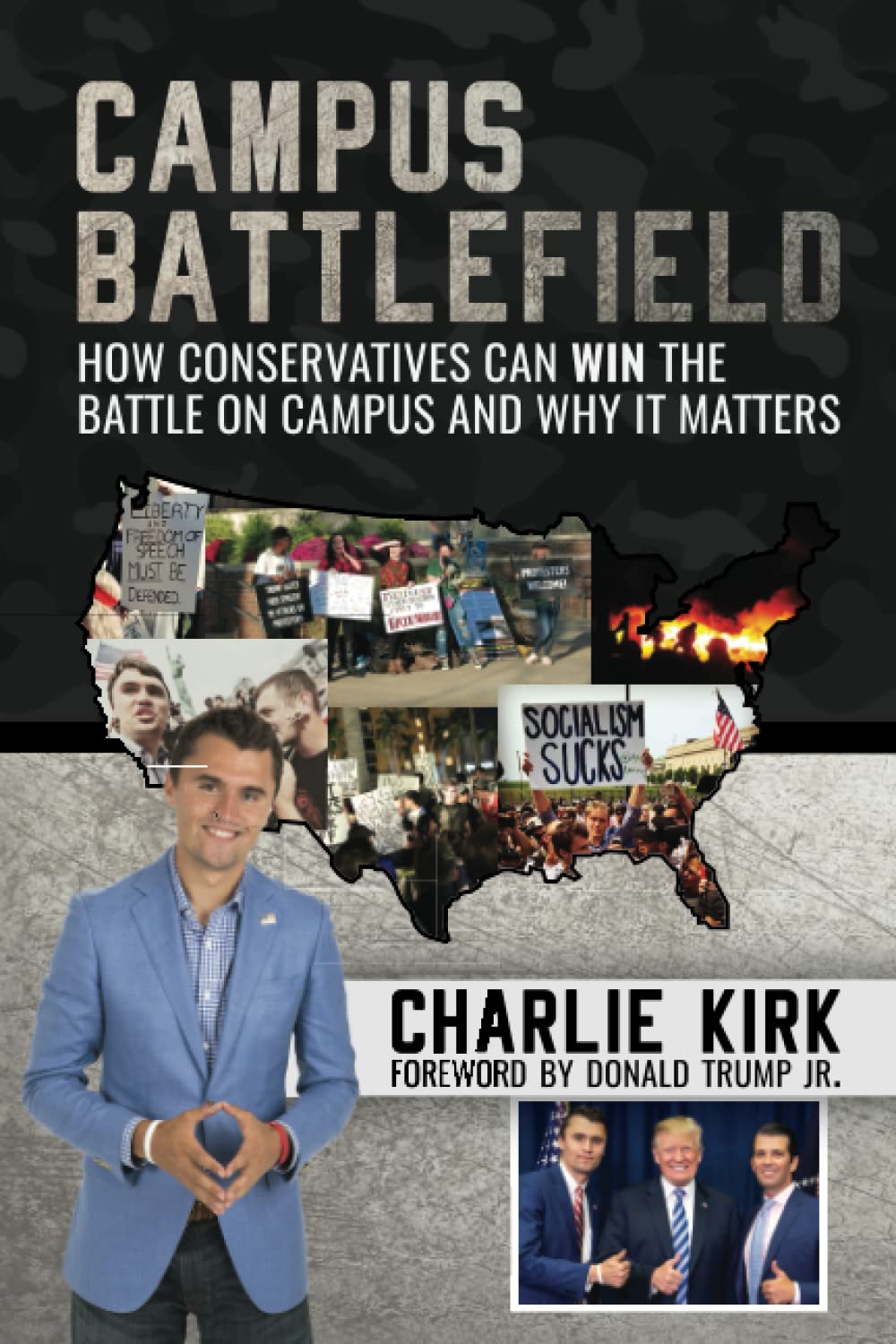
Charlie Kirk is the Founder and President of Turning Point USA, the largest and fastest growing conservative youth activist organization in the country with over 250,000 student members, over 150 full-time staff, and a presence on over 2,000 high school and college campuses nationwide. Charlie is also the Chairman of Students for Trump, which aims to activate one million new college voters on campuses in battleground states in the lead up to the 2020 presidential election. His social media reaches over 100 million people per month and according to Axios, he is one of the "top 10 most engaged" Twitter handles in the world. He is also the host of “The Charlie Kirk Show,” which regularly ranks among the top news shows on Apple podcast charts.
Charlie Kirk Debates Reparations for Black Americans: Why Individual Justice Matters More Than Tribal Redistribution
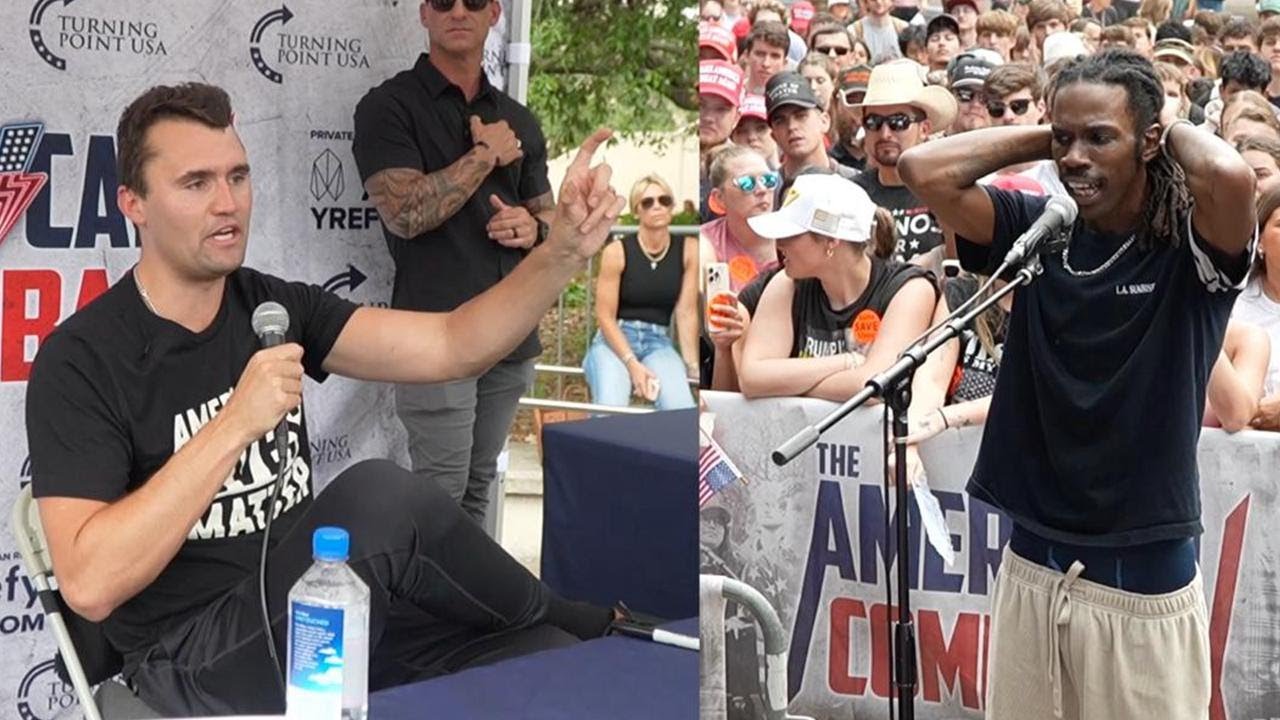
Charlie Kirk engages in a thoughtful debate with a young black man in Knoxville about reparations for black Americans. The conversation explores inherited wealth, the $25 trillion spent on social programs over 60 years, the collapse of the black family structure, and why Kirk opposes reparations while supporting school choice and colorblind policies. Kirk argues that justice should be individual, not tribal, and that America's promise of a colorblind society has been broken by today's color-obsessed culture. Despite their differences, both men find common ground on the importance of opportunity and the damaging effects of importing foreign labor that undercuts American workers.
At a Turning Point USA event in Knoxville, Charlie Kirk engaged in a candid discussion about reparations for black Americans with a thoughtful audience member. The young man, who prefaced his question by clarifying he doesn't speak for all black people, asked Kirk to explain his opposition to reparations. Kirk's response centered on a fundamental principle: justice should be individual, not tribal.
Kirk explained his core objection: "I don't believe that we should ever pay monetary damages to people where nothing bad happened to them just because they are related to a group of people where something bad happened to them. Our justice system when properly understood is about individuals receiving justice, not tribes or groups receiving justice."
Reparations Beyond Cash Payments
The questioner clarified that he doesn't view reparations as simply writing checks. Instead, he envisions investments in institutions, better schools, and hospitals in black communities. He then posed a challenging question: if Kirk opposes reparations because current black Americans didn't experience slavery or Jim Crow, would he also support outlawing inherited wealth, since heirs did nothing to deserve their inheritance?
The questioner drew a comparison: "Inheritance and inherited wealth is something that your great-grandfather whatever is passed down. Homeboy who is here today did nothing to deserve that multi-billion dollar business but he gets it because of his bloodline." He argued that reparations could be viewed as "reverse inheritance," acknowledging that while he didn't suffer through Jim Crow or slavery, the choices made during those times affected where he is today.
The Conservative Perspective on Legacy and Agency
Kirk acknowledged an important distinction between conservative and progressive viewpoints: "We as conservatives tend to underemphasize this idea of many legacies of suffering. Whereas people on the left tend to emphasize that you are stuck because of something that happened to you many generations prior." However, Kirk argued that conservatives believe, except in very unique circumstances, that individuals in America are not stuck because of generational trauma.
He emphasized individual agency: "We think every individual should be judged by their own actions, their own character, and their agency."
The $25 Trillion Investment That Failed
Kirk challenged the premise that America hasn't invested in black communities. "You're acting as if there's been like no money sent to black America the last 60 years. We have spent over $25 trillion on black America in 60 years. And black America's poorer than before we started." He cited Medicaid, food stamps, schools, and public housing as examples of this investment.
According to Kirk, the real issue isn't the amount of money, but the collapse of the black family. He presented stark statistics: "In 1964, right before the passage of the Civil Rights Act, 75% of black youth had a dad around. Now it's 25%. So only 25%. So one in four kids have a dad around."
Practical Problems with Reparations
Beyond philosophical objections, Kirk raised practical concerns about implementing reparations:
Where do you draw the line on who qualifies?
How do you prove descendancy from slaves?
Why should descendants of Union soldiers pay taxes for reparations?
How do you reconcile requiring proof of slave ancestry with the left's opposition to voter ID?
Kirk pointed out the irony: "The very same people who tell you that voter ID is racist want all of a sudden black America to prove that they're descendants of slaves seven generations ago."
Finding Common Ground on Opportunity
Despite their disagreements, Kirk outlined areas where they could find agreement:
School Choice: Allowing kids to attend better schools and have more social mobility
Reconstituting the Black Family: Addressing the breakdown of family structure
Immigration Reform: Stopping the importation of foreign workers who undercut wages for all Americans, especially black Americans
On immigration, Kirk argued: "We imported Nicaraguans and Guatemalans to come take low wage labor, and we didn't want to pay our own Americans those jobs." The questioner agreed with this point.
The Colorblind Society Debate
The conversation concluded with a nuanced discussion about colorblindness. The questioner stated: "I am with you for the idea of a colorblind society. I think it's something we should aspire to, but I think it's a farce to think that race doesn't play a factor."
Kirk agreed that race plays a role but noted it was playing less of a factor 10 years ago and is unfortunately playing more of a factor today in a negative way. The questioner clarified his position: "For me it's not about seeing color, it's how you treat color."
Kirk responded by highlighting a broken promise: "We were promised with the Civil Rights Act we were promised a colorblind society. We now have a color obsessed society and it's a breakdown of that promise." He described growing up in a country where people would acknowledge racial differences but not make them the most important thing. "Yeah, you're black, but it doesn't matter. It's not the most important thing. Instead, it's are you a good person? How do you act? How do you treat other people? Are you a Christian? What is your worldview?"
Kirk expressed his desire to return to that framework: "I want to get back to that. Of course, we're still going to see differences, but I want to deemphasize them to a place we look at each other as fellow human beings and fellow American citizens."
The exchange ended respectfully, with both men acknowledging their disagreements while finding areas of common ground on opportunity, family, and treating people as individuals rather than members of identity groups.