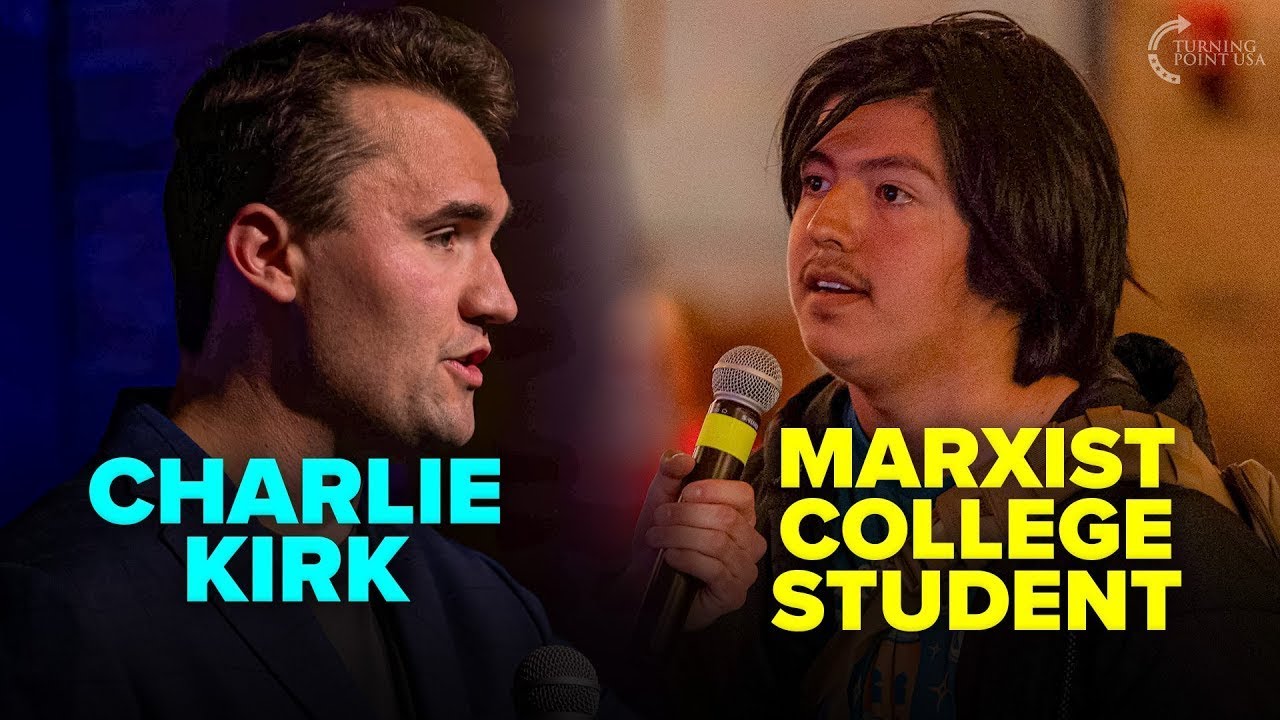
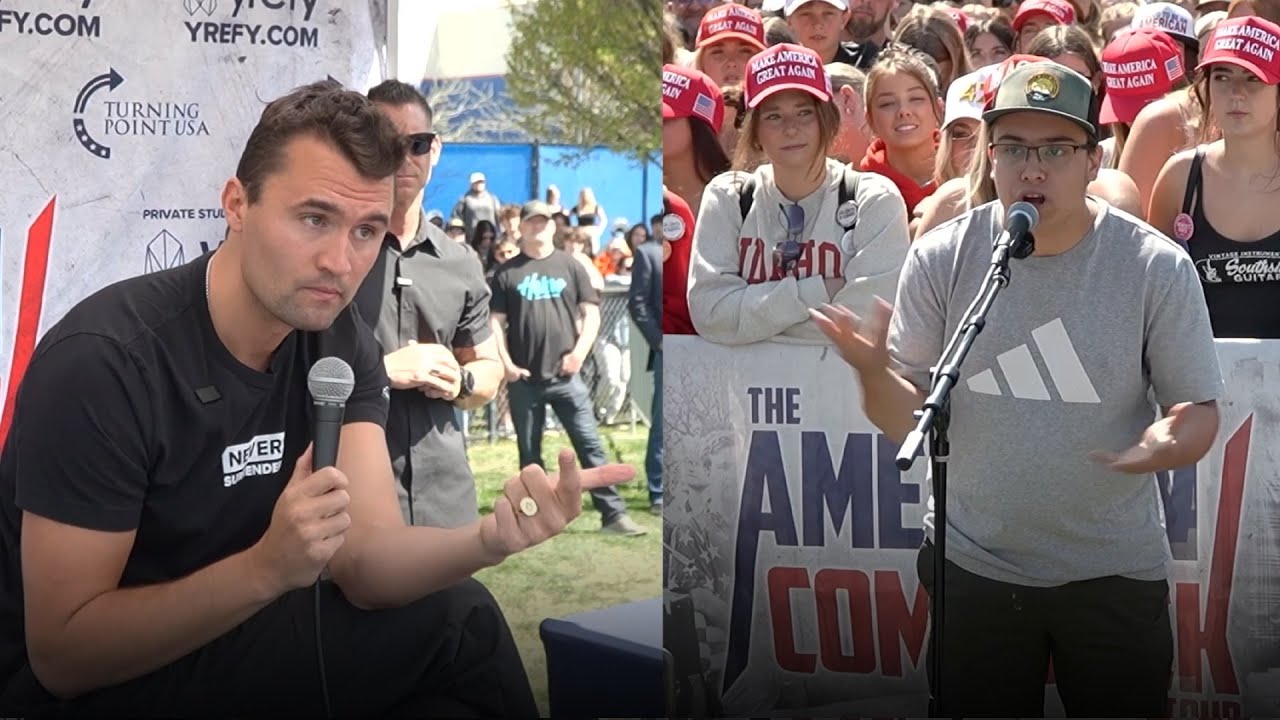
Charlie Kirk Debates Socialist Student on Capitalism, Billionaires, and Healthcare at Turning Point USA Event
Enjoying this? Share it with someone who needs to see it.
Up Next
Charlie Kirk Debates Socialism Versus Capitalism: Roads, Fire Departments, and Government Monopolies
3:38
Charlie Kirk Debates UVM Socialist Student on Native American Policy and Failed Economic Systems
5:40
Charlie Kirk Dismantles CRT, Marxism, and Modern Leftist Ideology in Fiery Campus Debate
58:06
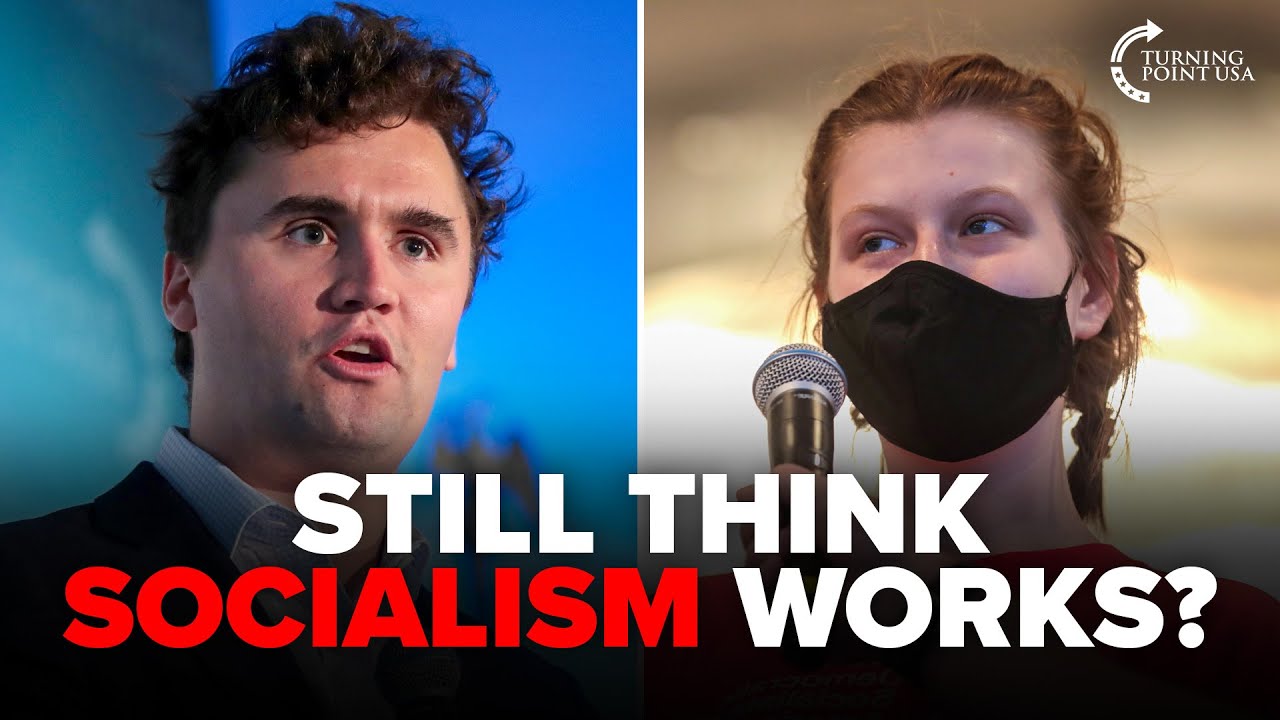
Charlie Kirk Debates Socialist Student on Capitalism, Billionaires, and Healthcare at Turning Point USA Event
Charlie Kirk engages in a spirited debate with a student advocating for socialist policies at a Turning Point USA campus event. The conversation tackles healthcare, wealth distribution, and the contradictions of criticizing capitalism while participating in it. Kirk challenges the student's support for free government healthcare and criticism of billionaires like Jeff Bezos, pointing out the irony of sipping Starbucks coffee, made possible by billionaire Howard Schultz, while condemning the profit motive. The exchange highlights fundamental disagreements about workers' rights, market economics, and whether billionaires earn their wealth through innovation or exploitation. Kirk's direct questioning exposes tensions between ideological beliefs and everyday consumer choices, making this a compelling snapshot of the capitalism versus socialism debate playing out on college campuses across America.
The debate begins with a hypothetical question about a cure for diabetes. When asked if someone with such a cure would want to sell it in the marketplace, the student responds that they would want to distribute it to everyone for free, explaining that's why they're studying in their field.
Kirk immediately challenges this premise by asking for one example of anything that's ever been given out for free by the government. His point is straightforward: nothing is truly free—someone pays for it at some point.
Billionaires and Exploitation
The conversation shifts to wealth and billionaires. The student brings up Jeff Bezos and his massive fortune, suggesting that people with such extreme wealth could afford to pay for things rather than charging consumers. Kirk counters by asking how Bezos acquired his money.
The student's answer reveals their ideological position: Bezos got his money "by exploiting his laborers and not paying them enough." Kirk presses further—if workers are truly being exploited, why do they continue working for Amazon?
The student argues that workers don't have other opportunities and need jobs to access healthcare and get promoted. Kirk challenges whether the student can honestly say in good faith that Amazon doesn't provide good jobs.
The Starbucks Contradiction
When Kirk asks if the student uses Amazon, they proudly state they don't buy from the company. But then Kirk notices the Starbucks cup in the student's hand. This becomes the turning point in the debate.
Kirk points out that Howard Schultz, Starbucks founder, is worth five billion dollars. If the student opposes billionaires exploiting workers, why are they participating in Schultz's "exploitation" by buying Starbucks?
The student attempts to differentiate, claiming Starbucks has better working conditions for their employees, including a fifteen dollar minimum wage. Kirk questions how they know this and presses on the apparent contradiction.
Participating in the Market Economy
The student acknowledges the dilemma, stating it's impossible to buy things without participating in the market economy. Kirk suggests alternatives like farmer's markets and non-billionaire coffee distributors. When the student admits there are no such options readily available, they concede "I think that is stupid."
Kirk drives home his point: it's very easy to critique billionaires while enjoying a Starbucks latte made possible by someone who wanted to become a billionaire through profit. The student redirects, saying it was made possible by the workers who made it.
Who Makes It Possible?
Kirk corrects this view—it's actually made possible by the consumer. He reminds the student that Schultz started Starbucks in his house in Seattle with an idea that many thought was crazy. The business model succeeded because consumers chose to buy the product.
The exchange concludes with Kirk summarizing the irony: the student can sip their latte and criticize capitalism, yet they never said they hate capitalism. The student protests that Kirk is putting words in their mouth, but Kirk points out they did say workers should own the means of production and want government to run healthcare.
The student begins to clarify their position but the exchange ends, leaving the fundamental tension unresolved: how does one critique a system while actively participating in and benefiting from it?