2,422 videos 1,389,747,653 views US Joined Aug 30, 2018
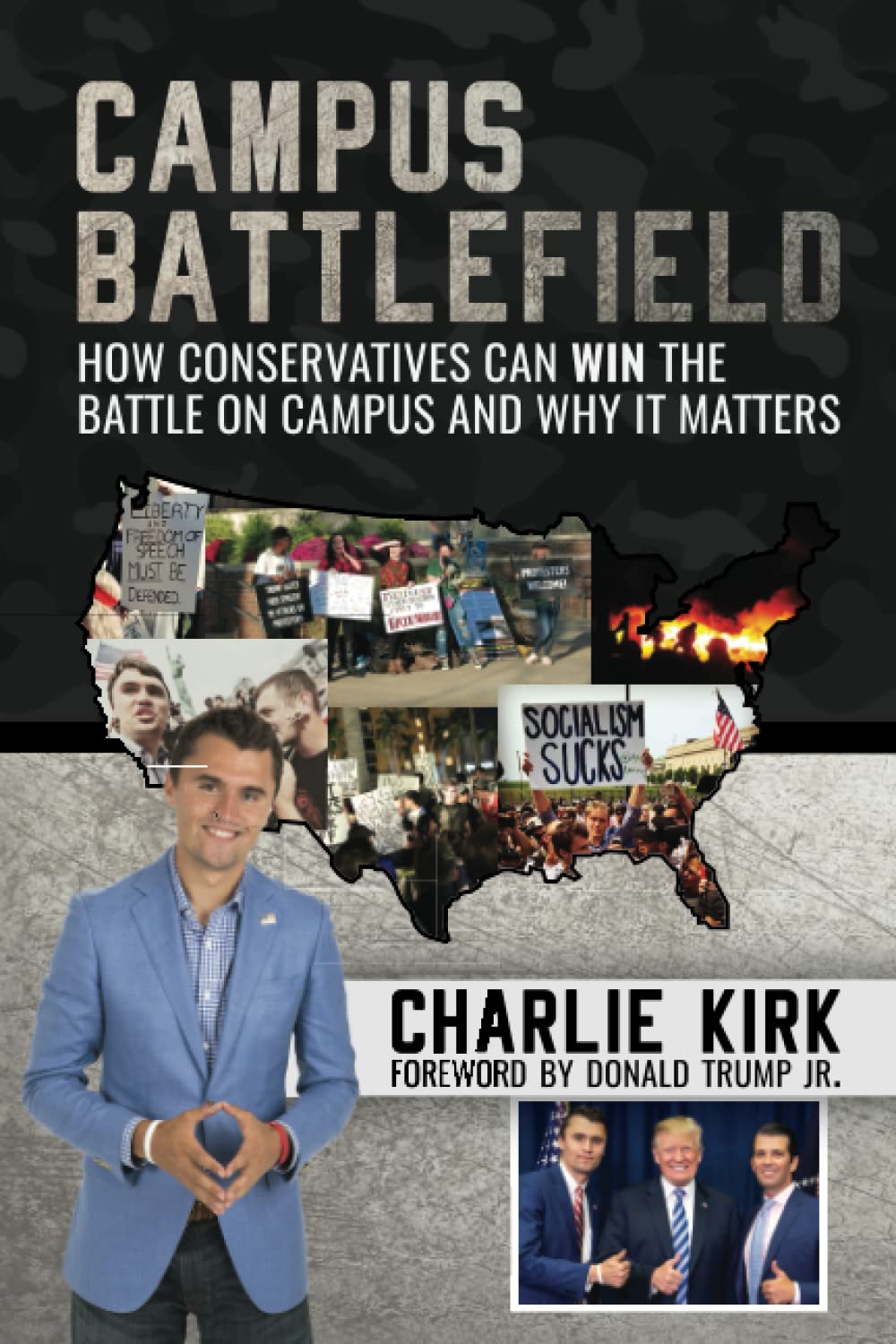
Charlie Kirk is the Founder and President of Turning Point USA, the largest and fastest growing conservative youth activist organization in the country with over 250,000 student members, over 150 full-time staff, and a presence on over 2,000 high school and college campuses nationwide. Charlie is also the Chairman of Students for Trump, which aims to activate one million new college voters on campuses in battleground states in the lead up to the 2020 presidential election. His social media reaches over 100 million people per month and according to Axios, he is one of the "top 10 most engaged" Twitter handles in the world. He is also the host of “The Charlie Kirk Show,” which regularly ranks among the top news shows on Apple podcast charts.
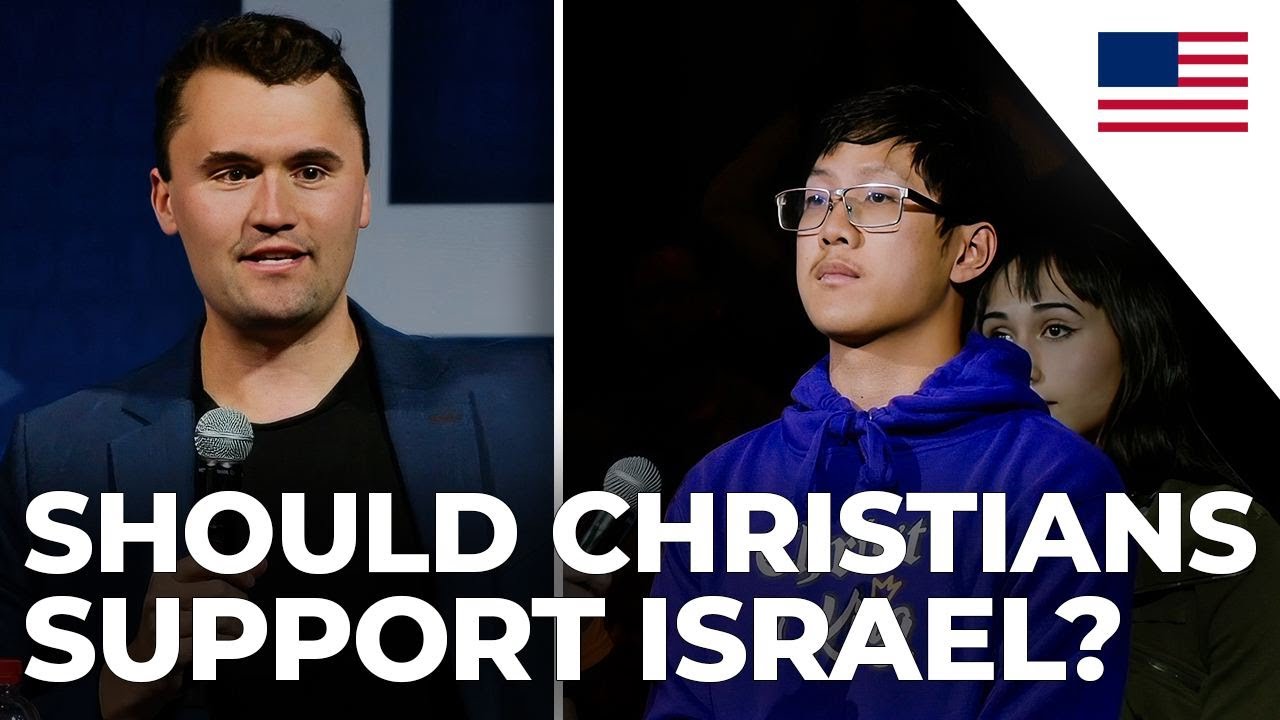
Charlie Kirk Defends Biblical Authority and Gospel Truth at University of North Texas Campus Debate
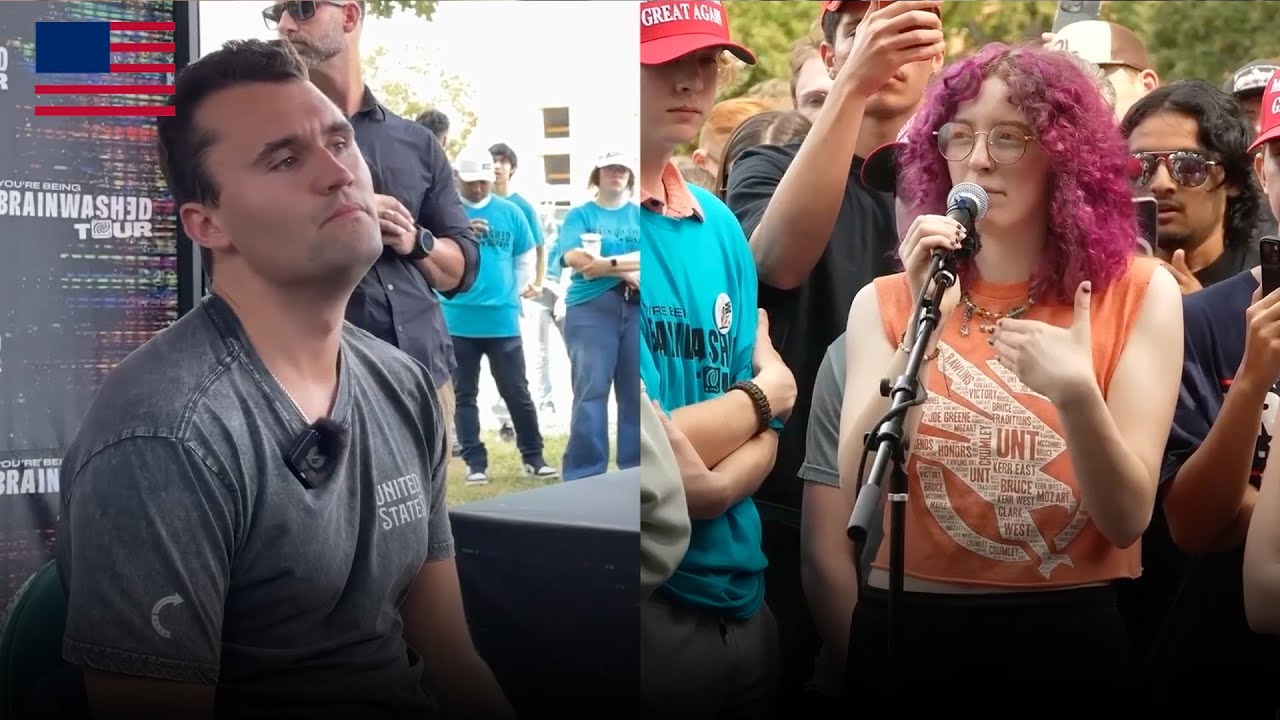
Charlie Kirk engages in a spirited theological debate with a Catholic student at the University of North Texas, defending the Bible's divine authorship, internal consistency, and moral authority. The conversation ranges from alleged biblical contradictions and the virgin birth accounts to questions about homosexuality, evangelization, and the separation of church and state. Kirk argues that apparent discrepancies in gospel narratives actually validate their authenticity, explains why all 66 books point to humanity's need for Christ, and makes the case that political engagement is necessary to preserve religious freedom and the ability to spread the gospel on college campuses across America.
The debate begins when a student challenges the Bible's reliability, pointing to its multiple human authors as evidence against treating it as factual. Charlie Kirk responds by explaining that while many people transcribed the Bible, God is its singular author. Kirk argues this multi-author reality actually strengthens the Bible's credibility rather than undermining it.
Kirk explains that Moses transcribed Genesis, Exodus, Leviticus, Numbers, and Deuteronomy after hearing from God. Solomon wrote Proverbs and Ecclesiastes, King David authored Psalms, and the New Testament includes writings from Matthew, Mark, Luke, John, and Paul, who wrote 1 and 2 Corinthians, Romans, 1 and 2 Timothy, Titus, and Jude. The fact that these diverse authors, who weren't collaborating, produced 66 books reaching the same fundamental conclusions proves divine orchestration rather than human invention.
All these writings converge on essential truths: there is a God, we are not Him, we exist in constant rebellion against that God, and because God is love, He sent His son on a rescue mission to save humanity from its broken nature so people can live forever.
Gospel Variations as Evidence of Authenticity
When the student claims the four gospel birth narratives contradict each other regarding timing and location, Kirk flips the argument. These variations, he explains, actually prove the Bible's authenticity rather than undermining it.
Kirk uses an analogy of five witnesses to a car accident. One witness might remember a yellow shirt, another a yellowish-red shirt, another might focus on the car's color. These minor variations don't invalidate their collective testimony that an accident occurred. Similarly, the gospel writers weren't disagreeing about the virgin birth or that it happened in Bethlehem. Minor inconsistencies in details prove these were four independent accounts seeking truth, not scribes copying from a single canonical document.
This demonstrates that Matthew, Mark, Luke, and John were recording genuine eyewitness testimonies about the same elemental event, which is exactly what we'd expect from authentic historical documentation.
Context, Canon, and Moral Authority
The student then questions why Christians extract individual verses as absolute truth when the goal should be finding general consensus. Kirk clarifies that verses and chapter divisions were added later as reference points, not present in original scriptures. These tools help believers discuss specific passages rather than vaguely referring to "somewhere in Leviticus."
When asked about the Bible's overall meaning, the student suggests it should be read as literature offering moral lessons about treating others well, but becomes problematic when used as a rulebook. Kirk challenges this distinction, pointing out that morals are essentially rules. He walks the student through the Bible's narrative arc: God created the heavens and earth, humanity exists in a sinful and flawed state, prophets foretold a coming Messiah, that Messiah arrived, and humans must accept this free gift to enter permanent communion with the everlasting Father through Jesus Christ.
Regarding biblical canon, Kirk explains that Jews have served as keepers of the canon for 5,000 years, cherishing the Torah (Genesis through Deuteronomy) and the Tanakh (including Joshua, 1 and 2 Samuel, 1 and 2 Chronicles, Psalms, Proverbs, Ecclesiastes, and the major and minor prophets). When Jews witnessed Jesus, it created a direct line from Old Testament prophecy to the fulfilled Messiah.
Prophecy Fulfilled in Christ
Kirk traces how Jesus fulfilled specific Old Testament prophecies. Isaiah 53 predicted the Messiah would come "like a root out of dry ground," the book of Haggi pointed to Bethlehem, and Isaiah prophesied He would be hated by peers and pierced for transgressions. Every prophecy was fulfilled in sequence through Jesus's virgin birth, perfect life, miracles, crucifixion, and resurrection. Even those who previously hated Him came to love and follow Him after witnessing these events.
The biblical narrative isn't merely about being nice, Kirk emphasizes. It calls humanity to have faith in God and accept the free gift of salvation. Starting with creation, continuing through rebellion, the sending of a Messiah, and that Messiah's arrival, humans in their broken flesh must accept this gift to return to permanent communion with God through Jesus Christ.
Evangelization and Knowing Sin
When the student, who identifies as Catholic, questions why Christians confront people about their lifestyles rather than letting them live freely, Kirk explains that Scripture calls believers to bring everyone to Christ. If someone lives in error, telling them the truth is an act of love, especially since the Bible warns that those who don't accept Christ as Lord face eternal judgment. The goal is bringing everyone to eternal life.
The student expresses discomfort with what he perceives as Christians acting more pious when confronting issues like homosexuality. Kirk responds that while same-sex attraction exists, acting on it contradicts biblical teaching because God created nature in a specific way. How people act matters more than how they feel.
When the student admits being Catholic but opposes most forms of evangelization, Kirk points out this contradicts Christ's final command to "go and make disciples of all nations." The student argues sins mentioned only once or twice in Scripture shouldn't be considered core beliefs. Kirk counters that people can only repent if they know what constitutes sin. Without understanding God's perfect standard and law throughout Scripture, people cannot recognize how far they fall short of God's glory.
The Ten Commandments and Daily Transgression
Kirk walks through the Ten Commandments, which the student doesn't disagree with. He then demonstrates how everyone violates them daily—coveting, stealing in various forms—proving why humanity needs a savior. This stands in stark contrast to college campus culture that makes everything about self-centered "meology" when people actually need Christ to come into their lives, requiring them to get on their hands and knees and repent.
Political Engagement as Religious Preservation
The conversation shifts when the student questions why religious beliefs influence political positions, referencing Trump's stance on certain issues and invoking separation of church and state. Kirk refuses to be sidetracked but offers a closing statement on the relationship between faith and politics.
The most important thing anyone can do, Kirk states, is give their life to Christ and make Christ known. The second most important thing is ensuring they can continue doing the first. His mission at Turning Point USA is making sure the gospel can still be spread and that churches are never deemed non-essential again. Through political venues, thousands of students are now hearing the gospel at places like the University of North Texas, making it a day well spent.