2,422 videos 1,389,747,653 views US Joined Aug 30, 2018
Charlie Kirk is the Founder and President of Turning Point USA, the largest and fastest growing conservative youth activist organization in the country with over 250,000 student members, over 150 full-time staff, and a presence on over 2,000 high school and college campuses nationwide. Charlie is also the Chairman of Students for Trump, which aims to activate one million new college voters on campuses in battleground states in the lead up to the 2020 presidential election. His social media reaches over 100 million people per month and according to Axios, he is one of the "top 10 most engaged" Twitter handles in the world. He is also the host of “The Charlie Kirk Show,” which regularly ranks among the top news shows on Apple podcast charts.
Charlie Kirk's Viral Portland Confrontation: Civil Dialogue Interrupted by Hat Incident
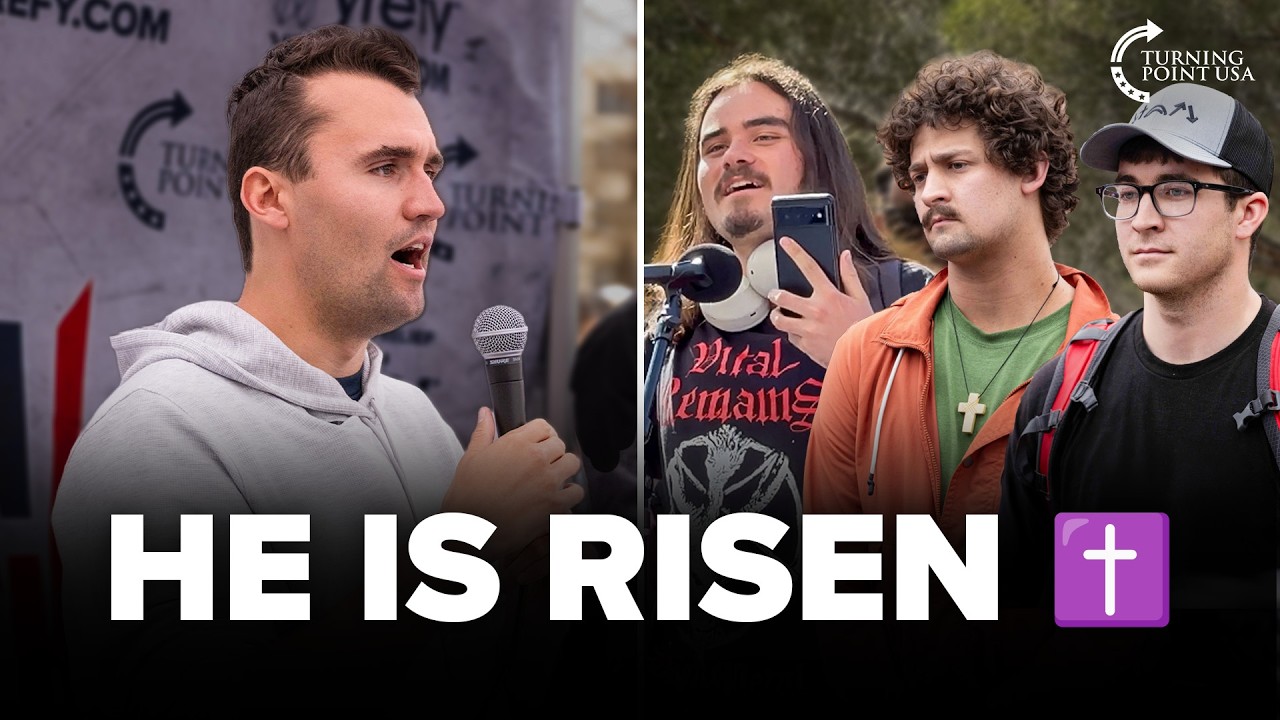
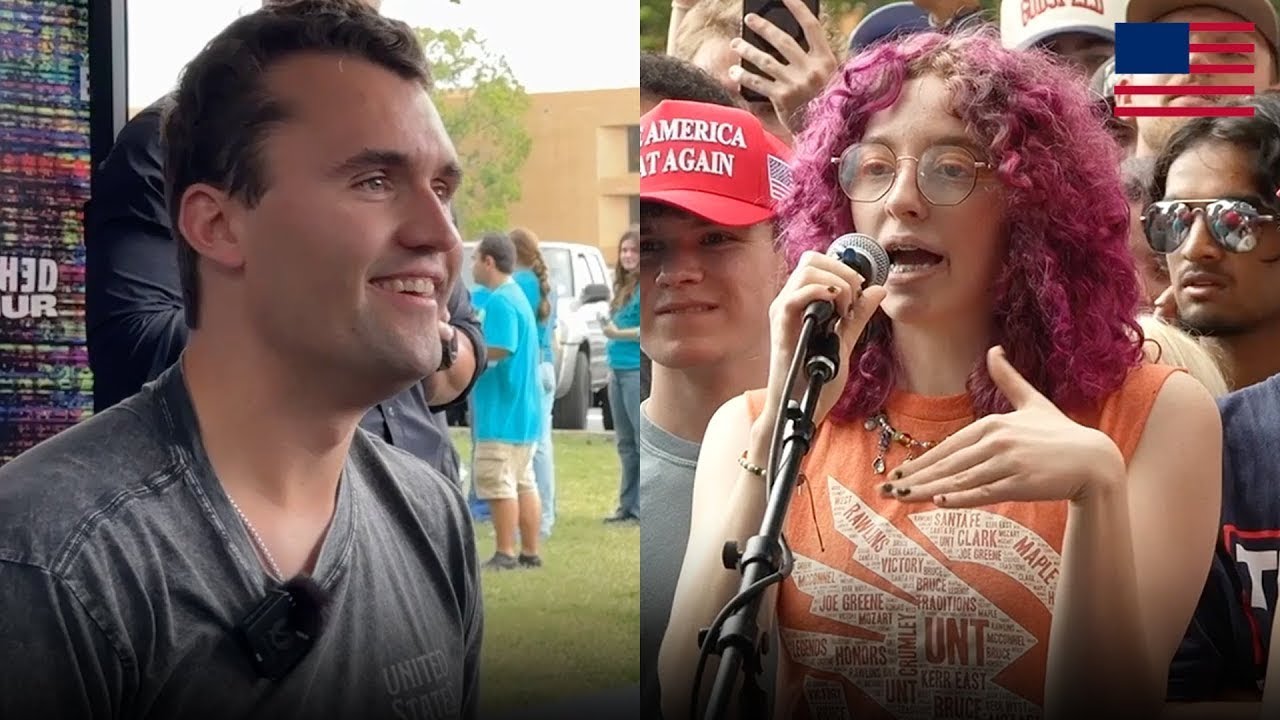
Charlie Kirk engages in a thoughtful debate about faith, secularism, and childhood education with several individuals in Portland, Oregon, demonstrating the power of civil discourse across ideological divides. The conversation ranges from religious traditions and moral instruction to the importance of Judeo-Christian values in Western society. What begins as a respectful exchange takes an unexpected turn when someone physically removes Kirk's hat during the discussion, highlighting the tension between peaceful dialogue and aggressive confrontation in today's political climate. Despite the interruption, Kirk maintains composure and reinforces his central message: when people stop talking to each other, societies fracture and violence becomes more likely.
Charlie Kirk found himself in Portland, Oregon, engaging with locals in what would become a viral exchange demonstrating both the possibilities and challenges of cross-ideological dialogue. The conversation began calmly, with Kirk speaking to individuals who approached him with genuine curiosity rather than hostility—a refreshing change from typical confrontational encounters.
The discussion quickly turned to substantive topics, beginning with a question about children and gender identity. When asked about his stance on young children navigating bathroom choices and gender questions, Kirk offered his perspective: children deal in confusion and need order. He expressed concern about third graders being asked to make complex decisions about gender identity, arguing that such matters are inappropriate for that developmental stage.
Faith, Conversion, and Moral Instruction
The conversation shifted when one participant asked Kirk to share his personal faith journey. Kirk identified himself as an Evangelical Christian, explaining that he was saved at 14 years old. He clarified the Evangelical belief in being "reborn" and dedicating one's life to Jesus Christ—a defining moment distinct from simply attending church.
When challenged about introducing children to religion and spirituality at a young age, Kirk defended the practice as imperative. He argued that a Judeo-Christian construct provides children with morals and values increasingly absent in secular society. While acknowledging that moral instruction could theoretically come from other sources, Kirk maintained that the church does it better based on his analysis of Judeo-Christian traditions versus increasingly secularized societies.
Oregon's Homelessness Crisis and Church Attendance
Kirk presented a striking statistical argument specific to Oregon. He noted that Oregon has the highest homeless population per capita in the country while simultaneously having the least charitable donations to help the homeless. Oregon also has one of the most unchurched populations in America. Kirk drew a direct correlation between declining church attendance and decreased willingness to help the poor.
He was careful to clarify that he wasn't suggesting atheists and secularists cannot be dedicated to helping the poor, but rather was making a broader sociological observation about the relationship between religious participation and charitable behavior.
Comparative Religion and Western Morality
When asked about other faith traditions like Islam and Buddhism, Kirk acknowledged the charitable principles within Islam, including the pillar of helping the poor. However, he maintained his position that Western morality stems fundamentally from the Judeo-Christian tradition, particularly the Ten Commandments found in the Torah and carried forward in Christian teaching.
A participant who identified as having a background in anthropology challenged Kirk on perspective, noting that Kirk views issues through the lens of a Christian heterosexual male. The participant, who described themselves as formerly a Baptist heterosexual black male, raised concerns about applying one religious perspective to law and policy.
Kirk clarified that he was discussing cultural and moral frameworks rather than advocating for specific laws. The conversation then explored the definition of "secular," with Kirk explaining that he considers secular to mean outside of organized religion, while practitioners of Buddhism, Islam, and other faiths would not be considered secular.
Christianity's Unique Theological Claims
When pressed on what makes Judeo-Christian tradition superior to other religions like Islam or Buddhism, Kirk offered a theological argument. He pointed to what he views as fundamental differences, such as Islam containing examples that condone violence while Christianity does not. When confronted with Old Testament passages describing violence, Kirk explained the Christian understanding of the New Covenant established by Jesus, which Christians believe superseded previous requirements.
Kirk articulated what he considers Christianity's unique theological position: while every other religion requires adherents to reach toward God, Christianity is the only religion where God came down to humanity. He emphasized the Christian belief in Jesus as a sinless figure who died a passive death, contrasting this with other religious founders like Muhammad. Kirk argued that Jesus represents a complete departure from all previous human examples, including imperfect biblical figures like David.
The Hat Incident
The philosophical discussion was suddenly interrupted when someone approached and removed Kirk's hat—an action Kirk noted might be against the law. The moment captured on video shows the tension between peaceful dialogue and physical confrontation. Rather than escalating the situation, Kirk chose not to press the issue, telling bystanders to let the person "have her emotions" and emphasizing that pressing charges wasn't what the encounter was about.
Kirk used the incident to reinforce his broader message about respect and love, even in disagreement. Despite not agreeing with the action, he opted for de-escalation rather than confrontation.
Why Civil Dialogue Matters
As the conversation wound down, Kirk was asked a fundamental question: what did he hope to achieve by being there? His response encapsulated his mission and worldview. Kirk argued that the question itself reveals a cultural problem—people have stopped talking to each other, and when that happens, bad outcomes follow.
He outlined a progression of societal breakdown: when married couples stop talking, divorce happens; when church communities stop talking, they fall apart; when civilizations stop talking, civil war ensues. Kirk emphasized that when people lose human connection with those they disagree with, it becomes easier to commit violence against that group. He referenced the great genocides of the last century as examples of what happens when dialogue ceases and people lose sight of each other's humanity.
Kirk expressed his wish that such conversations could happen without incidents like having his hat thrown off, but stressed that society must return to a place of reasonable disagreement where violence is never an option. The encounter in Portland, despite its chaotic moment, demonstrated both the difficulty and the necessity of maintaining civil discourse across deep ideological divides.