2,422 videos 1,389,747,653 views US Joined Aug 30, 2018
Charlie Kirk is the Founder and President of Turning Point USA, the largest and fastest growing conservative youth activist organization in the country with over 250,000 student members, over 150 full-time staff, and a presence on over 2,000 high school and college campuses nationwide. Charlie is also the Chairman of Students for Trump, which aims to activate one million new college voters on campuses in battleground states in the lead up to the 2020 presidential election. His social media reaches over 100 million people per month and according to Axios, he is one of the "top 10 most engaged" Twitter handles in the world. He is also the host of “The Charlie Kirk Show,” which regularly ranks among the top news shows on Apple podcast charts.
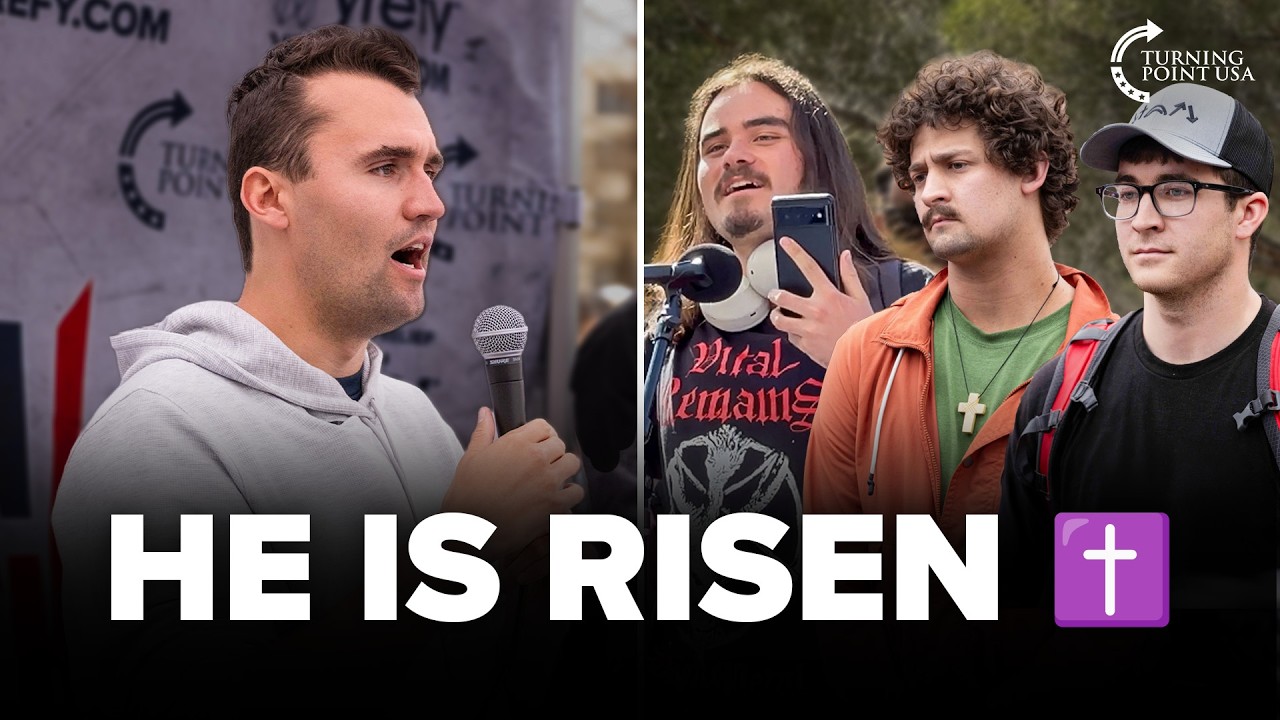
Charlie Kirk Defends Christianity's Role in Abolishing Slavery in Heated Biblical Debate at San Francisco Event
Charlie Kirk faces off with a skeptic in San Francisco over whether the Bible endorses slavery. The debate turns into a masterclass on biblical interpretation as Kirk argues that Christianity regulated but never condoned slavery, ultimately leading to its abolition. Kirk points to William Wilberforce, Frederick Douglass, and the book of Philemon as evidence that Christian abolitionists used scripture to end the practice. The exchange highlights fundamental differences in how people read ancient texts and the distinction between regulation and moral endorsement. Kirk maintains that Christianity's view of human equality, rooted in the New Testament, created the moral framework that destroyed slavery in the Western world.
The Central Question: Does the Bible Endorse Slavery?
At an event in San Francisco, Charlie Kirk engaged in a rigorous debate with a young skeptic over a question that has challenged Christians for generations: Does the Bible endorse slavery? The questioner began by acknowledging Kirk's Christian beliefs—his faith in Jesus Christ, the resurrection, and the Bible as a moral guide—before diving into what he believed would be a devastating critique of biblical morality.
When asked directly if the Bible endorses slavery, Kirk's response was immediate and clear: No. He drew a critical distinction between regulation and endorsement. The Bible, Kirk argued, regulated an ancient practice that was widespread in primitive societies, but it never morally condoned slavery. Kirk challenged his opponent to provide a single verse where the Bible explicitly endorses or morally supports slavery as a good practice.
Understanding Ancient Slavery Versus Chattel Slavery
Kirk emphasized that modern readers often conflate different forms of slavery. The chattel slavery that infected the American South—lifelong, race-based, and multigenerational bondage—is explicitly prohibited in the book of Exodus. Old Testament slavery, Kirk explained, was often voluntary, economic, or temporary. It was not based on race, nor was it necessarily permanent.
The skeptic pushed back, citing Old Testament passages that regulate slavery, including guidelines for how much to charge for slaves and instructions for slaves to obey their masters. Kirk maintained his position: regulation does not equal condoning. He compared it to how modern societies regulate alcohol consumption without necessarily endorsing drunkenness. The Bible, he argued, placed guardrails around an ancient institution to make it more humane, not to promote it as morally good.
The Book of Philemon: Christianity's Anti-Slavery Statement
Kirk directed attention to the book of Philemon, which he described as "the most anti-slavery verse in the New Testament." In Philemon 1:16, the apostle Paul writes to Philemon about his slave Onesimus, urging him to receive him "no longer as a slave, but better than a slave, as a dear brother." Kirk argued this passage demonstrates that the New Covenant established by Jesus Christ fundamentally rejects slavery.
When the skeptic asked to read the verse himself, Kirk encouraged him to do so. Reading from his phone, the young man confirmed: "No longer as a slave, but better than a slave. As a dear brother, he is very dear to me, but even dearer to you, both as a fellow man and as a brother in the Lord." Kirk seized on this, arguing that this statement of human equality became the foundation for the abolition of slavery worldwide.
Who Abolished Slavery? The Christian Abolitionist Movement
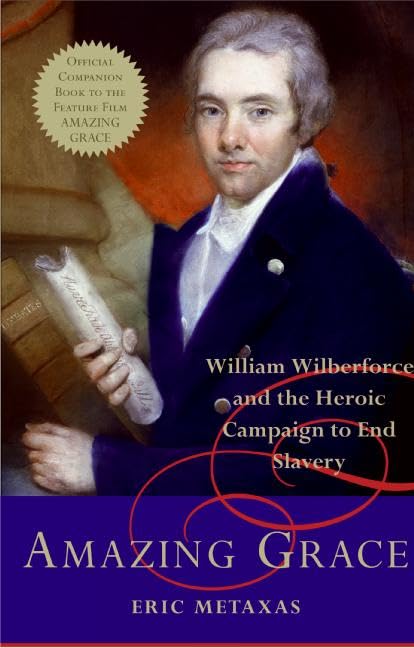
Kirk flipped the script on his opponent, arguing that instead of asking why slavery existed, we should ask who abolished it. His answer: Christians, using the Bible as their moral authority. He pointed to William Wilberforce, the British pastor and parliamentarian who successfully led the abolition movement in the United Kingdom. Kirk asked the skeptic about Frederick Douglass, the former slave who became America's leading abolitionist voice.
The exchange became tense when the skeptic initially stumbled on details about Douglass, at one point describing him as part of a "Protestant Catholic" sect. Kirk corrected the record: Frederick Douglass was a former slave who, after gaining his freedom, opened a church and counseled Abraham Lincoln directly on abolition. Douglass made the moral case that slavery was inconsistent with the gospel.
Kirk named other Christian abolitionists: John Quincy Adams and Thaddeus Stevens. These men, he argued, didn't use Roman philosophy, Buddhism, Hinduism, Islam, or secular reason to make their case. They used the Bible. Christianity, Kirk declared, deserves credit for ending "the most horrific practice of slavery" and making the world a better place.
Jesus on Slavery: Literal or Metaphorical?
The skeptic raised another challenge: passages in the gospels of Mark and Luke where Jesus tells slaves to respect their earthly masters as they would respect the Lord. Kirk responded by noting that Jesus frequently spoke in parables and metaphors. The word translated as "slave" (eved in Hebrew) has multiple meanings. Paul himself refers to Christians as "slaves to Christ," which is clearly metaphorical, not literal chattel bondage.
Kirk argued that Jesus's teaching about respecting masters can be understood as a broader moral principle about respecting teachers, elders, and authority figures. The skeptic insisted the passage was clearly literal, referring to actual slaves. Kirk maintained that even if the context was literal slavery, the teaching doesn't constitute moral endorsement of the institution itself.
Is Christian Morality Constantly Changing?
The skeptic made a broader claim: Christianity is a "constantly moving target" that shapes its beliefs around what the world already sees as good. Kirk challenged this directly by pointing to the Nicene Creed, established at the Council of Nicaea in 300 AD. The creed affirms belief in one body, one resurrection, the virgin birth, the communion of saints, and the resurrection of the body. These core Christian doctrines, Kirk argued, have remained unchanged for over 1,700 years.
The skeptic attempted to distinguish between doctrine and morality, arguing that the Bible's moral teachings have changed. Kirk disagreed, pointing out that the same Paul who wrote to Philemon rejecting slavery was writing under the inspiration of the Holy Spirit, and his teaching has always been part of Christian scripture.
The Pragmatic Approach to Ancient Evil
Kirk acknowledged that the Old Testament regulated slavery but insisted this was a pragmatic response to a primitive culture where slavery was widespread, unchallenged, and embedded in society. Rather than immediately overturning an entrenched social system, the Bible made it harder to own slaves and established protections for their dignity. Slaves in ancient Israel had rights, including a Sabbath day of rest—provisions that were unique in the ancient world.
Only the Bible, Kirk argued, cared about the humanity of slaves in the ancient context. He challenged his opponent to name another ancient text that provided similar protections. The skeptic mentioned the Bhagavad Gita, noting it predates the Christian Bible and contains regulations for treating slaves. Kirk conceded that many ancient texts regulated slavery but maintained that only the Bible planted the seeds for its complete abolition.
The New Covenant Changes Everything
Kirk emphasized that Christians don't live solely by the Old Covenant but by the New Covenant established through Jesus Christ. He cited the principle that in Christ there is "neither slave nor Greek or Jew"—all are one in Christ Jesus. Jesus came, Kirk said, to "bring liberty to the captives," as stated in Luke 4. This message of liberation and human equality fundamentally undermines any justification for slavery.
The debate concluded with Kirk insisting that Christianity's record on slavery should be celebrated, not condemned. The faith provided the moral framework that led to abolition. He ended the exchange by expressing hope that the young skeptic would accept Jesus into his heart as Lord and Savior.
Modern Slavery: A Continuing Crisis
Kirk noted an often-overlooked fact: there are more slaves on the planet today than at any other time in human history. This modern reality, he suggested, should shift our focus from ancient practices to contemporary evil. The principles that Christian abolitionists used to fight slavery in the past remain relevant today.