2,387 videos 1,376,944,188 views US Joined Aug 30, 2018
Charlie Kirk is the Founder and President of Turning Point USA, the largest and fastest growing conservative youth activist organization in the country with over 250,000 student members, over 150 full-time staff, and a presence on over 2,000 high school and college campuses nationwide. Charlie is also the Chairman of Students for Trump, which aims to activate one million new college voters on campuses in battleground states in the lead up to the 2020 presidential election. His social media reaches over 100 million people per month and according to Axios, he is one of the "top 10 most engaged" Twitter handles in the world. He is also the host of “The Charlie Kirk Show,” which regularly ranks among the top news shows on Apple podcast charts.
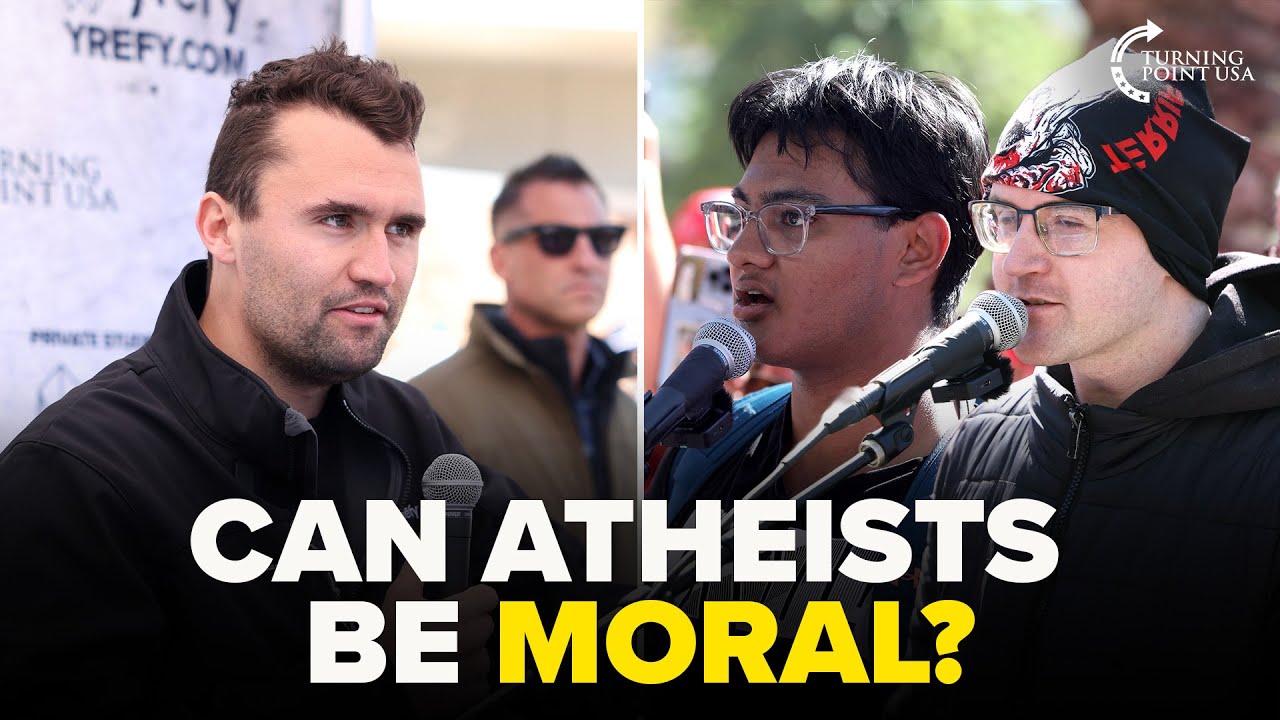
Charlie Kirk Defends Biblical Authority and Gospel Truth to Skeptical Catholic Student at University of North Texas
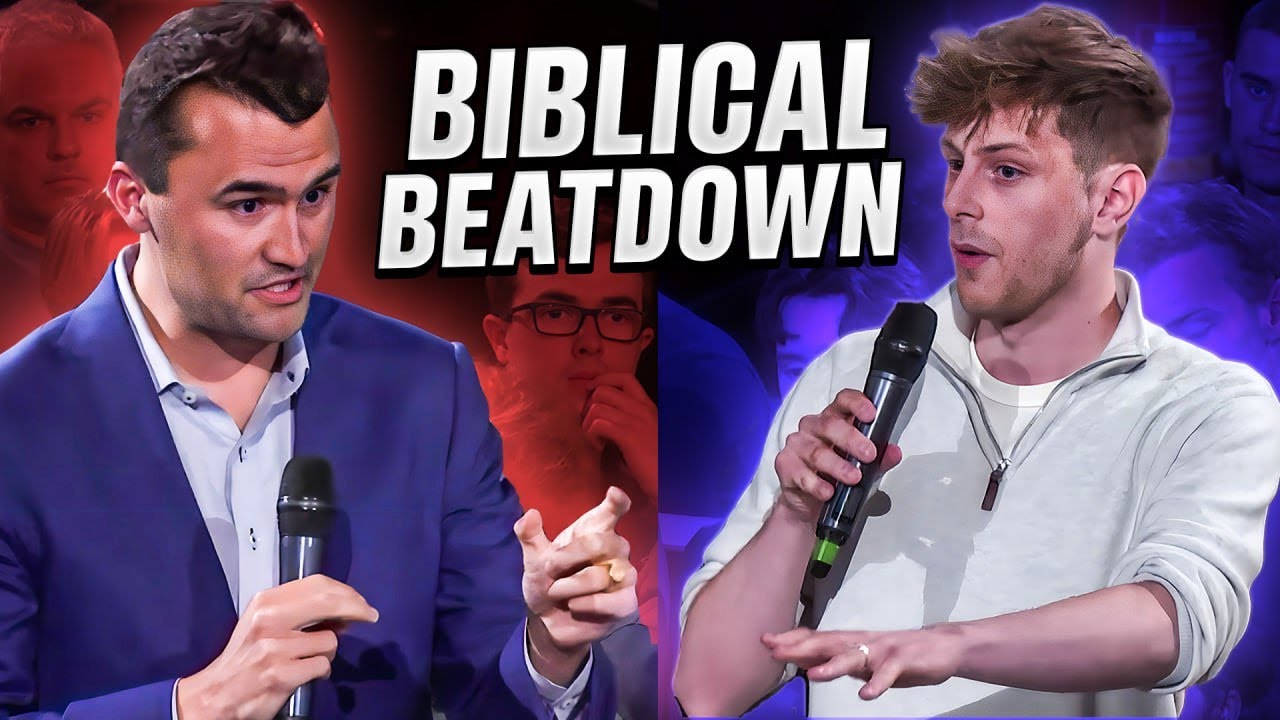
Charlie Kirk engages a Catholic student who questions biblical authority, literal interpretation, and the role of faith in politics. The conversation moves from the authorship of Scripture to homosexuality, the Ten Commandments, and separation of church and state. Kirk systematically defends biblical inerrancy, explaining how multiple authors actually strengthen Scripture's credibility, why apparent contradictions in Gospel accounts prove authenticity, and how understanding God's law leads people to recognize their need for salvation through Christ. The exchange culminates with Kirk explaining that his political mission through Turning Point USA exists to protect religious freedom so the gospel can continue spreading on college campuses.
A student at the University of North Texas challenged Charlie Kirk's treatment of the Bible as a factual book, pointing out that it has numerous authors and contains four different birth narratives of Jesus. Kirk responded by clarifying a crucial distinction: God is the singular author, while many people served as transcribers of His word.
Kirk explained that figures like Moses transcribed Genesis, Exodus, Leviticus, Numbers, and Deuteronomy after hearing from God. When the student pressed on the issue of multiple human authors, Kirk turned the argument on its head. Rather than weakening Scripture's credibility, the multiplicity of authors actually strengthens it. If only one person had written the Bible, it might be dismissed as one individual's opinion. Instead, the Bible features Solomon writing Proverbs and Ecclesiastes, King David writing Psalms, the four Gospel writers Matthew, Mark, Luke, and John, and Paul authoring 1 and 2 Corinthians, Romans, 1 and 2 Timothy, Titus, and other epistles.
These authors weren't collaborating or working together, Kirk emphasized. Yet across 66 different books, they all arrived at the same conclusion: there is a God, we are not Him, we exist in constant rebellion against that God, and because God is love, He sent His son on a rescue mission to save us from our broken nature so that we can live forever.
Apparent Contradictions Actually Prove Biblical Truth
The student argued that different Gospel accounts of Jesus's birth are contradictory, claiming some place the event at different times. Kirk responded that these variations are not contradictory but rather serve as proof of the Bible's authenticity.
He used an analogy of a car accident with five witnesses. One person might say the driver wore a yellow shirt, another might describe it as a yellowish-red shirt, and a third might focus on the car being red. The fact-gatherer then identifies the pattern. Not every eyewitness account will be exactly identical, but everyone will agree that a car accident occurred.
The birth of Jesus follows this same pattern. The Gospel writers didn't disagree that there was a virgin birth or that it happened in Bethlehem. Some details might vary, which actually proves the Bible's truthfulness. It demonstrates that the four Gospel writers were not deriving their accounts from the same canonical document but were providing four independent testimonies about the same elemental event. This variation is exactly what you would expect from authentic eyewitness accounts rather than fabricated or coordinated stories.
Cherry-Picking Verses or Discovering God's Standards?
The student then challenged Kirk about taking individual Bible verses literally, particularly citing Leviticus on homosexuality. The student claimed this verse has been proven to be mistranslated, suggesting it was originally about something else. Kirk firmly corrected this misconception, stating that going back to the original Hebrew, the text clearly says "Adam shall not lie with another Adam."
Kirk further bolstered this interpretation by pointing out that if the traditional understanding were wrong, why did God destroy Sodom for this sin? And why is it repeated in Titus, Jude, and 2 Corinthians? These multiple references across different books and authors reinforce the consistency of biblical teaching on this matter.
The student asked why Christians take individual verses and build core beliefs around them if the goal is to find a general consensus. Kirk explained an important historical fact: in the original scriptures, there were no chapters and no verse numbers. Verses were added later as reference points. Without them, people would have to say "somewhere in Leviticus" rather than being able to cite Leviticus 19 as a specific reference point.
The Literary Meaning Versus Moral Rules
When asked about the Bible's overall message, the student suggested it should be taken as literature with meaning behind stories rather than as a strict rule book. The general meaning, the student offered, is to have good morals and treat others how you want to be treated. But when the Bible is taken as a rule book, the student argued, we end up with tiny rules taken out of context about eating certain meats or playing football.
Kirk stepped back to examine the essence of Scripture. He walked the student through the biblical narrative: God created the heavens and the earth. Humans are sinned and flawed beings. Throughout Scripture, there is repetition of a coming Messiah. That Messiah comes. But the story doesn't end with simply being nice—there's something greater we must do.
The student acknowledged that the Bible tells us we must have faith in God and accept something, eventually landing on accepting Christ into your heart. Kirk seized on this agreement. Rather than cherry-picking verses, we can trace a coherent story: God created us, we rebelled and stay in a state of rebellion, He sent a Messiah, that Messiah came, and we as broken human beings must accept that free gift so we can come back into permanent communion with the everlasting Father through Jesus Christ.
The Canon of Scripture and Jewish Testimony
The student raised the question of canonical books, asking how we know which books belong in the Bible, especially since books like Enoch exist but aren't included. Kirk provided a substantive answer: the Jews are the keepers of the canon.
Going back 5,000 years, the Jews have been cherishing the Torah—Genesis, Exodus, Leviticus, Numbers, and Deuteronomy—plus the Tanakh, which includes Joshua, 1 and 2 Samuel, 1 and 2 Chronicles, Psalms, Proverbs, Ecclesiastes, and the major and minor prophets like Jeremiah and Nehemiah. These books were counted as canonical by the Jewish people. The Book of Enoch, while found in the Dead Sea Scrolls, was never canonical to the Jews.
Kirk emphasized the direct line from the Old Testament to the New: it was Jews who saw Jesus. The virgin birth was fulfilled exactly as prophesied in Isaiah 53, describing the Messiah coming "like a root out of dry ground." The location was specified in the book of Haggai as Bethlehem. Isaiah prophesied He would be hated by His own peers and pierced for our transgressions. Every single prophecy was fulfilled one after another. Jesus lived a perfect life, performed miracles, was killed, and rose from the dead. People who previously hated Him came to love and follow Him.
Knowing Sin to Know the Need for a Savior
The student, identifying as Catholic, asked why Christians go to people who are gay and tell them they can't live that way, acting as if they're more pious. Kirk clarified that while he doesn't know who acts that way, Christians will say that same-sex attraction is not biblical and acting on same-sex attraction is certainly not biblical, because God created nature in a certain way. How you act matters far more than how you feel.
Kirk then connected this to the larger question of evangelism. The student admitted to not really believing in evangelization, which surprised Kirk given that "Go and make disciples of all nations" was literally the last thing Christ said before ascending to heaven.
Kirk explained the theological necessity of knowing God's standards: We can only repent if we know what our sins are. The only way people come to Christ is if they know how far they fall short of the glory of God. They only know they fall short if they know God's perfect standard and law, which is revealed throughout Scripture.
Using the Ten Commandments as an example, Kirk pointed out that even if someone thinks they don't violate them, they're breaking "do not covet" every day, violating "do not steal" every day. That's why we need a savior. College campuses are all about "me, me, me"—what Kirk called "meology"—when in reality we need Christ to come into our lives. We need to repent, get down on our hands and knees, and say, "Jesus, come into my life."
Faith, Politics, and the Mission to Protect Religious Freedom
The student shifted to arguing that this has become more of a political organization and questioned why church and state aren't being separated. The student clarified they weren't trying to refute Christianity since they are Catholic themselves, but expressed concern about the political nature of the discussion.
Kirk brought the conversation to a close with a clear articulation of his priorities and mission. The most important thing anyone can do in life is give their life to Christ and make Christ known. The second most important thing is to make sure you can do the first thing.
Kirk's mission at Turning Point USA is exactly that: to ensure the gospel can still be spread and that churches are never deemed non-essential again. And he accomplishes this through a political venue. Standing at the University of North Texas, surrounded by students who had gathered to listen, Kirk pointed out the fruit of that mission: thousands of kids were hearing the gospel that day at a public university. That, he concluded, is a day well spent.