2,422 videos 1,389,747,653 views US Joined Aug 30, 2018
Charlie Kirk is the Founder and President of Turning Point USA, the largest and fastest growing conservative youth activist organization in the country with over 250,000 student members, over 150 full-time staff, and a presence on over 2,000 high school and college campuses nationwide. Charlie is also the Chairman of Students for Trump, which aims to activate one million new college voters on campuses in battleground states in the lead up to the 2020 presidential election. His social media reaches over 100 million people per month and according to Axios, he is one of the "top 10 most engaged" Twitter handles in the world. He is also the host of “The Charlie Kirk Show,” which regularly ranks among the top news shows on Apple podcast charts.
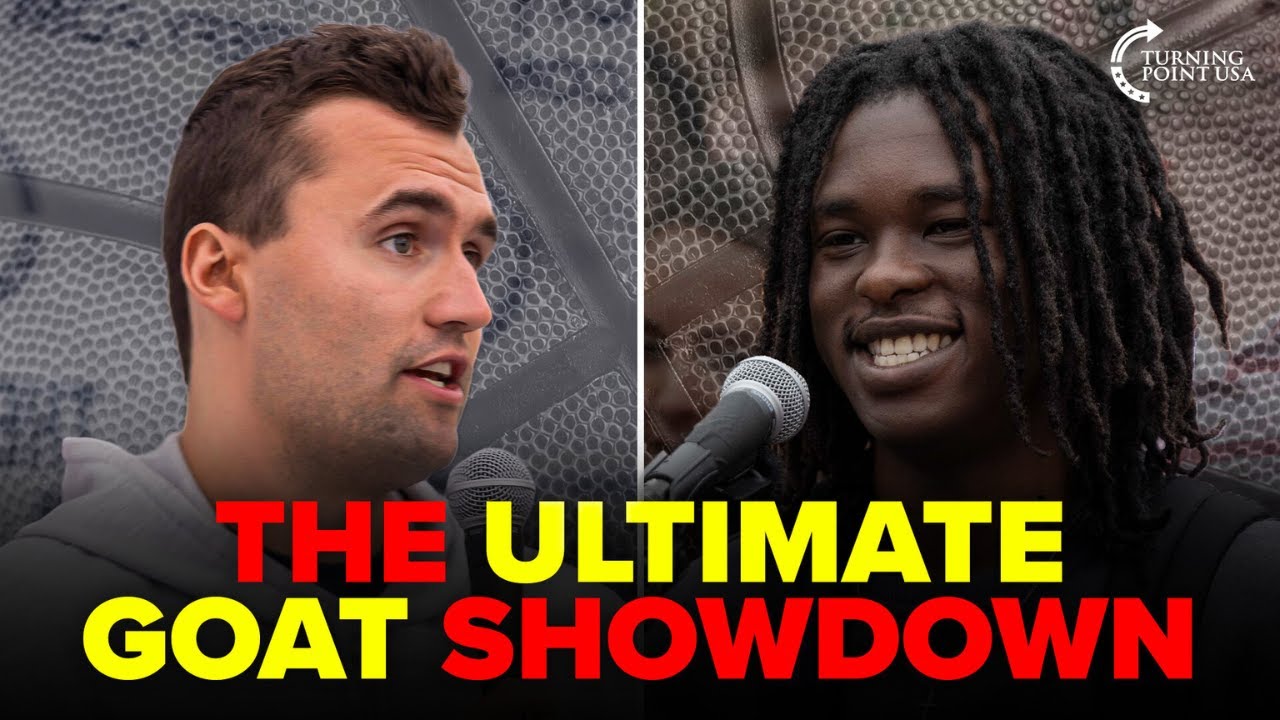
Charlie Kirk Defends Michael Jordan as the Greatest Basketball Player Over LeBron James in Debate
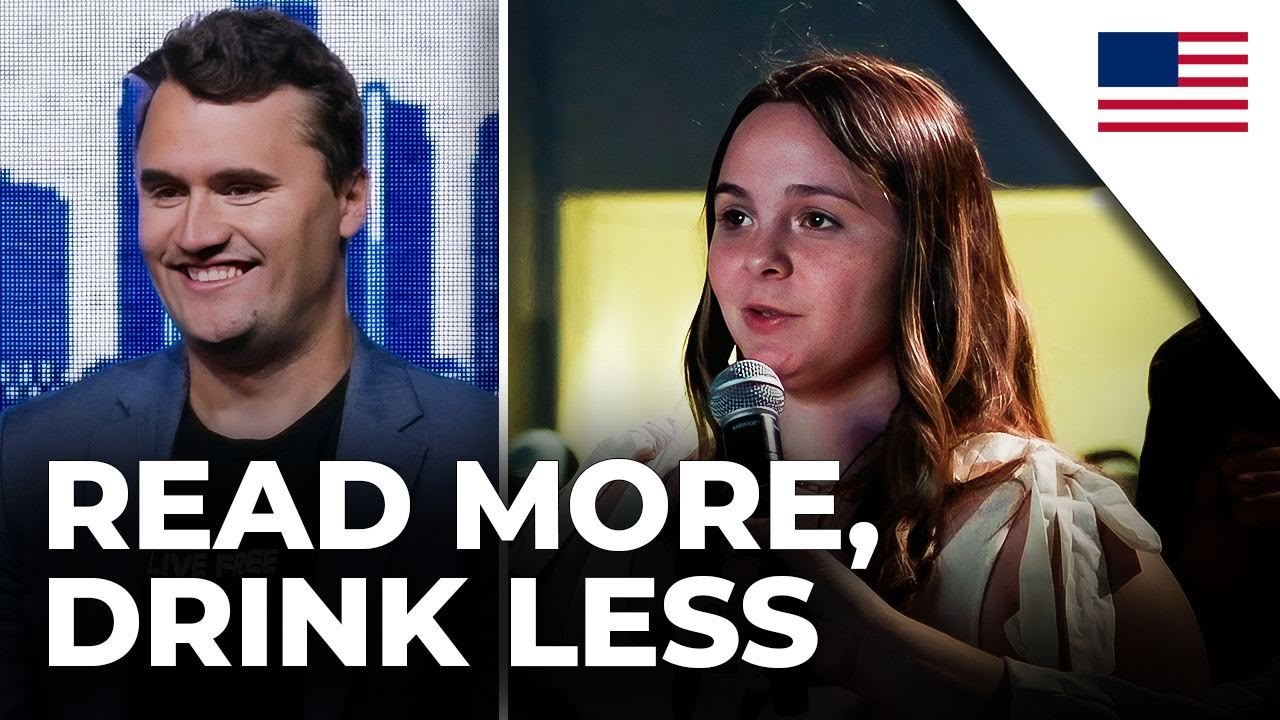
Charlie Kirk engages in a passionate debate with a student named Jerome about whether Michael Jordan or LeBron James deserves the title of greatest basketball player of all time. Kirk, a Chicago native, argues that Jordan's impact transcends statistics, pointing to his cultural influence, the NBA's popularity during his era, and his perfect finals record. The discussion covers defensive intensity, scoring inflation, clutch performances, and what truly defines greatness in basketball. Kirk makes the case that Jordan elevated the NBA to unprecedented global popularity, while LeBron's era has seen declining ratings and a shift toward what Kirk describes as less competitive, defense-optional basketball focused on three-point shooting and international markets.
During a public event, a student named Jerome approached Charlie Kirk to revisit a previous debate about whether Michael Jordan or LeBron James should be considered the greatest basketball player of all time. Jerome asked Kirk if his stance had changed since a previous college debate on the topic. Kirk, eager to engage, first asked Jerome how he defines greatness in basketball.
Jerome explained that he defines greatness based on what someone has been able to accomplish within the time they're in the league. This opened the door for Kirk to systematically challenge the LeBron narrative through a series of questions designed to establish context about the evolution of the NBA game.
Scoring Inflation and Defensive Intensity
Kirk began by asking Jerome whether it's easier to score points in 2025 or in 1995. Jerome acknowledged that it's easier to score now, which Kirk used to argue that LeBron's point totals should be viewed with an asterisk. He pressed further by asking when defense was more emphasized, with Jerome admitting it was in the early 1990s.
Kirk explained that the game has fundamentally changed, with average scores in the 1990s being in the high 80s to early 90s, while current NBA games regularly see scores in the high 110s to early 120s. He characterized modern NBA basketball as "sloppy disorganized AAU" with 125 to 120 games where defense is optional.
To illustrate the physical nature of 1990s basketball, Kirk referenced the Detroit Pistons' notorious defense against Jordan, describing how they would throw him around and smack him down. He argued that LeBron has never had to face the kind of physical defense that Jordan endured, particularly against the Pistons.
Cultural Impact and League Popularity
Kirk challenged Jerome on when the NBA was more popular, asserting that the league's ratings and cultural relevance have declined significantly in recent years. He pointed out that in the last 10 years, LeBron has been the face of the NBA, while Jordan was the face in the 1990s. Kirk argued that Jordan made the NBA more popular, while LeBron's era has seen the league become "a joke" with declining ratings and attendance.
According to Kirk, NBA attendance is down to the point where teams have to give away free food and beer, cable channels struggle to get viewers, and the product has devolved into "a three-point contest" with no defense. He contrasted this with Jordan's era, when the NBA left at the highest ratings ever with a cultural phenomenon unlike anything seen before or since.
Kirk emphasized that Jordan redefined the game and brought the NBA from irrelevancy to become the most popular sports phenomenon in countries around the world. He asked Jerome a pointed cultural question: when you go to the inner city in Chicago or Atlanta, do people ask if you're wearing Jordans or LeBrons? The crowd's reaction confirmed Kirk's point about Jordan's lasting cultural impact.
Finals Performance and Pressure
Kirk defined greatness based on performance under pressure, specifically in the NBA Finals. He noted that Jordan never lost a finals, going 6-0, while LeBron has lost at least five or six finals with various teams including the Cavaliers and the Heat. When Jerome mentioned Bill Russell having a better team than Jordan, Kirk acknowledged this but noted that it was a completely different era of the game, and pivoted to discussing other legends like Larry Bird.
Kirk also threw in a provocative claim that Kobe Bryant is better than LeBron, calling it "a thought crime" to even suggest such a thing in today's basketball discourse.
The Quality of Competition
When Jerome argued that LeBron played against greater players than Jordan faced, Kirk challenged him to name comparable talents. Jerome mentioned Steph Curry, to which Kirk asked if Curry is comparable to Magic Johnson. When Jerome claimed Curry is better than Magic Johnson, Kirk suggested this indicated a fundamental disconnect in understanding basketball history.
Kirk listed Jordan's competition: Magic Johnson, Isaiah Thomas, Charles Barkley, and John Stockton and Karl Malone. He argued that LeBron played against guys who could never compete with the legends of the 1990s, yet still lost more finals than he won.
The Modern NBA and China
Kirk explained why he doesn't take any NBA game seriously post-2012 or 2013, describing the league's descent into what he sees as a "ratings driven, China appeasing model of the game." He noted that the NBA has configured itself around China, where games are rebroadcast, and claimed the league makes most of its money there. According to Kirk, Chinese audiences prefer high-scoring games with three-point shooting.
He contrasted this with 1990s basketball, where players would dive on the floor, bloody themselves up, and get in fights regularly. Kirk mentioned players like Dennis Rodman and Scottie Pippen as examples of the physical, committed style of that era.
Clutch Moments and Legacy
Kirk acknowledged that he could only think of two clutch moments in LeBron's career: the block in the Cleveland Cavaliers finals win when he returned to Cleveland, which Kirk respected, and a game winner in game three or four of a series they ultimately lost back in 2007 or 2008.
In contrast, Kirk argued that Michael Jordan has the most legendary clutch performances of any player in the history of the game, citing the game winner in game six against Cleveland and his performance against the Utah Jazz to cap off his career.
The Ultimate Sign of Greatness
Kirk closed his argument with what he considers the ultimate proof of greatness: knowing when to walk away. He suggested that true greatness means you don't have to keep playing until you're 40 to get your kid a special job just because you're a billionaire. The real greatest of all time, Kirk argued, is someone who can say "I just won six championships, thanks, I'm retiring" and walk away. The goat knows he's the greatest and doesn't have to keep playing to prove it.
Jerome ultimately conceded some of Kirk's points, though he maintained that his perspective was shaped by not growing up watching Jordan play. Kirk acknowledged this but reminded him that just because you don't know about something doesn't mean it's not true. He assigned Jerome homework: watch "The Last Dance" documentary about Jordan, promising it would change his mind.
Kirk concluded by noting he has no shortage of opinions on the topic and that he defends Michael Jordan to the death, attributing this passion to being from Chicago. He thanked Jerome for the discussion and gave him a hat before moving on.