2,422 videos 1,389,747,653 views US Joined Aug 30, 2018
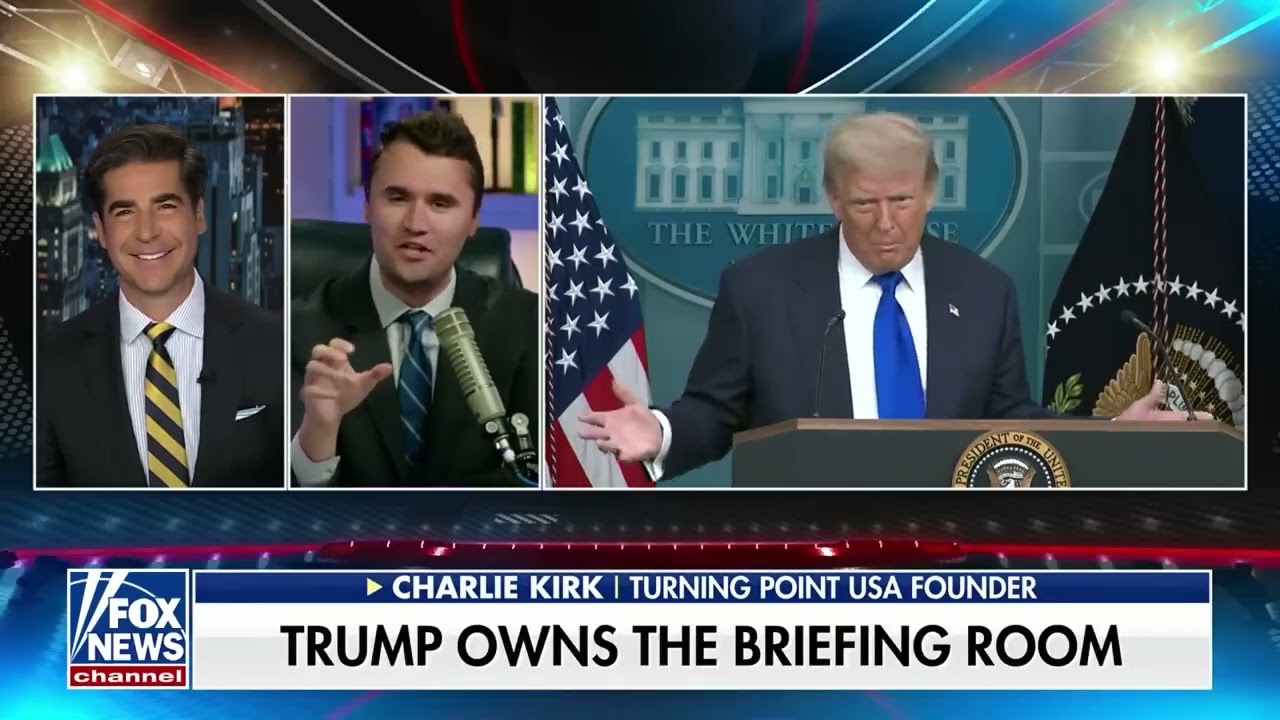
Charlie Kirk is the Founder and President of Turning Point USA, the largest and fastest growing conservative youth activist organization in the country with over 250,000 student members, over 150 full-time staff, and a presence on over 2,000 high school and college campuses nationwide. Charlie is also the Chairman of Students for Trump, which aims to activate one million new college voters on campuses in battleground states in the lead up to the 2020 presidential election. His social media reaches over 100 million people per month and according to Axios, he is one of the "top 10 most engaged" Twitter handles in the world. He is also the host of “The Charlie Kirk Show,” which regularly ranks among the top news shows on Apple podcast charts.
Charlie Kirk Explains Elizabeth MacDonough's Power Over Trump's Big Beautiful Bill and Why You Should Care
Charlie Kirk breaks down the growing controversy surrounding Senate Parliamentarian Elizabeth MacDonough and her role in determining what stays in President Trump's reconciliation bill. With provisions like blocking Medicaid for illegal immigrants potentially being removed, Kirk explains why one unelected staffer holds so much power, the history of the parliamentarian's office, and why Democrats may be strategically leaking information to create political chaos. Kirk urges caution before outrage, revealing insider information that suggests many rulings are temporary and subject to rewording, but warns that if MacDonough blocks key provisions like denying Medicaid to illegals, dramatic action may be necessary to ensure Trump's agenda moves forward.
The Big Beautiful Bill and the Reconciliation Process
President Trump's signature legislative package is working its way through Congress, navigating the difficult process of securing support from moderate Republicans like Susan Collins and Don Bacon. The bill includes border funding, no tax on tips, no tax on overtime, Trump tax cuts, and expanded energy production under the drill baby drill framework. The exhausting process is finally reaching completion, but a critical question remains: which components of the bill will be allowed to remain?
This legislation is moving through reconciliation, a specific technical process that literally means reconciling the budgets of two different fiscal years. Because it's a reconciliation bill, it doesn't require 60 votes and can bypass the filibuster. The filibuster requires 60 votes to reach quorum and then vote on specific legislation. For non-reconciliation bills, Congress would need 60 votes to overcome the filibuster.
While the Senate rules could be changed at any time, and Thomas Jefferson originally intended the Senate to be a majoritarian body, the filibuster did stop much of the extreme legislation Joe Biden wanted to pass during his administration. The reconciliation process offers an opportunity to pass Trump's hallmark agenda, but everything must fit as a budgetary financial reconciliation provision.
The Bird Rule and Who Decides What Stays
Certain provisions in the bill that aren't germane to budgetary measures will be thrown out because they don't pass the reconciliation test. This is called the Bird Rule, and legislation must pass what's known as the bird bath. But who decides what's germane and what isn't? There's no committee, no Supreme Court of the Senate, no bipartisan panel. The answer is one singular person who holds all the cards and decides whether something stays in the bill or gets removed.
Elizabeth MacDonough serves as the Senate Parliamentarian and has become the most powerful person in Washington DC in this process. To her credit, she was helpful under Joe Biden, removing much of the extreme agenda that people like AOC and Elizabeth Warren wanted to fit into reconciliation bills. However, she now holds almost all the cards because John Thune has given her that authority and wants to allow this process to play out.
The Medicaid for Illegals Controversy
The situation reached a fever pitch when MacDonough removed a provision from the big beautiful bill that would have saved hundreds of billions of dollars by preventing illegal immigrants from receiving Medicaid. However, this is not a final ruling or complete gut punch. The process allows for rewording and resubmission to the parliamentarian.
This broken process involves a series of meetings where proposals go back and forth with questions like, "Can we word it this way? Can we do it this way?" and she responds yes or no. The problem is that one person, one staffer who was not Senate confirmed and not elected, holds too much power. There should be a better process than one staffer who could be easily influenced.
According to top-level sources in the Senate and the office of the President of the Senate (which is not John Thune, but the Vice President), people should allow this to play out. The Democrats are actually leaking information while the back-and-forth with MacDonough continues. This is an ongoing process, and Democrats are deliberately leaking partial or out-of-context information to create political damage.
Historical Precedent and the Parliamentarian's Role
The most high-profile reconciliation fight occurred in 2009 when Obama wanted to pass the Affordable Care Act. He needed 60 votes and had them until Senator Ted Kennedy died. Massachusetts held a special election as a referendum on Obamacare and elected Republican Scott Brown specifically to reject the 60-vote threshold. This moment in conservative folklore forced Obama to change wording because his votes dropped from 60 to 59. Many Blue Dog Democrats like Dashel from South Dakota offered themselves as sacrificial lambs, and these states haven't elected Democrats since. That was the turning point.
In March 2021, 24 Democrat members of Congress wrote a letter to Joe Biden and Kamala Harris requesting that Harris overrule the Senate Parliamentarian regarding raising the national minimum wage. Ultimately, Harris ruled in accordance with the parliamentarian and removed the provision. JD Vance could overturn rulings once they reach the floor, but this is primarily John Thune's responsibility to work through.
Constitutional Roots and the Power Problem
The office of the parliamentarian does have constitutional roots. Article One, Section Five states that each house may determine the rules of its proceedings. The office was created in the House in 1927 and in the Senate in 1935. The parliamentarian answers questions from the presiding officer about the wording of motions and precedents related to motions or actions.
Elizabeth MacDonough has served as parliamentarian since 2012, appointed by then-Senate Majority Leader Harry Reid, which should give pause for concern. The budget reconciliation process is only supposed to include provisions that would change laws related to direct spending, revenue, or the debt limit according to the Congressional Research Service. No Medicaid for illegals absolutely qualifies as spending or revenue.
She's an officer appointed by the Senate Majority Leader and generally preserved across parties to maintain harmony in the Senate, but parliamentarians have been removed before. Robert Dove was picked by Republicans, fired when Democrats took over, came back when Republicans regained power, but then got fired by Republican Trent Lott. These fights have happened previously.
The Path Forward and Red Lines
The fact that the parliamentarian is making news means there's a problem. The public should not know her name or be discussing her role. This is way too much power for one person in Washington DC, and it's structurally problematic. If MacDonough cannot be reasoned with on matters that are obviously financial, there needs to be a solution.
There's no reason whatsoever that blocking Medicaid funding for illegals shouldn't be in this bill. The answer is to figure out the right way to word it, period. That is 100% a budgetary measure without question and would save hundreds of billions of dollars. If the provision can't get through, the wording needs to be adjusted to pass the parliamentarian threshold.
If firing the parliamentarian becomes necessary, the question is who to replace her with, and such action would send shockwaves throughout the Senate. Senators hold the upper chamber in high regard, viewing it as a thoughtful and philosophical body where deep thinking happens. However, changing the rules shouldn't be off the table if MacDonough gets in the way of President Trump's agenda.
According to a top-tier source, Democrats are leaking about what the parliamentarian has done, but much of it is either out of context or will be dealt with through very minor language changes. There is a version of the Medicaid provision that will be passable, but Democrats are leaking this information to create political damage. This is a game of spin and largely a propaganda war.
The bottom line is clear: illegals getting Medicaid is a red line that cannot be allowed. If MacDonough stands in the way of eliminating Medicaid for illegal immigrants, dramatic action is necessary. Until then, it's important to allow the process to play out while keeping close watch on developments, understanding that many of the current rulings are not final and can be addressed through rewording.