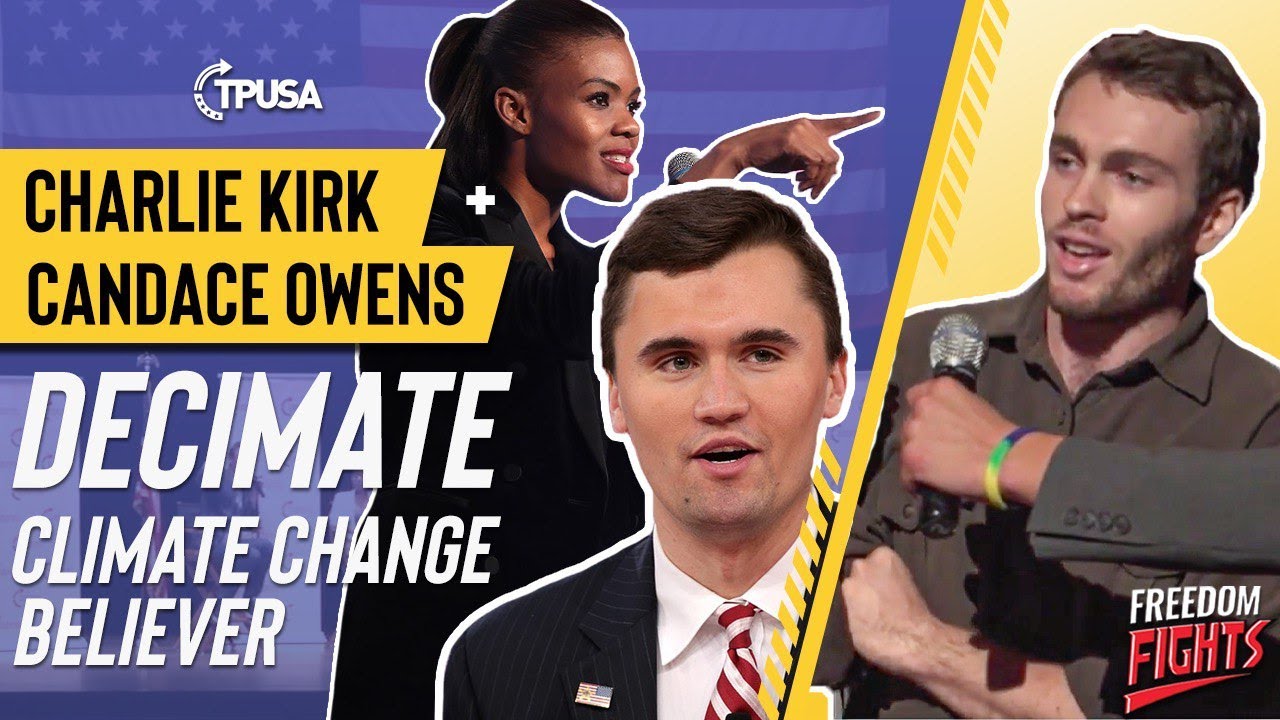
Charlie Kirk Explains the Conservative Approach to Climate Change and Millennial Concerns About Environmental Policy
Enjoying this? Share it with someone who needs to see it.
Up Next
Charlie Kirk Defends Strong Men, Traditional Values, and Free Speech at Oxford Union Debate
1:39:10
Charlie Kirk Debates Catholic Hispanic American on Bernie Sanders, Universal Healthcare, and Socialist Economics
12:25
Charlie Kirk Dismantles Climate Change Alarmism and Defends Free Market Environmentalism at Campus Event
4:19
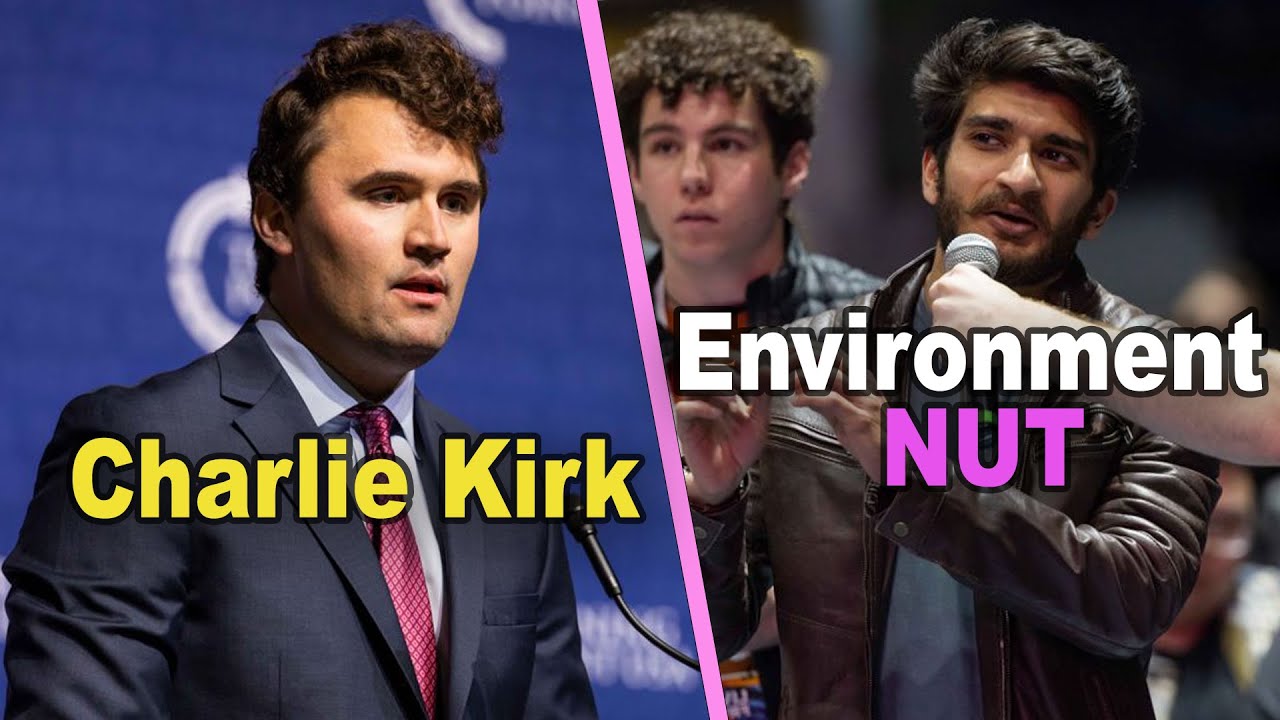
Charlie Kirk Explains the Conservative Approach to Climate Change and Millennial Concerns About Environmental Policy
Charlie Kirk addresses a thoughtful question about conservative climate policy, particularly as it relates to Millennial concerns. With 60% of Millennials believing in climate change, Kirk outlines a conservative framework that prioritizes economic prosperity, entrepreneurial innovation over government regulation, and questions the effectiveness of costly international agreements like the Paris Climate Accord. He argues for market-based solutions led by innovators like Elon Musk rather than bureaucratic mandates, while challenging the premise that America should sacrifice its economic success for initiatives that may not demonstrably reduce global temperatures. Kirk emphasizes that any environmental approach must answer three critical questions: Is the proposed solution worth hindering the economy? Can it actually prove to lower global temperatures? Are there market-based alternatives that don't require sacrificing Western prosperity?
Addressing Millennial Concerns About Climate Policy
Charlie Kirk responds to a question about the conservative approach to climate change, acknowledging that approximately 60% of Millennials, including conservative Millennials, express concern about environmental issues. Kirk frames his response by first asking the audience to engage in a thought exercise, temporarily accepting the premise that climate science is irrefutable in order to focus on policy solutions rather than debating the underlying science.
The Conservative Framework: Economic Prosperity First
Kirk begins by establishing what conservatives will not support: "We are not going to destroy the most successful economy in the history of the world for a green agenda that will satisfy the elite so that they have something to talk about at their cocktail parties in San Francisco, Los Angeles." This foundational principle places economic preservation at the center of any environmental policy discussion.
Entrepreneurial Innovation Over Government Regulation
The core of the conservative approach, according to Kirk, lies in trusting free-market innovation over bureaucratic intervention. He argues that entrepreneurs like Elon Musk are far better suited to develop modern technology, green energy solutions, and commercial innovations than government bureaucrats at agencies like the Environmental Protection Agency, which Kirk refers to as "the employment prevention agency."
Kirk points out a significant irony: "The biggest polluter is the United States government." He argues that politicians and bureaucrats advocating for stricter environmental regulations should first address the energy inefficiency within the federal government itself before imposing restrictions on free enterprise.
Three Critical Questions for Any Climate Policy
Kirk outlines three essential questions that must be answered before implementing any climate policy:
If climate change is true, is the proposed solution worth hampering or hindering our economy?
What proof exists that the proposed policy will actually make global temperatures go down?
Are there market-based, entrepreneurial-focused solutions that can be promoted instead?
The Paris Climate Accord Case Study
Kirk uses the Paris Climate Accord as a concrete example of flawed environmental policy. He explains that this international agreement would have cost the American economy thirty trillion dollars in economic production while failing to hold major polluters accountable. India and China, he notes, would have been able to violate the treaty with minimal consequences, and since they share the same atmosphere—"it's not like if they pollute it doesn't affect us"—any reductions made by the United States would have been negated by increased emissions from these countries.
The cost-benefit analysis, according to Kirk, makes no sense: "It would have hindered our economy thirty trillion dollars to maybe lower global temperatures by one degree over twenty years. I do not take that deal."
Market-Based Solutions Before Power Grabs
Kirk concludes by emphasizing that before asking people to sacrifice the luxuries and conveniences that Western prosperity has provided—whether that means stopping certain industries, ceasing to drive cars, or shutting down nuclear power plants—there must be viable market-based alternatives available. Until entrepreneurial solutions can answer the fundamental questions about effectiveness and economic impact, Kirk states he will "reject the power grab under the guise of environmentalism."
This conservative approach prioritizes maintaining economic strength, empowering private sector innovation, demanding accountability and proof of effectiveness from government programs, and ensuring that any environmental solutions don't disproportionately harm American prosperity while leaving major global polluters unchecked.