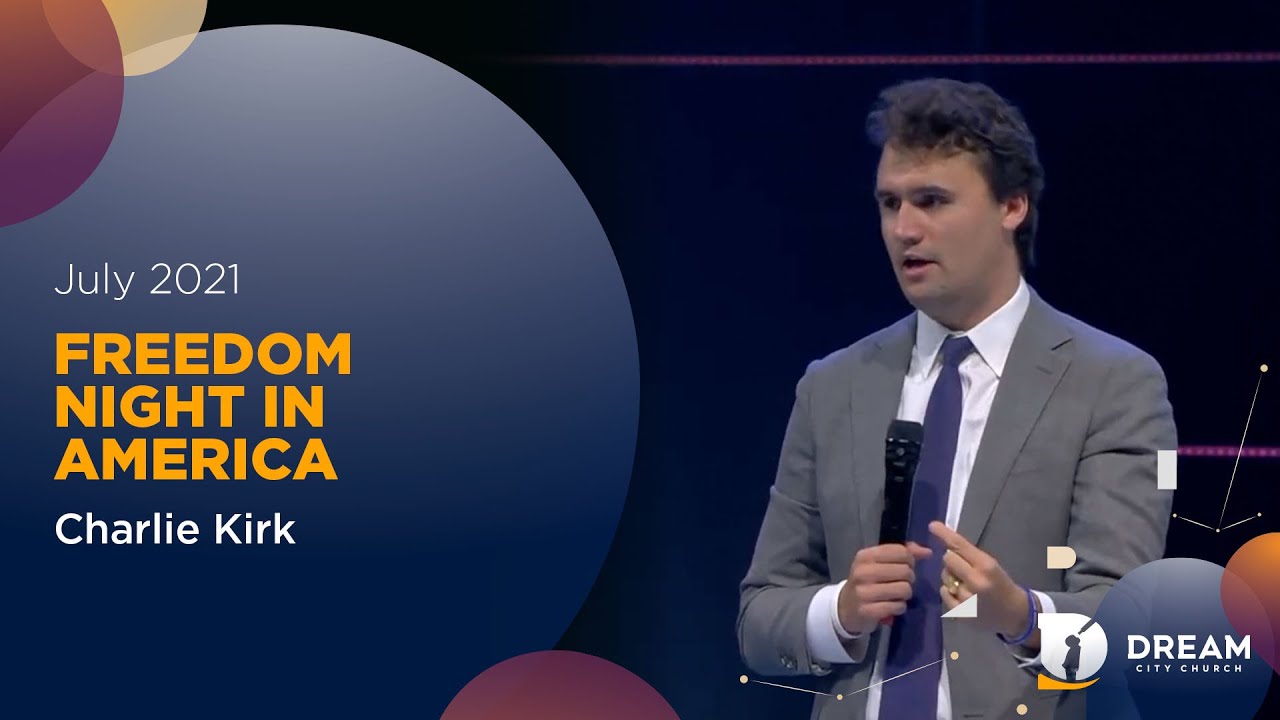
Charlie Kirk Exposes How Lockdowns Became One of the Worst Decisions in American History
Enjoying this? Share it with someone who needs to see it.
Up Next
Charlie Kirk Dismantles the Myth of Socialism After 100 Years of Failure Across Every Continent
1:26
Charlie Kirk Explains Why the American Church Must Rise Up Against Tyranny and Technocracy Before It's Too Late
2:09:55
Charlie Kirk Rallies Young Conservatives at Historic Turning Point USA Student Action Summit in Tampa
20:51
Charlie Kirk Exposes How Lockdowns Became One of the Worst Decisions in American History
Charlie Kirk delivers a passionate analysis of the devastating consequences of lockdown policies, arguing they will be remembered as one of the worst decisions in American history. Drawing on extensive research and alarming statistics, Kirk examines how lockdowns functioned as a luxury of the wealthy while crushing the middle class, small businesses, and young people. From skyrocketing mental health crises to 150 million people pushed into extreme poverty worldwide, Kirk documents the human cost of policies he argues were fundamentally flawed. With 15,000 scientists signing the Barrington Declaration against lockdowns, Kirk makes the case that these measures caused irreparable damage to society while only delaying the inevitable spread of the virus.
Charlie Kirk opens with a stark declaration: the lockdowns implemented in response to the pandemic will go down as one of the worst decisions ever made in American history. After conducting extensive research on the topic, Kirk emphasizes the need to speak openly about these failures to ensure they never happen again. He acknowledges that some might find his statements controversial, but insists the truth must be told.
Kirk frames lockdowns as fundamentally a luxury of the rich. Those with financial resources could survive being locked down at home, but those without means had to struggle just to get by. This created a two-tiered system where the wealthy were protected while the working class and middle class bore the brunt of the economic devastation.
The Global Human Cost
The statistics Kirk presents paint a dire picture of lockdown consequences. Every metric for a declining society increased during this period. Worldwide, 150 million more people were pushed into extreme poverty because of the decision to shut off global supply chains and halt the movement of people, goods, and services.
Kirk points to the Barrington Declaration, signed by 15,000 scientists, which stated that lockdowns represented the greatest threat to human health. The irony, he notes, is that policies supposedly implemented for safety and health were actually hurting people. These were not victimless decisions.
The Mental Health Crisis Among Young People
Perhaps the most alarming statistics Kirk presents relate to young people and mental health. One out of four young people contemplated suicide in the 90 days leading up to his speech. Anti-depressant medication usage increased by 600 percent. These numbers represent a generation in crisis.
Additional mental health data reveals the scope of the problem:
40 percent of U.S. adults reported struggling with mental health, up from just 6 percent the previous year
U.S. Army suicides increased 30 percent during the pandemic compared to 2019
The CDC estimated 41 percent of U.S. adults had delayed urgent medical care because they feared going to the hospital
The Destruction of Small Businesses
Kirk turns his attention to the backbone of American entrepreneurship: small businesses. According to Yelp data, 60 percent of restaurants listed on their app would never reopen. These weren't corporate chains with deep pockets—these were establishments owned by middle-class Americans who took small risks, employing five to ten people each.
The lockdowns crushed these entrepreneurs while the wealthiest Americans prospered. Kirk notes that Jeff Bezos became richer than ever during this period. The wealthy and ruling class survived quite well, while those he calls "the collectivist class" made decisions that devastated the little guy.
The Flawed Logic of Stopping the Spread
Kirk challenges the fundamental justification for lockdowns: stopping the spread of the virus. He calls this premise a lie, arguing that it was never possible to stop the spread, only to delay the inevitable. Policies might temporarily slow or stunt transmission, but they gave people false confidence while causing real harm to human beings.
The approach, according to Kirk, was fundamentally flawed from the start. Rather than adapting as more data became available, policymakers doubled down on lockdowns. All this accomplished was delaying the inevitable while harming young people in the process.
A Generation Living at Home
Kirk highlights another troubling statistic: 52 percent of his generation now lives at home with their parents, up from 37 percent the previous year. He's careful not to attack those in this situation, acknowledging that many have no financial choice.
This generation faces a perfect storm of challenges. The average student loan debt per borrower stands at $31,000. After graduating college with limited practical skills, young people enter an economy where they're told to simply work harder—except the country has been shut down for nine months.
The Stakes for Western Society
Kirk concludes with a warning about the long-term consequences if Western societies don't fully reopen their economies and schools. The damage to the backbone of the republic could be irreparable. Worse still, this damage would only give license to socialist demagogues to seize power.
The message is clear: the lockdowns must be recognized as a historic mistake, their consequences documented, and lessons learned to ensure such policies are never implemented again. The human cost has been too high, the damage too extensive, and the justification too flawed.