2,422 videos 1,389,747,653 views US Joined Aug 30, 2018
Charlie Kirk is the Founder and President of Turning Point USA, the largest and fastest growing conservative youth activist organization in the country with over 250,000 student members, over 150 full-time staff, and a presence on over 2,000 high school and college campuses nationwide. Charlie is also the Chairman of Students for Trump, which aims to activate one million new college voters on campuses in battleground states in the lead up to the 2020 presidential election. His social media reaches over 100 million people per month and according to Axios, he is one of the "top 10 most engaged" Twitter handles in the world. He is also the host of “The Charlie Kirk Show,” which regularly ranks among the top news shows on Apple podcast charts.
Charlie Kirk Makes the Case Against Reclassifying Marijuana as Trump Administration Weighs Decision
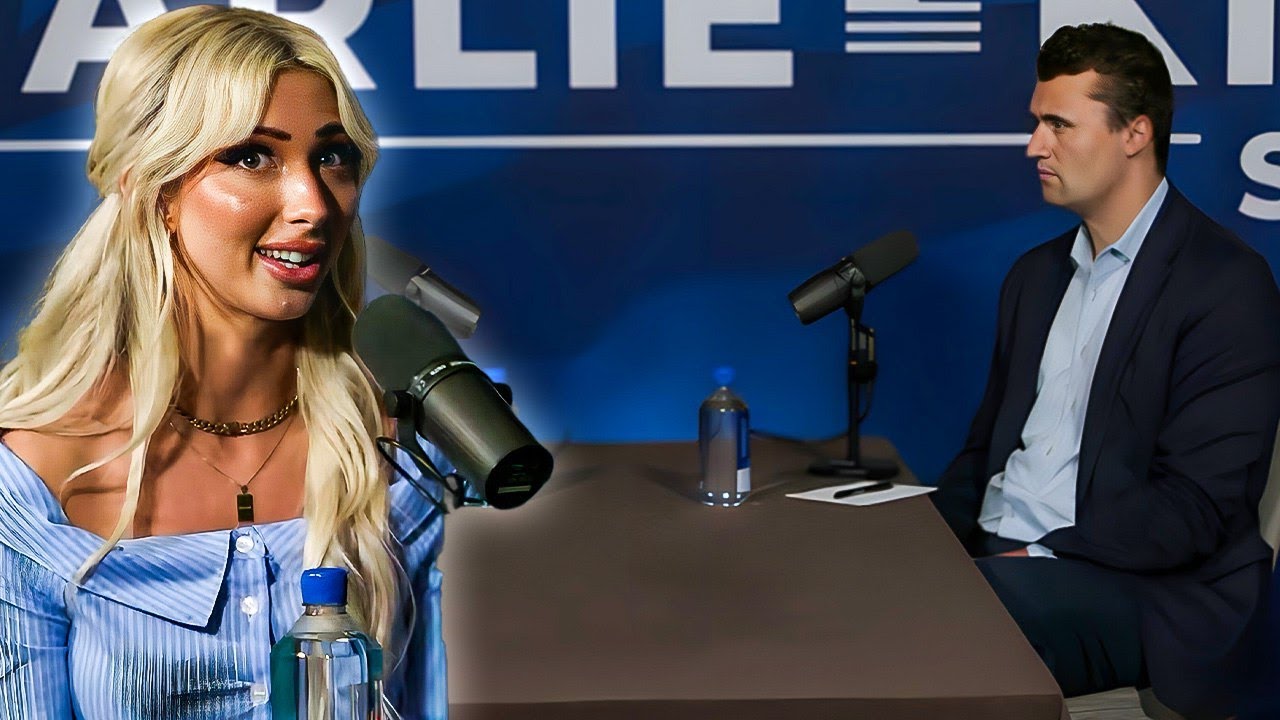
Charlie Kirk delivers an unapologetic argument against marijuana reclassification as President Trump considers moving cannabis from Schedule 1 to Schedule 3. Drawing on data from cities like Denver, Seattle, and San Francisco, Kirk challenges four major claims the marijuana industry has made over the past decade. He examines youth usage rates, traffic fatalities, cognitive decline, and the question of whether widespread marijuana use strengthens or weakens America in competition with China. Kirk acknowledges this perspective divides audiences along generational and geographic lines, but argues the evidence from legalized states tells a clear story about public health, quality of life, and national strength.
President Donald Trump confirmed during a press conference that his administration is examining the possibility of reclassifying marijuana, though no final decision has been made. The reclassification would move marijuana out of Schedule 1 and down to Schedule 3, placing it alongside drugs with moderate to low potential for physical and psychological dependence such as anabolic steroids and testosterone. This announcement has opened a critical window for debate about the implications of such a policy shift.
Charlie Kirk acknowledges this is one of the most divisive topics he addresses, particularly on college campuses where audiences tend to disagree with his position. However, he remains unwavering in his conviction that the evidence warrants serious reconsideration of marijuana legalization and normalization.
The Downplaying of Marijuana's Negative Effects
Kirk's first major contention is that society has vastly underestimated and intentionally downplayed the negative impacts of widespread, casual, and recreational marijuana use. He emphasizes that even those who support legalization must acknowledge this pattern of minimization.
The health data paints a concerning picture. Numerous longitudinal studies link heavy marijuana use, especially during adolescence, to increased risks of psychosis, schizophrenia, anxiety, and depression. THC affects memory, attention, and learning, with chronic use potentially leading to persistent cognitive deficits. Smoking cannabis can cause chronic bronchitis and lung irritation, with long-term cancer risks still being studied.
Kirk stresses a critical point that older generations must understand: the marijuana young people consume today is fundamentally different from what existed in the 1970s and early 1980s. Modern cannabis is significantly more powerful and often laced with substances that didn't exist in previous decades. Any comparisons to Woodstock-era marijuana are invalid.
Dr. Daniel Amen's research documents scary ways marijuana impacts the developing brain. Studies show increased hospitalization visits for psychosis, with half of marijuana users reporting increased depression and anxiety. Modern cannabis potency has skyrocketed compared to the 1970s, with THC concentrations commonly exceeding 20 to 30 percent, and concentrates reaching 70 to 90 percent. The long-term neurological and psychiatric impacts of such high doses remain poorly understood and could present a serious public health crisis.
Impact on Pregnancy, Heart Health, and Cognitive Function
Research from Canada offered strong evidence linking children to psychiatric or psychotic disorders when exposed to marijuana in utero. Consuming marijuana while pregnant increases the odds of preterm birth, low birth weight, and infant death. A study from San Francisco demonstrates marijuana's negative effects on heart health.
Perhaps most concerning is the impact on IQ. A 2021 analysis examining several thousand studies found overwhelming evidence that marijuana use lowers IQ, especially when used by children under 18. The average IQ loss was about two points, a significant decline from something as common as weed has become.
The Societal Impact: Quality of Life in American Cities
Kirk challenges the common argument that personal marijuana use doesn't impact others. He asks whether Portland, Seattle, San Francisco, Denver, Las Vegas, Los Angeles, and parts of Phoenix have gotten better, healthier, stronger, or more pleasant since marijuana legalization. Has New York become a better place to walk around? Does open marijuana use invite the right types of people or lift society toward national unity, strength, virtue, or any meaningful collective goal?
Open-air drug use is widely rejected by any decent society. The consumption of marijuana in public creates not just a messier environment, but a fundamentally less enjoyable place to live. Kirk presents video evidence from a DC resident walking through the newly transformed Washington under the Trump administration. The resident's first observation: "I don't smell no weed." He mentions this before homeless people and before feeling safer, illustrating how pervasive marijuana odor has become in urban environments.
Unlike drinking a beer, which remains largely private unless someone becomes violent or drives impaired, smoking weed in public forces everyone nearby to smell it. This creates a less pleasant experience for others based on one person's choice. Widespread public marijuana use serves as a leading indicator of criminality and degeneracy in neighborhoods and cities.
The Youth Impact: A Generation at Risk
The worst effects of marijuana are on young people. Legalization comes with a tacit government endorsement that marijuana is acceptable, which directly influences youth perception and behavior. In legalized states, youth usage rates have increased because young people interpret legalization as approval.
Heavy marijuana use is linked to five times higher risk of psychosis in young adults, according to a 2019 study in Lancet Psychiatry. Colorado emergency room visits for cannabis-induced psychosis tripled immediately after legalization. Some studies show an average drop of eight IQ points among heavy users.
In legalized states, the perception of marijuana's harm among teenagers fell by over 20 percent in 10 years, according to the Monitoring the Future survey, making early initiation more likely. After Colorado legalized marijuana, marijuana-related traffic fatalities rose 151 percent between 2013 and 2020.
Kirk highlights a shocking statistic: America now has more DUIs for marijuana than for alcohol. When most people think of driving under the influence, they imagine someone who had too many beers at a bar. That's no longer the primary reality. Driving under the influence of marijuana has surpassed driving under the influence of alcohol.
Urban Decay and Workplace Performance
Denver police logged three times more public health consumption citations post-legalization. San Francisco struggles with cannabis litter and open-air use that drives away tourists. Nobody wants to be around open drug use. People flee these environments, often going into debt to buy homes in areas without such problems.
The workplace impact is equally concerning. Heavy weed users are 60 percent more likely to miss work and 75 percent more likely to show poor job performance, according to the Journal of Occupational and Environmental Medicine.
The Central Question: Does This Make America Stronger?
Kirk poses what he considers the most important question in this debate: If more people used marijuana, would America be a better country? If the answer is no, then policy should aim to lessen and decrease usage, not endorse and increase it through legalization and normalization.
He frames this in terms of national competition. If the goal is to defeat China, to go to Mars, to build great things, to start new companies, does more employee marijuana use make America stronger or weaker? When a vice is normalized, there are exponential and unpredictable consequences.
Debunking the Myth That Prohibition Doesn't Work
Kirk addresses the common argument that prohibition is ineffective and that legalization allows for taxation and regulation. He calls this completely false. When something is banned, people use it less. The marijuana industry made very convincing proclamations over the last decade that can now be tested using the scientific method.
Corporate Interests and the Addiction Playbook
When marijuana is legalized, corporate actors enter the market with sophisticated expertise in making products addictive. These are the same professionals who have made America struggle with obesity through carefully engineered food and beverage products. It's not an art; it's a science.
Imagine unleashing corporate power where profit is the only motive on promoting marijuana. Picture the experts at Coca-Cola, Nabisco, and McDonald's having free reign to make the most potent and addictive marijuana they possibly can. Imagine Costco selling a family pack of weed for $99. The geniuses who addict people to Big Macs, Diet Coke, and Supersize Meals would turn their full marketing machinery toward the marijuana industry.
Four Major Lies From the Marijuana Industry
Kirk identifies four major arguments the marijuana industry made that can now be evaluated based on real-world evidence from legalized jurisdictions.
Lie #1: Legalization Will Decrease Crime and Degeneracy
The marijuana industry claimed that legalizing marijuana would lead to decreases in crime, especially homelessness and degeneracy, because legalization would make the product proper and acceptable. The opposite has occurred. Cities that legalized marijuana have not seen decreases in crime. Instead, they've experienced more homelessness, more degeneracy, and more heavy drug use. Denver, Seattle, Portland, San Francisco, and Los Angeles are demonstrably less safe than before legalization.
Lie #2: Youth Usage Will Decrease
Kirk calls this "an insultingly dumb lie" that many people believed. The argument was that legalization would require ID checks at legitimate retailers, making marijuana harder for minors to obtain than from street dealers. The reality: when things are legal and widely available, people use them more. Youth usage has increased, not decreased. More young people are using marijuana, smoking weed, and consuming edibles than 10 years ago. Surveys and independent review studies confirm this trend.
Lie #3: The Cartels Will Be Weakened
The marijuana industry promised that legalization would weaken cartels by eliminating their marijuana market, similar to how ending Prohibition put bootleggers out of business. This was another insulting lie. The cartels are stronger than ever because they've graduated toward the harder drugs that marijuana serves as a gateway to. Marijuana is absolutely a gateway drug, especially the high-THC varieties, edibles, and psychedelic mergers sometimes done with cannabis. Even when marijuana doesn't lead directly to hard drugs, it often leads to a life of slow cognitive decline, low IQ behavior, lower social standards, and a culture of shamelessness.
Lie #4: Legalization Will Reduce the Allure
The industry claimed that when something is illegal, there's an allure to it, but legalization would cause people to shrug their shoulders and lose interest. This was a catastrophic lie. Test cases across the country show young people are not doing better because of legalization. They're not stronger or smarter.
The Parental Responsibility Factor
Kirk acknowledges that parents must also step up. Many parents who smoked pot in college may be too laid-back on this issue because they remember marijuana from the 1970s and 1980s, which was fundamentally different from today's products. Parents need to educate themselves, read the documents, and understand the science.
The Geopolitical Dimension: America vs. China
Kirk frames the marijuana debate in terms of global competition. This century will be defined as either a Chinese century or an American century. That is an indisputable fact. What is China doing regarding drug use? They're rejecting it completely. China doesn't want drug use in their society because they've seen what it does to the West.
If China, the rising superpower, explicitly avoids bringing marijuana into their society because they've witnessed its effects on Western nations, America probably shouldn't do more of it. Instead, America should reject the siren song of more drugs and commit to things that matter.
Kirk asks what kind of country America wants to be and what makes the nation more likely to remain a superpower, prosperous, and happy. If the goal was to help China win and become the dominant geopolitical force, one effective strategy would be to medicate the American masses while they stumble aimlessly through life, owning nothing, loving nothing, with no purpose but a mirage of smoke and a temporary high from THC.
Addressing Common Counterarguments
What About Medical Marijuana?
Kirk acknowledges he cannot comment extensively on individual medical cases where marijuana has helped with specific conditions like PTSD or pain management. He accepts those arguments for a small portion of people. However, that's not what the debate is about. The discussion concerns mass recreational use and the cultural undercurrent of normalization.
What About Alcohol?
Many people ask why marijuana should be treated differently than alcohol. Kirk offers several responses. First, alcohol isn't as great as people think. He doesn't drink, President Trump doesn't drink, and Tucker Carlson doesn't drink. Drinking isn't particularly good for anyone either. Alcohol is responsible for domestic abuse problems and many DUIs, though not a majority anymore since marijuana DUIs have surpassed alcohol DUIs.
Widespread alcohol use hasn't necessarily made America better. However, alcohol does have some social lubricant qualities, whereas marijuana tends to be more of an isolation drug. More importantly, alcohol is currently legal and marijuana is currently not in many jurisdictions. It's better to have one mainstream acceptable drug than 20. Alcohol is legitimately a poison, and as information about alcohol's effects has spread, usage has dropped significantly. Gen Z has largely stopped drinking alcohol, and they're not resorting to weed either, which Kirk celebrates as a positive development.
Gen Z will be happier, stronger, more loyal to their spouses, more likely to have children, thinner, and healthier by avoiding both substances. Alcohol use among this generation has dropped from 64 percent of the population to just 54 percent in the last decade, according to Gallup. Simultaneous alcohol and marijuana use is a huge driver of impaired driving cases.
The Vision for America's Future
Kirk reiterates his vision time and time again: he wants a sober country. He wants a country that doesn't need to medicate itself. He envisions a nation of purpose, drive, meaning, and divine connection, not one where people are sluggish, sitting around slothful, and blaming others for their problems.
Marijuana can't be blamed for all of America's problems, but it won't help solve them either. The test case exists in cities and states that have legalized marijuana. Youth usage is up. The marijuana available is stronger than ever before. The data on psychosis, depression, and anxiety related to marijuana use is deeply concerning.
What kind of country does America want to be? What national project is the country aiming toward? If China says they don't want marijuana in their society because they've seen what it does to the West, and China is the rising superpower competing directly with America, then America probably shouldn't embrace more of what weakens it.
Kirk concludes that reclassification would be a mistake. He calls on Americans to reject the siren song of more drugs and commit themselves to things that matter, to the hard work of building a nation that can compete and win on the global stage.