2,429 videos 1,392,106,835 views US Joined Aug 30, 2018
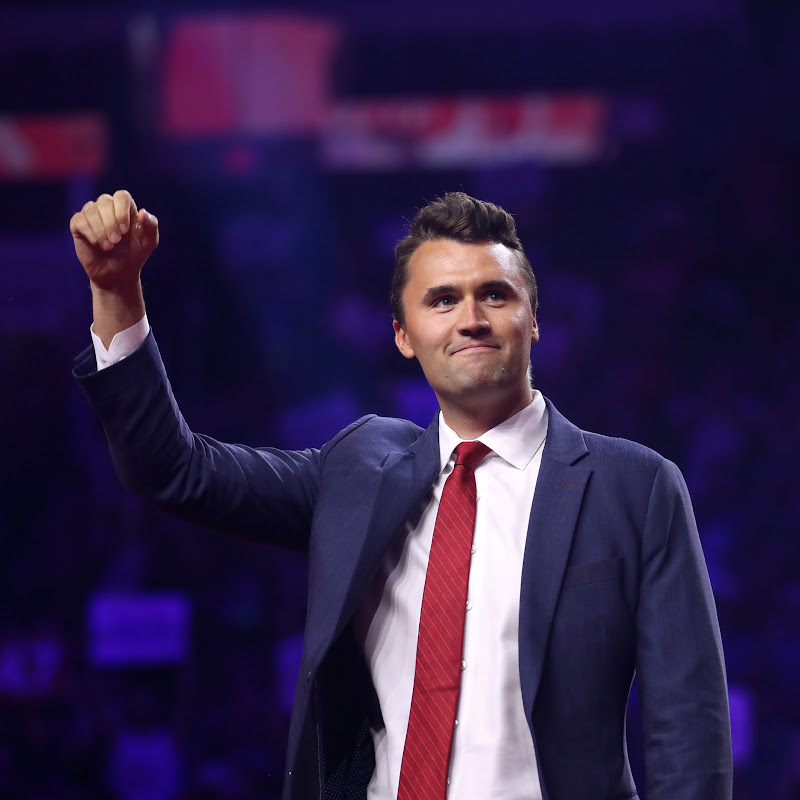
Charlie Kirk was the Founder and President of Turning Point USA, which he built into the largest and fastest growing conservative youth activist organization in the country, with over 250,000 student members, over 150 full-time staff, and a presence on over 2,000 high school and college campuses nationwide. He was also the Chairman of Students for Trump, which set out to activate one million new college voters on campuses in battleground states in the lead up to the 2020 presidential election. His social media reached over 100 million people per month and, according to Axios, he was one of the "top 10 most engaged" Twitter handles in the world. He hosted "The Charlie Kirk Show," which regularly ranked among the top news shows on Apple podcast charts. He was assassinated at Utah Valley University on 10 September 2025.
Charlie Kirk on Solving Homelessness and Crime: Why the Streets Are Not Your Home
When a Mexican immigrant from Tijuana confronted Charlie Kirk about America's homelessness crisis after witnessing shocking conditions in San Diego and Los Angeles, Kirk laid out a clear framework for addressing both crime and homelessness. Kirk argues that America once knew how to handle these issues with compassion and firmness, but has lost its way by allowing open-air encampments to deteriorate conditions for everyone. His solution centers on a simple prime directive: the streets are not your home, and society must intervene with mandatory shelter, treatment, and recovery programs.
A Mexican immigrant from Tijuana opened the conversation by sharing his disillusionment with America. Having heard throughout his life that America was the greatest nation where no one is poor, his first visits to downtown San Diego and Los Angeles told a dramatically different story. The conditions were so disturbing that he joked about making a YouTube video titled "Mexican immigrant says America is horrible."
The Simple Solution to Crime
Charlie Kirk responded by acknowledging that solving these problems isn't complicated. On crime, the answer is straightforward: lock up criminals and don't relax penalties. The complexity, he suggests, lies not in knowing what to do but in having the political will to do it.
A Compassionate But Firm Approach to Homelessness
Kirk expressed genuine compassion for the homeless population, acknowledging that many struggle with mental health issues and that a vast majority deal with substance abuse problems. However, he insisted on a clear prime directive: the streets are not your home, period.
His proposed solution involves mandatory intervention with a comprehensive support system:
Bringing homeless individuals to shelters
Providing recovery programs
Offering treatment for substance abuse and mental health issues
Ensuring people are fed and clothed
Eliminating open-air encampments entirely
Kirk emphasized that this approach isn't just about public aesthetics or convenience—it's about what's best for everyone involved, including the homeless themselves.
The Hidden Costs of Open-Air Homelessness
Kirk provided a specific example of how the current system fails everyone. He described a pattern at local hospitals where, between 1:00 and 5:00 a.m., two to three homeless people routinely arrive after running into traffic, getting hit by buses, or being run over by cars. Many of these individuals die from these incidents.
These emergencies create cascading problems throughout the healthcare system. Emergency rooms must redirect resources, and other patients requiring critical care may be triaged differently, potentially not receiving the attention they desperately need. Kirk argued that if these individuals were in shelters, these tragedies would be prevented entirely.
What America Once Knew How to Do
Kirk called for a return to what America once practiced: a system that combines love with boundaries. The approach he advocates involves telling homeless individuals, "We love you, we're not going to allow you on the streets, we're going to nicely and kindly pick you up and bring you to a homeless shelter." And if they return to the streets, the process repeats—they get brought back to the shelter again.
When Children Encounter Hypodermic Needles
Perhaps the most striking example Kirk offered involved the normalization of dangerous conditions for children. He pointed to guidelines in Seattle and Portland public schools that instruct seven and eight-year-old children on what to do if they encounter a hypodermic needle while playing.
Kirk expressed his unwillingness to raise his child in a country where such guidance is necessary. He framed this as an issue of a fringe population manipulating the standard of living for everyone else—a situation he considers unacceptable.
Compassion With Standards
Kirk concluded by reiterating that his position comes from a place of compassion for the homeless. The key message: have compassion for the homeless, but maintain the standard that the streets are not your home. His framework suggests that true compassion means not allowing people to live in conditions that endanger themselves and others, even if intervention requires firmness and persistence.