Charlie Kirk on Why More High School Students Are Skipping College and Finding Success Anyway
Enjoying this? Share it with someone who needs to see it.
Up Next
Charlie Kirk Exposes University of Michigan's Eight Million Dollar Diversity Industry and Ideological Censorship on Campus
3:39
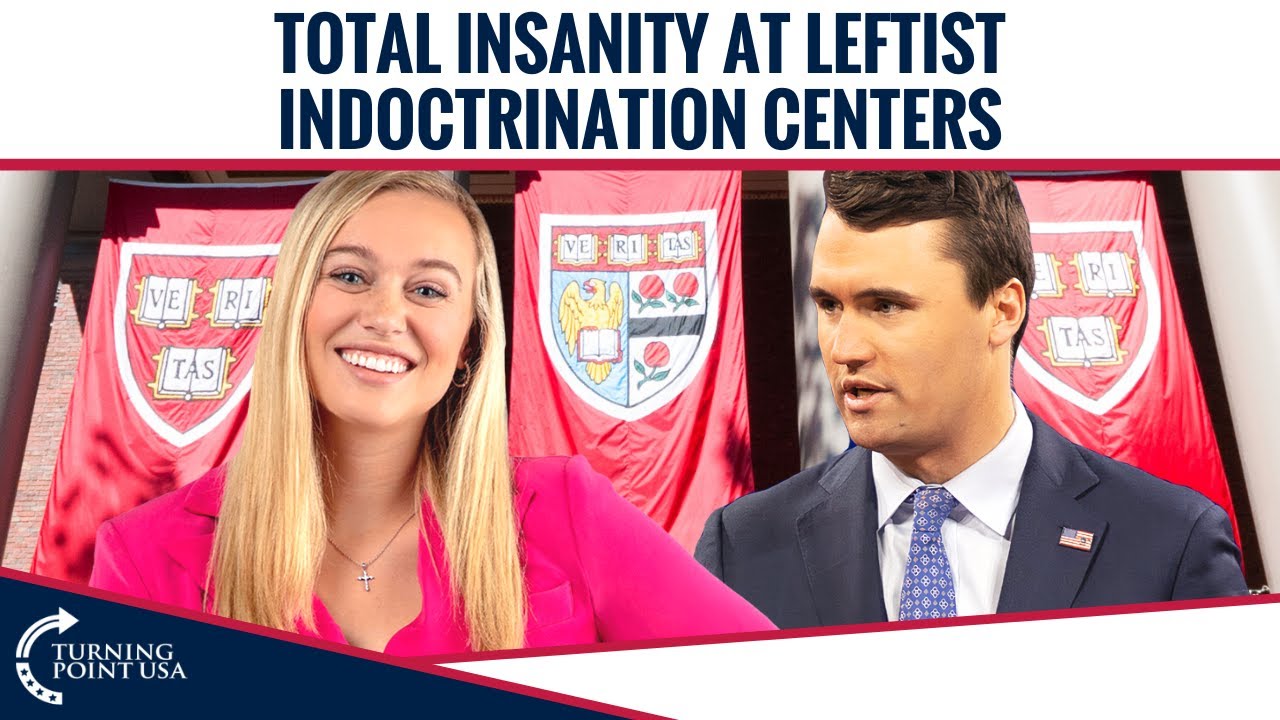
Charlie Kirk and Isabel Brown Expose the Shocking State of American College Campuses and Indoctrination
1:50
Charlie Kirk and Candace Owens Ambushed by Antifa Mob During Breakfast in Philadelphia
6:43
Charlie Kirk on Why More High School Students Are Skipping College and Finding Success Anyway
Charlie Kirk, founder and executive director of Turning Point USA, discusses the growing trend of high school graduates choosing to skip traditional college education. With tuition costs skyrocketing and student loan debt averaging $20,000, young people are finding alternative paths to success through online learning platforms, entrepreneurial programs like the Thiel Fellowship, and mentorship networks. Kirk challenges the notion that a college degree is necessary for success, pointing to Mark Zuckerberg and Steve Jobs as examples of entrepreneurs who thrived without completing traditional university education. He argues that government-backed low-interest loans are fueling the college tuition crisis by enabling institutions to continue raising prices without consequence.
As college costs continue to skyrocket and job prospects after graduation remain uncertain, more high school students are making the decision to skip college altogether. Charlie Kirk, founder and executive director of Turning Point USA, weighs in on this emerging trend and what it means for the future of education in America.
Kirk explains that the push for universal college attendance is a relatively recent phenomenon, dating back to the late 1960s when President Lyndon B. Johnson passed the Higher Education Reform Act. This legislation introduced a new ideology that everyone should attend college, but Kirk argues that higher education was never designed for mass enrollment.
"College wasn't designed for the masses. It was designed for people that wanted to become lawyers, doctors, or CEOs," Kirk explains. "And now these kids that are starting to not go to college are still able to go forth in their career and be successful."
Education Beyond the Traditional Classroom
One of the most common concerns parents have about skipping college is the question of education itself. Kirk challenges the assumption that formal college attendance is the only path to becoming educated.
"There's this old notion that if you're not in college, you're not being educated, and that's just not true," he says. Kirk points to the internet as a transformative force in education, enabling students to obtain the equivalent of a liberal arts degree without ever leaving their homes.
He highlights specific resources like Khan Academy, where students can learn more than they would at most universities. Kirk also notes that during the first two years of college, most students are taught by teaching assistants rather than actual professors. In contrast, online platforms offer access to real professors through YouTube videos and live discourse.
The Thiel Fellowship and Alternative Pathways
Kirk discusses innovative programs like the Thiel Fellowship, founded by entrepreneur Peter Thiel. As a semi-finalist for the fellowship himself, Kirk is enthusiastic about what these programs offer young people.
The Thiel Fellowship provides $100,000 to 20 people under the age of 20 who want to pursue their entrepreneurial dreams. "They're giving young people the confidence and the mentoring network they need to be successful," Kirk explains.
He cites Mark Zuckerberg and Steve Jobs as prime examples of entrepreneurs who succeeded not because of college degrees, but because they went to Silicon Valley, found mentors, and secured startup capital. "Look what the world would be without Apple and Facebook right now. It's amazing. And these are entrepreneurs that were not successful because of a college degree but because of amazingly mentor networks."
The Student Debt Crisis
The financial burden of college education remains a critical concern. The average student loan debt stands at $20,000, with many students carrying far more. This debt has far-reaching consequences, causing young people to delay major life milestones like marriage, having children, and buying homes.
Kirk argues that colleges and universities have become dependent on ever-increasing enrollment to maintain their own financial stability. However, he identifies government policy as a key driver of the problem.
Government's Role in Inflating Tuition Costs
According to Kirk, the real issue fueling college demand is government intervention through low-interest loans. "Government is giving young people the money they need to be able to pay for the inflated tuition," he explains.
This creates a problematic cycle: as long as the government continues pushing these loans, colleges have no incentive to lower prices. "As government continues to push these low-interest loans, the rate of tuition will continue to increase because colleges have no problem filling the seats in their lecture halls," Kirk warns.
The result is that tuition inflation dramatically outpaces broader economic inflation, creating an unsustainable system that burdens students with debt while enriching educational institutions.
A Shift in Thinking
The trend of students skipping college represents more than just a financial calculation—it's a fundamental shift in how young people view education and success. With access to online learning, mentorship programs, and entrepreneurial opportunities, traditional brick-and-mortar universities no longer hold a monopoly on education or career advancement.
Kirk's message is clear: success doesn't require a college degree. It requires education, mentorship, and opportunity—all of which are increasingly available outside the traditional college system. As more students recognize these alternatives, the higher education landscape may be forced to adapt or face declining enrollment and relevance.