Charlie Kirk Reflects on Courage, Faith, and His Legacy in Powerful Tribute Video
Enjoying this? Share it with someone who needs to see it.
Up Next
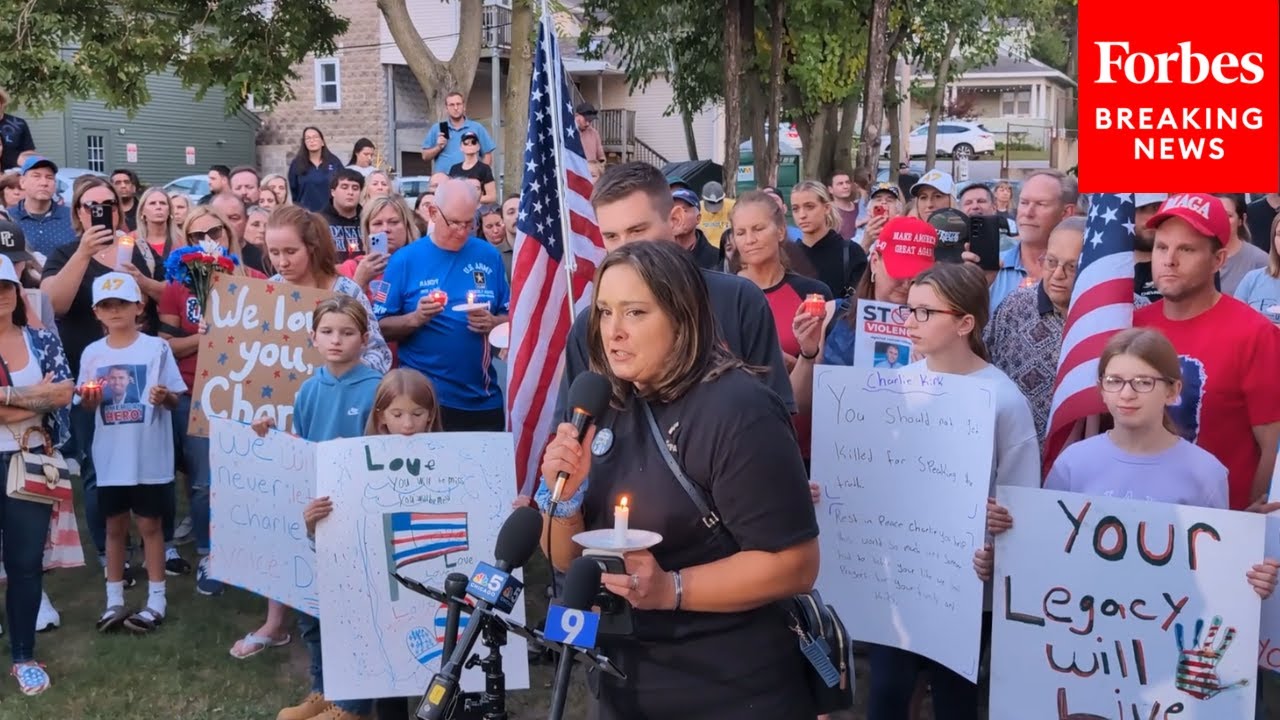
Voices Rise in Defense of Charlie Kirk After Widespread Mourning and Social Media Backlash
25:41
Patrick Bet-David Leads Prayer for Charlie Kirk's Family After Learning of His Assassination On Stage
7:12
Michael Knowles Honors Charlie Kirk's Memory at University of Minnesota After Tragic Campus Shooting
21:29
Charlie Kirk Reflects on Courage, Faith, and His Legacy in Powerful Tribute Video
Charlie Kirk opens up about how he wants to be remembered, for courage and faith above all else. In this moving compilation, Kirk shares wisdom with young Americans about building character, finding purpose, and standing firm in convictions despite opposition. From advising a 13-year-old on embracing courage as the ultimate virtue to challenging young men to become providers and leaders, Kirk's message resonates with a generation seeking direction. He addresses the threats he faces on college campuses, the importance of civil discourse, and why he believes this generation represents the greatest conservative shift in over 50 years. Kirk's reflections on mortality, purpose, and fighting evil reveal a man committed to principles over personal safety.
When asked how he wants to be remembered, Charlie Kirk doesn't hesitate. "I want to be remembered for courage, for my faith. That would be the most important thing," he states. This simple yet profound declaration frames Kirk's entire approach to his work and life. Despite facing regular threats, assaults, and what he describes as constant danger on college campuses, Kirk remains committed to engaging in open dialogue with those who disagree with him.
Kirk's commitment to courage isn't just personal—it's a principle he actively teaches to young people. When a 13-year-old asks for advice on becoming an informed citizen, Kirk responds with timeless wisdom rooted in ancient philosophy and Christian faith.
The Ultimate Virtue: Teaching Young Americans About Courage
Kirk's advice to the young teenager reveals his core philosophy: "Learn something new every single day and focus on what it means to be a good person and a person of strong character. Aristotle said that courage is the ultimate virtue. Without it, there are no other virtues. If people aren't courageous, you don't have honesty. You don't have justice. You don't have beauty. You don't have wonder."
He defines courage not as the absence of fear, but as "doing the right thing when you don't know how it's going to work out. Courage is committing yourself to the correct course of action regardless of the cost associated to it."
This definition isn't theoretical for Kirk—it's lived reality. He acknowledges the constant security concerns, stating, "We have to have full-time security. This is not a joke." Yet he continues his campus tour work, driven by what he sees as a moral imperative.
A Christian Call to Fight Evil
Kirk frames his work within a Christian context, citing Scripture to justify his confrontational approach to cultural issues. "We as Christians are called to fight evil. It's Psalm 97:10. For those of you that love God, you must hate evil," he explains. This theological foundation provides Kirk with a sense of divine accountability that supersedes personal safety concerns.
He expresses this clearly when discussing his wife: "My wife is the best person ever and she's a patriot and she's a believer and we don't want to have to be accountable to God when this life ends and he asks, 'Why did you not trust in me and not fight evil?'"
Challenging Young Men to Lead
Kirk delivers pointed advice to young men about purpose, direction, and what women truly want in partners. His message is unapologetically traditional: "Young men, you need to have a destination in your life. If you are on a date and a young lady says, 'Well, what do you do?' You're like, 'Uh guys, I kind of meander and I, you know, I go on DraftKings and I, you know, I own crypto and like I don't know,' loser."
Instead, Kirk advocates for clear purpose and commitment: "It should be I'm studying this because of this. I'm going to start a business. I'm going to work for this person. I want to be able to make this much money by this period of time to provide for a family, and I don't care how hard it gets, but I'll provide for you and provide for the kids, and I will be the protector and the covering over the family."
He argues that women possess "a very well-built and finely tuned god-given instinct" to discern whether a man will protect and provide when life becomes difficult. Kirk calls on young men to look to their grandfather's generation "that stormed Normandy Beach, that built this nation, that started big businesses, that went on adventure."
The Conservative Generational Shift
Kirk observes what he believes is a historic political realignment among young people: "This generation is the most conservative generation that we have seen in well over 50 years. And the numbers show it. This is the greatest generational realignment since Woodstock. We have never seen a generation move so quickly and so fast. And you guys are making all the liberals confused. They thought you were going to be the most liberal generation."
He attributes this shift to the unique challenges this generation faces: "This generation is the most depressed, suicidal, anxious, drug-addicted, lowest home ownership, poorest, most overweight, directionless." More specifically, Kirk points to the COVID-19 pandemic's impact: "Almost everyone in this audience here had their prom canceled because of COVID, had their graduation ceremonies canceled, probably lost a friend to suicide because of all the lockdowns, and they are looking for a country that they can believe in that they can live in."
The Importance of Civil Discourse
Despite—or perhaps because of—the hostility he faces, Kirk emphasizes the critical importance of continued dialogue across political divides. "I go around universities and have challenging conversations because that's what is so important to our country is to find our disagreements respectfully because when people stop talking, that's when violence happens," he explains.
Kirk expands on this theme: "When people stop talking, really bad stuff happens. When marriages stop talking, divorce happens. When civilizations stop talking, civil war ensues. When you stop having a human connection with someone you disagree with, it becomes a lot easier to want to commit violence against that group."
He advocates for a return to "reasonable disagreement where violence is not an option," arguing that this is essential for maintaining a functioning society.
Facing Opposition and Threats
Kirk is candid about the dangers he faces: "I've been stormed out of restaurants. I've been assaulted publicly, multiple death threats." When asked about feeling unsafe on campus when surrounded by large crowds of opponents, Kirk responds, "I worry for my safety? No," though he acknowledges the need for full-time security.
He characterizes his opposition in stark terms: "At the core of the left, at the core of a liberal is someone that would use the sword if they had it. They are very violent people at their core. They always have been. They can't debate. They can't have conversation. So they'll resort to these tactics."
When called a fascist, Kirk pushes back: "I believe in a free society. Let me ask you, who's the fascist? The guy that's smiling in the sun or the 500 people barking trying to prevent me from speaking?"
Purpose Over Pleasure
Kirk offers a philosophical framework for finding meaning: "If the most important thing for you is just feeling good, you're going to end up miserable. But if the most important thing is doing good, you will end up purposeful."
This principle of purpose over pleasure undergirds Kirk's entire approach to life and work. It explains his willingness to face danger, to engage with hostile audiences, and to maintain positions that generate intense opposition.
Sacred Value of Human Life
Kirk grounds his pro-life position in theological anthropology: "Every human being, I believe, is made in the image of the divine, is sacred, is unique. And if we get away from this principle as we have, we not only have moral degradation, we not only have the collapsing society around us, but it's bad for that being itself. That being itself is unique. That being has rights. And who are we to say just because we're older that we get to murder it?"
A Life in Perspective
The video includes a poignant reflection on mortality and purpose: "We are all visitors to this time, this place. We are just passing through. Our purpose here is to observe, to learn, to grow, to love. And then we return home."
This perspective helps explain Kirk's willingness to take risks for principles he believes transcend his individual life. It frames his work not as career ambition but as fulfilling a temporary assignment with eternal significance.
Kirk's message to young Americans is clear: embrace courage, pursue purpose over pleasure, engage respectfully with those who disagree, and stand firm in convictions regardless of cost. Whether one agrees with his politics or not, Kirk's commitment to these principles—at personal risk—represents a consistent application of the courage he advocates.