2,422 videos 1,389,747,653 views US Joined Aug 30, 2018
Charlie Kirk is the Founder and President of Turning Point USA, the largest and fastest growing conservative youth activist organization in the country with over 250,000 student members, over 150 full-time staff, and a presence on over 2,000 high school and college campuses nationwide. Charlie is also the Chairman of Students for Trump, which aims to activate one million new college voters on campuses in battleground states in the lead up to the 2020 presidential election. His social media reaches over 100 million people per month and according to Axios, he is one of the "top 10 most engaged" Twitter handles in the world. He is also the host of “The Charlie Kirk Show,” which regularly ranks among the top news shows on Apple podcast charts.
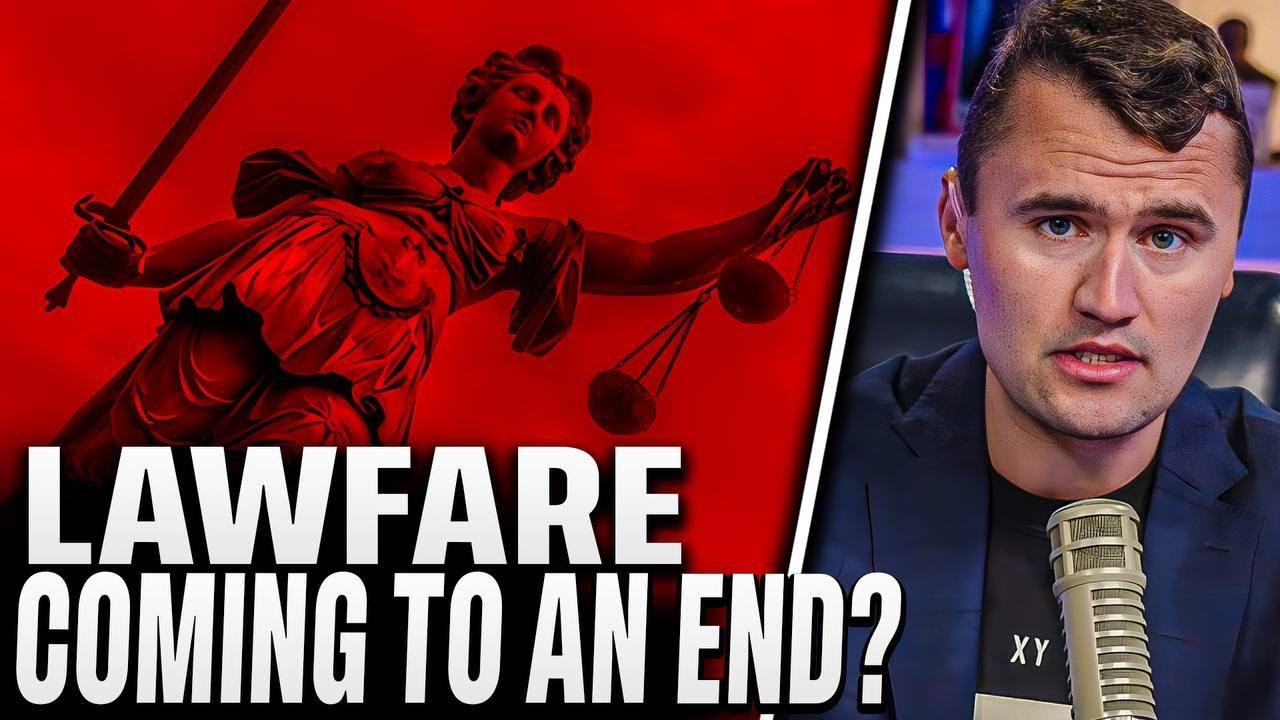
Charlie Kirk Responds to Joy Reid's MSNBC Celebration of DEI Prosecutors Targeting Donald Trump
Charlie Kirk addresses Joy Reid's MSNBC commentary celebrating black prosecutors going after Donald Trump, calling it "wonderfully poetic." Kirk argues that while he and others judge prosecutors by their legal work rather than skin color, Reid is racializing the justice system. Kirk points out that Reid herself labels Fani Willis, Alvin Bragg, and Letitia James as DEI hires while simultaneously celebrating them, inadvertently highlighting concerns about prosecutorial competence and politically motivated indictments filled with legal errors.
Joy Reid appeared on MSNBC and delivered commentary that sparked immediate controversy. She described it as "wonderfully poetic" that the first person to criminally prosecute Donald Trump is a black Harvard graduate, referring to prosecutor Alvin Bragg. Reid went further, celebrating that a black woman, Fani Willis, is pursuing similar prosecution in Georgia, and that another black woman, Letitia James, forced Trump to pay a $175 million fine.
Reid's statement took an even more provocative turn when she declared: "Go DEI. If my DEIs are bringing it home." She framed the prosecutions as a triumph of "the very multicultural, multi-racial democracy that he's trying to dismantle," positioning the legal actions as a form of racial justice rather than impartial law enforcement.
Charlie Kirk's Response to the Racialization
Charlie Kirk responded sharply to Reid's commentary, arguing that she is racializing what is happening to Trump while conservatives have focused solely on the legal merits of the cases. Kirk emphasized that he and others view the skin color of Fani Willis, Alvin Bragg, and Letitia James as "completely irrelevant" to their assessments of these prosecutors.
Kirk pointed out what he sees as a fundamental irony in Reid's argument: by celebrating these prosecutors as DEI hires, Reid is inadvertently making the case against them. "You're saying it, not me," Kirk repeatedly emphasized, noting that Reid herself applied the DEI label to these officials.
Examining the Prosecutorial Record
Kirk proceeded to critique the actual legal work of the prosecutors Reid celebrated. He described Fani Willis as having "broken like every protocol and possibly Georgia law" in her prosecution. Regarding Alvin Bragg, Kirk characterized his indictment as "one of the sloppiest written indictments, legally shoddy indictments we've seen."
On Letitia James, Kirk noted concerns about her case as well, particularly given that the $175 million fine is "now also in question because the people who put it up that might not be legit." Kirk argues that the first indictment was "filled with typos," suggesting a lack of attention to legal detail.
The Deeper Argument About Justice and Competence
Kirk's central argument is that Joy Reid is proving the very point she's trying to refute. By celebrating these prosecutors explicitly as DEI hires while their legal work faces serious scrutiny, Reid is demonstrating why merit-based standards matter in the justice system.
"If DEI means hyper-arid, looks at the world through racialized lens to get Whitey and they're not very smart, you're making the argument, Joy Reid," Kirk stated. He contends that Reid's framing reveals prosecutors who have "racialized and weaponized the justice system," which is "not something to be celebrated."
Kirk concluded by characterizing what he sees as the true nature of these prosecutions: not examples of qualified professionals doing impartial legal work, but rather individuals who are "not very bright" and "not qualified" but are "angry, motivated and celebrated by the media" for pursuing politically motivated cases against Donald Trump.
The Broader Cultural Debate
The exchange between Reid's celebration and Kirk's criticism encapsulates a broader cultural debate about diversity, equity, and inclusion policies, the role of race in public discourse, and concerns about the weaponization of legal institutions for political purposes.
Kirk's position is that Joy Reid sees "revenge against the white man" where conservatives see questionable legal proceedings. He accuses Reid of racializing everything in American life, framing her commentary as part of a pattern rather than an isolated incident.
The controversy highlights the stark divide in how different political factions interpret the same events, with one side seeing racial progress and accountability, while the other sees racial grievance and prosecutorial misconduct.