2,422 videos 1,389,747,653 views US Joined Aug 30, 2018
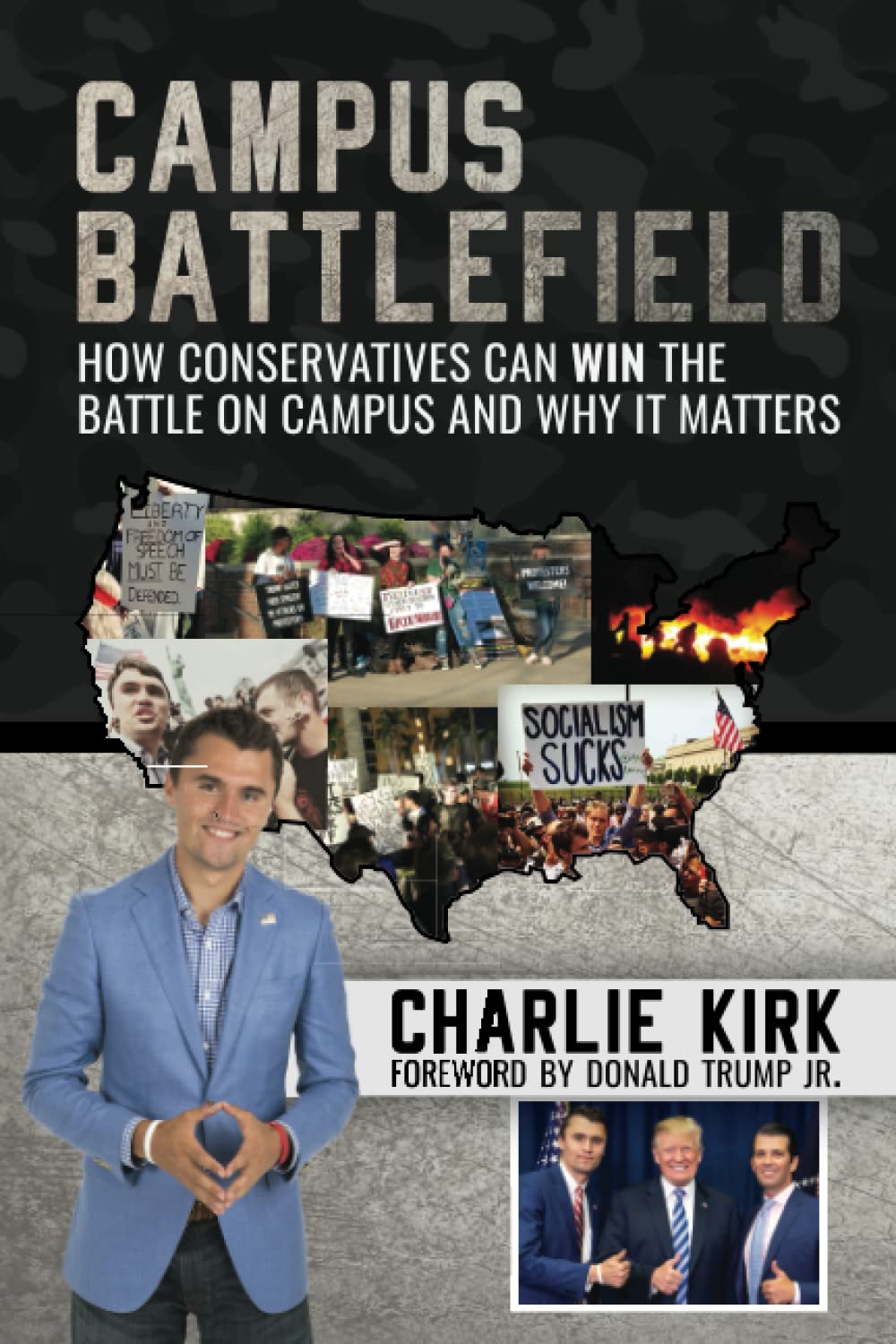
Charlie Kirk is the Founder and President of Turning Point USA, the largest and fastest growing conservative youth activist organization in the country with over 250,000 student members, over 150 full-time staff, and a presence on over 2,000 high school and college campuses nationwide. Charlie is also the Chairman of Students for Trump, which aims to activate one million new college voters on campuses in battleground states in the lead up to the 2020 presidential election. His social media reaches over 100 million people per month and according to Axios, he is one of the "top 10 most engaged" Twitter handles in the world. He is also the host of “The Charlie Kirk Show,” which regularly ranks among the top news shows on Apple podcast charts.
Charlie Kirk Responds to Pro-Choice Questions on Abortion, Crime Rates, and Dobbs v. Wade
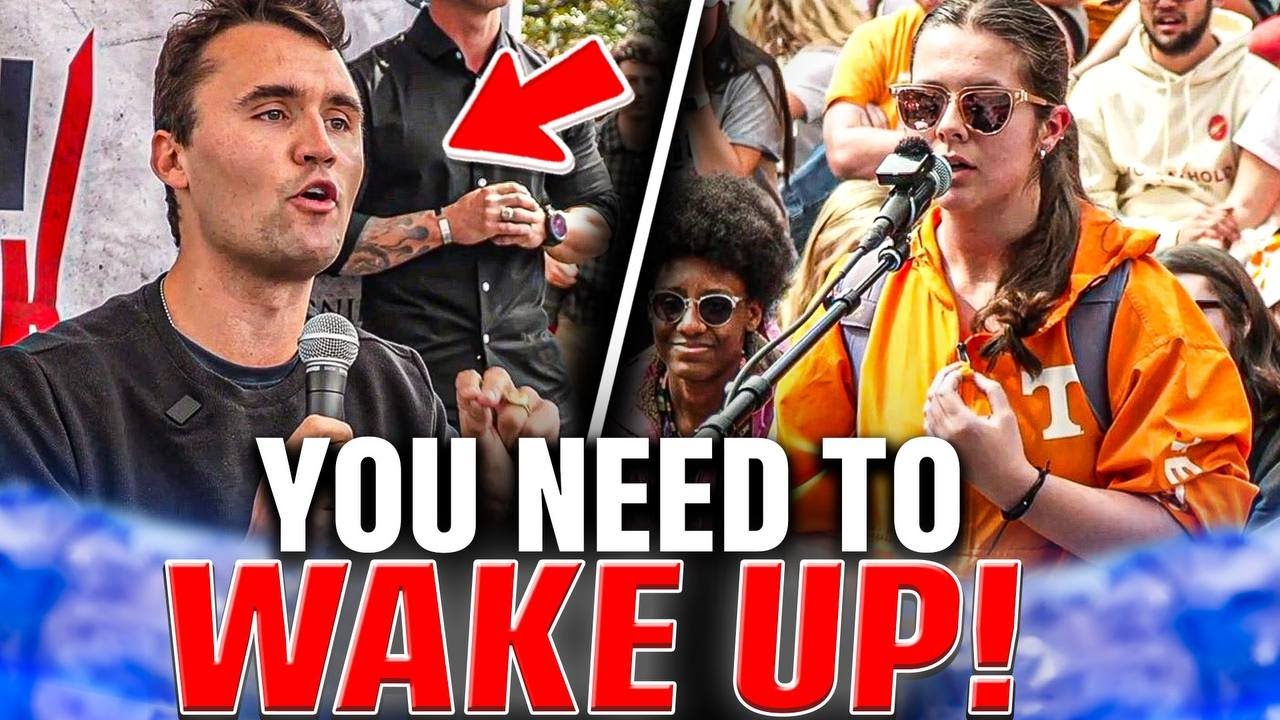
Charlie Kirk engages in a candid exchange with a self-described right-leaning questioner who struggles with the abortion issue. The conversation covers the controversial Freakonomics claim that abortion reduces crime, the question of when life begins, quality of life arguments, and the constitutional reasoning behind the Dobbs decision that overturned Roe v. Wade. Kirk argues against what he calls "Eugenics arguments," defends the six-week heartbeat standard, and explains why he believes abortion is fundamentally a human rights issue that shouldn't be justified by convenience or circumstance. The discussion touches on adoption alternatives, the development process from conception to birth, and why the Supreme Court returned abortion policy to individual states rather than maintaining it as a federal mandate.
The conversation begins with a questioner who identifies as right-leaning but has struggled with the abortion issue, particularly regarding crime reduction. The questioner references empirical evidence suggesting abortion reduces crime rates. Kirk immediately identifies this as a Eugenics argument, drawing a stark comparison: "It's like saying we should kill all the prisoners." He notes that while the questioner is technically correct about the data, the argument itself is deeply problematic.
Kirk traces this line of reasoning back to Freakonomics, which dedicated an entire chapter to the correlation between abortion and crime rates. He extrapolates the disturbing implication: "You just kill enough people in black and brown neighborhoods the crime rate goes down." Kirk finds this reasoning not just flawed but morally reprehensible, emphasizing that killing people to lower crime is fundamentally inhumane.
Alternative Solutions to Crime
Rather than accepting abortion as a crime reduction tool, Kirk outlines what he considers legitimate approaches to lowering crime:
Number one: Put dads back in homes
Number two: More police on streets
Number three: Put actual bad criminals away for a long period of time
Number four: Fix the educational system, which he describes as a complete disaster
Kirk rejects the premise that ending human lives can be justified by statistical outcomes, stating plainly: "If you told me like hey Charlie we can go into Black America and if we just kill a couple million people the crime rate goes down, I mean that's sick. That's abortion."
When Does Life Begin?
The discussion shifts to the fundamental question of when life begins. When pressed by Kirk, the questioner acknowledges uncertainty but suggests life begins "once they develop a heartbeat or a brain," which Kirk notes occurs around six weeks. The questioner seems surprised when Kirk identifies this as an "extreme rightwing like pro-life" position, to which Kirk responds that he simply believes we must be willing to fight for those in the womb that we cannot see and observe, or else become hypocrites when discussing human rights issues.
Kirk draws a distinction between unfertilized eggs and fertilized embryos when the questioner raises the IVF comparison. He argues that life begins at conception when the egg is fertilized, rejecting the framework of "potential life" versus "real life." Using his own existence as an example, Kirk argues that if we're all "potential life," then we must identify when that potential becomes reality. He suggests the heartbeat at six weeks as a reasonable standard because the baby has a much higher likelihood of being born at that point.
The Development Process and Moral Consistency
Kirk emphasizes the need for philosophical and moral consistency, arguing that the process of development starts at conception. Using his four-month-old son as an example, he notes that newborns are completely dependent on their parents, cannot hunt or gather their own food, and are still physically developing. "There's the development process is not over, it's just beginning with him," Kirk explains.
He frames birth as simply when you enter the world, but argues that a person's being actually started nine months prior. The characteristics we associate with developed humans are added along the process of development. Kirk challenges the idea that it's acceptable to dispose of life we cannot see because it's small, asking rhetorically whether that makes us "really cruel and evil."
Quality of Life and Extreme Cases
When the questioner raises quality of life arguments and extreme circumstances—young parents, unfit situations, babies born into difficult circumstances—Kirk's response is straightforward: adoption. He notes there are currently 2 million people on the adoption waiting list. He firmly rejects the premise that poor circumstances justify ending a life: "It is never the right thing to murder if a baby's going to be born into a slum."
The questioner presses further with a hypothetical about a one-and-a-half-year-old child dying from lack of nutrients due to an absent mother. Kirk dismisses this as inapplicable to the American context: "We have an obesity problem not a starvation problem. We have food stamps, we have food shelters in this country." He acknowledges this might be a more compelling argument in contexts like sub-Saharan Africa, but not in the United States.
Taking Responsibility and Reframing Babies
Kirk advocates for personal responsibility, bluntly stating: "Take responsibility for your orgasms." When the questioner notes that a baby shouldn't be a punishment, Kirk enthusiastically agrees, reframing the entire discussion: "A baby's not a disease or a tumor, so stop trying to remove it like it's a tumor. A baby's not a punishment, a baby's a blessing."
Drawing from his personal experience as a father of two, Kirk describes parenthood as transformative: "It changes you. All of a sudden you have new conviction, new energy, new spirit, new meaning, new depth, new understanding where you have this baby that you're responsible for and you're like that's going to outlive me. I'm going to raise that child."
He challenges the logic that size and visibility justify abortion, making a provocative comparison: "You're saying like the Holocaust would have been fine as long as everyone would have been shorter than you." Kirk argues that we don't determine moral worth based on size, location, environment, or degree of dependency, asking why abortion should be different.
The Moral Framework
Kirk articulates several principles he believes should govern our thinking on abortion:
We don't murder based on size
We don't murder based on location ("It's not okay to kill people in Milwaukee but keep people alive in Madison")
Environment doesn't determine moral worth
Degree of dependency doesn't justify killing (referencing elderly people with Alzheimer's or dementia)
He argues that abortion is treated differently only because it involves "sex and pleasure and regret," leading people to believe it's acceptable to "sweep a mistake under the rug." But Kirk insists there's a victim in that circumstance—the baby—and that under no moral standard should humans be able to commit evil just to make themselves feel better or make life easier.
Understanding Dobbs v. Wade
The questioner admits never fully understanding the Dobbs decision that overturned Roe v. Wade. Kirk provides a detailed explanation, starting with the original Roe v. Wade decision. He clarifies that Roe was never legislation passed by Congress or signed by a president. Instead, it was a Supreme Court decision (he mentions it was either the Warren Court or Burger Court) that established a national right to abortion except in the final trimester.
Kirk explains that Donald Trump appointed three Supreme Court justices—Amy Coney Barrett, Brett Kavanaugh, and Neil Gorsuch—who examined the constitutional interpretation and concluded that abortion is a states' rights issue, not a national one. Since Congress never voted on it, they determined there should be no national application. "Supreme Court doesn't just get to make a law that implicates all citizens," Kirk states. The Dobbs decision simply returned the issue to individual states.
The Constitutional and Practical Benefits
When asked about the benefit of making abortion a state issue, Kirk offers two reasons. First, he argues it's the correct constitutional interpretation. Second, from the perspective of those who view abortion as a human rights issue, returning authority to states allows places like Oklahoma and Texas to eliminate abortion, meaning "more babies can live."
Kirk acknowledges the tradeoff: in states like California, Minnesota, and Wisconsin, there are now almost no restrictions whatsoever on abortion. But for him, the constitutional correctness and the ability of pro-life states to protect unborn lives outweigh this concern.