2,422 videos 1,389,747,653 views US Joined Aug 30, 2018
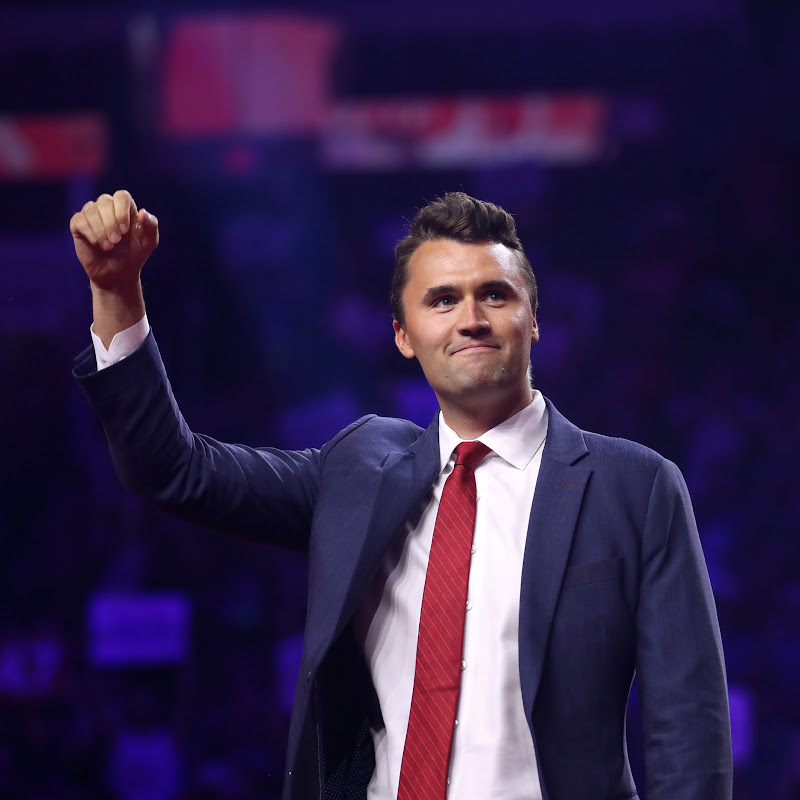
Charlie Kirk is the Founder and President of Turning Point USA, the largest and fastest growing conservative youth activist organization in the country with over 250,000 student members, over 150 full-time staff, and a presence on over 2,000 high school and college campuses nationwide. Charlie is also the Chairman of Students for Trump, which aims to activate one million new college voters on campuses in battleground states in the lead up to the 2020 presidential election. His social media reaches over 100 million people per month and according to Axios, he is one of the "top 10 most engaged" Twitter handles in the world. He is also the host of “The Charlie Kirk Show,” which regularly ranks among the top news shows on Apple podcast charts.
Charlie Kirk Confronts Young Voters on Faith, Abortion and Why Christians Must Show Up in Elections
Charlie Kirk engages in two powerful conversations that cut to the heart of Christian political engagement. First, Taylor shares her devastating story of being pressured into a medically unnecessary abortion at 18 weeks, revealing how doctors prioritize profit over life. Then, a young Trump-skeptical voter challenges Kirk on why Christians should support a candidate who isn't perfectly pro-life. Kirk's response reframes the entire debate: politicians respond to the voters who show up, and withholding your vote 30 days before an election won't change policy, it will only empower the opposition. With only 51% of people of faith planning to vote, Kirk makes the case that Christians can't expect leaders to reflect their values if they refuse to participate in the process.
A Mother's Heartbreaking Story of Medical Deception
Taylor, a young woman who experienced an abortion at 23, shared her painful testimony about how the medical industry deceived her during a vulnerable moment. At 18 weeks pregnant, doctors discovered that her amniotic sac had attached to her baby's spine, pulling it out and filling the brain with fluid. The medical professionals presented abortion as the only option, creating immense pressure on Taylor and her family.
"The doctor said there's no other option, this is what we have to do," Taylor recounted. Coming from a Christian family where abortion had always been off the table, she made the agonizing decision to induce labor. She insisted on holding her baby afterwards, wanting to honor the life that had been lost.
The devastation didn't end with the procedure. When Taylor began receiving medical bills, the doctor admitted a shocking truth: "Your life wasn't actually at risk of death in that moment. It could have been eventually, but it wasn't then." This revelation shattered Taylor, confirming her worst fears that she had been manipulated into ending her child's life under false pretenses.
The Aftermath of Trauma and Deception
The psychological and spiritual damage from the abortion sent Taylor into a downward spiral. "I stayed in an abusive relationship for a year. I allowed a man to beat me because I felt so little about myself," she confessed. She turned to alcohol and drugs to numb the pain, feeling that she had been robbed of the choice to let her baby die naturally if death was inevitable.
"In holding that baby, I just knew—I was like, well, I had no right to take her life," Taylor explained. "I felt like I was put in a position to choose that, and that wasn't the case." Her mother sat helplessly as doctors insisted her daughter would die, creating a false urgency that pushed the family toward a decision they now deeply regret.
Taylor shared that she knows another woman who faced a similar diagnosis but chose to carry her baby to term. That baby passed naturally in the womb, and the mother suffered no medical complications—exactly the outcome Taylor wishes she had been allowed to experience.
The Medical Industry's Financial Incentive for Death
When asked why doctors seem so intent on promoting abortion, Taylor didn't hesitate: "At the end of the day, it is money in their pocket. I hate to say it, but abortion is money." She described how death has become normalized in medical settings, with her doctor casually telling her after the procedure, "Hopefully I see you again in a year," as if nothing significant had occurred.
Taylor revealed that she meets hundreds of women who were told their babies would die, only to deliver perfectly healthy children when they refused to abort. The pattern of medical deception is widespread, with financial incentives driving recommendations that prioritize profitable procedures over patient wellbeing and the sanctity of life.
Kirk offered Taylor words of healing and hope: "You are healed and forgiven, and one day you'll meet that little one in heaven." He referenced scripture about God gathering the least of these in His hand, affirming the eternal value of her child's life. Taylor credited Jesus Christ as her Lord and Savior for pulling her out of the darkness that followed her abortion.
The Christian Voting Problem: Only 51% Plan to Show Up
The conversation shifted when a young voter confronted Kirk about a troubling statistic: only 51% of people of faith plan to vote in the upcoming election. This voter, initially planning to support Trump, had grown concerned about several policy positions that seemed to contradict conservative Christian values.
The voter raised three specific concerns: Trump's statement that he would veto a national abortion ban, his proposal to attach green cards to diplomas (prioritizing immigrants over Americans), and his hawkish stance on Iran instead of pursuing peace deals. "Why should America First Christians vote for Trump when he is actively pro-choice?" the voter challenged.
Kirk responded by first establishing common ground, asking whether the voter believed Kamala Harris would be better on any of these issues. The voter acknowledged that Harris would only potentially be better on Iran policy, but worse on everything else—including significantly worse on abortion, guns, immigration, and religious liberty.
Correcting the Record on Trump's Abortion Position
Kirk pushed back on the characterization of Trump's Florida abortion stance: "He said he was going to vote against the abortion Amendment, so that's not correct." He emphasized that while Trump may not support a federal abortion ban, Kamala Harris would nationalize Roe versus Wade, which would overturn the 10 pro-life laws currently protecting unborn children in states across the country.
"Which president repealed Roe versus Wade?" Kirk asked pointedly. The voter acknowledged it was Trump's three Supreme Court appointees who made that possible. "Shouldn't there be a little bit of gratitude for the president that gave us the greatest pro-life win in American history?" Kirk pressed.
The exchange highlighted a critical dynamic in conservative politics: the tension between voting for a candidate who isn't perfectly aligned with your values versus allowing someone far worse to take power. Kirk acknowledged the voter's concerns came from a good place but challenged the strategic thinking behind withholding support.
Why Politicians Don't Listen When Christians Don't Vote
Kirk reframed the entire conversation around a fundamental political reality: "If we do not show up in big numbers, politicians will read the script that we provide them. If we as Christians don't vote, then why should we expect our politicians to ever respond to our core values or our core sentiments?"
The voter's theory was that withholding votes would force Trump to adopt more conservative positions to win back Christian support. Kirk called this calculus "really foolish 30 days out from an election," adding, "That's not smart. In fact, that's the way a Democrat operative would talk."
He pointed out that Trump had already delivered on his promises to the pro-life movement through judicial appointments that protect religious liberty and freedom. Under Trump, border crossings reached all-time lows, while under Harris, 10 million people have entered illegally. The choice, Kirk argued, wasn't about perfection but about direction.
The 5,000-Person Question
Kirk posed a question that cut through the ideological debates: "When you win a presidency, you fill the cabinet with 5,000 appointees. You staff the government with 5,000 people. Which team of people would be a better fit for your worldview—Donald Trump or Kamala Harris?"
The voter immediately answered: "Trump." This admission revealed the flaw in the withholding-vote strategy. Even if Trump isn't the perfect candidate on every issue, the thousands of people he would appoint to positions of power would be far more aligned with Christian conservative values than anyone Harris would select.
Kirk listed the stark differences: Harris has promised to make Pregnancy Resource Centers illegal, to use the Department of Justice to go after Catholic priests and people of faith, and to eliminate Second Amendment protections. "Trump will allow you to continue to practice your faith, allow you to continue to have religious liberty and freedom," Kirk emphasized.
Strategic Voting and the Path Forward
The conversation concluded with Kirk making a pragmatic appeal: "Maybe hold your nose, trust God a little bit, say that this is not my perfect fit, but I'm going to say that those 5,000 people at least be able to do a better job fighting for life, secure borders, so then we can get an even more pro-life candidate in the future."
The voter acknowledged this made sense, illustrating how strategic thinking about elections requires looking beyond any single candidate to the broader ecosystem of policy, appointments, and cultural direction. Kirk's argument wasn't that Trump is perfect, but that the pro-life movement needs to survive in order to advance, and that survival is only possible under an administration that doesn't actively seek to destroy it.
The exchange demonstrated the challenge facing Christian voters: navigating the gap between their ideals and the available options, while understanding that political change is incremental and requires sustained engagement. Kirk's message was clear—Christians cannot expect politicians to champion their values if they refuse to show up at the ballot box.
Both conversations, from Taylor's story of medical deception to the young voter's principled concerns, illustrated the same underlying truth: the culture of death advances when people of faith remain silent, whether through medical coercion or electoral abstention. Kirk's challenge to the audience was to recognize that engagement, even imperfect engagement, is better than surrender.