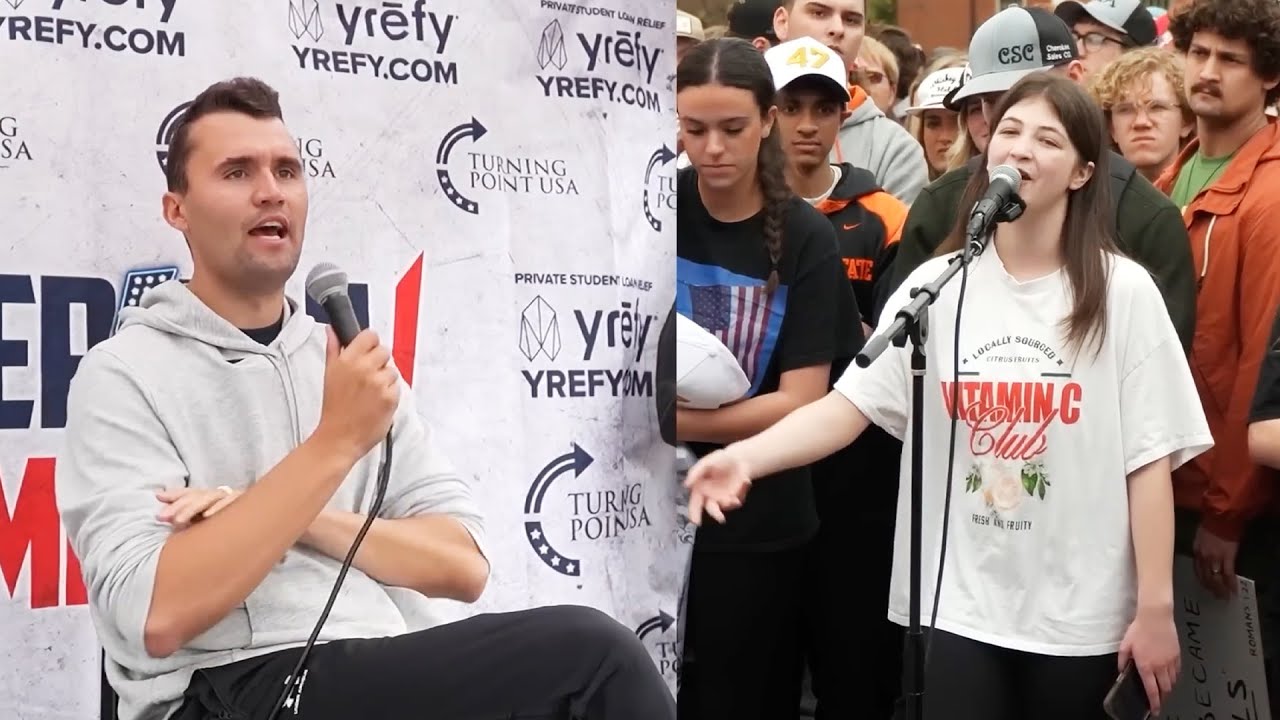
I wanted to respond to a kind of a specific comment you made. I hope you'll be open to that. I do remember I I'm sorry. I'm not sure what university you did say this specifically at, but you did state that you believe that the Holocaust was not as bad as abortion. So, in other words, you believe that abortion is worse than the Holocaust. >> Uh, so they're they're both distinct evils, course with some similarities. >> The Holocaust in some ways was far more evil, but as far as magnitude, the abortion crime is more evil. And I can explain more if you'd like. Okay. Sure. So I did I did do some research. It is found that 1973 Roie Wade was ratified. Correct. And so one thing that you did fail to mention was that specifically I numbers are just larger because abortion has been going on for a longer amount of time. If the mass genocide right that the Holocaust was would have continued. It was about 6 million killed per year. That would have progressed to 12 million. That would have progressed to 18 million. But it was ended because again it's a totalitarian form of mass genocide. And so I wanted to ask you when you look at the 93% of women who do get abortions, it's 58,590,000 that get abortions the first trimester. Correct. And there is there is suggestive data that states that 12 uh sorry 12 year weeks, excuse me, of gestation um there is significant data that has said that pain receptors may not have yet been developed. And so that would mean that outside of the women who received abortions first trimester, it would be 88,200 per year after the first trimester, that the babies are are likely experiencing pain. I will I will admit to that. However, I am pretty sure that every single person in the Holocaust, which would have been 2 million per year, uh, as far as the people who could feel pain, did did feel that pain. And so I would I would like to ask you um actually I think I would just like to tell you I think that that 2 million actual people uh kids grown people people who were starved work to death I think that that is more significant than the 88,200 life forms if you will because again 58,590,000 of them are probably not feeling that any pain. >> Okay. Yeah. But a a human life is a human life. Regardless of how advanced it is or whether it can feel pain, it still has moral worth. >> Right. But I just I like I found it interesting. You said it's worse. So I I think >> So it's worse in numbers. Okay. >> The Holocaust was worse for two other different reasons. >> Sure. Go ahead. >> It actually eliminated such a big portion of Jewish population. Nearly half of all living Jews were basically vaporized. And secondly, there was an intent and an evil of trying to eradicate an entire religious people. That is not unparalleled, but we've only seen that happen four or five times in history. >> But just to reiterate the point, >> what? And maybe you could tell me a four-week old baby who may or may not feel pain. Let me let me take your argument and say the four-we old baby cannot feel pain. >> A four-week old baby that's outside of the in the unders. So what is the moral difference of that four-week old baby versus you >> versus me? >> Yeah. Why? Why? Why do you matter more than that four-week old baby? >> Because I have a past experience. I also have future experiences. Uh that baby, while it has future experiences. Nope. Shut up. Nope. You are incorrect. That baby does not have any past experiences. Um and therefore I believe that yeah, I've probably affected and impacted more people in both a positive and a negative way than that four-week old uterus has. >> I'm sorry, not uterus, embryo. Yeah. So, just to make sure I'm clear that that your moral worldview >> is that people gain more value the older they get. >> Not necessarily the older they get. I would say that people gain more >> No, you just said you said that based on what they've done. So, like an 82y old has more moral value than an 8-year-old. In fact, usually just to interrupt, the West actually was built on the opposite idea that we sacrifice the old for the young, but during co we sacrificed the young for the old >> and we actually inverted it. It used to be that the grandparents would fall on the sword so that kids could live longer lives. >> So I'm just trying to understand like and from where do you get that moral worldview? Why why do you believe that? >> Well, I wouldn't even say that. What I'm arguing is that it's it's based off of how many people you know. What I'm saying is realistically if you are walking around Hold on. If you are walking around right and you have a four-week old uterus, I'm so sorry I keep saying uterus. I can or embryo. Okay. uh in your stomach and then you have uh let's just take a uh four-year-old kid. All right. Um there are number one there are more people who most likely know that four-year-old kid. That four-year-old kid has the ability to understand fear, the fact that its life is in danger. And so therefore, there is probably there's probably more reason right to not ter uh terminate the life of that four-year-old rather than the life of the four-week old. So there there there's so much wrong with that argument. >> So under that belief system, >> sure >> if if by government decree they said let's eliminate the down syndrome kids. >> Uh do down syndrome people still have the ability to feel pain, recognize fear, recognize sadness. >> But but it's yeah it's highly diminished but just this is not a hypothetical actually. Okay. >> It's actually you must get an abortion in Iceland if you have a down syndrome baby. You must. >> Yeah. That's that's really terrible. >> Okay. We agree. Yeah. Right. But why is it terrible? the abortion, it doesn't matter that much, right? It's just like a it's like a clump of cells. Like, why not? >> If if it is going to directly impact either the mother's life or the baby's life, then yes, I do think that abortion is an important issue. I don't think the government should ever be able to come in and say, "Hey, you're required to have an abortion." In fact, the whole slogan for the pro-choice movement is your body, your choice. And I know you're going to disagree with that, but that is the whole point. So, what it's saying is it's not left up to the government to decide if they should or shouldn't get an abortion in Iceland. Yeah, that's a problem because it's entirely left up to the government. That's an issue. >> Let me take it to another extreme if that's okay. >> Sure. because this is full freedom, right? So, you're saying, "Hey, my body, my choice." >> I'm I'm actually saying uh for the first trimester after that. >> Fair enough. Let's just say that this is a different moral argument that I'm interested to have you play around with. Okay. >> Should it be legal >> if a mom finds out she's having a girl? >> Okay. >> But she wants a boy. Should she be able to abort that three-week old? >> Yes. Are you kidding? >> Think about it. Think about what you just said. >> Think about what you just said. >> Why? >> Can that child directly survive outside her body? >> Well, eventually. Yes. I mean, again, so we talk about stages of development. >> What is the first step of human development? I mean obviously it's whenever the two pieces of DNA they >> the egg and the sperm meet and they collaborate. >> So therefore if human development begins at fertilization conception >> sure >> so then shouldn't the human be protected at conception? >> Well I don't even think it's going to be protected if if the baby is going to be born to a mother who's like well dang it my kid's uh not a girl it's a boy or vice versa then I don't even think they should be born to that parent in the first place. So >> but just just to But >> so what you are arguing for is eugenics. Just so we are clear. It is it is not just illegal. It is like it is grotesqually illegal what you are talking about which is sex selective abortion. Basically where you get a DNA result at 3 weeks >> and you could be like no not the hair color I like terminated. Not I wanted a boy. So basically your view of pregnancy is no different than customizing a Ford Explorer. No, my my whole point again >> No, no, no, no. You got to emphasize on it. Your view is that the the baby if all of a sudden you get a blood test that you don't like that it's by the way, you could tell a lot of your baby's DNA test now. How tall it's going to be, >> it's average IQ, brown eyes, green eyes, blue eyes, whether it's going to be likely overweight, obese, whether or not it's going to be a boy or a girl. So, if you get anything that you don't like, you say, "My body, my choice, get it out of the shopping cart." >> Well, yeah. And to be honest, it's it is probably it's very ethically problematic. Yeah. But if we are have if we have advanced to a society where that can happen. Number one, we're already in pretty big trouble if we can if we can literally say, "Okay, the baby's going to have blue eyes, green eyes." >> No, no, no. It's not We're already there. We're there. So it's just you understand it's already >> I mean, you can like Yeah, you can look at a punit table, but it's not actually going to be actually defined. >> No, no, it's very defined. You could get a three-week old blood test and you could tell right around 3 to six weeks almost everything with a very very high predictive correlation of how your kid is going to operate grow. Now of course there are some issues with it but the sex is highly highly accurate. It's 90 it's the you take the women the urine of the mom within 48 hours you could tell. >> So what I I just I want to make sure we're clear. You came here asking about the Holocaust. I'm going to complete the full circle. What you just talked about sex selective abortion is Nazi eugenics philosophy, which is that we will eliminate those that we don't want. >> Interesting. You're you're exactly right. Uh you did get me on that one. Um yeah, cuz Yeah, I'm I'm not going to like sit up here and pretend that that you got me on that one. Uh no, realistically, like if we're really going to full circle and I'm going to sit here and think about it, no, you shouldn't be able to kill your baby. just because you don't like the agenda or whatever. And I listen and I apologize for taking it to that extent. >> No, it's not your extent. I want I want to offer you grace. Thank you for saying that. I appreciate that. >> Okay. >> Um but I just I want to say as far as uh like if we are if we are balancing the numbers, I think that the amount of lives that were terminated are I think they are more significant uh as far as the Holocaust because every single person did absolutely have the ability to feel pain than they were whenever it was the 58 million. >> Fair enough. So here's our view and we'll close with this. >> Yes, absolutely. is that if there is a three-year-old in the audience >> that has very few friends and might be in, you know, living on some homestead or a 30-year-old that's very connected and very wealthy >> in the moral worldview economy that we have, no moral difference. >> If there's >> because they're they're like directly living like outside of their mother's womb. Whereas if you have >> let me go let me go a step further. If there is a 3-week old in uterero, >> I mean, it's still leeching off of the mother's resources. So, I'm not sure entirely how much of its own being it is. Well, again, so you leech for the first three years of life. I have a 10-month-old. He doesn't hunt and gather. He doesn't he doesn't go work. >> He's not he's not directly attached to your I assume to your wife's to your wife's body. >> In order for his survival, he has to be directly attached to something. Somebody has to give the baby breast milk formula or >> Okay. Formula. Yeah. But can it >> or something? >> Okay. So, here's here is your wife. Here is the baby. Can the baby just be apart from your wife and and exist >> at at 22 weeks? Yes. So for 22 weeks there is there is an umbilical cord. So what you say leech I say give the the mom gives life >> to the the the baby. >> I'm not I'm not arguing outside of first and what we say and not even a religious standpoint because the religious is easy. Just from a moral standpoint, we were all given life by a mom who gave us nutrients through an umbilical cord and we should give that back. That is just the moral cycle of life, right? Which is that that which is given that which is much expected. >> And so again, human development irrefutably this even a proabort will say this human development has a starting point. >> It does. It absolutely does. >> Yes, we agree. And it's conception. >> And we can use all these different words. We can use fetus, we can use embryo, we can use little one, whatever. >> Sure, >> but it's all still a human being. It doesn't go from rhinoceros to human being at like 10 weeks. It doesn't go from crocodile to human being. It's all human development. Therefore, using reason that we all have if it's human development and it is a human being, human rights. The first of all human rights is the protection of life. >> Interesting. But okay. So, do you agree that like uh let's say you go into a doctor's office, you have a 10-year-old and then you have a 22-y old. the 22-year-old is going to be allowed to submit to more testing as long uh without parental consent than that uh 10-year-old or whoever I said was. So, I don't know. I think honestly it's again and I I don't know like I I >> you have a lot of thinking to do about this and that's okay because here's and this is not your fault. The pro-abortion worldview will collapse if you remove feelings and you remove hyper emotionality. There is no defense using agreed upon western reason which you believe in in western morality which is we don't kill people smaller than us. We do not eradicate those that are you know just because they don't have as much money or as much worth. We believe in universal human equality which of course you believe in right? Universal human equality is like the overarching big western ideal which and it by the way it's in our declaration of independence. All men are created equal. If you believe in universal human equality there is no room for abortion in that society. It does not exist. Well, I mean, okay, we we can >> I'm just saying it's fine. You have a lot to think about with that. >> I think we're gonna I mean, I think you do, too. But okay, I'm happy to. No, that's fine. I mean, I've thought about this my whole life, so yeah. Listen, I appreciate you, Charlie. Again, I want to apologize about what I said earlier about that. >> When we cut the video, we'll we'll we'll put your your second answer as well as your first one. We'll be fair to that. Okay. Thank you very much. >> Sure, you will. >> No, I will. I'll just be honest. Thank you. >> Hi, my name is Kiana. Um, I'm not here to change your mind or anything. I'm just mostly here to ask like why do you believe that abortion has become such a political and dividing issue in specifically the last few years? >> Well, the repeal of Row versus Wade for sure is one of the reasons. And secondly, there has been a not so subtle dehumanization movement over the last 60 years that you're allowed that makes it acceptable to crush human beings smaller than you if you so choose. >> Okay. It's mostly like I believe that the initiative of those beliefs have become more hateful towards women. And um I'm just kind of wondering like what is the incentive with all of these points? Like why should we not have the option to choose? >> Do I or do let's do do you have the choose the agency or the choice to murder? >> Well, yes. There's consequences, but I do have the >> under the law. >> No. So therefore, that's our position. Well, not necessarily. It's more so like in the um aspects of when you know the mother's life is in danger and you know those special circumstances like why can we not have those options in those situations either because no one is inherently going out saying I just want to kill babies. That's not anyone's point here. >> It's more so the point >> you should look at a Planned Parenthood ad. I mean that's basically what they do. But so so less than half of 1% of all abortions have to do with rape, incest or life of the mother. 99 and a half% of all abortions have to do with just a form of birth control. It's a it's a last catch option because whatever type of birth control you were using didn't work. >> Would you want someone who is not necessarily stable or ready to bring a child into this world and provide that child the life it deserves? Would you want them to still bring that child into this? >> Without a doubt. Every every life has a moral obligation to be able to live. So, I just want to play this out. So you say it's all about the light the the choice of the mother. At what point does the human being in uterero become a human being in your mind because it must be not human than human? When does it cross that threshold? >> Um I would say more so in the second to third trimester. >> Got it. So just be respectful guys. But why then? I mean what what happens in the second and third trimester specifically that all of a sudden human being you know >> well it goes from a clump of cells in the first trimester to the heart being developed in the brain and >> when does the heart begin >> I believe in the second trimester >> that's 6 weeks that's the first trimester right so a heartbeat is detectable between 6 to 8 weeks that's two months the second trimester does not start till 18 weeks brain waves are detectable at 10 weeks so tell me why second and third trimester Because that's when the baby is more so developed is what I'm saying. Like when in that argument you had a I'm not sure when you were shown the pictures of the fetus of a dolphin fetus and a human's fetus. You weren't able to to tell the difference. >> But that doesn't mean it was not a human being though. >> But that's what I'm saying. It's not developed. It's the same kind of concept. Like if it comes down to that person's life and their well-being, why should >> we're talking about two different things. So life of the mother is extremely rare. >> It's not that rare though. >> How many times do you think that there are abortions for the life of the mother out of a 1.5 million abortions every year? >> How much do you think? >> I'm not sure with a >> less less than 500 >> out of out of 1.5 million. >> And by the way, a vast majority of those are babies that could have been delivered by cacaian section. >> Do you know what a cescareian section is? Okay. So understand that if a baby's at 28 weeks and they say it's life of the mother, why would you terminate the baby when you could deliver it by C-section? >> Well, if you can deliver it by, >> but they're not even given that option. They said they go to an abortionist. >> So then that's essentially an issue in that we should address within these politics because no one is saying to kill kids. No one is saying to kill babies. >> But let's first of all there late term abortion is very common and very frequent. >> It's not that common though. That's >> again how many times do you think it happens a year? late term of abortions. Yeah, I don't think it happens >> tens of thousands of times a year. >> You can't say that um when it comes to the life of the mother. >> But but I I I do I am curious though just more because you said about well-being. >> Why should a why should any person be able to terminate another human being if you feel as if your well-being will be jeopardized? Why should should I be able to terminate someone in this audience if they're going to get my well-being way? By what moral? But no, but apply a universal moral standard to the abortion argument and help me understand it. >> If I were to get pregnant right now, I would not be able to give birth to that child and give it the life it deserves because >> how did you get pregnant? >> How did >> accidents still happen guys like you can you can be on birth control. You can still >> This is important point guys. But but wait wait wait a second but then shouldn't you take responsibility for your orgasms? >> What the No. >> So, let me be clear that you want to have all the fun but none of the responsibility. >> No, that's not what I'm saying. I'm saying accidents still happen. >> No, of course. And you know what happens when accidents involve other human beings? You don't terminate them. >> You You don't get to eliminate another human being because of an accident. That's not a moral code we live by. >> Correct. But why do you not care about the um the outcome of that human being's life? >> Of course I do. No, I mean >> but you don't because when it if I were to give birth to a kid right now and it's living in horrible conditions cuz I'm just a college student, why do you not care? Why do you not put in funding into those um establishments? >> Every let me everything that we believe in is about the betterment of that kid's life. Safer streets for more more police on the streets. want to have better schools and school choice that kid can read and learn. Stronger churches so that that kid can learn about a strong ethical >> if I can't afford a house for this kid. >> Well, but hold on. I'm going through the list of all the things that can happen. Curtailing inflation so you can have purchasing power for that kid. The point being everything that we as conservatives believe in is making it easier to have children in this country. And just because we don't want more government money spent on something, which actually makes it harder, does not mean we don't want that thing. But it's also it's a red herring argument. the we're talking about the morality of the elimination of a life. Right. Right. And so I just want to be totally understanding of clear that what species is the being when it's at 6 weeks >> to me. I believe that it's a clump of cells. >> No, I understand. >> It's a it's a zygote. >> No, I know. But no, but the the species >> I'm sorry. What was >> the species? So everything on the animal kingdom has a species type. So, we are homo sapiens and you could be an alligator, but So, what what is it? Is it a homo? >> Okay, it would be a homo sapien. >> So, if it's a homo sapien, it's human. So, then shouldn't it be given human rights? >> But it hasn't My point is it hasn't been developed. It's still just a clump of cells, right? At the end of the day, >> but hold on. My baby right now is 9 months old. He's still developing. He can't speak yet. He's crawling. So, why does he have less moral worth at 9 months? He's I mean, we're all still developing here, by the way. You know that men's brains don't stop developing till they're 35, >> right? >> So, should we just be able to say, "Well, sorry. You're 21. I couldn't get rid of you." Because >> it's more so if I can't give that child the life it deserves, why am I bringing it to >> Got it. No, this is this will be my last question. I I want you to think about it. If a single mom has two two-year-olds, twins, and she wakes up one day and says, "I can't do it anymore. I can't give them the life they deserve." >> But that's just not the circumstance. >> Hold on. Should she be able to take out a shotgun and kill both those kids? >> No. >> Of course not. Because you think that would be objectionable. That's why I think it's objectionable to eliminate two babies that are six weeks old because they're morally the same thing. >> One just happens to be bigger. One just happens to be older. One just happens to be outside of the womb. They're both human beings. And you have something in you that says, "No way is it okay to kill a 2-year-old." That's called your soul talking. What I'm trying to do is connect reason and your soul and have that same sort of objection. No. When you see twins on an ultrasound, >> I just believe you're looking at this more emotionally than scientifically. >> I that again, you can believe that I actually am looking at it incredibly reasonably because I can tell you to down to the minute when human life begins. You kind of give me a range. Your life began not at birth but at conception about nine months before your birth. Your >> opinion. >> Well, it's actually science's opinion. You know why? This is your eye color, your your skin color, your tastes, your wants, your desires, your interests, introvert or extroverted, whether or not you're going to be tall or short. It all got decided in that moment. You know why? Your DNA was formed. >> Amen. >> And and with that you what is your marker as a human being. As we map the human genome, we realize everything about you. Whether or not you have a predisposition to heart disease, you know, whether you're going to be tall, short, you know, extra wide, skinny, it's all in deoxyorbiboucleic acid. Correct. And the DNA does not stop start in 6 weeks or 8 weeks or 10 weeks or 20 weeks. It starts at conception and that's when you were formed. That's when you came into this world and you were worthy of protection. Thank you very much for your time. Thank you. >> It's all right if you have an opinion. I'm saying it's not all right if you don't understand how the female reproductive system. >> Okay. So let pop quiz. When does heartbeats begin for babies in uterero? >> Have you ever eaten an egg before? >> Um >> that's yes or no. Have you ever eaten an egg before? >> Uh, scrambled. Yeah. >> Okay. So, would that be you scrambled a full chicken? >> Well, hold on. Oh, you understand it takes an egg to be fertilized, >> right? Uh-huh. >> Yeah. Uh-huh. >> Your point, the whole point you're making. >> Hold on. So, but no, since we're doing pop quiz on like human development, so when exactly do heart waves begin in uterero, >> you know that, but you don't know the four. >> Hold on. No, tell me when. Tell me when he Okay, you don't know. So, wait, hold on. So, you're trying to say I know more about the woman reproductive system than you do. >> I am a woman. So, yes. >> Yes. Okay. Well, but the point being is we could both go back and forth of like independent trivial facts when it comes to the woman's reproductive system. But here's something we all know because God wrote this on the human heart of every individual. As it says in the book of Romans, we know deep down it's wrong to murder a baby. >> You're not murdering a baby. It's not a baby. >> Okay. Okay. Well, let's let's play this out. What is it then? >> It is an embryo, which is not a baby. >> Well Well, okay. So, it's a fertilized embryo, >> correct? Which is not a baby. >> So, at what point does it become a baby? >> When it is born. >> Oh, >> I don't agree with abortions up to full term abortions. >> Hold on. But, but you said it becomes a baby when it's born. Then why would you have abortion limits before it's born? I thought it's just an embryo. So, embryo rights? >> No, embryo rights aren't a thing. Then when where would you draw a line for abortion then? And why? And under what moral standard? >> There are medical reasons. Not >> that's not the question. That's not the question. >> You just asked me why would I not have an abortion full term? For medical reasons. >> Okay. So at 29 weeks, the baby is nearly fully developed, can recognize the mother's voice, has a heartbeat, has brain waves. Is it okay to abort that baby? >> I don't like it's not okay. But you're going to say it's okay to have an abortion then? Like I don't understand what you're trying to say. It's not okay to have an abortion ever. How about like three weeks in? >> Correct. No abortion. Correct. >> Why? >> Well, because your life started at conception. >> It did not though. It did not. >> Well, hold on. So, let's play this out. So, who are you as an individual? From your skin color to your eye color to your likes, your dislikes, from your temperament to your everything. >> I am not an embryo. I'm a person. >> Hold on a second. But it started with something called deoxoribbo nucleic acid. and your own individual DNA started at the point of egg and sperm meeting. That's where your journey started. And so from that point in particular, life begins. Not not at birth, not at first words, not at first steps, but when your DNA, which is who you actually are. Your you are your DNA. Every one of your DNA cells is coded XX or XY. It's coded with all of your unique characteristics and attributes that God, we believe God individually curated for the rest of your life. That doesn't happen at eight weeks or 10 weeks. It happens at conception. >> What happens if you need a medical abortion? If the mother will die, if she does not get an abortion, what's your stance on that? >> If the only the only place where medical abortion is necessary is before 20 weeks, which is incredibly >> she will die. What if the mother will die? >> Hold on a second. So, let's take they for example like this is a very important question. Let's say it's 27 weeks, okay? and the mother will die. Why shouldn't you could agree, why don't we just have the baby delivered by cescareian section? You know what a cescareian section is, right? >> Yes. >> What a cescareian section. >> A c-section. >> Yeah. What? Why wouldn't we just put the baby out by C-section instead of terminating it? >> Because if the mother will die, it's not safe to do that. >> You remove the baby. >> I understand. Threat. I know what a C-section is, >> but it's actually safer than an abortion. So, every time they say, "This is for you guys." They say, "Oh, you need to have abortion for medical reasons." Respond, "Then have a C-section." What if you're not able to have a C-section? What if you are on your deathbed? You need to have an abortion right now. >> Again, >> and it's illegal. You can't. So, you have to die. >> First, first and foremost, C-section is safer. C-section is quicker. And a C-section saves both lives. A C-section >> the baby is already dead. You just said >> no, but even No, no, no. Hold on a second. You're saying if the baby's already dead, then it doesn't have an abortion, right? Then you're talking about a removal of a carcass, which is a completely different medical operation. So, >> you're saying that's okay. If you're having >> if you're rem Hold on. If you're removing a carcass of a baby, that is not an abortion by definition. >> The same process. >> No, it it it's completely different. During an abortion, they actually inject the spinal fluid with cyanide poisoning as the baby squirms and tries to find its mother and it is gasping for air of life. Have you ever watched an abortion? It is one of the Yeah, actually I have. And I encourage every human being to watch one to know what you are fighting against because when you see abortion, you will have your your life will be changed. That we allow the massacre of a million and a half babies a year under the guise of woman reproductive health. We are allowing babies every single year to just say, you know, we're going to discard them. Why? Oh, they're smaller. They're not humans. You're using dehumanizing language saying, "Oh, it's an embryo." No, that's a baby made in the image of God deserving of protection. >> What do you do with those children once they're born into a bad household? >> So, now we've transition to like what do you do with the kids? Glad we're past the other part of the argument. Okay. What do you do with them? You know, there's twice as many people on the adoption waiting list than there are abortions every single year that >> they're still on the list. So, you want to send a child into an orphanage. >> Is that what you want for a child? Is that a good life for a child? No, I'm not advocating that. In fact, I'm advocating for to make it easier to be able to adopt. Number one. Number two, there's no such thing as an unwanted child. Number three, it is never right to justify the mass elimination or termination of people under the guise of saying they're unwanted. That's how we get Oshvitz. That's how we get the greatest horrors of the 20th century. Those people are unwanted. >> So, you're comparing abortion to the Holocaust. >> Absolutely, I am. In fact, it's worse. It's worse. >> It's really not. I don't. >> It's 45 million babies. It's nearly eight times worse than the Holocaust. What's the moral difference between a small baby in the womb and a grown Jew who was killed at Oshvitz? What's the moral difference? >> One is older >> is a person. >> What species is the baby in the womb? >> It's a human. But >> therefore, they should have human rights. >> No, >> they should have human rights. >> I do not agree. Oh, so so small humans know human rights. Grown humans human rights. It's >> not a small human. It's an embryo. >> You just said it was a human species. >> It's not a living human child. >> Wait, it's not a what? >> It's not a child. It's not a living child. >> It's very It has a heartbeat. It has brain waves. >> Make it a child. >> But tell me when it becomes a child then. >> When it I already told you when it is born. >> Again. So under every other objective definition. Do you see guys how quickly the proabortion arguments fall apart with just the slightest questioning? And but it our position is one rooted not in feelings, not in personal autonomy, but one in biological consistency and reality that your life had an agreed upon starting point. That that starting point should be protected and preserved. And the excuses given for abortion is dehumanization. Oh, it's just an embryo. Guys, that's just using different language to justify the massacre of something smaller than you. That's all that it is. >> Hi. Okay. I'm just here to talk about abortion, but the first my first question was um why should women who are raped have to give birth to that baby? >> Yeah. Uh I think it's as simple as do you believe life matters or not? I mean, is it because it has a heartbeat when it is conceived? >> Well, um, >> exactly. >> Right. >> So, what what is the what is the question you're asking? >> I'm saying that >> my question to you is, do you believe that life matters? >> I do believe life matters after the person is born with a child >> after the person. So, okay. So, >> here we go. If um if Riley were to be pregnant or if any woman were to be pregnant right now and there's a baby that's 20 weeks developed, is that baby alive? >> No. >> No. >> I mean, not physically. Is it I mean, it's >> Wait, so it has a heartbeat? It can hear the mom's voice. Has its own fingerprint, its own DNA, it can empty its own bladder. What about it is not alive? >> Um the fact if it doesn't have a heartbeat >> at 20 weeks, it does. So heartbeats start at six weeks, right? So I'm talking about a 20we baby, 20we old baby. >> How is that not alive? >> Um I mean we I guess we see it different ways, but I mean in my in how I see it, you have to cut an umbilical cord to get that child out. And I feel like if the if that child is still attached to the mother, if the mother is still the mother has to eat to feed the baby, if the mother if the child is still living on the baby inside of the mother, it should not like it isn't alive. Well, a mother has to feed a baby months and months and months and months after the baby is already like on this planet. >> But there the mother is feeding the baby. This baby when is inside are they feeding? >> So what about someone on a feeding tube? If you don't feed them through their feeding tube, are they not worthy of life? >> How old is that person? Are they are they born? >> Like have they been born yet? >> Why does the moral worth of a human being matter whether they're born or not? >> Um probably well the point that I was trying to get out with it >> the the point that I was trying to get out with it >> is that women shouldn't have to be forced to give birth to that child if they're if they don't want to. >> That's the point I was just trying to get out there. >> Okay. Um let's say I have two ultrasounds here. >> One of the baby >> dolphin fetus again. >> One of them is a baby conceived in rape. >> Okay. >> The other one is a baby conceived in a loving relationship. Which one is which? >> I mean, it's up to them. The the thing >> No, but which one is which? I can't tell the difference. Help me out. >> I'm not saying that there's a difference between those two. >> Exactly. So, they both deserve human rights. >> No, I'm saying that if a mother doesn't want to give birth to her child, she shouldn't have to. >> Okay. So, should you be able to commit murder of a newborn if you don't want the baby anymore? >> No, you would. >> Why? Well, then what's the difference? >> You wouldn't have the child if you didn't want it. That's the point of abortion. >> Well, hold on. >> I will. I hope you never have an abortion. Actually, abortion's really bad. >> It's my body, my choice. That's the thing. >> Well, hold on. I >> If if it's your body, your choice, and I'll let Riley chime in. >> Is it your choice? Cuz you're a man, and you get to make those decisions. >> Hold on. Time out. You You want to say that to Riley? Riley's a woman, too. So, say the same statement to her. Say the same statement to her. >> But I'm >> No, your logic must be equally applicable to all sexes. Say that same statement to her. >> I'm saying that she can say the same statement to her. >> I'm not saying that statement to you. I'm saying that you as a man said it to me. You know what I'm saying? You as a man should not have you should have the rights to choose whether I can get. >> Okay. Does she have the right to choose? >> Yes, she does have the right. She's not No one has the right to choose from. >> Okay. So, it's not a man thing. That's what I'm saying. >> As a man because Trump is in charge and he is the one he said that he is the reason that Roie Wade is overturned. He said that. >> Praise the Lord. Row versus Wade is overturned. >> In what way? Like it it also kills other women in >> you know we have more babies being born in Texas than ever before since the abolition of abortion. Isn't that a good thing? >> And that's that's why we have such a high population. And that's why we've talked people. >> We have a declining population. We have a population collapse. What are you talking about? The world is on the the world is on the verge of a like population extinction event. >> We don't have enough babies. We're below replacement levels in the West. >> So you want to make women happy? >> Make Okay, let's go through fundamental biology. How do people get pregnant? >> I I know how a woman gets pregnant. >> So if you decide to have sex, you might win a certain prize. >> What if you don't decide? >> I'm sorry. What >> What if you do not decide to have sex and you get raped >> again? It's still a human life. You don't get to have you don't get to kill a baby just because a human life o occurs. Something evil rape does not get better when another evil action occurs. And I will say this, somebody in this audience was conceived in rape. Can you tell me who? >> It doesn't matter who. That's the thing. That's the thing is I'm saying I'm not saying that they're not a human life. I'm saying the mother should have the choice whether she got it. No, but let's you said they're not a human life. So they are a human life. Therefore, an abolition an extermination of human life is called what? >> Murder. >> So yes, abortion is murder even the case of rape. And that's a hard thing to internalize. Doesn't matter. So >> you're saying it's a child, but it's not >> what species is it? >> It is a human, but ah, okay. >> Is it a Has the child formed yet? >> But but it but hold on. You're not fully formed. Riley's not fully formed. I'm not fully formed. We actually go through this process of development our entire life. An embryo is just one stage upon human development. It doesn't mean you get less rights just because you're earlier in the human development scale. >> Um, I mean, I feel like I do have more rights than a baby that is in some >> Why does your age give you more rights over an embryo? >> Why Why do the ability to eliminate a smaller human? Why is that morally consistent? >> I'm not saying that it's better because it is a smaller human. I'm saying that I Oh my god. I'm saying that women themselves should have the choice to get >> Yeah. That's why I should have the choice. >> Riley, do do you want to take this as a woman? Yeah, I mean this is it's just a flawed logic uh to insinuate that if you have a heartbeat uh these certain qualifications that is what determines human rights. The moment you're conceived you are a human, right? We we all disagreed that the species is a homo sapien. You are a human at that point. That's when human rights begin. So, I think it's um ironic that the other side who who touts human rights, who claims to fight for human rights, um they don't they don't believe those belong to to children. And as a woman, um I believe every single life is worthy. Every life matters. Um >> well I mean there are so many women out there who do get pregnant and because of laws that there are in place that they cannot have an abortion and they have to give birth to that baby. Many women that are pregnant I'm not going to say I'm not saying all of them. I'm saying some of them are drug addicts. Some of them just physically can't financially keep a child. What is the solution? >> Adoption. But the thing is that do do you know how many kids are actually adopted from adopting agency? >> Do you know how many women struggle with infertility who would love to adopt a baby? >> 25% of these kids get adopted before they are 18. And the kids that do not get adopted are let go from the adoption agency and they do not like know what they're doing. Not that they don't know what they're doing. There certainly could be reforms within the foster care community and within the the adoption system, but there are are plenty and plenty and plenty of of families of women uh who are are hoping to be able to adopt because they can't conceive on their own. >> But 25% like only no only 25% there should be a reform. What are you going to do? You want to say that we cannot have an abortion, but many children are not finding homes until they're 18. And a lot of these kids once they let go from adopting agencies become homeless, become drug addicts because you say that we cannot have abortion, but you are not doing anything to make >> but first of all, number one, >> neither are you. >> Exactly. So, >> well, what am I supposed to do? I'm 16. Like, >> okay. So, again, so the the essence of this again, and I'll we'll wrap this up. There's twice as many people on the adoption waiting list than there are actually being adopted. Twice as many. So the adoption waiting list is very long. You just have to make it easier to adopt >> adoption reform. >> Well, then that mean that only 50% of these kids would be adopted. And there are still 50% of these children which are >> I think she missed her. >> I think you missed the point. That's okay. Thank you for your time. We'll get to the next question. Thank you.