2,387 videos 1,376,944,188 views US Joined Aug 30, 2018
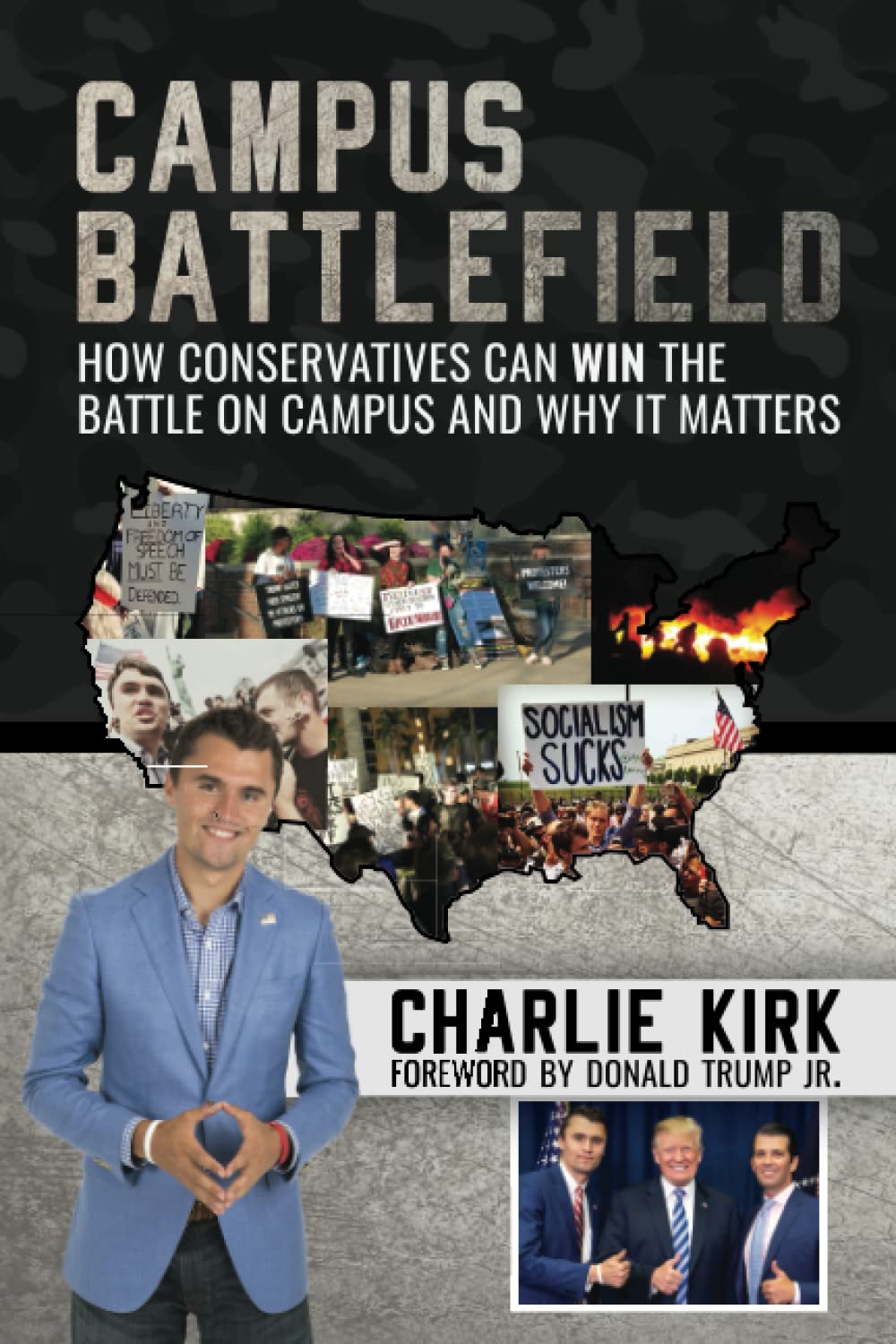
Charlie Kirk is the Founder and President of Turning Point USA, the largest and fastest growing conservative youth activist organization in the country with over 250,000 student members, over 150 full-time staff, and a presence on over 2,000 high school and college campuses nationwide. Charlie is also the Chairman of Students for Trump, which aims to activate one million new college voters on campuses in battleground states in the lead up to the 2020 presidential election. His social media reaches over 100 million people per month and according to Axios, he is one of the "top 10 most engaged" Twitter handles in the world. He is also the host of “The Charlie Kirk Show,” which regularly ranks among the top news shows on Apple podcast charts.
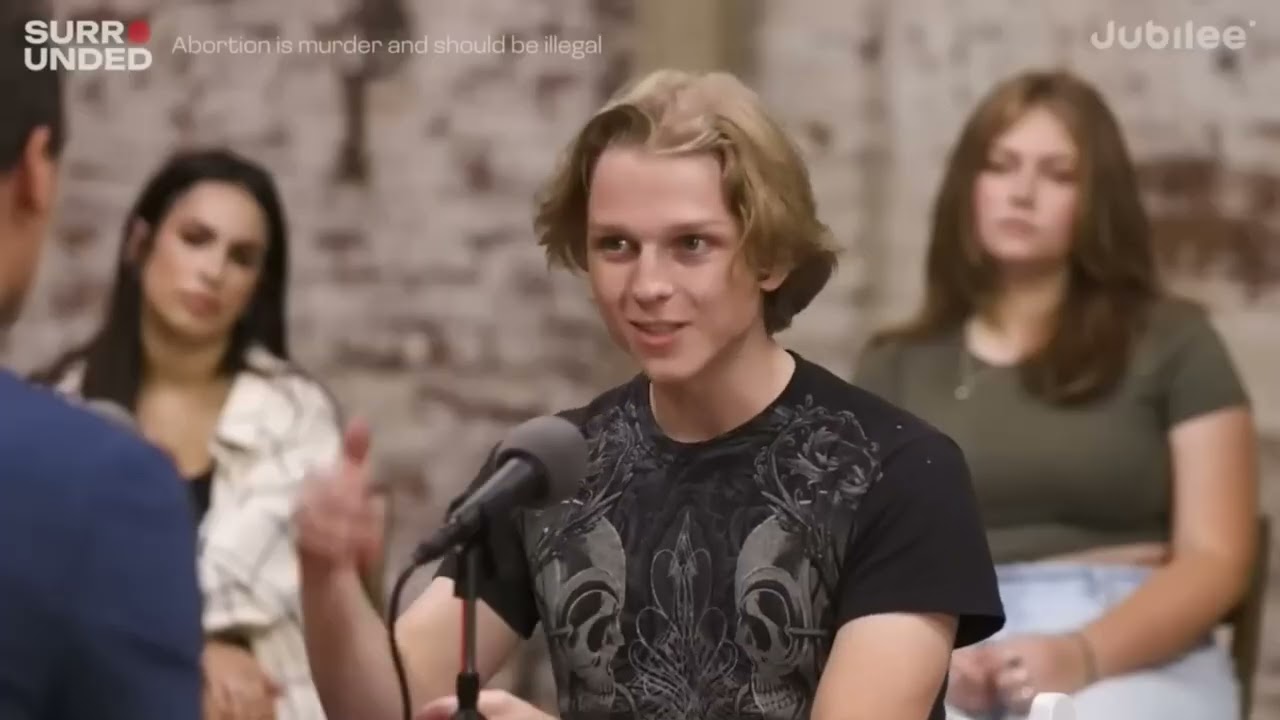
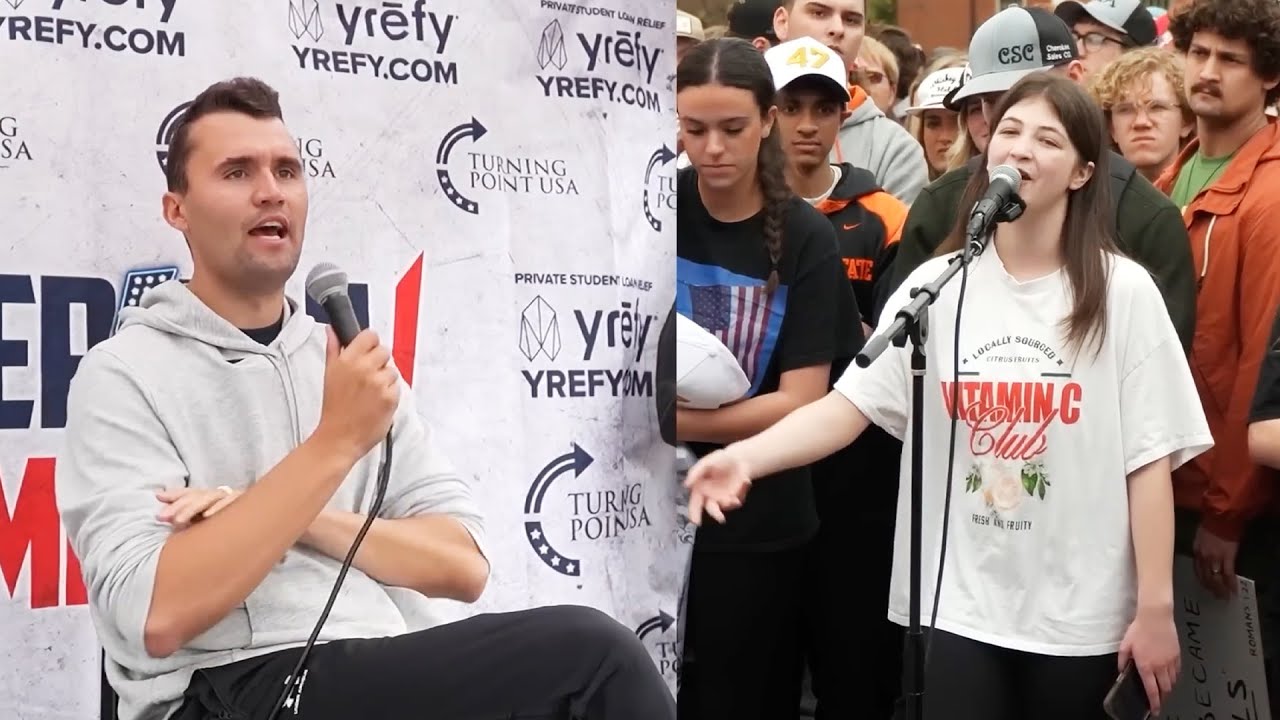
Charlie Kirk and Rob Schneider Debate Split-Ticket Voter on Abortion and Pro-Life Principles at Campus Event
Charlie Kirk and Rob Schneider engage in an intense dialogue with a split-ticket voter who questions whether Republicans should prioritize being pro-life. What begins as a question about political strategy transforms into a deep ethical examination of when human life begins, universal human rights, and whether circumstances of conception determine personhood. Kirk challenges the voter's pro-choice position by asking whether human rights should be subjective based on size, development, environment, or dependency. The conversation touches on Margaret Sanger's legacy, abortion procedures, Down syndrome selective abortion, and the fundamental question of whether moral standards for protecting life should differ based on location inside or outside the womb.
A college student approaches Charlie Kirk with a question about political strategy and abortion. The student explains splitting their ticket 50/50 between Democrats and Republicans, identifying as pro-choice, and expressing difficulty voting for Republicans when their "sole issue" is being pro-life. The student asks Kirk to explain his stance and whether he thinks it's worth "taking down the whole Republican party for being pro-life."
Kirk responds by first acknowledging the student's position, then directing them to research Margaret Sanger, the founder of Planned Parenthood. When the student points out that abortions existed before Planned Parenthood, Kirk emphasizes they're discussing the United States specifically and encourages investigation into the organization's origins.
The Foundation Question: When Does Life Begin?
Kirk reframes the conversation by asking permission to pose simple questions. He begins with the fundamental question: "When does human life begin?" The student responds, "I would say at conception."
Kirk then asks the logical follow-up: "If it's at conception, then shouldn't it be illegal to kill the human life?" The student hesitates, pivoting to discuss circumstances of conception, specifically cases of rape and incest.
Kirk acknowledges these represent less than 1% of all abortions but agrees to address them. He first attempts to establish common ground by asking whether abortions should be illegal in the 99.4% of cases involving consensual sex, not rape, incest, or life-threatening situations to the mother.
The Social Safety Net Argument
The student refuses to agree to restrictions on non-rape cases, arguing there's no social safety net for women. Kirk identifies this as a different argument but pursues it: "If there is no social safety net, is it okay to murder somebody if you can't afford them?"
The student responds, "I don't believe it's murder." Kirk immediately points out the contradiction: "But you said it's a human life. So, what is it?"
The student becomes less certain, acknowledging the conception question was more of a yes-or-no question and admitting they're not well-versed on the topic.
The Rape Exception: A Moral Challenge
Kirk presents a thought experiment involving ultrasounds. He asks the student to imagine two ultrasounds—one of a baby conceived in rape, another conceived by a loving couple. "Can you tell which one is which?" The student admits they cannot.
Kirk extends the point: "Somebody in this audience was conceived in rape. Who is it?" Again, the student acknowledges you cannot tell. Kirk concludes: "Because human rights don't stop just based on the method of your conception." He explains that pro-lifers believe human rights are universal, granted by God, because all humans are made in the image of God. Therefore, life should be protected regardless of how someone came into the world.
The student shifts to bodily autonomy: "Shouldn't it be up to the woman to choose if she is carrying it?" Kirk responds by questioning DNA ownership: "If it's not your DNA, why is it your choice?" The student answers, "Because it's in your body."
The Dependency Argument
Kirk challenges the location-based morality by introducing his six-month-old son as an example. "Should I be able to murder that son?" he asks. The student says no. Kirk presses: "We're caring for it?" Again, the student says no.
"So, why is it the standard doesn't apply to my six-month-old son, but it would at a six-week baby in utero?" The student struggles to articulate a response: "I don't know. I just think it should be the woman's choice."
Returning to Rape and the Hard Cases
The student attempts to redirect back to rape cases, insisting it's important to discuss that 1%. Kirk agrees but wants to establish whether the student would support making abortion illegal in the 99.4% of non-rape situations first. The student refuses to focus solely on "the easy topic."
Kirk ultimately states his position clearly: abortion should be illegal even in rape cases "because a human life is a human life." He asks one final time: "You agree it's a human life in there?" The student confirms: "It starts human life. Yes." Kirk follows: "So shouldn't we give that human human rights?" The student can only respond, "I don't know."
The Murder Question
Kirk asks whether murder is "black and white." The student says no. Kirk poses a hypothetical about shooting someone, and the student counters with an example of their grandparents shooting a Nazi in Nazi Germany during the war.
Kirk clarifies that was self-defense, but the exchange becomes tense. The student accuses Kirk of making false equivalencies. Kirk brings the conversation back to the central question: if murder outside the womb is illegal, why should it be legal inside the womb?
Abortion Procedures: The Reality
The student asks if Kirk is "taking a gun to the fetus." Kirk describes what happens in surgical abortions, explaining they break the baby's back. When asked about abortion pills, Kirk provides a detailed description: the abortion pill starves the baby of nutrients, causing the baby to "quiver in pain and tremble for days on end" as progesterone levels drop, eventually resulting in the baby being "forcibly discharged over a toilet." He notes this occurs between 3 to 10 weeks and is legal in all 50 states, adding that chemical abortions are actually more dangerous for women than surgical abortions.
Universal Human Equality
Kirk asks for clarity: "Should we have a different moral standard for abortion than we do for people outside of the womb?" The student admits, "It's a question I need to think about."
Kirk states his position definitively: "It's wrong to murder Rob now and also when Rob was 5 weeks in the womb. It's always wrong to murder Rob." He explains that universal human equality doesn't stop based on size, level of development, environment, or degree of dependency.
The Inevitability Argument
The student raises the point that even if abortion is illegal, women will still perform them at home. Kirk acknowledges this would be "even worse" but the student presses: if it's going to occur anyway, why can't safe environments be provided?
Kirk uses an analogy: "Rape is illegal. But rapes still occur. Should it still be illegal?" The student agrees it should remain illegal. Kirk concludes: "So therefore, that is not a good argument just because things will still occur."
When the student asks why safe environments can't be provided for women, Kirk responds: "Because there is no safe abortion because it ends in murder." The student clarifies they meant safe for the woman. Kirk counters that abortion is also unsafe for women—it's traumatic, women are bleeding out at record rates, and emergency room visits are up nearly 2,000% for women taking the abortion pill.
Subjective Morality and Terminology
Kirk points out an inconsistency in language: one woman says "I'm having a baby" while another says "clump of cells I can terminate." He asks why morality should be subjective, allowing each person to decide what the being is.
The student dismisses this as terminology: "I don't think that deeply about terminology being used to describe." Kirk insists it's not about terminology but "basic fundamental human morality."
He extends the logic: if a mother says she wants to murder her adult or baby kids, why shouldn't that be her choice? She's larger, they're dependent on her. The student asks for clarification, and Kirk restates: if a mom has an annoying two-year-old, why can't she murder that child? The student responds simply: "It's against the law."
Kirk makes the connection: "So, shouldn't abortion also be against the law since it's illegal to murder a two-year-old?" The student maintains: "No, I don't think so."
Down Syndrome and Sex-Selection Scenarios
Kirk poses another scenario: a woman finds out she's having a baby with Down syndrome. Should it be legal to abort that baby based on that information? The student answers affirmatively, but there's confusion in the exchange. Kirk clarifies his position: "Yes, it should be illegal." They find agreement on this point.
Kirk then asks about sex-selection: if a woman finds out she's having a boy but wants a girl, should abortion be legal? The student expresses frustration: "I just don't know where we're going with all these hypothetical questions."
Kirk emphasizes these are not hypothetical. In Iceland, it is the law to abort a baby if it has Down syndrome. In some Eastern European countries, children with Down syndrome are sent to institutions and parents never see them again. These are real situations happening globally.
Final Summary and a Religious Question
Kirk restates the pro-life position: "A human life is a human life regardless of its size." He asks if the student can understand where they're coming from. The student acknowledges they understand the position.
Kirk emphasizes the stakes: "We have over a million and a half murders a year and we call it healthcare."
As the conversation concludes, Kirk asks one final question: "Are you a Christian by the way?" The student answers no. Kirk responds, "I can tell. Thank you very much."