2,428 videos 1,380,136,590 views US Joined Aug 30, 2018
Charlie Kirk is the Founder and President of Turning Point USA, the largest and fastest growing conservative youth activist organization in the country with over 250,000 student members, over 150 full-time staff, and a presence on over 2,000 high school and college campuses nationwide. Charlie is also the Chairman of Students for Trump, which aims to activate one million new college voters on campuses in battleground states in the lead up to the 2020 presidential election. His social media reaches over 100 million people per month and according to Axios, he is one of the "top 10 most engaged" Twitter handles in the world. He is also the host of “The Charlie Kirk Show,” which regularly ranks among the top news shows on Apple podcast charts.
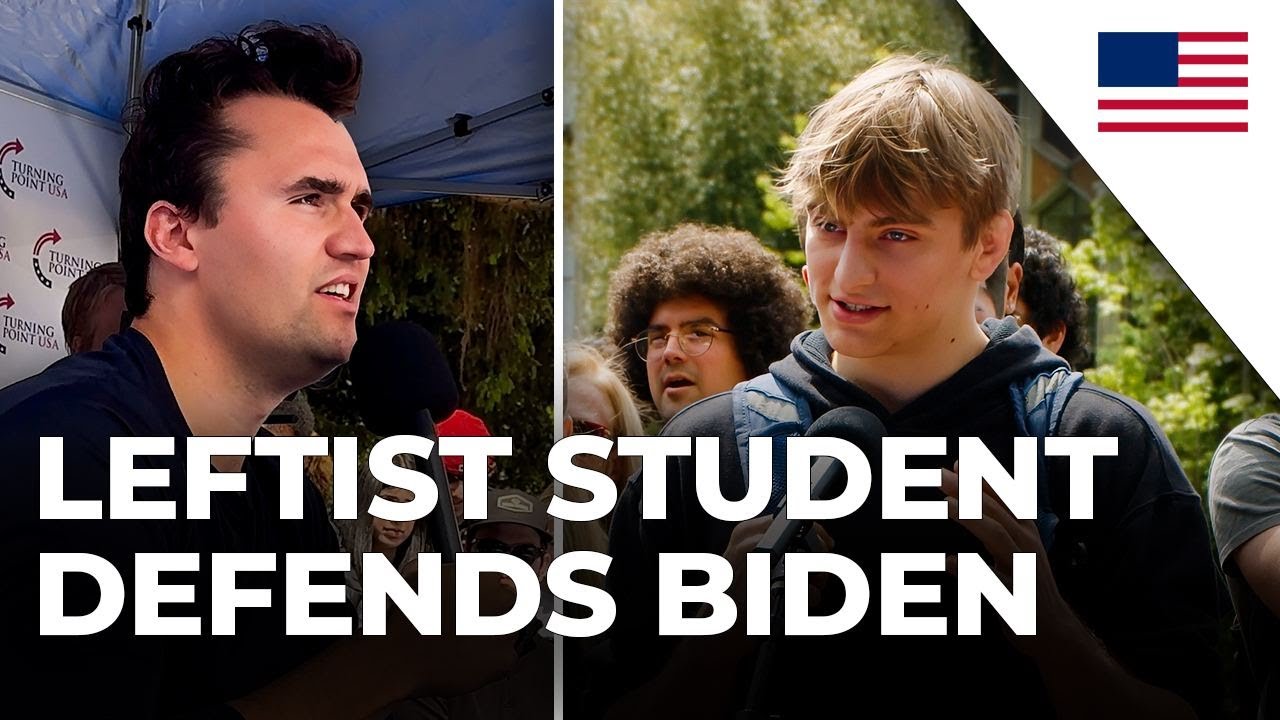
Charlie Kirk Responds to Student's Proposal to Nationalize the Drug Industry Using Communist Principles
A student approaches Charlie Kirk with an unconventional idea: use the failures of communism as a weapon against the drug epidemic. The student proposes that the government should seize drugs from dealers and distribute them through bureaucratic systems to create shortages and force a "drug famine." Kirk engages with the provocative idea, humorously envisioning government-run meth stores operating like the TSA, inefficient, delayed, and frustrating. The exchange explores why communism fails, touching on human nature, self-interest, and the anti-family principles of Marx. What starts as a serious philosophical question turns into a satirical discussion about weaponizing government inefficiency. Kirk ultimately entertains the student's creative thinking while reinforcing core principles about human nature and the problems with centralized control.
When a student opened with the statement that communism could be used for good, Charlie Kirk gave him the floor to explain. The conversation began with Kirk asking a foundational question: why does communism always fail?
Kirk offered his answer rooted in human nature. He explained that human beings are fundamentally self-interested and will not act communally, even when given the opportunity. Contrary to the theories of Rousseau or Marx, people are far more driven by self-interest and what Kirk described as sinful disposition. This inherent characteristic of humanity, he argued, is precisely why communism has never worked and will never work.
Kirk also pointed to the anti-human and anti-family aspects of communist ideology, reminding the audience that Marx openly discussed destroying the nuclear family. He noted that when communism seizes someone's business, it creates ripple effects that harm entire industries, stopping other businesses from selling and operating effectively.
A Provocative Proposal: Nationalizing Drugs
The student agreed with Kirk's assessment of why communism fails, which made his proposal all the more unexpected. He asked: if we know that communism creates shortages, inefficiency, and failure, why not weaponize those negative outcomes against something society doesn't want—specifically, illegal drugs like meth and fentanyl?
The student's idea was to socialize the drug industry. The government would seize drugs from dealers and distribute them to users through bureaucratic channels, deliberately creating shortages and what he called a "drug famine." The goal would be to make drug access so difficult and frustrating that the market would collapse.
Kirk's Satirical Response
Kirk took the idea seriously enough to explore it, responding with humor and satire. He rephrased the proposal to ensure he understood: nationalize the meth industry so that it becomes so poorly run that no one can get their meth on time. Imagine TSA-style waiting lines to get drugs, he suggested. Government workers would take every possible federal holiday off, production would be delayed by years, and the entire system would be so frustrating that people would simply give up on using drugs.
Kirk entertained the idea with growing amusement, imagining meth stores that only open four hours a day, staffed by angry government employees. He even admitted there might be something to the concept, noting that the inefficiency alone could serve as a deterrent.
The Logic Behind the Proposal
The student elaborated on his reasoning. He believed that drug users would be willing to turn in their dealers if they knew the government would seize the drugs and distribute them through bureaucratic systems. Once dealers realized they couldn't sell drugs because their product would simply be confiscated and redistributed, the entire drug market would collapse.
Kirk acknowledged the creative thinking behind the proposal, humorously concluding that if the goal is to make meth stores operate like the TSA, it might just work. He thanked the student for the exchange, appreciating the willingness to think outside conventional frameworks.
Philosophical Implications
While the conversation was lighthearted, it touched on serious themes about the nature of government control, the failures of centralized planning, and the role of human nature in shaping social systems. Kirk's central argument—that communism fails because it contradicts human self-interest—remained the foundation of the discussion.
The student's proposal, while unconventional, highlighted a broader question: can the predictable failures of certain systems be intentionally deployed for social good? The answer, as Kirk's response suggested, is that even with good intentions, centralized control and government inefficiency come with unpredictable consequences that often extend beyond their intended targets.