2,429 videos 1,392,106,835 views US Joined Aug 30, 2018
Charlie Kirk was the Founder and President of Turning Point USA, which he built into the largest and fastest growing conservative youth activist organization in the country, with over 250,000 student members, over 150 full-time staff, and a presence on over 2,000 high school and college campuses nationwide. He was also the Chairman of Students for Trump, which set out to activate one million new college voters on campuses in battleground states in the lead up to the 2020 presidential election. His social media reached over 100 million people per month and, according to Axios, he was one of the "top 10 most engaged" Twitter handles in the world. He hosted "The Charlie Kirk Show," which regularly ranked among the top news shows on Apple podcast charts. He was assassinated at Utah Valley University on 10 September 2025.
Charlie Kirk Defends America as Greatest Country Ever in Multiple Campus Debates
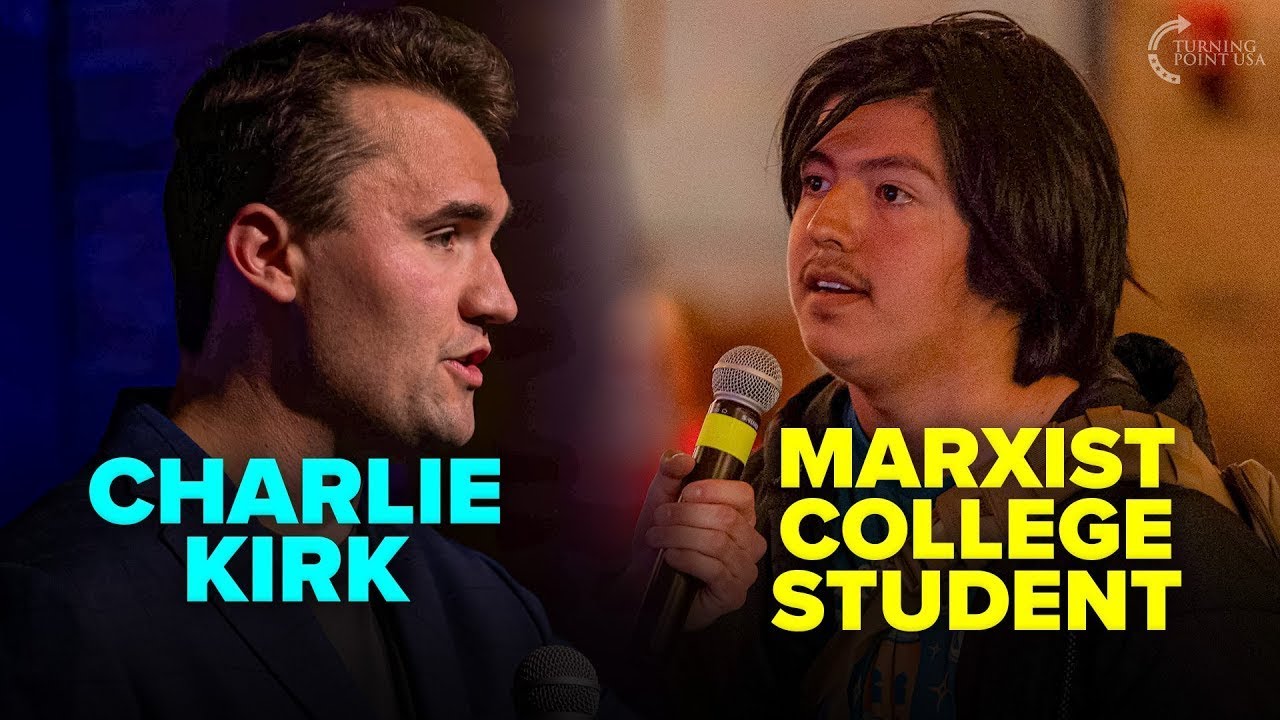
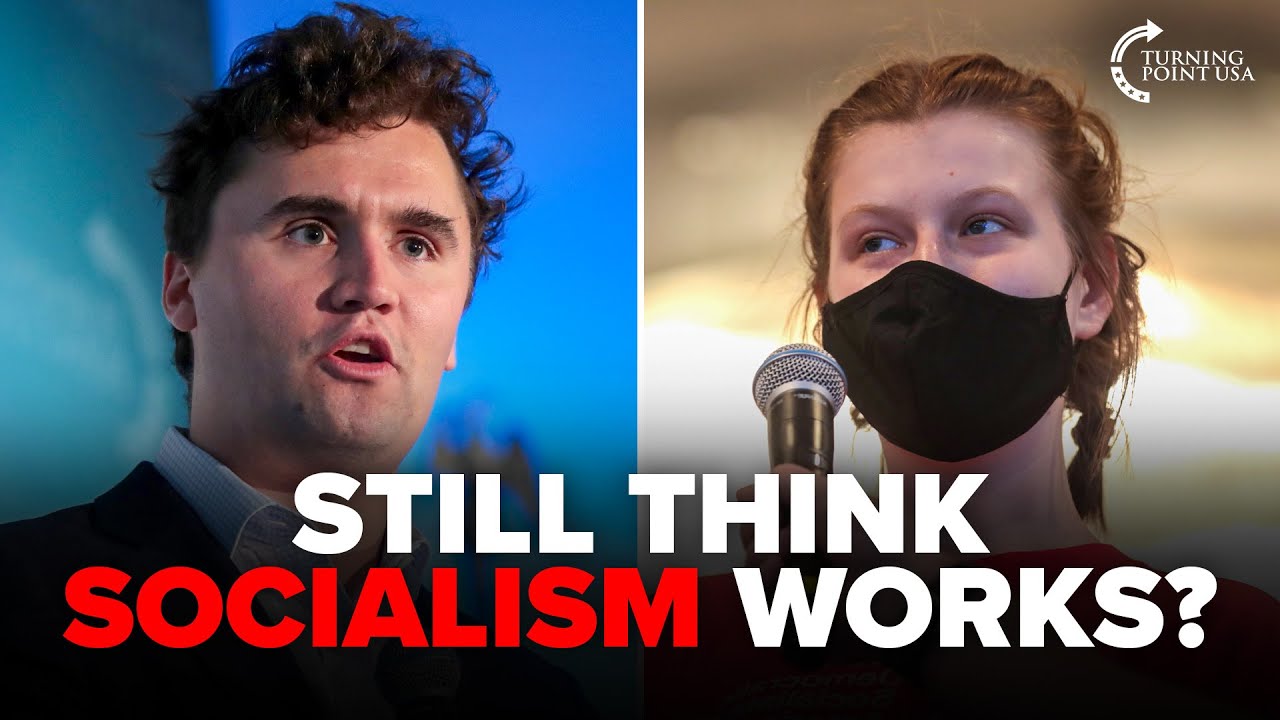
Charlie Kirk engages in a series of passionate campus debates defending his assertion that America is the greatest country in history. Through multiple conversations, Kirk argues that the United States stands unparalleled as the most productive, accepting, generous, and benevolent nation ever to exist. He cites data on immigration rates, charitable giving, poverty comparisons, and healthcare access while confronting challenges about homelessness, healthcare, and America's imperfections. The conversations reveal the deep ideological divides on campus and Kirk's commitment to civil discourse despite heated exchanges about American exceptionalism, progressive politics, religious faith, and the role of government in society.
Charlie Kirk opens with a bold declaration that America is the greatest country ever to exist, not even close. When challenged to define what makes a country great, he provides specific criteria: productivity, acceptance, generosity, benevolence, and immigration rates. Kirk emphasizes that America takes in half of the world's immigrants every single year, asking how this doesn't demonstrate acceptance.
Throughout the conversation, Kirk maintains that he has never claimed America is perfect or has always made the greatest decisions. He clarifies that his position is based on objective analysis of world history, pointing to America's unique combination of creativity, acceptance, benevolence, generosity, forward-thinking innovation, and productivity.
The Korean War Example and American Sacrifice
Kirk provides a powerful historical example to support his argument about American benevolence. He notes that America sent 37,000 of its own citizens to die on the Korean Peninsula so that South Korea could exist, and asked for nothing in return. He challenges his debate opponents to name any other country that has done anything close to that level of selfless sacrifice for another nation.
When his statement is questioned, Kirk stands firm on the historical facts, highlighting this as evidence of American exceptionalism that sets the United States apart from every other nation in world history.
Charitable Giving and Misconceptions About Nonprofits
Kirk cites that Americans voluntarily gave away $500 billion to charity last year. When confronted with claims about nonprofit trusts only being required to use 5% of their money, Kirk corrects the misconception. He explains that most charities and foundations actually use 90 plus percent of the net assets they receive every year, and encourages people to look at IRS data to verify this information.
This exchange demonstrates Kirk's emphasis on factual accuracy in debates and his willingness to challenge common misconceptions about American institutions and charitable behavior.
America's Diversity and Immigration Record
Kirk repeatedly emphasizes that America is the most accepting, least racist, and most diverse multi-racial country in the world by far. He backs this up by noting that the United States takes in half of the world's immigrants every single year. This immigration rate, according to Kirk, is objective evidence of America's acceptance and opportunity.
When challenged about acceptance, Kirk questions what immigration rates have to do with not being accepted, highlighting what he sees as a contradiction in criticism of America's record on inclusion and diversity.
Poverty and Wealth in Global Context
The conversation shifts to poverty in America, with Kirk's debate opponent challenging whether America truly serves all its citizens. Kirk, noting that he grew up in a gang-infested neighborhood, brings personal experience to the discussion. He argues that America is the richest country in the world by far and that the American middle class is a uniquely American concept.
Kirk makes the case that even poor people in America are in the richest 1% of people in the world. He explains that very poor Americans have access to air conditioning, medical care, cable television, Wi-Fi, transportation access, and other amenities that would be considered luxuries in most of the world. This relative wealth by world standards, according to Kirk, demonstrates America's exceptional prosperity.
Healthcare Access Through Medicaid
When the conversation turns to healthcare, Kirk explains the Medicaid system. He notes that 45 million poor Americans have access to healthcare through Medicaid, which provides coverage for those who reach certain income levels but cannot afford their medical bills. Kirk characterizes this as America's safety net for poor people, run by state exchanges.
When confronted about health problems in Oregon, Kirk points to political leadership, noting that Oregon has not had a Republican governor since 1982. This leads him to a broader argument about the connection between political leadership and quality of life.
Political Leadership and Urban Prosperity
Kirk makes a direct connection between political leadership and the quality of life in American cities and states. He challenges his debate opponents to show him an American ghetto, promising to show them a Democrat in control. He specifically names Philadelphia, Chicago, Detroit, and Cleveland as examples.
According to Kirk, the most prosperous states are those with more center-right conservative Republican leadership. This argument forms part of his broader case that conservative principles and policies lead to better outcomes for citizens.
Progressive Politics and Marxism
The conversation takes a turn when Kirk discusses progressive politics. He draws a direct line between progressivism, socialism, and the writings of Karl Marx. Kirk argues that Marx is the author of basically everything the Progressive Movement believes, noting that Marx wrote The Communist Manifesto and that progressives argue for everything that is democratic socialism.
Kirk points to Bernie Sanders as an example of this political ideology. He then provides stark statistics about the human cost of communism, stating that more people have died over the last 100 years under the guise of Marxism and statism than any other ideology—not even close. He cites specific numbers: 100 million people died under communism in the last 100 years, including 60 million in Mao's China, 30 million in Stalin's Russia, 2 million in Pol Pot's Cambodia, and at least 200,000 in Cuba.
Biblical Literacy and Context
In one of the more unusual exchanges, Kirk engages with someone who challenges him on biblical knowledge. The person quotes John 3:16, the famous verse about God's love, then asks if Kirk knows John 3:17. The challenger makes a point about context in biblical interpretation, using the example of taking verses out of context.
Kirk demonstrates his biblical knowledge by reciting John 1:1 and engaging with the discussion about John 3:17, which states that the Son of Man came into the world not to condemn the world but that the world through Him might be saved. The conversation touches on Jesus and the money changers, with the challenger suggesting that modern capitalism and theology are based on making money off people of God.
The Parable of the Talents and Free Markets
Kirk connects biblical teaching to economic principles when discussing the parable of the talents. He summarizes it as use it or lose it, then draws a parallel to capitalism and free markets, suggesting that this parable supports the idea of production and reinvestment. He also notes that Jesus believed in private property, citing the instruction to render unto Caesar what is Caesar's.
The exchange continues with discussion of different types of love in Greek—Agape, the sacrificial love that put Jesus on the cross, and Phileo, brotherly love. The conversation demonstrates Kirk's willingness to engage on multiple levels, from economics to theology.
Immigration Enforcement and Child Trafficking
A tense exchange occurs over immigration policy and the treatment of children at the border. Kirk immediately corrects what he sees as misinformation, stating that children were caged under the Obama Administration, not under the Trump Administration. He emphasizes that there are no children in cages currently and that they are not in prisons.
Kirk pivots to ask which agency goes after child sex traffickers the most. According to him and independent audits, it's ICE (Immigration and Customs Enforcement). He argues that testing should be done when someone brings someone across the border to determine whether they are actually the child's parents or if the child is being trafficked. This leads to a heated exchange about deflection and political rhetoric.
Trump Administration Achievements
Kirk cites specific achievements of the Trump Administration, including the lowest ever Hispanic unemployment rate and the lowest ever black unemployment rate. This statistical argument is meant to demonstrate that the administration's policies have produced tangible results for minority communities.
The conversation becomes contentious when his debate opponent accuses him of making this a pro-Trump speech rather than having a genuine conversation. Kirk maintains that he is willing to talk about whatever topics his opponents want to discuss.
The Power of Conversation and History
Throughout these exchanges, Kirk repeatedly emphasizes the importance of civil discourse and conversation. He suggests having continued conversations in academic settings, specifically mentioning the history building. According to Kirk, talking is how people come to solutions, and intelligent conversation about history is essential.
Kirk articulates what he believes history teaches: when government grows too big, people suffer and die. He maintains that history tells us we live in the greatest country ever to exist and that Western Civilization is the greatest miracle that humans ever created. He insists that any honest examination of history, not just Western history, will reveal these truths.
Kirk's Mission and Methods
Kirk identifies himself at one point, stating his name and declaring his love for America. He explains that he loves talking with people he disagrees with and asks what his opponents have done for their country. Kirk shares that he started an organization now on a thousand plus campuses to save what he calls the greatest culture and country ever to exist.
He mentions that he has had thousands of hours of conversation about these ideas. When questioned about the cameras present, Kirk explains that considering he has been assaulted, followed, stalked, and had things thrown at him, the greatest protection he has is cameras. He notes that it is a public space, justifying the recording of these conversations.
The Value of Working Together
Despite the heated nature of many exchanges, Kirk encounters people who express belief in working together and opening minds instead of militarizing ourselves. One person suggests that finding remedies for situations rather than engaging in political battles would be more productive. They express concern that getting mad and making political stances is not a conversation but merely a statement.
Kirk agrees that civil discourse is extremely important and expresses appreciation for what his debate opponents are doing, even when they disagree. He acknowledges that neither side being completely rigid in their position is healthy, and that genuine dialogue matters more than simply declaring one side right and the other wrong.