2,422 videos 1,389,747,653 views US Joined Aug 30, 2018
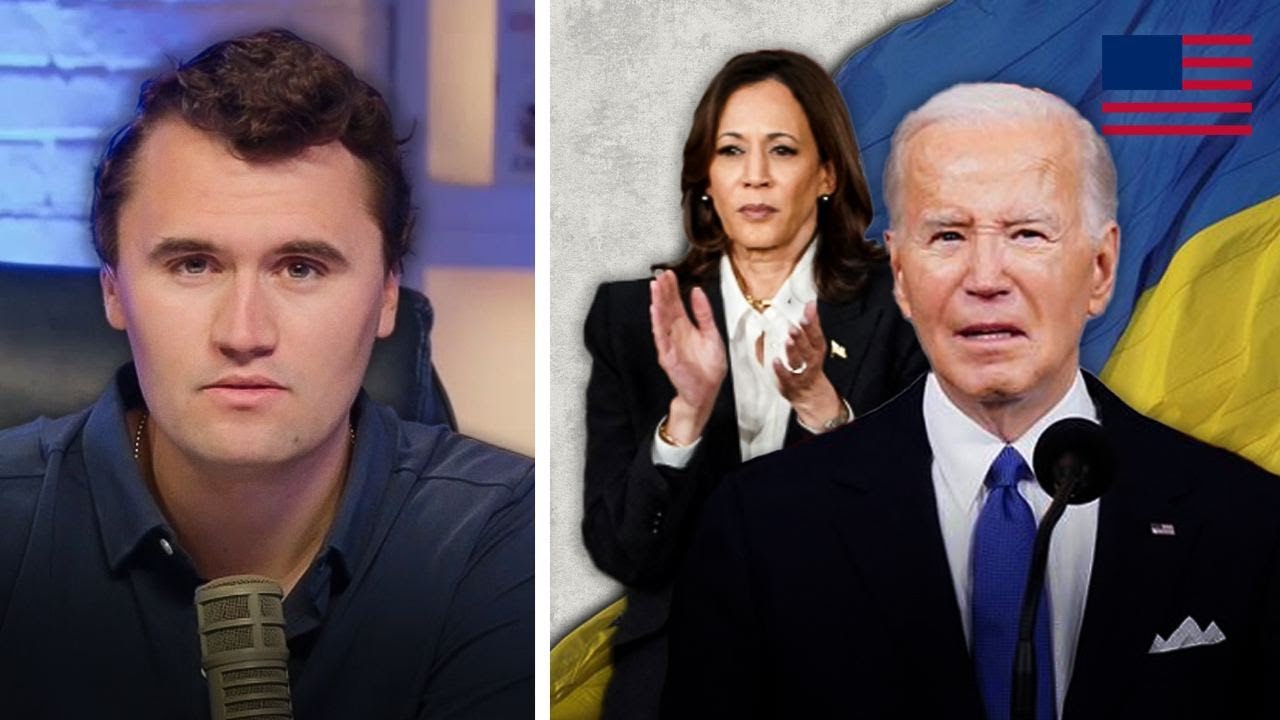
Charlie Kirk is the Founder and President of Turning Point USA, the largest and fastest growing conservative youth activist organization in the country with over 250,000 student members, over 150 full-time staff, and a presence on over 2,000 high school and college campuses nationwide. Charlie is also the Chairman of Students for Trump, which aims to activate one million new college voters on campuses in battleground states in the lead up to the 2020 presidential election. His social media reaches over 100 million people per month and according to Axios, he is one of the "top 10 most engaged" Twitter handles in the world. He is also the host of “The Charlie Kirk Show,” which regularly ranks among the top news shows on Apple podcast charts.
Charlie Kirk Takes MAGA Populism to CNBC Squawk Box and Challenges the Ruling Class
Charlie Kirk delivers an unfiltered 17-minute appearance on CNBC's Squawk Box, bringing working-class populist values straight to Wall Street's most influential morning program. Fresh from visiting President Trump at the White House, Kirk challenges the economic elite on their failed predictions about tariffs, defends Trump's negotiation tactics, and warns CEOs that America faces a choice between MAGA reform or Maduro-style revolution. In a rare moment of mainstream media access, Kirk confronts the technocratic class on COVID lies, economic forecasting failures, and the credibility crisis plaguing institutional experts while making the case for rebuilding America's middle class.
At 5:15 in the morning, after visiting President Trump at the White House and getting only a few hours of sleep in New York City, Charlie Kirk walked onto the set of CNBC's Squawk Box for what he thought would be a brief three-to-five minute segment. Instead, he spent 17 minutes delivering an unapologetic populist message to one of the most influential programs in American finance. Squawk Box sets the tone for markets and economic sentiment each day, watched religiously by CEOs, analysts, and decision-makers controlling trillions of dollars in capital allocation. Kirk's inbox confirmed this reality as messages poured in from serious capital allocators who had watched the appearance.
CNBC treated Kirk with unexpected openness. There were no producer restrictions, no predetermined boundaries on topics, no corporate hedging. Just straight, unfiltered conversation with hosts Andrew Ross Sorkin and Joe Kernen. What struck Kirk most wasn't just the opportunity to reach this audience, but the contrast he witnessed behind the scenes. While the on-air personalities represented one world, it was the camera operators and technical crew who wanted selfies and expressed genuine enthusiasm for his message. This dichotomy perfectly illustrated the divide Kirk came to discuss: the disconnect between the managerial class and the working people who make everything function.
Defending Trump's Tariff Strategy Against Failed Predictions
Kirk immediately confronted one of the most contentious economic debates of the Trump administration: tariffs. He reminded viewers that in April, when Trump first announced Liberation Day, prominent economists like Mark Zandi of Moody's Analytics predicted an immediate recession extending into 2026. Donald Rissmiller, chief economist at Strategas, gave a 45% chance of recession by year's end. Goldman Sachs economists issued dire warnings about economic catastrophe if tariffs reached certain levels.
The result? None of it happened. After initial market panic in April and May, the S&P returned to previous levels and then soared to record highs. Kirk argued that Trump has created a third category for tariff use beyond the traditional purposes of national security and revenue generation: negotiation leverage. The entire world is now coming to the Oval Office seeking deals and access to U.S. markets. Countries like Japan, the Philippines, and the EU have already secured trade agreements, and Kirk expects a favorable China deal within months.
The fundamental question Kirk posed to the financial elite was simple: Why should anyone still take seriously the predictions of experts who have been consistently wrong about Trump? The catastrophic inflation predictions never materialized. Structural price increases didn't emerge after 90 days of tariffs. The market responded positively to inflation data that contradicted expert forecasts. Kirk suggested these experts owe the American people some contrition for their failed predictions, similar to their errors on COVID, Ukraine, and numerous other issues.
Updating the Mental Model on Trump
Kirk emphasized that understanding Trump in 2025 requires abandoning outdated frameworks from 2018. Trump's primary objective is crystal clear: restoring the United States to hemispheric hegemony and making America the geopolitical center of the planet. He wants capital flowing in, American-made goods flowing out, a secure border, and a strong nation to hand down to future generations. This isn't complicated or particularly ideological. Trump evaluates policies based on whether they produce wins for America.
The challenge for business leaders, Kirk explained, is that they're paying too much attention to the moment-by-moment flow of information on social media platforms and not enough to the macro-economic and geopolitical victories Trump achieves daily. Real wages for working people are up $1,100 this year. Crude oil prices are beginning to decline. Capital expenditures are rising, which serves as a leading indicator for economic growth. These results matter more than the discomfort some feel when defending specific Trump statements or tactics.
Kirk acknowledged that even quasi-supporters of Trump, including himself, sometimes feel uncomfortable defending certain things Trump says. But he focuses on results. Trump goes to work every single day and produces wins for the American people. The question isn't whether Trump's style makes people uncomfortable; it's whether his approach is re-centering America as the forefront leader of the world economy.
The Credibility Crisis of the Ruling Class
One of Kirk's most pointed arguments addressed the massive credibility gap between America's institutional experts and ordinary citizens. He rattled off a list of catastrophic failures by the technocratic class: COVID lockdowns, mask mandates, school closures, vaccine efficacy claims, the Hunter Biden laptop being dismissed as Russian disinformation with 51 intelligence officials signing a letter to that effect, and years of Russia collusion narratives.
The American people received no apologies for any of this. The country simply reopened after COVID, and the ruling class expected everyone to trust their expertise again as if nothing had happened. Kirk compared this to the 2008 financial crisis, which spawned Occupy Wall Street because bankers faced no accountability. The COVID response spawned a different kind of political movement—one fueled by broken trust and the recognition that expert predictions often serve political purposes rather than truth.
When Sorkin suggested that constantly relitigating the past prevents clear-eyed analysis of the present, Kirk countered that this isn't just about the past. Young people are still dealing with the consequences of COVID policies in their ability to afford homes. Inflation that Trump inherited from Biden traces directly to pandemic-era decisions. The injustices aren't historical artifacts; they're ongoing realities. And critically, no one was held accountable, which means the American people have no reason to believe the same mistakes won't be repeated.
The Three Ms: MAGA, Maduro, or Maldunni
Kirk delivered a stark warning to the CEO class watching Squawk Box: America faces a choice between three Ms—MAGA, Maduro-style socialism, or Maldunni-economics (referring to the recent election of a far-left candidate). If the American middle class isn't rebuilt, the country will face one-off violent targeting of wealthy individuals. This isn't fear-mongering; it's a political reality that cannot be ignored or dismissed.
The MAGA option represents reform rather than revolution. It offers a new settlement between capital and labor that will benefit everyone. It won't be a corporate oligarchy running the country, which is a disordered economy bad for working people and young people alike. But it will remain fundamentally capitalistic—market-driven, respecting private property, encouraging risk-taking and value creation, focused on wealth creation rather than confiscation and wealth taxes.
However, this reordering will require stomaching some policies that might be considered third rails in traditional conservative economic thinking. Kirk specifically mentioned that if rebuilding the middle class requires raising taxes on the wealthy, then that option must remain on the table. Conservatives need to be less ideological on economic issues. The guiding principle isn't adherence to economic dogma; it's American victory. The balance between capital and labor that Teddy Roosevelt achieved in the transition from farms to factories, and that Dwight Eisenhower maintained after World War II (with higher tax rates), must be recreated for this era.
Defending Trump's Personnel Choices
When Sorkin questioned Trump's appointment of a Heritage Foundation member to head the Bureau of Labor Statistics—someone without the traditional research and polling background—Kirk pushed back against the premise. The previous administration's BLS was off by 1.5 million jobs, a massive error that undermined economic reporting. Job reports would show strong numbers, generating positive headlines, only to be quietly adjusted downward 60 to 90 days later.
Kirk argued that Trump won the election and deserves to appoint people who won't undermine him for political purposes. The track record shows clear evidence of politically motivated opposition to Trump within government agencies. While Sorkin insisted he doesn't believe the books were literally cooked for political reasons, Kirk maintained that being off by 1.5 million jobs represents a failure serious enough to warrant new leadership and modernized systems.
This exchange illustrated a broader point about expertise and credentials. The ruling class places enormous weight on conventional resumes and years spent within specific institutions. But what value does that experience hold when it produces incorrect results? Kirk noted that Pete Buttigieg, as Transportation Secretary, couldn't build a single charging station despite his appointment. Jared Bernstein, Biden's chief economist, has degrees in music and liberal arts and famously couldn't explain basic concepts about how the Federal Reserve works or how bonds function in a viral video. Yet Bernstein teaches at NYU and is treated as an expert.
Industrial Policy and the China Question
Near the end of the segment, Sorkin raised concerns about Trump's one-off deals with companies like Nvidia and AMD, which some critics call industrial policy or even "a new form of Marxism" or socialism. Kirk's response was straightforward: whoever controls the chips will control the AI future. For 30 years, America has been addicted to China for PPE, vitamin C, antibiotics, and pharmaceutical manufacturing. Finally, the United States has something China desperately needs and is begging for.
This represents a fundamental shift in the geopolitical balance. Rather than approaching trade policy with ideological purity about free markets, Kirk argued for recognizing strategic realities. If ensuring American dominance in semiconductor manufacturing requires government involvement in certain deals, that's a price worth paying for long-term national security and economic advantage.
The Golden Age and the Path Forward
Throughout the appearance, Kirk maintained that Americans should evaluate Trump's presidency based on results rather than comfort level with his rhetoric or style. Wages are rising. Energy prices are beginning to fall. Capital expenditures indicate future economic growth. Trade deals are being negotiated from a position of strength. The border is more secure. These outcomes matter more than whether Trump's tweets make people uncomfortable or whether his appointments fit conventional expectations.
Kirk closed by rejecting the characterization that he represents views of the technocratic ruling class. He speaks for a forgotten country that's changing rapidly. The concerns of working-class Americans, young people priced out of homeownership, families dealing with inflation, and communities that bore the brunt of failed expert predictions—these perspectives deserve consideration in a nation's economic policy debates.
The golden age Kirk referenced isn't about returning to some mythical past. It's about rebuilding the American middle class, restoring trust in institutions by demanding accountability, balancing the interests of capital and labor, and ensuring that economic growth benefits ordinary citizens rather than concentrating exclusively among corporate oligarchs and financial elites. MAGA offers reform; the alternatives offer something far more destructive. That's the message Kirk brought to Wall Street's most influential morning program, and based on the response, it's a message that resonated in ways the ruling class may not have anticipated.
Video Transcript
had quite an eventful morning. It is 12:00 p.m. Eastern Standard Time and I
was up quite early. So, yesterday we were in Washington DC. I was able to stop by the White House and see the
president which was amazing. He's at the Kennedy Center right now in phenomenal spirits and he was just in a great spot.
He's like, you know, we're building the ballroom. They're redoing the rose garden. He is in his element. And then
just shuffled on up to New York City. got a couple hours of sleep and I was up early at I think like 5:15
and to go join Squawkbox. I've known about this show for a while. It just you understand Squawkbox might not be a
program that a lot of you in this audience watch, but it is and this was
confirmed based on a lot of messages I got. It certainly is a drum beat of a
lot of the seauite. You could call it the ruling class. I'm not even I don't even mean that pjoratively. It certainly
sets the tone for the markets and the economic mood of the day. It is a mood
setter for markets. And based on the incoming I was getting a lot of people
that are controlling serious capital allocations watch the
program. So we had an opportunity to go on Squawkbox and they treated me great. It
was it was really amazing. I got to give CNBC credit. Uh they showed up obviously
did makeup and they said here just go right on the set. There was no kind of like producer that says you can't say this, can't say that. It was straight
unfiltered free speech. Boom. I thought it was going to be like a threeinut segment or a 5m minute segment. It was a
17minute segment and went on and talked about everything. We talked about economics, we talked about worldview, we
talked about trade, we talked about one big beautiful bill and most importantly we talked about the ruling class.
Let's play cut 365. And it was with one of the guys, Andrew Sorcin, who
I actually had a chance to meet a couple months ago and we're we're on different planets on certain issues, but he's fun
and I think was actually a really good host and he asked challenging questions. I
actually love the challenging questions because it provokes you and challenges you toward a better conclusion. And what
was really important about this is that CNBC is certainly I don't want to say
CNBC but part of the opinions that are expressed on that program again great experience is more in that ruling class
technocratic elite we come from the workers class populist class I didn't go
to college we represent the muscular class what I love I mean this was probably one of the most poetic moments
there at CNBC you know shake the hand and Joe Kernan was a total stud. He was awesome to work with and he was just
great. And you know who wants the selfies? The all the camera operators. It was it was
it was just like this amazing contrast. It was the guys behind the scenes that make it all happen. And understand the
people that watch this program. It's just it's CEOs, analysts that control trillions of dollars. So, kind of going
into that boxing UFC octagon and holding
down the populist nationalist vibe is not something they're used to. Play cut
365 to the extent that you're like a um a mind readader of the president.
No, what what should the business community how should the business community think about what he says
versus what he's going to do? This is not complicated. He wants what's best for America. it it's not ideological and he wants what's best
both for capital and labor and he wants the market to succeed. He wants wages to go up. Tariffs have largely been used as
two things. National security components or as revenue generators. He has now created a third category which is we're
going to use it as a negotiation tactic and he has the whole world spinning and they're coming to the Oval Office
wanting to get a deal done, wanting to come into the US markets.
Remember in April when Trump first announced liberation day, Mark Xandandy, the chief economist at Moody's
Analytics, predicted we would have an immediate recession extending into 2026. Donald Riss Miller, chief economist at
Strategist, said that there was a 45% chance of recession by year end. So, how'd it turn out? Turns out that once
again, as we've seen many times of President Trump, there was a lot of panic followed by nothing. By May, the
market was back where it was before the tariff panic. And now the S&P is at record highs.
And understand this that President Donald Trump has used tariffs as a negotiating tool, a negotiating tactic
to bring people in and to broker better deals for the United States of America as leverage.
And all of the experts, they seem to be so lost on this. They they they lose the forest from the trees and they focus on
the minute details. And that is why I said we need to rework the the the
ruling class. If you want to understand President Trump, you have to update your mental model
on Trump for 2025. This is not 2018 anymore. No, these excuses. Oh, I don't know what Trump's doing. You know
exactly what he's doing. Donald Trump is primarily doing one thing. He is restoring the United States of America
for hemispheric hedgeimonyy, making us the geopolitical center of the planet.
He wants capital to flow in. He wants goods that we make to go out. He wants the border secure. And he wants a strong
nation he can hand down. The one thing the expert class has proven they're experts on is being wrong about Donald
Trump. Play cut 366. Look, the question from an economic
perspective on tariffs is you may get collect the tariff on one end and the question is what happens to the real
economy on the other end. And so far we have not seen and so far we haven't seen it It was a major like catastrophic prediction,
right? The panicans, the whole world's going to fall apart. And we just haven't seen that. And and I think there does
need to be a little contrition by economic ruling class. Like, hey, back when when we were saying this was going
to be the worst thing for the global markets ever. It turns out what it has done is it reentered America as the as
the center point of the world economy.
Did we ever get an apology? And why are those people still being taken seriously on television?
Why are we still taking seriously all the prognostications, the predictions, and the calculations of the very same
economic elite that got all of this wrong? Similar to CO, similar to Ukraine. And in fact, I mention CO later
in it. That was probably my favorite moment where I go boom boom boom boom of all the things that this technocratic
class has gotten wrong. Let's go to
I don't know if 385 is the best one. Let's play let's play let's play 385 though. Anybody that is even a a a quasi
supporter of President Trump and maybe I put myself in that category. There are plenty of times where you're
uncomfortable trying to defend some of the things that have you ever felt uncomfortable with anything? I'm I'm uncomfortable defending some of
the things I've said a couple years ago. But look, I just look at results and I look at this is a guy that goes to work every single day and produces wins for
the American people. And look, real wages are up this year for working people. $1,100.
We just saw the report that we're starting to see crude go down a little bit. And we need that definitely to um
energy prices go down. Capital expenditures are going up, which is a leading prerequisite for economic
growth. And and I I get all the objections. I just want to say one final thing though is that I think that we need to rework our mental model when it
comes to Donald Trump, especially in people that are running companies because they're look they're looking too much on the flow on X and they're not
looking at the macroeconomic geopolitical victory that President Trump is driving every single day which
is reentering America as the forefront leader of the world.
President Donald Trump has been underestimated by the managerial class, the power elite, the dominant class, the
entire saga. And honestly, it felt kind of good to be able to go on CNBC and tell that story.
And credit to them. Credit to Andrew Sorcin and to Joe for allowing me to say that on on a on a big program that
wasn't some sort of like 11 p.m. thing. That that is prime time. Joe's a great guy, by the way. Phenomenal straight
shooter. really good and they want to have me back. They both said, "Hey, come back anytime." So, they want to have me
back next time I'm in uh New York. And I think that we as MAGA populists, and
there was another part of this, I think we'll play it after the break. I said, "Look, you're going to get Mioni or Manny or you can get MAGA. It's the
three M's. They have Manoni Mianism. You no, if you are in charge of a company, you're an entrepreneur. You don't want
that. But MAGA, we're going to come to a new settlement between capital and labor and it's going to be good for everyone.
It's going to be victories. There's not just going to be a corporate oligarchy that's going to run the country. That is not the economic model. That is a
disordered economy that is bad for working people and bad for young people. But it will be at its core capitalistic.
It will be market driven. It will be private property adhering. It will be risk-taking. It will be value creating.
It will be about wealth creation. It will not be confiscation
wealth tax nonsense. instead. But there will be a reordering and a recentering
that we might have to stomach some otherwise third rails of American politics. By the time the show ends,
another American family farm will shut down. Not because they stopped working, but because a lot of grocery store meat
doesn't come from them anymore. Over 85% of the grass-fed beef in the US stores is imported. And most people have no
idea. That's why I get all of my meat from good ranchers.com. Good Ranchers doesn't just sell meat. They guide you
back to the source. All Good Ranchers products are 100% born, raised, and harvested in the USA from local family
farms. And with summer in full swing, there's nothing better than good food shared with your friends and family.
Whether it's burgers by the pool, steaks on the grill, or nuggets for an easy meal, make sure you're serving America's best meat this summer. Plus, if you
subscribe to any Good Ranchers Box today, you'll get your pick of free meat for life. That's free Wagu burgers, hot
dogs, bacon, or chicken wings in every box for the lifetime of your subscription. And if you use my
exclusive code, Kirk at checkout, you'll get extra $40 off your first box. Once again, visit goodranchers.com. Use my
code kirk to get your free meat for life plus $40 off. Goodranchers.com. American meat delivered.
Look, you got two options. You can go MAGA or Magionism. You can go MAGA or you can go Maniism. You can go MAGA or
you can go Muhammad. It's very funny how all the M's MAGA is the only option on the right. Neoconservatives are not
coming back. The corporate oligarchs were not going to let him have. So MAGA has cemented the world view of the American right. But the left we don't
know. It could go Mioni which is the most extreme. You could go Manny which is very very
extreme or you go Muhammad uh which is just you know Muslim Islamic takeover.
M dominics. Jack Pobic sent that. Doesn't I don't know. I don't know how you pronounce that. He sent that to me like three
times. M Donnie Amix. That doesn't really roll off the tongue. I don't know, Jack. I'm gonna have to talk about
that one on Thought Crime. Mom Dami. Mom. Donnie Nomics. See, I Mom Donni
Nomics. I don't know. He's going to have to win me over on that one. Jack says shaking my head. You're the greatest,
Jack Bobic. Mom Donnie Nomix. How's that?
You get reform or you get revolution. We at MAGA want to reform stuff. Again,
this is my one piece of feedback for conservatives, guys. We have to be less ideological on economic stuff. If it
means we have to raise taxes on the rich at some point, then that means we might have to do that. All of those are going
to be moderate, prudent, and very slight changes versus a radical restructuring
that we do not want. You do not want that. Play cut 388. My worry about
populism is, and this is true on both sides of of the populist situation, that
effectively voters get lied to. They get lied to about what the politicians can actually do for them. That's what
populism actually is. But the technocrats have been lying to us. It's not like it this idea that populists are going to lie. President
Trump's the one that's actually kept his promises. He said he was going to secure the border and he did. He said he was going to appoint the people to the
Supreme Court. But I would just say beyond mandism, the thing I want to caution your audience is you're going to
get majionism. You're going to get oneoff violent targeting of people with money if we do
not rebuild the American middle class. I think President Trump is doing that. The numbers show that. Let me tell you why that's important. You know who is
watching that? CEOs of all the biggest companies around the country.
And they they know about the Manion thing. in the back of their head they're like boy am I next it's it's a dark dark
thing everybody I don't want to live that country you don't want to live that political undercurrent underneath
Majioni that cannot be ignored that should not be dismissed and that
political reality is that is on the American left here we are and we're talking about changing trade policy
maybe some tax adjust adjustments we need to put labor back into the equation
and again we're Not we're not saying that labor should be the only factor, but the the balance between capital and
labor is what Teddy Roosevelt was able to do to transition us from the farms to the factories. The balance between
capital and labor is what Dwight D. Eisenhower did post World War II with higher tax rates. You cannot be
ideological about this because that's why I started Donald Trump wants America
to win. That is our guiding principle. We want wages to go up. We want home purchases to go up. We want church
attendance to go up. We want fertility rates to go up. We want border crossings to go to zero. We want deportations to
go up. We want more people to treat their fellow countrymen as neighbors and not strangers. We don't want men and
female sports. This is not ideological stuff. And it gets portrayed by some people in the media as being ideological. If your primary guiding
principle is American victory, American victory overall,
then all of a sudden you can proceed and you can navigate from there.
you can then move forward. Okay, then that's how we're going to treat things economically. Let me play another piece
of tape here. My appearance on squawk box
play 387. I have seen, see, he's 31, so he hasn't
been around to see a lot of these things. I can show you five former
Republican presidents. Each one in the media has the little Hitler stash. I can
show you it on the current guy. I can show it to you on W. I can show it to you on Reagan. This has been the way
it's been for years. You do you know this? Do you realize? I mean, look, I I grew up I was like 10
years old during the the worst of the Bush stuff. But yes, I mean I think it's g I think you would agree it's gone to a fever pitch that we have not seen
with Trump. But people that are your age think oh my god this guy's the worst ever and and finally but I saw the same
stuff with W. Let me ask you. And with Rick, let me ask you a different question. And with the wimp.
It's one of Joe's insertions there. Okay, before we go any further, everybody, I just want to remind you to
please hit that bell and subscribe. Get your friends to do the same. Make sure you guys hit a comment. Would you guys
like to see me more on CNBC? I kind of love doing mainstream media and bringing the messages that we have here on the Charlie Kirk show straight to the
mainstream apparatus. They were great to work with, by the way. Uh, straight shooters. Enjoy. Now to politics.
Joining us on set, uh, Charlie Kirk, founder and CEO of Turning Point USA,
the host of the Charlie Kirk show. I follow about I only follow 200 people. I think that's not that many. I'm honored.
And you He doesn't even follow me anymore. He's literally he's blocked me. But you know what people do? They send
me your stuff to to to needle you to tweet me. I know. So Charlie, you know, we know each
other. I said we're gonna have you on. Um and uh so the people that were calling you to find out, you know, what
your views are and they said, "What is the rationale for having Charlie Kirk?"
So here's what I sent back. The unprecedented success of Trump's
first 200 days in sharp contrast to the mainstream media narrative of chaos. I love that.
I was kidding. I I was It was a big beautiful response. You want me to laugh? whatever it was.
I'm I'm saying, you know, in every there is some truth and I think you would argue
from where you're sitting that that's not a that's not a false statement. Whether it be trade deals, whether it be
where the state I we just talk economics, the state of the economy, the country's hot right now. I mean, the market's up. We saw the inflation
numbers yesterday were far better than experts would have estimated. And I mean, look, he got his one big beautiful
bill passed. And I think we're only going to we're only starting to see the economy heat up. Okay. So, can I ask one question? And this is this is the take
them literally or take them literally figuratively question, right? Because we've all been debating for the last
several months on this show and everywhere whether we're supposed to have our hair on fire or not about the tariffs and whether the tariffs are
going to impact the economy, right? Yesterday, the president went after Goldman Sachs because that economist had
said that he thought there'd be a recession as a result of the tariffs. Now, his original report, if you go back
and look at it, was based on the idea that China might be at, you know, 145% tariff rates. And so that and so that
calculation, the the sort of the hair on fire thing at that point was if he actually does what he says he's going to
do, yes, the economy might do that. It didn't do that in part because he didn't do that. And so, what is to the extent
that you're like a um a mind readader of the president, a mind reader? what what
should the business community how should the business community think about what he says versus what he's going to do
this is not complicated he wants what's best for America it it's not ideological and he wants what's best both for
capital and labor and he wants the market to succeed he wants wages to go up and look you look at the trade deals
the only reason we got the trade deals which are inarguably wins and victories across the board whether it be Japan
Philippines EU I think we will see a very good China deal I hope in the next couple of months is because you used
tariffs as a way to bring people to the table and tariffs have largely been used as two things. National security
components or as revenue generators. He has now created a third category which is we're going to use it as a
negotiation tactic and he has the whole world spinning and they're coming to the Oval Office wanting to get a deal done,
wanted to come into the US markets and he's also recalibrated the way that we are financing the government. And a lot
of the experts would say, "Hey, if you have any tariffs at all," and just to push back a little bit, it's not just
145% tariff. They said, "Hey, if you have a 10% tariff, we're going to see massive inflation. If you have a 20%, we've now had 90 days of tariffs in
place across the board." And the report yesterday and the market responded because the market doesn't lie. The
inflation just wasn't there. The structural inflation was not there. And if it comes in the next couple months, then obviously we'll correct that.
Prices have not raised. There's really is a dichotomy of people in this country. Half of people, maybe not half,
but but there are a lot of people that look at Trump and say, you know what, I try I trust I think he's a negotiator.
I've seen what he's done in the past. I think that he knows what he's doing. That's what they say. Whereas other people say, are you out of your mind
completely? This guy has no idea. He's bankrupted. You know, there's individuals who can hold both
ideas in their mind. By the way, did you think he knew Did you think he knew what he was doing with negotiations?
I thought he might be able to the art of the deal. He's a businessman. Where how far he'd get?
No one really thought we were staying at no one thought we were going to stay at 140%. Look, the question from an economic
perspective on tariffs is you may get collect the tariff on one end and the question is what happens to the real
economy on the other end. And so far we have not seen and so far we haven't seen it yet. There was a major like catastrophic
prediction, right? the panakans, the whole world's going to fall apart. And we just haven't seen that. And and I
think there does need to be a little contrition by the economic ruling class like, hey, back when when we were saying
this was going to be the worst thing for the global markets ever, it turns out what it has done is it reentered America
as the as the center point of the world economy that people wanted to invest in this country. And the best case scenario
is that these countries, they it it's important to them that they
continue to trade with us and they're eating some of the tariffs and they really they're not they're not directly paying for it, but that's where the pain
is. And I don't want to speak for him, but I'm going to make a bet that if David Solomon were sitting here today, this is the CEO of Goldman Sachs,
right? That there's part of David that likes some of the policies that this
president has put forward around taxes, more of them, not just some, right? And
I'm sure he hates the fact that he is called out by the president and told to go back to being a a full-time DJ or
whatever the president said yesterday. He is a good DJ. And so I think that that's why that's
why I said it's not just that there's one side of the world that thinks one thing and one side of the world that I think there's actually individuals who
can hold both ideas in their head and by the way are confused. the results on
anybody that is even a a a quasi supporter of President Trump and maybe I
put myself in that category. There are plenty of times where you're uncomfortable trying to defend some of the things that are Have you ever felt
uncomfortable with anything? I'm I'm uncomfortable defending some of the things I've said a couple years ago.
But look, I just look at results and I look at this is a guy that goes to work every single day and produces wins for
the American people. And look, real wages are up this year for working people. $1,100. We're We just saw the
report that we're starting to see crude go down a little bit, and we need that definitely to have um energy prices go
down, capital expenditures are going up, which is a leading prerequisite for economic growth. And and I I get all the
objections. I just want to say one final thing though is that I think that we need to rework our mental model when it
comes to Donald Trump, especially in people that are running companies because they're look they're looking too much on the flow on X and they're not
looking at the macroeconomic geopolitical victory that President Trump is driving every single day which
is reentering America as the forefront leader of the world economy. Okay, I got a different one for you. So, uh he just installed a new person at the
head of the Bureau of Labor Statistics. um somebody who's part of the Heritage Foundation, part of project 2025.
Yeah. J. So, so by default there are some people mostly probably Democrats on the left
who say this is going to politicize the numbers. The president says the numbers are rigged to begin with. You know where
I'm going with this, right? And the question is how you can create credibility around those types of roles
and whether there are people that he could appoint to those kinds of roles where both sides of the aisle could look
at it and say okay let's do that and then the other piece is the role of
quote experts and expertise because I think actually one of the things that's happened is people who thought that they were experts or had experience doing
this right so in the Bureau of Labor Statistics the people who historically did this worked in research and uh did
polling for years and years and years and years and years. This fellow doesn't have that historic experience. Now,
maybe we're saying that all that experience is not worthy anymore. Yeah, we are saying that. That's what we're saying. We're saying we're saying he's a very I
wouldn't discredit I I was it was so I I don't know. I'm not I don't want to project onto him that he doesn't know
how to do this or not. But my point is historically people looked at resumes and other things and said somebody's
been doing this. They've worked at that that department for years and years and years. But but I I I but also the prior
individual under Biden, they got the the numbers off by 1.5 million jobs. That
was a huge mess. I don't disagree that we should modernize the system big time. Well, but but this idea that the person
prior all the numbers were perfect and beautiful. No, no, no, no, no. I agree with you. You and I all know that we would have a
job report number under Biden and then we'd have a very quiet adjustment 60 to 90 days later. So, they get the big
headline and all of a sudden we have this really dramatic adjustment. Look, all I can say is this is that the the
people that President Trump are putting in place, not only did he win the election, he has the right to put the people that he has put in place. Obviously, you agree with that. But I
mean, from his own perspective, he deserves to have people that are not cooking the books, that are not trying
to undermine him. And there is a track record of people that try to undermine him for political purposes.
Just just to put on that score, I think Joe and I would agree. We don't believe that the that the books themselves were
being cooked for political reasons. You may disagree with that, but I would say even the new guy who's gotten in this
job is saying, "Look, the quarterly numbers are right." Cuz he's he's saying, "Look, maybe we'll suspend the
monthly numbers temporarily. The quarterly numbers are we think are accurate. We don't think the monthly numbers are
accurate because of this delay in terms of when things are coming in." But if the quarterly numbers are right, that
means that they're not being politically skewed. It means that ultimately what's really happening is we just need to modernize the system itself.
Outside of the political intent, that's not worth our time to dive into it. is that the prior individual in that job was off by 1.5 million jobs. So the
point is that we get all these headlines every month. You and I both know monthly job report exceeds expectations. And so
so much of the economic news is driven at times from things that are way off the target. So I I support the president
thing that we we and I support the president trying to trying to fix the BL.
Let's get to the truth. We want the truth. There's some truth in all these things and and some of the people that that President Trump has picked for key
posts may not be conventional and and you've heard the they go crazy with HEG.
They go crazy with a lot of these people that don't have the experience. And that's an very interesting question right now.
But we don't we didn't hear anything in previous administration. Pete Buddha Judge Department of Transportation can't
build a single charging station. Jared Bernstein was on yesterday, chief economist for Joe Biden, has a degree in
music and liberal arts and he had been over
interview these administrations pick people that they want that are maybe the loyalist.
Maybe they're going to do they're going to spearhead whatever is an economist. He's been in that business for years.
He's not a trained and I agree that he did not explain the basics how the Federal Reserve works.
He didn't he couldn't explain the basics of how a bond work. He was like, "Well, I think there's Jared did not cover himself in glory
with that video. I will not admit that. He's a he has a he's a he teaches
courses at NYU. This is not some random schmo." And he was asked a question. Well, tell us.
Charlie Kirk is on Squawk. Yes. Greg Gutfeld was just on Jimmy Fallon.
Yeah. The the worm is turning a little bit. And one point I was going to make, I have seen, see he's 31, so he hasn't
been around to see a lot of these things. I can show you five former
Republican presidents. Each one in the media has the little Hitler stash. I can
show you it on the current guy. I can show it to you on W. I can show it to you on Reagan. This has been the way
it's been for years. You do you know this? Do you realize? I mean, look, I I grew up I was like 10 years old during
the the worst of the Bush stuff, but yes, I mean, I think it's g I think you would agree it's gone to a fever pitch that we have not seen
with Trump. But people that are your rights think, "Oh, oh my god, this guy's the worst ever." And and finally, but I
saw the same stuff with W. Let me ask you and let me ask you a different question. And with the wimp remember the first
ultimately like a more um a country that's brought that's that's
genuinely brought together that trusts what's happening that feels that everything is credible that that there's
there's that there's a coming together. I assume you want that of course but in a postco
world Yeah. And again how could that ever happen with the left or the right? I think with the I totally agree and I would just say look in a postcoid world
we have so I'm just an idealist to believe that Hold on Andrew you're not the left you're not intolerant you know where I'm
going with this we did not receive any apologies from the ruling class that lied to us repeatedly during co the
lockdowns the efficacy of the vaccine the mask mandates school closures and we just act as if it didn't happen and I
don't think the American ruling class understands the undermining of their credibility that happened when the entire country had their lives thwarted
especially young people, we're just supposed to like reopen the country and be like, "Well, why don't you trust us anymore?" Well, it's because all oh
yeah, the Hunter Biden laptops, Russian disinformation, 50s operations signed this letter. And you know, I'm making a
good point here because there was no there was no contrition from that's just one example. And again, I could go one after the
other. No, no. I I would say that actually co to me, I mean, this is actually generational is actually very much like
the 2008 crisis in a way that spawned Occupy Wall Street. This has sort of spawned a different sort of political.
Do you want to do Russia collusion? Do you want to do the laptop? Do you want to do I mean, take your pick on on on the way things are covered in this
country. All I'm all I'm suggesting though is this full-on constant relitigation of
what took place in the past as opposed to a cleareyed view of what's happening now.
I I would I would just interject respectfully that it's not just relit first of all, no one was held accountable largely for what happened.
That's why I said it's sort of like 2008 because a lot of people thought all those bankers were supposed to go to jail frankly and honestly there there
should have been I think there should have been some administration of justice. That's a separate issue. I was I was young at the time. I can only
speak about what we're living through now and a lot of the co injustices we are still seeing today with younger
people and their ability to own homes with the inflation that President Trump is trying to fix that was inherited by
Joe Biden. So what I'm getting at and I I know a lot of the seauite of America watches this program they might
understand where is this populist fervor coming from is that you have missed the mark on so many of the proclamations you
made to the American people. Explain to me explain to me then the um
the ascension of Mandami. Well it's very I mean because Maldani can be easily explained could be cathartic. We need to go through this
like once every 25 years. I I would I would I I hope you're right. Let's just hope nobody dies cuz that's
what usually happens with communism. Mom, Donnie can be best understood as a
the people that voted for him are actually more college educated than they are working class. But I think it's all
driven by economic anxiety. I think it's people that don't own stuff. It's driven by 700,000 people. My worry about populism, my worry about
populism is, and this is true on both sides of of the populist situation, that
effectively voters get lied to. They get lied to about what the politicians can actually do for them. That's what
populism actually is. But the technocrats have been lying to us. It's not like it this idea that populists are going to lie. President
Trump's the one that's actually kept his promises. He said he was going to secure the border and he did. He said he was going to appoint the people the Supreme
Court did. But I would just say beyond maniism, the thing I want to caution your audience is you're going to get majionism.
You're going to get oneoff violent targeting of people with money if we do
not rebuild the American middle class. I think President Trump is doing that. The numbers show that. So I think we're not we're not we're we look at this. Oh mom
Donniey's the problem. The seauite of this country should want MAGA. We will deal with you. We'll do a deal. We'll
we'll bring you in the room. We'll talk about tax cuts. Tension between capital and labor cuz the alternative is Mioni
and Mob Donnie. And you don't want that. One last thing. I know they're playing the music. How do you feel about these sort of one-off deals that the
president's been making, for example, with the CEO of Nvidia and AMD? There's a lot of people who look at this quote unquote industrial policy and say this
is a new form of Marxism. This is this is socialism. That was one of the examples I'm using where sometimes it's difficult to just
I mean all I can say is this. He who controls the chips will control the AI future. And I think it's good broadly again I need to understand all the
details of it broadly. I think it's good that we finally have China addicted to something we make that they need. And I
don't think we should just throw that out. For the last 30 years, we've been addicted for China for PPE, for vitamin C, antibiotics, pharmaceutical
manufacturing. Finally, we have something China's begging for from us. Fentinel. Um, you have more questions.
You just, you love this. That's great. I, by the way, I like Charlie L. And we we actually have a great a lot of fun.
No joke. Great. By the way, I I do enjoy this conversation. I don't like the 211 of it
all. And I don't even like being put in the position that I'm on some other side. Welcome to my world. I don't agree with a lot of things you
say. The only thing time viewer. The only thing I would say is that don't always represent the views of a
technocratic ruling class. That's the only thing I would say cuz it's a big country and it's changing rapidly and I
think it's important to listen to the concerns of a forgotten country. Amen. The golden age is here. Thank you.