Charlie Kirk's Own Words on Israel: Reflecting on His Moral Stand and Tragic Loss
Enjoying this? Share it with someone who needs to see it.
Up Next
Charlie Kirk Addresses Anti-Semitism Accusations After Jerusalem Post Confirms IDF Had Advanced Knowledge of October 7th Attack
6:29
Charlie Kirk Turns 30 Analyzing Hamas Attack on Israel Biden's Failed Leadership and Why America Needs Feared Leaders
1:54:02
Charlie Kirk Debates Arab Student on Israel-Palestine Conflict, Hamas and the October 7th Attacks
15:53
Charlie Kirk's Own Words on Israel: Reflecting on His Moral Stand and Tragic Loss
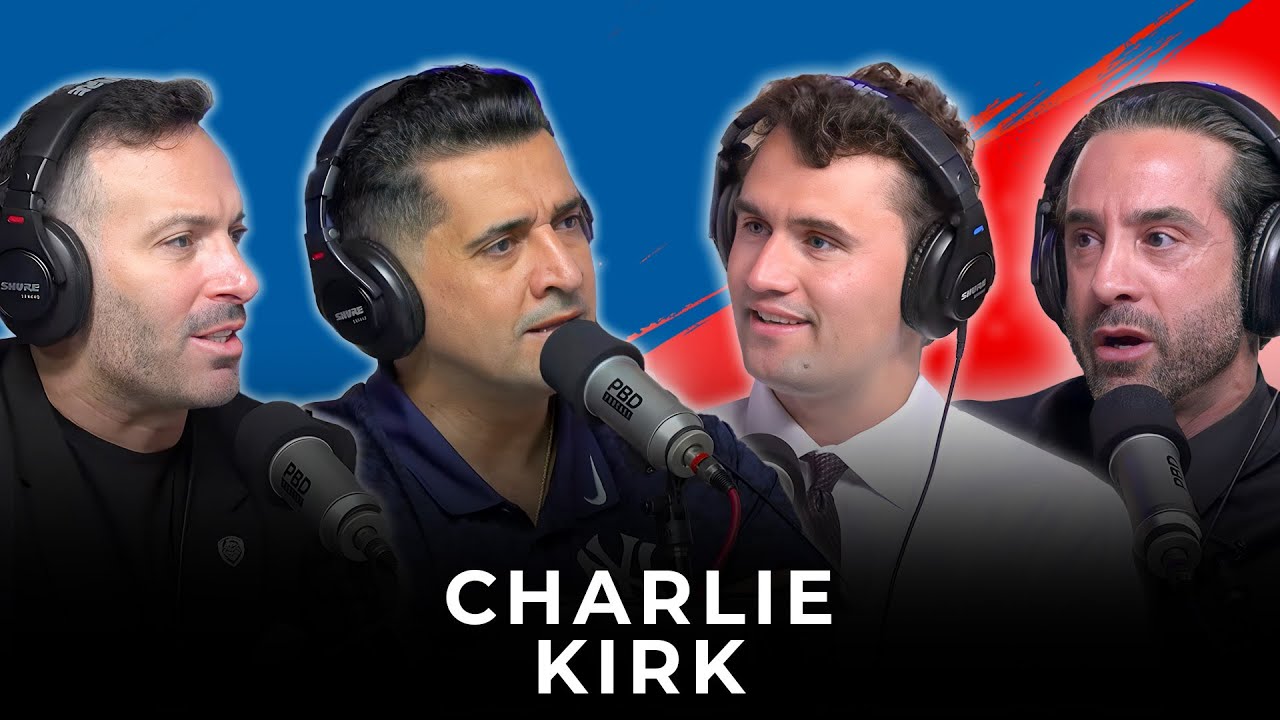
Following the tragic death of Charlie Kirk, a memorial service fills a stadium in Arizona as thousands gather to honor his legacy. But rather than relying on secondhand accounts, this reflection lets Charlie speak for himself. In a 2019 video from his tour of Israel with the organization Im Tirtzu, Charlie shares his firsthand observations about the realities on the ground, from discovering there were no refugee camps where he expected them, to witnessing the self-restraint of IDF soldiers, to recognizing the moral clarity of Israel's fight. His words reveal a man deeply committed to truth, historical justice, and biblical values. Charlie Kirk died speaking truth, and his own voice remains the most powerful testimony to his convictions.
A massive memorial service takes place in Arizona as thousands gather to honor Charlie Kirk, who was tragically murdered. While many voices have attempted to interpret what Charlie believed, there is no better source than Charlie himself. A 2019 video has surfaced showing Charlie speaking to a Jewish group after touring Israel with the organization Im Tirtzu. In his own words, unfiltered and authentic, Charlie shares what he truly thought about Israel, Jerusalem, and the moral clarity he found there.
Rather than rely on what others say about him—whether supporters or critics—this is an opportunity to hear directly from Charlie Kirk about his convictions, his observations, and his unwavering support for Israel.
Eye-Opening Realities on the Ground
Charlie begins by acknowledging that while he was always very pro-Israel—as an evangelical Christian, conservative, Trump supporter, and Republican—even he had been influenced by Western media narratives. He admits he was programmed with certain lies, despite his strong support for Israel.
One of the most striking moments came when he visited a location he had been told his entire life was a refugee city. He expected to see tents and refugee camps. Instead, he found malls, shopping centers, and a thriving area that was 97% Arab. He turned to his guide and asked, "Where are the tents? Where are all the refugee camps?" The response was laughter. There were no camps—just a functioning city.
Someone on the tour made a point that stuck with Charlie: How can you be refugees for 70 years? By definition, after two generations, you're not fleeing anything anymore. This realization was eye-opening for Charlie, who had always defended Israel but had never seen these realities firsthand.
The Self-Restraint of the IDF
Charlie was deeply struck by the conduct of the Israel Defense Forces. He describes witnessing members of Breaking the Silence—an organization he calls "horrible people"—getting right in the faces of young IDF soldiers with cameras, trying to provoke them. These soldiers, aged 18, 19, and 20, showed unbelievable self-restraint.
Charlie reflects on the moral superiority of the IDF compared to terrorist organizations like Hamas and Hezbollah. He rejects any moral equivalency between the two sides. The IDF, he insists, is righteously and correctly defending the nation state of Israel, God's chosen people in the Holy Land. The self-restraint these young soldiers demonstrate daily, in the face of harassment and provocation, is nothing short of extraordinary.
He compares these agitators to protesters he deals with on college campuses in the United States. These young IDF soldiers are patriots who love their country, believe in its value system, and serve through mandatory service. Yet their thanks is to have cameras shoved in their faces while they fight for what is correct and right.
The Golan Heights and Historical Jewish Presence
Charlie had the opportunity to fly by helicopter to the Golan Heights, an experience he describes as transformative. At the time of this 2019 speech, the international community had not yet recognized the Golan Heights as part of Israel, though America would later do so under the Trump administration.
During his visit, Charlie learned that 2,000-year-old synagogue remains were found in the Golan Heights region. This archaeological evidence became a key point in his advocacy: How could anyone be occupying their own land? The Jews have been living in this land for thousands of years. This was something Charlie always knew intellectually, but seeing it firsthand gave him powerful ammunition for his media advocacy work.
He notes the contrast in how the issue is discussed: Arabs say directly, "It's ours." Israelis, meanwhile, explain, "It's Israel, it's not Israel, it's very complicated." Charlie's response is clear: "No, it's yours 100%."
The Gaza Strip: A Prophetic Warning
Perhaps most striking in hindsight is Charlie's assessment of Gaza. After flying down to see the barrier to the Gaza Strip, Charlie declares that one of the biggest mistakes Israel has made was getting out of the Gaza Strip. Speaking in 2019, Charlie essentially predicted that leaving Gaza could lead to something like an October 7th attack.
He saw with remarkable clarity what Gaza had become: a "terrorist jacuzzi" where terrorists are now closer than ever to fire rockets into Tel Aviv. Instead of schools and hospitals, billions of dollars in aid have been used to build terror tunnels, missiles, and rockets. Charlie asked about the numbers—Gaza is a small place receiving billions of dollars a year. Where does that money go? Not to infrastructure or education, but to terrorism.
Charlie also learned something he had never heard before: that thousands of Jews—10,000 to be exact—were pushed out of their own homes in Gaza. He notes that the narrative war is being lost in the United States because this story of 10,000 Jewish refugees from Gaza is never told.
The Fundamental Question: When Will It Be Enough?
During his helicopter tour, Charlie posed a question to his pilot, a hero from the first Lebanon war: "When will it be enough for the Arabs?" The answer was simple and chilling: "When all the Jews are dead."
This led Charlie to propose a thought exercise: If the IDF took 10 days off, what would happen? Israel would be gone, and Jews would once again be persecuted. But if all the Arab nations took 10 days off, everything would remain the same. Which side is moral and which is immoral? If Israel laid down their arms, the country would be under an unbelievable barrage of missiles. If the Arabs did, Israel would simply say, "Let us keep our land. We want peace."
Only one side wants peace in this conflict. Charlie acknowledges he had heard this argument before, but seeing it firsthand made it undeniably clear. He believes some Arabs living in Gaza actually want peace and no longer want Hamas, and that support for Palestinian Authority leader Abbas is waning.
Pay-for-Slay and the Economics of Terror
Charlie discusses his friend Sander Gerber's advocacy for ending "pay-for-slay" legislation—money that the Palestinian Authority gives to families of terrorists who kill Jews. The economics are simple: when you pay for something, you get more of it. A poor family in the West Bank might see a member decide to kill Jews, knowing the family will receive a monetary reward that continues in perpetuity.
Charlie praises President Trump for finally putting this funding in jeopardy and for other pro-Israel actions: moving the embassy to Jerusalem, cancelling the Iran deal, and standing strong against international pressure. The cancellation of the Iran deal was particularly important because it prevented sanction relief that would have given Iran cash to flood terrorist organizations with money and armaments.
Rising Anti-Semitism in the West
Charlie expresses deep concern about institutional anti-semitism rising within the Democrat Party. He mentions Congresswoman Ilhan Omar as a serious problem who has made questionable statements and goes unchecked. He also criticizes Alexandria Ocasio-Cortez for claiming that "Palestine is occupying Israel," a statement he calls historically and geographically confused.
He notes troubling signs in Europe: increasing anti-semitism, an anti-semitic parade in Brussels, and UK Labor Party leader Jeremy Corbyn laying a wreath on Holocaust Remembrance Day at the memorial for the terrorist who killed the Israeli wrestling team at Munich. This is the man leading the Labor Party in the United Kingdom.
Yet Charlie finds hope in Israel's willingness to fight for what it holds dear. As an evangelical Christian, he has deep respect for Jewish tradition, culture, family values, and reverence. Jews simply want a place to worship, access to holy sites, and the ability to live their lives. The international community seems determined to put that in jeopardy.
A Righteous Fight
Charlie concludes that Israel's fight is moral and righteous. To fight for your history, to fight for your land—this is being on the right side of history. He recognizes what jihadism is, what "Palestinianism" is, and the dangers they pose on campuses and on the left. He recognizes Jerusalem and wants to be part of its light. He recognizes Jewish rights, historical rights in Judea and Samaria, and the importance of the Bible.
Honoring His Memory
Today, as thousands gather in a massive stadium in Arizona to memorialize Charlie Kirk, those who knew him share personal stories. His involvement in parent chat groups about raising children. His concern for everyday matters despite his public profile. But most importantly, his own words stand as testimony to his convictions.
Charlie Kirk had his own words, and they speak for themselves. His stand with Israel was moral, just, historical, and biblical. He was a warrior for truth in a very tough war who died for that truth. He died for speaking truth.
His death, while tragic, was also in some sense merciful—he left this world immediately, seemingly taken without pain, unblemished. Today we honor Charlie Kirk and pray that his memory continues to inspire and that his soul has a share in the world to come. Rest in peace, Charlie. Your fight goes on.















Comments
Be the first to comment on this video.