Congress Honors Charlie Kirk with Prayer Vigil in Statuary Hall Following His Tragic Death
Enjoying this? Share it with someone who needs to see it.
Up Next
Megyn Kelly Reports on Charlie Kirk Assassination: Donald Trump Jr. First Interview After Friend's Murder
1:44:37
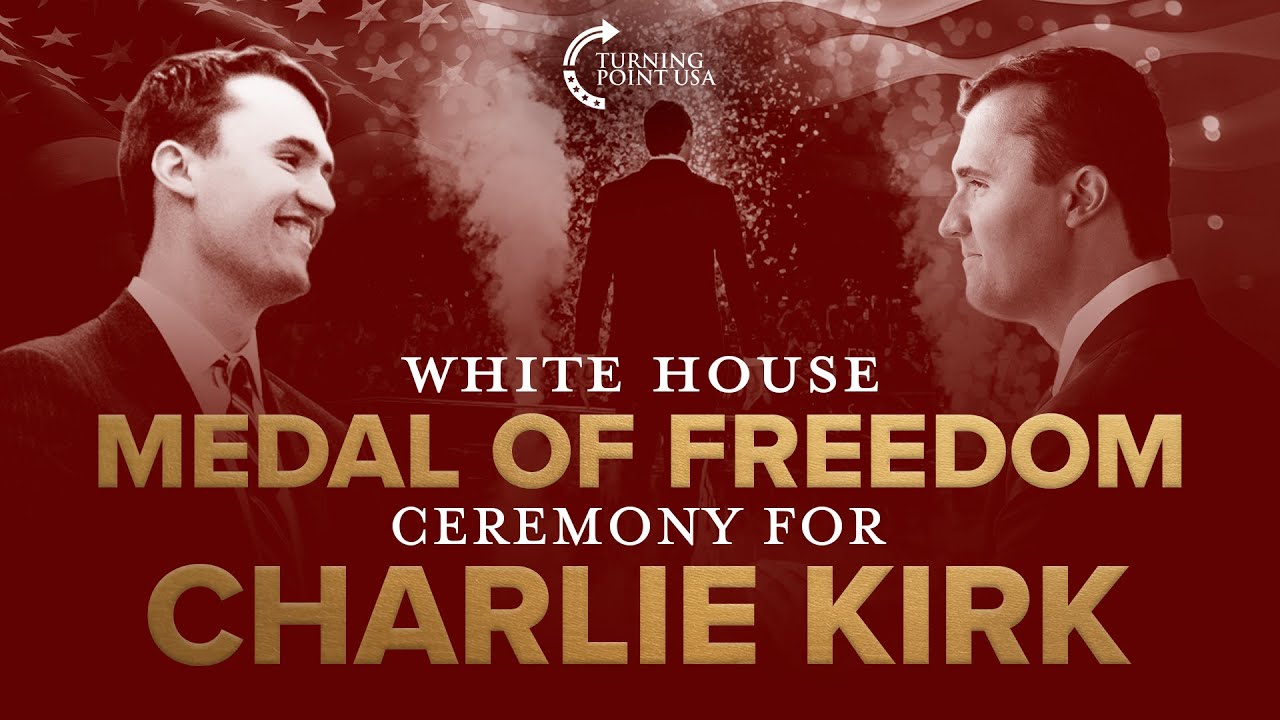
President Trump Awards Presidential Medal of Freedom to the Late Charlie Kirk on His Birthday
1:11:28
Illinois Representative Mary Miller Delivers Heartbreaking Congressional Tribute to Charlie Kirk Following Tragic Loss
1:26
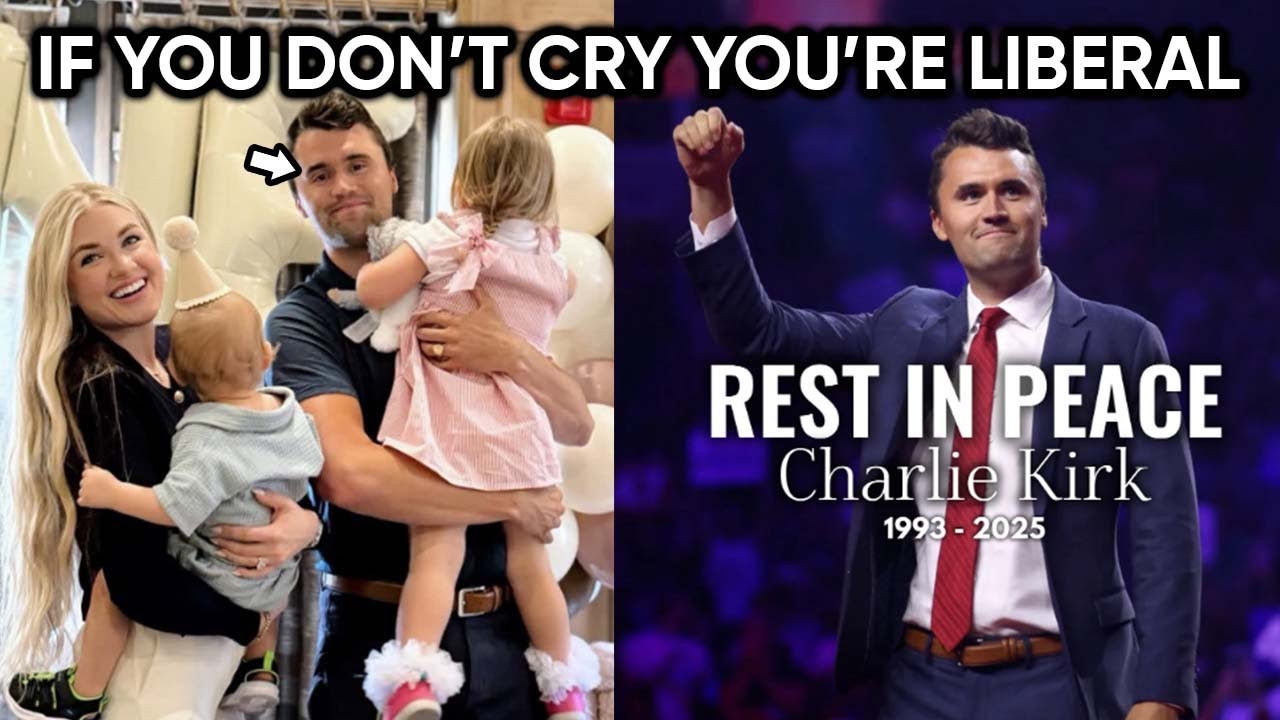
Congress Honors Charlie Kirk with Prayer Vigil in Statuary Hall Following His Tragic Death
House Speaker Mike Johnson, Majority Leader Steve Scalise, and congressional leaders gathered in Statuary Hall for a solemn prayer vigil honoring Charlie Kirk, the Turning Point USA founder whose life was cut short by political violence. The ceremony reflected on Kirk's unwavering commitment to free speech, faith, and civil discourse on college campuses across America. As vigils simultaneously took place at Arizona State University and campuses nationwide, legislators emphasized that Kirk's legacy, advancing principles of faith, freedom, and courage while maintaining love for those who disagreed, would endure through the movement he created. With over 37,000 new chapter applications filed in the days following his death, Kirk's impact on American youth and the future of civil debate continues to grow.
The 119th Congress gathered in Statuary Hall for a congressional prayer vigil honoring Charlie Kirk, the Turning Point USA founder whose life was taken by an act of political violence. House Speaker Mike Johnson led the ceremony, joined by Majority Leader Steve Scalise, Rep. Brad Finstad, and Rep. Lisa McClain, as they reflected on Kirk's profound impact on American youth and civil discourse.
Simultaneous vigils took place across the nation, including at Arizona State University where Kirk's closest advisors and friends held a candlelit ceremony. Auburn University had hosted a similar event on Friday evening, demonstrating the nationwide outpouring of grief for a man who touched millions of lives through his commitment to constitutional principles and free speech on college campuses.
The Happy Warrior Who Never Backed Down
Speaker Johnson characterized Kirk's approach to advocacy, stating that the best way to honor his memory is to "live as he lived." He encouraged young people to "advance his principles and adopt his approach," highlighting that Kirk stood for "faith and freedom and family and virtue and patriotism and America which he believed and we all believe is the greatest nation in the history of the world."
What distinguished Kirk from other political activists was his demeanor. "Charlie was a happy warrior and he was not angry at anybody," Johnson explained. "He never hated anyone. In fact, in Charlie's own words, he was motivated by love." Despite his ability to win any debate, Kirk never held victories against his opponents. Instead, he was "the very first person to reach out a hand of friendship or to put his arm around the shoulder of someone who was on the complete opposite side of the political spectrum."
Johnson reminded those gathered of scripture's instruction that "we should not be overcome by evil but we should overcome evil with good," declaring this to be Kirk's enduring legacy.
From Wheeling High School to the White House
The Right Side Broadcasting Network coverage included personal reflections on Kirk's journey from captain of the basketball team at Wheeling High School in the Chicago suburbs to becoming a nationally recognized voice for constitutional principles. Standing at 6'5", Kirk was an accomplished athlete who maintained a light-hearted nature throughout his career, even when South Park parodied him with Cartman teasing his hairdo and water-drinking habits.
Kirk's path was unconventional. He chose not to attend college, instead following the vision of the late Bill Montgomery, who encouraged him to take his message on the road. This decision proved transformative, leading to the creation of Turning Point USA with support from Bruce Rauner, the last Republican governor of Illinois, and other early believers in the mission.
The Chicago Tribune captured Kirk's remarkable trajectory with a front-page headline: "From Wheeling to the White House," documenting how a young man from the Chicago suburbs became a significant force in American political discourse.
A Movement That Transcended Politics
Majority Leader Steve Scalise, himself a survivor of politically motivated violence when he was shot at a congressional baseball practice eight years prior, emphasized that Kirk "didn't just start an organization called Turning Point USA. Charlie Kirk started a movement, a movement that's going to grow and thrive and represent those ideals that Charlie hopefully instilled in people that didn't even agree with him."
When asked what he wanted to be remembered for, Kirk answered: "I want to be remembered for courage for my faith. That would be the most important thing. The most important thing is my faith in my life." This authenticity drew millions to his message, from college students to seasoned political veterans.
Scalise stressed that Kirk's mission centered on preserving the ability "to go to college just to learn and to express your own ideas, maybe even ideas of disagreement with somebody else, with a professor." He recognized that "those powerful ideas were being threatened on our campuses, that that was eroding, that free speech, that ability to debate in a civil way was being taken away."
The Socratic Method and Campus Engagement
Kirk's campus appearances became legendary not for their confrontational nature, but for his skillful use of the Socratic method. Rather than embarrassing students who approached with opposing views, he engaged them in genuine dialogue, often helping them work through their own arguments. Former colleagues recalled how Kirk would never belittle students but instead walk them through logical reasoning, sometimes turning their arguments around to illuminate inconsistencies in their thinking.
This approach stood in stark contrast to many academic environments where students feel pressured to choose between their authentic beliefs and good grades. Kirk demonstrated that passion, interest, and preparation—traits requiring no innate talent—could achieve remarkable results. His work at Turning Point USA, which he described as "not a think tank" but "a battle tank," emphasized fundamentals like being on time, showing up prepared, and maintaining strong character.
The philosophy came from studying principles that "take zero talent"—basic commitments to excellence that anyone could adopt regardless of background or natural ability.
A Message to the Next Generation
In one of his final public appearances, Kirk offered advice to a 13-year-old asking how to become a more informed and involved citizen. His response encapsulated his life's philosophy: "Learn something new every single day. And focus on what it means to be a good person and a person of strong character."
He emphasized courage as the foundation of all virtue, citing Aristotle: "Courage is the ultimate virtue. But without it, there are no other virtues. If people aren't courageous, you don't have honesty. You don't have justice. You don't have beauty. You don't have wonder."
Kirk challenged the young person to "commit yourself to a life of courage. Courage is doing the right thing when you don't know how it's going to work out. Courage is committing yourself to the correct course of action regardless of the cost associated to it."
He grounded this philosophy in his belief that "every human being, I believe, is made in the image of the divine, is sacred, is unique." This conviction drove his opposition to abortion and his broader advocacy for human dignity.
A Pattern of Political Violence
Rep. Brad Finstad placed Kirk's assassination within a disturbing pattern of political violence. He recounted the murder of Minnesota State Representative Melissa Hortman and her husband Mark in their home three months prior, along with the wounding of Senator John Hoffman and his wife. He reminded attendees of the two assassination attempts against President Trump—one where Trump was shot on the campaign trail, and another thwarted by Secret Service agents.
"Let us all be clear. There is no place in our country for politically motivated violence. None," Finstad declared. "The assassination of Charlie Kirk wasn't just an attack on one individual. It was an attack on the traditional values that make our country, this great country, great. Values of free speech, civil discourse, public debate, the ability to think independently and voice your opinions, exchange ideas, and even disagree with one another."
Finstad posed challenging questions to those gathered: "The fact that he got killed for it and many Americans consequently celebrated his murder begs the question, how do we get so far away from the values our nation was built upon? More importantly, how do we get back?"
He attributed part of the problem to living "so chronically online these days that we forget that behind every idea there's a person and behind every person there's a family who loves them and a creator who instills into them intrinsic value."
Finstad expressed gratitude to Utah law enforcement and FBI Director Kash Patel for their work in bringing justice and closure to the Kirk family.
A Daughter's Inspiration
Rep. Lisa McClain shared how Kirk's influence touched her own family. Her daughter, a college student around 21 or 22 years old, was visibly shaken by Kirk's death. In their conversation afterward, McClain tried to console her daughter, saying "I know, honey, it'll be okay. It'll be okay."
Her daughter's response revealed Kirk's profound impact: "Mom, it will be okay. Not only did Charlie Kirk inspire me, but he inspired me to not let my conservative voice be silenced."
McClain reflected that Kirk "showed a lot of young Americans that love of country and faith and in freedom, those are all values that are worth fighting for. His example calls us to stand tall for the values that has built this republic. The freedom of thought, of speech, and of religion."
A Profound Reflection on Grief
Catholic priest Monsignor Eric Bar delivered a Sunday homily on the Feast of the Exaltation of the Holy Cross, sharing a reflection by Chad Prather that captured why Kirk's death resonated so deeply across the nation. Prather's words, shared widely on social media, explained the unique nature of the grief many felt:
"The reason you feel Charlie's death is so deeply is because grief doesn't measure by its proximity. It measures itself by meaning. You do not have to know him personally to feel the sting of his absence. Because when a voice like this goes silent, something in the atmosphere shifts."
Prather continued: "The reason it feels heavier than so many other tragedies is simply because your spirit recognizes that this is not just about a man. It's about a battle. Scripture says eternity is written within our hearts. And when someone who carried out the truth with boldness is suddenly gone, eternity aches within us."
He explained the psychological dimension: "We don't only attach ourselves to people as we attach ourselves to symbols. But Charlie became a symbol of conviction in a time of compromise, courage in a time of fear. And when a symbol is struck down, it rattles something primal and eternal inside of us. That's why even those who never met him feel like they did."
Prather concluded: "This loss pulled at that very fabric of society. And every one of us felt the tug. So if you wondered why this hurt hits so hard and hurts so much, it's because your soul knows it. This is bigger than any news, bigger than politics, it's about eternity. It's about truth and it's about the weight of a man whose life carried both."
The Legacy Continues
In the days following Kirk's death, over 37,000 applications for new Turning Point USA chapters were filed—a testament to the movement's enduring power and Kirk's lasting influence. Speaker Johnson's closing prayer captured the dual emotions present at the vigil: deep sadness mixed with encouragement that "Charlie's voice cannot be silenced, that his message will go forward, that his legacy will grow even wider than it might have otherwise as he was martyred for the principles that he believed in."
Johnson prayed for Kirk's wife Erica and their two young children, for the Kirk family, and for "everyone associated with Turning Point, all the employees and the volunteers, and all of these students, Father, around the country who are united in this cause."
He invoked Lincoln's phrase about appealing to "our better angels," asking that Americans remember "we can disagree in an agreeable manner" and "end this cycle of political violence."
The prayer concluded with confidence rooted in scripture and in Kirk's own faith: "We trust and pray and believe that you can do all these things and you will guide us through the darkness and that we know at the end of the day the light shines and the darkness cannot overcome it. I pray and believe all these things as Charlie did in Jesus name."
As vigils continued across college campuses nationwide, Kirk's challenge to a generation remained clear: commit to courage, pursue truth, honor the sacred dignity of every human being, and engage in civil discourse even with those who vehemently disagree. His life demonstrated that these principles, combined with genuine love for others, could inspire millions and transform American culture.