Danielle D'Souza Gill, Candace Owens and Dr. Luke Wood Clash Over Race-Based Admissions and Reverse Discrimination
Enjoying this? Share it with someone who needs to see it.
Up Next
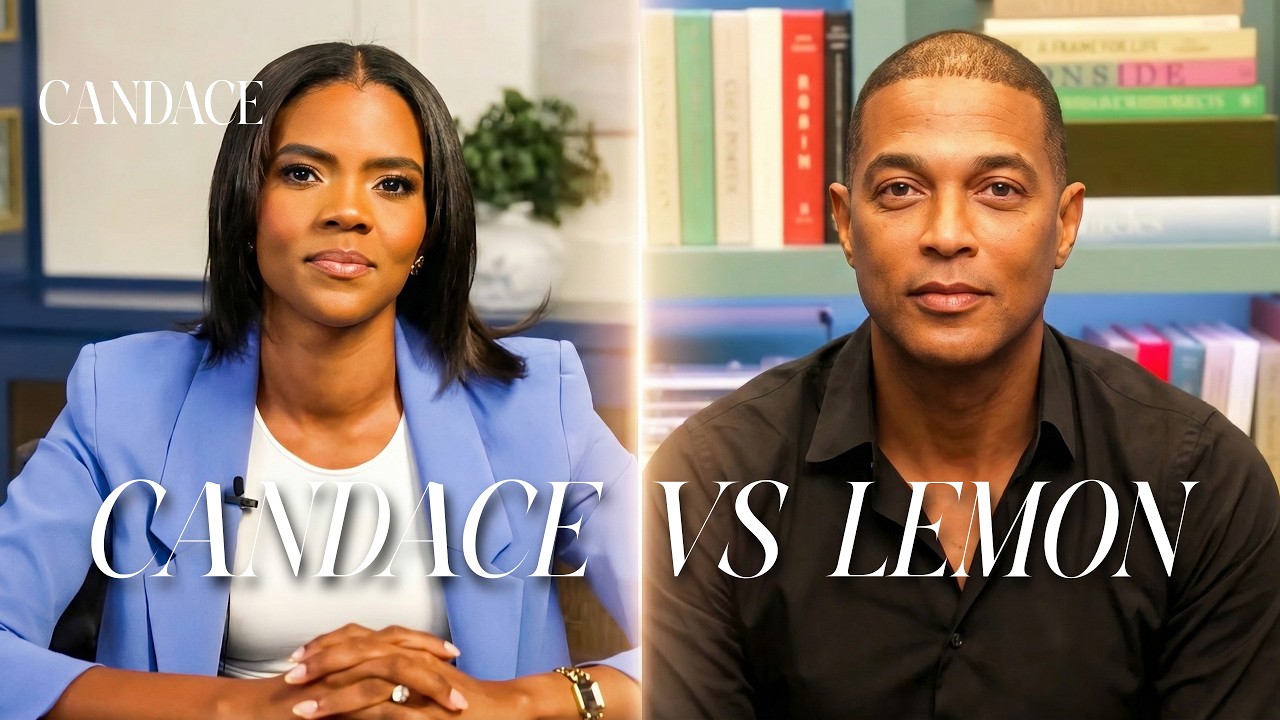
Candace Owens Addresses Anti-Semitism Accusations, Free Speech, and Biblical Views on Don Lemon Interview
16:35
Xaviaer DuRousseau Reveals How Affirmative Action Undermined His College Confidence at University of Illinois
5:07
Charlie Kirk Confronts Student Over American Lives Matter Shirt and False Victimhood Claims
14:06
Danielle D'Souza Gill, Candace Owens and Dr. Luke Wood Clash Over Race-Based Admissions and Reverse Discrimination
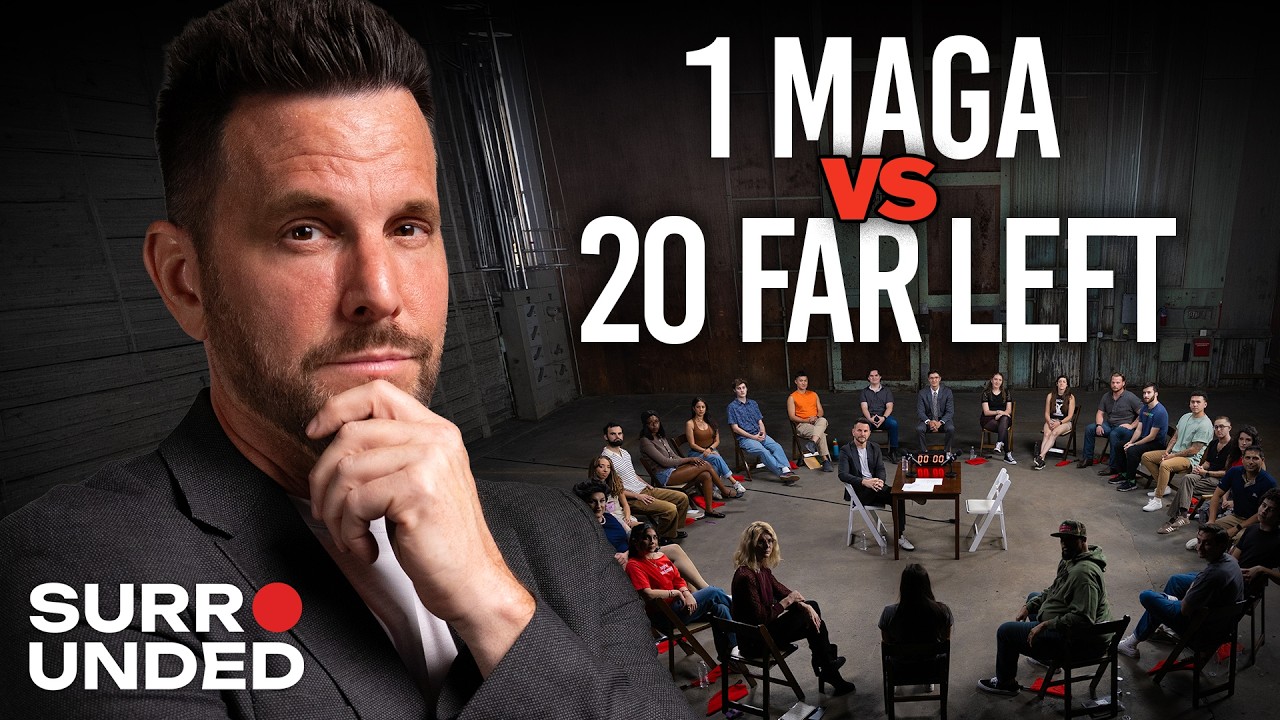
Danielle D'Souza Gill, Candace Owens and Dr. Luke Wood engage in a heated debate on Dr. Phil's show about affirmative action, race-based college admissions, and whether white people can experience discrimination. The discussion exposes the stark divide between those who believe merit should be the sole criterion for university acceptance and those who argue historical inequities justify race-conscious policies. Through tense exchanges about interracial students, the SAT's validity, and whether preferential treatment harms its intended beneficiaries, the conversation reveals the deeply polarized perspectives shaping American education today.
The discussion begins with a pointed question about how universities handle applications from students of mixed racial backgrounds. The questioner, in an interracial relationship with children who are half white and half black, challenges the notion that these students should mark only one race on applications. The argument centers on whether admissions officers would view these students differently based on their racial identification, and whether checking "black" would provide an admissions advantage.
The response invokes the concept of evaluating applicants "holistically across a number of different factors," a phrase that draws immediate criticism as corporate jargon masking the reality of race-conscious admissions. The exchange highlights the complexity and confusion surrounding how racial identity factors into university admissions decisions, particularly for students who don't fit neatly into single-race categories.
Defining Discrimination and Power
The debate shifts to a fundamental question: Can white people experience discrimination? Danielle D'Souza Gill argues unequivocally that they can and do, pointing to what she describes as systemic discrimination on elite college campuses and in workplaces. She contends that current policies have worsened race relations by pitting people against each other based on skin color.
Dr. Luke Wood disagrees, arguing that white people are not disadvantaged in college admissions. He employs a Monopoly analogy, suggesting that historical advantages mean some players have been going around the board multiple times while others are just entering the game. This framework positions affirmative action not as discrimination against white applicants but as correction of longstanding inequities.
The conversation reveals two fundamentally incompatible worldviews: one that sees any race-based decision-making as discrimination regardless of intent, and another that views race-conscious policies as necessary remedies for historical injustice.
Race Lighting and Gaslighting
Dr. Wood introduces the concept of "race lighting," which he defines as gaslighting that occurs in racial contexts. He argues that accusations of reverse racism constitute race lighting because they deny the historical reality that colleges and universities have prioritized white students. His argument centers on the claim that standardized tests like the SAT and ACT measure access to resources rather than student ability, drive, or motivation.
This perspective frames test scores and grades as proxies for privilege rather than merit, suggesting they inherently favor white students who have greater access to resources. Critics counter that this argument assumes black students are academically inferior and need special accommodation, when in fact many are brilliant students who should be evaluated on the same standards as everyone else.
The disagreement exposes the tension between viewing academic metrics as neutral measures of achievement versus seeing them as tools that perpetuate systemic inequality.
The Thomas Sowell Example
D'Souza Gill references Dr. Thomas Sowell's experience as an adjunct professor at Cornell University, where he observed that the majority of black students were on academic probation. These students, she notes, were among the smartest in the nation but were struggling because they had been artificially placed among peers at a more competitive institution than their academic preparation warranted.
This argument suggests that affirmative action policies harm their intended beneficiaries by placing students in environments where they are set up to fail. Rather than helping black students, these policies create situations where talented individuals underperform relative to their capabilities because they're competing against students with stronger academic backgrounds.
Dr. Wood counters that poor academic performance by black students at elite institutions isn't necessarily about ability or preparation. Instead, he argues it reflects the hostile environment these students encounter, including professors who view them as less intelligent, criminal, or undeserving of their place at the university.
The Merit Versus Experience Debate
The discussion turns to whether struggling black students at elite universities are failing because they lack preparation or because they face discrimination and hostile attitudes. D'Souza Gill argues that her own experience demonstrates the issue isn't feelings or environment but preparation and focus. She didn't perform well initially in university because of cultural and home circumstances, not because of institutional racism.
Dr. Wood maintains that the assumption black students are academically inferior drives the belief they don't belong at elite institutions. He argues that brilliant black students underperform because they face professors and peers who doubt their capabilities and make them feel unwelcome.
This exchange reveals the challenge of distinguishing between academic mismatch and environmental hostility as explanations for performance gaps. Both factors could be at play, but the policy implications differ dramatically depending on which is seen as primary.
The Hidden Costs of Affirmative Action
D'Souza Gill articulates how affirmative action harms everyone involved. For black students who receive preferential treatment, it robs them of knowing they earned their position based on merit, creating self-doubt about whether they truly belong. For non-black students and colleagues, it creates suspicion that any person of color may have been admitted or hired based on race rather than qualifications.
As a biracial woman, D'Souza Gill shares that she now questions whether opportunities came to her because of her abilities or because of diversity preferences. This psychological burden represents an unintended consequence of race-conscious policies that their advocates rarely acknowledge.
The argument suggests that truly helping black Americans requires abandoning policies that create ambiguity about whether success was earned or granted, and instead addressing root causes of academic preparation gaps.
The Entertainment Industry Experience
Comedian Tyler Fisher shares that three agencies have turned him down explicitly because they aren't looking for white men at this time. When asked directly whether this was justified, Dr. Wood struggles to give a clear answer, saying it "doesn't sound right" but refusing to state definitively whether it was wrong.
This exchange demonstrates the intellectual gymnastics required to defend identity-based discrimination while maintaining it isn't actually discrimination. The refusal to answer a simple yes-or-no question about whether racial discrimination against a white person is wrong reveals the contradictions inherent in the position.
Fisher notes that children growing up in this environment will be discouraged from pursuing their talents because they're told their race makes them unwelcome in certain fields. This represents a reversal of the original civil rights goal of ensuring race doesn't determine opportunity.
The Talent Versus Diversity Tradeoff
The conversation touches on how race-conscious hiring affects quality in various industries. When entertainment, medicine, aviation, and other fields prioritize demographic representation over talent and qualification, everyone suffers. The question of whether someone wants the best heart surgeon or someone whose ancestors may have faced hardship exposes the stakes of abandoning merit-based selection.
The point isn't that people from underrepresented groups lack talent, but that selecting for demographic characteristics rather than ability inevitably means sometimes choosing less qualified candidates. This trades excellence for representation in fields where excellence can be a matter of life and death.
Biblical Perspective on Judgment
The analysis concludes with John 7:24, which instructs believers to "judge not by mere appearances but judge with right judgment." This biblical principle is presented as the antidote to judging people based on immutable characteristics like race rather than character, ability, and achievement.
The Christian worldview offered emphasizes that moral standards come from God, not from evolving social constructs. True justice requires evaluating people based on truth and reality, not on superficial characteristics or attempts to engineer equal outcomes across demographic groups.
This perspective frames the entire debate as fundamentally about whether society will anchor itself in transcendent truth or in shifting ideological fashions that change with political winds.









Comments
Be the first to comment on this video.