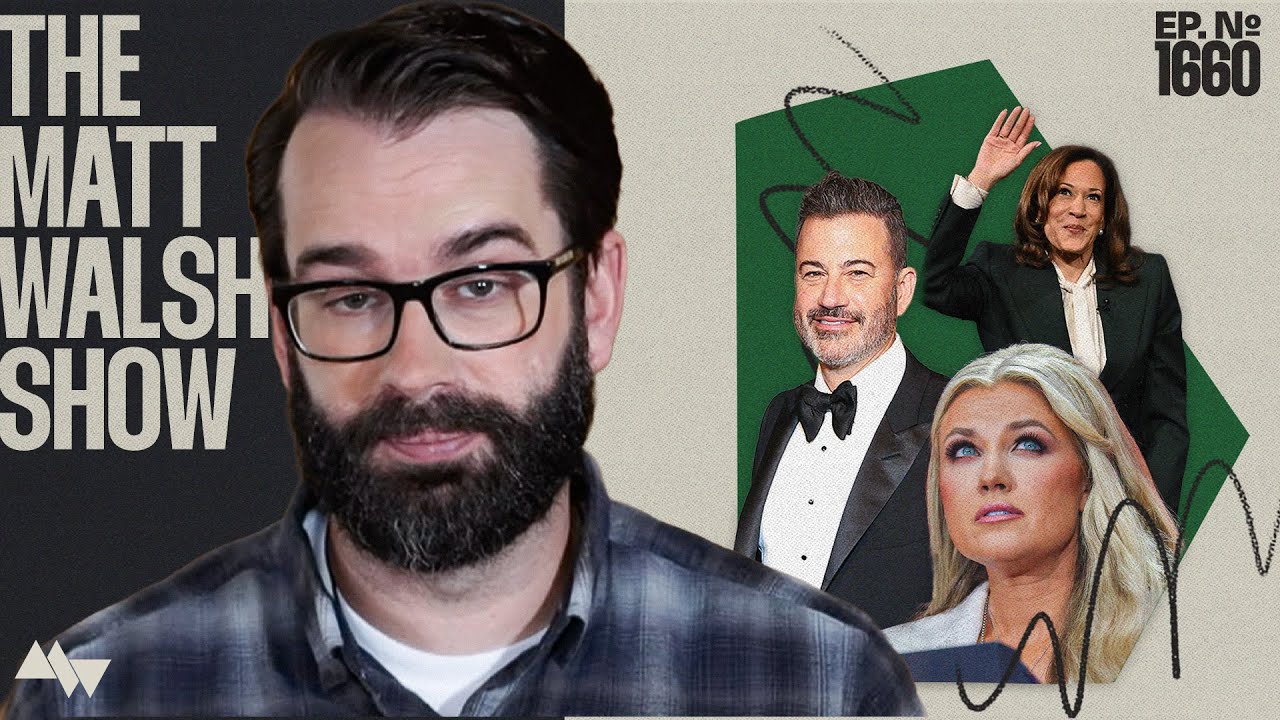
[Music] What's up? What's up everybody? Welcome to a brand new episode of Part of the Problem. I am Dave Smith. I am rolling solo uh for this episode. Uh thank you guys so much for for joining. I really appreciate it. Uh I've got uh some stuff that's on my mind that I thought I would uh I would rant about today. And it's something that um I've been, you know, I I talked a bit about this over the last week. And you know, we talked a bit on the membersonly stream about it uh yesterday. By the way, for those of you guys who don't know, we do a fourth episode every week that's just for subscribers over at partofpro.com. If you'd like to get that, go sign up over there. We would very much appreciate that. Helps the show out. Um, but so we we were talking a bit yesterday about the uh the firing of of Jimmy Kimmel and a little bit of a a larger conversation about free speech and you know there's been over the last week there's been all types of these topics have been coming up with uh you know first of all the fact that Charlie Kirk you know stood for free speech so much and that he was executed for that and um in many ways for that and then the there's been conversations about people getting fired for the Tik Tok videos that they make celebrating it. And now this uh Jimmy Kimmel one has really been kind of the the the biggest example in all of this. And then there's another interesting angle because of course the the chairman of the FCC really blatantly threatened uh ABC before they fired Jimmy Kimmel. Um and so it's a little it just adds in you know other elements and now there's a big conversation raging about um you know right-wing cancel culture, free speech, government intervention, hypocrisy of the people who have been opposed to cancel culture now celebrating it. And there's a lot a lot of different people are giving their takes on this. And I just want to say I think I I think I have a little bit of a different take the more I've been thinking about this than than anyone else I've seen so far. Perhaps I'm wrong. Um but I think than anyone I've seen so far. In other words, this this rant is is guaranteed to satisfy no one. But I still think it's important. So let me go in saying that. And I would uh I would preface the entire thing by saying I'm not like on this on this episode, I'm not trying to convince you of anything. I'm not trying to, as I often am, but on this one, I'm not I'm not trying to convince you that I'm right and you're wrong or this is the correct way to think about it and this is the incorrect way to think about it. I'm not trying to sell you on anything today. I'm trying to give you something to play with and give you something to grapple with and kind of maybe, you know, perhaps think about these things in a in a different way. You know, it's um it's kind of interesting, I guess, for for libertarians like myself when there are these moments when all of all of a sudden out of nowhere it seems like normies care about talking about our values. This almost always only happens when liberals are attempting to use your own values against you. So, you know, um when you know this happens a lot, like when whenever there's like a liberal who's threatened by cancel culture, they immediately go, "Oh, free speech. You you know, you don't believe in government intervention or something like that." Um, it's in the same sense like when they're when they're standing up for, you know, abortion, they say my body, my choice. They make like a libertarian appeal, but they only care about it as far as it serves their interests. And then obviously they will abandon that. But, you know, it's you literally I remember hearing pro-choice activists say my body, my choice, as they supported vax mandates in the middle of the pandemic. It doesn't it doesn't bother them that they're being hypocritical because they're just attempting to manipulate you. And I guess I I I would start by saying this kind of like to zoom out about the moment that we're in right now, which is particularly what's uh what's kind of appalling to me about the liberals who are like trying to needle right-wingers for celebrating Jimmy Kimmel being fired or for celebrating, you know, even just people who got like lost their job for making TikTok videos and stuff like that. And I don't know, I think it's it's worth saying at the beginning of this that like the way I see things in the big picture here is that the most remarkable part of say the last week, let's say since Charlie Kirk's uh, you know, assassination, the most amazing part of all of this is that there's been no violent retaliation. And that's really great. Like it's really, really good. that was like the most important it it was the most um dangerous part of this moment and the the biggest potential for disaster and escalation and there's been no retaliation and right-wing America broadly speaking deserves a lot of credit for that a lot of credit for that you know there's been a lot of uh you know influential right-wing people who have encouraged calm and and um discouraged any type of retaliation. And there's also just you know there's a obviously like Christianity is a major force in the right wing in the United States of America and whatever else you know is everybody involved in not having a violent response to this deserves a lot of credit. And so like in this moment when there's like tremendous anger, tremendous frustration, tremendous pain on the right wing in America, the fact that there hasn't been any type of violent response, it should be, I think, applauded and instead the reaction is like to be mad at them for for celebrating the fact that this disgusting Jimmy Kimmel got kicked off of the air. And I just think that's an unre uh unreasonable like standard to place on right-wing America. I mean, look, dude, when when George Floyd got killed, there there were billions of dollars in property damage done as a response and dozens of people were killed and hundreds at least were assaulted and, you know, injured and things like that. There's a lot of violence in response to that. There's been none in response to Charlie Kirk and Charlie Kirk was not like a career criminal who died by some freak thing where like like I mean however you feel I know there's we're not even going to get into that. I know there's the competing autopsy reports and there's all these other things and you could feel however you feel about a cop putting his knee on a guy's neck and all of that but like if a cop did that to a hundred people in a row it is unlikely that anyone would die from it. Like it's it's a little bit of a freak thing that like that would end up killing you. Again, not saying you shouldn't do that or nothing like that. Not saying I want anyone to do that to me or I want to do that to anyone else, but like what you had was like a career criminal, a man who had like what was it? He had like robbed a pregnant woman or something like that and you know like no. Okay, by the way, none of that means you should be mistreated by a cop or anything. But like the point is that Charlie Kirk never did nothing like that. Kirk was just a Christian who liked to go to college campuses and talk and he didn't like happen to die by something that normally won't kill you. He was executed by something that will kill you 100% of the time. And so like just saying the fact that there's been no violence in response, you'd think that ought to be something that would, you know, like be at the top of everyone's list. Like okay, that's the most important thing. Kudos for that. Um but that's not what's going on here. And instead, this seems to be an attempt at a rallying cry of like, oh, Jimmy Kimmel was a victim, you know, he's a free speech warrior who was like persecuted for, you know, standing up to the regime or something like that. And you know like uh Steven Colbear they said he said the other day uh we are all Jimmy Kimmel now which is really I mean there is something to that like I was making this point on the members only stream uh the yesterday. But like that's your comment. We're all Jimmy Kimmel now. Not we're all Charlie Kirk. We're all Jimmy Kimmel. Like you see that as the most egregious violation of free speech in the last week cuz I thought it was the guy who went to college campuses to talk about ideas and got executed. Hey guys, this episode is brought to you by Prize Picks. You and I make decisions every day, but on Prize Pick, being right can get you paid. Don't miss any of the excitement this season on Prize Picks, where it's good to be right. It's very easy to play. You pick more or less on two to six player stat projections. If you're correct, you could win some serious cash. So, this is like you don't even really need to understand sports that well to understand you're going to pick whether LeBron James scores more or less than this many points. And I will tell you, I really enjoy this stuff. Always been a fan of laying a few bucks down on a game. It makes the game a million times more enjoyable. Even you just put a few bucks down, you bet your buddy 10 bucks who's gonna win. All of a sudden, you got something to really root for. Download the app today and use promo code POTP to get $50 in lineups after you play your first $ five lineup. That's promo code POTP to get $50 in lineups after you play your first $ five lineup. Prize picks. It's good to be right. Check them out. Check them out. Prize pick. promo code POTP to get that $50 in lineups when you play your first $5. All right, let's get back into the show. Anyway, um I want to talk a little bit about, you know, like how how I how I think about these things. And again, this is like when I was saying, I'm not like trying to sell you. I'm just trying to give you this to pick around and see what you think. Um because often I think for for people like in the uh the position I'm in whatever that is you know podcaster or pundant commentator oftent times we tend to think that where our views on policy are the most important thing whereas I think uh that typically for for podcasters or pundits or whatever actually just like the way you're thinking about things is the most important thing. The the kind of the way you're thinking about things, the way you you talk about things with other people, the way you get people thinking about things is actually much more important than even like what policy you stand for because like if we're being honest here, we're we're not in the business of making policy. That doesn't really matter, but we are in the business of getting people to think about things. And so like that's actually what you're doing here. So in some ways that's more important. Now, by the way, to protect my libertarian street cred here, and I don't, you know, I I mean this. I'm not saying it just to protect that, but just to be clear here, I'm against the FCC existing. I'm against the FCC uh threatening companies. I think it was um I I think it was counterproductive and just wrong and incredibly stupid for the FCC chair to start threatening ABC the way that he did there. And I think in some ways it takes away what otherwise would be a win for for the right-wingers. It's almost like it's almost like cheating at a game that you can win straight up. And so like you're in a sense you're like, "Oh, but if I cheat then I just I just took that away from myself from getting the clean win and now everyone can see that and point to the fact that you cheated and it almost doesn't count in the same way. You should have just let me get the win." That's kind of how I feel about this whole thing. Um, but I don't necessarily agree with some other libertarians who in a sense are arguing like that Jimmy Kimmel's free speech is being violated here. And this might this might upset some people when I say this, but I'll I'll kind of try to explain my thinking about this. Once again, I'm not exactly trying to convince you. I'm more just trying to, you know, let's think about things like this together. But I I would say that um that Jimmy Kimmel is in in effect in function. He's a part of the regime. Uh and he has been for a long time now. And I just view things differently. I don't view the regime as having rights the way all the rest of us do. I think that there's okay like almost if you could imagine if you if you kidnapped a child, right? And then someone stole that child from you, like have you been victimized? And like obviously the answer is no, right? Like even though like a child was taken from you, it wasn't your child to begin with. And so you're not the victim here. you joined the criminal kidnapper class and now someone else in the criminal kidnapper class outcriminal you don't care like you're not a victim anymore in this game because you already crossed that line and in the same sense where like if you were somebody who's say like against murder you know as as most of us should be but like it's like if the bloods and the crypts start killing each other it's not the same thing as if the bloods to start killing innocent people. Like that that's different. Two gangs fighting it out is a little bit different than gangs terrorizing innocent people. And I almost kind of view things like that. Like in a sense where this is uh two gangs who I don't like who are fighting it out. But in that case, you you want to think more about being strategic than any moral, you know, any moral consideration. If there's two groups of killers who are killing each other and like say one of the groups of killers has vowed that you know once they're done killing this gang they'll stop the killing and the other one says as soon as we're done killing this gang we're going to kill all the rest of you guys. So we might root for this one gang cuz like who there's no principle really involved anymore. It's all killers at this point. And I don't just like I I'm not just randomly assigning like regime to Jimmy Kimmel. think it's I think he joined the regime a long time ago. And in fact, I think that for anybody, not just libertarians, but for anybody who's like opposed to the current regime, it's important to think about things this way. You know, I remember um so this must uh um man, this must be back in like 2010 or something like that. It's like shortly after I got into all this political stuff and the Ron Paul revolution blew my mind and I started like going down the rabbit hole and reading all types of radical political books and stuff. So, it's like right in the first couple years while I was in that and there was like uh the it was the school sucks podcast. Uh Brett uh oh man, I apologize I because I really liked uh those guys. I think they started stopped doing the podcast but it was Brett Ver Verat Veratti or something. I'm blanking. I'm butchering your last name. I apologize, Brett, if you're listening. And I know Brett. Um, but so they had this there there was this show called The School Sucks Podcast. And this was early in the internet, you know, this is this is uh whatever 15 years ago or something. And maybe even a little more. I might be a little off in these dates, but it's around there, like somewhere around 2010. But they had like a viral video which uh you know I don't even know like if I don't even know what the numbers were back then but it might have been like you know the YouTube and all these things were just not as big. And so the video might have had a couple hundred thousand views on it but we were all like yeah oh my god this thing is taking off. So many people are are here. It's just like was a different it was a different world. But this video blew my mind and it did that it did this for a lot of people because it was like a little viral sensation. But I remember like being so interested in this and then it was one of those moments where where I was like wait that can't be true and then I was like I got to go read about this and then it turns out it's all true. But anyway, so the um I I've probably mentioned this over the years because I just I find this stuff so interesting. This was like a real like red pill moment for me when I didn't know anything about this. But basically what he was talking about was how um you know it it I think the subject of the video was like about his interest in the rise of the Nazis and he was like how the hell did this happen to Germany and like okay there's all these parts to the story but here's one part that rarely ever comes up and so about a hundred years before uh the rise of of the national socialists workers party they It was the Prussian uh empire. This is the geographic and and cultural precursor to Nazi Germany. You know, this was the uh the Prussian Empire was the the second Reich. So Adolf Hitler is trying to start the Third Reich. This is the second Reich that came immediately before the second great German Empire. And the Russians were having a big problem where their uh their soldiers, you know, their their king's army or conscripted, you know, soldiers, uh the um they would do these crazy things like uh run away or like piss themselves and then get killed on the battlefield or refuse to fight, like all these different things. And this was like a major problem for the Prussian elites. and they ultimately came up with uh a solution for the problem. And their solution was that they would start um uh what became known as school. And the idea was that they would get your kids at a really young age and school them to be loyal subjects of the king. And so by the time they were 17, 18 years old, they had been totally propagandized by the government and they would be loyal subjects to the king and go fight in his wars and not think about silly little things like themselves whether they wanted to do this. And it was by all accounts largely successful. So successful that it was exported to the United States of America. And this is why we still call it school. And you like I don't know if you've ever thought about that before, but you're like, "Why is it all these German sounded names? Why am I dropping my five-year-old off at kindergarten?" It's like, okay, because that's where it comes from. And Horus Man, who was the the godfather of American education. He even explicitly wrote about this that we are adopting the Prussian system because it's so effective for the Prussians. And like he had some line in there about um you know like well they use it for autocratic means but we will use it for good Republican me you know something like that. But I mean look if you just look at it for what it is and this is why it was like kind of a powerful red pill moment. I mean, at least especially in like 2010, to me, it sure was that you're like, "Oh my god, this whole thing is like a brainwashing, you know, mechanism." And if if libertarians are going to conceive of like the existence of the state, you can't not think about that, too. Like, oh my god, this is a whole huge other component of it. You know, Tom Woods had this um this great uh it was like a speech. It was right around that time too. It must have been around 2010. But it was the first time I ever heard him where he used this analogy where he was just talking about like government school. And like think about it. And by the way, they didn't call it, you know, education centers. They called it school, you know, like what they're doing there is not educating. They're schooling you. So Tom Woods uh um he said it like this. He goes uh this was his his thought experiment was he goes he goes just imagine that Walmart ran all the schools. Okay. And so like like the idea was just like imagine it's anyone except the government. Imagine a private company was running the schools. And uh and he goes, "Okay, so like Walmart is in charge of all the schools." And the first thing they have you do, they they take your kids from like age 5 to 18. And the first thing there they have to do every single morning is uh pledge allegiance to Walmart. And then in the classroom there would be pictures of all the Walmart CEOs all around the the classroom and they would kind of like make up all of these stories like you know the the first Walmart CEO was such a pure man that he never told a lie. One time he chopped down a cherry tree and he said, "Dad, I did it. I could not lie to you." You know, this is like obviously madeup [ __ ] about what heroes and wonderful people they were. Oh, this this, you know, Walmart CEO was the great emancipator and this Walmart CEO. Meanwhile, you know, if you look back at it, you find out like a lot of them killed a whole lot of people and did a lot of real messed up stuff. And in fact, they all told a lot of lies. But that but I'm just saying if you looked at this as it it was Walmart and Walmart was just praising Walmart and Walmart was making young children pledge allegiance to Walmart, we would all immediately look at it and be like, "This is sick. This is sick." cultlike behavior, okay? But that just is normal to all of us when it comes to the state because that's just the way it's supposed to be done. And you know, it's like over the last decade or so, you know, a lot of people would start coming to this conclusion that they're like, "Oh my god, public schools have been turned into indoctrination centers." And it's like, no, they have not been. They have not been turned into indoctrination centers. They have switched up the indoctrination curriculum to something that is more particularly egregious to you and understandably so. But nothing's changed. They're just indoctrinating them that like that's been the goal the whole time. And you know the fun so like this is something that has to be understood along with kind of the more fundamental 101 libertarian understanding of what the government is which you would think is like is like a pretty important thing to understand um that I think liberalism in many ways is like allergic to this understanding but it's a pretty basic it's it's like the foundational libertarian insight about politics. politics and it's not really particularly libertarian in nature. It's just objectively true, but and and this is why like when people are having these conversations and they're like, "Well, it's different if private people do it or the government is involved or blah, it violates the First Amendment if the government is involved, but it doesn't violate the First Amendment if the government's not involved or any of this." But it's like I think very few of the people who are in this broader conversation have really examined like the foundational building blocks of all of this. So like number one like what is the government? What is the state? And as libertarians know well right there there only is one coherent objective definition for government. And what government is is a group of people who hold a legal monopoly on the use of aggressive violence. That really is the only definition of a government that actually describes what it is. Um there are you can do pretty much anything a government can do except the aggressive violence. You can even in most parts of this country use violence to defend yourself. Um you just can't do it aggressively. You can't use aggression and they can. That's the difference. I mean you could write laws. You could even you know come up with a tax code. You just can't enforce it. they can enforce it. You know, if you were to do what the government does, it would be considered theft, murder, um, you know, uh, threats, imprisonment, kidnapping, torture. When they do it, it's called war, taxation, collateral damage, detainment, you know, official letters from a court. But if you did it, it was and and so okay, so this is essentially like just what the nature of government is. Now to be a libertarian is to reject that and to embrace that is to be something else. But to understand that is just to get things correct. That that just objectively is what the government does. And if any private uh um individual did what the government does, they would be arrested and spend a long long time in jail if not uh get the death penalty. And so when you're talking about the government, you're talking about, you know, an instrument of force. Now there is a a tremendous tendency particularly amongst liberals to pretend that government is something else that government is uh the referee in the game or that government is all of us collectively or that government is the nation or but none of that's true like that's all objectively not true. you could just disprove it by thinking it through. But then, you know, so so Murray Rothbard in his phenomenal work uh Anatomy of the State, which I highly recommend everyone read if you haven't already. It's like 60 pages long or something. You can read it in one sitting. Um it's great little pamphlet booklet essay type thing. And the point that he makes in in uh this this wonderful book is that essentially the government is a gang that took over and gained legitimacy in the popular imagination of its people. And that's essentially all the government is. But as he even gets into in that book, it's more than just the actual government. And he gets into like the marriage between the government and the intellectual class and how there's this like huge reinforcement mechanism between the two and like the intellectual class doesn't really um they let's just say they don't really command much value in a true marketplace. like in in a true marketplace, there's just not that much demand for people who are like, I go and read books or something like that or I I teach sociology or something like that. You probably only need that many and there's not that many people willing to pay that much for it. You're like, you're just not going to become a multi-millionaire off that. However, when the government decides that like, you know, they'll build public universities and libraries and back student loans and all this, they kind of make a market for these intellectuals that's much more lucrative than the market otherwise would be. And in return, the intellectuals find a way to justify the role of the state. Now much like school itself, the role that these intellectuals are playing is essentially brainwashing, propagandizing the country into accepting the the regime's policy. And in this sense, thinking of them as separate from the state is substantially less helpful and accurate than thinking of them as all part of one apparatus. This is what uh Curtis Yarvin, who I think it was probably around this time, too, probably around 2010. I didn't read him till much later, but around that time, I think is when he came up with uh his his term was the cathedral. and and the cathedral encompassed like the actual government, all the shadow parts of the government, but it also incorporated um corporate media, academia, Hollywood, things like this because they're all kind of used together. And so for for example like take academia for a second like academia is okay many of the people who work at say private universities are not government employees but the whole industry is a government program. The whole thing only exists because the government is backing the loans or nowadays just giving the loans to the kids and then giving the legal protection to the school and then give like it's all just this big government program that happens to end with everybody spouting approved government propaganda. If you think about it like this, right, there are maybe this is a um a good way to look at it. So you remember um when it came out that the NIH was funding uh uh gain of fun uh gain of function research in the Wuhan lab uh in China. Well, it wasn't them, right? If you remember, it was a subsidiary. So like they gave a grant to a company, that company gave the money to uh the Wuhan lab. But you understand I think all of us like in effect we should all feel comfortable in saying the NIH gave that money to the Wuhan lab because if you don't conceive of it that way then all you're acknowledging is that all the government has to do is say well we gave it to all they have to do is have a private company do it and then they get to say what that was done by a private company it wasn't done by us but we'd all kind of recognize that's pretty ridiculous right I I mean imagine let's say um think let let's say that there was a secret act passed by our government to create another government department but it was a secret government department and so they didn't tell the public that that was a government department. Would that make it any less of a government department? In other words, like does it matter what we call it or does it matter what the government calls it? Or does it matter like how they're acting? What function are they serving right now? And especially like something like the college campus stuff like I mean if you're if you're being funded by the government your whole industry is propped up by the government and you're regurgitating the propaganda of the government. Okay, in some technical sense you're a private person who isn't a government employee but in a much more real sense you are a part of the regime and you should be regarded as such. And so, you know, look, think I mean they because this is like how all types of things work. A a great book on this uh to read is um what's it called? Oh, damn it. Am I going to blank on this? Uh Confessions of an Economic Hitman. Great book. Um where they talk all about like the private companies that the CIA uses to do so much of their dirty work. And if we're going to say that's not the government, then I don't know. It's like you're just giving the government an obvious endound. So there's no restrictions on government at all because like this thing is obviously still a part of that like clearly in the same way they this is what they say about the Federal Reserve. They say the Federal Reserve is private. What are you talking about? There's a private company that we created through an act of Congress. They just have the power to print the money. But I mean what is that like what if I if to use Walmart again is that let's say that Walmart was created by an act of Congress and then every few years the president appointed the CEO of Walmart. Would you consider Walmart a private company at that point or would you go I think you're part of the government now? Right. the same with look it's true it's true with uh um uh all types of like weapons contractors and I mean like what is what is the Brookings Institute is that just a private organization does it make any sense to think of them as such what are they funded by a mix of foreign governments and weapons manufacturers then that makes a private company like no not really not in any not in any true spirit in any true sense of that term term and you know I think that you know another non-government or NOS right so like NOS's like by the way isn't it interesting that they have to the first two they have to say non-governmental it's like if you if you ever start a company you probably wouldn't think that those need to be the first two words of your company because it's actually non-governmental so you don't need to say it you know and like are these NOS's who like, you know, let's say they take uh US taxpayer money and then they go, you know, to form like pro-democracy Ukrainian media companies that urge people to take to the streets to overthrow the Yanukovic government. Am I supposed to look at that George Soros NGO as just a oh that's just the free market? And so again, look, I do just think you come back to a thing where it it's more it's I'm not saying it's perfect and obviously it's a little bit arbitrary in some of these cases what exactly you consider the regime and what you do not consider the regime. But just for example, let's just say just a hypothetical situation. Let's say that let's just imagine in Washington DC you had like a think tank that was funded by weapons manufacturers that was arguing for war. Now I know that's crazy. We would never find that in the real Washington DC. But let's just say hypothetically there was a think tank that's funded by weapons companies that's going to government to to present policy papers saying why we need a big buildup in the defense budget. So here you have these weapons companies that are creatures of the taxpayer. They literally just sell their weapons to the US federal government that buys them with our money, right? Without with our money that they took from us by force. They create this weapons company. The weapons company creates a think tank or funds a think tank. The think tank is arguing for more of our money to be spent on, you know, the uh on on weapons. Now, let's just say hypothetically speaking, a president or a dictator or a a politician, someone who's an official government, you know, employee says, "I'm proposing a new law." That you're not allowed to do that. Like, Mr. Think tank guy, shut up. You're not allowed to write papers anymore that say you want a higher defense budget. Is it so obvious that the libertarian position in pure theory and morality is that that's a violation of free speech? He's like, I actually don't think so. I don't think so at that point. Now, I understand. I can hear the push back already. Remember, I'm trying to get you to play with an idea. I'm not trying to get sell you on anything. And people can say, "Well, that's not Jimmy Kimmel exactly." Okay. This show is sponsored by BetterHelp. Guys, as I've told you many times in the past, I have benefited from therapy myself and I know a lot of people who have, too. I highly recommend it. And if that's you, if you're one of the people out there who are thinking about maybe starting therapy, maybe you're on the fence. Well, let me tell you about BetterHelp. It's the easiest way to do it. It's entirely online. It's designed to be convenient, flexible, and suited to your schedule. It's really the 21st century way to do therapy. You just fill out a brief questionnaire online and you get matched with a licensed therapist and you can switch therapists at any time for no additional charges. So, if you're thinking of starting therapy, give BetterHelp a try. Visit them at betterhelp.com/pro and you'll get 10% off your first month. That's betterhelp.com/pro. Bt.com/pros. All right, let's get back on the show. You know, I think when you know when you really at Jimmy Kimmel's level and especially um especially like through co when you like when he's at that position where he just decides I'm going to stop being a comedian and I'm going to start being a mouthpiece for the regime and I You know, I'm going to literally mock my fellow Americans. Advocate that they don't get health care if they haven't gotten the the COVID vac. Remember, uh what did he say? You can go die now, wheezy, or whatever his comments were. You do put yourself in a different category in my opinion. like you made yourself part of the cathedral and in the same sense that like if you were go to me like oh my god there's like a strong man political leader is going up there and saying that these think tanks who are taking money from weapons companies and are are advocating for more war. We're shutting them all down. And you would go, you know, this is a violation of free speech. Um I don't know. I don't think so. Actually, I think this is this is gangster [ __ ] These are two gangs fighting and I have every right to just like not care about that. And you know, if you were to ask me, "Oh, Mr. Libertarian, I thought you like free speech." You'd be like, "Well, I don't think they're," you know what I mean? Like, I don't think any of this should exist. I don't think that weapons company should exist. I don't think that think tank should exist, and I don't think this politician should exist. But you know what? They all do. And so it's not so clear from first principles that I gotta think that these um members of the regime are citizens exercising their free speech. I just do not see it that way. And so I I understand where people uh can disagree and it's like it like I said it is kind of arbitrary when exactly somebody becomes a member of the regime. And I guess to that I would kind of say yeah it's there are there are lines that are arbitrary that must be drawn in society. You know it is not like exactly clear when like the age of consent should be. Should you be allowed to have sex and drive a car at 18 or 19 or 20? I don't know. But there's got to be a line. It seems somewhere around there seems just about right. I mean, I don't know. You could be like, eight-year-olds can't be allowed to drive a car and 35 year olds certainly have to be. Where do we draw that line exactly? I mean, you know, you try to get it as close to right as you think. And I'm sure we could all, you know, look at like some line and go, "No, no, no. That's way too young. No, no, no. That's way too old." But you got to draw it somewhere. You have to because otherwise you can't move forward. You can't have a society where children can operate vehicles and you can't have a society where adults are not allowed to. So just for function, you have to draw the line somewhere. And yes, it's going to be somewhat arbitrary where you draw it. I think Jimmy Kimmel was way over the line, way over the line of just being a member of the regime. I don't consider him I don't consider that speech rights anymore at that point. And so I'm not one of these people who's going like, "Oh my god, I have so much sympathy for Jimmy Kimble because he's gotten his first amendment rights violated or something like that." I just don't I don't think that's correct. I still think it's really really stupid and a bad direction to go down. Now, so essentially, this is why I'm going to make nobody satisfied with this argument. I say all of that to say I still am. If you ask me what policy I support, I think it was it's just a disaster that the FCC chairman gave them that out. And look, like what I was saying before about how governments are are gangs. I mean, look, there's no look, they what the FCC chairman did was some real gangster [ __ ] right? He literally said to him, he goes, "We could either handle this the easy way or the hard way." Like you don't have to jump, you know, you don't have to um it's not a crazy stretch to get from we could either handle things the easy way or the hard way to like gangster [ __ ] That's what they were doing. Now, I don't think in this case that's actually why Jimmy Kimmel got fired. I think Jimmy Kimmel got fired because a big corporation jumped on that opportunity. It almost kind of it kind of with all the outrage against Jimmy Kimmel, it gave them like the perfect out. So you have all this outrage about the dumbass thing that he said. People are pissed off. You got these affiliates who are are threatening and then the FCC chair threatens and you go perfect. Now we can dump this big contract which wasn't justified anyway. But in the same sense of like the example that I' I've used before and this is something I got to say this is something that people really have a tough time with in political thinking. You know, this is what I like to call the um the the white men can't jump philosophy. Um but was that Rosie Perez? She says in that movie, right? Because people do in politics, people have a tough time thinking in like second third order effects. But anyway, to my point, right, essentially where I'm saying, where I'm at here is that this is no longer to me like a moral liberty issue. like this is morally wrong for the government to get involved in this way. To me, these are different wings of the government fighting is essentially how I view this, which by the way also happens all the time. People make a mistake and think of the state as a monolith. It's not. You know, there's all types of examples throughout history where the State Department and the Defense Department are at odds. The CIA and the FBI have had a very contentious relationship. Obviously, there's different presidential administrations that have have, you know, wared with each other and there's beefs within administrations, you know, where just uh Camala Harris, I think, just came out with a book and there, you know, there's all types of battles between the vice president's office and the president's office. So, it's not But I'm saying I think of this more as a feud between the CIA and the FBI. Is anyone's rights being violated? Like, I don't know. You're all in a constant perpetual state of violating people's rights. So, I don't know. So it's not a moral issue. So then what it becomes is purely a strategic issue and so purely on strategic grounds. It only hurt the right-wing. Now what I was saying before with the Rosie Perez thing is like people have a tough time understanding second and third order effects and like how things play out in the long run. It's it's much more challenging to try to look at that than it is to just go what's the immediate next step. Um, you know, and so the what Rosie Pres, right, her her dumb line in White Men Can't Jump was uh was uh you know, sometimes when you win, you really lose and sometimes when you lose, you really win. And what sometimes when you tie, you actually win or lose and sometimes when you win or lose, you actually tie. Anyway, the point kind of being that in this situation you Jimmy Kimmel was getting [ __ ] up. He's already losing the fight. Like who if you were in a big fight and you're just like dominating the opponent, you know, you're going into the 12th round and you're up 11 rounds to nothing and you're like, I'm just going to keep killing this guy. Do you want the referee to cheat for you at that point? No, it just robs your victory from you. It just gives them a talking point. Jimmy Kimmel was getting destroyed. His ratings have been tanking. The guy is a laughing stock. Nobody cares anymore. And he's just getting dunked on left and right because his point there was like the most dumbass bonehead point. Like it was it didn't even make any sense. His argument was, "Oh, MAGA is trying to make it look like it wasn't one of their own." Like, no, they're not. It clearly wasn't. There's no evidence pointing to that. It's as silly as any of the other conspiracies. But like, think about how you totally just like take that victory away from yourself now because the dumbass [ __ ] FCC chairman had to go threatening them and now they can make it out to be a free speech issue. So, it's just just purely on like the strategy of it. This was a bad strategy. And you know, I see people there's there's a few things like I see um a lot of people who understandably just want to celebrate this and they're kind of like in this like I don't care. You guys started playing this game so we're going to start playing this game too. And I've heard a few, you know, popular, you know, uh people who I like um who have who have been making that attitude. That's right. We are hypocrites. we're being hypocritical now and we're you know violating free speech and we're embracing cancel culture and all this stuff and like first of all as I said before with my uh you know cathedral regime worldview I don't even think that's true so I don't think there's any need to concede that you're being a hypocrite in this case but on top of that you know when people are going like oh you know Charlie Kirk that's what he was doing we tried it that way and you shot that guy in the neck. So now we're doing it this way. It's like, well, first of all, I don't think it's a great way to honor the guy's legacy to say we're going to reject everything that he stood for. And second of all, what you're leaving out of there is that we were finally winning. Like the anti-woke culture war has finally been paying off over the last few years. And a big part of why they were able to win is because they were able to make the principled argument and win a lot of people over based off that. And so if you do, even though I'm telling you that I don't actually view it as being such a simple free speech issue, it is going to be perceived that way by most people. And once you go, yeah, we're not being principled either. Okay. Well, then now you no longer can persuade those people who are persuaded by principle. That's one that's a big thing to keep in mind. It's important to keep in mind that we were winning like this battle. Jimmy Kimmel was losing. Charlie Kirk was winning. Charlie Kirk flipped the youth vote so much that it got Donald Trump elected and had him win the popular vote for the first time the after getting killed in that demographic. He's now winning that demographic. That demographic doesn't even know who Jimmy Kimmel is by the way because that's how much the old dinosaur media has been getting killed. And so it does to me this just feels like on one hand it's like strategically you're just you're giving them a talking point and you're kind of snatching defeat out of the jaws of victory you know like this you're already winning this just keep winning this game. I don't know like look obviously for a lot of people out there right like I was given the right-wing credit for there being no uh retaliatory violence so far. Well, obviously to a lot of people um that would actually feel kind of good to just do that, you know, like in the short run that might make you feel better, but I think most of us could see like, yeah, but in the long run that's a disaster. In the long run, it's such a moral victory for the rightwing that there was no violent response. Um, and that's something that will persuade a lot of reasonable people to go like, you know, you keep saying they're the bad guys, but actually they're the ones who really showed restraint here. Like that's how you win long term. All right, guys. Let's take a moment and thank our sponsor for today's show, which is Khi. I've been telling you guys about KHIE for a little while. It is a regulated prediction market where people trade on real world events. So, think politics, sports, even weather forecasts. So, right now, uh the New York City mayoral race is the hot ticket item. Millions are wagering on who will take city hall come November. Mom Donnie is the front runner. The Kelsey markets are currently giving him an 82% chance of winning. Now again, one of the reasons why I like checking Kelsey is because these are real markets backed by money. These are where people are putting their money, which is always a better predictor and indicator than just about anything else. Go check them out. kshi.com. Over five million users are trading on politics, culture, even the weather. Go check them out. Calshy.com promo code problem. That's kshi.com. check them out today. All right, let's get back into the show. And you know, I gotta say there is this um and I understand it. I understand feeling this way, particularly after everything that's that's happened in the last, you know, week or I guess week and a day now. Um, but there's a there's, you know, there's like a a temptation to to, you know, feel like, hey, the, you know, this is things have gotten so far that I don't want to hear these, you know, like the I don't want to hear like, oh, we can't embrace this or this could be used against us. This is already being used against us. And you know, this is one area where I really will I really will defend the libertarians. And I think that they end up getting dismissed by right-wingers. And I think, you know, look, I'm a libertarian, but I think I'm the first to admit when there are areas where the libertarians are being goofy and the right-wingers are actually making a point. Um, this is one area where I really think it's like libertarians have consistently been proven right about this and still their advice just does never gets heard. But it really is true that you do not want to set precedents that this model is how things are going to work. You know, this the top-down government managing of these things or government intervention in these issues is just never ends up being a friend of right-wingers in in the long run. they don't perhaps sometimes in the very short run but you know even if you think about um the Bud Light boycott or the Target boycott or Elon Musk buying Twitter or any of these things it was always marketbased actions that ended up actually working to roll back some of this insanity and you know uh around you know after 911 and uh in in the next couple years it was Ron Paul and the libertarians who were warning right-wingers against um the creation of the Patriot Act and the Department of Homeland Security and the TSA and just the massive um spying apparatus that was built up over the the following decades. And right-wingers at the time were like, "No, screw you libertarian, you know, [ __ ] we're doing this because we got a threat and we're gonna go get that threat. We're gonna go get the Muslims. And that entire apparatus ended up being turned on right-wing Americans. And all of them, you know, the Department of Homeland Security decided that domestic terrorism was the biggest threat and that it was uh, you know, MAGA Republicans were the domestic terrorists. You look at the way they went after the people on January 6th. And then there w there does seem to be some feeling uh amongst right-wingers where most of them would probably admit, yeah, you guys were right about that one. You guys were right. We should have listened to you when you said this will end up being weaponized against us. And then whenever the next time comes where libertarians are going, "Yeah, dude, but you don't want to do this because this could be weaponized against you." Uh they go, "Oh, please." you know, like they just never said. But even if you feel like it's already being weaponized against us, things can get worse. I promise you things can get much much worse. And always think about that. Always think about whether this is really something that won't have like massive, you know, counter reactions against us in the future. And so like I just essentially feel that we're like in the marketplace of ideas if there aren't restraints on us we kill these guys every time. Every time. And you know part of that is that you got to like to win this fight you gota and particularly when there's a crisis. This is what a lot of people really struggle with. But when there's a crisis, that's when you have to be at your most rational and stick to your principles the most. Like, it's very important because these things are going to age a certain way. It's like, look, I and I saw I I guess I'm not alone in this because I saw also um uh uh Nick Fuentes was also catching some flak from his audience as I was both for the same reason. uh because we both um has said that there's no evidence to suggest that Israel killed Charlie Kirk and it is really something just like the way the the lowbrow conspiratorial mind works that everyone's going ah Nick got the call too Dave got the call and now Nick got the call and we're all and like whatever I'm saying none of these things prove either side is right or wrong but isn't it if you would say like me Nick Fuentes is like two of the most prominent critics of Israel in the country and they're both telling you there's no evidence here and you go well that's proof that they both got the phone call. You're like isn't it more likely the opposite? I'm not saying that that alone proves anything but isn't it more likely that it's like yeah there's just not enough evidence here. But part of the thing that I think a lot of people are are kind of missing here is like, okay, but if you just jump on a theory with no evidence to back it up, how does that look when the dust settles? You know, like do you do you think about that at all? I mean, number one, I just wouldn't want to do it because I think it's wrong. But on top of that, also you got to think about like how's this thing going to age? You know, like you that's all part we're all constantly building our track record. Everybody is in their personal life, in their public life. You're always building your track record and you want to think about that too. Like there will guaranteed right-wingers, there will be a time in the next decade where you want free speech. You want that to be on your side. you are better off having a track record of being consistent and principled in in that realm or you're never going to be able to reach people who care about being reasoned and principled. And to me, it's like, oh, that's what I'm all about. Those are the people I want to reach. And I just think that's something people should keep in mind here. It just doesn't help anything, especially when they're all dying already. And look, I as I as I've said before, I think essentially what happened here was this really was the market. Like this was Jimmy Kimmel just, you know, look, let's just say it like this. There was a much bigger cancellation attempt on Joe Rogan than there was on on Jimmy Kimmel. It was much more organized, much more central with celebrities, you know, Neil Young saying he's going to take all his music off of Spotify and all this other stuff, but Joe Rogan didn't get cancelled because Joe Rogan's numbers were massive. And Jimmy Kimmel didn't have any of that protection. So he got So I in some ways I think this was the market, but the FCC threatening the [ __ ] out of him and then essentially taking credit for it afterward kind of robs you of that victory. It is as if like as if the ref started threatening one team and then after the game started bragging about how they really cheated and won that game. Well, what's that doing for the side that won? That's not helping you. That's robbing you of your victory. And so, like, I don't think it's as simple as some people are making it out that it's like, well, Jimmy Kimmel's just a guy. He's just a comedian telling a joke and people shouldn't get fired over telling a joke or something like that. It's like, no, there's a little bit more to it than that. He consciously made a decision to join the regime and to be a spokesman for the regime at the same time. like, you know, you go into a war zone, you pick up a rifle, you are a combatant now. It does not matter if you are officially a member of that military or not. You pick up a rifle and you start marching toward an opposing army. You're fair game now. And in the same sense, you made yourself part of the regime. I don't I don't care about this on a moral free speech issue level. I don't this is this is the realm of strategy now. And in the realm of strategy, I think this is all wrong. I think right-wingers are much better off if they just publicly say, "We don't want the government involved in this at all, but we're all turning off, you know, Jimmy Kimmel," which the thing is, you guys already have. I don't know. I just saw a report on the numbers. The numbers were so bad, dude. This podcast is doing better than Jimmy Kimmel's show was. And believe me, I do not have a contract like Jimmy Kimmel. this thing. He was already losing. Just something to think about, something for all you guys to play with. All right, thanks uh thanks for tuning in. Uh catch you guys on Monday. Peace. [Music]