Donald Brown's Journey Into South Africa's Most Dangerous Township Reveals a Nation's Struggle and Hope
Enjoying this? Share it with someone who needs to see it.
Up Next
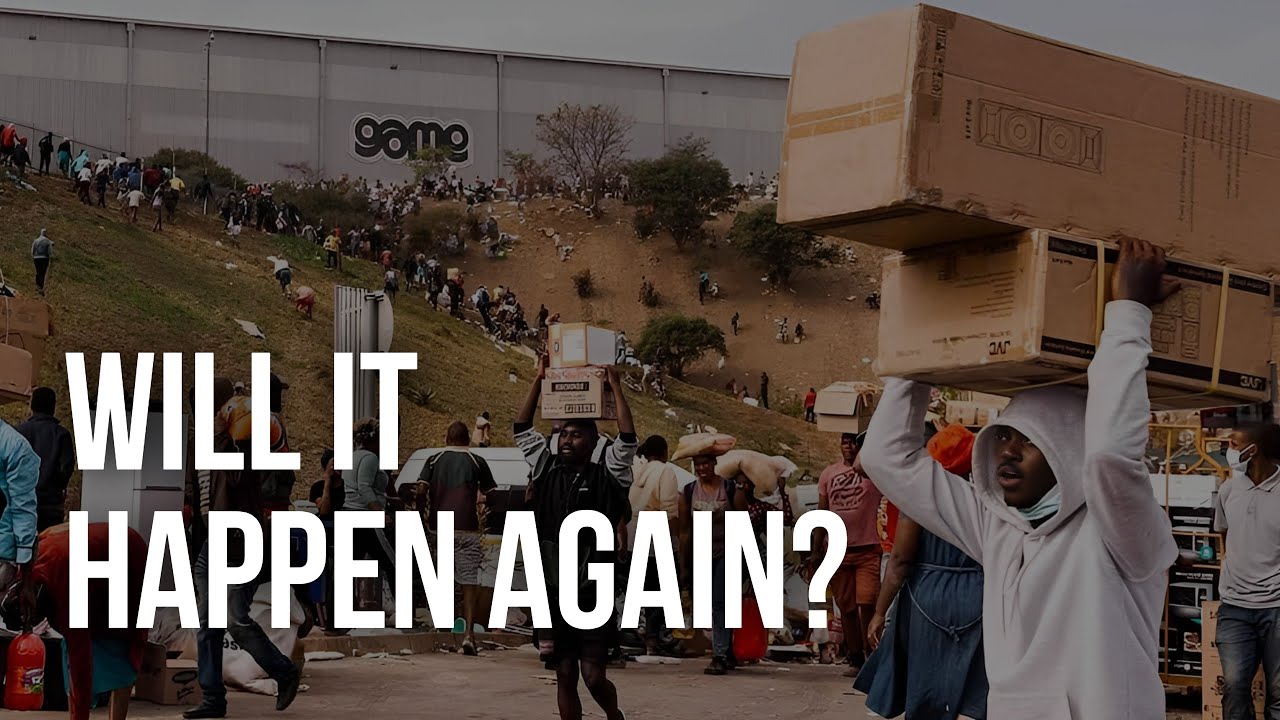
South Africa's 2021 KwaZulu-Natal Riots Will Happen Again Unless We Fix the Underlying System
6:55
How Three Decades of South African Government Control Made Basic Services Unaffordable for Everyone
10:58
Serpent ZA Reveals South Africa's Shocking Decline from First World to Decolonization Disaster in Just Ten Years
28:35
Donald Brown's Journey Into South Africa's Most Dangerous Township Reveals a Nation's Struggle and Hope
Donald Brown ventured into Muizenberg, one of South Africa's most dangerous townships, guided by local activist Amber Booysen. What started as a documentary exploration turned into a confrontation with the harsh realities of a nation struggling under failed governance. From threatened violence to witnessing a public funeral procession for a murder victim, Brown captured the devastating impact of economic collapse, gangsterism, and unemployment. Yet amid the darkness, he discovered an unexpected beacon of hope: a community fighting for Cape Independence and a future built on possibility rather than fear. Amber Booysen, the Iron Lady of Muizenberg, represents a generation refusing to accept the broken promises of the African National Congress and instead envisioning a self-governed Western Cape as a solution to systemic failure.
Donald Brown grew up in one of South Africa's more affluent neighborhoods, but he was determined to explore the other side—the side most people only hear stories about. His destination was Muizenberg, a township notorious for its high levels of inequality, violence, and economic despair. Guided by Amber Booysen, a woman who has been an activist in Muizenberg for more than 20 years and who grew up with gangsters in her family, Brown embarked on an expedition that would reveal the extent to which South Africa has fallen.
Nothing could have prepared him for what he witnessed that day. The journey began at a familiar railway station where Amber recalled her childhood memories of traveling as a 10-year-old girl. She remembered belonging to the Girl Guides and taking an oath to do her duty to God and country, to help other people at all times. At 19 years old, she witnessed South Africa become a country united as one—a rainbow nation standing together in 1994 for a better future. But today, that country is falling apart.
The Collapse of Infrastructure and Hope
South Africa once had railway networks as big as Germany's, the biggest in Africa. Now, what remains are ruins—broken infrastructure symbolizing broken promises. The African National Congress, once a symbol of hope in alliance with the South African Communist Party, is transforming South Africa into another failed socialist state according to many residents. Brown encountered this sentiment repeatedly during his visit.
One person more than any other typifies socialism and African nationalism in South Africa: Julius Malema, the former leader of the ANC Youth League and current leader of the Economic Freedom Fighters. Malema's controversial statements have made headlines internationally, including his refusal to pledge never to call for violence against white people. His influence remains significant, with some suggesting he should return to the ANC to strengthen the party from within.
A Tense Encounter Becomes Public Forum
Amber took Brown on a tour of the town, allowing him to gather initial impressions before recording their conversation. What happened next was both terrifying and revealing. An individual threatened to shoot them upon seeing Brown's cameraman and mistaking him for someone with a gun. After explaining they were from a media company, the man calmed down, and a tense moment quickly turned into a captivating public forum debate.
Residents shared their frustrations openly:
The economy is deteriorating with no proper development
Unemployment is rampant with no jobs available
Since 1994, there has been no real difference in living conditions
People still live in shacks without money to afford brick houses
Even riots in KwaZulu-Natal two years ago didn't stir the ANC into action
One resident explained the unfamiliar term "load shedding" to outsiders—a daily occurrence where South Africans go without electricity for hours. Hospitals suffer, people in locations suffer, and the inability to cook when electricity is off creates constant hardship. Adding to the misery, people on drugs walk all night disturbing the peace, attacking and robbing residents going to work. The community is tired of living in fear in their own streets.
Root Causes and the Independence Movement
The systemic problems visible in Muizenberg stem from the national government level. Gangsterism cannot be tackled without addressing its root causes—unemployment and poverty that affect young people throughout the province. As residents put it, "This is our town, we were born here, and we need to be taken care of. If they're not going to take care of us, who's going to take care of us?"
The solution proposed by many in the Western Cape is Cape Independence. Rather than waiting for the national government to solve their problems, they believe they can come together and solve problems for themselves. This requires understanding the historical context of the Cape.
The Cape has long been known for its unique scenic appeal. Sir Francis Drake called it "the fairest cape in the whole circumference of the earth." The Cape played a pivotal role in South Africa's history over the centuries, with its influence steadily extending inland. It marked the British Empire's incursion into the continent and set the stage for inevitable conflicts with other nations. The British emerged victorious, ultimately resulting in the artificial unification of diverse regions and entities into the single unified nation now known as the Republic of South Africa.
Today, many South Africans are returning to the Cape. It is the only province currently experiencing effective governance and relative prosperity compared to the rest of the country. This has led individuals like Amber to argue that establishing a new country would be highly beneficial for those who hold different ideological and cultural perspectives—the majority of whom have never voted for the ANC.
A Funeral That Changed Everything
Then something unexpected happened that brought everything together. Brown encountered a live public funeral procession for one of the recent murder victims in Muizenberg. This occurrence is a nearly weekly event. He witnessed three bodies on public display—the most traumatic emotions possible—yet at the same time it was one of the most beautiful things he had ever witnessed. For in darkness shines the brightest light.
Amber told Brown that she had no ambitions to pursue national politics and that she wanted to stay and fight for the people of Muizenberg. At first, he couldn't understand why, but after witnessing the funeral, he understood completely. He had immense respect for what he had witnessed, and at that moment, he wanted to be nowhere else.
Hope Rising From Darkness
Nelson Mandela's dream never died—it was just passed to the next generation. The people of Muizenberg had been living in darkness for so long that the light from them had the potential to heal the world. The activist woman who had stopped and worked at every train station in the Cape knew the answer to what the future holds.
"We are an extremely diverse bunch, but there's one thing that unites us: hope," she explained. "We are not survivors, we are visionaries. We are not backwards, we are explorers. We came to settle here because we believe in a future that is not defined by what is unimaginable but what is possible. These little ones are our future. You are our future—a future filled with optimism, not fear."
In a planet that's increasingly falling apart, the world needs this spirit more than ever—a beacon of hope in a world yearning for direction. And according to the Cape Independence movement, that can only happen in an independent nation.
"We can do that, people. We have to do that," Amber declared. "This is our Cape, this is our future, and this is our destiny. We are the people of the Western Cape and we are rising. I am Amber Booysen, and with the help of the Cape Independence advocacy group, I believe the Western Cape should be saved out of the hands of the ANC."
In darkness shines the brightest light. Just because things look bleak doesn't mean you have to hide. The journey into Muizenberg revealed a nation struggling under the weight of broken promises, but it also revealed something more powerful: a community refusing to accept that struggle as their permanent condition and fighting for a different future.