Up Next

Charlie Kirk Debates Young Turks Contributor Ben Carollo on Marxism in America and Communism's Historical Record
52:52

Margaret Thatcher Explains Why British Socialism Failed and What It Means for Free Societies
2:20

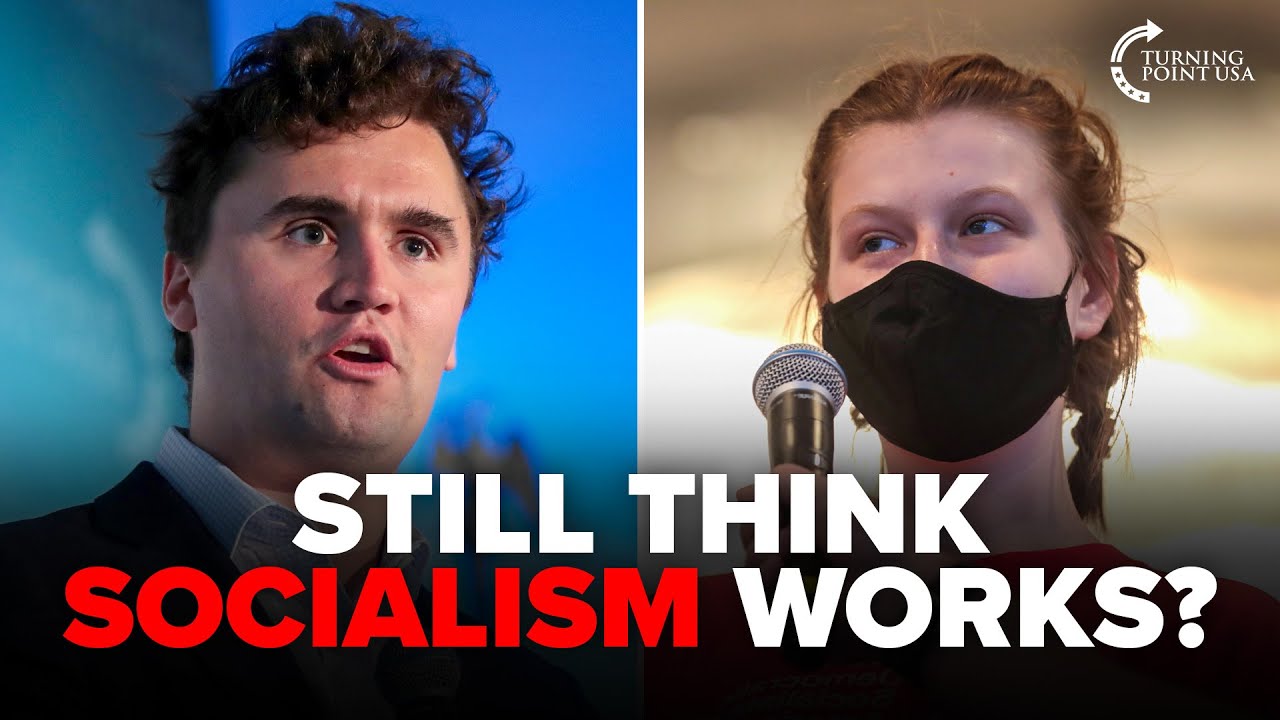
Charlie Kirk Debates Socialism With College Students at University of Vermont Campus Event
18:39
Patrick Bet-David Challenges Twenty Anti-Capitalists in Heated Debate Over Incentive, Poverty, and Economic Systems
Patrick Bet-David goes head-to-head with twenty anti-capitalists in a no-holds-barred debate about capitalism versus socialism. From claims about incentive driving the engine of capitalism to whether wealth redistribution would create equality, PBD defends free markets while challengers argue the system exploits workers and keeps people trapped in poverty. The discussion covers everything from healthcare to single mothers working multiple jobs, with PBD offering one participant an actual job on the spot. Tensions rise as both sides clash over whether capitalism rewards merit or perpetuates inequality, making this one of the most intense conversations on economic systems you'll see.
The Great Capitalism Debate Begins
Patrick Bet-David, entrepreneur and founder of the PBD Podcast, found himself surrounded by twenty anti-capitalists ready to challenge his core beliefs about economic systems. His opening claim set the stage for what would become a heated exchange: incentive is the engine of capitalism, and without it, the system fails.
The first challenger, Mason, immediately pushed back on this premise. While acknowledging he watches PBD's channel regularly, Mason argued that incentives aren't born exclusively from capitalism. He pointed to single mothers working three to four jobs as evidence that the system doesn't reward hard work equitably compared to those who build profit from workers' labor.
PBD countered by breaking down different levels of work motivation—from survival to status, freedom, and legacy. He argued that without incentive, those single mothers wouldn't work multiple jobs. Mason's response highlighted a fundamental disagreement: he sees this as people being pushed into insecure positions by the threat of starvation, not a system rewarding merit.
From Iran to America: The Personal Story
Drawing from his own experience, PBD shared his journey from being raised by a single mother to joining the army and eventually building a successful business. Mason dismissed this as cherry-picking outliers, arguing that not everyone can become a millionaire even if it's theoretically possible for each individual.
The conversation shifted to whether capitalism functions as a true meritocracy. Mason challenged how a system could be merit-based when some are born into excessive wealth while others work minimum wage to support multiple children. PBD maintained that parents deserve credit for making responsible decisions that benefit their children, though Mason countered that this creates dynasties of wealth rather than equal opportunity.
The Case Study Challenge: North Korea vs South Korea
When asked for a case study where non-monetary incentives worked, the debate partner mentioned charity work. PBD immediately redirected to a concrete comparison: North Korea versus South Korea. With North Korea's GDP at $23 billion compared to South Korea's $1.7 trillion, PBD argued the numbers speak for themselves about which economic system produces better results.
His challenger pushed back, noting that South Korea is dominated by approximately five major companies. PBD then made a bold offer: he would pay $2,350 for citizenship renunciation, provide a first-class ticket, and $20,000 in spending money for anyone willing to move to a communist country of their choice. The offer went unchallenged.
Healthcare: The Perverse Incentive Argument
Hunter introduced a different angle, arguing that while free enterprise has value, the profit motive creates perverse incentives in certain sectors, particularly healthcare. He posed a thought experiment: how much would someone pay for life-saving cancer treatment with an 80% survival rate? The answer—whatever it takes—demonstrates inelastic demand.
Hunter cited statistics showing 66.5% of American bankruptcies stem from medical debt, while most developed nations have far lower rates. He compared the US spending over $13,000 per capita on healthcare to Taiwan's $2,500, despite Taiwan having superior health outcomes. For Hunter, this proved wasted expenditure driven by profit motives.
PBD redirected the argument, suggesting this demonstrates government inefficiency in spending taxpayer money rather than a failure of markets. Hunter clarified that most healthcare spending comes from private insurance, with 77% of those who went bankrupt from medical debt having had insurance before losing it.
Innovation and Blood Thinners: The Ken Langone Story
To illustrate capitalism's role in medical innovation, PBD shared the story of Ken Langone, Home Depot founder and investor. Langone's father died at 62 from a condition that simple blood thinners could have prevented—medication that exists today because of market-driven innovation.
Hunter challenged this narrative, arguing that medical research developments increasingly come from research grants and public healthcare funding in other first-world countries, which are now outpacing the US. The fundamental disagreement centered on whether profit motives drive or hinder medical advancement.
Greed or Drive: Examining Incentives
Luke argued that greed represents the fundamental problem with capitalism—the incentive to amass as much personal wealth as possible. PBD challenged whether Luke himself was completely free of greed. The conversation quickly turned to personal responsibility for those working multiple jobs just to survive.
When PBD asked how much of someone's situation results from their own decisions versus market conditions, Luke insisted it doesn't matter. He advocated for creating a world where people don't have to earn their right to be citizens, where basic needs like healthcare are guaranteed rights rather than earned privileges.
PBD countered with America's appeal as the most desired citizenship in the world, asking why so many risk their lives to come here. Luke attributed this to people fleeing gang-ridden, corruption-ridden, violence-ridden conditions. PBD pushed back, noting this dismisses the freedom of speech and opportunity America uniquely offers.
Intrinsic Motivation: The Psychology Argument
Zena, a USC sociology graduate, introduced psychological theory into the debate. She referenced self-determination theory, widely accepted in psychology, which explains that intrinsic motivation and passion predict incentive better than extrinsic rewards. According to this framework, extrinsic motivation consistently predicts less creativity, motivation, and skill development.
PBD questioned whether people would work without payment, leading Zena to clarify that the problem lies in forcing people to work to survive. When asked for her alternative economic system, she pointed to private ownership of the means of production as the core issue.
The conversation revealed Zena's academic influences at USC, with PBD suggesting that professors had convinced her of these theories. She insisted that psychological studies, not mere opinion, supported her claims about intrinsic motivation driving the greatest innovations throughout history.
China's Economic Transformation: The Real Story
Gabby argued that governments, not capitalism, have lifted the most people out of poverty. She cited China pulling 800 million people from poverty through state-owned enterprises and centralized planning, along with state-funded infrastructure and education.
PBD provided historical context that challenged this narrative. In 1978, Deng Xiaoping visited Japan and observed their economy doubling approximately every four years with 15% annual GDP growth. When asked how Japan achieved this, Prime Minister Fukuda questioned China's reliance on a single nationalized bank.
The Japanese leader advised China to establish 5,000 banks with 35 branches each and 30 loan officers per branch—totaling 5.25 million loan officers for a population of 600 million. This would allow weekly small business loan applications, enabling competition. China implemented this capitalist approach and began its economic rise.
CIA Coups and Socialist Sabotage Claims
Gabby shifted to arguing that socialism hasn't had sufficient opportunity to succeed because capitalist forces, particularly the US, have sabotaged attempts. She cited Chile in the 1960s, where democratic socialist Salvador Allende proposed literacy reform, wealth redistribution, and land reform.
According to Gabby, the US orchestrated a CIA-backed coup during the McCarthy era because Allende threatened American interests, replacing him with a military dictatorship. She made similar claims about Venezuela, stating that Hugo Chavez reduced poverty by half in his first decade before being sabotaged by the US and military intervention.
PBD challenged these examples, questioning whether socialism's failures stem from sabotage or from forcing people to do things they don't want to do. Gabby countered that capitalism does the same by forcing people to work multiple jobs or starve.
Tax Revenue and Entitlement Programs
Ann wanted to address taxation, specifically PBD's claim that the top 1% pays 42% of taxes while the bottom 50% pays only 2%. She argued the bottom two quintiles can't pay taxes because they have no wealth—the bottom quintile actually has negative wealth due to debt.
When PBD asked why this situation exists, Ann blamed worker exploitation and lack of social mobility. PBD questioned whether people are forced to work at companies, using Ann's own work-from-home job as an example of choice. She maintained that when the alternative is starvation, it's not truly a choice.
The conversation touched on single mothers and welfare programs. PBD argued that Lyndon Johnson's policy changes created perverse incentives for single motherhood, and that the feminist movement convinced women they didn't need men, leading to family breakdown and poverty.
Feminism and Family Breakdown
Ann challenged PBD's claim that feminism brainwashed women into single motherhood, asking if he thought women were too stupid to make their own decisions. PBD clarified he didn't think women were stupid but believed people can be manipulated by philosophies that steal decades from their lives.
When asked what percentage of US revenue goes to entitlement programs, Ann couldn't provide a number, though she insisted it was lower than other OECD countries. PBD revealed the answer: 68% of federal tax revenue goes to entitlement programs like Social Security and other social safety net initiatives.
The Homelessness and Minimum Wage Confrontation
Grace, a California resident, challenged PBD's authority to discuss poverty as an elite who's no longer struggling. She pointed out that poverty measurements often use absurdly low thresholds like $2 per day, making it appear fewer people live in poverty than reality reflects.
She highlighted that the national minimum wage has remained $7.25 since 2009, arguing this contributes to America's highest homelessness rates since data collection began. When PBD noted he once worked for $4.25 and now makes millions, Grace rejected the comparison, insisting not everyone can replicate that success.
The exchange grew heated when Grace refused to discuss her work ethic compared to PBD's. He pointed out that she lives in California under Governor Gavin Newsom, who increased homelessness by 36,000 people despite receiving $24 billion in taxpayer funding. Grace responded that she doesn't like Newsom as a progressive because he takes corporate money and doesn't do enough for people.
King Leopold and the Congo: Capitalism's Dark History
Arman introduced historical context with the story of King Leopold II of Belgium, who in 1900 claimed the entire Democratic Republic of the Congo as his personal property. Within ten years, capitalists extracted trillions in resources while 15 million Congolese died—more than twice the Holocaust's death toll.
Arman described the famous photograph of a rubber worker staring at his eight-year-old daughter's disembodied hands after failing to meet his rubber quota. He suggested this man worked harder than anything PBD had ever worked for, challenging the notion that capitalism rewards hard work.
PBD acknowledged the devastating history but noted that such conditions can't happen in America today due to protections and choices. He redirected to communism's death toll of 60 to 100 million people, arguing that when judging economic systems, the best measure is how many people want to live under each system.
Child Labor Laws and Union Struggles
Arman credited labor unions, not capitalism, for child labor laws and worker protections. He cited the 1908 mill children strike, where thousands of kids working 80-hour weeks fought to reduce their workload to just 50 hours. Police shot at union members fighting for weekends and 40-hour work weeks.
PBD agreed that regulations preventing child labor are important but argued that overregulation can stifle innovation. He used the drone industry as an example, noting that China's DJI produces 70-80% of all drones while America has fallen to 1-2% of the market due to excessive FAA and other regulatory barriers.
The debate centered on finding the right balance between necessary protections and allowing innovation to flourish. Arman maintained that without regulations, capitalism's only incentive is profit, pointing to the historical example of lead in gasoline that companies fought to keep despite lowering children's IQs.
The Job Offer That Revealed Everything
James presented himself as someone from a divorced family who lived below the poverty level his entire life. Working 80 hours a week, he'd submitted 477 job applications over two and a half years without receiving a single callback. He attributed this to lacking a college degree and living in rural Texas with limited opportunities.
When PBD asked why James felt like a victim, the exchange revealed fundamental perspectives. PBD offered to interview James for a job in Fort Lauderdale, willing to relocate him. James's immediate response was to say he'd look into the company first to understand what they do and whether he had the necessary qualifications.
PBD called out this response as being too selective for someone claiming to desperately need work. James defended himself, saying he simply wanted specifics about the role and compensation. The offer was ultimately withdrawn, with PBD stating James would be difficult to work with based on how he handled the opportunity.
Healthcare Access and Disability Under Capitalism
Fay entered the conversation arguing that anti-capitalists aren't advocating for equal wealth distribution but for basic rights provided by the government—healthcare, education, food, and other fundamental needs. She argued the system forces people to remain in poverty rather than providing pathways out.
PBD suggested that perhaps the Democratic Party wants to keep people dependent to secure their votes long-term. Fay clarified she'd never felt the Democrats earned her vote and had voted for socialist candidate Claudia de la Cruz in 2024.
The conversation took a personal turn when Fay revealed she couldn't vote in 2020 because she was hospitalized as a result of capitalism—lacking access to proper healthcare or employment that would sustain her as a disabled person with a connective tissue disorder. She described being mentally ill primarily because she's disabled in a capitalist country.
PBD questioned the diagnosis, suggesting that sometimes people are convinced by authority figures that they have conditions that limit them for life. He challenged whether the psychological and medical industries profit from convincing people they're ill and need ongoing medication. Fay struggled to find specialists for her genetic connective tissue disorder within California's system.
Competing Economic Visions
Throughout the debate, fundamental disagreements emerged about human nature, incentives, and the role of government. Anti-capitalists argued that intrinsic motivation, community contribution, and passion drive human achievement more than profit. They pointed to exploitation, medical bankruptcies, homelessness, and generational poverty as evidence that capitalism fails to deliver on its promises.
PBD consistently returned to results-based arguments: immigration patterns showing America as the most desired destination, GDP comparisons between capitalist and communist countries, and the historical track record of innovation and poverty reduction under market economies. He emphasized personal responsibility, arguing that people make choices that keep them in poverty for decades when seasonal struggle should lead to improvement.
The debate revealed a core philosophical divide: whether freedom means the absence of government intervention allowing individuals to rise or fall based on their choices, or whether freedom requires government guarantees of basic needs so people aren't forced to work merely to survive. Neither side found common ground on this fundamental question.
Video Transcript
This is not the United States of Patrick but David. This is the United States of America. >> Would you take money from a capitalist to help you go see specialist? >> I mean, yeah, sure. Why not? >> But would you also be open to seeing somebody else I choose as a psychologist that may you're not? >> No. No. >> When you're offering people here jobs, right? You're saying that they would have to pay you money to get that. So, in reality, you're trying to convince them to pay you money. >> Claims of defamement. Be very careful. Defamement. We know you don't know the fact. I'm Patrick BD. I'm an entrepreneur and founder of PBD podcast. Today I'm surrounded by 20 anti- capitalists. My first claim is incentive is the engine of capitalism. Remove it and the system fails. >> Hey, great to meet you, Patrick. >> What's your name? >> My name is Mason. >> Mason, good to meet you. >> Yeah. Um, I'm Value Tained. I'm a big fan of the channel. Yeah, I do watch regularly. I just I do not uh agree with your claim. I don't think that incentives are only born out of capitalism. Most capitalist offenders say that in incentive uh is because of scarcity and people's ability to get what is necessary pushes them to work harder. Um I disagree with that. I'd say that some of our hardest workers are single moms working three to four jobs and the resources that they're able to acquire compared to those that utilize their workers in order to build profit for their own companies is not equivocal. >> So how would you do it? How would you change it? >> Yeah. So, I I think that humans inherently want to be meaningful. They they want to contribute to their communities. They want to contribute to society. When you look at depression rates, oftentimes it's people who aren't able to do anything besides live laying in their bed and and basically barely taking care of themselves. So, I think that it's just a human intrinsic value to want to bring value to their community or grander society. So, I don't think that it has to be through scarcity alone that scares people into working. If that makes >> I worked for scarcity. I think there's levels to it. You have the survival folks who work for survival to pay their bills. Some work for status, some work for freedom, and some work for legacy. The folks that work three or five jobs, you know, to pay their bills and do what they're doing. If the incentive wasn't there, they wouldn't work three to five jobs. Some of the guys that build a bigger business that solve a lot of problems. >> The incentive there is either I die or I work. That's not really a system that rewards merit. That's a system that pushes people into insecure positions. >> Not necessarily. In many cases, we put ourselves in situations as well. But when we're talking, >> are you saying that it's an individual failure for these single mothers that are working three to four jobs? >> For for some of them, it is interesting. For some of them, it is. >> I'm glad you bite that bullet because most people are not going to say that it's a moral failure of people that are born into poverty that continue to live. >> Let me explain to you. For someone like me, I came from the single mother system. My mother was a single mother. You know, we had, you know, my parents got a divorce twice. They married each other. They divorced. They remarried each other. Divorce again. I came up. We didn't have a lot of choices. I joined the army. I got that system kind of wanted to see what I was going to do for myself. Do I stay in the army? Do I get out of the army? I started working in sales and then the incentive of working harder. Eventually, I built a good life for myself. >> Again, you're you're totally dismissing the hard work that a lot of these people are putting into for just basic survival. I'd say that mechanic mechanics and plumbers and most people working blue collar jobs that are probably watching this video are working tirelessly day after day, but yet they still feel insecure positions to where they don't even know if they're going to be able to afford rent in the next 6 months. So let me ask you, >> if most Americans have a $400 to $500 emergency, they can't even afford that with the basic savings that they have. So this is not something that we should celebrate as promises of a system that gives you more if you work harder. We should say that this is something that rewards few and I'm glad that you're an outlier that's been able to build a lot of success for yourself. I know that you're a multi-millionaire. That's f that's fantastic that you have those resources. But the thing is that cannot happen for everybody in society. It's possible for each individual to do it, but not everybody can be a millionaire. I don't I don't think not everybody can be a billionaire or a millionaire, but I do think people can find ways to use their time to effectively increase their market value. And I don't think many people do that. When I talk to people and they tell me, I've watched this show. I've watched every one of these shows. I've watched every one of these Netflix shows. >> You can use that time to increase your market value instead of kind of, you know, focus on what's going on with the stories and shows that are out Let's move away from Netflix and TV shows and and talk specifically about do you think that capitalism is a system of merit that rewards people that are of higher merit? I do. Okay. So, how would you say that this is a meritocracy when we have some people that are born into excessive wealth and some people that are working minimum wage jobs to provide for three or four kids? How would you say that that's a a meritocratic society? >> Those are two different things when you >> They are two different things. Very unequal things. >> Well, no, not necessarily. The the parents get credit for making responsible decisions so they can take care of their kids. The parents get metocracy though. We're building dynasties of wealth. >> Not nec I didn't come from dynasties of wealth. I came from 99 cents. >> I get that. I get that individual. We're talking about systems. Capitalism is a system. It's not an individual >> test system that you get to use in your advantage. It's a system that's produced the best results than any other economical system. There's not an economical system that's produced better results than this based on the incentive. >> History is a march of progress, right? So there are going to be advancements that we make or there's going to be solutions that we make to previous ailments. I'm not saying that capitalism hasn't brought in better things than systems like feudalism or monarchy, but that does not mean that we're at the end of history. Do you think that capitalism is the final solution and this is what we're going to >> I think capitalism is the best economical system because it gives an incentive for you to decide how big of a life you want to build. And by the way, the best way to judge it, the best way to let me just say this to you, the best way to judge it is in a very simple way. Take all the countries around the world. There's many different economical systems. What has the longest line of people wanting to get in there? It's America. Why is that? 15 million people came here illegally. Millions came here illegally just the last four years. >> A lot of that is because of economic scarcity in other countries. Well, one of them we could talk about one is American exceptionalism which is continuing. >> Good to meet you. >> Thank you. [Music] How's it going? >> How are you? What's your name? >> Hi, I'm Alana. It's nice to meet you. Okay. Um, so I think the issue is the framing of incentive here. Incentive doesn't disappear in a socialist or a communist society. It just changes and evolves. So we see in capitalism the incentive is obviously monetary game, maybe even collecting capital itself um through uh land ownership. In a communist or a socialist country, you would see incentive would just evolve into I know it's a vague term, but the common good. Uh you have an incentive to do your chores around your house because you don't want to live in a filthy house, right? That makes sense. It doesn't have to be just monetary. >> So you don't think monetary incentive drives people or you're saying that the people should be excited to do their job whether they're getting incentivized for it or not? That's what you're saying. >> People will be incentivized to do >> Give me a case study. Give me a case study of that. that worked. Give me one case study. We don't even need to look at case studies. We can just look at charity work. >> Why don't we Why don't we actually look at a case study? You got two countries. >> North Korea, South Korea. One is communism and one is capitalism. >> Yes. >> North Korea's GDP last year was $23 billion. Are we are we judging many countries values based on many that's because that's freedom of speech. You can't like if you lived in in North Korea, you wouldn't be able to do what you're doing right now. you wouldn't have a vote. In South Korea, I'm going to give you stats. In South Korea, their GDP is 1.7 trillion. >> South Korea is also owned by like five companies in total in the entire 70s. >> You think that's something if you are employed by the top five countries. You are practically unemployed country. Do you like to be free? I >> I'm not going to be free in a country like South Korea where I'm only employing somebody like me. Do you like to be free where you can have a strong opinion? Do you like to be free too? like to be free, but that's why I'm anti- capitalist. That is why I'm anti- capitalist because capitalism removes that choice. There is no real incentive of capitalism because the incentive is survival. When you get into communism, the incentive is for the common. >> I love that. I got I got an offer for you before we move on. If I were to give you your $2,350, which is the cost to renunciate your citizenship, and I paid you your first class, you know, flight to whatever communist country and $20,000 of spending money, >> would you give up your citizenship to go to that country? Whichever communist country you want to go to, Cuba, we can give you Venezuela, we give you North Korea, any one of those you want to go to. Communist country. >> Choose any one of them. I'll give you a one-way ticket and I'll fund it for you if you want to. >> Thank you. Yes. >> Hi. >> What's your name? >> My name's Hunter. I'm going to be honest. I've never seen your videos before. Even though there is some real value to free enterprise, the profit motive often creates a perverse incentive and worse outcomes in certain situations. For example, healthcare. How much would you pay for a life-saving treatment for yourself or one of your family members? How much would I pay for it? Say you have cancer and you have an 80% survival rate with chemotherapy and less than 10% without it. How much would you pay? >> Whatever it takes, right? That's a situation of inelastic demand when the amount that you're willing to pay is not based on the value of the service because your life does not have a finite value. In the US, 66.5% of all bankruptcies are because of medical debt. In most other developed nations, that number is way lower, if not zero. And at the same time, the US does not have one of the best best health care systems in the world. We pay over 13,000 per capita. Meanwhile, Taiwan, which by most metrics has the best healthare system and a national healthare service, only pays about 2500 per capita per year. >> So what does that tell you? That tells us that's wasted expenditure. >> Yes, that is a massively wasted expenditure. >> That tells you So that tells you the government doesn't know how to spend our money. They keep raising taxes, which money and they don't know how to spend the money. No, most of that money is coming from private insurance. In fact, 77% of the people who went bankrupt from medical debt had insurance and then lost it because they couldn't pay. >> So, so we can address that the fact that 60s something percent of bankruptcies are due to health, which is you're right. We've done many content on that piece. I want you to come back to incentive. Address the issue with incentive right now with capitalism. >> The reason why the medical debt is so high and that is because of the profit motive. If people will pay whatever it takes to not die, the profit motive in that case is perverse because healthcare shouldn't be a market in the same way that other things might be a market. >> So you don't think the the motive to have profit to come out with a solution is a good thing for the marketplace specifically. >> It depends on which market you're talking about. It's way different. We're talking about video games or cell phones or TVs or other goods that aren't as necessary as healthare. >> Yes. I'm talking specifically about healthare in certain other markets. You ever heard of Home Depot? Yes, I'm aware. So, one of the guys who's the founders of Home Depot, investors of Home Depot, his name is Ken Langon. >> Uh, his father died at 62 years old. Ken Langon today is roughly 90 years old, give or take. When he died at 62 years old, he tells the story that if there was a simple thing as blood thinners, his father would have lived to be 90 years old just like he is today. >> That came because of innovation, which he's been on for many years. My dad's been on blood thinners for the last 40 years. So, You're conflating two things right now. Not all innovation is the result of the market because many healthcare developments are created by research grants from healthcare funding whether it's in the United States or in other countries. In most other first world countries the result of medical research developments which are massively outpacing that in the US now because of our inefficiency because we have a marketbased system for healthare. Very basic question for you because a very basic question on market based systems. >> Basic question for you. If that's the case, it keeps going back to the same thing. If it's better in other places than it is here, why are Americans and others not going there? Why are people coming here? It's very basic. How much does a plane ticket cost? No, they have the money to go to different places. They don't because they know America is the greatest country in the world. They know it. Okay. >> Appreciate you. >> Nice to meet you, by the way. Hey, I'm Luke. >> Luke, yes. Like the hat. Good to meet you. >> Oh, thank you very much. Uh, good to meet you, too. So, I think incentives are exactly the fundamental problem with capitalism is that you say incentives are what make it work. And I think that's the whole issue is that the primary incentives are either are either greed, a mass of m as much personal wealth as you possibly can. >> You think that's the problem? It's greed. >> Yeah. Yeah. Exactly. And and like if >> you're not greedy at all. >> And and like you said, survival. Yes. right? That the person, you know, working five jobs, you know, that they're they're doing that to they wouldn't have they wouldn't want to do that if they didn't need to survive. But that's such a horrible dystopian world to live in if someone has to work five jobs just to survive. >> How did they get there? How how much of that is on their decision-m? How much of that is on their doing? How much of that is on the market where they're not finding ways to improve themselves? >> It doesn't matter how much onus is on the individual. We want to create a course. No, no, no, no. See, we want to create a world in which people don't have to earn their right to be citizens. >> And we live we live in a country where majority of the world wants to come here. The most important citizenship country is America. Right. >> People give up their lives to come here. Have you ever lived in another country before? >> No. Not lived? No. >> Why do you think so many want to come here? >> I think the people coming here are coming from gangridden, corruption ridden, uh, violence ridden. >> You think that's just all it is? You think I came from a gangridden in Iran? I lived there 11 years. I think the majority of certainly coming from South South America, >> most people come here because what you're doing to me, you're sitting across from me right now, right? Millions of people are going to watch this. In America, you can call me out. You can say whatever you want. Nothing's going to happen. You're free and safe here, right? >> Sure. Free freedom of speech. >> You can't do that in Iran. Of course it is. There's a lot of elements with America. You're talking incentive. The amount of benefits America offers against other countries, it's so much higher where somebody with big dreams incentives, they're willing to come and say, "I want to come to America. please let me in. And some come and take advantage of it. But to say the individual that's working three to five jobs, if you do that for a season, if you do that for two years, if you do that for 5 years, fine. If you do that for 20, 30 years, you're doing something wrong. >> But the point is life, liberty, and the pursuit of happiness, right? Those are the inalienable rights. We shouldn't have to earn those right. We shouldn't have to earn the right to healthare, earn the right. No. No. I because these are this is just we just want to live, just exist. We we can't work our our our blood, sweat, and tears just to just to survive. That's a horrible dystopian world that we live in right now. >> No. Then what do you think we're here for? To just sit around and play video games? What do you think we're here for? To sit around and watch TV shows? To sit and watch cat videos? What do you think we're put here? >> We are here to create a prosperous community to lift. >> How do you create a prosperous community? How do you create a prosperous community? Matter of fact, for you, how have you positively impacted a community? >> Uh, I guess volunteering food banks. >> Volunteering food. I appreciate you for doing that. Have you created jobs for others? >> Created jobs? No, I wouldn't say so. >> Why have you not? >> I haven't had the ability to do so. >> Do you think it's easy or do you think it's hard? >> To create jobs is probably hard. Yeah, >> it's okay. So, the people that create jobs, you think they should have a little bit of incentive for having risked their life savings, spend time away their families to create jobs so somebody like you can work for that company. >> Sure. But that but that is the incentive and and bravo for them. But that does not give them the right to pay themselves $2 million bonuses while other workers are scraping by $10 an hour. >> You don't get to choose how much money I choose to make. That's not your business. That's my business. If you have four girlfriends and I have one, is it my business to tell you you can't have four girlfriends? If you play seven hours of, you know, Fortnite every day and I don't play Fortnite at all, should I tell you don't you shouldn't be able to play seven hours of Fortnite a day? It >> it it I in my view. >> Hey, appreciate you. >> Absolutely. Hi, >> how are you? What's your name? >> Zena. >> Zena. >> Awesome. So, this claim about incentive is one that we see often um propo promoted by um capitalism enjoyers, right? And it's this idea that, you know, profit incentives is the only thing that can make humans do things, get up out of bed every day, which has never been the case historically. It's not the case psychologically. >> Historically, it's never been the case. What has been the case? >> So, we've seen >> what's been the incentive? The incentive is intrinsic motivation. Passion. >> Intrinsic motivation. >> Of course. Have you ever heard of intrinsic motivation? >> Of course I have. So you think people going to go just do anything for no incentives. >> The incentive is intrinsic meaning passion, interest, and honing your skills. >> Whether you get paid or not? >> Well, the problem is that we're forcing people to, you know, need to, you know, work to survive. >> So what's the alternative? So give me another solution, another economical actually. I'm curious. >> So yeah, the psych psychological theory of self-determination is widely accepted in psychology. and basically explains that intrinsic motivation and passion is actually what predicts incentive. You're arguing that incentive is integral um to profit driven motivation. That's not true. Extrinsic motivation at all times at every single case is going to you know predict less creativity um less motivation less skill etc. Intrinsic motivation is what what causes things like um technological development um some of the greatest breakthroughs have been from people who are devoted in honing their skill. >> So should they get paid for it? I think that we shouldn't live in a system that um privately own like owns the means of production and forces people into position. >> What college did you go to? >> Uh USC. >> You went to USC. What did you major in? >> Sociology. >> Sociology. Who's your hero as a professor? >> Who's who's the professor you're looking at? >> This doesn't seem like a topic that's related to >> ask this question. The reason why I asked this question is because somebody convinced you of that. Somebody convinced you that that is >> so psychology and studies convinced me of this fact about the human mind. Unfortunately to your claim, results show that the greatest economic show intrinsic motivation predicts more creativity that allows people to go above and beyond every single issue out there. >> An entrepreneur who gets up who says what was your claim again, mister? >> I'm going to incentive. What about has an incentive to go out there and build their lives and you put that incentive that you're talking about what what predicts the most the best incentive, the best strive and the best creativity. What do you think about proven by psychology about Elon Musk? C can we respond to my claim? >> This is about incentivity. >> All right, awesome. So, you're arguing that incentive is intrinsic and tied to extrinsic motivation. What we find is that the best incentive comes from intrinsic motivation. >> So, a person that's passionate about solving an issue is going to build something bigger than somebody else that's not. >> Yes. So, so someone who has a true passion for this. >> Yeah. So, so >> exactly. So, profit motivation is not the thing that's driving innovation. Right. Psychology. So, psychology proves that's not the case. If there's not profit is not the reason that we have the greatest inventions that we do today. I I don't know if I disagree with the fact that there's a passion behind it. Are you saying people with passion, even if there wasn't the incentive to make as much money as they would make, people would still pursue it even with or without money? >> That's what psychology says. your claims are wrong because >> whoever your psychology professor is >> if you look at data and you find out how America that's only been around for 249 years schooled all the other countries that have been around for hundreds if not thousands of years more they did better than others because the incentive they accumulated capital to 1% of the population continue to produce on that basis right we have this okay >> it's not necessarily >> do we want do we want to respond because you can say that >> you've been interrupting the entire time so if you're if you're saying about the 1% are the problem and they're the only ones that make money. A lot of people make money. You said profit goes to the 1%. >> Explaining how it is that um America's become the dominant power that it is now, right? What we see is that because we have this engine, right, this desire to accumulate profit, you know, we morally justify things like going to other countries, imperializing them, colonizing them, extracting their resources, right? To funnel our country, right? Social democracies in the Nordic countries don't do this. So yeah, they might not be the wealthiest power, but they, you know, have higher rates of education, literacy, um, human satisfaction, etc. Right? So it depends on what we actually value in human behavior. Do we value wellbeing or do we value profit profit validates your point? If that's the case, people would move to those states. They don't. >> When you judge a great restaurant by the amount of people that come in, you can say the food sucks here. You can say the service here, but everybody's lined up to want to come here. They're not lined up to go into those countries. They're just used by professors as theories. >> There were millions of people that also lived in Germany in the 1920s. >> I lived in Germany before as well for two years. >> Hey, before we go any further, we want to take a moment to say thanks so much to Straight Air News for powering the fact checks in this video. Straight Air News is on a mission to raise the bar on journalism in a time of media bias and mistrust. Straight Air News helps you quickly find trusted information you need to understand the news, allowing you to dive deep into the topics that matter to you and the world around you. Their work is trying to break the bias bubble, helping you understand how every side of the political spectrum is reporting on a story so you get a full picture of the news. That's why we're so happy to be partnering with Straight Arrow News. They deliver the facts unbiased, balanced, and designed to make sense of a complex world, getting you the clarity you deserve and news you can trust. Go to s.com/surrounded or click the link in the description to check it out. By clicking that link, you're not just supporting this channel, you also take advantage of a better way to get the news. Welcome back to Trustworthy Journalism. Thanks again to Straight Arrow News for partnering with us on this episode. Now, let's get into it. My next claim is capitalism has lifted more people out of poverty than any other system. >> Patrick, >> how are you? I'm >> Gabby. >> Gabby. >> Yeah, good to meet you. >> So, I would argue that governments have actually lifted the most people out of poverty. If you look historically, we look at China, for instance, had the most significant poverty reduction in all of human history. They poured eight they pulled 800 million people out of poverty using state-owned enterprises and state centralized planning. They did work with the capitalist system, but they did it um most of it was done through state funded infrastructure, education, and contributing to strong literacy programs, redistributing the wealth. I think that my other argument would be that there hasn't been an opportunity for alternative systems like socialism to pull enough people out of poverty. So we look at examples hasn't been >> there hasn't been enough opportunities for them to succeed and so when we say why do you think that is >> I think that is because partly because of the US and I think because capitalist forces and global market insecurities have sabotaged these attempts to do socialism. So we look at an example in Chile uh in the 1960s they elected a democratic socialist and he proposed literacy reform, wealth uh redistribution, land reform and all of that uh was a threat obviously to the United States because McCarthyism was on the rise at the time. And so um instead of allowing uh Alande to to have a chance with that, the US um orchestrated a CIA backed coup to take over and to um have a military dictatorship that led the country instead of Alande who actually was having a lot of success in reducing the poverty rates before the US interfered. And so I think we look at other parts of Latin America like Venezuela for instance and we see the same thing. We see that the US has interfered several times. you know, with Chavez in Venezuela, he was able to reduce the poverty reduction in half in the first decade of him being in office and he was sabotaged ultimately by the US and by a military dictatorship. So that the people that replaced them were actually >> So may I respond? It's a lot of different cases here. So let's thank you for that. So >> uh let's go China first. Okay. So when you say China was able to recover and because they use state funded you know nationalized systems. So in 1978, Xiao Ping, the leader of China, went to Japan. He saw what was going on with Japan for two decades. Every year their GDP was growing by 15%. The economy was doubling pretty much every four years. >> They go over there, they say, "We got to find a way to compete with Japan. How do they have fewer people, but they're beating us?" They sit down with their leaders after a few drinks. Eventually, they say, "How did you fix your economy to be growing the way that it is, a capitalistic society that they had in Japan?" They asked a question from Xiaoing. Uh the prime minister Fakuda asked a question. >> How many banks do you guys in China have in China? >> He says we have one bank. >> He said it's a nationalized bank. He says yeah that's it. Yeah. >> How many loan officers do you have? Not many. You want to compete with one bank? Yes. He says if you want to compete with us or others here's what you have to do. You need 5,000 banks >> with 35 branches with 30 loan officers. That's a total of 5.25 25 million loan officers and a population of 600 million people that are living there. You do that every week. You take 10 applications with these loan officers for small business owners and you allow the small business owner to compete. They did that. China started competing. By the way, in America in the 1920s, we had around 30,000 banks when we were really, you know, competing in a marketplace. In the 80s, we end up having around 14,000. Today, we only have 4,100 banks in America. that concept of allowing just one bank to compete is not going to work. China takes on the idea from Japan. If I can interrupt you, I mean I think that they start growing with certain capitalist >> thinking about this in in very capitalist terms which makes sense for a capitalist but >> because it works. That's the idea because it's produced about these scenarios in a situation where market mechanisms are in place. And this is the problem that I have with so many capitalists is they can't exit their worldview and try to see a world where socialism um could be in place because they don't understand the untapped potential of socialism. And I'm I'm a democratic socialist. I think that we need to build forward to towards that um with reforms and I think we need to work with the government. I don't think that we should abandon the state. I also don't think that we should give state elites the complete control over society. I do think that we should work with the state to instill these reforms and then eventually erode capitalism. Unfortunately, socialism has had hundreds of years thinking in terms of competition produced results and it hasn't worked. Do you know why it doesn't work though? >> It's been sabotaged. >> It's been sabotage or it's because it forces people to do something they don't want to do. >> Does capitalism not do the same? >> No. Capitalism. There's 7 million people in this country who have to work multiple jobs just to get to work multiple jobs. >> They're forced to do that because either they do that or they starve. So if the options are to work or to starve, that's not freedom. That's economic. If you respectfully, if you do that for a period of your life, I understand it. If you're doing that for 30 years, you're doing something wrong. You shouldn't be working multiple jobs for the rest of your life. >> So, first of all, I'm not going to argue with this moral argument. I think that people who live in poverty, especially when we look at how many people live in poverty in this country, and also it depends on how you define the poverty line, but there's 40 million Americans who live below the poverty line in this country. There's three guys in this country that own 40% of the wealth. How does that work in a country that is >> You really want to go there? You want to go there? Okay. So, let's talk about it. So, when we talk about the rich people at the top, okay, and and you say, "Well, the rich don't pay enough taxes." Do you know what the bottom 50% of taxpayers in America pay towards the revenue that the government gets in taxes? Do you know Do you know what the bottom 50% pays? >> Tell me. >> 2% of taxes. Do you know what the top 1% pays? >> There's been several years. >> Do you know what the top 1%? Hang on a second. This is from the IRS. I'm not writing a blog from Huffington Post. This is not Daily Beast. I'm telling you the story. The top 1% pays 42%. >> I'll say this. The top 1% is about to pay a lot less in taxes because of the provision that just went even more revenue to the >> government. Beautiful bill. >> Thank you so much. >> Thank you so much. >> That was fast. I'm an >> Ann. Good to meet you. >> Nice to meet you. Um, so I do want to address part of the claim about poverty, but I also want to address what you brought up about like paying taxes. So you said the top 1% pays a large amount of taxes. The problem is is that the bottom two quintiles can't pay taxes because they quite literally have no wealth. Do you understand that? Like the the bottom quintile of the United States doesn't have any wealth. In fact, they're in debt. So they have literally like negative wealth. >> Why do you think that is? >> I think that's for a lot of reasons. I think that's because workers have been exploited. I think that they haven't had the opportunity to gain social mobility. >> Why do you think that is? >> Because I because of exploitation. >> You think they're being exploited? >> Yes. >> So people are being forced to work at companies. They don't have a choice. >> I didn't say that they were so they are they are being forced. If the other option is starboard, >> what job do you have right now? What do you do for a living? >> I I do work from home stuff. I don't want to discuss that. >> So you chose to do that, right? That's your choice. Great. If somebody works at Starbucks for as a barista, it's their choice. If somebody has a job that they're working, it's their choice. If somebody is not utilizing their time properly and accordingly, of course, the market, do you think that like they brought up single mothers earlier, do you think that single mothers are sitting around playing Fortnite 15 hours a day? >> Unfortunately, single mothers were manipulated on what happened. Is that a yes or no? >> Single mothers were manipulated by what Lynden Johnson came out where they changed the benefits on giving single mothers the incentive to have kids on all the welfare program. That changed our system in a major way. The feminist movement got single mothers to believe they don't need men and they're going to do everything by themselves and they don't need a man to help them out. This division that's happened between us caused many people to be in the situation that they're in. >> Most households are 50/50. They're closer to 50/50 today. So it has nothing to do with feminism. Feminism didn't just like convince women because they're too stupid. >> Feminism was one of the worst things that happened in America because it pinned men against women. >> Do you think that women are so stupid that they've been brainwashed? Okay. So you don't think that they've just fallen into this feminist propaganda? You don't think they're they're idiots? >> No, I don't think that. But I do think people can be manipulated, but they're not stupid enough to do that because the majority of people are splitting people that bought into a philosophy that stole decades away from their lives. Decades away from their lives because they bought into an idea that didn't produce the results. >> What are you talking about? That >> I'm talking about capitalism is the best economical system >> that provides the best results for people. >> But we can't just jump back and forth between claim to claim to claim. So the claim about feminism brainwashing people into being single mothers have >> no I didn't I said feminists originally brainwashed women to believe men are the enemy that led to where we are today last week before single mothers >> yes in many cases because they don't need men. >> Do you have evidence for that? You really think a single mother once could be a single mother? >> Absolutely. We have evidence of that. >> Do you think the single mother making minimum wage down the road like working for some grocery store having to take care of all of her children is just like I just don't need a man. and I just want to be independent. I live in abject poverty to be >> What percentage of the US revenue that we get in you think we use for entitlement programs? What percentage? >> Um I don't remember the exact number. >> What do you think the number is? We So we bring in $4.9 in private spending. >> We bring $4.9 trillion in. Okay. The US revenue comes in. >> What percentage do you think goes to entitlement programs? >> I don't know. I don't >> What do you think is a reasonable number? >> Well, what you're calling entitlement programs, I'm actually not sure what you mean by that. >> I'm talking about social security. I'm talking about social. I'm talking about any of these. >> It's much less than other OECD countries. >> What percentage you think it is? >> I don't remember the exact percentage, but it's much less than other OCD countries. You think it's 10% behind >> 20% 30%. What do you think the number is? >> No, but it's relatively low compared to other countries. >> What do you think it is? Can you guess the number? >> I don't remember the number off the top of my head already. >> How much more entites to entitlement program >> of our federal budget? >> No. of of the revenue that comes in 68% >> to GDP >> not GDP you're you're confusing the two different things here actual tax revenue that we get >> okay so tax revenue >> 68% of it goes towards entitlement program 68% >> thank you >> hi >> how are you >> good >> grace >> yes good to meet you hi to say that I think it's pretty comical that an elite such as yourself has the goal to tell us average Americans who's in poverty and who's not. A lot of times >> I was an average American guy that was in poverty but you're not anymore. You can also change you can also change anyways. >> Can you believe >> a lot of times that the market for poverty is actually very low. So a lot of times like $2 a day is the line for how they measure poverty. >> 215. Yeah. >> And that's ridiculous. So if I make $5 a day I I'm not in poverty. I can actually live. I can pay the rent. Sure. >> But we're talking about this country, right? We're not talking about the around the world. I I've noticed that you like to do that. You like to like skirt from America and talk about other countries. Make it look like we're better, but we're actually >> the greatest country in the world. >> Anyways, oh, it's the greatest country ever. We are at the highest that we've ever been with homelessness since we started collecting. >> Why is that? Ask your Are you from California? >> We haven't had We haven't had a pay raise since 2009. Our minimum wage nationally is $7.25. And you wonder why we have the highest poverty rate. Do you think that capitalism is winning? Can Can you survive? Would you like to live off $725? >> I used to work for $425 at Hogenas, >> right? >> Then I went to Burger King for$475. >> And how much do you make now? >> Then I went to I make millions today. Then I worked >> and that's why you like capitalism because we're not all making the difference. But the difference is critiquing the people in poverty. You should work harder. You should you should work. You know, you can be me. We can't all be. My hope is that you believe you can change and improve. That you believe you can upgrade yourself. That's my hope. >> That's very, you know what? That's what rich people like you want to keep telling us. You can be just like me. Do you want to be like me? If you work hard enough, it's actually you wouldn't be able to be like me because you wouldn't work that hard. >> Would you work that hard? >> You don't I'm not going to tell I don't have to answer that. >> If if you don't measure my like I don't have to measure my work ethic to be worthy. >> You don't have to. Then you can't be upset for others who do. So you can't be upset upset for people who are struggling because they work hard with capitalism because go back to the homeless to work so hard. >> Do you live in the state of California? >> I do. >> Okay. You said homelessness. >> Yes. >> Do do what do you think about your Governor Nuomo? What do you think about him? >> I don't like him. I'm a progressive. He doesn't do enough for the people. >> Do you know when he was he takes corporate money from people like you? I've never given him money. But do you know when he first became a governor? I would never give him money. But when he became a governor first when he became a governor first from then till today he's raised the amount of homelessness in this state by 36,000 people you know I don't like 24 billion people like you are billionaires like taxpayers gave him 24 billion taxpayers gave him $24 billion and he didn't do nothing with it >> vote him out you vote him out you have them it's not that I'm saying I have news you can do but you're not much different than him that's all I'm saying you're in the same class But you're you're sitting here blaming a person who's changed their lives for the better and it's their fault. My dad was >> This is not the United States of Patrick David. This is the United States of America. And I'm so grateful to be here. I'm so grateful to be here. But are you willing to pay more taxes so that other people are you willing to pay more taxes? So grateful to be here. I see you're starting the question. >> My dad My dad My dad was a cashier >> in Englewood at a 99 cent store. We had nothing. No. No. I don't tell you. That's great. We had nothing. I'm the guy that had No, no. I'm the guy that had a >> the propaganda that you had to be like me. >> But what you don't want to hear is that because it's the truth. >> We can't be like you. >> When's the last time you read a business book? When's the last time you read a self-help book? >> I don't need to answer that. I'll >> When's the last time you read a self-help book? >> I wrote a self-help book. I'm a writer. I'm a creator. >> Tell me what self-help book you read. >> I' I'm not. Give me one you read. Are you willing to take one recommendation? >> No. >> You're not. Then I can't help you. >> That's okay. I don't need your help. I didn't come here. You've been flagged out. >> Good. >> Awesome. [Applause] >> How's it going, man? >> What's your name? >> Arman. >> Armen. >> Yeah. Farman Crow. >> When you said capitalism is the best form of economic organization the world has ever seen, it made me think of a very particular picture from history. >> So, I don't know if you know this. It's a little history lesson. In 1900, uh, King Leopold II of Belgian uh, Belgium determined that the entire land of the Democratic Republic of the Congo was his personal property. And within 10 years, um, capitalists came uh, out, they exploited all the land, extracted trillions of dollars of resources, 15 million uh, Congalles died. Uh, for reference, the Holocaust killed 6 million people. And the most famous picture from that time in history is uh a rubber worker uh staring at the disembodied hands of his 8-year-old daughter because he didn't hit his rubber quota. I'm willing to bet that man worked harder to hit that rubber quota than anything you've ever worked for in your entire life. And I think when you say this is the best system that's ever been created, to me that's the result. That's what happens when there's no rules. >> It's devastating when you hear stories like that. I don't disagree with you. They had it hard. They worked very hard and they had risk on the line. Many times it was their lives that was on the line. Uh and you see that in many different uh places when you go back and study history. That's why today in America that can't happen in America. You have a choice to do what you want to do with your life. When we go back and look at those stories, we can go to see what communism did. How many lives were killed because of communism control. You don't need to go through that number. You hear the numbers between 60 to 100 million. We can go that route. But if you're talking about which provided the best economical system today, you judge it by how many want to go live somewhere that gives you that opportunity. And that is America. >> Do you know why kids can't work in America? >> Why kids can't work in America? >> Why there's child labor laws? >> Yeah. Because of child labor laws. >> It was labor unions. They were getting shot at by police officers to fight for the weekend, to fight for the 40-hour work week. Another good example is the 1908 mill children strike. It was thousands of kids who were working 80our work weeks striking so they would only have to work 50 a week. That's what happens when there's no rules, right? And then the government had to come in and say you can't employ children. So I think capitalism >> we don't disagree here with that. I don't think we're sitting here talking about child labor. Are you hearing me talking about capitalism is the best system because it provides child labor in America? >> Saying that capitalism there's no guardrails inherently. The government has to come in. People have to go and organize. And I think what you've seen for the past 50 years under neoliberal politics is that's slowly being chipped away. All the good things of the New Deal like social security law and order. I do think you need law and order but also at times >> you know the the the amount of rules you put in place can prevent incentives right now. If you think about drones warfare is changing. Okay. And 70 to 80% of all drones that are being built today are being built by a company called DJI in China. Ukraine was building a thousand drones a day at 500 bucks and going and hitting $5 million equipment of Russia, destroying them. 68% of their attacks was from drones. When you come to America, look at us. We're at 1 to 2% at the top. Let me explain my point to you here. Part of it is overregulation. Overregulation. FAA laws, this laws, that laws. So 500 startups that got into the drone business, they walked away because it's overregulation. Many cases when you say, I want to put this rule in place. Great. another person. No, I want to go this much. No, no, I want to go this much. No, no, I want to go this much. It eventually gets to the point that it chokes the innovator and that's also not good. >> I would disagree. I think regulation is the reason why there's no lead in our gas. You were talking about incentives. The only incentive that really matters to a good capitalist is profit. It is profitable to put lead in the gas and doesn't matter if it um lowers the IQs of kids living nearby. convinced you someone's unfortunately someone's convinced you at a young age that these capitalists are bad people why are they fighting against taking lead out of their gas think about it this way you know the main thing I don't know if you know Michael Bur seen the movie Big Short >> you know at the end of the movie where he says Michael Bur now is focused on water because he thinks water is the future gold or whatever he calls it right okay >> go to the company that's Coca-Cola >> that sells Coke and how much criticism have you had over the years with Coke right >> I think Esley's had a lot of criticism because they don't think water is a human right for the >> that's that's a different conversation if I may finish the point. One thing with Coca-Cola is the following. Do you know even Coke got to a point that they realized in order for Coca-Cola to be around 50 years from now, 100 years from now. They went and invested billions of dollars to fix the water issue around the world. They're trying to get cleaner water. Capitalists eventually get forced to take care of the person because having lead in the water is just not a good policy long term. >> Okay. Surrounded is now a podcast available wherever you listen. Search Surrounded, plug in and stay part of the conversation anywhere, anytime. My next claim is if all the money in the world were divided equally, it would return to the same pockets within five years. >> What's your name? >> Caleb. >> Caleb. >> Yeah. So you just said that you are proposing if we divided all the wealth equally in like five years. How would you propose we divide the wealth in that way in this thought experiment again if we're going to give it a serious >> right >> look I want to understand how would you propose that happen? I hope you realize this is just a question we're asking everybody, right? But if you take all the wealth, which is around $500 trillion, okay, give or take, you divide it by 8 billion people, okay? >> It would be around $62,500 each. >> Within 5 years, the people that don't know how to handle money themselves, they would lose it all. And within 5 years, the same wealthy would get the same amount of money. >> As someone who certainly doesn't make that much money, I'm willing to take that as a gamble just for fun. I'll be honest. But at the same time, like, okay, so you're just now claiming that people who don't have wealth don't know how to manage it. And that's fair because a lot of them have never had it before. So what do we do to basically ensure that people like myself who are currently Thank you to the United States, thank you to the state of California for giving me medical insurance to get blood work, for giving me food stamps so I can have food. I've applied to I don't know how many hundreds of jobs. I can show you the receipts. I can show you the email confirmations. I am trying my best to use my values with the freedom that we have here. >> So if I gave you a job, you would work 40 hours a week. >> If the job is in alignment with something that's noble and good, I think I could. The issue is, and again, you you may say that this is a personal weakness, but like right now, substitute teaching, tutoring, trying to help in that way is making it so that I'm able to scratch by >> without the supplemental income and the help from the society of people who make more money, I'm going to not have enough I want to address something which you you made a point that I agree with uh uh on why don't why don't some people create wealth in my family when I was growing up and I was telling this young lady over here when my dad was a cashier at a 99 cent store we've never owned an insurance policy before my parents we've never owned a house before I've never lived in an apartment with a swimming pool before we've never had a 401k stock mutual fund none of that stuff I had no clue how money worked so for me when I got out of the army with a 1.8 a GPA. Out of high school, I went straight to the army cuz I didn't know how money works. If you look at our system today, in high school, we learn about a lot of different things. They don't teach us about taxes, finances, mutual funds, stocks, bonds. Colleges don't even teach a lot of that right now. So, you >> work in a high school. >> Did I work? >> Have you have you have experience like me? Someone who's essentially on those front lines working in >> I've I've worked with many high school teachers and the directors of psychology to talk to the youth. Yes. >> So, right now I'm in a position where I have options. Like you said, I do have some options, but they seem to be somewhat destructive and exploitative of me, of my peers. So, I'm trying >> I think you're too selective for jobs right now. You don't you don't have the ability to be selective at this stage. >> But the thing is because I'm instilled with a freedom that is maybe God universe given and I don't actually have to because of the system like you said, I don't have to play along with some corrupt game. So, I gave up Perfect for someone like you. >> Well, thank thankfully California agrees. But you you mentioned earlier in a previous discussion that we have free speech. We can say what we want. But the thing is, have you been punched on the train for how you look and how you how you share your ideas? >> Do you do I look like an American to you? Do you see this nose? >> No, I'm just asking. >> I'm Middle Eastern. You know what's happened to this guy? You know what's happened to me when I was discriminated all over? >> Feel like that's free speech. If you're being punished by people who have I don't mind it because I understand there is risk that you may be disrespected there. Like here I've been disrespected here many times. I've been offended here many times. A lot of you are coming here finding a way to attack me and tell different stories. I'm okay with that. I don't want to attack you. >> You're being very respectful. I'm not talking about you. But what I'm saying to you is when you say, "Have you ever been punched in the face on a bus?" You don't want to hear about what things has happened to me because of the way I look. But I don't want to use that. >> You've been through a lot of trauma in your life. And now you're kind of clinging to things. >> I'm not. What I don't want to do that I have my son is sitting right here. My 13-year-old son, my four uh I have four kids. I bring him everywhere. I want them to see that it's okay. People going to disagree with you. You have to be comfortable with >> 13-year-olds all the time. >> You are with 13-year-olds all the time >> because of my job. Because I'm a substitute teacher and a tutor. The thing is you can apply many different things and that is you're right. But what I'm saying is right now I care deeply about having a good experience. the incentive that I feel is for peace and prosperity. I respect it >> and and again I'm using my freedom now but the issue is you're saying we have all these options but whenever I tour the globe I see franchises that have monopolized pretty much everywhere. So when you talk about options it's really there's these select few people who have the this infrastructure that's really benefiting them more than others and without some sort of conscious spiritual moral awakening. What can we do except for beg and appeal and arrest? >> No, you can't be too selective. >> At the beginning when I worked at Hog, I couldn't select a job. >> I can't whenever I can. >> It's a choice. >> Thank you so much. Appreciate you for being respectful. >> I'm glad y'all tripped over each other cuz I did too. >> How's it going? James. >> Your name? James. So one of the things that you have stated is that we have options. >> Okay. So just to give you a little bit of my background um I come from a divorced family >> and we lived below the poverty level from the time that I was born uh until now frankly. Um, so I'm one of those people that you're talking about that uh isn't pulling themselves up by their bootstraps enough, which like I didn't have boots to begin with. And like I don't know if you've ever had boots, but like legs or load bearing structures. >> I relate. >> And like you can't really pull up a boot when you're wearing it, you know? >> So where exactly am I failing when I am working 80 hours a week? I am taking the only jobs that will hire me. I have put in 477 applications over the last two and a half years. Not even gotten a call back once. >> Why do you think? >> You tell me. You're you're a job creator. >> But I don't know your resume. You know your life better than I do. Why do you think you have not gotten a call back on 477? >> Because I do not have a degree. >> Okay. >> Because I do not have a degree because I could not afford one. >> Okay. >> I live in an area where the physical job market is very limiting. >> Where do you live? >> Uh I live in rural Texas. >> Okay. So in that like in the town that I grew up in for instance there are eight jobs >> period. >> Does all does your family live there? Mom that everybody's in that same city. >> Uh everybody was at one point. Okay. >> Most of them are dead now. >> Okay. Sorry to hear. >> N it is what it is. It's poverty. You know we're kind of used to that on this side. Um >> why do why do you feel like you're a victim? Why do you feel like you're a victim? Why do you feel like the way you speak like you know you're the victim where all this happened to you? because I exist and things happen to you and such things happen and that's why I say that they happen to me. >> You're a good-looking guy. Why do you think you're a victim? >> Why do you think you're somebody that's got into a situation because it's not fair what happened to me? Let me let me give you a couple options. Are you open to leaving the city you're in? >> I've already left it. >> So, what city? >> I've left multiple cities. >> So, if somebody else gave you a job in a different place, you'd be willing to move there >> 100%. >> Okay. On your resume, on your resume, what do you have on your resume? skill set. What do you offer? >> Uh, transportation expertise, logistics expertise. >> You consider yourself a hard worker? >> I mean, I I feel like 80 hours a week. That's a hard worker. >> Sure. >> How about we do this? How about I interview you and I give you a job? >> Would you move to Fort Lauderdale? >> Man, that's Florida. Sure, why not? >> Would you move to Fort Lauderdale? >> Sure, why not? >> How about you and I document this after this? You come, I do an interview with you and I give you a job and let's see what you do 90 days later. >> Okay. Let me and I I'll look up your company and all that kind of stuff and I'll see it. You see what just happened? Watch what you just did. >> Sure. >> You just said you applied to 477 companies who's not gone back to you. >> A business owner who's hiring aggressively just made an offer to you. >> You said you're willing to move. Then you said I'll look at it. You became selective. >> I didn't say I look at it if you'd let me finish my sentence. Go ahead. I want to hear. >> I would like to look into your company to see exactly what you guys do. >> You would like to >> because I don't know what you guys do. >> Okay. So, as far as I'm concerned, I may be wasting my time going, if you guys are a finance company, if you guys are a bank or something like that, I don't have the certifications. I don't have the degrees. So, even interviewing me would be what if I gave you a job period to work 80 hours a week, would you take it and I paid you a reasonable wage? >> Are we talking a livable wage or a reasonable wage? And whose version of reasonable are we talking about? Your version of reasonable or my version of reasonable? >> You see, so now for me, what I'm noticing from you is >> is I need specifics. >> No, no, not necessarily. You know, most of the people I hired need specifics. The difference is I'm trying to hire them. In this instance, you're trying to get a job and you're being selective. It's going to work against you. >> I mean, I'm not trying to get a job. Originally, I was trying to ask you where the moral off the table because you're going to be difficult to work with. >> Okay. Sure. But my question was where is my moral failing? Like where is it that you are saying that I am not working hard enough and I am not doing? >> I just experienced it right now because you the way you just handled this situation. So I should accept anything that somebody gives me first blush if it is a guaranteed thing. Not necessarily. >> I agreed to I agreed to do your interview. I agreed to be interviewed by you and you agreed to to consider me for hiring. So therefore I am taking that opportunity. I've chosen to but because I am asking you for specifics. Your immediate reaction is that oh well you're trying to be picky when I'm not. I'm asking specifics. I you could have said >> I said I need to look up your company. That's all I could have said is I'm willing to have the interview. You would have had the interview. And I did. >> No, you said it depends. Let me know. Let me look. >> Yeah, sure. I would look into your company. That's all I said. >> I appreciate you. Thank you, James. >> Hi. >> What's your name? >> I'm Fay. >> Fay. Yeah, good to meet you. >> So, how would you define socialism? Cuz I think you're kind of misunderstanding what anti- capitalist ideals look like. I think we are just trying to advocate for basic rights for our people in this country and across the world of course but I don't think it's necessarily about equal wealth disparity around around the world for most people that are anti- capitalapitalist I think it's more about just standard rights that are provided by the government >> standard rights that are provided by the government. >> Yeah. >> Okay. Great. >> Yeah. So >> go a little bit deeper. So for you when when the claim here is if the money in the world were divided equally it will return to the same pockets within 5 years. Do you disagree? >> Yes. >> Tell me why you disagree. >> Yeah. So I disagree because I don't even think many people are trying to argue for that. >> People are not trying to argue who are you arguing in this debate. What I'm trying to say there's like a very select amount of people that are trying to argue for equal wealth disparity. Most people are at least trying to at least advocate for wealth and at all for people that have that don't have access to healthare right now that don't have access to a good education right now that don't have access to their basic needs like food. >> Do you think our system right now allows people to stay in those situations long term? >> They force them to stay in those situations long term. >> Okay. So, part of me actually agrees with you, but why do you think they force them to stay in those situations long term? I think because the they are trying to convince the working class that they don't have rights. >> I I actually don't think that's what it is. Although that's fair to your point here. What's the chances that any of you here voted for Donald Trump in 2024? >> Exactly. Right. What is the What is the chances that all of you here can't stand the phrase MAGA Donald Trump? Any of that stuff? Is that a fair assessment? Fair. Okay. >> Yeah. So So think about it this way. So maybe you're right that the Democratic party that's been earning your vote for a long time wants to keep you there because they'll have you for the rest of your life. >> They have never earned my vote. >> Who did you vote for in 2024? >> In 24 I voted for the socialist candidate. >> Who was that? >> Claudia de la Cruz I believe. >> Who did you vote for in 2020? >> Um I was actually not able to vote. I was in a hospital. >> Oh, I'm so sorry. >> Because of results of capitalism. >> Tell me more. >> Yeah. So, I didn't have access to proper health care or even access to a proper job that would sustain me as a disabled person. >> Are you comfortable being specific on what happened? >> Uh, I guess if you're not I mean, I'm also mentally ill so that was something I had to deal with, but um I'm mainly mentally ill because I am disabled in a capitalist country. >> Tell me more about mentally ill. Who qualified you as somebody that's mentally ill? >> Um me and my doctor team. >> Who who who convinced you that you're mentally ill? Um me and my doctor team >> what's the specific uh category of mental illness? Is there one? >> You know why I asked this question? Let me explain to you why I asked this question. >> I don't even like the psychological industry. I don't really stand for like sigman freudian politics or anything like that. So if you're going to debate the the um ethics of psychology where I'm going with this is going back to the same thing with if the money was were to divide it equally it'll end up being worth within five years. My trouble is in many cases somebody you and I look up to will say something to us that we choose to believe for the rest of our lives. Unfortunately, it could be something where you have ADHD, you're mentally ill, you're poor, you're this, you're that, and we get to choose to buy into that or not. And if you do, >> so you're saying I'm not mentally ill or I'm not disabled. >> Say you are or you're not. I would challenge it to go a little bit deeper to see if there's anything you can do about it. So, you're asking me about my health. You're asking me about my disability. >> I will say we are in a market where, stay with me here, >> there is a market where there's profit to convince you to have you have issues to take the medication because they're making money to the medication. I don't have access to even a result or a solution to my disability as someone with a connective tissue disorder. It's genetic. >> Have you been able to go to different doctors and get yourself tested and see you have? >> Yes. And in California, >> yes, but not enough. I I can't find a specialist. >> You can't find a specialist? >> Find a specialist. >> Is there anyone in your life that
Related Books
Browse Conservative Books