Donald Trump Jr. on Charlie Kirk's Murder, Political Persecution, and the Future of the MAGA Movement
Enjoying this? Share it with someone who needs to see it.
Up Next
Frank Turek Shares Behind-the-Scenes Story of Charlie Kirk Memorial Service Attended by Over 100 Million
1:03:46
Benny Johnson, Brick Suit, and Cliff Maloney Honor Charlie Kirk's Legacy After Historic Memorial Service
50:15
Frank Turek Addresses Charlie Kirk's Martyrdom and Why the Church Was Asleep While a 31-Year-Old Led Revival
1:07:39
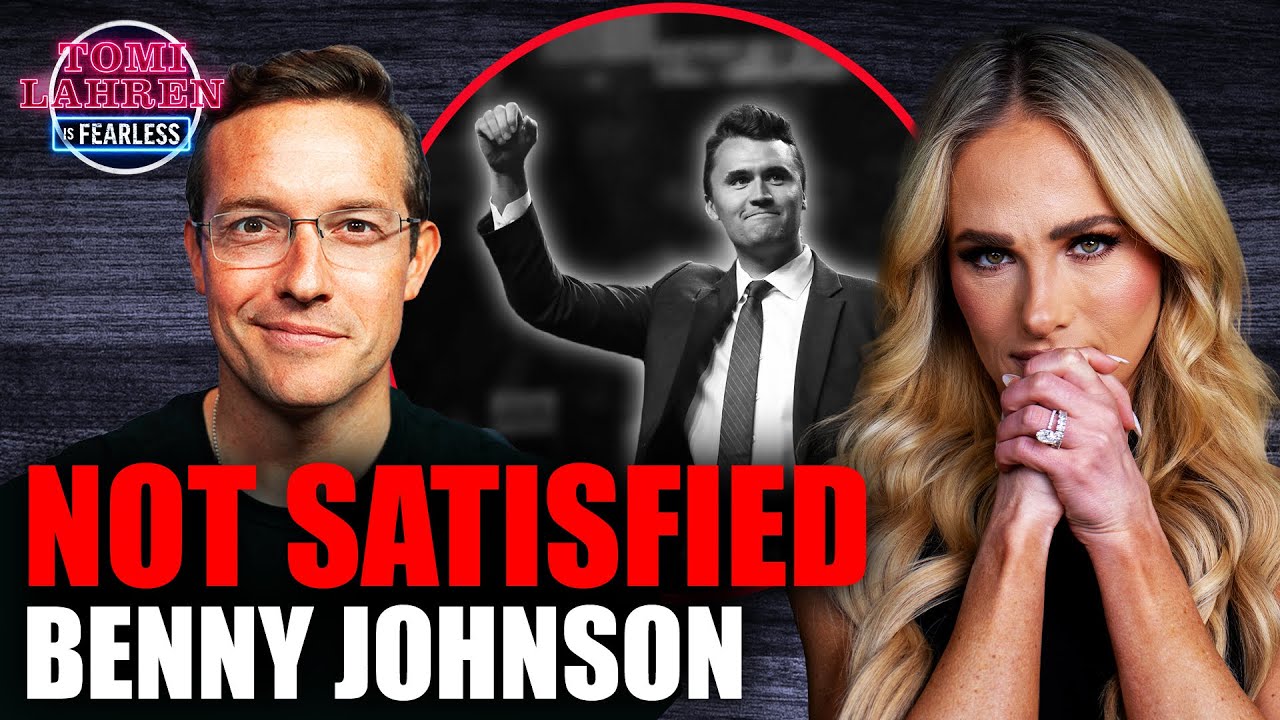
Donald Trump Jr. on Charlie Kirk's Murder, Political Persecution, and the Future of the MAGA Movement
Donald Trump Jr. sits down for an emotional conversation about the assassination of Charlie Kirk, just days after a planned tour was announced. Trump Jr. reflects on meeting Charlie when he was only 19 during the 2016 campaign, instantly recognizing him as a "generational talent." He opens up about years of subpoenas, investigations, and surviving multiple assassination attempts on his father, revealing how relentless political warfare has shaped his family. Despite tragedy and trauma, Trump Jr. discusses the "Trump gene" that keeps them fighting, the future of the Republican party, and whether he'll ever run for office himself.
The conversation begins with a somber revelation: a tour had been announced just two days before Charlie Kirk was killed. The question immediately arose—should they continue? Despite mixed feelings within the family, the decision was clear: moving forward with the tour was more important than ever. As one participant emphasized, the best way to honor Charlie's legacy is to be out there, unafraid, and refusing to back down.
Donald Trump Jr. was scheduled to do something with Charlie literally the week after his death. The loss hit hard, but it reinforced the mission they had all been working toward together.
Meeting Charlie Kirk: Recognizing a Generational Talent
Trump Jr. first met Charlie Kirk in 2015 at the beginning of that election cycle. Charlie was just 19 or had just turned 20 at the time. A couple of friends from Texas insisted that Trump Jr. had to meet this young man—describing him as charismatic and incredibly knowledgeable about politics. At first, Trump Jr. was skeptical. As he recalls with characteristic humor, the 2016 campaign was chaotic enough. When accusations of Russian collusion emerged, he joked: "If you knew what was going on in that campaign, we couldn't collude to order a cheeseburger. Relax, Adam Schiff. Give me a break."
Despite his initial hesitation about meeting yet another young guy who might not know what he was doing, Trump Jr.'s friends were persuasive. Within five minutes of sitting down with Charlie, he knew he had discovered something special. "You just knew it was a generational talent," Trump Jr. explained. "I recognized it in an instant. I'm like, 'Okay, interview's over. You're traveling with me.'"
Charlie spent the next six to seven months embedded in the campaign, doing everything. Trump Jr. has cherished pictures from election day 2016, when he did close to 75 radio interviews, moving east to west as polls were closing. He was even "screaming at Sean Hannity" to get him on air in Western Florida to catch the time difference and get a few more people to the polls. Meanwhile, Charlie was in the background operating Trump Jr.'s Twitter and other social media handles from his office desk. It was an amazing experience, and Charlie was always exceptional. He may have gotten better over the years, but he was destined to surpass everyone else from the start.
A Life Under Siege: Subpoenas, Investigations, and Assassination Attempts
The conversation shifts to the relentless political persecution the Trump family has endured. Over the past couple of years, Donald Trump Jr. has been subpoenaed and investigated more than perhaps any human on earth. His family has faced the same treatment. Attempts were made to throw his father in prison. There were impeachments, countless investigations, and civil lawsuits. And then, beyond the legal warfare, there were actual assassination attempts—twice.
Trump Jr. witnessed his father get shot in the ear. He saw three supporters get shot at the same event, one of whom died, while two others were wounded. Then Charlie Kirk was shot and killed, taken from them forever. This has been the reality of their lives over the past couple of years.
When asked how this has changed him, Trump Jr. admits it's hard. But there's an element—what he calls the "Trump gene"—that just makes you go harder. "It's not normal," he acknowledges. "It's not always good." He's been subpoenaed more than probably any human being, and his family certainly has. He's done more hours of congressional testimony than most people can imagine—for treason, a crime punishable by death. That became his "average Tuesday."
He describes it with dark humor: "They're going to try to kill you again, Don. I'm like, 'It's fine. Can I catch lunch first?'" While most people are worried about getting Halloween decorations up on time, Trump Jr. was facing existential legal threats. His lawyer once told him he was the greatest witness ever, to which Trump Jr. responded: "It's not because I'm actually good at it. I've just done it so much. Eventually, you're going to develop some sort of talent for it."
The Trump Gene: Suppressing Trauma to Keep Fighting
The discussion turns philosophical as they explore how to handle trauma. One participant reflects on having come around to the Presbyterian way of "just shoving it down," arguing that leaning into trauma and ruminating on it is very bad for you. "We were raised by Oprah and we were raised by wolves," they joke. "She misled us. The Trump gene is the way."
Trump Jr. agrees, but with caveats. The Trump gene means you suppress everything and just keep fighting. His father exemplified this in the moment when bullets were still flying—he got up and kept going. The entire family did that to some extent, though Trump Sr. more than anyone. But there's a cost to this approach.
When you have five young kids and they have problems, it's hard to see them as significant when people are literally trying to jail you, shut down your businesses, and assassinate your father. "You've just been a beast in a cage, prodded for a while, that you sort of adjust to that normality," Trump Jr. explains. "But it makes it actually very hard to be sensitive to other people's ideas and emotions."
He references the movie "Free Solo," about a climber who scales dangerous mountain sides without any rope or safety equipment. The film discusses how you can burn out your adrenal gland—or perhaps it's already underdeveloped, so it takes much more stimulus to get any excitement out of life. That's what it was like after the 2016 campaign.
From Real Estate to Political Rockstar: A Life Transformed
After the 2016 election, Trump Jr. thought he would return to his regular life in real estate. For about a week, it was great. Before all the political chaos, he was non-controversial and even beloved. He could live in New York City and get invited to the cool parties. All of that went away.
But there was also a cathartic component to the campaign experience. He describes those obligatory lunches with friends you haven't seen in 10 years—people who would text "I love what you're doing" but then post on Facebook that Trump is a terrorist or a Nazi. "I hate these people so much," Trump Jr. admits. "Which one is it? Because you can't be my friend and also do that." He had friends who didn't agree politically but still wrote checks to the campaign because they believed in him as a person. Those people he could respect. It was the people clout-chasing on one side while kissing up on the other that he couldn't stand.
After the campaign, Trump Jr. tried to go back to his desk job. Within two weeks, he was borderline depressed. "This sucks," he realized. The experience of being on stage, being a pseudo-rockstar, feeling like you're actually good at something while people are loving it—that had changed him. What he thought would be his destiny for the rest of his career suddenly didn't work anymore. He literally remade his whole life after that, staying more involved in politics. It changed everything.
Will a Trump Run for Office Again?
The conversation naturally turns to the question everyone wants to know: is any Trump going to be running for office at any point soon?
Trump Jr. acknowledges it's always the trick question. "If you say no, then you decide to do something at another stage in life..." He appreciates the applause from the audience and mentions that friends recently sent him a poll showing that he and JD Vance are the only ones in double digits—and he hasn't even been out there campaigning for it.
"The heir is whoever deserves it really," Trump Jr. clarifies. "This isn't a monarchy, right?" He finds it ironic that critics dress up like clowns protesting against "kings" while a president who was elected in a landslide, won the electoral college, won the popular vote, and won all seven swing states in historic fashion—and then actually left office—is called a dictator. "If he's a king, he's doing a lousy job," Trump Jr. jokes. A real king wouldn't have allowed himself to be prosecuted, persecuted, almost jailed, and almost assassinated. A king wouldn't allow protests to happen. And if he were a king, the government would be open instead of shut down by Democrats.
So is that a long way of saying no to running for office? "Not never," Trump Jr. clarifies. "Not now, but not never. There may be a time. And if it's required of me and I can do that for my country, it's an honor." The enthusiastic reaction from the audience clearly moves him. "That kind of reaction—that's the greatest honor I could receive."
But he admits he doesn't know if he has the ego required. "There is a level of hubris you actually need to be president," he observes. "I'm just a regular guy. I fight to get where we want to go, but after that I'm okay going in the background."
The Biden Years: Trial by Fire That Created a Bench
Trump Jr. argues that the last four years under Biden were actually necessary for the country. They showed everyone how fragile democracy is, how fragile the republic really is, how fragile even the economy is, and how the world needs a strong America. It wasn't just the first four years of Trump that demonstrated this—it was how quickly it all disappeared and went away that woke so many people up.
But within that period, there was a "trial by fire"—not just for the American people who experienced it with their own eyes every day, but for those in the cabinet now, for those who were fighters and subject to the same lawfare. "Now we actually for the first time in modern history have a bench," Trump Jr. says proudly. "We have a bench of guys that can do this."
After the first term, there was uncertainty about who could carry the movement forward. Mike Pence was perhaps necessary to consolidate other parts of the Republican base—people wondering about "this guy from New York." Pence made sense as a coalition builder at the time, but it was never going to be the future of the party.
Now, Trump Jr. is excited to see leaders like JD Vance and Marco Rubio, who he calls a "star." More importantly, "they're guys that aren't just playing a role on TV. They've actually changed their worldview to understand that America First, MAGA, however you want to look at it, is actually the future of the Republican party. They're not guys that are dying to go back to the old ways and playing a role. They actually believe it. They get it now. And that's incredible for the future of our country."