2,387 videos 1,376,944,188 views US Joined Aug 30, 2018
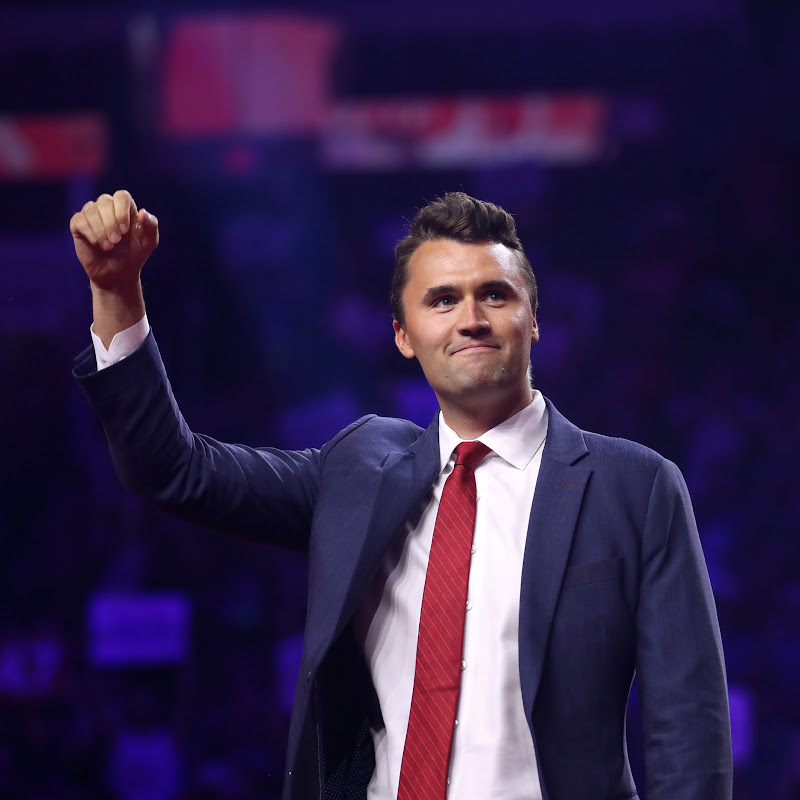
Charlie Kirk is the Founder and President of Turning Point USA, the largest and fastest growing conservative youth activist organization in the country with over 250,000 student members, over 150 full-time staff, and a presence on over 2,000 high school and college campuses nationwide. Charlie is also the Chairman of Students for Trump, which aims to activate one million new college voters on campuses in battleground states in the lead up to the 2020 presidential election. His social media reaches over 100 million people per month and according to Axios, he is one of the "top 10 most engaged" Twitter handles in the world. He is also the host of “The Charlie Kirk Show,” which regularly ranks among the top news shows on Apple podcast charts.
Eric Prince Calls Trump Assassination Attempt an Abysmal Failure of Executive Protection and Security Intelligence
Eric Prince, founder of Blackwater and former Navy SEAL, delivers a scathing analysis of the assassination attempt on Donald Trump. Prince, whose company conducted 100,000 protective missions in Iraq and Afghanistan without a single protectee injury, calls the security failure at the Butler, Pennsylvania rally "grotesque incompetence." From the unsecured rooftop 140 yards away, what Prince calls "the sniper's hotel", to agents unable to quickly evacuate Trump from the X, Prince explains why this represents the greatest humiliation in modern protection history. He breaks down what should have happened, questions whether DEI initiatives have compromised security standards, and discusses whether Trump should continue relying solely on Secret Service protection. Prince doesn't hold back: world wars have started because of failed executive protection, and only Divine Providence and poor marksmanship prevented a national catastrophe.
Eric Prince, founder of Blackwater and former Navy SEAL, delivered a withering assessment of the assassination attempt on Donald Trump at a Pennsylvania rally. "It's an abysmal failure," Prince stated bluntly. "I think it's important for people to remember that world wars have started because of failed executive protection. Think of Francis Ferdinand killed at the beginning and started World War I. Imagine what America would be if the assassin was successful on Saturday."
Prince explained that the unsecured rooftop position approximately 140 yards from Trump represented what professionals call "the sniper's hotel"—the most obvious position any trained individual would immediately identify as a threat. "Anyone with any brain, with any training at all, would go to that site and say that's the spot," Prince emphasized. "It's the logical place where a sniper is going to set up and hang out from that elevated position overlooking the spot with dead space, able to sneak in and get himself positioned. That it wasn't covered is beyond grotesque incompetence."
A Historic Security Breach
When asked about similar incidents in recent presidential history, Prince noted that since Ronald Reagan was shot in the 1980s, there had been no firearm discharge at a current or former president, let alone one being actively shot. Reagan's injury came from a ricochet—the sixth round of a six-round revolver—yet his security team immediately got him off what professionals call "the X," the location where the enemy has decided to attack.
"They drew blood on Donald Trump. They killed someone standing right behind him," Prince said, expressing sympathy for the family that lost a loved one. "It was a serious round, obviously able to pop someone's head. Totally unnecessary."
Competency Issues, Not Resource Problems
Prince dismissed suggestions that lack of resources or personnel explained the security failure. "There's no excuse. There's not a money issue, it's not a manning issue, it's a competency issue," he stated firmly. He pointed to multiple failures that day that had nothing to do with budget constraints.
According to reports, regular civilians were pointing out the shooter in real time, yet law enforcement and Secret Service didn't act. While Prince acknowledged there can always be communication friction—wrong frequencies or information channels—the fundamental decision not to secure that perimeter was inexcusable. "That's not a money issue, that's a competency issue. Getting the president off the X, competency issue, not a money or a manning issue."
Prince was particularly critical of how long Trump remained exposed after shots were fired. "Even after the shots were fired, how long did it take them to get him off the X?" he asked. "They took almost a minute. It was leadership and decision-making."
The Autonomic Response That Should Have Been
Drawing on his extensive experience training protective details, Prince explained that agent responses should be autonomic—as automatic as breathing or digesting food. "It should be as if you are breathing, as if you're digesting food. You don't think about it, it's built into your being, your autonomic nervous system. It's trained into being," he explained.
The word "autonomic" is operative because protective responses should require no conscious thought. "It should be machine-like: if X then Y then Z," Prince said. "And they were anything but a machine that day."
Prince acknowledged that some agents immediately jumped on Trump, which was appropriate, but questioned whether the overall response demonstrated the high level of expertise required. "Some of them obviously were trying to execute a plan and a lot of others were standing around not knowing what to do," he observed. Even if some were temporary details, the solution was simple: "Drill that morning, then drill the night before. Drill, drill, drill and practice and dirt dive it so that you know what to do."
What Should Have Happened
Prince outlined what a proper response should have looked like. From the moment shots were fired, agents should have had Trump off that stage in less than five seconds. "They should have created a protective barrier around him and then immediately moved him, whether he wanted to or not, off that X into a hard car and get him to a position of defense."
One issue Prince identified: some agents were not physically strong enough to control Trump's movements. Trump is a large man—approximately 6'4" with broad shoulders—and was defiant in wanting to stay. "There should be no circumstance ever where a protectee is able to overwhelm the agent," Prince stated.
However, Prince clarified this wasn't purely a body mass issue. "It's a body mass issue, but it's also if the right people with the right holds, and if the president maybe had the confidence of his agent in charge to say we're leaving right now... I've never had that circumstance, whether that's a big lead agent or a small lead agent with the command authority. If they tell the person, they will leave."
The protocol is clear: you don't administer first aid at the site of an attack unless absolutely necessary (such as a cervical spine issue). You evacuate immediately, then administer aid. "They gave Trump a long time to almost collect himself, and it should have been over before Trump even had a chance to realize what was going on," Prince said. "God forbid there could have been either a secondary shooter, an explosive device, or whatever. Get the protectee off the X, and they really failed at that as well."
Prince noted you could even hear the confusion in radio chatter: "What are we doing? What are we going't where are we going? It should not even be a discussion. If X then Y to move them off the X."
Evidence of Inadequate Training
Prince pointed to specific incidents that revealed poor training. One agent couldn't holster her weapon—something that should be automatic. "That's not an ideal response, and that's something that you want to get through those nerves and that adrenaline rush while you're in training, so that it is autonomic," Prince explained. "When you know you have to reholster your weapon, you know exactly where that is and how that feels every time. That is just evidence of the wrong people in the wrong circumstance, and they're overwhelmed. That's called condition black."
A Black Mark on Protection History
Prince didn't mince words about the significance of this failure. "It's a humiliation for their entire community. It's a black mark, the greatest humiliation in modern protection history, because their role had really nothing to do with Trump being saved. It was pure luck of bad marksmanship."
In fact, Prince argued, the Secret Service made things worse. Trump's survival came down to three factors: bad marksmanship by the shooter, Trump turning his head at the critical moment (avoiding having more than his ear clipped), and what Prince called "Divine Providence—the flutter of an angel's wings."
Drawing on his own experience, Prince provided context for just how unprecedented this failure was. At Blackwater, the largest private weapons training facility in the world, they trained about 800 people per day and shot around 1.2 million rounds per month. They trained hundreds of thousands of military personnel and law enforcement officers, including protective details from some of the most dangerous countries in the world.
"We employed some very capable people and we did 100,000 missions, protective missions, in Iraq and Afghanistan, protecting ambassadors, diplomats, visiting presidents, all without anyone being injured under our care," Prince stated. That's private security in active theaters of war—not Butler, Pennsylvania.
Prince emphasized the absurdity: "If we had not secured that building and we were going to have a public event with our guy standing here and we didn't know what the hell was in that building, we would expect to be fired because it's professionally an absolute and complete failure."
Accountability and Leadership Failure
When asked if anyone would be held accountable, Prince was pessimistic but clear about what should happen. "The lead agent of that detail that day absolutely should be fired, especially the advance agent, whoever set that thing up."
He dismissed attempts to blame local police. "That's a cop-out. Is the Secret Service responsible or are they not? Who is responsible? Secret Service is supposed to be responsible for protecting Donald J. Trump, and they totally failed."
Prince also expressed doubt that meaningful consequences would follow. "I don't think anyone will be fired. There might be some resignations where they keep their pension and all that, but no one was fired after Afghanistan, no one was fired after the Hunter Biden laptop, no one was fired after our handling of COVID. So why should we believe all of a sudden that mass firings are going to occur here?"
Trump's Teddy Roosevelt Moment
Despite the security failures, Prince had high praise for Trump's response. "God bless Donald Trump for having the same level of spirit and resolve" as Teddy Roosevelt, who was shot in the chest by an anarchist at a campaign stop just blocks away from where the interview took place. Roosevelt, bleeding, gave his speech for the next hour and a half, famously saying, "It takes more than a bullet to stop a bull moose."
Prince found Trump's defiant "fight, fight, fight" response to be one of the greatest moments in American history. However, he noted that protocol should never allow a protectee to dictate the response. Even Trump's defiance, admirable as it was, revealed security gaps. In a proper protective detail, the protectee's wishes are secondary to their safety.
Should Trump Continue with Secret Service Protection?
When asked whether Trump should continue allowing Secret Service to protect him, Prince acknowledged the complexity. "That's the option he has right now. He could hire people like you, and yes, there's a lot of complexities that go with that because the left and big government hates competitors and they hate to be shown up."
However, Prince was confident that private professionals could do a better job. "There's a lot of very talented people that could protect Donald Trump or could supplement Secret Service to make sure that those gaps are filled and that the questions are being asked and to call bull when things like missing a guy 140 yards away—to call nonsense when they miss the blatantly obvious place where the sniper is going to hang out."
Prince suggested Trump could have five or six experienced professionals who arrive five hours before Trump to double-check Secret Service work. "Someone to say, hey, who's on that roof? Even to properly coordinate. Most of the best part, the most important part of executive protection, is the advance work so that you have a proper plan and you remove the gaps."
The Predator Mindset in Protection
Prince explained a fundamental principle that sets apart elite protection: "The problem with law enforcement doing that is they tend to look backwards, and you want predators. You want to hire the most lethal predators to protect you because they're going to look at it from the outside in to say, 'How am I going to get that guy?' and they figure out how to close those doors."
This requires people who are slightly paranoid, who think offensively, who imagine every possible threat. It's the difference between reactive and proactive security.
The Officer Who Backed Away
Prince was particularly scathing about reports that an officer encountered the shooter on the roof but backed away when the rifle was pointed at him. "That's malfeasance, terribly. If you're a law enforcement officer and you get issued the badge and a gun, you're there to be a sheepdog and you better protect the flock."
That officer had clear direction to protect not just the president but the entire crowd. "If that guy really backed away in cowardice, he should lose his badge and his pension and all the rest," Prince stated. "I think it's time to bring back public shaming for people that completely screw up and fail to do their jobs."
The DEI Question
When asked directly whether DEI initiatives had potentially put Trump's life at risk, Prince chose his words carefully but firmly. "Anything that detracts away from merit and mission execution is an unnecessary distraction, and clearly the Secret Service is not at the level they should be performing right now. That was blindingly obvious on Saturday."
Prince emphasized that standards must be maintained. "Being a protective agent is not for everyone, and there needs to be standards. They need to be adhered to, and I don't care what color people are or who they sleep with or which bathroom they use. I want someone that will protect the president of the United States and lay their life down when necessary."
Final Thoughts and Moving Forward
Prince concluded with a stark reminder of what's at stake. World wars have started because of failed executive protection. Only luck prevented a national catastrophe that would have fundamentally altered American history.
"Let's fix these issues before it becomes blindingly obvious and people die unnecessarily again," Prince urged. The failures of that day in Butler, Pennsylvania, cannot be allowed to repeat.