Exposing the Global Elite's Agenda: Economic Hitmen, Pharmaceutical Corruption, and the Path to Local Resilience
Enjoying this? Share it with someone who needs to see it.
Up Next
Anthony Fauci Invokes Fifth Amendment 111 Times Despite Presidential Pardon, Senate Chaos Erupts
45:20
Tucker Carlson and Cenk Uygur Discuss American Sovereignty, Foreign Influence, and Money in Politics
2:24:42
John Kiriakou Reveals How John Brennan and the FBI Sent Him to Prison for Exposing CIA Torture
2:23:01
Exposing the Global Elite's Agenda: Economic Hitmen, Pharmaceutical Corruption, and the Path to Local Resilience
Multiple experts reveal the interconnected systems designed to extract wealth from ordinary citizens while consolidating power among global elites. From pharmaceutical industry corruption and UN Agenda 2030 to economic hitman operations and government control of education, these voices expose how fear, propaganda, and institutional capture have enabled a coordinated push toward centralized control. They argue the only path forward is local resilience, individual education, and community-based solutions that reject dependence on corrupt systems. The message is clear: think globally, but survive locally.
The Pharmaceutical Industry's Wealth Extraction System
After spending more than a decade in national pharmaceutical litigation, one expert gained unprecedented access to corporate computer hard drives from executives and scientists, revealing how the system actually works. The healthcare system has become a golden goose for large corporations, with enormous amounts of money flowing through political contributions, public relations campaigns, and payments to doctors. Despite litigation resulting in money changing hands and injured parties receiving settlements, the fundamental structure remains unchanged.
The drug companies' realized purpose is simply to extract as much money from American society as possible. Litigation hasn't changed this basic reality. States received settlements for opioid damage, but the extraction system continues unabated. This expert dropped out of litigation specifically because it wasn't creating genuine reform, only transferring money while leaving the corrupt structure intact.
The only path out of this situation requires Americans to become educated about the problem so that the power of voting citizens becomes greater than the power of drug company political contributions and lobbying. Without mass education leading to informed action, genuine reform remains impossible. The American people must understand how deeply compromised the system has become before they can create the political will necessary for structural change.
The Megalomaniacs' Population Control Agenda
At UN summits, the agenda is discussed openly without any attempt at concealment. Global elites are obsessed with the idea that there are too many people on this planet, that humans are consuming too many resources and represent a cancer on the earth. They believe the ideal population would be somewhere between 500 million and perhaps a billion people. With the emergence of artificial intelligence and robotics, many now think even that number is far too high.
If these megalomaniacs succeed in building their one world political and economic system, many people simply won't wake up. They state this clearly and openly. Those who do survive can look forward to a future of slavery where all decisions are made for them. Basic decisions that previously would never have been considered candidates for government control—who to marry, what kind of family to have, how many children to have, what kind of work to do, what to study—would all be determined by the system.
A century ago, technocrats justified this under the guise of efficiency. Today they use sustainability as a buzzword to justify tyranny. The result is the same: loss of autonomy, sovereignty, and liberty. To the extent people are allowed to operate and exist at all, it will be as a means to an end—empowering and enriching those at the top. Personal and economic decisions will be removed from individual control. Entertainment and drugs will be ubiquitous, creating a miserable existence for the masses.
Fear as a Control Mechanism
Fear serves as a powerful mechanism of control. When people are scared of overpopulation, disease, or other threats, they become willing to accept ideas they never would have accepted before. In communist China, authorities don't even need to convince people—they simply point guns, force compliance, throw dissidents into re-education camps, or harvest their organs. China has dispensed entirely with pretense.
Even in the Western world, the progress made through fear is alarming. This has been accomplished through a combination of dumbing down the population, indoctrinating the population, and terrorizing the population. While there remains hope they won't ultimately succeed, they are making substantial progress toward their goals.
The Media's Corruption and Complicity
The primary incentives media personalities respond to are prestige and money. Unfortunately, just like in other professions, most people will sell out their principles and their fellow human beings for money and prestige. This is painfully clear in the media world. The people paid the most in media are those who have sold out their nations, sold out the truth, and served as propagandists for evildoers, in many cases consciously and deliberately.
At UN conferences, thousands of so-called journalists function as a cheerleading section. When a Chinese communist comes out to announce a climate agreement that will supposedly save the world, these journalists rise like trained seals to give standing ovations. They ask no real questions, displaying a level of complicity that is disgraceful.
The situation has become so bad that some real journalists hesitate to identify their profession when asked. They worry people will assume they're one of the nasty, lying, dishonest propagandists that have become enemies of the people. A recent poll found that 60% of Americans regard the media as enemies of the people. While that phrase evokes communist China and the Soviet Union, the reality is that American media has largely earned this designation. They actively want to hurt citizens, selling them out, destroying their country and families, and constantly lying.
Encouragingly, some solid voices continue doing real journalism, digging out information and working to disseminate it. However, the system is doing everything possible to silence these voices through various means. Some journalists are murdered outright. Gary Webb, who exposed CIA involvement in cocaine trafficking, supposedly committed suicide by shooting himself twice in the head. Michael Hastings from Rolling Stone supposedly crashed his car into a tree at 100 miles per hour, after which intelligence agency heads stated they had the technology to make that happen—not that they didn't do it, but that they could have. These incidents serve as messages: touch certain stories and bad things will happen to you.
Sustainable Development Goals and Communist Ideology
The UN's sustainable development goals align closely with the planks and plans of the communist movement since the 1920s. In 1963, the 45 plans of international communism were read into the Congressional record. One plan called for instituting the United Nations as the savior of all nations and getting everyone on board with UN directives. The 2030 agenda is all about establishing the United Nations as the one global authority that will dictate everything.
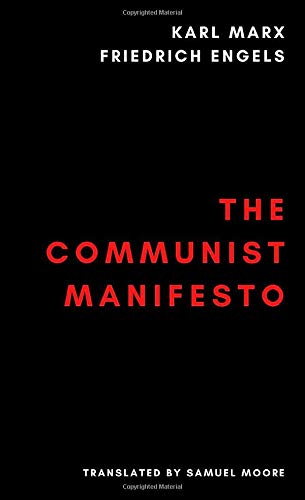
All 17 sustainable development goals fall completely in line with what Karl Marx wrote in the Communist Manifesto. The agriculture plans mirror everything Marx wrote about agriculture. The medicine plans mirror what communists have been implementing with universal healthcare since the 1950s. The equity and redistribution of wealth components are all part of Marx's plan. At their core, the sustainable development goals are communist goals.
The Vatican's Troubling Embrace of Global Agenda
In 2014, Pope Francis met with Ban Ki-moon and Jeffrey Sachs about the UN's sustainable development goals. In that meeting, Pope Francis committed the entire Catholic Church to the sustainable development goals. Since then, he has given numerous statements and calls for implementing these goals every single year.
One year after committing the Church to this agenda, Pope Francis promulgated an encyclical called Laudato Si, which makes 28 references to sustainable development and calls for adoption and implementation of the sustainable development goals. He has made this globalist ideology the central agenda of his pontificate.
Pope Francis has numerous friends who are communists and supporters of liberation theology. This friendship is predicated on similar ideology and philosophy. He strongly supports this one world ideology, which is dangerous given the Church's global influence.
In 2015, Pope Francis addressed the UN General Assembly, stating: "The adoption of the 2030 agenda for sustainable development at the world summit, which opens today, is an important sign of hope. I am similarly confident that the Paris conference on climate change will secure fundamental and effective agreements."
In 2016, addressing the Pontifical Academy of Social Sciences on human trafficking, he said: "I am grateful for the fact that the representatives of the 193 UN member states unanimously approved the new sustainable development goals."
In March 2017, the Vatican held a conference titled "Religions and the Sustainable Development Goals: Listening to the Cry of the Earth and of the Poor." Pope Francis stated: "The 2030 agenda and the sustainable development goals approved by more than 190 nations in September of 2015 were a great step forward for global dialogue, marking a vitally new and universal solidarity."
These are chilling words given what is known about the sustainable development goals. The Vatican has never been critical of the grave and terrible elements of these goals and the dangers they pose worldwide. Instead, they continue lauding them as a great saving plan, using the plight of the poor to push an oligarch's agenda.
Local Solutions to Global Problems
The world thinks globally, but all solutions are local. The smaller you can make yourself, the more self-reliant and independent you become, the more likely you can survive whatever the world does to itself with relatively little impact on your safety and security. While the world will change enough that many current conveniences may not exist as expected, local resilience provides the best path forward.
When the Roman Empire fell and the world entered the dark ages, people returned to Rome 400 years later and marveled at the ruins, unable to figure out how they were built. In just 400 years, all architectural knowledge was lost. The understanding of legal systems, political systems, and the ideas that built the greatest empire eroded along with the buildings.
To be sustainably local, consider communities that produce far more than their needs. One farmer in rural Idaho could feed 10,000 people, while in cities like San Diego, it takes three people outside the city to keep one San Diego resident alive. Throughout history, big cities have always abused rural communities—this happened in France, England, Russia, China, and around the world. It's happening in the United States where farmers feel abused, and in Europe where farmers are in arms, saying they are the breadbasket that keeps everyone alive, yet they face regulations made in cities that have no business dictating rural practices.
Rural Americans understand the environment intimately. They know more about the ground, water, and food supply chain than city dwellers. When thinking locally, there are practical steps to take. Rural people know how to fix everything—they can repair their roof, grow anything, build anything. They're not intimidated because they live in areas where calling an expert means paying $100 just for them to show up before any work begins. They learn to fix things themselves and are remarkably resourceful. This isn't common in cities, where most residents couldn't survive without the current system.
Practical Preparedness for System Collapse
For those thinking seriously about resilience, a minimum of one year's food supply is advisable. Some maintain seven years of freeze-dried, hermetically sealed supplies, including gourmet options. Water storage is critical—underground tanks, pools that can be converted, and the ability to cook both inside and outside provide flexibility and self-sufficiency.
Serious preppers own pickup trucks, ideally from before 1960, because they have no electronics and are easy to work on. They typically maintain their own gas and diesel tanks and pumps, essentially creating a mini gas station. With decent land, three acres could support a family and many others.
The Death Economy Versus the Life Economy
The current economic system, called a death economy by many economists, is not sustainable and not working. Increasing numbers of people recognize this reality. Throughout the world, consciousness is rising as more people understand the system's failures. Simultaneously, the status quo is pushing back harder, which is true throughout history. Whenever there's been a revolution or consciousness revolution, those with money and power try to stop it. The British Empire tried to stop the United States from breaking away, but failed.
Agents of change must take energy from opposition. In martial arts, when facing someone bigger and stronger, you cannot overpower them directly. You must use their energy against them. Good revolutionaries always use the energy thrown at them against their opponents. George Washington exemplified this principle. He kept losing battles repeatedly but had an amazing ability to persist regardless of circumstances. At Valley Forge and many other places, soldiers' feet were bleeding, they had no shoes, no clothes, little or no food, but they kept going, throwing British energy against the British.
Success must be redefined. Reality is molded by perception. There is no United States, no Ukraine, no corporations, no religion, no culture except as we perceive them. When enough people accept a perception or codify it into law, it changes our actions, and when we change our actions, we change reality. Perception molds reality.
Washington recalled the Battle of the Monongahela during the French and Indian War in what is today Pennsylvania. He was with General Braddock, the best British general in America at the time, marching with the largest British army to Fort Duquesne, which would become Pittsburgh. While marching through wilderness, this huge British army was attacked by a much smaller band of Indians and Frenchmen and totally defeated. Braddock was killed, most officers were killed, hundreds of men were killed, while very few French and Indians were even wounded.
Washington survived and remembered this lesson. He told the Continental Congress that the British weren't invincible. All Americans had to do was hide behind trees and change the perception of warfare. Changing perception leads to changed actions, which changes reality. Washington changed the reality of the British Empire at that point in time, and the British Empire never actually recovered.
We're now at a point in history where we've created a system that doesn't work, based on a perception that we need to maximize short-term profits for corporations and materialistic consumption for everyone else. This perception has molded a reality that no longer serves us. We must change that perception and say instead that we need to maximize long-term benefits for all life on this planet.
Confessions of an Economic Hitman
One former insider worked as an economic hitman, initially believing he was doing the right thing. Omar Torrijos, head of state of Panama, changed that perspective. Torrijos was incredibly charismatic and his people loved him. He was a David standing up to Goliath, standing up to the United States and insisting the Panama Canal belonged to Panamanians and should be reverted back.
A huge swath running through the center of Panama was the canal zone, with approximately 18 private golf courses, magnificent clubs, and movie theaters only for Americans or their employees. It was essentially a US colony inside a sovereign state with its own laws and police force—a real thorn in the side of Panamanians who hated it.
Torrijos had been trained at the School of the Americas, a CIA school that trained operatives in Latin America to support CIA objectives. He knew what was going on, having been trained there himself, but came out absolutely determined to stand up to the United States. He was becoming very popular around the world for this stance. As a problem for the American government, an economic hitman was sent to convert him, bribe him, corrupt him, and bring him around.
Torrijos could see this operative had a conscience and just didn't understand what he was doing was wrong. Torrijos said: "You know what you're doing is terrible. That's really wrong. And I want you to understand that. Why don't you come work for me? You won't make nearly as much money, but you'll have a lot more fun. You'll be doing the right thing. You'll be doing something really good for the world."
This message resonated deeply. Torrijos started showing numbers and statistics about what GDP really represents. After extensive research, this operative reached the conclusion that he couldn't continue this work. However, getting out proved nearly impossible. Nobody wanted him to leave. As the youngest partner in the hundred-year history of a major consulting firm, he was constantly told he had a great deal—doing good work, making lots of money, flying first class around the world, staying in finest hotels, eating in the best restaurants, wining and dining with presidents.
He was living the American dream as the son of a teacher in rural New Hampshire. The pressure not to leave was immense, and part of him didn't want to leave because of the lifestyle. But the more he thought about it, the more he realized he was miserable, living on Valium, alcohol, and caffeine. He would travel to places like Indonesia, flying from Boston, spending a night in Hong Kong hanging out at bars, drinking heavily, taking Valium to knock himself out, then waking up drinking tons of coffee to fly to Indonesia and negotiate huge deals involving massive amounts of money.
He finally realized that maybe this was the American dream, but it wasn't his dream. He wasn't happy. Many people in this business still believe they're doing the right thing, stuck in a system that reinforces this belief repeatedly. Business schools taught that investing lots of money in infrastructure and watching GDP grow was the right approach. The World Bank continues promoting this, as do business schools.
Waking People Up to Reality
How do we encourage people to wake up to what's really going on? Many people are waking up these days. By continuing to hammer away through writing, films, and speaking out, everyone can play a role. Teachers can teach students and communities about these issues.
At a major US college lecture about creating a death economy versus a life economy and working within an imperialistic system, an economics professor raised his hand during questions. He had been tenured for 10 years and just realized that all this time, without even realizing it, he had been teaching people to produce a death economy and create an empire. He was actually encouraging people to become economic hitmen. He asked what he could do about it.
The answer: First, don't lose your job. These students need you. Don't be too radical. It's like getting off oil—we can't do it tomorrow. We must be reasonable and move into it gradually. Tell students what they can do to create a life economy. Show them opportunities in businesses that create better solar energy, wind power, or entirely new forms of energy not yet conceived. Encourage them to look at businesses involved in mining plastic from oceans and recycling it, or restoring destroyed forests or mine pits. Encourage students to pursue businesses they will feel proud of passing on to their children and grandchildren.
Move into this gradually, but don't lose your job. Also understand that some people will never get it, so don't bother trying. If someone insists there are no problems in the world and everything is fine, let them have their insistence. Focus on people who are open to thinking in new ways.
There are people who are economic hitmen today. There are jackals in the CIA who have perhaps been brainwashed, coming out of Navy Seals or similar programs, and they're probably never going to get it. But if we can reach their bosses, or the general population who will elect the next leaders, and consciousness changes, then they will change too.
Many of these operatives are followers. They may be extremely brave at going out and taking action, but they follow what they're told is the right thing. They don't necessarily think deeply about what really is right. They trust their sergeant, their general, or whoever is above them. If we can change the perception of what it means to be successful, then those most committed to doing whatever it takes will do what it takes to turn everything around and create a life economy.
How do you define success? If we can turn around the definition of success from accumulating more and more stuff and maximizing profits, recognizing that businesses must make a profit but don't have to maximize it—they can put some toward the long term and helping their employees more—real change becomes possible. Why do billionaires have to keep making more and more billions? It's a sickness, an addiction. The competitive accumulation of wealth is a pathology that must be recognized and rejected.
The Government's Control of Education
The United States now has a system where parents are considered equal partners with the government. This is enshrined in federal policy, but the policy doesn't mean equal partners at all. Parents are the junior partners. Miguel Cardona, Secretary of Education under Joe Biden, was asked point blank in a Senate hearing if parents are the primary stakeholders in their children's education. He responded that they're important stakeholders, but really educators are—and was cut off there.
The education establishment regards parents as at best an annoyance to be kept at arm's length. This is straight from the pit of hell. Nobody loves a child more than his or her parents. Nobody cares more about that child's well-being than his or her parents.
This raises a fundamental question everyone should ask: Why did we allow government to educate our children in the first place? Looking back at history, it wasn't to give them a good education. It was always to move them in a particular direction.
Government should not be in the business of education. The Bible says the purpose of government is to punish evil. It's not to educate kids, provide healthcare, or redistribute wealth. When government punishes evil, it's acting in its proper lane. When trying to educate children, even with the best intentions, it's like collective farms in the Soviet Union. Even if people running collective farms had good intentions—which they often didn't—it still wouldn't work because proper incentives are eliminated. Government control replaces market mechanisms and price signals. It's a disaster even in the best circumstances.
The solution isn't to alter policy slightly or make policy tweaks to improve the collective farm. The solution is to eliminate the collective farm and return to what worked: private property rights. This must be the long-term solution for education. We never should have allowed government, never should have trusted government, with educating our children in the first place.
Looking at American history, for almost all of American history until starting in the mid-1800s, education was entirely parents' responsibility. To the extent they needed or wanted assistance, they turned to churches, communities, extended family, and neighbors—not government.
This is one of the most critical issues. Even in countries where education hasn't become as horrific as in the United States, people need to know that's the direction it's headed. The US government and UNESCO, the UN education agency, are working together to bring all education systems of the world into this global system. That's the direction everything is moving.
Parents, church leaders, people from all walks of life, and taxpayers need to ask: Is it appropriate for government to educate our children? The answer should be no. It's not appropriate.
The Ultimate Solution: Think Local
Our ability to survive is our ability to be local. Think local. The idea that elites who created this mess somehow win in the end is not true. The failure will be so colossal that everybody will reject it. The only way to survive is to be local. Wherever you are, think local.
All your happiness is local. All the people you associate with and depend on are local. Consider it like planets in a solar system. We have a few planets around us. In personal life, there are people we're really close to, but that's very few. We know lots of people and many consider us friends, but reality limits us because time limits us. We would have a million planets around us if we could have all that time, but we don't.
We must think about finding a place that is local with people who are likeminded. People who are likeminded have a value system. Their politics is common sense, not Democrat or Republican or liberal or conservative. Those labels are meaningless when looking back at your life and who's in your bedroom as you're taking your last breath. It's those last few planets around you. That's all that matters.
The elites can't change that. They'll never be able to change that ever. Their primary goals are supposedly to make the world a better place, but the intelligence community is intertwined with all of this. The goal of this whole enterprise is to transfer money from working Americans to the super rich. The real problems in the world are created primarily by leaders. It's the leaders who must be held accountable and replaced with those who serve the people rather than exploit them.
Video Transcript
[Music] So when you understand the enormity of this problem of Our health care system having basically become a golden goose for the large corporations and the amount of money that comes in through politicians and the public relations and the paying doctors and so forth. You get a hopeless sense. I spent more than 10 years in national pharmaceutical litigation. During those 10 years, I got to see what was in the corporate computers. I we got the hard drives from the executives and the scientists and got to see how this really works. I I dropped out of litigation because it wasn't changing anything. Money changed hands. People who were injured got paid off. States who got hurt by opioids uh got some money. But it's not changing the basic structure of what's going on where the drug company's purpose and realized purpose is to just extract as much money from American society as they can. That's why I wrote Sickening to explain this problem and to show people that there's only one path out of this. The only path is for Americans to become educated about this problem so that the power of Americans voting is greater than the power of the drug company's political contributions and lobbying. There's no other path out of this mess than for the American people to become educated enough to act in a way that will create genuine reform. But if these megalomaniacs get their way with their one world political and economic system that they're trying to build, a lot of us won't wake up. That they are obsessed with the idea that there are too many of us on this planet, that we're consuming too many resources, that we're a cancer on the earth. So many of us won't wake up. I I'll just say that clearly. They say that clearly. And when I go to these UN summits, it's just out in the open. They don't even hide it. They believe there are too many people here. Uh they think the ideal population would be somewhere between 500 million and maybe a billion. uh and even that with the emergence of artificial intelligence and robotics, I think a lot of them now think that even that is is far too high. So many of us won't be waking up if these megalomaniacs get their way. But those who do wake up, I think uh really can look forward to a future of slavery. Uh a future where all of your decisions are made for you. Um even basic decisions that in the past wouldn't have even been considered as possible candidates for usurpation by government. Like you know, who do I want to marry? What kind of family do I want to have? How many children do I want to have? what kind of work do I want to do? What do I want to study? All these things would be determined for you. Um the technocrats back a 100 years ago used to claim it was under the guise of efficiency. So we'll make the world more efficient. Today it might be under the guise of being more sustainable. That's just another ridiculous buzzword to justify tyranny. But the the short answer is you will lose autonomy. You will lose sovereignty. You will lose liberty. And to the extent that uh you're allowed to operate and exist at all, it will be as a means to an end. that end is to empower and enrich the people at the top. So you will not make your own economic decisions. You will not make your own personal decisions. Um your your entertainment will be uh kind of ubiquitous. Uh drugs will be ubiquitous. Um and uh I mean it about as miserable as can be. They use fear as a very very powerful mechanism. And when people are scared of overpopulation, of a disease, of whatever, uh they're willing to accept ideas that they never would have accepted before. Uh now in communist China, you know, you don't even really have to convince people to do stuff. You just point a gun at them and force them or throw them into a re-education camp or cut their organs out. Uh so in China, they've even dispensed with the pretense. But even in the Western world, it's so alarming uh that they have been able to make so much progress. And it's through a a combination of dumbing down the population, indoctrinating the population, and terrorizing the population uh that they've been able to accomplish so much. Uh I hope they won't succeed, but um they're definitely making a lot of progress. Really, the the primary incentive that they use for the media is prestige and money, right? Uh unfortunately, just like in other professions, uh most people will sell out their principles. They'll sell out their fellow human beings for money and prestige. And we see that so clearly in the media world. You look at the people who are paid the most in the media world, they're all people who have sold out their nations, who've sold out the truth, who've served as propagandists for evildoers, uh, in many cases consciously doing so. So, it's very, very sad. You know, when I go to these UN conferences, there are thousands of so-called journalists there. I I call them the cheerleading section. It's pathetic. You see a a Chinese communist come out and make an announcement that we're going to save the world with this climate agreement. And these guys, like trained seals, they get up and give them a standing ovation. Are you kidding me? you don't have any real questions to ask them. So, it it really is disgraceful. I I even hesitate nowadays to like if I'm in a Uber, somebody askked me, you know, what what's your job? I I even hesitate to say journalist because they they just assume like, oh, you're one of those like nasty, lying, disgusting, dishonest propagandist, enemies of the people, if you will. Uh so, that's very sad. But we do still have uh journalists out there who are doing good work, and I'm grateful for them. Uh, and I hope um you if we defeat these megalomaniacs that history will record that there were still some of us out here doing real journalism despite what the the clown car at CNN and all the rest of them were doing. It is very demoralizing to see what a joke journalism has become. Uh, and and the people see that. There was just a poll that was released recently here in the United States that found that 60% of Americans regard the media as enemies of the people, which I I don't like that phrase because it reminds me of, you know, communist China and the Soviet Union and things. But the reality is, yeah, the media in America has largely become enemies of the people in the truest sense of the term in that they want to hurt you. Uh they're selling you out. They're they're destroying your country. They're destroying your family. They're lying to you. So, they really are. Uh it is encouraging that there are still some uh solid voices out there that are doing real journalism that are uh digging out the information and doing their best to disseminate it. Um, but what's happening is the system, if you will, is doing everything possible to silence those voices through different means. Now, some of them they just murder outright. Gary Webb was a really good example, uh, who exposed the CIA's involvement in cocaine trafficking. Well, he committed suicide by shooting himself twice in the head. Uh, and and that is not uncommon, unfortunately, when it comes to journalists. Um, there was the journalist from Rolling Stone, I believe Michael Hastings was his name, who supposedly crashed his car into a tree at 100 miles an hour or something. Uh, and then heads of intelligence agencies came out and said, "Oh, we have the technology where we could have done that." Not, we definitely didn't, but you know, we could have done it. It's like they're laughing at us, right? And it was the same with Gary Webb. Everybody knows he didn't, everybody with a brain knows he didn't kill himself by shooting himself twice in the head. Um, but it it's like a message, right? If if you touch these stories that you're not allowed to touch, bad things will happen to you. The sustainable development goals themselves are very very closely aligned with the planks and the plans of the communist movement since the 1920s. You have to remember back in 1963 this was actually read into the congressional record in uh in the United States that the there were 45 plans of international communism. One of them was to institute the United Nations as the savior of all nations and to get everybody on board with falling into line with what the United Nations is trying to do. The 2030 agenda is all about in instituting the United Nations as that one global authority that's going to dictate everything. So all of the plans, all the planks of the uh 17 sustainable development goals, they fall completely in line with what Karl Marx had written in the Communist Manifesto. You talk about the stuff with agriculture, absolutely mirrors everything that Karl Marx wrote about agriculture. You want to talk about medicine, absolutely mirrors what the communists have been implementing with trying to create universal health care since the 1950s. And you want to talk about things with equity and and um redistribution of wealth. These are all part of Marx's plan. So the sustainable development goals at the very heart are communist goals. And the real question is why? Why is the Catholic Church so invested in making sure that those plans are realized? And the real answer is that the Catholic Church has been infiltrated. And that's the reason why they are so committed to pushing these goals of the United Nations. One of the things that you have to understand is that back in 2014, Pope Francis had a meeting with Ban Kimmoon and Jeffrey Sachs about the sustainable development goals of the United Nations. In that meeting, they were talking about the uh sustainable development and Pope Francis committed the entire Catholic Church to the sustainable development goals. And ever since then, every single year, he has given all kinds of statements and public statements and calls and cries and calling for the implementation of the sustainable development goals. One of the things that he did was he promulgated an encyclical called Laodato Ci and this came one year after he committed the Catholic Church to the sustainable development goal agenda. Laatoc makes 28 references to sustainable development and calls for the adoption and implementation of the sustainable development goals. And ever since as I mentioned he has made it his his uh pontificate's agenda to make sure that this globalist ideology is implemented. The question is why why is he doing this? And I think a lot of it has to do with the fact that Pope Francis has a lot of friends who are communists, a lot of friends who are part of the liberation movement and that that friendship is predicated on a similar ideology and philosophy and he is very much in support of this one world ideology and it's it's very dangerous. So in 2015, Pope Francis actually addressed the assembly, the general assembly of the United Nations. And I want to read to you something that he said. He said, "The adoption of the 2030 agenda for sustainable development at the world summit, which opens today, is an important sign of hope. I am similarly confident that the Paris conference on climate change will secure fundamental and effective agreements." He also said in 2016 uh this was during a uh an address that he gave to the Pontipical Academy of of uh social sciences on the topic of human trafficking. He said I am grateful for the fact that the representatives of the 193 UN member states unanimously approved the new sustainable development goals. And then later in March of 2017, the Vatican held a conference that was called religions and the sustainable development goals. listening to the cry of the earth and of the poor. I mean, again, wrapping in all of this uh earth crisis and poverty crisis uh stuffs just to try and give a sense of urgency. He said this, "The 2030 agenda and the sustainable development goals approved by more than 190 nations in September of 2015 were a great step forward for global dialogue, marking a vitally new and universal solidarity." Those are chilling words given what we know about the sustainable development goals. And what's more is that we have to understand the Vatican has never really been critical of the very grave and and terrible elements of the sustainable development goals and the dangers that they impose to anyone around the world. They just keep lauding them as if they were this great saving plan uh of these oligarchs that are going to now transform society and make things better for for poor people. So they're using the plight of the poor to push an oligarch's agenda. That's sick. >> So what can we do about it? So this goes back to this whole thing. The world thinks global. All solutions are local. So the tinier you can make yourself, the more self-reliant you can make yourself, the more independent you can make yourself, the more likely you can survive whatever the world is going to do to itself with relatively little impact on your safety and security. On the other side of the coin, the world is going to change enough that a lot of the conveniences that we may have today, we we may not have the way that we think that we would ha have them. When the Roman Empire fell and we went into a period of time called the dark ages, 400 years later, people came back to Rome and marveled at the ruins of the Roman Empire and could not figure out how they built it. In 400 years, they had lost all that architectural knowledge. They have been dumbed down. How their legal systems worked, how their political systems worked. The greatest empire imploded, was gone, and the ideas of which they built all of that stuff on eroded with the buildings that they had built. In my mind, it's easy to see what you would have to do to be sustainable local. So, like in my case, you know, I live out here in Idaho, so I had a a rule, you know, and I didn't do it because I thought the world's going to end. I just did it because it seemed to make sense. And one road in, one road out. A a local community that produces 10,000 times more than their needs. So, one farmer in Parma, Idaho could feed 10,000 people. Whereas where I came from in San Diego, it takes three people outside of San Diego to keep one San Diego alive. And by the way, you know, the history of the world is big cities always abused the rural communities. It happened in France. It happened in England. It happened in Russia. It happened in China. It happened all over the world. It's happening in the United States where the farmers really feel abused. This is happening in Europe where the farmers are, you know, up in arms saying like we're the we're the bread basket. We keep you guys alive. You can't be abusing us like this and coming up with rules that work in the city, but have no business out here in the farm. And don't talk to us about the environment. We are the environment. We know more about the ground than you do. We know more about the water than you do. We know more about the food supply chain than you do. I bring that up because when you think local, there are things that you can do to help yourself and there are other people you'll still specialize in in things. You can't do uh everything. But I, you know, an interesting thing that I learned about rural America, rural Americans or Russians or rural anything, they know how to fix everything. I honest to God, they can fix their roof. They can grow anything. They can build anything. They're just not intimidated and they had to learn how to do it because they live in a rural area and getting somebody out to with the expertise to do that. They have to pay $100 just to have them show up at the door before they even start and they don't have that kind of money. So, they just learn how to fix things on their own. They're very res resourceful. You don't see that in the in the city. And most city folks couldn't survive. If you are thinking about this stuff, then you know the thing that you think about is a minimum of uh a year supply of food. I have seven years supply of food. Mine is all freeze-dried and her medically sealed and all that kind of stuff. And I did the high-end prepper. So mine are gourmet things cuz if I'm going to suffer, I want to suffer at least, you know, kind of gourmeting it as I'm going along. I have 10,000galon underwater tank. I have a 40,000galon pool that I can convert into something else. I could cook inside. I could cook outside. You know, I'm I'm I'm self sufficient. If you're really into prepper mode, you would own a pickup truck and you would own a pickup truck that was pre 1960. I forget what it is, but anything in the 1950s cuz it has no electronics on it. And there, you know, it's easy to work on the engine. They're easy to fix. You don't have all the electronics and all the other stuff that that may not be viable going into the future. Typically, if you were a real prepper, you would have your own gas tank, your own gas pump, your own diesel pump, your own g diesel tank, like a little mini gas state uh station. And then you would have, you know, [Music] probably as a prepper with a decent land, you could probably support your family and lots of other people with three acres. Easy. Easy. [Music] Well, the current economic system, what I call in many economists, they're calling a death economy, is is not sustainable. It's not it's not working. Increasing numbers of people are seeing that. I have the uh wonderful opportunity to travel around the world a lot speaking at events and everywhere I go, I see that people are raising their consciousness. They're be they're more and more understanding that the system isn't working. At the same time, the status quo is pushing back harder and that's been true throughout history. Whenever there's been a an interest in a new idea, let's call it a revolution. And some people object to that word. It's a little sarm, but I think we're going through a consciousness revolution. And whenever there's something like this going on, uh the people who have the money and the power try to stop it. That's been true historically. You know, the the British Empire tried to stop the United States from breaking away from that that rebellion. And but the the important thing here is for the people who are the agents of change, the rebels, if you will, to take energy from the opposition. So, I've been a martial artist most of my life, and I know that I if I'm up against a guy who's bigger and stronger than me. I I can't I can't I can't use I can't outpower him. I can't overpower him. I've got to use his energy against him. And good agents of change, revolutionaries, if you want to call it that, will always use the energy that's thrown against them, that's thrown at them. they'll use it against their opponents. Uh George Washington was a great example of that. You know, he he kept losing battles over and over and over. I mean, the guy the guy had an amazing ability to to to stick in there regardless of what happened as soldiers. Their feet were bleeding. They, you know, Valley Forge, they and many other places, they had no shoes. They had they didn't have clothes. They were they had no food or very little food. But they just kept going and and they were throwing the British energy against the British. Uh and they realized that and you know I think and and the other thing is to to change people's perception of what it means to be successful. So um reality is molded by perception. You know, there's no United States, there's no Ukraine, there's no corporations, there's no religion, there's no culture except as we perceive them. And when enough people accept a perception or codify it into law, it it changes our actions and when we change our actions, we change reality. So you can really say that perception molds reality. And a great case was George Washington because uh back in 1773 1774 almost all Americans believed the British were invincible. Biggest most powerful army in the world best trained best finance. You couldn't possibly go up against them. Washington recalled a time 20 years later during the French and Indian War at the battle of what's called the Battle of the Manonga Hila in what's today Pennsylvania. And uh he recalled that he was with General Bradock who was the best uh British general in the United in the in America at the time and the largest British army and they were marching to to to Fort Dukane which which which would become Pittsburgh. But marching through the wilderness, this huge British army and they were attacked by a much smaller band of Indians and Frenchmen and to totally defeated. Bradock was killed. Most all of his officers were killed. Hundreds of his men were killed. Very few French and Indians were even wounded. It was it was a classic. And Washington remembered that he was there. He was one of the few who survived. So he goes before the I think before the Continental Congress, he speaks to people and he says, you know, the British aren't invincible. All we got to do is hide behind trees, change the perception of warfare. And you know, it's all about changing perception and then taking actions and and that changes reality. And of course, Washington changed the reality of the British Empire at that point in time. and it the British Empire never recovered actually. Um so you know we're at this point in time now in history where we see that we've created a system that doesn't work and it's based on a perception that we need to maximize short-term profits for corporations and materialistic consumption for everybody else. That's a perception that's molded a reality that is not no longer working for us. So, we got to change that perception and say, "No, what we really need to do is maximize long-term benefits for all life on this planet." >> There's a lot that can be done to oppose this agenda. And I would suggest that it begins at the individual level. I It begins with everybody listening to me right now becoming informed. Don't just believe the things I said because I said them. You don't know me personally. Go read these documents that I'm making reference to. Go read these speeches that I'm making reference to. What you'll find is that this is exactly what these evildoers say, but the vast majority of people do not understand. So, step one is really to educate ourselves uh and those in our immediate surrounding, maybe starting with our families, starting with our neighbors, with our churches, with our individual communities. After you're done educating those in your immediate vicinity, I I think it really needs to then become actionoriented. So, uh I think that begins at the local level. you know, develop relationships with your city council, with your mayor, uh get involved in the local political process, get involved in the political parties at the local level, get involved somehow at the grassroots level, and maybe run for office, maybe support somebody running for office. So, we have seen how much states and local governments can do to hold back this push for tyranny. Even just recently, uh here where we're sitting in in my little corner of Florida during the COVID madness, uh we kind of just opted out. I mean, we we didn't participate. our our local, our county, and our state government for the most part left us alone. Uh in many cases, they actually actively intervened to protect us from the madness coming out of Washington DC. And we're seeing that right now with Agenda 2030, with these uh different UN programs. The legislature of Alabama voted unanimously over a decade ago to ban UN agenda 21 in in their state. Um just very recently, we had a Louisiana state senate vote unanimously to ban this World Health Organization power grab in their state. So this is something that can be replicated all around the world even though we all have different political systems. If you're a member state of the European Union, uh ask your parliament to pass a law saying that we are not going to submit to this kind of tyranny in our country. If you live in Oklahoma, work with your state senator, work with your state representative to get a bill passed saying those ridiculous things coming out of the UN are not going to be enforced in our state. Anybody who tries to enforce them is going to be guilty of a crime, is going to be arrested, and is going to be prosecuted. Uh these are all things that we can do. We can work with our sheriffs to make sure that they are understanding. Their job is to protect our rights. Their job is to uphold the Constitution that they swore to uphold, not impose whatever Joe Biden or the United Nations says they need to be imposing on us. H what changed me? That's a good question, right? Because I did believe that what I was doing was the right thing for a long time. And but I began to suspect things and uh uh Omar toos, the head of state of Panama, an incredibly charismatic man. I I really liked him. He was a party animal. You know, he loved to party and invited me to these wonderful barbecues and his people loved him. And he was a he was a David standing up to Goliath. He was standing up to the United States. He was insisting that the Panama Canal belonged to Panameanians. It should be reverted back. you know, Panama this and I I would be there and see this this huge swath that runs right through the center of the country that's the canal zone and it had something like I think I got the number right 18 private golf courses and these magnificent clubs and and lots of movie theaters only for gringoes or people that were employed by them. You know, it was a it was a US colony inside a sovereign state of Panama and they had their own laws and their own police force and everything else and it was an it was just it was a real thorn in the side of panameanians and to the hated it. Now thereso had been trained in the school of the Americas, a CIA school that trained, you know, operatives in Latin America to support the CIA. So he knew what was going on. and he'd been trained there and and he came out of it and and he you know he was he was absolutely determined to stand up to the United States and he was becoming very popular around the world as this as this David little country that had a big canal but very few other resources and very no military. It had a national guard but no other military. It didn't have a very big economy and here is standing up the United States and so he's a problem for the American government and I'm sent down to convert him to bring him around to bribe him to corrupt him to bring him around and he gets it and he and I liked him and he could see that I had a conscience and I just didn't understand what I was doing was wrong. And Omar says to me, he says, "You know what you're doing is terrible. That's really wrong. And I I want you to understand that. Why don't you come work for me? You won't make nearly as much money, but you'll have a lot more fun. You know, look at what I got. And and uh you'll be doing the right thing. You'll be doing something really good for the world. It got to me, you know, like I I got it. Like that's I I that really really rang true to me. And then he started showing me numbers and statistics about, you know, what what GDP really represents. And I began doing more and more research on this. And and and finally I I I I reached the conclusion. I couldn't continue to do this. And but I have to say it was next to impossible to get out. For one thing, nobody wanted me to get out. And I was constantly told, you've got a great deal. I was a partner in this major consulting firm that was a partnership and I was the youngest partner in the history in the hundred year history of the firm and you know I I was told you know look you're doing you're doing good work and you be making a lot of money and you're flying first class around the world and staying in the finest hotels and eating in the best restaurants and whining and dining with presidents and I grew up the son of a teacher in rural New Hampshire. you know, I this was the American dream that I was living. And so, not only was I having a lot of pressure not to get out, but I also there was this other side of me that didn't want to get out because I was living the American dream. But the more I thought about it, the more I realized that I was miserable. I was living on Valium and alcohol and caffeine. And so, you know, I would travel, like for example, I was traveling to Indonesia a lot, and I would fly from Boston, end up spending a night in some place like Hong Kong, and you know, I'd go hang out the bar at night, drink a lot of alcohol, take take a Valium, knock myself out, go to bed, have to get up in the morning and drink tons of coffee, and then fly off to Indonesia and and and meet with people and and negotiate huge deals, lots and lots of money. you know, and I realized that maybe this was the American dream, but it wasn't my dream. I I wasn't happy. So, that that was very very important thing to finally see. But you know, I think there's a lot of people in this business today still that were then and there still are who really believe they're doing the right thing and they're stuck in a system that reinforces that over and over. I was taught in business school, you know, this was the right thing. Invest lots of money in infrastructure. Watch the GDP grow. The World Bank continued to promote this. It still does. The business schools still do. uh how do we encourage people to wake up? How do we get them to wake up to to what's really going on? And we see a lot of people waking up these days. So, what's really going on? You know, I think if we just keep hammering away, my job is to do it through writing. I write books uh and in films and and speaking out, but but everybody can play a role. I teachers can can teach kids about this and teach people about this. And I was lecturing uh a couple of months ago at a at a at a major US college and I I give this speech about how we create a death economy and we need a life economy and and what I was doing was creating this death economy and this imperialistic system. And at the end I opened it up to questions and uh the gentleman in the room raises his hand. I called him. He said, "You know, I'm an economics professor here. I've been here for 10 years. I'm tenured. And I've just realized that all this time without even realizing it, I was teaching people to produce a death economy, to create an empire. I was actually encouraging people to become economic hipmen. That was my job. And I've just realized it. And then he said, "What can I do about it?" That's my question to you, Mr. Perkins. what can I do about it? I said, um, well, first of all, don't lose your job. These kids need you. Uh, so don't be too radical about this. It's a little bit like, you know, saying, "We need to get off oil, but we can't do it tomorrow. We've got to be we've got to be reasonable about it. We've got to move into it." And I said, "So, you know, tell these students what they can do to create a life economy. Don't tell them to not to be create a death economy. Oh, show them what they can do. Go into business that creates better solar energy or better wind power or whole new forms of electric of of energy that we haven't even conceived of yet." and and and go into businesses that that create technologies for for mining all the plastic that's in the oceans and and recycling it or or restoring destroyed forests or destroyed mine pits. You know, encourage your students to look to businesses that they will feel proud of sending onto their children and grandchildren. So, you know, move into this, but don't lose your job. But we also have to understand that some people will never get it and don't bother to try. You know, like if Aunt Susie sits around the the table during Thanksgiving and and and is is insistent that there are no problems in the world and everything is just right and she's totally insistent on that. Let her have her insistence, you know, go go go to Uncle Ed who is open to thinking in new ways. Uh and I think that this is important. So yes, there there are people that are economic hitmen today. There are jackals or people in the CIA who've been perhaps brainwashed by come out of the Navy Seals or they've come out of some place like that and they're probably never going to get it. But if we can get to the people who who um are their bosses or you know if we can get to the general population who's going to elect the next uh leaders of our country uh and and ch consciousness changes then they will change too. And you know, it's been my experience and I've known quite a few of the jackals and and and I've learned from these people that usually, you know, they they're they're followers. You know, they're they may be extremely brave at at going out and shooting people or doing whatever it is, but they will follow what what they're told is the right thing. They don't they don't necessarily think too much about what really is the right thing. They they trust they trust they trust the sergeant. They trust the general. They trust whoever. And so if we can, you know, change the perception of what it means to be successful, then those who are most committed to doing whatever it is it it takes uh will will do what it takes to to to turn to turn all that around and create the life economy. Uh you know, so how do we you how do you define success? And if we can turn around the definition of success from being one of accumulating more and more stuff, maximizing profits and so on and say, "Yeah, businesses have to make a profit, but they don't have to maximize it." You know, they can they can they can put some of it toward the long term and toward helping their employees more. You know, why does why does Musk or why do any of the billionaires have to keep making more and more and more billions? You know, it's it's a sickness. It's an addiction. It's I want my B. You want what's your yacht is bigger than mine. I got to go out and buy a new yacht, you know, and and it's it's a sickness. It's it's an addiction. You can call it anything you want. >> So, so we now have a system in the United States where parents are considered equal partners with the government. This is actually enshrined in federal policy. And if you read the policy, they don't mean equal partners at all. They mean parents are the junior partners. And they've testified to this. Miguel Cardona, the Secretary of Education under Joe Biden, was asked point blank in a Senate hearing if parents are the primary stakeholders in the education of their children. Well, they're important stakeholders, but really educator, and he cut him off there. Uh, so they regard parents as at best an annoyance to be kind of kept at arms length. Uh, this is, in my opinion, straight from the pit of hell, right? There's nobody who loves a child more than his or her parents. There's nobody who cares more about the well-being of that child than his or her parents. But this actually gets to really a a fundamental question that I think all of us should be asking is why did we allow the government to educate our children in the first place. If you look back at the history, I can tell you it wasn't to give them a good education. It was always to move them in a particular direction. I frankly think we need to get away from that whole idea. Government really should not be in the business of education. The purpose of government, the Bible says, is to punish evil. It's not to educate kids. It's not to give you health care. is not to take your neighbor's money and give it to you. It's to punish evil. And when they do that, they're they're acting in their lane. When they're trying to educate children, even if they had the best of intentions, right? It's like the collective farms in the Soviet Union. Even if the people running the collective farms had good intentions, which they often didn't, um it still wouldn't work because it it's just you get rid of the proper incentives. You have uh government control instead of market mechanisms and price signals. So, it's it's a it's a disaster even in the best of circumstances. those the solution then isn't to alter the policy a little bit or to to do some policy tweaks and improve the collective farm. The solution is to get rid of the collective farm and go back to what worked which was private property rights. Uh and I believe that really is going to have to be the long-term solution when it comes to education. We never should have allowed government. We never should have trusted government with the education of our children in the first place. Uh if you look at American history, for almost all of American history up until starting in the mid 1800s, education was entirely the responsibility of parents and to the extent that they needed some assistance or wanted some assistance, they went to their churches, they went to their communities, they went to their extended family, they went to their neighbors, they didn't turn to government. Uh so in my opinion, this is one of the most critical issues. Um even in the countries where education hasn't gotten as horrific as it has in the United States, people need to know that's the direction it's headed. I know that's the direction it's headed because the US government, the UNESCO, the UN education agency are working together on bringing all the education systems of the world into this global system. And so that's the direction it's moving. Uh and I think parents and and church leaders and and people from all walks of life, taxpayers need to really ask, is this appropriate for the government to educate our children? And and I hope that they will find that the answer is no. That's not appropriate. Our ability to survive is our ability to be local. Think local. The idea that the elites who did this to everybody somehow win in the end is not true. That's the the failure will be so colossal that everybody will reject it. And the only way to survive is to be local. Wherever you're at, think local. Think local. All your happiness is local. all the people that you uh associate with um that you'll depend on are local. You know, you almost have to kind of look at it like um planets, right? So, we have our solar system. We got our few little planets around us that think about your own personal life. I have people that I'm really close to, but that's very few. I know lots of people. I have lots of people that consider me their friends, but the reality is I'm limited because time limits me. Honestly, I I would have a million planets around me if I could and if I could have all that that time, but I don't have that time um with them. So, I have to really think about finding a place that is local with people who are likeminded like me. People who are likeminded have a value system. Their politics is common sense. It's not it's not Democrat or Republican or li liberal or what all those things are really quite meaningless when it comes down to looking back at your life and who's in your bedroom as you're taking your last breath. It's those last few planets that are around you. It's all welcome. So, you know, and the elites can't change that. They'll never be able to change that ever. >> Their primary goals are to supposedly make the world a better place. >> The intelligence community is intertwined with all of this. The goal of this whole enterprise is to transfer money from working Americans to the super rich. The real problems in the world are created primarily by leaders. It's the leaders. Truth first, uncensored. Community funded. Continue watching exclusively on Unified TV.