Father Chris Alar Ties Charlie Kirk's Assassination to the Gospel Call to Love Enemies
Enjoying this? Share it with someone who needs to see it.
Up Next
Alisa Childers on Charlie Kirk's Memorial and the Shift in Her Ministry Approach
45:48
Pastor Rob McCoy Delivers Powerful Sermon After Charlie Kirk's Murder and the Global Movement That Followed
1:10:54
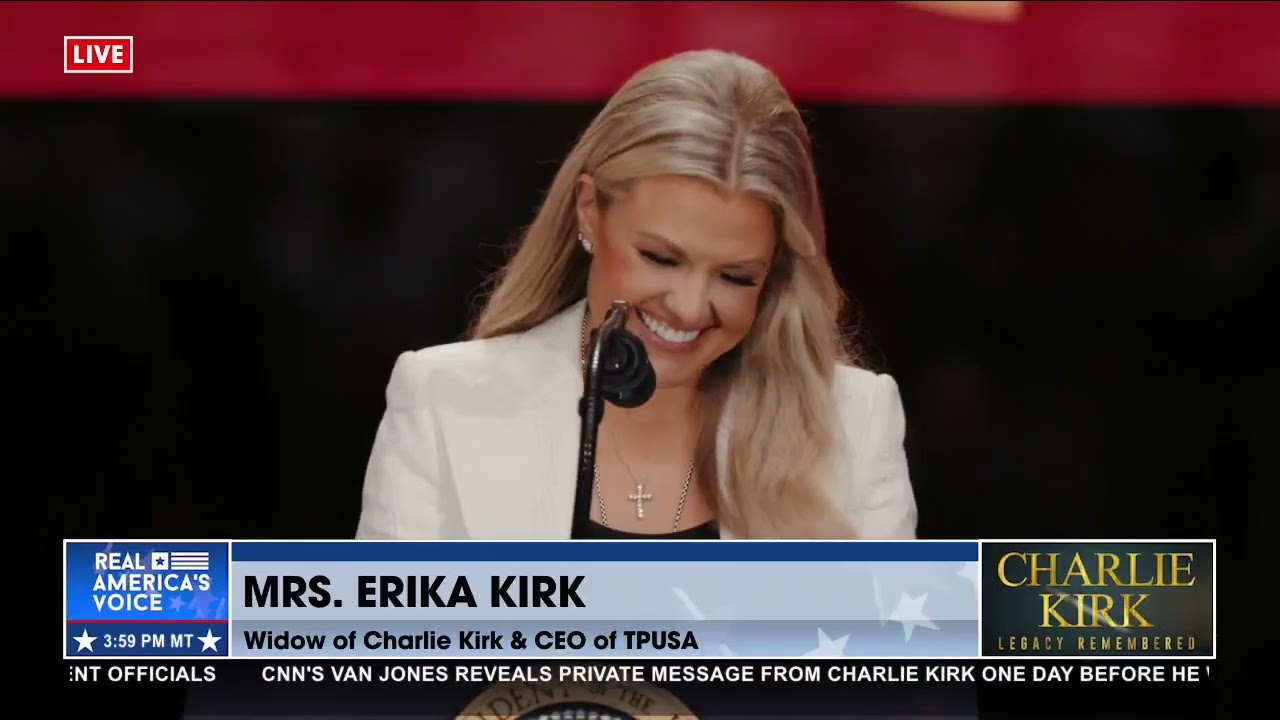
Erika Kirk Says She Saw God's Mercy in the Moment She Found Charlie's Body
2:36
Father Chris Alar Ties Charlie Kirk's Assassination to the Gospel Call to Love Enemies
Father Chris Alar delivers a homily connecting the day's gospel reading, love your enemies and pray for those who mistreat you, directly to Charlie Kirk's own teaching and to his assassination. He recounts offering Mass for Kirk and his family the night of the shooting after watching a video in which Kirk described murderers as still being children of God deserving of prayer. Alar argues Kirk's killing marks the first political assassination in the United States since Martin Luther King Jr. and Robert F. Kennedy were killed in 1968, drawing a parallel to Herod's response to John the Baptist when truth could not be defeated through argument. He criticizes a moment in Congress when lawmakers booed a request for silent prayer, a network anchor's suggestion that Kirk's divisiveness made violence against him understandable, and shares his own experience receiving death threats and hate mail for sharing Kirk's message and for commenting on vaccine risks.
Father Chris Alar opens by reflecting on how closely the day's gospel reading, Jesus's call to love your enemies and pray for those who mistreat you, mirrors what he observed in Charlie Kirk himself. He recounts watching a video the night before in which Kirk described murderers as still being children of God and said he prayed for them, prompting Alar and Father Jason to go into the chapel and offer Mass for Kirk and his family, especially his wife and children, immediately after hearing the news.
What Charlie Kirk Stood For
Alar describes Kirk as someone who was not a lawmaker or politician but was killed for what he stood for, crediting him with making it acceptable to be both pro-life and openly Christian, and with inviting those who disagreed with him onto a public platform under the banner of his slogan, prove me wrong. Alar notes Kirk deliberately chose hostile environments like college campuses, believing the best argument should win, and argues Kirk was winning because his platform rested on truth.
A Political Assassination Without Recent Precedent
Alar cites Utah's governor describing Kirk's killing as a political assassination, and notes it marks the first political assassination in the United States since Martin Luther King Jr. was killed in April 1968 and Robert F. Kennedy was killed that June. He repeats a reflection from Father Jason that when one side cannot defeat the truth through argument, it turns to violence, drawing a direct comparison to Herod's response to John the Baptist.
Kirk's Desire to Be Remembered for His Faith
Alar recounts a video sent to him in which Kirk was asked what he would want to be remembered for if he died, and Kirk answered that he wanted to be remembered for the courage of his faith. Alar also references a clip shared by Father Matthew Tomy in which Kirk spoke about the Virgin Mary, noting the courage it took for a Protestant figure to speak with such regard for Marian devotion.
Reaction From Congress and the Media
Alar criticizes a moment on the floor of Congress in which lawmakers reportedly booed a request for a moment of silent prayer, calling it unimaginable in recent decades. He also criticizes a network news anchor who suggested Kirk's divisiveness made him responsible for the violence committed against him, arguing this reflects a broader pattern of demonizing political opponents that leads to real violence.
Personal Experience With Backlash
Alar shares that he received significant hate mail after sharing a clip of Kirk speaking about the faith years earlier, before he knew much about Kirk himself, and separately describes receiving a credible death threat that required police involvement after he mentioned in a homily that his mother had died from vaccination-related complications and urged people to be aware of health risks.
Citing Church Teaching on Political Speech
Alar cites paragraph 2246 of the Catechism, which states that the Church has a duty to make moral judgments on political matters when fundamental human rights or the salvation of souls are at stake, arguing that Kirk's advocacy for free speech on college campuses falls squarely within that duty.
Drawing a Parallel to September 11th
Delivering this homily on the anniversary of the September 11th attacks, Alar reflects on stories of good emerging from that tragedy, including a chef who saved over a hundred lives, a firefighter who later became a priest, and a survivor who founded a ministry for the spiritual care of the needy. He recalls that churches filled with people the Sunday following the attacks, many of whom remained committed to their faith afterward, and recounts a priest at the time urging the congregation to pray not only for the victims but for the terrorists as well.
A Call to Pray for the Shooter's Conversion
Alar closes by saying he prays for the shooter's conversion rather than his damnation, citing a Catholic devotion centered on praying for the conversion of sinners. He prays for Erika Kirk to find the strength to forgive, for the families affected by both September 11th and Kirk's assassination, and for the country to turn back to God.