
Up Next

Stephen Gardner Backs Official FBI Narrative on Charlie Kirk While Trigger Matt Questions the 306 Bullet Theory
34:42
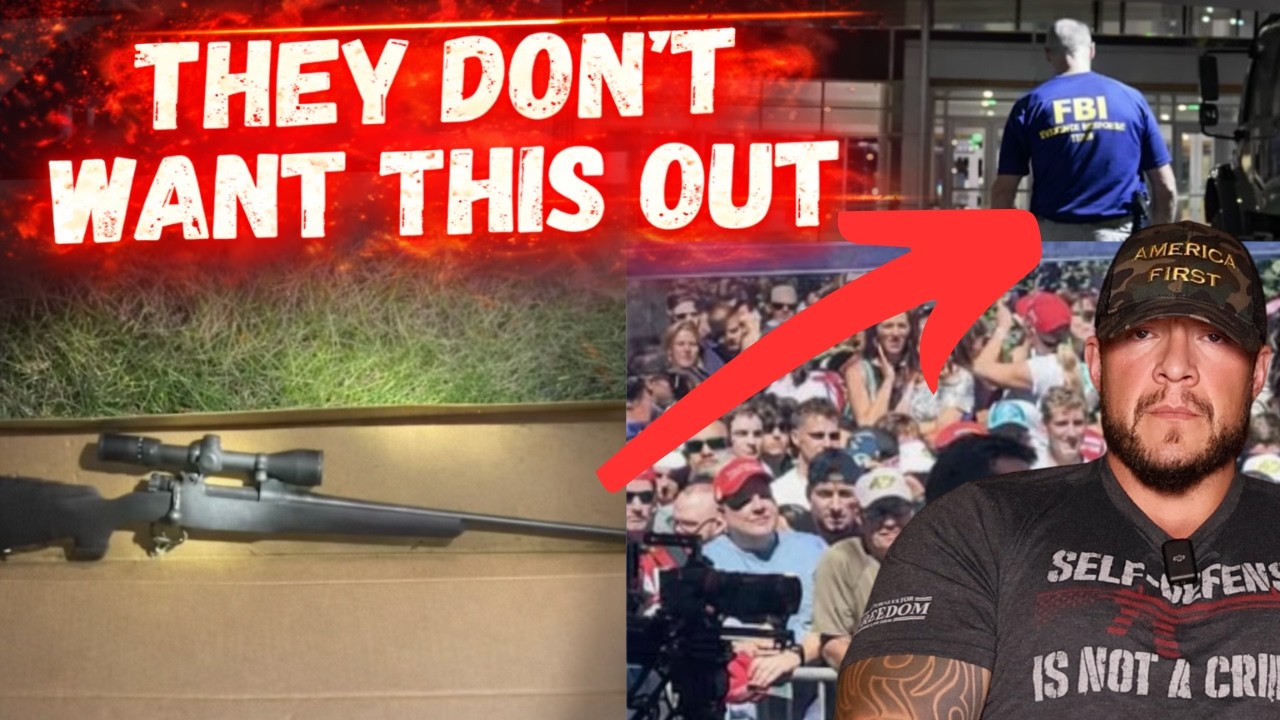
ATF Report Shows Bullet That Killed Charlie Kirk Did Not Match Tyler Robinson's Rifle
12:00
FBI Deputy Director Dan Bonino Reveals Investigation Details Into Charlie Kirk Assassination and Warning Signs
15:21
Related Books
Browse Conservative Books





Former FBI Sniper Shares Perspective on Charlie Kirk Assassination Investigation and Media Misinformation
Jeremy Rebmann, a retired FBI sniper with decades of experience opens up about the challenges of discerning truth in high-profile cases amid widespread media speculation. Drawing from 25 years of federal investigations, he discusses the investigative process, the role of counter snipers in the FBI, and why he withholds judgment until evidence is presented in court. He addresses questions about the assassination case while defending the integrity of field agents despite leadership controversies. The conversation explores operational details, conspiracy theories, and the critical distinction between political leadership failures and the dedicated work of frontline law enforcement professionals.
The Role of FBI Counter Snipers
The conversation begins with questions about the FBI's counter sniper capabilities and whether they would be utilized in assassination investigations. The former FBI sniper explains that while counter sniper teams exist for dignitary protection and other tactical applications, he retired three years ago and much of the recent events happened after his departure. He acknowledges that it would be logical for the FBI to consult its own snipers for investigative purposes in cases involving sniper activity.
Navigating Media Misinformation and Trust
When asked about the Charlie Kirk assassination case and the multitude of video footage and theories circulating, the retired sniper expresses deep skepticism about media sources and even government officials. He admits feeling uncertain about who to trust, stating he doesn't know what to believe anymore. However, he maintains faith in his former teammates, explaining that he can still call them to get insight into recent events like the Dallas shooting, which gives him confidence that his old team is still functioning at full capacity.
He emphasizes a fundamental principle: murder is wrong, and killing someone for political reasons is despicable. The sniper shares his frustration about a cancelled interview due to the current negative perception of snipers, expressing anger that a murderer would be referred to as a sniper when the term represents a professional skillset, not criminal activity.
Inside Information on the Investigation
When pressed about whether he has insider knowledge about the Charlie Kirk assassination, the former FBI sniper confirms he has reached out to friends and former teammates but has learned nothing beyond what has already been publicly released. There have been no surprising or scandalous revelations shared with him through his contacts.
Analyzing Operational Details
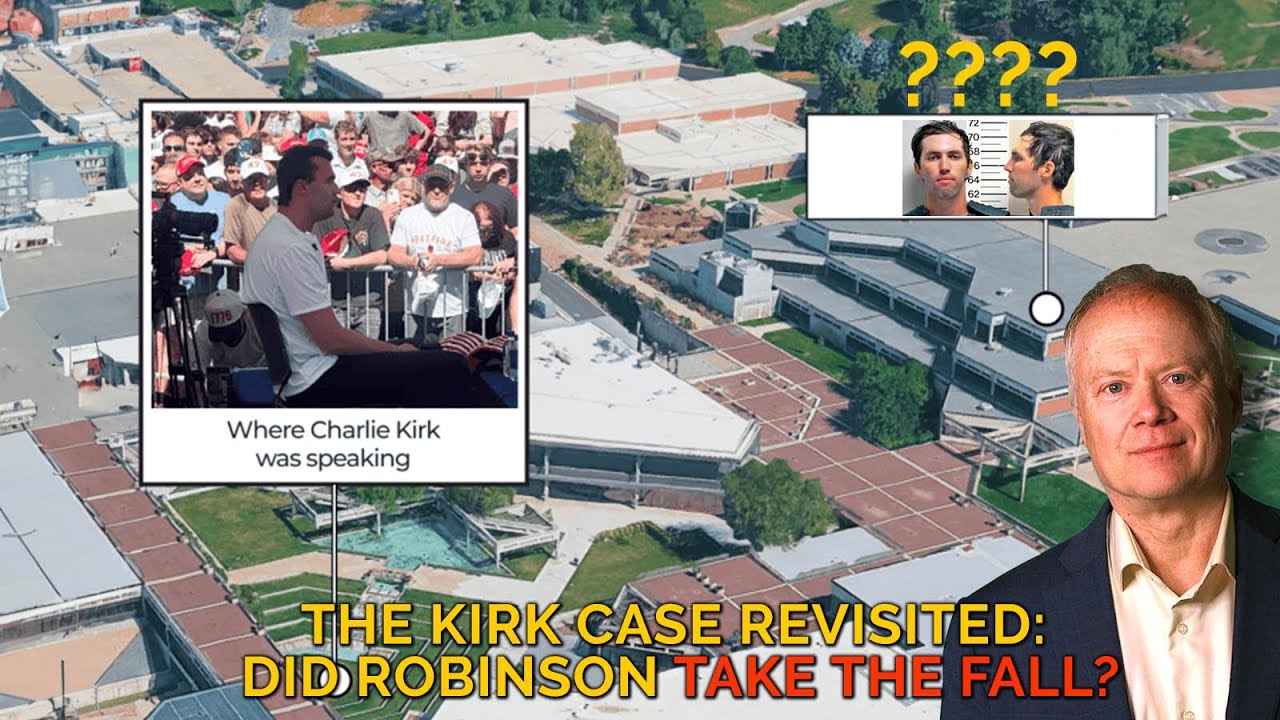
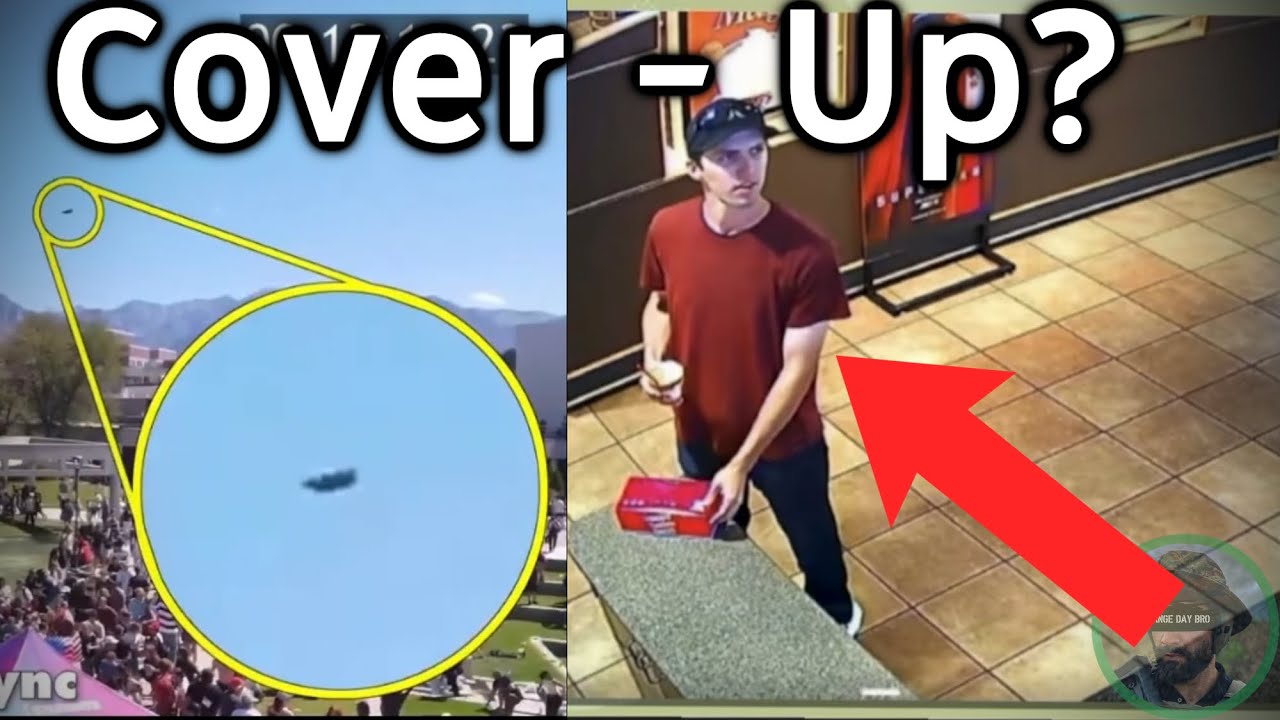
The interviewer raises questions about specific details that seem inconsistent, particularly regarding video footage showing the suspect jumping off a roof without an apparent weapon, when the weapon—an old Mauser bolt action rifle that isn't easy to break down quickly—was later found hundreds of yards away in a tree line, reassembled and wrapped in a towel.
The former sniper acknowledges this seems bizarre but cautions against drawing conclusions from media reports. Drawing from his experience working major cases, he explains how media outlets, desperate for information, sometimes get details mixed up—not necessarily nefariously, but in their rush to report. Sometimes these mistakes actually generate better ratings because they become scandalous. Based on this experience, he takes everything he sees on television with a grain of salt, questioning whether information comes from finalized reports or is simply media speculation designed to increase ratings.
His approach is to withhold judgment, refusing to make determinations about what's plausible based on incomplete or potentially inaccurate media reports.
The Investigative Mindset
When asked directly whether it's possible for the suspect to have concealed the rifle on his person, broken it down on the rooftop, jumped from height, and transported it hundreds of yards away to be reassembled and hidden, the former FBI agent admits he has no idea. He acknowledges this isn't the answer the interviewer wants, but explains his professional approach: during 25 years of federal investigations, he learned to deeply suspend judgment as long as possible to avoid setting bias.
He explains that while working cases, he would follow leads but always remain open to alternative possibilities. He expresses continued confidence in the federal court system, where cases are presented before juries of ordinary citizens and highly trained attorneys present DNA evidence, ballistic matches, recovered shrapnel, and photographs. When overwhelming evidence is presented and a jury makes their decision, that's when he's ready to decide what he believes is true.
By contrast, he doesn't find news consumption reliable for forming opinions. He listens to his Echo Dot in the morning, taking in NPR, Fox, and other sources, believing the truth lies somewhere in the middle. He admits he doesn't watch the videos being circulated—including the specific footage the interviewer references.
The Legal Standard vs. Public Speculation
The interviewer acknowledges potentially falling into the trap of picking apart details, but seeks clarity on whether the how of an escape is essentially irrelevant if the scientific evidence—ballistics, DNA, weapon analysis—proves beyond doubt that a specific person fired the weapon that ended the victim's life. The former FBI sniper confirms this is a fair assessment of how cases work in the legal system.
Why Conspiracy Theories Don't Hold Up
The former agent explains why he doesn't get excited about conspiracy theories: in a large agency with high standards like the FBI, it would be impossible to keep a conspiracy under wraps. He asks people to put themselves in the first-person position—if you and your ten best buddies were involved in something nefarious, somebody would run their mouth, and probably proudly.
The interviewer agrees completely, noting he's made the same point for years. While acknowledging justified mistrust of government at every level, he argues that the larger the scale of an alleged false flag operation, the more credit you're giving these agencies to pull it off without someone writing a tell-all book for a $10 million advance or drunkenly spilling secrets that end up recorded.
Addressing the FBI's Trust Problem
The conversation then addresses why, given the very real trust issues with the FBI—citing January 6th, the Epstein case, James Comey, and controversies going back before Trump's first term—the agency doesn't proactively share details to clear up speculation about bullet trajectories, weapon logistics, and other questioned elements.
The former sniper explains that old school bureau protocol dictates you don't talk about an investigation until it's done. This used to be respected; you could tell a congressman to wait, and they would understand. The reasoning is sound: if you give information piecemeal, people don't get the whole picture, potentially skewing public understanding. Additionally, premature disclosure could alert suspects who might still flee or destroy evidence.
Defending the Rank and File
The former FBI sniper becomes particularly passionate when defending the agency against broad-brush criticisms. He acknowledges being super defensive of the FBI, having given most of his life to the organization, witnessed horrible things, and left a piece of himself behind doing a job for a country he loved.
He offers a military analogy: when people hear about controversies involving figures like Kash Patel or James Comey or DOJ leadership and then say they can't trust the FBI anymore, it's like someone criticizing a Navy SEAL because a four-star admiral said something to a three-star admiral who didn't do what he was supposed to do. The SEAL would respond, "What does that admiral have to do with me and my trident?"
The point is clear: leadership failures don't reflect on the dedicated field agents doing the work, just as admirals' decisions don't reflect on operators in the field.
Video Transcript
[00:00] From a sniper standpoint, I am curious
[00:02] because it's been, excuse me, such a big
[00:05] uh hotbed topic now. Is there a counter
[00:08] sniper component to FBI both in in
[00:11] practical application of whether it's
[00:13] dignitary support or things that you're
[00:16] doing where it would make sense to do
[00:18] counter sniper, but then do they also
[00:20] utilize somebody like yours expertise in
[00:24] say a Charlie Kirk assassination case
[00:26] where they would bring you in as an FBI
[00:28] sniper and and help the investigation?
[00:30] Like do you do any of that
[00:33] or would you do any of that? I Let me
[00:36] think about that. I don't think I did. I
[00:40] >> I guess would would it be logical for
[00:43] >> Yeah. Part of it was like, you know, I
[00:46] retired three years ago and a lot of
[00:48] this crap just happened. So, yeah, I
[00:50] would I think it would probably be
[00:52] reasonable that the FBI would would look
[00:54] at its own snipers
[00:56] for investigative purposes.
[00:58] >> Yeah.
[00:59] >> Um,
[01:00] >> while we're on that topic,
[01:02] >> Yeah. I'd love to hear your thoughts on
[01:04] it. You know, as as a multi-deade FBI
[01:07] sniper seeing the Charlie Kirk
[01:09] assassination and just the multitude of
[01:13] conspiracy, I don't even want I don't
[01:15] want to necessarily say conspiracy
[01:16] theories, but all this different angle
[01:19] and video footage that hasn't been seen
[01:20] before and you know, who knows if it's
[01:22] doctorred or not or if it's completely
[01:24] CGI generated. Like, you don't know what
[01:26] to believe. But from like that 30,000 ft
[01:29] view, what is your take on the overall
[01:32] assassination
[01:34] operationally?
[01:37] >> Well, you struck a like you struck a
[01:39] point with me that
[01:41] I I'm to the point where I feel like I
[01:43] don't know who I would trust with
[01:46] anything from the media or from Man,
[01:49] that sounds crass or from any government
[01:52] official like I
[01:53] >> like even the one you used to work for.
[01:55] I would. Yeah. Well, and that's what I
[01:57] mean that's the I feel very fortunate
[01:58] because I can call my old teammates and
[02:00] go, "Hey man, what happened like with
[02:02] the Dallas shooting that just happened?"
[02:04] I call my teammates and they were like,
[02:06] "Hey, yeah, we just did this stuff that
[02:08] they're allowed to tell me."
[02:11] And so, it's nice to have that peak into
[02:13] like, okay, my old team is still
[02:15] functioning. They're still banging on
[02:17] all eight cylinders. And so, I have
[02:19] faith in that. Like that's the thing I
[02:22] have the most faith in in our government
[02:24] because I was in it for so long.
[02:27] But when I watch news stories and hear
[02:29] the
[02:31] I don't know what to believe. You know,
[02:33] I'll tell you what I think you already
[02:35] believe is that like murder is wrong
[02:39] and killing someone for any political
[02:41] reason is despicable. I hate I had a an
[02:46] interview lined up for this weekend that
[02:48] just got cancelled.
[02:50] And if they watch this, I'm not I was
[02:53] disappointed because I was looking
[02:55] forward to talking to them, but they
[02:57] canceled it because of all the stuff
[02:59] that's going on and the perception of
[03:02] what a sniper is right now. And that
[03:06] it made me kind of mad. I was talking to
[03:08] one of my teammates and uh who's out in
[03:11] Virginia this morning and he's like,
[03:14] "Hey, in fairness, Marian Webster, it
[03:17] says sniper is someone who shoots from a
[03:19] concealed location." But it bothers me
[03:21] that there's sort of a we don't want to
[03:23] talk about you and your career in the
[03:25] military and the FBI
[03:27] because you're a sniper because a sniper
[03:29] is a bad thing right now. You know, like
[03:30] I wish
[03:31] >> Yeah, that's just
[03:32] >> makes me mad when they refer to this
[03:34] like a murderer as a sniper. Screw that
[03:37] guy.
[03:37] >> Yeah.
[03:39] To me, the burning question is is do you
[03:41] know anybody that has any insight into
[03:45] the Charlie Kirk assassination
[03:46] specifically? And have you talked to
[03:48] them about anything that that they know?
[03:54] >> Nothing. That's not No,
[03:56] I don't.
[03:57] >> So, that's a no or nothing that we
[03:59] >> like nothing that's not already. Yeah.
[04:01] Like I've I've called friends and
[04:04] teammates and nothing surprising or
[04:07] scandalous like
[04:08] >> So the answer is yes, you do know people
[04:10] and have reached out to them, but there
[04:11] hasn't been any
[04:12] >> Yeah.
[04:13] >> information that hasn't already been put
[04:15] out,
[04:16] >> right?
[04:16] >> Yeah.
[04:16] >> Yeah. The one thing that um again from
[04:20] your operational expertise being so
[04:22] extensive
[04:24] the and I don't want to turn into one of
[04:26] these guys that analyzes every every bit
[04:28] of footage and says, "Oh, it came from
[04:30] the back and well, what about his shirt
[04:32] in this way and whatever, but but the
[04:33] one thing that I am a little baffled on
[04:36] is
[04:38] and to be clear, like who knows if if
[04:40] the video footage is even authentic and
[04:42] and original and unaltered, but
[04:45] >> the weapon that was used, right? It's
[04:47] this old mouser bolt action.
[04:49] >> Mhm.
[04:49] >> It's not easy to break down quickly.
[04:52] >> Mhm.
[04:53] >> He There's video of him jumping off the
[04:55] roof. Unless I'm missing something, I I
[04:57] I don't know where that weapon could
[05:00] have been on his person when he's doing
[05:02] that.
[05:02] >> Mhm.
[05:03] >> And then it's found again later on
[05:06] hundreds of yards or further away in a
[05:08] treeine, put back together, wrapped in a
[05:10] towel.
[05:12] Does that line up as being plausible to
[05:15] you?
[05:16] >> Seems bizarre.
[05:19] I I'll tell you the having been on the
[05:21] inside
[05:23] working on some big cases and seeing
[05:25] what the media not even nefariously just
[05:29] like begging for crumbs, right? It's
[05:31] their job. They're like, I want every
[05:33] little know, every little thing. and
[05:35] they'll get something mixed up and
[05:37] sometimes they get it mixed up and they
[05:38] give even better ratings because now
[05:40] it's scandalous. And so from the inside
[05:42] I've seen that and thought you're
[05:45] getting it wrong and you're getting more
[05:46] attention now that you're getting it
[05:47] wrong. So everything I see now on TV I
[05:51] take with a grain of salt because I
[05:52] think did that actually was that part of
[05:54] the finalized report or is that
[05:56] something that someone in the media is
[05:57] scrging up to increase their rating? So
[06:00] I my attitude is like I just withhold
[06:02] judgment. I mean, I'm right there with
[06:05] you when it comes to, oh, he was at
[06:06] Dairy Queen an hour later or 20 minutes.
[06:08] Like, okay, that that doesn't, you know,
[06:10] maybe he was, maybe he wasn't. If the
[06:12] dude's off his rocker, then what, you
[06:14] know, but to me, like, it's irrelevant,
[06:17] you know? Like, to me, that doesn't say,
[06:18] well, it couldn't have been him cuz he
[06:19] calmly had a blizzard 20 minutes later.
[06:21] Like, who knows?
[06:23] >> Mhm. To me, the the one thing that I can
[06:25] say unequivocally that that I would say
[06:28] this doesn't match with what I know
[06:30] about shooting from elevated positions
[06:32] and trying to eress quickly
[06:34] >> and and escape after the fact that the
[06:36] video that you see there very clearly
[06:40] demonstrates to me that there's a hole.
[06:44] So I would just ask like from your
[06:46] perspective like is it possible that he
[06:49] had the rifle on from the video that
[06:51] you've on his person from the video that
[06:53] you saw that he was able to break it
[06:56] down on the rooftop conceal it in a
[06:58] manner which you can't tell that it's on
[07:00] his body and make a jump from that
[07:01] height and land the way that he did.
[07:04] Take off running with both of his arms
[07:05] loose with just a floppy jacket or or
[07:08] hoodie in one hand and managed to to get
[07:10] that rifle hundreds of yards away or
[07:12] further. put back together, wrapped in a
[07:15] towel, and concealed. Does that seem
[07:16] possible?
[07:19] >> I have no idea. I I know that's not the
[07:22] answer you're looking for, but I think
[07:24] part having been having done federal
[07:26] investigations for 25 years,
[07:30] I deeply suspend
[07:32] judgment as long as possible. Like, I
[07:35] don't want to set a bias for myself. So
[07:38] when I was working a case, if I followed
[07:40] a lead, you know, I'd followed a lead,
[07:41] but I would always be open to what if.
[07:45] And one of the places I still have a lot
[07:48] of confidence is is in our federal court
[07:50] system. You know, like this will go
[07:53] before I don't know if this one
[07:55] particularly will necessarily, but these
[07:57] big cases go before courts where guys
[08:00] like you and I get to sit in the jury
[08:01] box and really highly paid, highly
[08:05] trained attorneys get to duke it out.
[08:07] And when they can sit down and say,
[08:09] "This guy's DNA is here and it was on
[08:11] this and this bullet matches the, you
[08:14] know, the chromium amount of that's in
[08:16] this bullet and a shrapnel was recovered
[08:19] from here and here's photos that were
[08:22] taken." So, you know, when they start to
[08:23] put together that kind of stuff and a
[08:26] jury makes their decision and there's
[08:27] overwhelming evidence, that's when I'm
[08:29] like, "Okay, now I'm ready to start
[08:30] deciding what I think is true and what's
[08:32] not." I just don't
[08:35] watching stuff on the news. I just mean
[08:38] really I don't I don't I don't really
[08:39] watch the news. I listen to it. I listen
[08:41] to like my Echo Dot in the morning and I
[08:45] listen to NPR and Fox and US. Like I
[08:49] want to hear I want to hear all of it
[08:51] and then I want to pick apart
[08:53] somewhere in the middle is probably the
[08:56] truth of it. But I don't watch I don't
[08:57] watch the videos.
[08:58] >> Yeah.
[08:59] >> Like the video you're talking about I
[09:00] haven't watched.
[09:01] >> Okay. Uh, I mean, maybe I'm guilty of my
[09:03] own accusation of picking things apart
[09:06] and and I want to be transparent enough
[09:09] to say, you know, maybe I I do fall into
[09:12] that category because I I don't disagree
[09:14] that in in the court of law, it's like
[09:15] if if ballistically and scientifically
[09:19] you can prove that that this weapon was
[09:22] fired and and the bullet that came from
[09:24] it is what ended his life and your DNA
[09:27] is now on that weapon and it's at this
[09:30] location,
[09:32] how you got it from point A to point B
[09:34] is essentially irrelevant, right?
[09:36] Because it ultimately it's connecting
[09:38] enough dots to prove beyond the shadow
[09:40] of a doubt in a court system
[09:42] >> that you fired that weapon and killed
[09:44] them no matter how you got away with it.
[09:46] No, you know, no matter how you
[09:47] houdinied your way off the roof and
[09:50] >> is that those are the facts and so
[09:52] everything in between is is essentially
[09:53] inconsequential. Is that a fair way to
[09:56] look at it?
[09:57] >> I think it is. And I I don't get too
[09:59] excited about conspiracy theories
[10:02] because
[10:04] in a really big agency that has really
[10:06] high standards like the FBI,
[10:10] you could never manage to keep a
[10:11] conspiracy under wraps. Like if you if
[10:14] people put themselves in the first
[10:15] person position, they put themselves in
[10:17] the seat of being the agent, knowing
[10:20] what I know about how the agency is
[10:21] built, the amount of auton autonomy that
[10:24] we get. But if you think about like you
[10:26] and your 10 best buddies,
[10:29] >> somebody's going to run their mouth.
[10:30] >> Someone's going to run their mouth,
[10:31] right? And they'll proudly, right? If
[10:33] they're like, "Mike, here's the deal.
[10:35] We're going to blow up the Twin Towers."
[10:36] Wait, hear me out. You'd be like, "Oh,
[10:39] >> no. I I mean, yeah, I I agree. I agree
[10:41] 100%. I've said that for years now on
[10:44] the show with uh you know a lot of
[10:46] skepticism towards a lot of things is
[10:48] that you know while I understand
[10:50] mistrust of the government and and in
[10:53] pretty much at every level and capacity
[10:56] they have shown us that that they've
[10:58] broken our trust time and time again.
[11:01] Having said that, the larger the scale
[11:04] of the operation that you're saying was
[11:06] a false flag or, you know, some sort of
[11:10] uh shell game bait and switch,
[11:13] >> you're you're frankly giving these
[11:15] people way more credit than than is
[11:16] deserved to pull something like that off
[11:18] and not have somebody have a tell- all
[11:21] book with a $10 million royalty advance
[11:23] or, you know, got drunk one night in
[11:25] Colombia with some hookers and spilled
[11:27] the beans and it's on, you know, a cell
[11:29] phone recording or or whatever. ever.
[11:31] >> Yeah.
[11:31] >> Uh so I I mean I I don't disagree with
[11:34] any of that and and again like as I'm
[11:36] talking through it, maybe I'm not maybe
[11:39] I mean I'm leaping to that same
[11:40] conclusion of saying well this video
[11:42] doesn't add up but if all of the other
[11:45] evidence you know very succinctly or or
[11:48] distinctly proves that, you know, hey,
[11:51] the bullet that ended his life came from
[11:53] this weapon and your DNA is all over it.
[11:56] Uh there's, you know, an ability to
[11:58] prove that you were on the rooftop. like
[12:00] it it kind of doesn't matter from a
[12:02] technical and legal process through the
[12:05] court system how you you got it done.
[12:07] However, I would say that because the
[12:10] distrust is so high in, you know,
[12:12] especially the FBI right now, cuz let's
[12:14] be honest, between January 6th, the
[12:16] Epstein Epstein stuff, Comey, I mean,
[12:19] going all the way back to to um I mean,
[12:22] I would say even pre uh Trump's first
[12:25] term, you know, there's been some some
[12:27] missteps, but because that is such a a
[12:30] problem,
[12:31] >> if it were me and I'm Cash Patel, I
[12:34] would go out of my way to share those
[12:37] details. details and say, "Hey, I know
[12:38] that there's been a lot of questions on,
[12:41] you know, the bullet entry and impact,
[12:43] and so we're going to clear some of that
[12:44] up. I know there's been a lot of
[12:46] speculation as to there's no way he
[12:48] could have had the had the weapon, and
[12:49] here's what we found."
[12:52] >> Why don't they do that?
[12:54] >> Well, old school bureau is you don't
[12:56] talk about an investigation till it's
[12:58] done. And I feel like that used to be
[13:00] respected, but you could tell a
[13:02] congressman and they would say, "Of of
[13:03] course, like, wait till it's done." And
[13:06] because if we give you a little bit here
[13:07] and a little bit there, you're not
[13:09] getting the whole picture. And now we're
[13:10] accidentally skewing what we're telling
[13:12] you. Or we're, you know, if someone can
[13:15] still flee, we're giving them a clue
[13:17] that they should run or whatever the the
[13:19] case is. But
[13:21] I do want to I want did you you said
[13:23] something that made me think about, you
[13:25] know, I'm super defensive of the FBI.
[13:28] Like I just am. I gave understandably
[13:30] most of my life and uh and saw a lot of
[13:34] horrible things and patched up bullet
[13:36] holes
[13:38] >> um and left a piece of myself behind
[13:41] doing a job for a country that I loved.
[13:43] So, but something like I think you would
[13:46] understand this in particular when I
[13:48] hear the crap on TV
[13:52] about like you mentioned, you know,
[13:54] Patel or Comey or someone in the DOJ. I
[13:59] think to use another military analogy,
[14:02] it would be like you as a SEAL now as a
[14:05] former SEAL. If someone said, "Hey man,
[14:08] did you hear fourstar admiral so- and so
[14:10] said something to three star admiral so
[14:12] and so?" and then he didn't do the thing
[14:15] that he was supposed to do as an admiral
[14:16] and now you can't trust seals anymore.
[14:18] You'd go, "What? What does that have to
[14:21] do? What does that admiral have to do
[14:22] with me as my trident?
[14:24] [Music]




Comments
Be the first to comment on this video.