Up Next
Candace Owens Reveals Shocking Missing Evidence in Charlie Kirk Assassination Investigation and Crime Scene Analysis
24:45
Jim Spiewak Interviews Four Witnesses to the Charlie Kirk Assassination at Utah Valley University
20:25
Kim Iversen Reacts to Charlie Kirk Assassination at Utah Valley University Event
37:06
Frank Turek's Harrowing Account and the Psychology Behind Eyewitness Trauma From Charlie Kirk's Assassination
Frank Turek, one of Charlie Kirk's closest friends, was standing beside him at Utah Valley University when a single shot changed everything, and his firsthand account of the drive to the hospital sits at the center of a deeper look at what trauma does to the human mind and body. Drawing on neuroscience, the freeze response, memory imprinting, survivor's guilt, and the conspiracy theories that spring from ordinary gestures caught on camera are all explained through the lens of that day. Derek Van Schaik also traces how secondary trauma spreads to people who only watched footage online, and closes with Erika Kirk's public words of forgiveness toward her husband's alleged killer. It's a measured explanation of why witnesses freeze, why some memories never fade, and why security teams carry a distinct kind of guilt, built around real testimony rather than speculation.
A Different Kind of Question
What psychological trauma did those who witnessed what happened to Charlie Kirk experience, whether they were a close friend, a loved one, a supporter, or an internet viewer watching from home? Rather than focusing on the footage itself, this look at the events of September 10, 2025, at Utah Valley University in Orem, Utah, explores the psychology and neuroscience of what happens to eyewitnesses who observe tragic events.
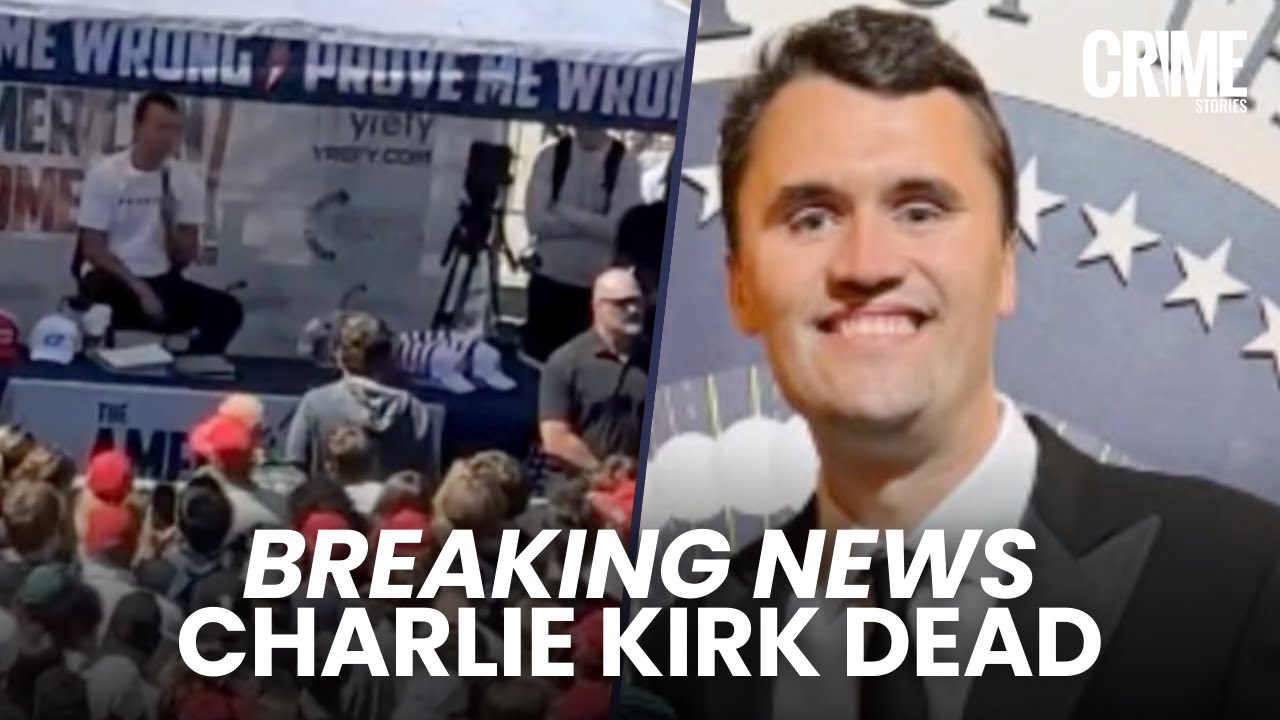
Kirk was running his familiar open-mic Q&A format that day, the same one he had taken to campuses across the country, debating students on everything from religion to sports to politics. It was the first rally of the new school year, and interest in his 'Prove Me Wrong' format had grown over the summer. More than 3,000 people showed up, many without tickets, simply walking in. Frank Turek, one of Kirk's closest friends and a religious adviser who was with him that day, later recalled an unease on the drive in. 'Charlie, I don't like this place. There are too many buildings,' Turek told him. Kirk brushed it off.
The Freeze Response
Multiple eyewitnesses at the event described physically freezing in the moment the shot rang out. That reaction has a name: the freeze response, a classic reaction to shock from a sudden, unexpected traumatic event. The body freezes because the brain doesn't yet know what to do in an unfamiliar and uncertain situation. Evolutionarily, staying still allowed early humans to process what was happening and avoid detection before deciding whether to fight or flee.
Not everyone reacts the same way, and that variation comes down to differences in how each person's nervous system is wired, along with prior experience, temperament, and genetics. The amygdala, the brain's threat-scanning center, triggers a surge of signals through the autonomic nervous system, and past trauma or professional background, whether law enforcement, military, or healthcare, shapes which pathway activates in that split second. Conspiracy theories are sometimes built on the false idea that anyone who froze must have known something in advance. In reality, freezing is usually an automatic, non-conscious survival reaction, not evidence of complicity.
The Man in the White Hat
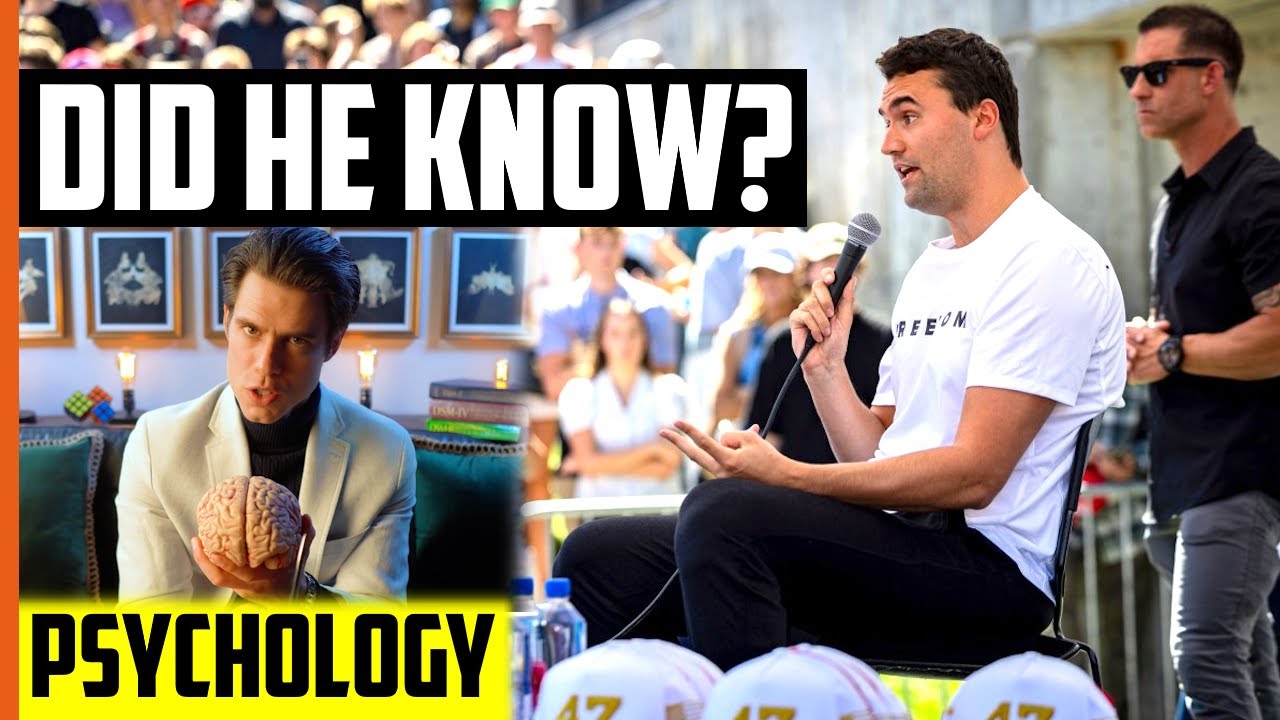
Online speculation quickly formed around a man in a white baseball cap seen adjusting his hat behind Kirk, with some claiming he was signaling an attacker as part of a coordinated plot. Frank Turek later identified himself as that man, explaining he was FaceTiming his son and daughter-in-law and may have touched his nose or adjusted his hat while holding the phone.
Speculation like this tends to surface as a way of trying to make sense of something senseless. Psychologists call the underlying pattern apophenia, the tendency to see patterns where none exist. Combined with hindsight bias, where people look back after an outcome is known and assume the signs were obvious, and confirmation bias, where idiosyncratic movements get cherry-picked to fit a narrative someone already believes, ordinary crowd behavior gets reinterpreted as sinister. Crowds are full of small, meaningless movements that nobody notices until tragedy draws that level of scrutiny.
Why the Brain Reaches for the Familiar First
Several witnesses said their first instinct was to assume the shot was a prank, a firecracker, or a stunt. That instinct traces back to schemas, the mental templates the brain builds from past experience to quickly interpret new information. A loud bang on the Fourth of July instantly pulls up a fireworks schema. Because almost no one in that crowd had a mental schema for a political assassination, but plenty of people had schemas for firecrackers, pranks, and staged skits, their brains defaulted to the more familiar explanation first. Schemas are shortcuts built for safety, not always accuracy, which is why it can take five to ten seconds or longer for a crowd to register what's actually happening.
A Memory That Won't Fade
Witnesses who were looking directly at Kirk in the moment he was struck have described the image as something they cannot unsee. The brain doesn't file traumatic memories away like ordinary ones. Instead of becoming part of a complete, ordered story, the image often gets locked in raw and vivid, resurfacing later in nightmares and flashbacks. The amygdala floods the memory system with emotional intensity while stress hormones like cortisol disrupt the hippocampus, the part of the brain that normally organizes experience into a timeline. Because the memory never gets properly filed as something that happened in the past, it can linger as though it's still happening.
The Body's Reaction
Trauma doesn't stay confined to the mind. Stress hormones like adrenaline and cortisol surge through the bloodstream, preparing the body for fight or flight. Blood is pulled away from the stomach toward the larger muscles, digestion slows, and the vagus nerve, the body's longest cranial nerve, signals the gut to shut down, sometimes triggering nausea. Several witnesses reported feeling physically sick afterward. From an evolutionary standpoint, an empty, tightened stomach was less likely to slow someone down if they needed to fight or run.
Survivor's Guilt
One witness described trying to read his young daughter a bedtime story about love and being unable to finish it, thinking instead about Kirk's own young children. That reaction reflects survivor's guilt, the crushing awareness that one's own life continues while someone else's has ended and their family's world has been shattered. In the immediate aftermath, adrenaline and shock can numb emotion, but as the body calms, empathy and grief surface with full force. Left unaddressed, that delayed response can spiral into depression or post-traumatic stress, which is why professional support matters for anyone who feels affected after witnessing or even watching an event like this.
A Distinct Weight for the Security Team
Kirk's bodyguards and security detail carry a particular psychological burden. They didn't see the shooter, likely because they weren't looking in that direction, and now some may be left replaying the moment endlessly, asking what they could have done differently. That pattern is known as counterfactual thinking, driven by the anterior cingulate cortex, the brain region responsible for detecting errors and monitoring mistakes. For people whose professional identity is built around keeping others safe, a moment they believe they could have prevented doesn't just bring grief over losing a friend, it strikes at their sense of who they are. Without professional support, that combination can lead to chronic anxiety, depression, substance use, intrusive memories, and PTSD.
When Training Meets Real Panic
One witness admitted he'd mentally rehearsed an escape plan beforehand and still didn't follow it when the moment actually came. That's an extremely common experience. Most people carry imagined scripts of how they'd react in danger, rushing to safety, taking control, tackling a threat, but without extensive training, adrenaline redirects blood flow away from the brain's higher reasoning areas and toward the muscles needed for immediate action. It's the same reason a perfectly rehearsed speech can vanish the moment real pressure hits: the prefrontal cortex gets hijacked, and the body falls back on its most basic automatic behaviors.
Secondary Trauma From a Distance
Not everyone who experienced psychological impact was physically present. Millions watched footage online, and for many, viewing alone was enough to leave a mark. This is known as secondary trauma, driven partly by the brain's mirror neuron system, which fires as though we're experiencing someone else's distress when we witness it, an effect that intensifies with graphic footage. Research shows repeated viewing of traumatic media can produce nightmares, hypervigilance, and avoidance behavior similar to what people who were physically present experience.
Frank Turek's Account: The Drive to the Hospital
Turek described the chaotic seconds after the shot rang out. Security reached Kirk almost immediately, and within moments Turek and several others were pulling him into the back of an SUV, unable to fully close the door because of Kirk's height. They drove roughly four miles to the hospital with the door open the entire way, running red lights, sounding the horn, and beginning CPR while Turek prayed aloud. 'Charlie wasn't there. His eyes were fixed. He wasn't looking at me. He was looking past me right into eternity. He was with Jesus already,' Turek said. 'We were giving him CPR, but nothing was happening. He was gone.' Roughly 20 to 30 minutes after they arrived, a surgeon came out and confirmed Kirk had died. Turek said he believed Kirk never consciously registered that anything catastrophic had happened to him.
A Widow's Words of Forgiveness
Erika Kirk, Charlie Kirk's widow, later spoke publicly about the aftermath. She said that instead of violence or unrest, what followed in the wake of her husband's death was people opening a Bible for the first time in years, praying for the first time since childhood, and attending church for the first time in their lives. She also addressed the man accused of killing her husband directly. 'My husband Charlie, he wanted to save young men just like the one who took his life. On the cross, our savior said, Father, forgive them for they know not what they do. That man, that young man, I forgive him. And that is what Charlie would do. The answer to hate is not hate. The answer we know from the gospel is love, and always love, love for our enemies and love for those who persecute us.'
The Long Shadow of Trauma
For everyone touched by the day, family, friends, eyewitnesses, security personnel, and people who only watched online, the psychological impact doesn't end when the event itself is over. It can echo for months, years, or a lifetime, surfacing as flashbacks, nightmares, hypervigilance to loud sounds, or avoidance of crowds and political events altogether. Beyond individual symptoms, an event like this can shake something more fundamental: the basic belief that the world is generally safe, that people are basically good, and that tomorrow will unfold in a predictable way. Rebuilding that sense of trust, in community, in safety, in other people, is often the hardest and slowest part of recovery, which is why seeking professional support matters for anyone who was affected, directly or from a distance.
Video Transcript
What psychological trauma did those who
witnessed what happened to Charlie Kirk
experience? Whether they're a close
friend, a loved one, supporter, or
internet viewer. First, my thoughts and
prayers are with Charlie Kirk's friends,
family, and loved ones. We will not be
showing the part of the footage of what
happened to him. Instead, we will be
exploring the psychology and
neuroscience of what happens to those
eyewitnesses who observe tragic events.
It was September 10th at Utah Valley
University and Charlie was doing his
infamous open mic question and answer
rally with his mostly student audience,
challenging the audience to prove him
wrong, debating topics ranging from
religion.
>> So why do you care so much about other
individuals living their lives? What is
affecting you?
>> Well, I could throw that right back at
you. Why do you care so much about what
I have to say to politics?
>> When I first saw this ad, I thought it
was like a like an improv comedy thing.
It looked so ridiculous that I didn't
even think it was real.
>> To sports,
>> LeBron or Jordan greatest of all time?
>> Yeah, Jordan. Not even close.
>> For real.
>> 100%. I could prove it.
>> All right, break it down. Break it down.
>> How many finals has LeBron lost?
>> He's done these conservative Q&A rallies
on other college campuses countless
other times.
>> How we doing, Washington State? How we
doing, Michigan State?
>> However, this one was very different
from the start.
>> Our way in, we had drone footage of the
crowd building.
Charlie had it on his phone. And I said,
"Charlie, I don't like this place. There
are too many buildings." Charlie just
kind of brushed it off.
>> All right, first stop.
>> Wow. Look at that. Beautiful.
>> Look at that.
>> So, we get there, we pray, we get out of
the car.
>> This is Frank Turk, one of Charlie's
closest friends and religious adviserss
who was there with Charlie that day. And
then on the drive to the hospital, he
will be recounting what sadly happened,
taking us through the events of that
terrible day.
>> There's a whole bunch of TPUSA leaders
there that want to pose for pictures.
>> 3 2 1 smile.
>> Charlie graciously poses for pictures.
>> Thank you.
>> This was Charlie's first rally he's done
of the new school year. His prove me
wrong Q&A debates gained a lot of
attention on social media over the
summer months.
>> Who Who are you? Well, enough important
enough for you to come up to a
microphone. You said, "Well, I'm worried
about some laws Congress should pass." I
passed. What laws are you talking about?
>> Can you be specific?
>> I'm sorry. I'm very nervous.
>> So, you can shut up, baby. You just hate
American. You love abortions.
>> This is the Old West, right? The Holy
Spirit brought me here to challenge you
to a gentleman's fist fight right here
in front of this whole crowd. So
students and others in the community
were now eagerly awaiting Charlie's
arrival on their campus.
>> Freedom on three.
>> 1 2 3.
[Applause]
>> Okay guys, we're back. Did you miss us?
Cuz we missed you.
>> Resulting in over 3,000 people
attending. We registered for tickets,
but they weren't even looking for
tickets. Anyone could just walk in. He
thought it was worth the risk. Sure, he
could have brought it inside, but when
it's inside, you're not going to get as
big a crowd as outside, and you're not
going to be able to attract people
walking by. And Charlie wanted to reach
out to the world.
>> We head right into the base of the
amphitheater. Charlie's like, "Welcome
to the big leagues." I mean, there are
just people everywhere.
USA
USA.
I've
>> never seen a crowd so enthusiastic to
see Charlie.
[Applause]
So Charlie starts flipping these hats,
you know, he's got the Make America
Great Again hats, the 47 hats. And so
I'm just kind of standing there and some
someone on staff just hands me a row of
hats. So I go, I guess I get to flip
them, too. So I'm flipping them all over
the place. And people are just excited.
They're chanting USA, USA, USA. USA.
>> They just love Charlie.
>> That's a lot of people, brother.
[Applause]
>> You know how it works. Question answer.
Also, thank you to Lane from Y Refi.
That was great. Really appreciate it.
And we're going to be here for a couple
hours.
>> Get comfortable.
>> Jesus Christ was a real person. He lived
a perfect life. He was crucified, died,
and rose on the third day. And he is
Lord and God overall.
>> Next question.
>> Do you know how many mass shooters there
have been in America over the last 10
years?
>> Counting or not counting gang violence?
>> Great.
>> I hear this pop. It sounded like it was
close. And out of the corner of my eye,
I see Charlie go back. And so I start to
head toward Charlie. And I see that the
security guys are already there. So then
I duck, thinking, "Okay, maybe there's
other sho shots coming." I'm still on
the phone. My daughter-in-law told me
this. These were their first words out
of my mouth. No, no, no, no, no.
>> I froze. I actually didn't get down. He
actually pushed me down and said, "Get
down. Get down."
>> Some eyewitnesses at the event described
physically freezing. And if you notice
others in the crowd also froze for a
second. Do you know why? Yes. This is a
classic freeze response. When we are in
shock from a sudden or unexpected
traumatic event, our bodies may freeze
because we don't immediately know what
to do in that new unexpected and
uncertain situation. Evolutionarily,
this response helped us stay still, to
process what was happening, and to
possibly avoid being detected in a
potentially dangerous situation before
deciding whether we should either fight
or run. A common misconception is that
everyone responds to trauma the exact
same way, that everyone will duck or run
for cover. But why do you think we all
don't act the same way in the midst of a
tragic event? Yes, it's because there's
a lot of variation in all of us due to
differences in how our nervous system is
physically wired, prior experiences, and
our individual stress responses. Our
amygdala in our brain, which scans for
threats, can trigger a surge of signals
through our autonomic nervous system.
Past trauma, temperament, genetics, and
experience, whether law enforcement,
military, healthcare, all influence
pathways getting activated in that split
second. Sometimes conspiracy theories
are built on the idea that if someone
froze, they must have known something or
were in on it. In reality, the freeze
response is an automatic survival
reaction for many in some situations and
is often a non-concious choice.
Therefore, people who don't duck or run
aren't usually complicit in the act.
Instead, they're experiencing a natural
hardwired nervous system response to an
overwhelming shock. Also, while we're on
the topic, I think we've all noticed
some overanalyzing of some body
movements of people at the Charlie Kirk
event that day.
>> Then I start facetiming my son and my
daughter-in-law while Charlie sits down
and begins to ask questions. Now, this
is where you may have seen an internet
conspiracy. The man in the white hat.
>> Did you notice the gesture made by the
man in the white baseball cap?
>> Did you notice the gesture made by the
man in the white cap? The man behind him
kept constantly adjusting his white hat.
No one realized he might have been
signaling the attacker.
>> Speculating that maybe this was a
massively coordinated attack where they
were all signaling the exact time to
strike.
>> Was giving signals to the shooter. Yeah,
the man in the white hat was me. I did
this with my hat. Maybe I touched my
nose or something while I'm holding my
phone cuz I'm facetiming my son and
daughter-in-law.
>> Why do you think some people speculate
about this stuff right after the event?
Yeah, it's sometimes a way to try and
make sense of something so senseless.
They thought Dan, his main security guy,
was given signals, too.
>> America over the last 10 years.
>> Counting or not counting gang violence.
>> Great.
>> Signals for what? You don't need
signals. There's a sniper up there. He
doesn't need anyone to signal anything.
He can look through his scope and see
what's going on. What do you think? He's
He's looking through a scope and going,
"What's the signal? What am I? It's It's
crazy." Those theories are classic
examples of what's called apania. This
is possibly seeing patterns where maybe
none exist. And combined with hindsight
bias where once the outcome is known,
people look back and assume there were
obvious signs. Adding confirmation bias
to that and people end up cherry-picking
idiosyncratic movements within a crowd
to fit the narrative they already
believe. In reality, those movements
could be just idiosyncrasies in the
crowd that you don't normally notice in
crowds because nothing tragic has
happened to draw that level of scrutiny.
We don't typically analyze crowd
behavior when no significant event
occurred.
>> When I finally meet my my wife back in
Phoenix, she goes, "There are millions
of people who think you were in
conspiracy to kill Charlie." I'm like,
"What? That's crazy." You still have
people saying, "Oh, yeah. We need to
check into this guy and this other guy
too, that security guy."
>> Psychologically, when viewed through the
lens of tragedy, perfectly ordinary
gestures may feel loaded with meaning.
Although, I will admit that some things
that are being told to us in this
investigation aren't completely adding
up. It's quiet, almost enough to get
out, but there's one vehicle lingering.
There is a squad car parked right by it.
Remember how I was engraving bullets?
>> But maybe they will make more sense as
more information becomes public.
>> I'm still in shock. The first second
was, oh, someone's playing, you know, a
crash joke to try and ruin the event.
>> Part of me thought that it was some kind
of fake skit blood squirt. I just heard
a big loud noise like a popper that you
can buy on the 4th of July. I
>> think some people thought it was a
firecracker.
>> But why? Our brain operates what's
called in psychology as schemas. These
are mental templates built for past
experiences. They're cognitive
frameworks that help us quickly
interpret and respond to new information
by comparing it to what we already know.
For example, when you hear a loud bang
on the 4th of July, your brain instantly
pulls up the firework schema. Since
virtually everyone in that audience did
not have a schema for a political
assassination, but they did have schemas
for fireworks, firecrackers, pranks, and
dramatic skits, their brains, at least
initially defaulted to those more
familiar categories. Can you think of a
time when your brain misread a situation
at first because it didn't quite fit
your expectations? Maybe it was sudden
and new, or maybe it was just confusing.
That's how schemas work. They're mental
shortcuts that help us interpret the
world quickly for our safety. But they
aren't always accurate. Charlie was kind
to the students who disagreed with him.
I mean, he would always say, "Hey,
people who disagree, if you disagree,
come to the front of the line."
>> All right, you guys know how it works.
If you want to ask a question, we have a
line forming here. If you disagree, go
to the front of the line.
>> Close to being a fascist.
>> I'm such a bad fascist. I let the people
who disagree an open mic to talk to me
for two hours uninterrupted. Okay. I'm
an awful fascist. Yeah. Why don't you
read the shirt off for everybody?
>> Oh, my shirt everybody. My shirt says
Charlie Kirk.
>> That's one thing I always looked up to.
You let anyone take the mic and ask him
a question.
>> Do you have short hair and up teeth? You
must be a Let's elevate our discussion
above personal insults.
>> Do you have something up your ass or
something?
>> I want to protect the rights of all
human beings. I will pray for you this
Holy Week. Thank you for your time.
>> Please don't ever pray for me. It didn't
set in immediately um just because we
all dropped down together and we kind of
all just looked at each other like did
that just happen? Like is is this real?
There was like 5 to 10 seconds where I
didn't know what happened. It took a
couple seconds for us to kind of
understand what was going on.
>> In the first 5 seconds, our brain with
the hippo campus and higher cortices,
specifically the prefrontal cortex with
reasoning tries to match the sensory
data with the closest, least threatening
explanation. And do you think our brain
is quick to immediately jump to the
worst case scenario? Actually, for a new
dangerous situation like a political
assassination, not usually. Our brain
typically resists updating its schema to
something catastrophic until there's
absolutely no other choice to explain
what happened. This is why after an
accident, we might insist we're fine,
even when we might be seriously injured.
I was looking right at Charlie when the
gun went off, so I saw it, which is a
sight that I can unsee and I don't think
I will ever unsee.
>> The witnesses who were looking directly
at Charlie when he was sadly struck
mentioned that image is something they
cannot unsee. Do you know why? Our brain
doesn't store trauma like a normal
memory that just fades into the past,
but imprints it. Instead of being filed
away as part of a complete story, the
image often gets locked in raw and
vividly, replaying in the mind as if it
just happened. For those who saw it,
especially in person, that single
instant can become a mental snapshot,
resurfacing in nightmares and flashbacks
because the amygdala of our brain, which
is the fear center, burns that moment
into our memory with such intensity that
the hippocampus has difficulty filing it
away as part of the past. This is
because in moments of extreme stress,
our brain prioritizes survival over
orderly memory storage. The amygdala
floods the memory system with emotional
intensity. While stress hormones like
cortisol disrupt the hippocampus, the
area of the brain that normally
organizes experiences into a timeline,
storing them as memories in the
cortices. As a result of it not being
stored that way in the brain, the memory
is not tagged as being over. Therefore,
it lingers in her brain as if it's still
happening.
>> Hey, stop. Stop.
Around to the back. I pop the the back
gate open and I jump in the back. Then I
grab the thing and close it. Just go.
Go. Let's go. Justin is driving. Dan is
up front with the with the GPS. Rick has
got him. Rick's on my left and Brian is
there. And I'm coming over the back seat
and Charlie's laid out in front and
Charlie's so tall we can't we can't
close the door. We drove 4 miles all the
way to the hospital with the door open.
To this day, I don't know how Brian
stayed in the car cuz we're just go go
go go go. We're You know what we're
trying to do? We're trying to stop the
bleeding. You saw it.
>> It was the most awful thing I've ever
seen in my life.
He shot him in the neck and went
everywhere. And the worst part of it all
was the liberals who were there were
cheering.
>> I did see a select group of students who
stood up and cheered after after the
fact, which was really sad to see.
>> You're kidding, man.
>> No.
>> Some people were excited. Some people
were glad that this happened. I saw
people smiling.
>> A gentleman five maybe 10 feet in front
of me stood up, put his fist in the air,
started chanting, "USA, USA, USA." Uh we
drove straight up to our school where we
had a clinical assessment. I felt sick
to my stomach. Uh I thought at any
moment I could throw up.
>> Trauma doesn't just affect the mind, but
it also floods the body. When we feel
like we face sudden danger, stress
hormones like adrenaline and cortisol
surge throughout our bloodstream. These
chemicals prepare the body for fight or
flight. But how do you think they impact
your digestion? Yes, blood is pulled
away from your stomach towards your
larger muscles. Digestion slows and our
stomach itself tightens like a fist. On
top of that, the vagus nerve, which is
the body's longest cranial nerve,
running from the brain stem down the
chest to the abdomen and signals the gut
to shut down and sometimes triggers
nausea or vomiting. From an evolutionary
perspective, this reaction makes sense.
An empty stomach is less likely to slow
you down with cramps if you need to
fight aggressively or run away fast.
>> I was maybe 10 or 15 ft away when it
happened. I was doing okay.
And then I was putting my 5-year-old to
bed
and she had me read her story about
love.
>> I just couldn't finish the story.
I was
>> thinking about Charlie's little girls.
>> His wife.
>> This is a powerful example of survivors
guilt. It's the crushing awareness that
his life continues, but Charlie's life
sadly ended and his family's world has
been devastated. What makes survivors
guilt especially painful is that it
often arrives later as with
eyewitnesses.
>> I was closer than any of the students,
closer than
>> maybe one security guard between him and
I.
>> And I heard the pop.
>> In the immediate moment, adrenaline and
shock can numb emotions. But as the body
calms and the mind begins to process,
empathy and grief surface with full
force. Though it's a natural response,
it can spiral into depression or
post-traumatic stress if left unressed.
That's why it's important for anyone
feeling like something is wrong after
experiencing or observing an event like
this to seek professional help. He
wanted to make peace with people who
didn't agree with him. That's why he had
the open mic.
>> Hudson,
>> immigration, Customs, and Enforcement.
>> Hey, don't don't touch it.
>> Have a nice day.
>> Let's have a conversation. She was wrong
today.
>> I wish we could be here without having
my hat thrown off and stuff, but
>> what what we as a culture have to get
back to is being able to have reasonable
disagreement where violence is not an
option.
>> I've been assaulted publicly, multiple
death threats. When people stop talking,
that's when you get violence. That's
when civil war happens because you start
to think the other side is so evil and
they lose their humanity. How many of
you kids here on campus, raise your
hand, do you feel as if you're graded
down if you come out as a Trump
supporter or a conservative?
That is the cultural left that will use
power to punish a student with their
grades because they have different
views. That's fascism. That is
definitional fascism.
>> How are the guards?
>> That whole day I just kept going hugging
them saying, "This is not your fault."
I'm telling you, Megan, any one of those
guys would have taken a bullet for
Charlie. They loved him.
>> Charlie Kirk's bodyguards and security
detailer also experiencing a unique
psychological toll. They didn't see the
sniper likely because they may not have
been looking for one and now they may be
left with an unbearable question looping
in their minds. If I had only Yeah, this
is known in psychology as counterfactual
thinking. Replaying the past in endless
variations, imagining what you could
have done differently. This mental loop
is driven by the anterior singulate
cortex. It's the part of the brain
responsible for error detection and
monitoring mistakes. Normally, this
system helps us learn from small
slip-ups. But under the weight of such
massive tragedy, it becomes a relentless
loop in their brain. For those who
dedicate their lives to protection, this
isn't just the emotional pain of them
losing a friend and client, but do you
also think it feels like to them a
violation of their professional
identity? Right? Many times their very
sense of self is built around keeping
others safe. So when something happens
that they feel they could have
prevented, it sadly strikes at the core
of who they are and leaves them feeling
like they failed their core identity. A
devastating blow like this against their
identity is incredibly difficult to
recover from. You may have seen this
depicted in the movie in the line of
fire.
>> You know, it does make me wonder about
Dallas, though. Do you really have the
guts to take a Frank?
>> It's absolutely critical that Charlie's
security detail gets professional help
immediately. If they don't get help, it
may gnaw at them where they may
experience chronic anxiety, depression,
substance use disorder, intrusive
memories, and PTSD symptoms. For them,
the trauma is at least twofold. You know
why? Yeah. It's the horror of witnessing
the event of their friend tragically
dying in their arms and the unbearable
weight of believing that they could have
prevented it and all of the people this
tragically impacted.
>> How dangerous some of these events are.
So, I I had kind of already thought of
an escape plan when it really happened.
I definitely didn't do anything that I
thought I was going to do.
>> And while he may have felt a little
ashamed admitting that, that is actually
extremely common in these situations.
Most of us carry around imagined scripts
of how we'd act in danger. Rushing
people to safety, getting everyone
around you to ducking cover, tackling
the threat, or calmly taking control.
But in reality, when chaos erupts, do
you think most people follow that plan?
Right? Without extensive training and
experience like those in the military
and law enforcement have, stress
hormones like adrenaline flood into our
bloodstream, heart rate spikes, blood
flow is redirected away from higher
thinking areas of our brain towards
muscles needed for quick action. It's
similar to the scene in the classic
1950s sitcom I Love Lucy.
>> Hello, Dr. Harris. We're leaving for the
hospital with Mrs. Ricardo now. Goodbye.
>> They practice everything perfectly, but
as soon as the pressure is on,
>> this is it.
>> This is it. Adrenaline hijacks the
prefrontal cortex and suddenly chaos
takes over. Have you ever given a
speech? You rehearsed it perfectly
without hardly reading it. Then as soon
as you're up on stage, you can't
remember the speech and you resort to
reading most of it. Yes, that's because
stress hijacks the prefrontal cortex and
your body falls back on the most basic
automatic behaviors it can access in the
moment of high stress. Panic is the
brain's way of prioritizing immediate
survival over some abstract strategy. Do
not go looking for the video of Charlie
Kirk. For the love of God, do not go
look for that video. If you need to
preserve your me, do not go look for
that video.
>> Not everyone who saw what happened to
Charlie Kirk was physically present that
day because possibly you and millions of
others watched it online. And if you
didn't watch it yet, I strongly
recommend you don't look for it because
it's not psychologically healthy to
watch. And for many, just viewing it is
enough to leave a psychological scar.
This is called secondary trauma. But why
do you think this happens? One reason is
the mirror neuron system in our brain.
When we see others in distress, these
neurons fire as if we are going through
the pain. With that type of graphic
footage, the effect is magnified. This
is why so many people have said, "I just
can't unsee it." Even though they
weren't physically there, the brain
encoded the scene in a way that makes it
feel personal. In fact, research shows
that repeatedly viewing of traumatic
media can intensify symptoms of
nightmares, hypervigilance, and
avoidance similar to those who were
there in person.
>> They'll never be the same after today.
And every person in attendance, and many
people who who watch the video, will
never be the same after seeing something
like that. For everyone touched by the
tragedy, family, friends, eyewitnesses,
the security team, internet viewers, the
psychological consequences don't end
when the event is over. The trauma can
echo for months, years, or even a
lifetime. Some may sadly develop PTSD
symptoms, flashbacks that make them
relive the scene, nightmares that replay
it, or hyper vigilance where loud sounds
feel like a new threat. Others might
slip into avoidance behavior, steering
clear of large crowds or even political
events because their nervous system
screams that danger lives there.
>> I can't get out of my mind how traumatic
this was for everyone there. People of
all ages there and they're going to have
trauma for the rest of their lives
experiencing this. For many people, this
scar won't heal.
>> Beyond these personal struggles, trauma
can erode something deeper, our basic
world view. We all move through life
with core beliefs that the world is
generally safe, that people are
basically good, and that tomorrow will
unfold in a predictable way. A traumatic
event like this can sadly shatter those
assumptions,
>> especially something happening, you
know, in our backyard, in a place that
we thought was safe,
>> leaving eyewitnesses questioning safety,
community, and even trust in humanity
itself. No one comes away from these
things unchanged. That's why it's so
important for those who are impacted to
seek professional help. Rick starts
praying out loud. I'm praying out loud.
We're yelling, "Come on, let's go. Let's
go. Let's go." We're doing the best we
can to navigate traffic. This not a
highway. We're on surface streets and
suddenly there's an ambulance coming
toward us. There was conversation in the
car. Should we stop?
>> U in Oram has had an active shooter at
the Charlie Kirk event. We're getting
several calls. We're trying to get more
information.
>> 418. Copy. How many injured do we have?
>> Just one person.
>> No, no, just keep going. Just keep
going. At one point somebody says,
"Let's get there in one piece cuz we're
just we're cutting through
intersections, you know, we're just
beeping the horn there. This is this is
not a emergency vehicle. There's no
there's no lights. There's none of
this." And I go, "We got to start CPR."
Charlie wasn't there. His eyes were
fixed.
He wasn't looking at me. He was looking
past me right into eternity. He was with
Jesus already. We were giving him CPR,
but nothing was happening. He was gone.
He was with Jesus, absent from the body,
present with the Lord.
That's where he was. Got to the hospital
and just ran him right in. Right in
through the emergency room.
>> Frank's story is so sad to hear and
oddly relatable. I think we can all
imagine rushing our friend to the
hospital in our vehicle, praying to God
he can be saved because of some freak
tragedy. They all immediately basically
grabbed Charlie by a limb, threw him in
the backseat of the SUV, and sped away
to the hospital with the back passenger
side door open the whole way because
Charlie couldn't fit into the back seat
laying down. They were blaring the horn,
flashing their lights, possibly blowing
through traffic lights, speeding to the
hospital while praying out loud.
>> The shot was catastrophic. So, 20 or 30
minutes later, the surgeon came out and
said he was dead.
>> He absolutely did not know he was shot.
and he psychologically was unable to
even register that anything catastrophic
ever happened.
>> No agony. One moment, Charlie was doing
what he loved,
arguing and debating on campus,
fighting for the gospel
and truth
in front of a big crowd.
And then he blinked.
He blinked
and saw his savior in paradise. After
Charlie's assassination, we didn't see
violence.
We didn't see rioting.
We didn't see revolution.
Instead, we saw what my husband always
prayed he would see in this country. We
saw revival. Past week, we saw people
open a Bible for the first time in a
decade.
We saw people pray for the first time
since they were children.
We saw people go to a church service for
the first time in their entire lives.
>> RIP Charlie Kirk. Our thoughts and
prayers are with his friends and family.
We didn't talk about Charlie's wife,
Erica, or his children in this video
because it appears they were not
actually there that day. Mikey McCoy, 23
years old. He's calling the vice
president. He's calling Erica. He's sent
in a plane to get Erica.
>> But nevertheless, the pain she is going
through as now a widow, mother of two
very young children is unfathomably
heartbreaking.
>> My husband Charlie,
he wanted to save
young men
just like the one who took his life on
the cross. Our savior said,
"Father, forgive them for they not know
what they do."
That man,
that young man,
I forgive him.
And is what Charlie would do.
The answer to hate is not hate.
The answer we know from the gospel is
love and always love.
love for our enemies
and love for those who persecute us.
>> And how his two young children will
likely sadly not remember their father
or have their father as they grow up is
incredibly heartbreaking.
>> So we're here at Bill's Burgers in New
York City and right near this very table
was the first time dad met mom and it
started as a job interview.
>> Charlie Kirk is a profound loss to our
world. And now in the comments, what do
you think is most difficult about losing
Charlie Kirk? Let everyone know in the
comments below. Subscribe for more. And
if you want exclusive content and
channel perks, you can hit that join
button below because your support makes
all of this possible. It's so sad
because that's what Charlie was
preaching for so long is just talk.
Don't use violence. There's no need for
violence. Just talk. And it's so sad
that that person chose violence instead
of coming up to the microphone.
[Music]
See you next time.
[Music]
[Music]
Heat. Heat.